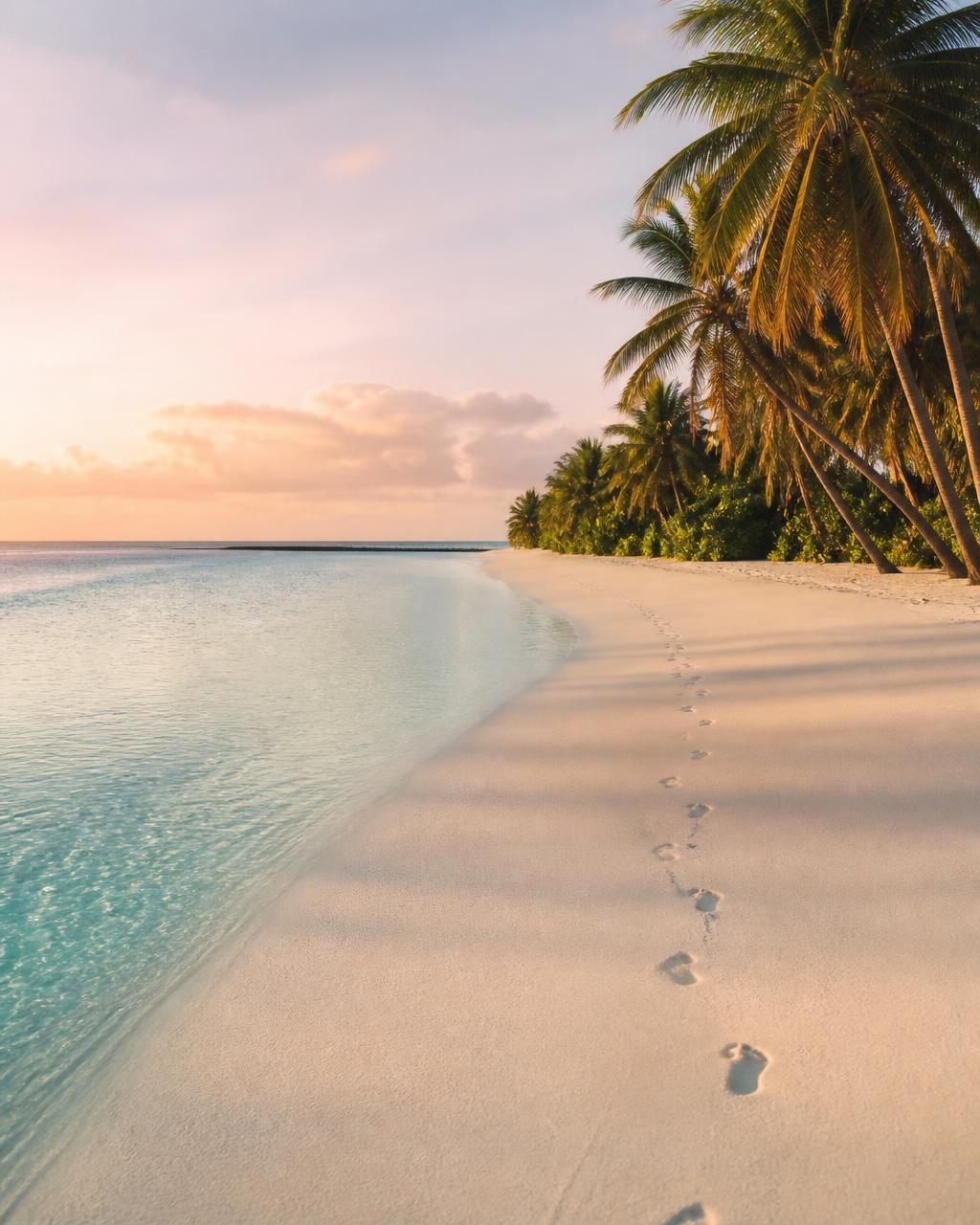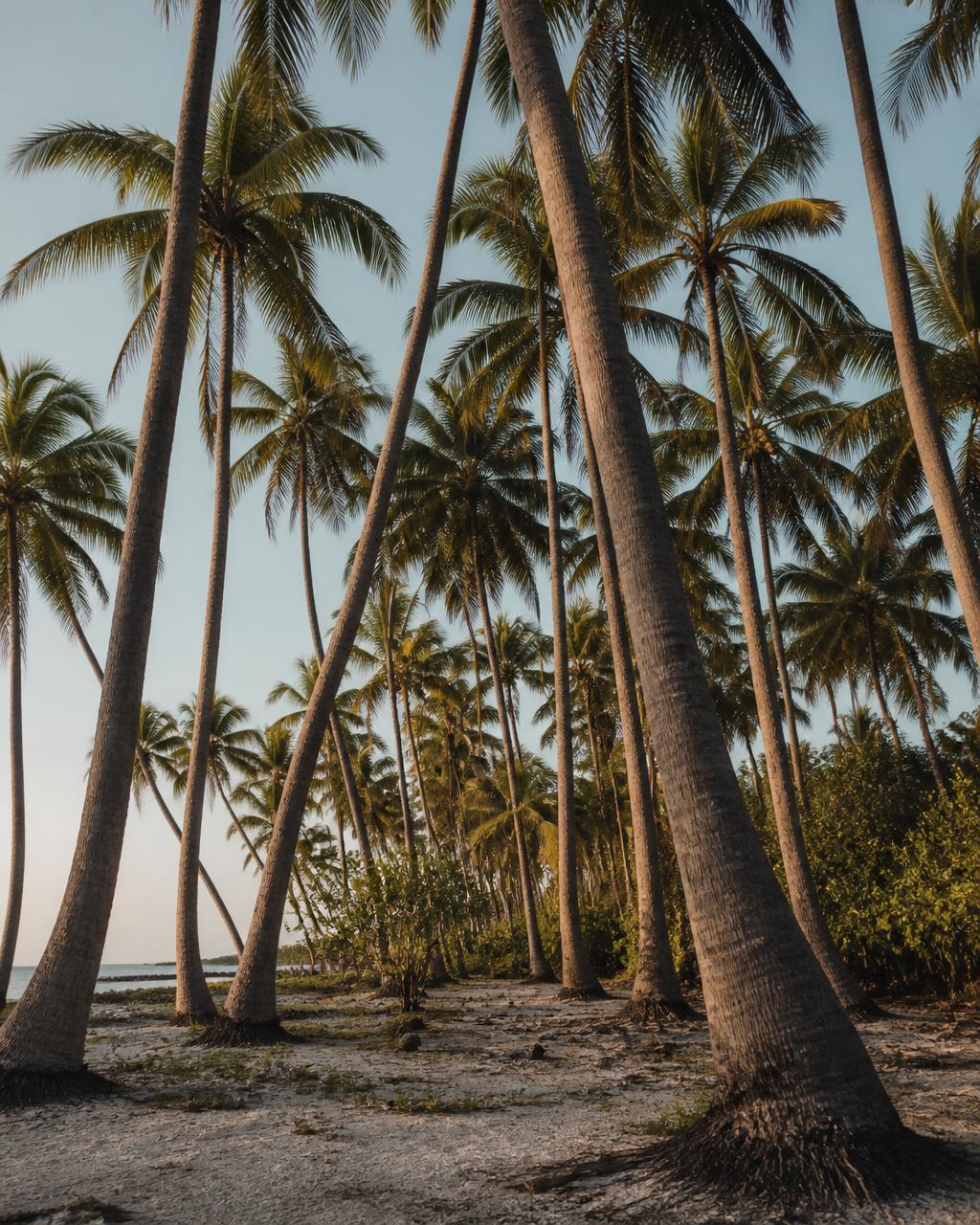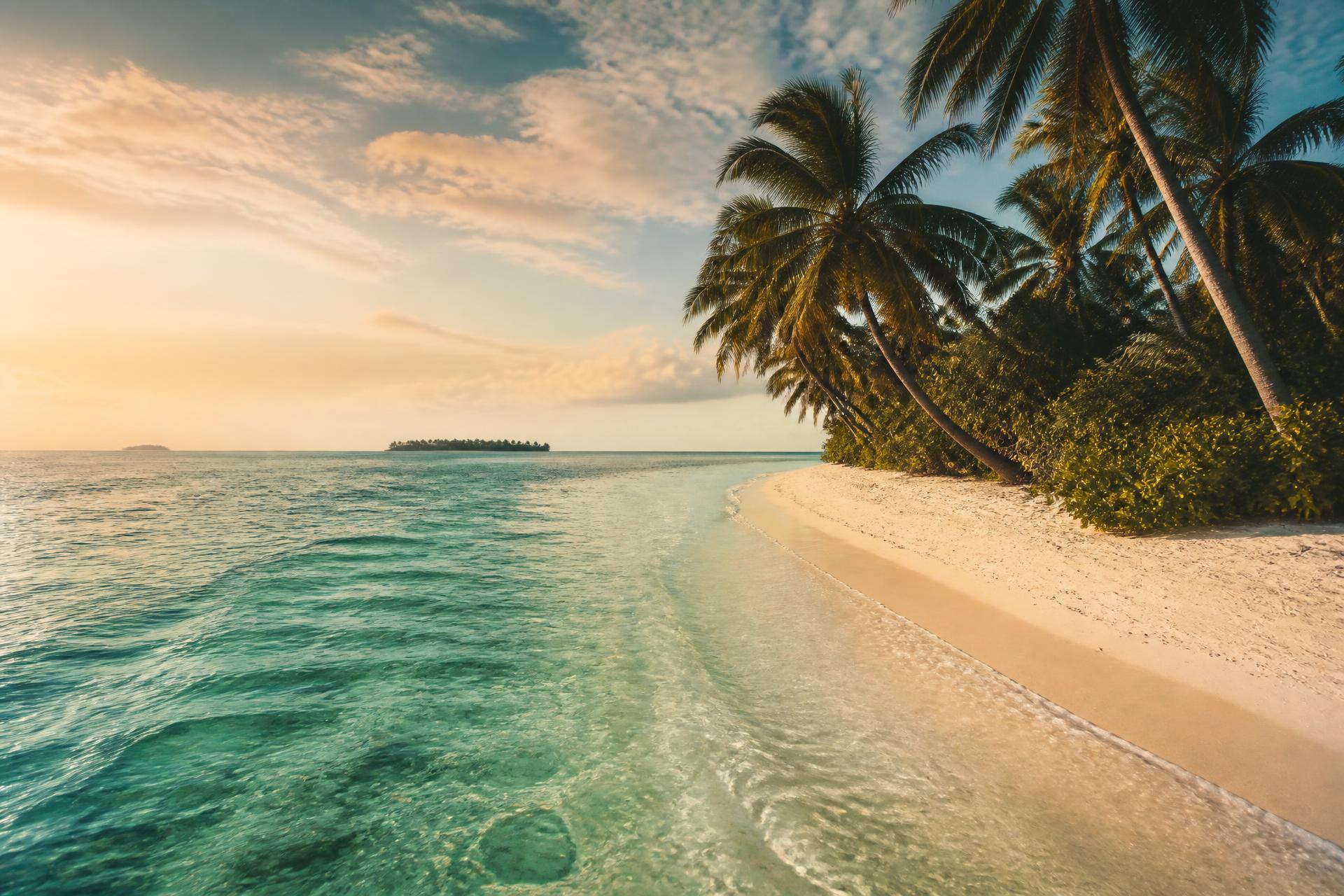
Crystal-clear turquoise lagoon and white coral beach on the Tetiaroa atoll at sunrise, with coconut palms and untouched vegetation along the shoreline

Tetiaroa — French Polynesia, South Pacific

The Island That Time Chose To Protect

Floating quietly within the South Pacific, Tetiaroa is more than a private island. It is a sanctuary where pristine nature, Polynesian culture and thoughtful hospitality exist in perfect harmony.

An Introduction

An atoll that was sacred long before it was rare.

The aircraft is small enough that you can see the pilot's hands. It lifts off the runway at Papeete, banks north over the reef, and within a minute the island behind you has become a green shape in a very large ocean. Then twenty minutes of nothing — the deep, unbroken, almost violet blue of open Pacific — and the sense, mild but unmistakable, of being carried away from something.

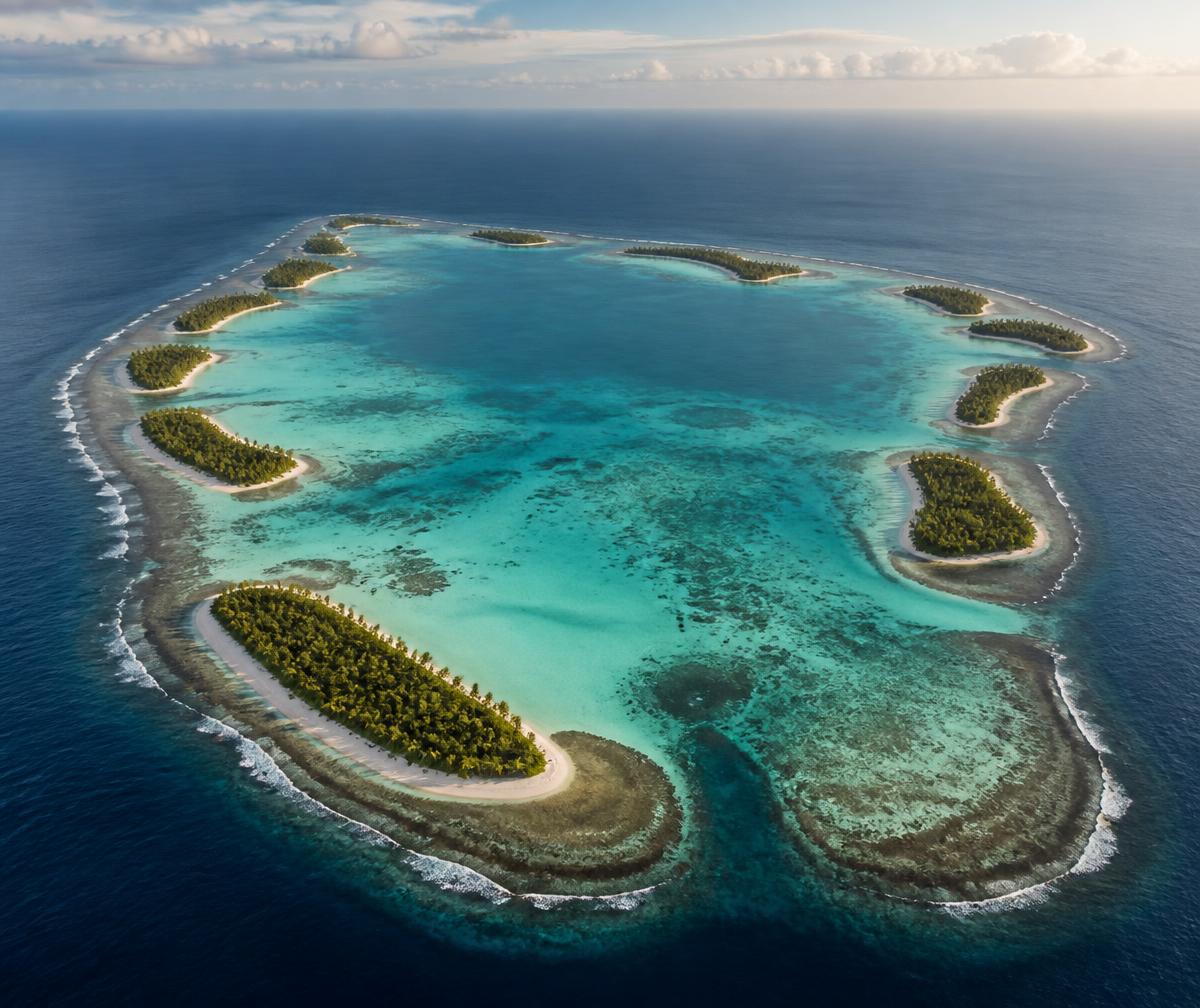
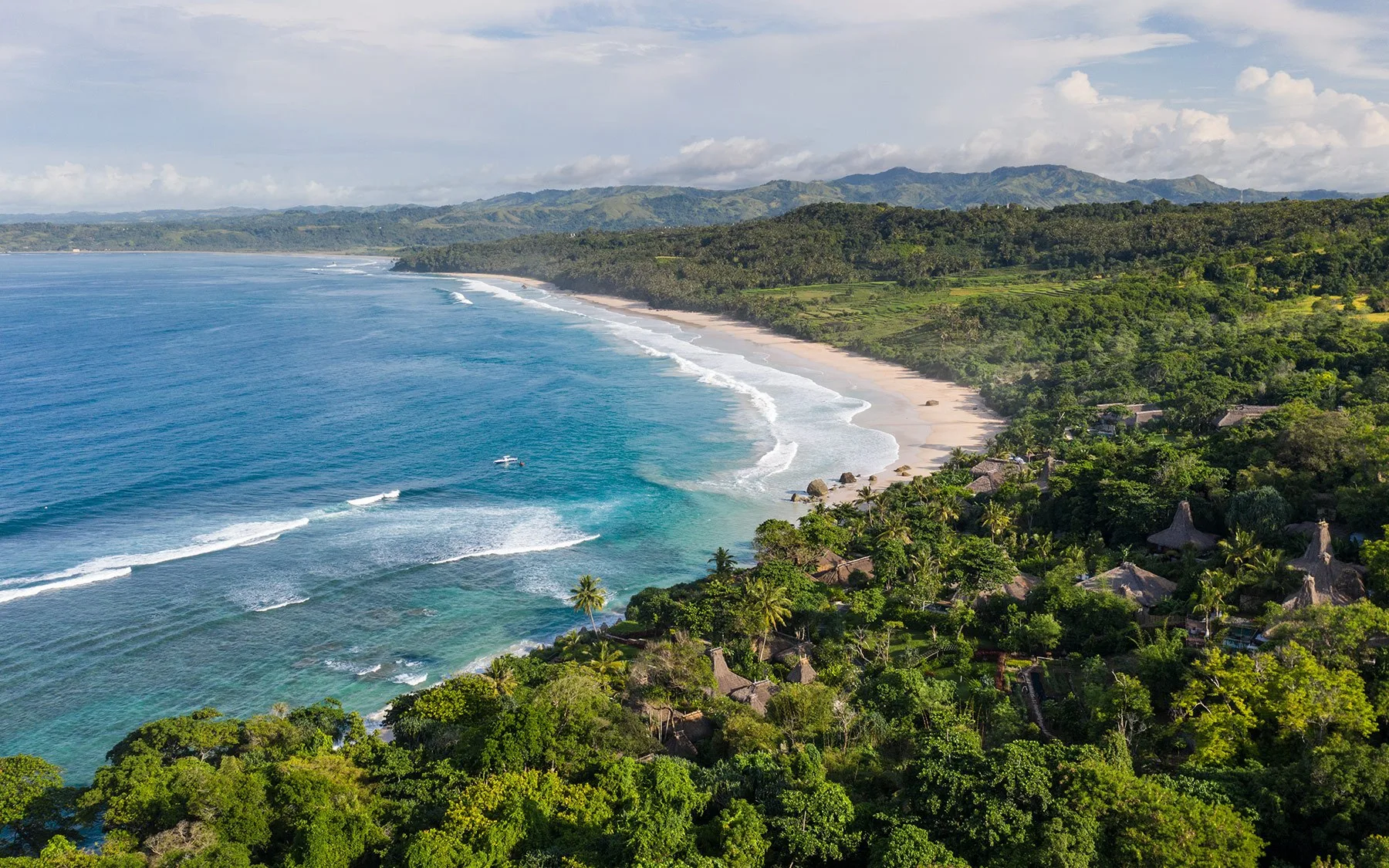
Tetiaroa announces itself the way a coral atoll does: not as land but as colour. A pale ring appears on the water, impossibly bright against the deep, and then it resolves into a lagoon — turquoise at the centre, jade along the flats, silver where the light hits it wrong — held inside a broken necklace of twelve small islands. There is no mountain here. Nothing rises more than a few metres above the sea. What you are looking at is essentially palms, sand and water, arranged over seven kilometres of lagoon, and it is one of the most beautiful things most people will ever see from an aircraft window.

You land on a strip of coral rubble. The door opens and the air arrives all at once — warm, salt-heavy, carrying tiare and something faintly green from the low forest. The engine stops. What remains is wind through fronds and, underneath it, the reef, breaking somewhere out of sight, a sound that will not stop for the whole of your stay and which you will miss badly afterwards.

This atoll belonged to the Pōmare dynasty, the royal family of Tahiti, who came here to rest and to be still, and whose marae stones still lie among the palms. Before that it fed and sheltered families who read this ocean better than any instrument. It was never empty. It was simply kept.

Marlon Brando found it in 1960 and spent the rest of his life worrying about it. He had come to the Pacific to make a film and stayed for the silence; what he wanted, in the end, was not a house on an island but an island that could survive having people on it. He talked about research stations, about seawater cooling, about leaving the birds alone. Most of it sounded eccentric at the time. Almost all of it is now here.

So the resort that carries his name is, properly understood, an argument rather than a hotel — that a place this fragile can be visited without being diminished, and that the highest form of luxury available anywhere in French Polynesia is an island still doing exactly what it did before you arrived. You will remember the lagoon. That is the whole intention.

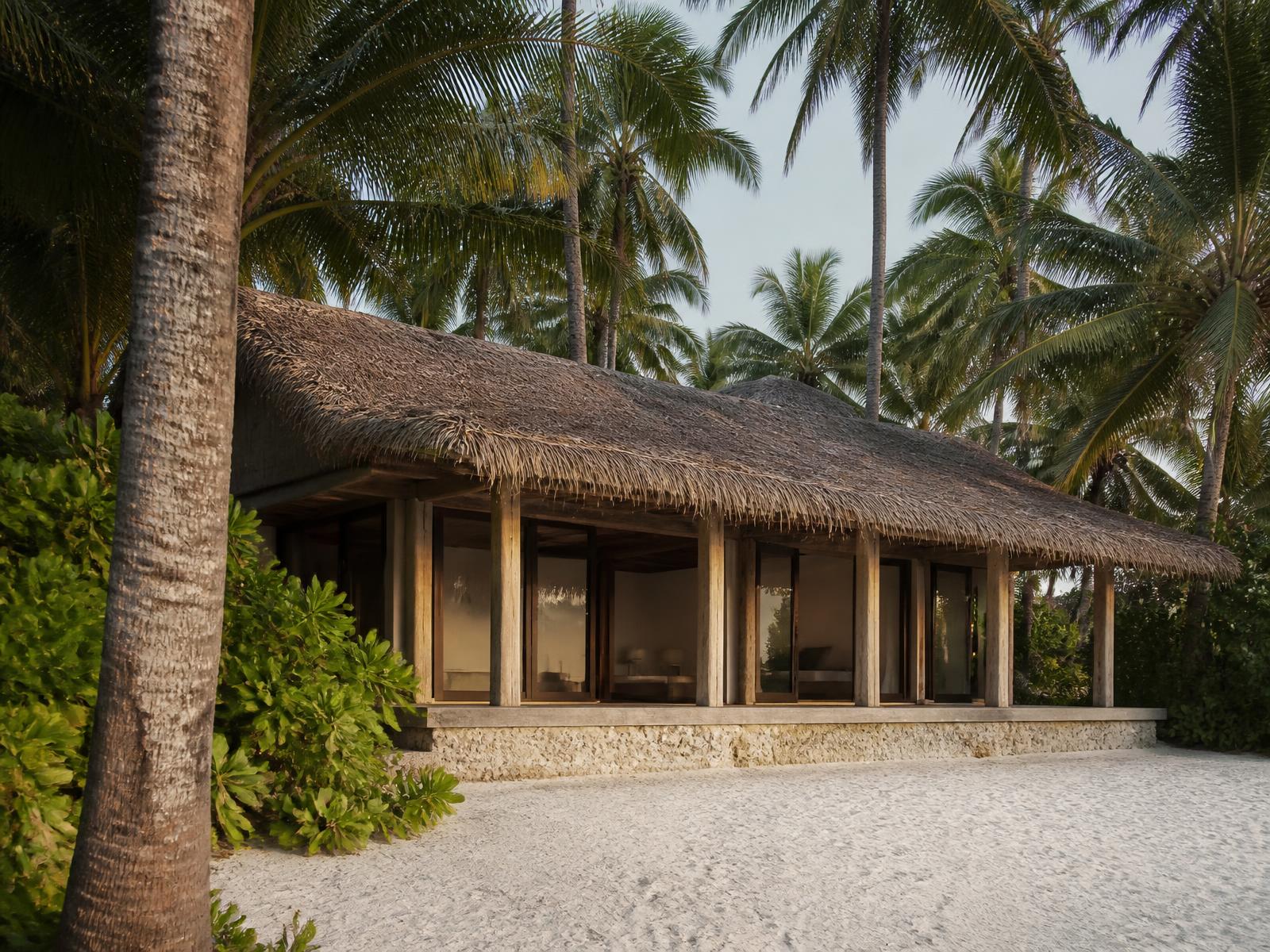
Low thatched-roof timber villa with coral stone base and large glass openings, half hidden among coconut palms on a white sand Polynesian island

Architecture & Design

Buildings that agreed to stay below the palms

Nothing here is taller than the trees, and that single rule explains most of what you see. Thatched roofs of pandanus and coconut, pitched deep and low. Timber posts, unpainted, going grey the way timber does within a metre of the sea. Coral stone at the base. From the water the island reads as forest with a few soft lines behind it.

Inside, the walls mostly stop where they can. Glass slides away entirely, so that the difference between the room and the sand is a decision rather than a boundary, and the breeze crosses the whole house without asking. Interiors are quiet to the point of austerity: pale linen, woven pandanus underfoot, local wood joined by hand, a few objects made by people whose names are known here.

The engineering is invisible and considerable — deep seawater drawn up from the ocean to cool the buildings, coconut oil in the generators, water from the sky, the whole atoll's energy accounted for. None of it is on display. Luxury on Tetiaroa is measured entirely by respect, and the most impressive thing about the architecture is how little of it you notice by the third day.

The Villas

Houses the island allowed

There is no list worth reciting. What matters is the breeze through the room at five in the morning, and how long you stay to listen to it.

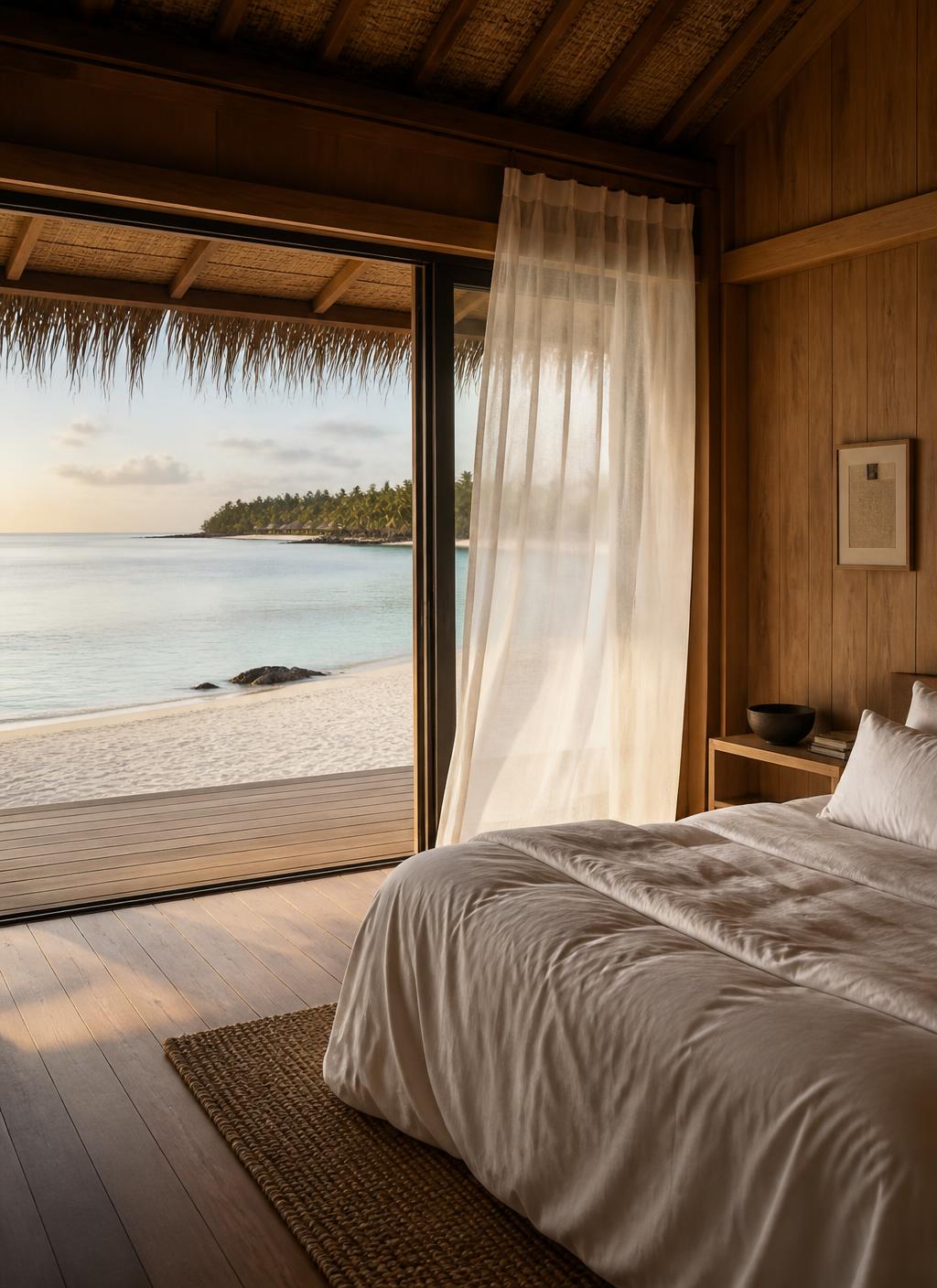
Minimal timber beachfront villa bedroom at first light with white linen, woven matting and open glass doors onto white sand and a pale turquoise Tetiaroa lagoon

No. 01

Waking With The Lagoon

You wake early here without deciding to. The light comes first — pale, low, arriving off the water and moving slowly up the timber wall — and then the birds, hundreds of them somewhere out over the motu, and beneath all of it the sound the lagoon makes against coral sand, which is not quite a wave and not quite silence. The doors were left open. They always are, after the first night. The breeze crosses the room, cool from the ocean side, and the linen is faintly damp with salt. Nothing here requires anything of you. You lie still, and by the time the water has turned from grey to green you have understood that the villa is simply the quietest place from which to watch an island wake.

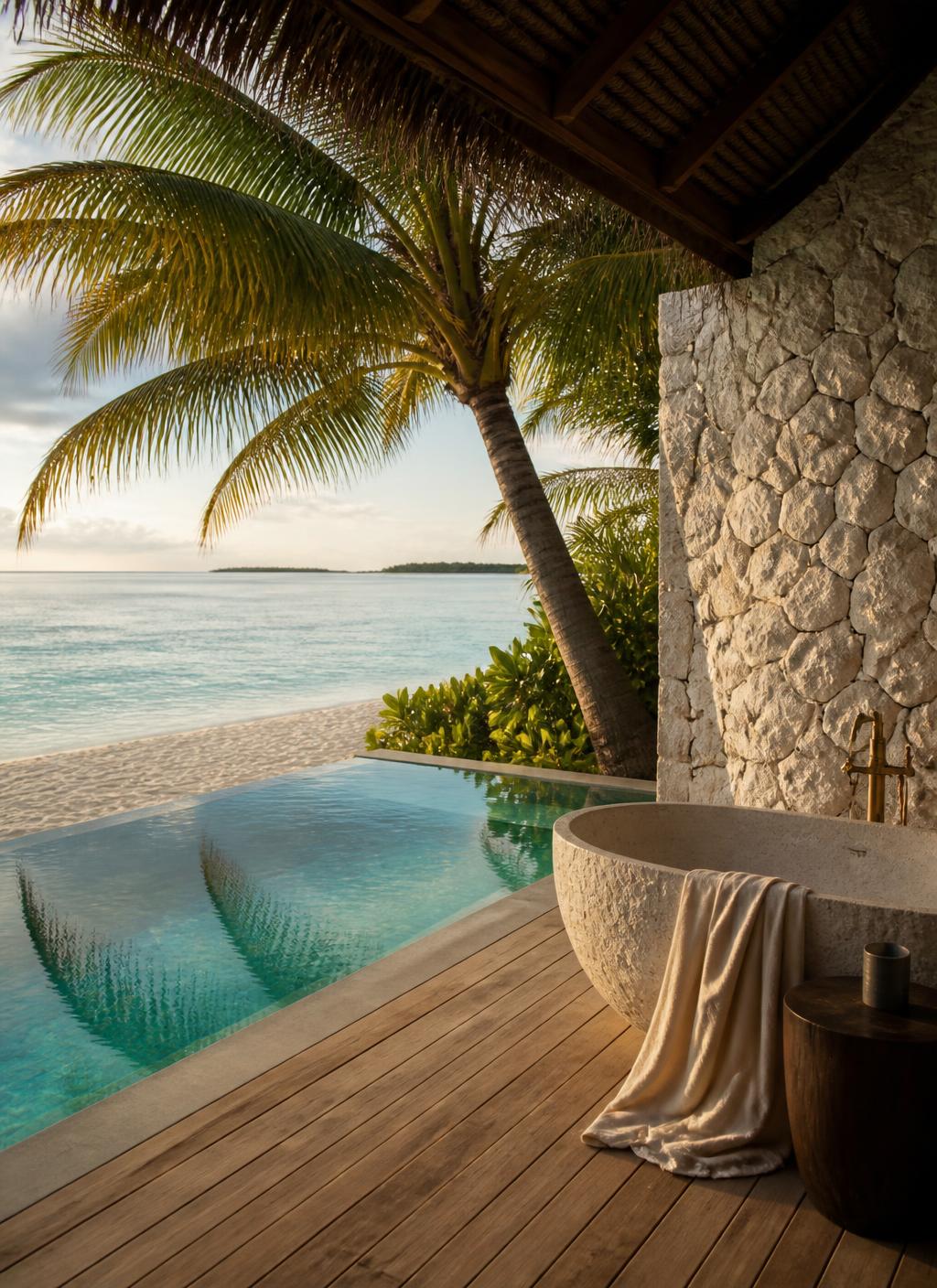
Private infinity plunge pool on a timber deck beside a stone outdoor bathtub, coconut palms and the turquoise South Pacific lagoon of Tetiaroa beyond

No. 02

Warm Water, And The Long Afternoon

By early afternoon the sand outside is too bright to look at directly and the palms have begun their slow, continuous conversation overhead. There is a pool at the edge of the deck and beyond it the lagoon, and the difference between the two is mostly philosophical. You move between them without much intention. Later, an outdoor bath under an open sky, warm water and cool air and the shadow of fronds crossing the stone. A hermit crab conducts its business along the deck. The book you brought stays where you left it. Privacy on Tetiaroa is not an arrangement; it is simply what happens when a house is set among palms on an island the sea keeps to itself.

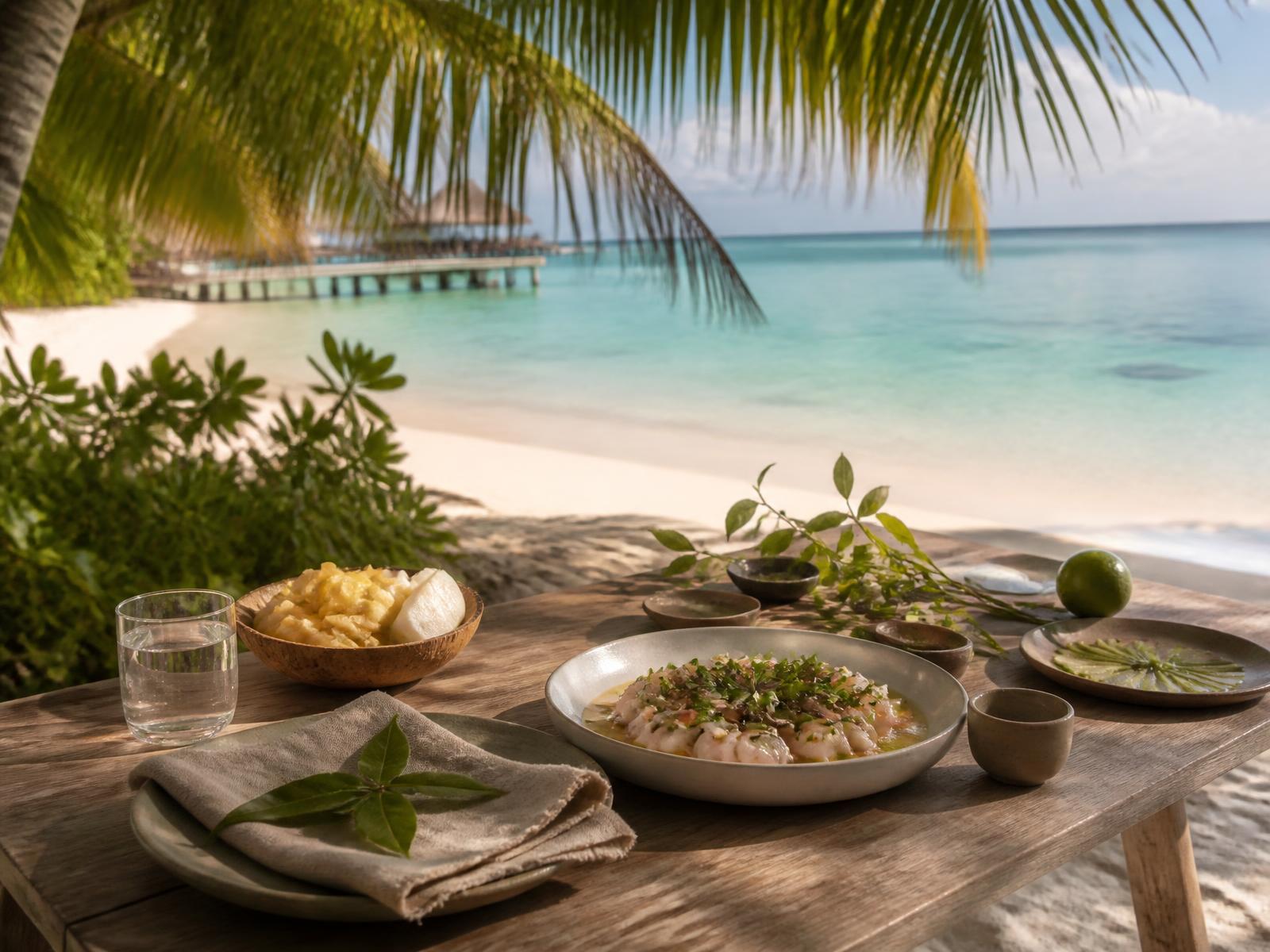
Timber table set on white coral sand at the edge of a turquoise Polynesian lagoon with reef fish crudo, lime, tropical fruit and garden herbs

Dining

Polynesia, cooked within sight of where it came from

Breakfast is fruit that was picked this morning and coffee taken slowly with the lagoon three metres away. Papaya, pineapple, pamplemousse the size of a football and sweeter than it has any right to be. Somebody splits a coconut. The wind moves the tablecloth. Nothing is hurried, because nothing here has anywhere to be.

At the centre of the cooking is the reef and the garden: mahi mahi, tuna, parrot fish brought in that morning; lime, coconut milk, vanilla from Taha'a, basil and chillies and herbs grown on the motu. Poisson cru is made properly here — cold, sharp, unadorned — and it will spoil you for every version of it you eat elsewhere.

French technique runs underneath all of it, discreetly, the way it does across these islands: a sauce that would not be out of place in Paris, arriving on a plate of things caught within a kilometre. Dinner happens late, on the sand, barefoot, in the hour when the lagoon goes bronze and then violet and then black with stars laid across it. Sit longer than the meal requires.

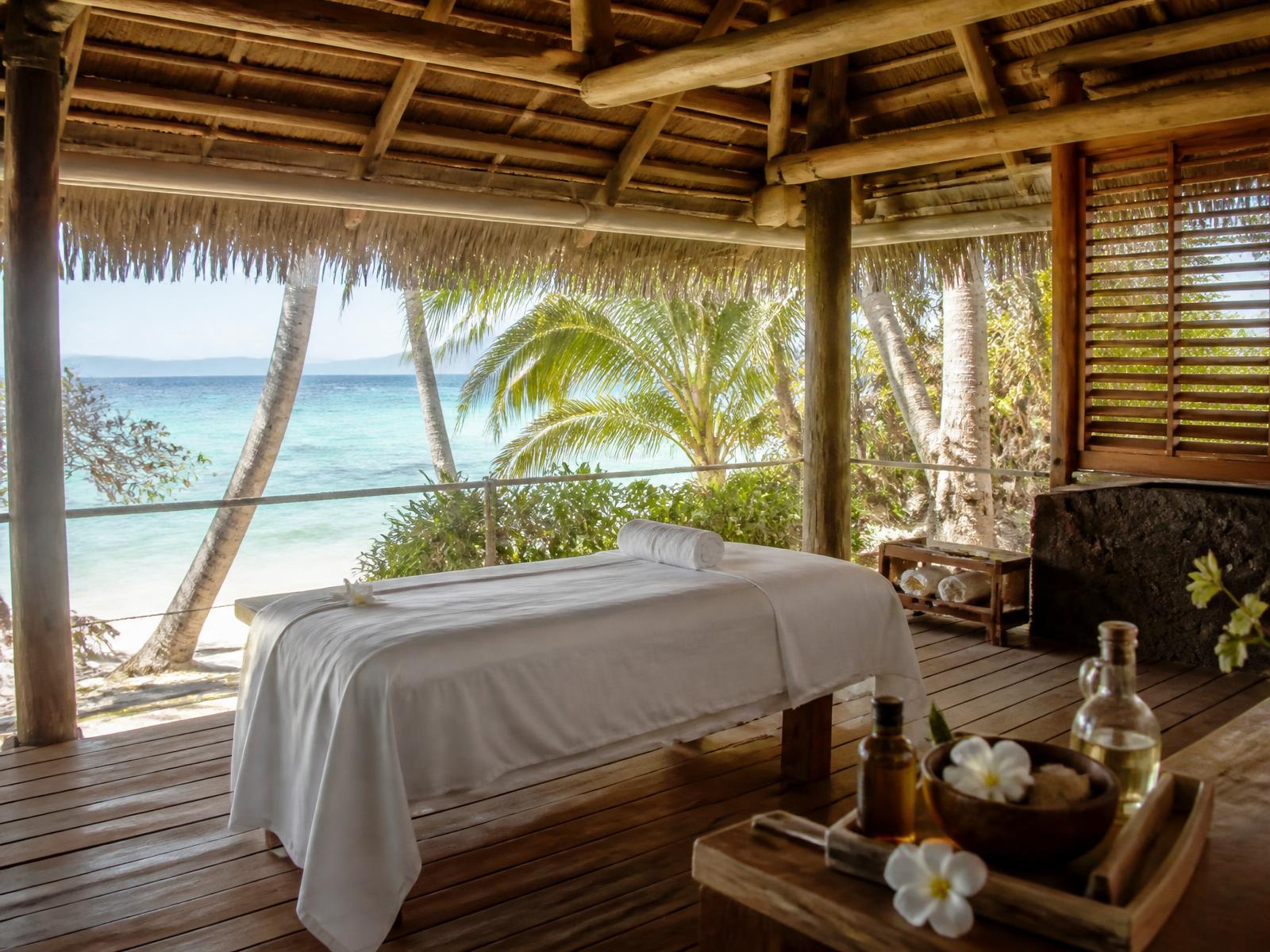
Open-air Polynesian spa pavilion with thatched roof and white linen among coconut palms, overlooking a turquoise lagoon

Wellness

Varua Te Ora, and the sound the lagoon makes

The spa sits back among the palms, a set of open pavilions built low over sand and shallow water, reached along a path where you will meet nobody. Its name means, roughly, the healing of the spirit. The shutters are open. The lagoon is audible from every table, continuously, and after ten minutes you stop hearing it as sound and begin hearing it as time passing slowly.

The rituals are Polynesian and old: taurumi, the traditional massage of these islands, worked with monoï — coconut oil steeped for weeks with tiare flowers — warm stones from the shore, and the long, deliberate pressure of hands that learned this from someone else's hands. Sand and coral and noni from the forest. Nothing imported, nothing perfumed beyond what grows here.

Afterwards there is tea, and no reason at all to move. Meditation happens at dawn on the sand facing east; yoga happens somewhere under the palms if you want it. Both are optional. What actually restores people here is simpler and harder to arrange elsewhere — several consecutive days inside a place with no engine noise, no glow on the horizon and no requirement to be anywhere, until your own pace quietly resets to the tide's.

Signature Experiences

Eight ways into the atoll

They belong to Tetiaroa rather than to the hotel, which is exactly why they matter. One a day is plenty. Some days none at all is better.

  • No. 01

    The lagoon, crossed slowly, early

    A small boat at six, the water still holding the temperature of the night, and twelve motu arranged around a lagoon so shallow in places that the hull seems to be travelling over light rather than water. Cut the engine somewhere in the middle. What follows is the thing people come back for: no horizon line worth trusting, no sound, and every shade of blue that has ever been named.

  • No. 02

    Coral, and the people learning to mend it

    There is quiet scientific work happening on this atoll — reef surveys, coral nurseries, long patient records kept by researchers who live here for months at a time. An afternoon with them is not an activity so much as a correction. You go out expecting to be shown something beautiful and come back understanding how it is held together, which is rarer.

  • No. 03

    Green turtles, on their own terms

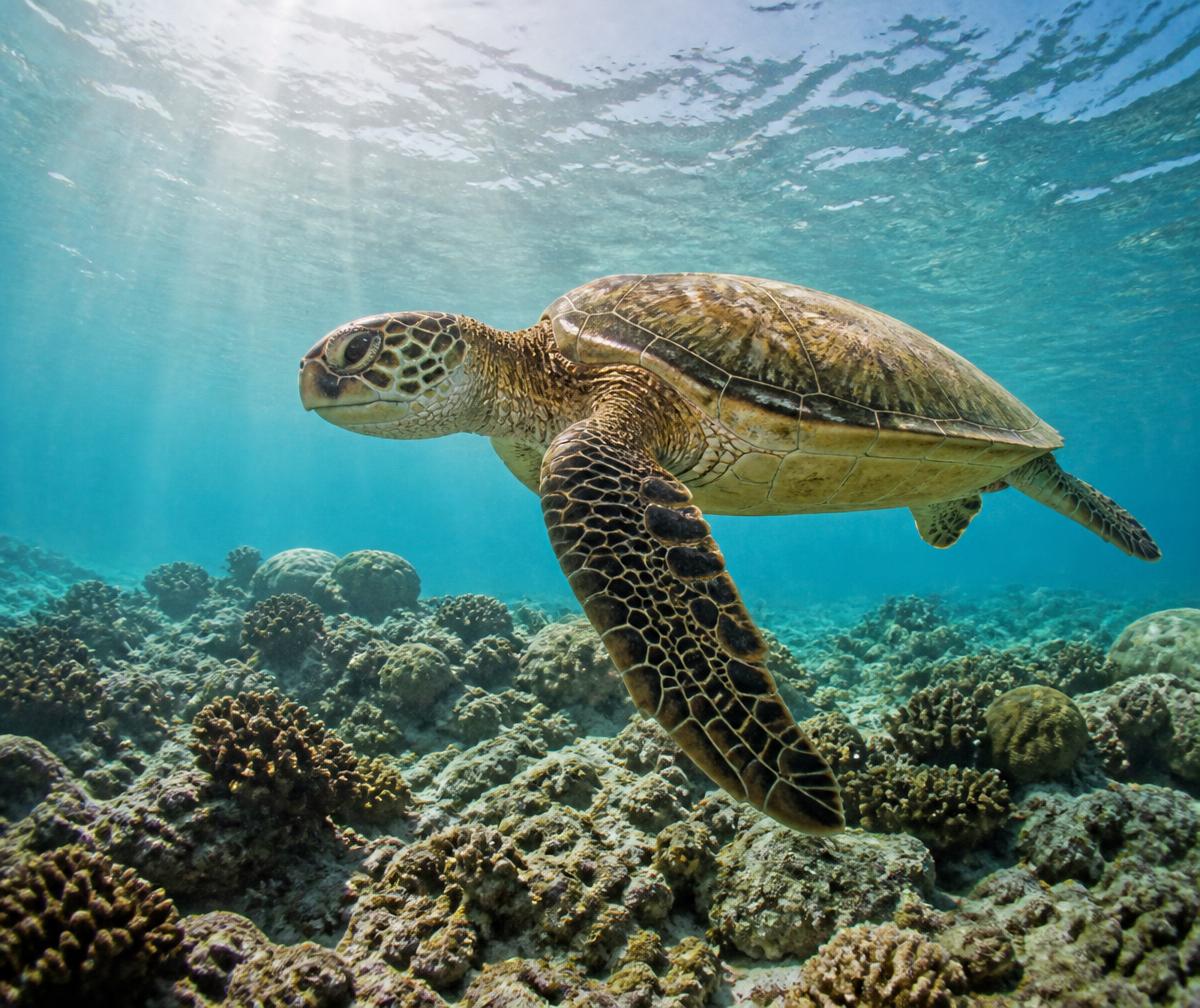
    They come to these beaches as they have for longer than anyone can properly account for. You wait at a distance, without expectation, and sometimes nothing happens. When it does — a shape lifting itself out of the shallows in the last light, a slow deliberate progress up the sand — nobody speaks. It is not a spectacle. It is simply an island doing what it has always done.

  • No. 04

    Birds, in numbers that are hard to describe

    Tahuna Iti and its neighbours hold one of the great seabird colonies of the Pacific: red-footed boobies, frigatebirds, terns, noddies, thousands of them, layered through the low forest. Go at dusk with someone who can name them by flight. The noise is enormous and entirely unlike traffic, and it stays with you.

  • No. 05

    Snorkelling with someone who studies it

    Face down in a metre of water with a marine biologist beside you, learning what a healthy reef actually looks like versus one that is coping. Blacktips in the shallows. Parrotfish grinding coral into the sand you walked on this morning. An hour of this rearranges how you look at every warm sea afterwards.

  • No. 06

    Polynesia, told by Polynesians

    Tetiaroa was the retreat of Tahitian royalty, and its history is not a theme — it belongs to families who still hold it. Weaving, ʻori Tahiti, the old navigation, a chant learned from a grandmother. Listen more than you photograph. The island reads differently afterwards.

  • No. 07

    Sail, without any particular destination

    A catamaran out onto the lagoon in the late afternoon, sail up, engine off, the reef breaking white a kilometre away and the palms turning bronze along the motu. Two hours is plenty. Bring nothing. Watch the light go.

  • No. 08

    The sky, which nobody here has ruined

    There is no glow on this horizon in any direction. Lie on the sand after dinner and wait twenty minutes for your eyes to give up their idea of what dark is. The Southern Cross, the Magellanic Clouds, the Milky Way lying across the whole lagoon and repeated, exactly, in the water.

Maison Voyage Loves

Six small things

  • Walking the beach before sunrise, when the sand is cool and the lagoon has not decided on a colour yet.
  • A coconut split open after breakfast, cold, drunk standing up in the shade.
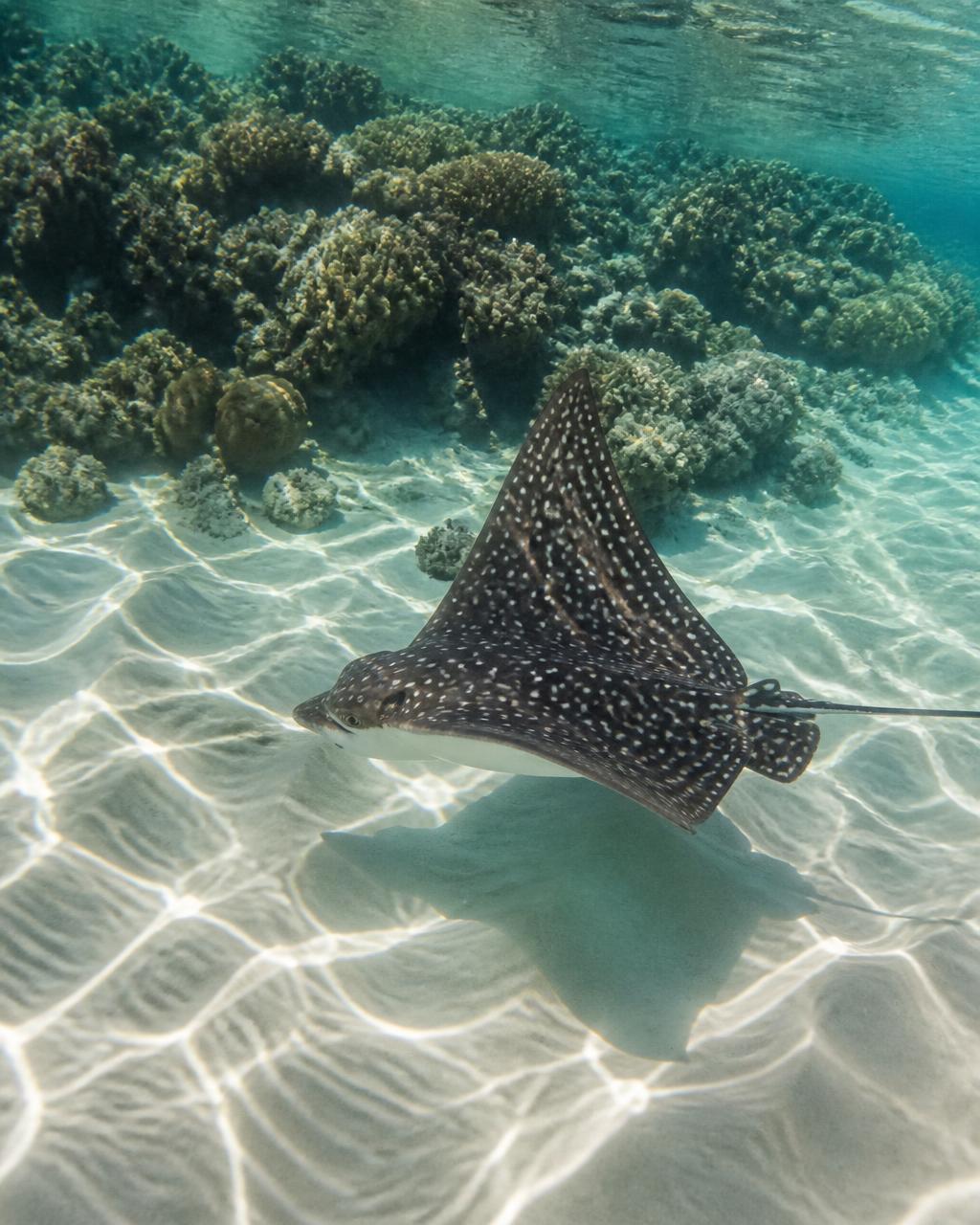
  • Rays gliding through shallow water a few metres out, unhurried, entirely uninterested in you.
  • An hour in which the only sounds are wind in the palms and the reef somewhere behind them.
  • Reading beneath coconut palms in the flat middle of the afternoon and falling asleep over the same page twice.
  • Sunset over the lagoon, and the twenty minutes afterwards that almost nobody stays for.

Who This Place Is For

Travellers who would rather be absorbed than entertained.

It suits people who notice birds, and people who notice water, and the considerable overlap between the two. Slow travellers do well here. So do swimmers, photographers, readers, anyone with a working curiosity about coral or navigation or seabirds, and anyone who has been meaning to spend a week without deciding anything in advance. Couples find it quietly romantic in the way that shared silence usually is — honeymoons and long anniversaries belong here as much as anywhere on earth. Those who care about architecture will find a great deal to look at, most of it by looking at what is not there.

It rewards a certain willingness to be uncomplicated. There is sand in everything. It is hot in the flat middle of the day. Getting here takes a long flight and then a small aircraft, and once you have arrived the atoll is the whole world for as long as you stay. None of that is a shortcoming; it is simply what a remote island is, and pretending otherwise would be the only real failure of taste available here.

It will not suit everyone, and we would rather say so plainly. There is no nightlife. There is no shopping, no gallery, no street. Very little happens after nine in the evening except stars and the sound of the reef. Anyone travelling for entertainment or a list of sights should choose somewhere else — and come to Tetiaroa later, when stillness has started to sound like a good idea.

Nearby Discoveries

What we would tell a friend

Tetiaroa rewards early mornings and long, undecided afternoons. Almost none of this needs to be photographed.

  • No. 01

    The far side of the lagoon, at the top of the tide

    An expedition of no great ambition: a boat, a guide, several hours, and the shallow channels between the motu where the water goes almost white. Take nothing. Get out and stand in it somewhere in the middle.

  • No. 02

    The reef, from the outside

    Beyond the break the floor drops away and the colour changes completely. Deep blue, big pelagic shapes, an entirely different island from the one you have been swimming in. Go once, early, with someone who reads the swell.

  • No. 03

    An afternoon at the research station

    The Tetiaroa Society keeps a working ecostation on the atoll — coral, turtles, seabirds, mosquito ecology, sea-level records. There is nothing polished about it, which is the appeal. Ask questions. They are used to them.

  • No. 04

    The bird motu, at dusk

    Landing is restricted and rightly so; you go with a guide, quietly, and mostly you watch from the water. Thousands of seabirds coming in over low forest as the light fails. Photograph little.

  • No. 05

    The royal history, walked

    Marae stones under the palms, the remains of a place Tahitian nobility came to rest and be still. A short walk and a long conversation, ideally with someone whose family has always known the atoll.

  • No. 06

    A day on Tahiti, before or after

    The market at Papeete at six in the morning, tiare and vanilla and reef fish on ice, then the black sand of the east coast and the valleys inland. Give it a day rather than a connection.

  • No. 07

    Photographing water, which is harder than it looks

    The lagoon defeats most cameras: too bright, too many blues, no reference for scale. Shoot at dawn or in the last hour, from low, with something in the frame that is small. You will keep fewer photographs and like more of them.

A Note from the Editor

Stay seven nights. Cross the lagoon twice. Leave two whole days undecided.

Come between May and October if you want the driest air and the steadiest trade wind, and in the green months if you would rather have the atoll almost to yourself. Spend a morning with the researchers early in your stay rather than late; everything you swim over afterwards will make more sense. And on one of the mornings, get up before light, walk the length of the beach with nothing in your hands, and stand in the water while the sky changes. The villa will still be there when you come back. The island, quietly, is the reason you came.

Ben Trousil, Founding Editor

From the Journal

Continue reading

All stories
  • Aerial view of a remote South Pacific coral atoll with palm-covered motu around a vast turquoise lagoon

    IslandsAugust 2026

    The World's Most Beautiful Private Islands

    Atolls, archipelagos and the small handful of islands where the geography still outranks everything built on it. A slow survey, from the Pacific to the Indian Ocean.

  • A green sea turtle swimming over a healthy coral garden in clear turquoise lagoon water

    NatureJuly 2026

    Luxury And Conservation

    What it actually costs to leave a place better than you found it — coral nurseries, seabird colonies and the quiet science behind the most restrained hotels on earth.

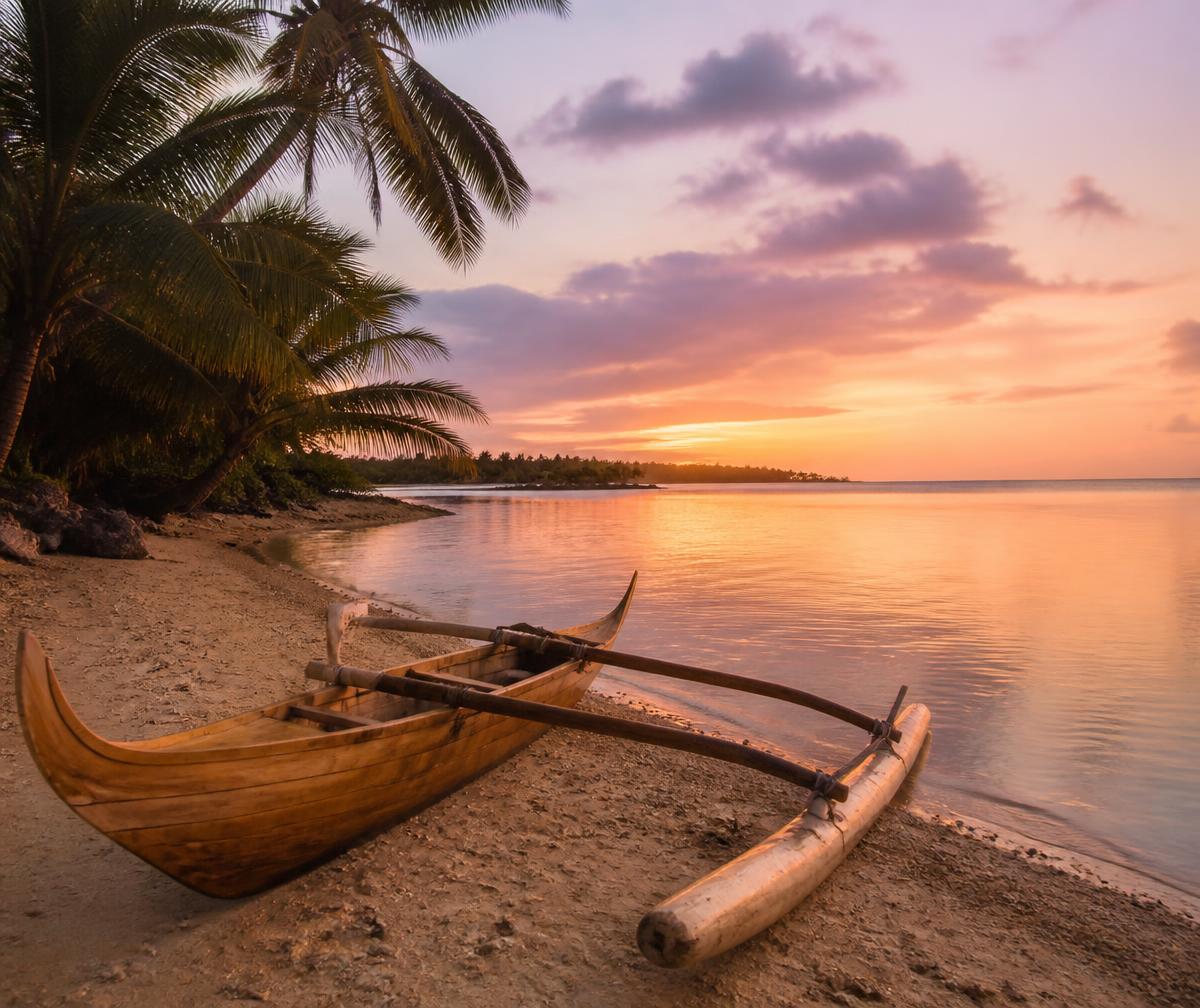
  • A traditional Polynesian outrigger canoe resting on white sand beside a calm lagoon at dusk

    DestinationsJune 2026

    French Polynesia Beyond Bora Bora

    One hundred and eighteen islands, five archipelagos and a culture that has been reading the ocean for three thousand years. An argument for going further than the postcard.

Eine persönliche Anfrage

Let's Curate Your Polynesian Journey

If the lagoon has begun to sound like your next journey, we would be glad to arrange it personally — the atoll, the archipelagos around it, and the long, slow days in between.

A night or two on Tahiti before the crossing, the small aircraft north to Tetiaroa, mornings with the marine biologists, a private sail across the lagoon, exceptional diving in the Tuamotu, a yacht through the Society Islands afterwards — shaped entirely around the way you actually travel.

Warum über Maison Voyage buchen?

  • Persönliche Luxusreiseberatung
  • Sorgfältig kuratierte Hotelempfehlungen
  • Maßgeschneiderte Reisepläne
  • Exklusive Partnervorteile, wo immer verfügbar
  • Persönlicher Ansprechpartner von Anfang bis Ende

Es entsteht keine Buchung und keine Kosten. Wir beginnen einfach ein Gespräch.

Eine Einladung

Die Reise fortsetzen

Ein Brief jeden Monat: ein Ort, den Umweg wert, ein Objekt, das Bewahren wert, eine Seite, langsam zu lesen wert. Nicht mehr.