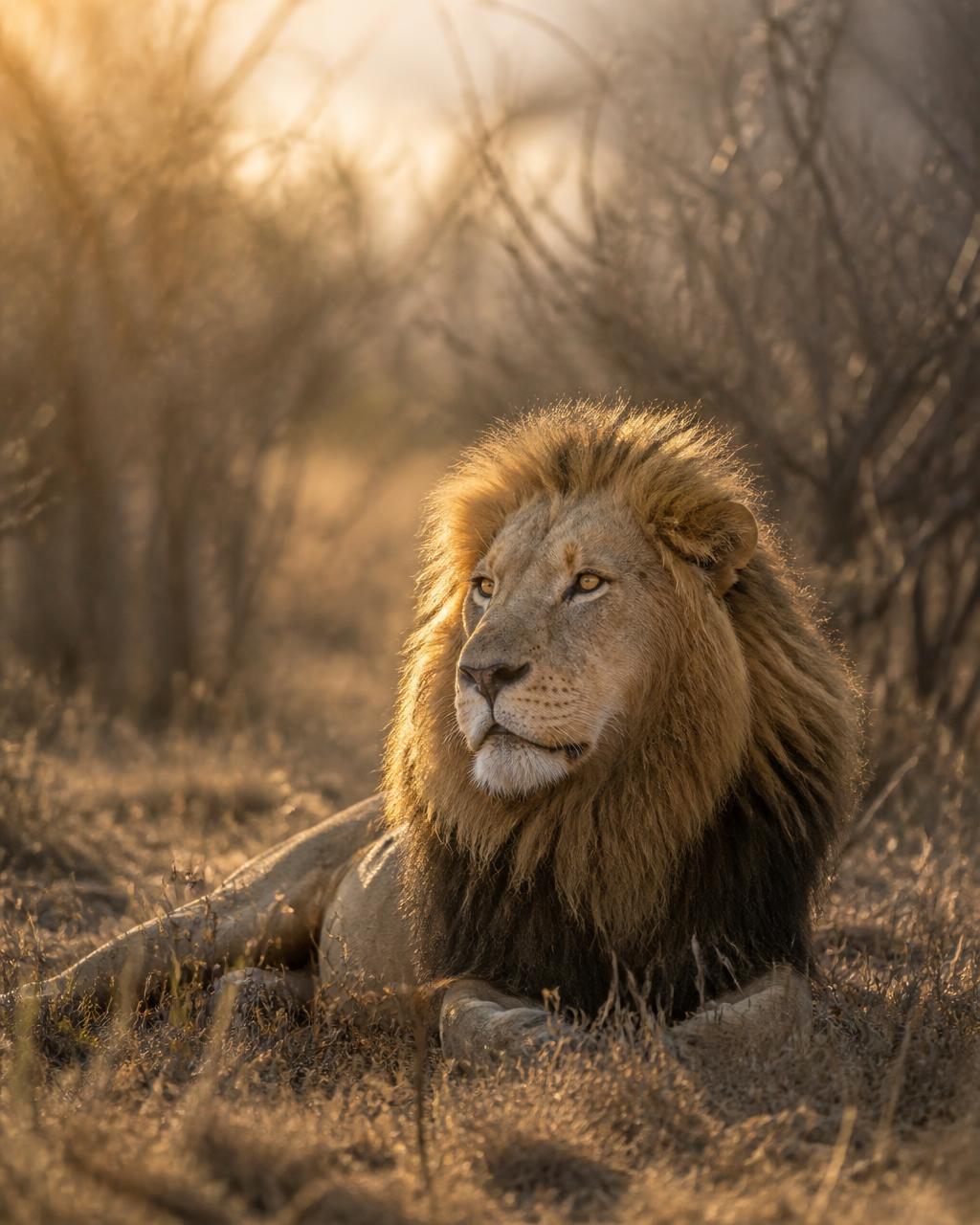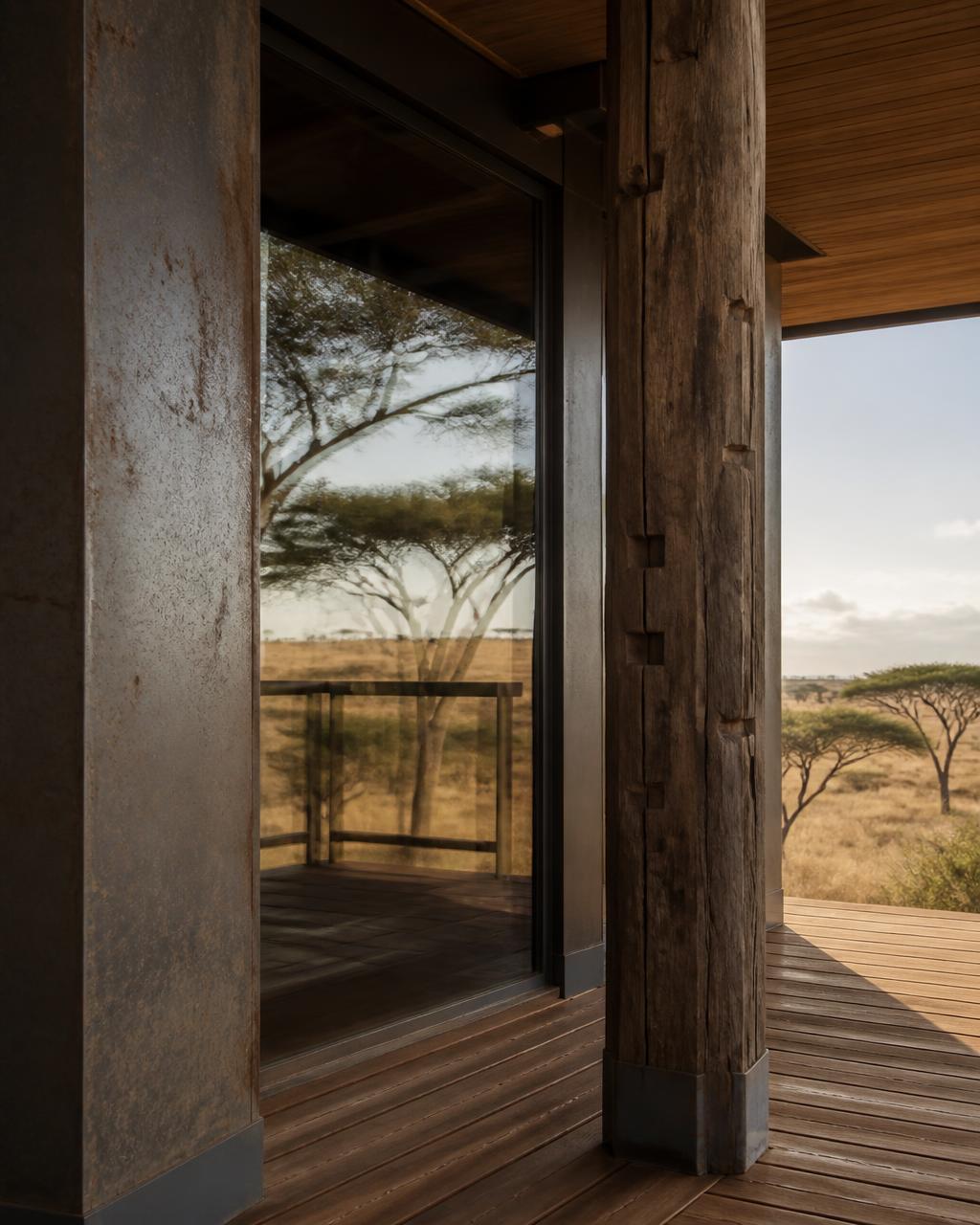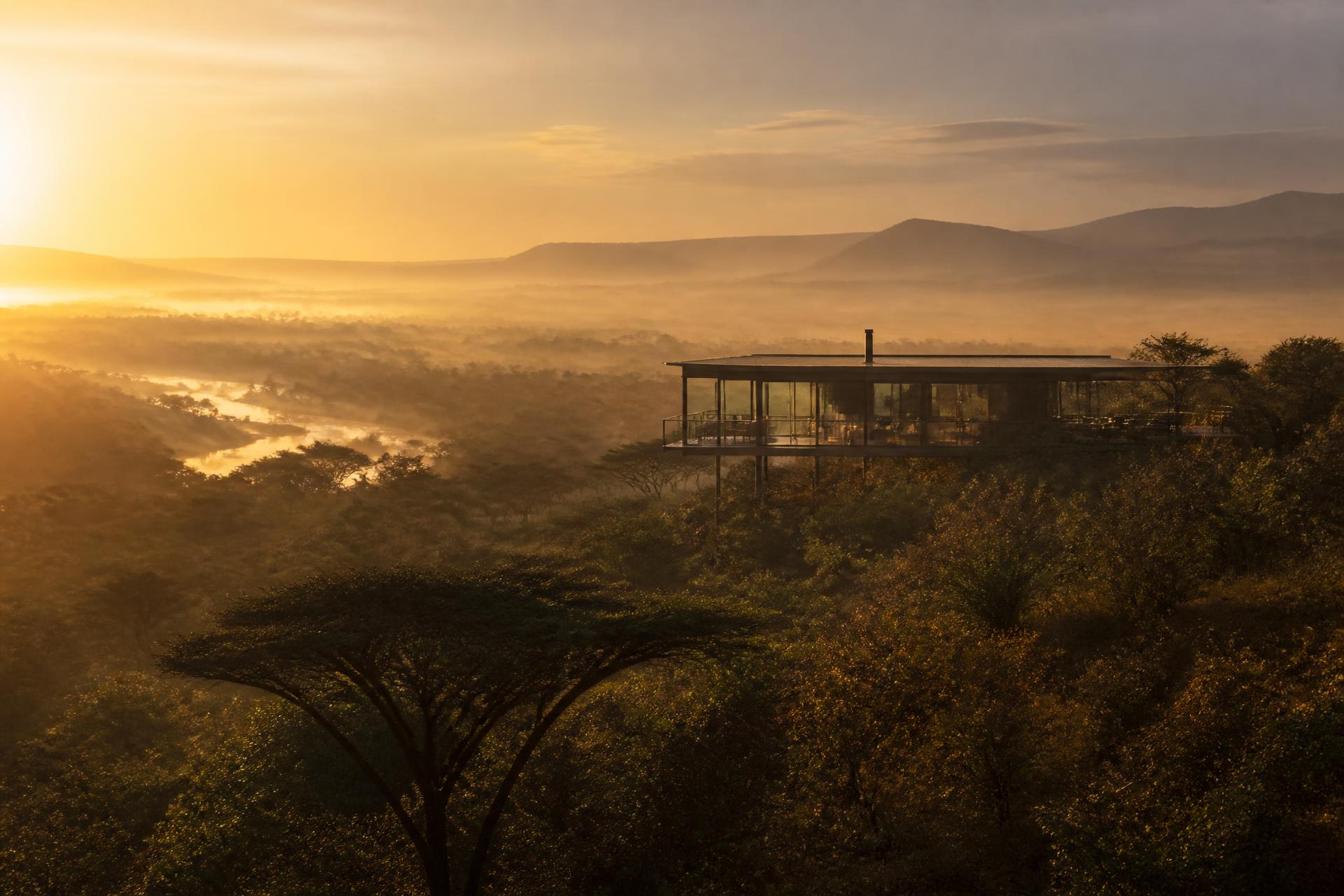
Golden sunrise over the Lebombo Mountains in Kruger National Park with mist rising from the N'wanetsi river valley, acacia trees in silhouette and a glass lodge suspended above the escarpment

Lebombo Mountains — Kruger National Park, South Africa

Where The Wilderness Writes The Story

Suspended above the rugged landscapes of South Africa's Kruger National Park, Singita Lebombo Lodge offers one of the world's most extraordinary safari experiences, where visionary architecture and conservation exist in complete harmony.

An Introduction

The gate closes behind the vehicle, and the noise of the world simply stops.

The road into the concession is red and loose and thoroughly unhurried. Dust rises behind you and hangs there, catching the light, taking a long time to settle because there is no wind and nothing else moving. The grass on either side is the colour of dry straw and taller than it looks. Thorn trees. A dead leadwood, pale as bone. The driver does not talk much, which turns out to be the correct way to begin.

The first giraffe appears without ceremony, standing in the road as if it had been told to expect you, and then walking off in that slow underwater way that never looks quite plausible. Nobody says anything. The engine ticks. Somewhere above, invisible, a fish eagle calls twice — the sound that people who love this continent hear in their sleep afterwards.

And then the silence. Not an absence, but a thickness: insects, a distant dove, the click of cooling metal, and beneath all of it a low, wide quiet that has been here considerably longer than any of us. It takes most people about ten minutes to stop filling it with conversation.

The lodge arrives late in the sentence, which is exactly right. Glass and steel on a ridge above the N'wanetsi, low and lean and dark against the ridge line, arranged so that the river valley comes straight through the building without being interrupted. You walk in and there is nothing between you and the wilderness. No lobby to cross, no view to be led towards. Just the escarpment, the river below, and the whole eastern half of Kruger going on for as far as the light allows.

Singita was built around one idea, and it is not hospitality. Protect the wilderness first — the land, the animals, the people who live at its edge — and let everything else follow from that. The suites, the fires, the wine, the long slow breakfasts: all of it exists downstream of a decision made about conservation, and it is that order of priority, more than any material, that you can feel in the building.

Africa is the protagonist here; it was before anyone came and it will be afterwards. The wildlife is the story. The lodge, understanding this perfectly, offers only the privilege of witnessing it.

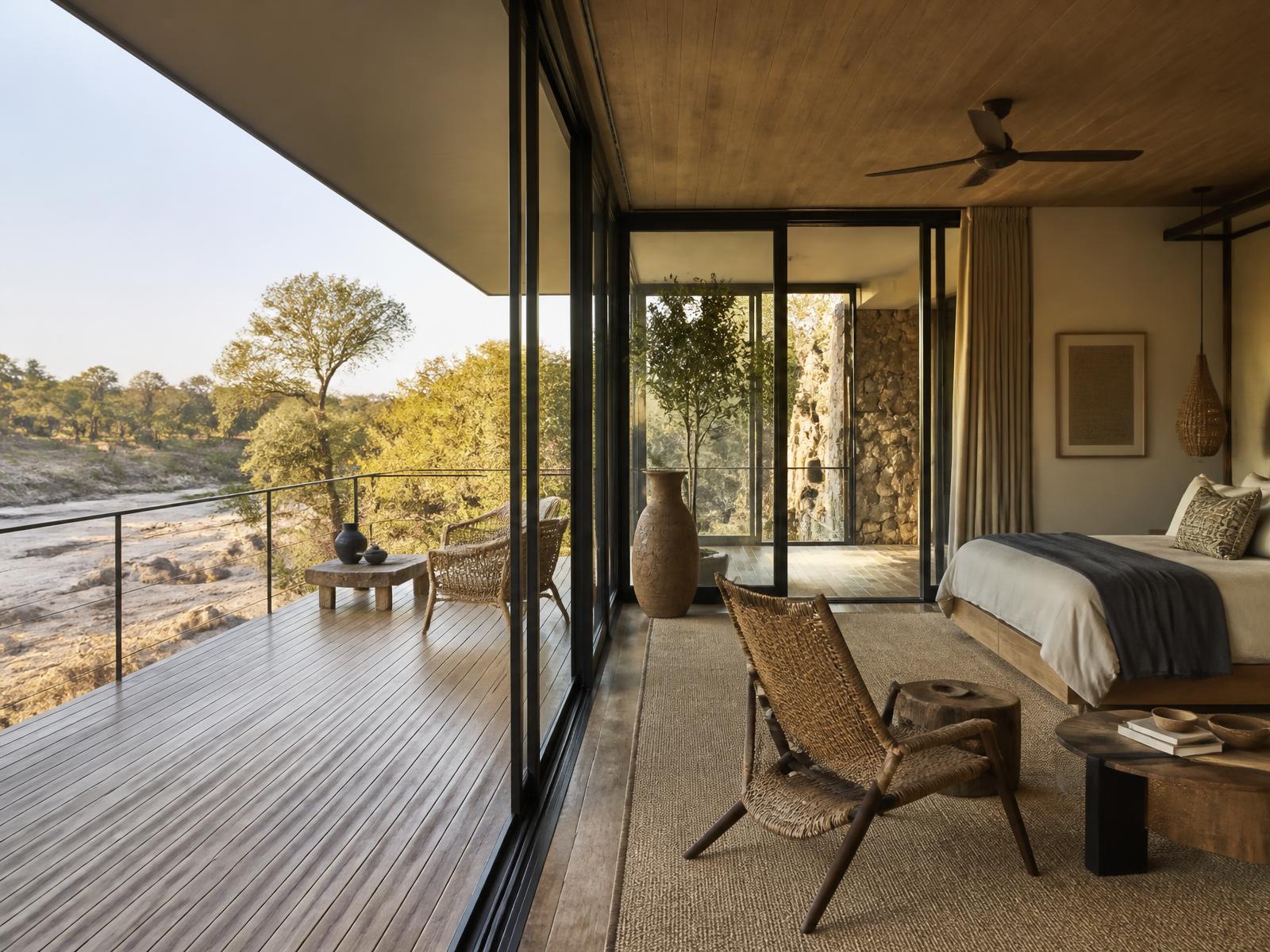
Contemporary safari suite with floor-to-ceiling glass walls, slender steel frame, natural timber decking cantilevered over a dry riverbed and woven African craft objects

Architecture & Design

A building that agrees to disappear

Glass on every side, held in a frame of slender steel, standing on legs above the slope so that the ground beneath continues uninterrupted. From the riverbed below it reads as shadow and branch rather than architecture. From inside it barely reads at all: you are simply sitting in the bush, at a comfortable height, with a roof.

The materials are few and honest. Weathered steel that has gone the colour of the soil. Timber left to grey. Stone gathered here. Woven grass, hand-thrown clay, beadwork and basketry made by people whose families have made them for generations — placed sparingly, never as decoration. Earth tones throughout, because nothing in this landscape is any other colour.

Living happens half outdoors: open decks, a fire that is lit every evening whether or not anyone asks, shade that moves through the afternoon. Nothing competes. The most expensive thing here is the restraint — the decision, made again and again, to build less so that the grass, the river and the ridge remain the only things anyone looks at.

The Suites

Glass, timber, and the bush left entirely alone

There is nothing worth listing. What matters is the first light on the ridge, and how long you stay on the deck afterwards.

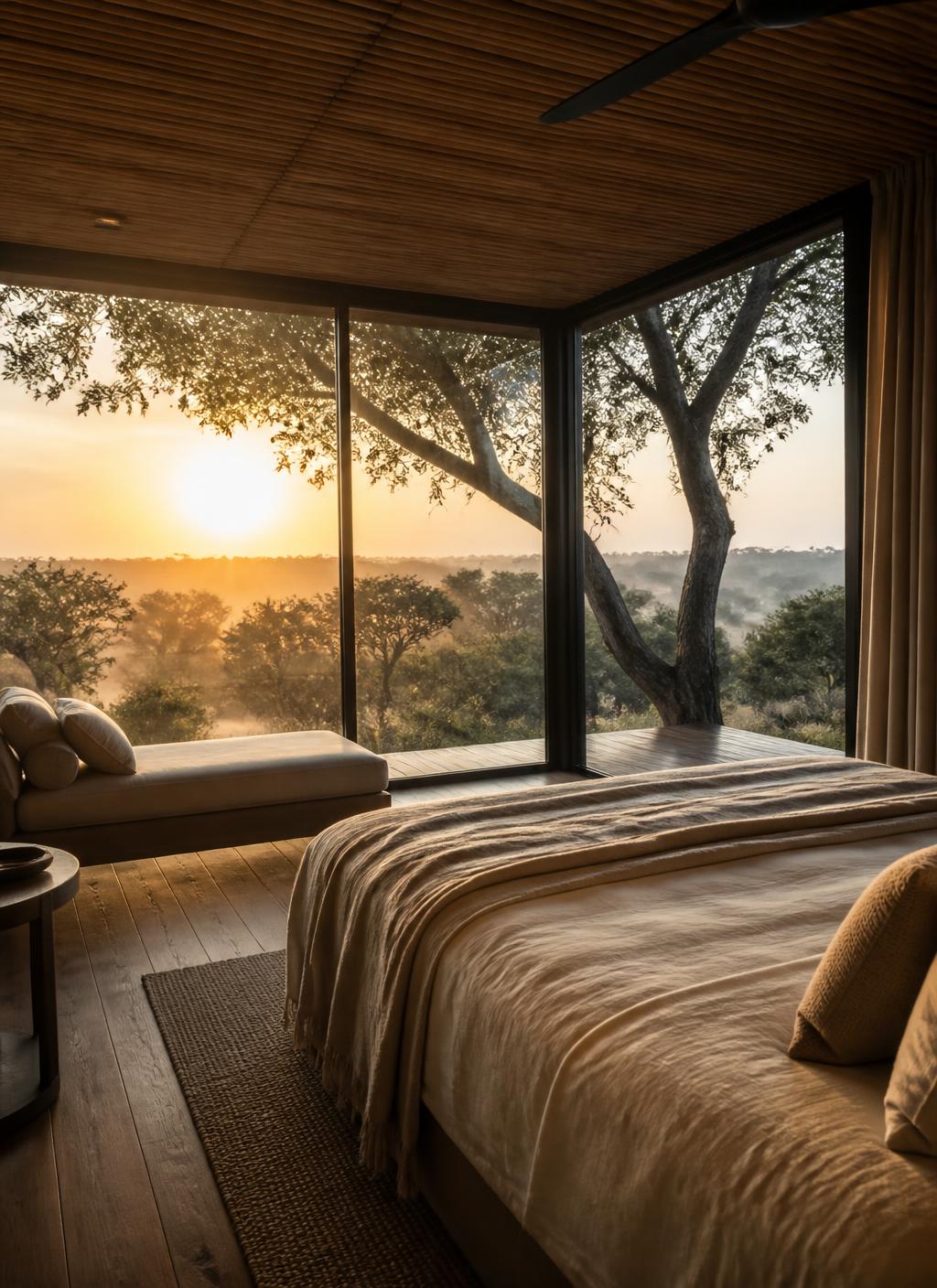
Bedroom of a glass-walled safari suite at sunrise, natural linen bedding, warm timber floor and floor-to-ceiling glass framing misted Kruger bush

No. 01

Waking Before The Light Has Decided Anything

Something wakes you and it is not an alarm. A francolin, perhaps, or the particular quality of grey that arrives half an hour before the sun. The glass runs from the floor to the ceiling on three sides, so there is no moment of remembering where you are — the bush is simply there, still colourless, holding its shapes loosely. Then the light comes up over the Lebombo ridge and the whole valley acquires detail: the pale grass, the dark line of the river, the dust already lifting somewhere to the east. You lie still under linen that is cool and slightly rough, and you do not reach for anything. Far off, an animal calls once. The morning belongs to it, not to you, and that is the whole pleasure of it.

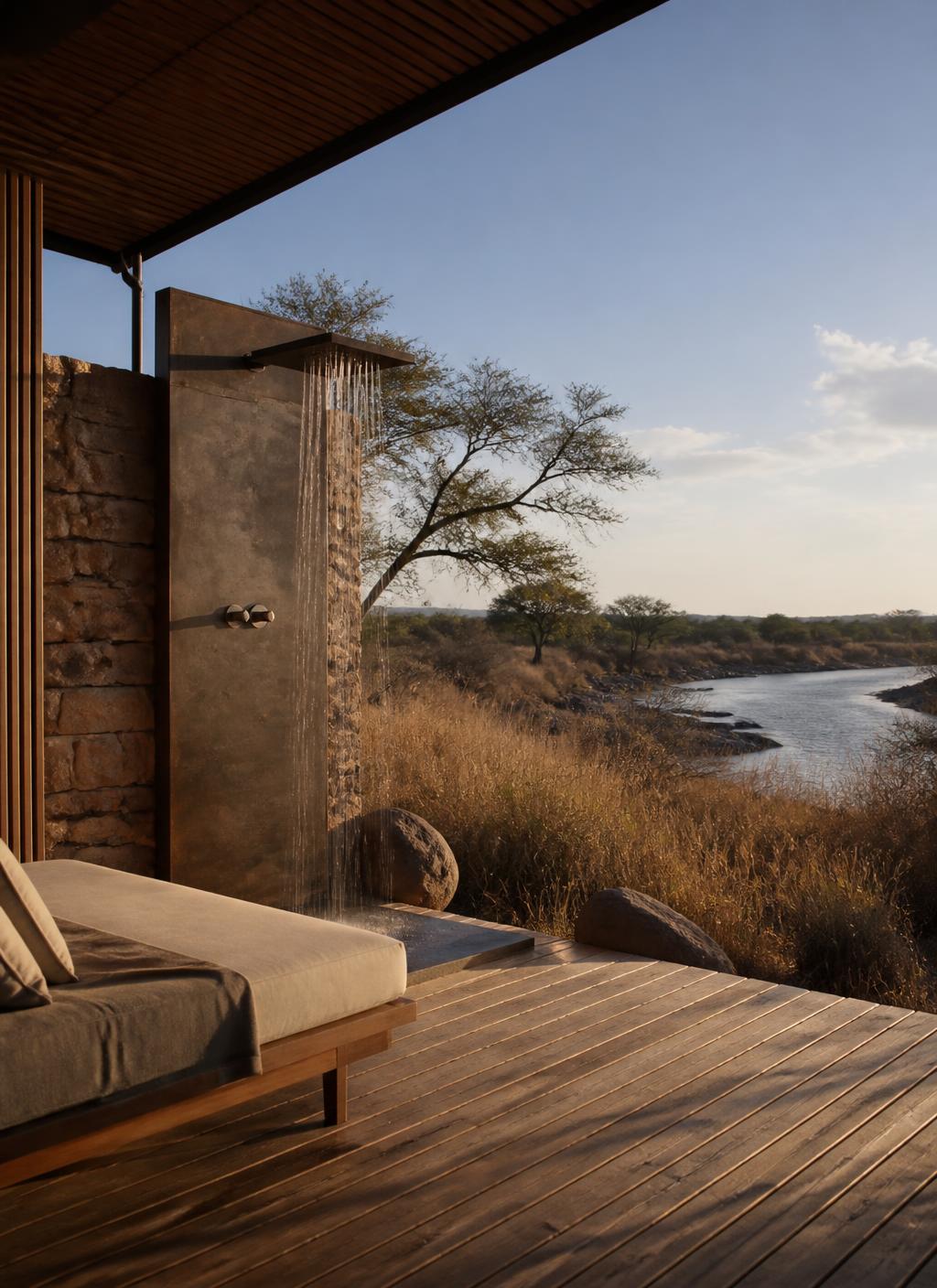
Private timber deck of a safari suite in late afternoon with a linen daybed, an outdoor shower of weathered steel and stone, dry golden grass and a river bend beyond

No. 02

The Deck, In The Long Gold Of The Afternoon

By four the heat has softened and the deck has become the only room worth being in. A daybed, an outdoor shower running warm over stone, a view down to the river bend where the sand is white and the water is thin. Nothing happens for a long time. Then something does — a kudu, a hornbill, elephants moving through the reeds with a sound like rain on canvas — and you realise you have been watching without thinking about watching for the better part of an hour. There is no schedule here that the animals have agreed to. What the room gives you is the timber, the shade, the stillness and the patience to wait.

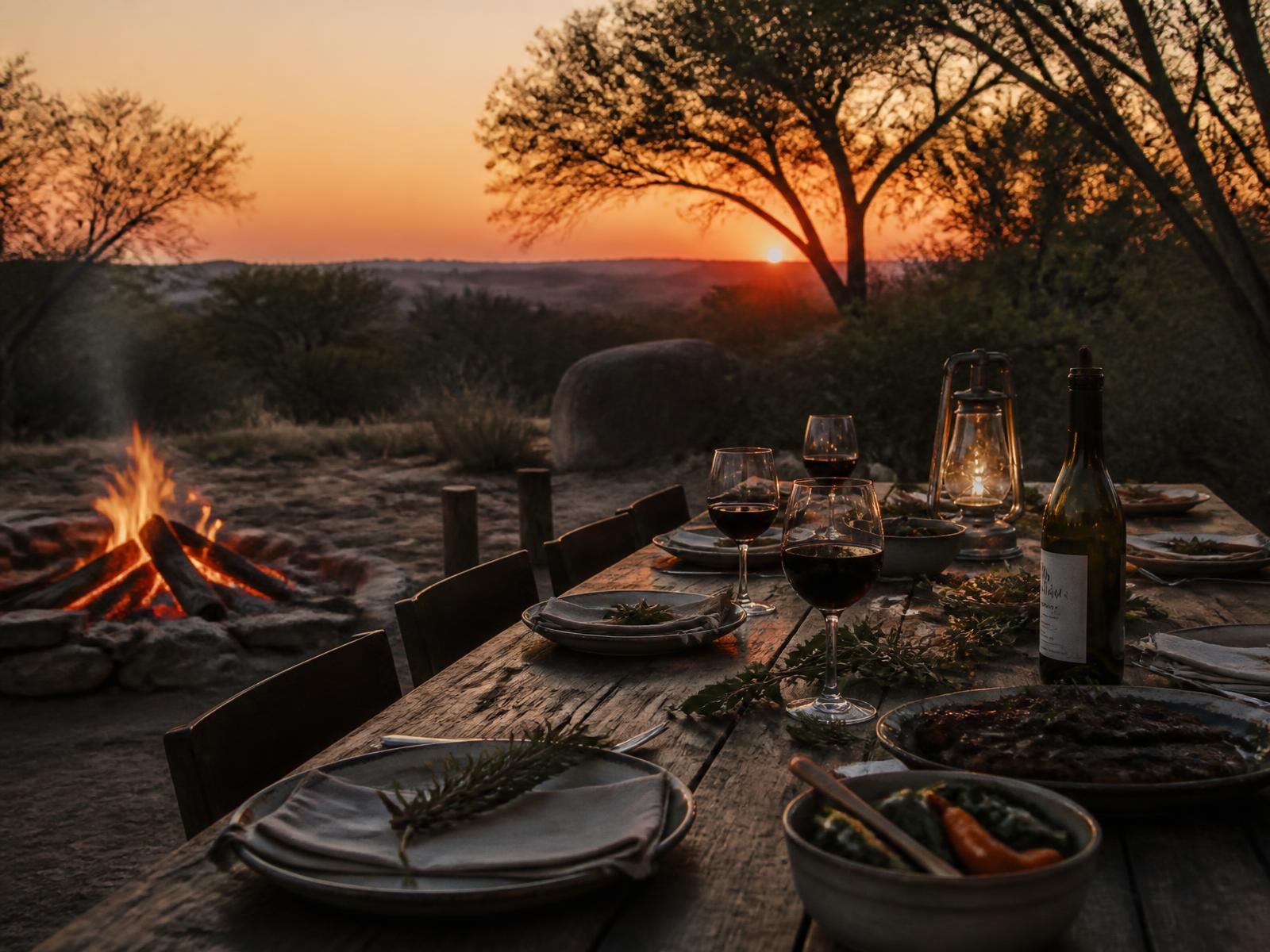
A long timber table set outdoors beside an open fire at dusk in the African bush with simple ceramics, fresh herbs, lanterns and South African wine

Dining

Fire, herbs, and the long breakfast afterwards

Breakfast comes back with you from the drive and lasts most of the morning. Eggs, warm bread, granadilla and paw-paw, coffee poured three times, everyone slightly dusty and still talking about the same twenty minutes at the river. The heat builds while you sit. Nobody clears anything early.

What is cooked here comes largely from the ground nearby: vegetables and herbs cut that morning, slow-braised meat, coals rather than flame, chakalaka and mealie and the plain, deeply satisfying food of this part of the country. The South African cellar underneath does the rest — Cape granite Syrah, old-vine Chenin, wine that tastes of a landscape only a few hours' flight away.

Dinner tends to happen outdoors, in a boma of thorn branches, around a fire that everyone eventually turns their chair towards. The talking gets quieter as the night goes on. At some point a hyena, or a lion a long way off, and the whole table stops for a moment and then carries on. Sit longer than the meal requires. There is nowhere in this concession that you need to be.

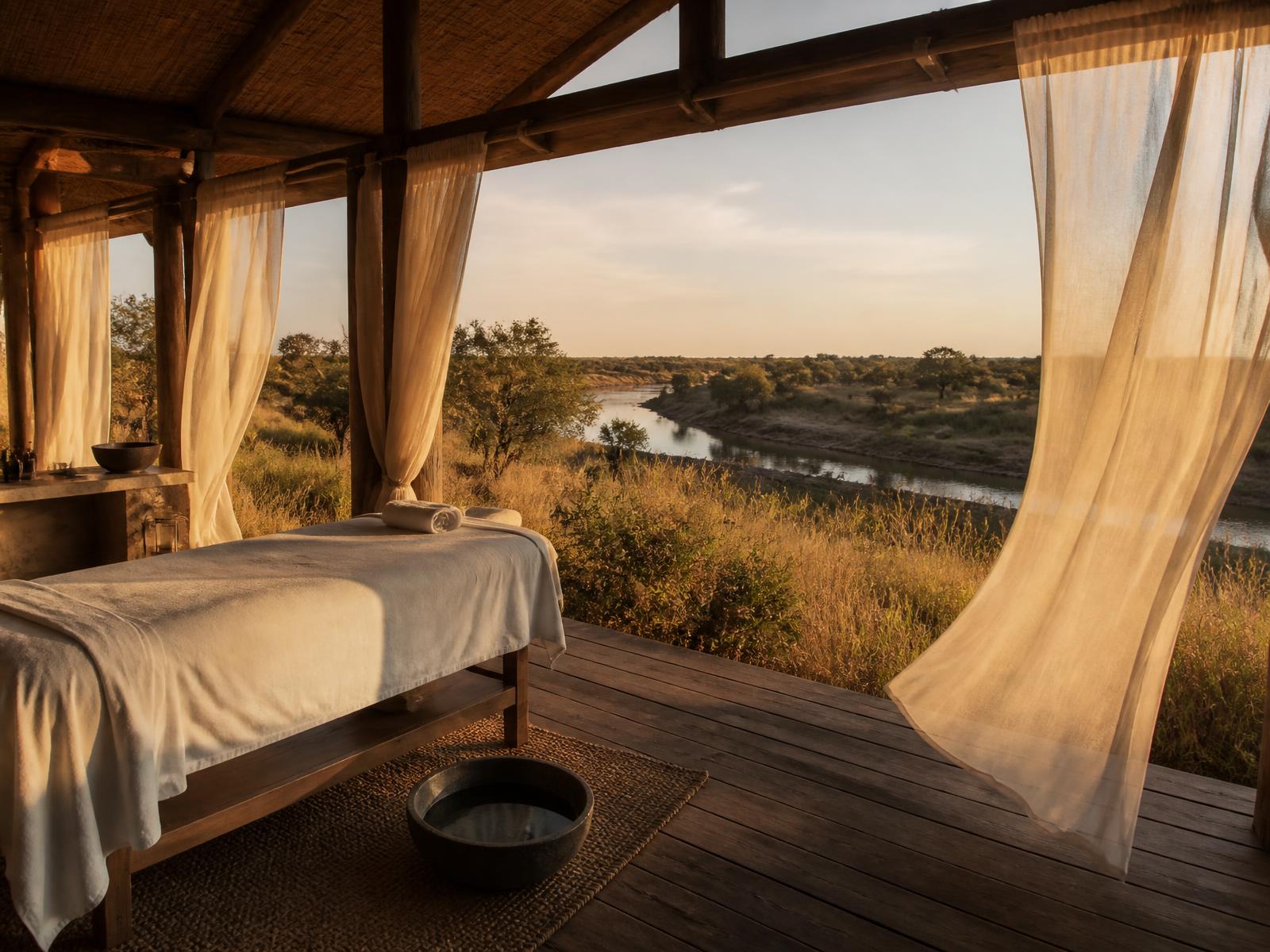
Open-air safari spa pavilion with timber deck, linen curtains moving in the wind, a simple massage bed and a view over golden savannah and a river

Wellness

Rest, arranged around the animals' hours

The middle of a safari day is empty by design, and the spa sits in the gap: an open pavilion of timber and stone, linen lifting in the warm wind, the grass going on beyond the deck with nothing in it. Oils of marula and African potato. Warm stones. Hands that are unhurried in the way of people who were taught this rather than trained in it.

Yoga happens on a deck facing east if you want it, early, when the light is still low and the birds are doing most of the work. Otherwise there is a shaded room of books, a chair, and the entirely legitimate option of doing nothing at all between eleven and four.

What actually restores people here is harder to arrange elsewhere: rising in the dark, spending five hours outdoors, sleeping in the afternoon because the body insists on it, and going to bed early because the sky is black and the day started at half past four. By the third morning you are keeping the animals' hours, and sleeping better than you have in a year.

Signature Experiences

Eight ways to meet the wilderness

None of it is arranged for effect. The animals were keeping these hours long before anyone thought to watch them.

  • No. 01

    The first drive, before the sun clears the ridge

    Coffee in the dark, a blanket over the knees, and a vehicle moving slowly along a track still cold from the night. Nothing is promised. What you get is the bush waking in order — birds first, then impala, then the dust of something larger further out. By the time the sun is properly up you have stopped hoping for anything in particular, which is the exact condition in which the best mornings happen.

  • No. 02

    Walking, which changes the proportions of everything

    On foot the wilderness stops being a view and becomes a place you are standing in. A guide ahead, a tracker beside him, single file, very little talking. You learn to read the ground: a print filling with sand, a broken stem, dung still warm. Nothing dramatic needs to happen. The heart rate tells you the truth about where you are long before the mind does.

  • No. 03

    A morning given entirely to photography

    Low light, a beanbag on the door frame, an unhurried driver who will wait forty minutes for an animal to lift its head. The discipline is in staying rather than moving on. Most of the frames worth keeping come from the last ten minutes, after everyone else has grown restless.

  • No. 04

    An hour with the rhino monitoring team

    No spectacle, no staging. A conversation in the field with the people who count, track and protect these animals, and who can tell you exactly what the last decade has cost. It is sobering and quietly hopeful in equal measure, and it recalibrates everything you see for the rest of the week.

  • No. 05

    The southern sky, undamaged

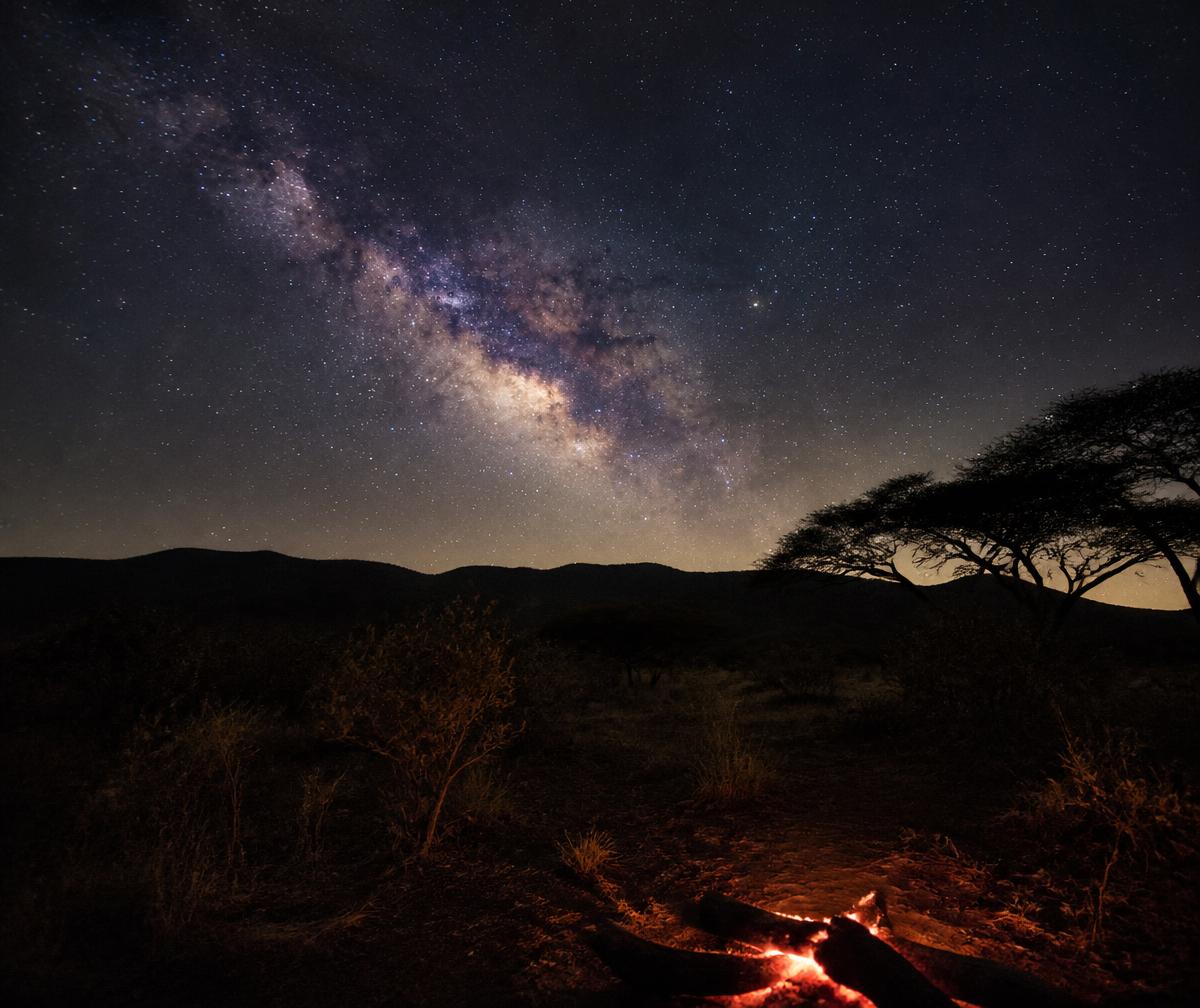
    There is no town within reach of this horizon. Lie back after dinner, give your eyes their twenty minutes, and the Milky Way arrives overhead with a density that seems almost implausible. The Southern Cross, the Magellanic Clouds, a satellite crossing. Nobody stays out long enough. Stay out longer.

  • No. 06

    Breakfast in the riverbed

    A table set on white sand under a fig tree, eggs cooked over coals, a jug of coffee, the vehicle parked at a respectful distance. The bank above you is where the elephants come down. You eat slowly with one eye on the treeline, which is the correct way to eat breakfast in Africa.

  • No. 07

    An hour underground, among the wine

    A cool cellar cut into the earth, several thousand South African bottles, and someone who can explain Stellenbosch, Swartland and the Hemel-en-Aarde without ceremony. Taste four things, learn what granite does to Syrah, and come back up into the heat slightly better informed.

  • No. 08

    The last light, from the escarpment

    A short drive up onto the ridge, the vehicle switched off, the whole concession laid out below in grass and thorn and the thin bright thread of the N'wanetsi. The light goes quickly at this latitude. Stay for the twenty minutes afterwards, when the rock keeps its warmth and the first calls start somewhere in the dark.

Nearby Discoveries

What we would tell a friend

The Kruger rewards early starts and long, unhurried afternoons. Almost none of this needs to be photographed.

  • No. 01

    The wider Kruger, taken slowly

    Two million hectares, of which the private concession is a very small and very quiet corner. A day driving east and south changes the scale of the thing entirely — mopane, granite koppies, sand rivers, and the understanding that the animals are not held anywhere.

  • No. 02

    The river, read as a system

    The N'wanetsi is not always a river. In the dry months it is a chain of pools, and everything alive is organised around them. Spend a morning sitting above one and watch the order of arrival. It explains more about this landscape than a week of driving.

  • No. 03

    Birds, once you begin

    Over five hundred species here, and the ones that convert people are rarely the rare ones — a roller on a bare branch, hornbills arguing, a fish eagle calling across the valley at eleven in the morning. Borrow the binoculars. It is a habit that does not leave.

  • No. 04

    The conservation work itself

    Anti-poaching, rhino protection, habitat recovery, the long unglamorous arithmetic of keeping land wild. Ask to see it rather than to hear about it. The scale of what is required is not obvious from a vehicle.

  • No. 05

    The communities beyond the fence

    The villages on the concession's edge are the reason any of this endures — schools, training kitchens, nurseries, employment that makes wilderness worth more standing than cleared. Go with someone who lives there, and go to listen.

  • No. 06

    The Lebombo ridge on foot

    The hills that give the lodge its name run north into Mozambique, low and ancient and volcanic. Walk a section of them early, before the heat, when the grass is still wet and the whole valley below is under mist.

Maison Voyage Loves

Six small things

  • Coffee taken standing in the dark at half past four, with the vehicle idling and nobody yet awake enough to speak.
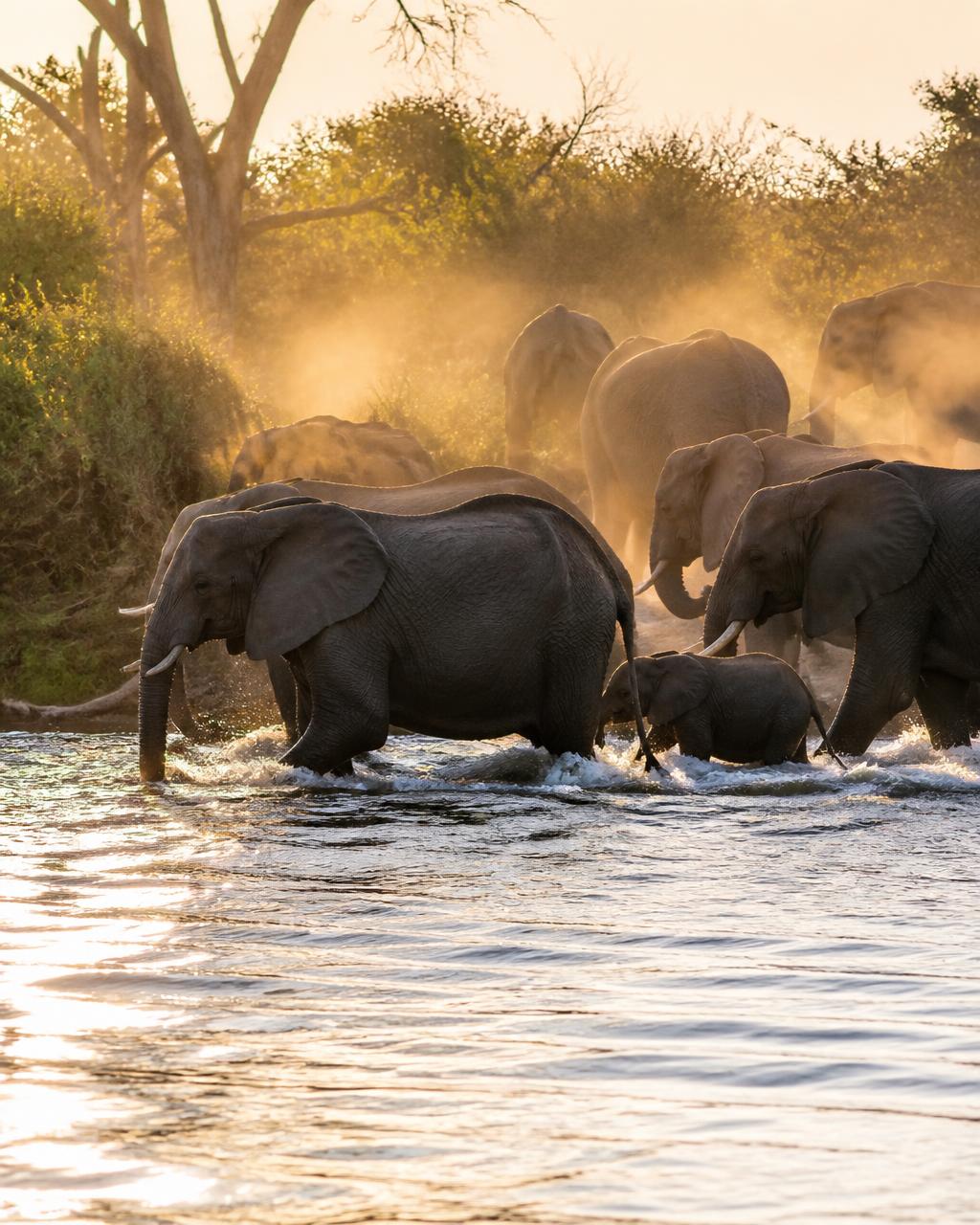
  • Elephants crossing the river below the deck, unhurried, the young ones last, the sound of it carrying up the slope.
  • The smell of rain arriving on dry earth — ten minutes before the rain, and better than the rain.
  • Lions calling somewhere beyond the river after dark, and lying still in the glass room listening to them work out where each other are.
  • The five minutes before the first drive, when the engine is off and the whole bush is deciding whether to begin.
  • A glass of Cape Syrah beside the fire, dust still on your hands, saying almost nothing.

Who This Place Is For

Travellers who would rather be humbled than entertained.

It suits people who care about wildlife for its own sake, who will happily spend forty minutes with one animal, and who find the architecture of restraint more interesting than the architecture of display. Photographers do very well here. So do people who came for the animals and leave preoccupied with conservation.

It suits families with children old enough to be quiet, and honeymooners who would rather share silence than a crowd. It suits writers, painters and anyone whose work has gone stale; there is something about five days of open horizon and no signal that loosens things.

It will disappoint anyone looking for shopping, nightlife or a city. There is none of that, in any direction, for a very long way. There is dust, grass, stone, water, birdsong, fire and an enormous amount of sky — and the animals, who were here first and will decide how your week goes.

A Note from the Editor

Come in the dry months. Stay five nights. Walk at least once.

May to September is when the grass is low and the animals come to the water; the light in August is the best of the year. Give one morning entirely to walking and one afternoon entirely to sitting above a pool doing nothing. And on the last night, stay out after the fire has gone down, let your eyes adjust, and listen for the lions on the far side of the river. The lodge will still be there in the morning. Africa, quietly, is the reason you came.

Ben Trousil, Founding Editor

From the Journal

Continue reading

All stories
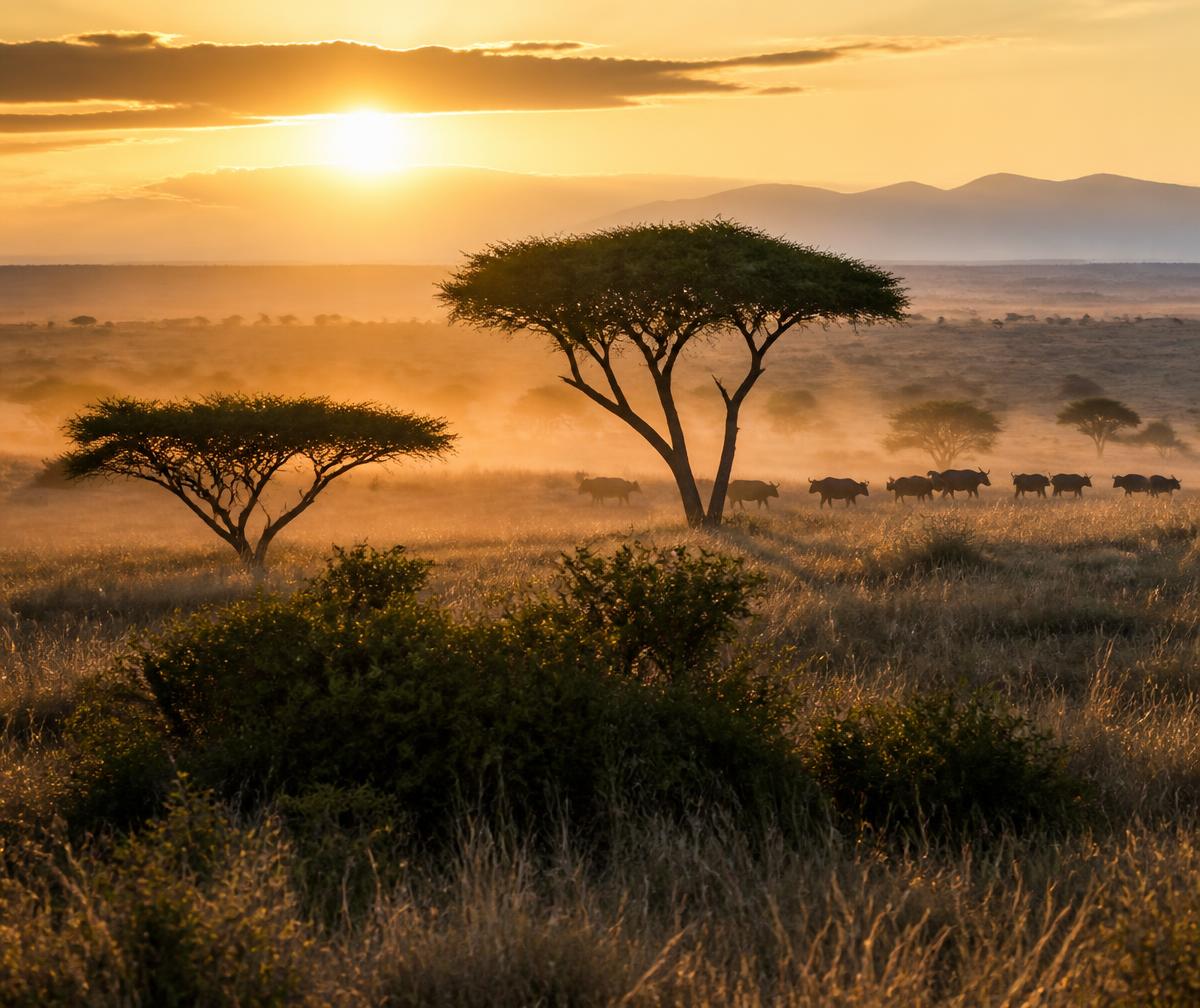
  • Open savannah at dawn with mist, flat-topped acacia trees and a distant herd of buffalo in golden light

    Slow TravelAugust 2026

    The Art Of Slow Safari

    Against the checklist. On staying with one animal for an hour, and why the fifth morning is always the one people remember.

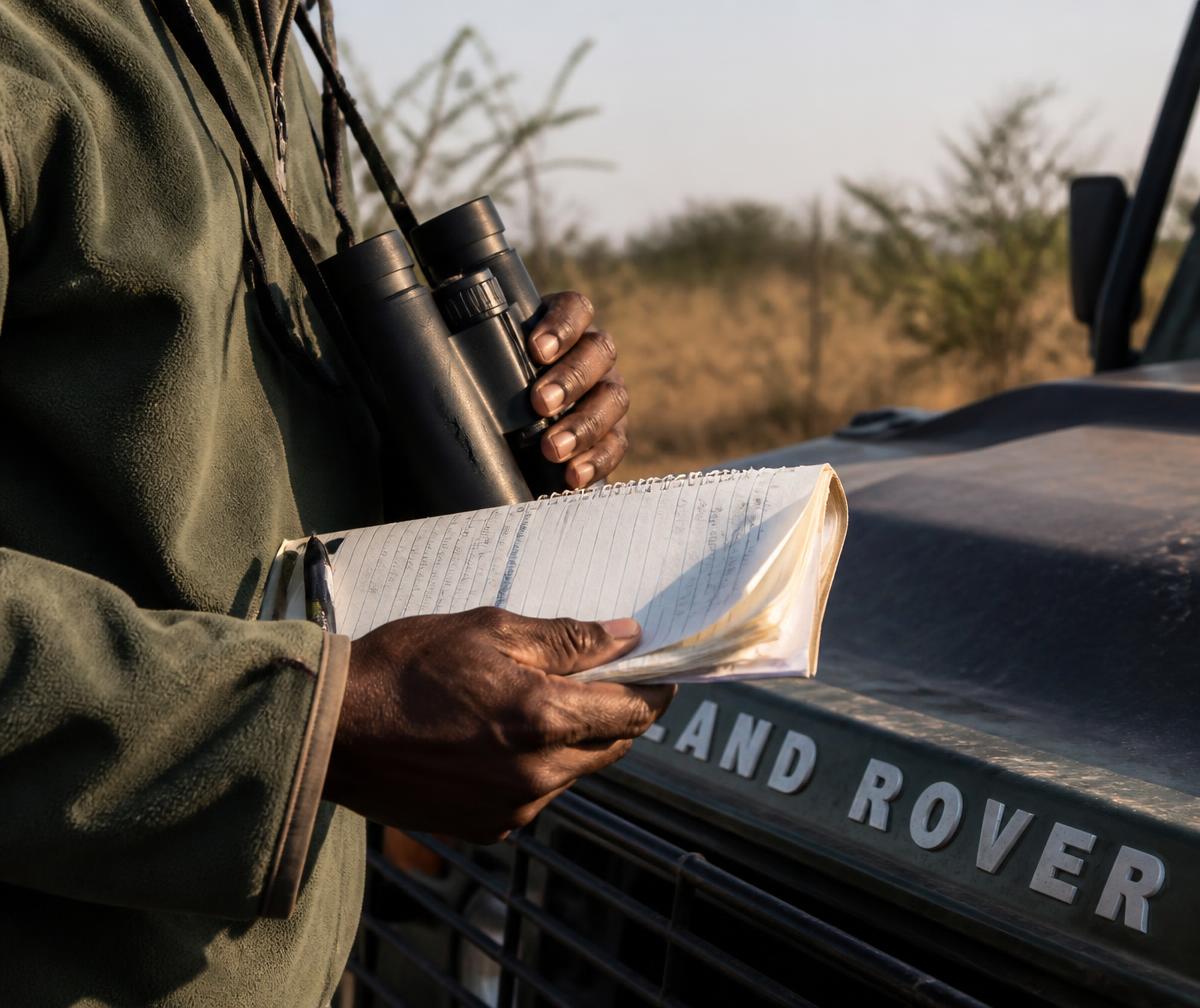
  • The hands of a field ranger holding a notebook and binoculars beside a Land Rover bonnet in the African bush

    ConservationJuly 2026

    The Future Of Conservation Travel

    Who owns the land, who is employed, and what happens in the low season. The questions worth asking before any safari is booked.

  • The Milky Way over the silhouetted Lebombo hills and acacia trees with a faint campfire glow in the foreground

    LandscapesJune 2026

    Walking Through The Kruger Wilderness

    On foot, at dawn, in single file. How the oldest way of moving through Africa rearranges everything you thought you had seen.

Eine persönliche Anfrage

Let's Curate Your African Journey

If the Kruger has begun to sound like your next journey, we would be glad to arrange it personally — the wilderness first, and everything else shaped around it.

A few nights in the Singita concession, the Cape and its wine estates afterwards, a slow week along the Garden Route, Victoria Falls at the end of the dry season, or a second camp in Botswana or the Serengeti — planned around the animals' seasons and the way you actually travel.

Warum über Maison Voyage buchen?

  • Persönliche Luxusreiseberatung
  • Sorgfältig kuratierte Hotelempfehlungen
  • Maßgeschneiderte Reisepläne
  • Exklusive Partnervorteile, wo immer verfügbar
  • Persönlicher Ansprechpartner von Anfang bis Ende

Es entsteht keine Buchung und keine Kosten. Wir beginnen einfach ein Gespräch.

Eine Einladung

Die Reise fortsetzen

Ein Brief jeden Monat: ein Ort, den Umweg wert, ein Objekt, das Bewahren wert, eine Seite, langsam zu lesen wert. Nicht mehr.