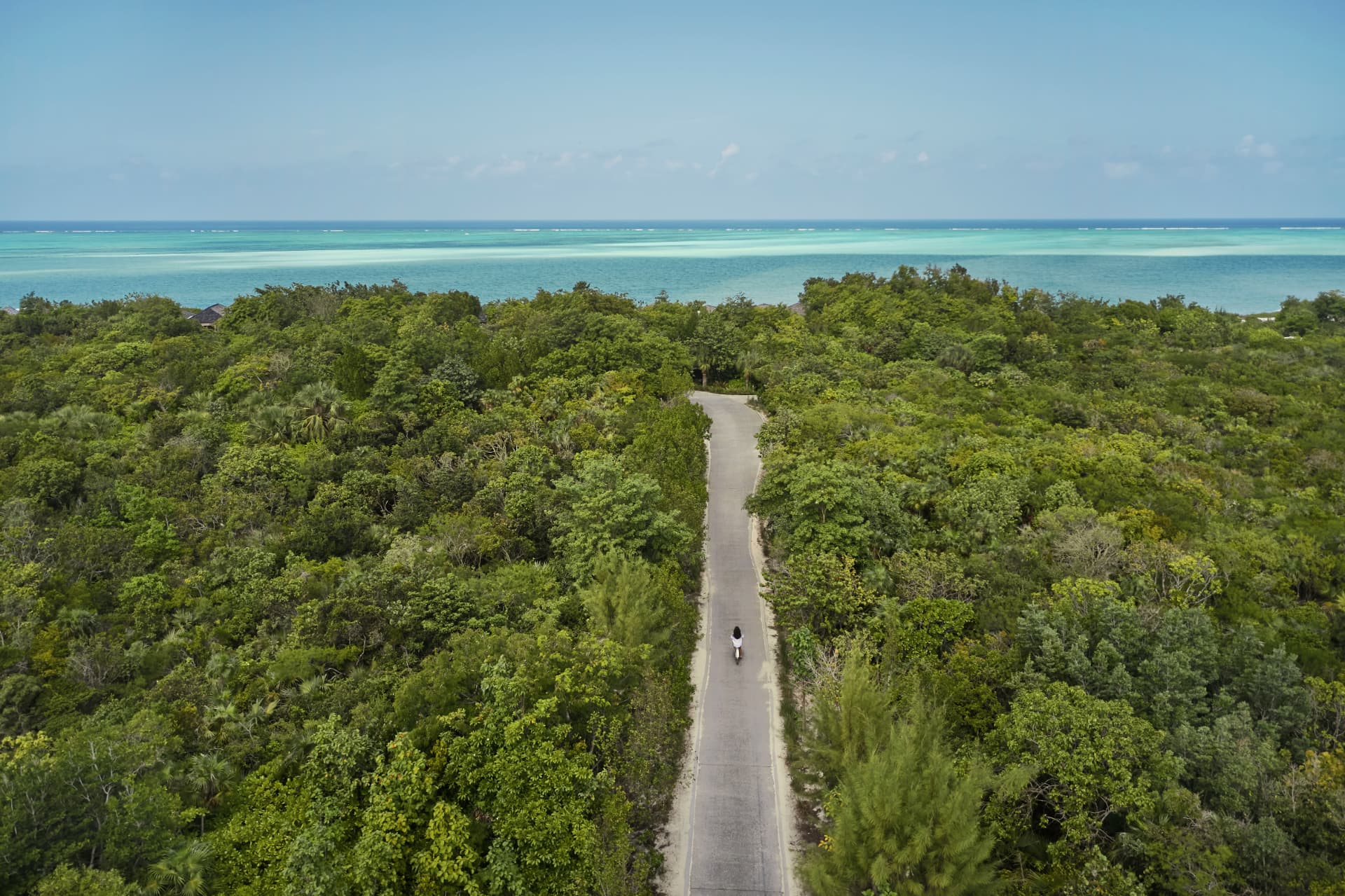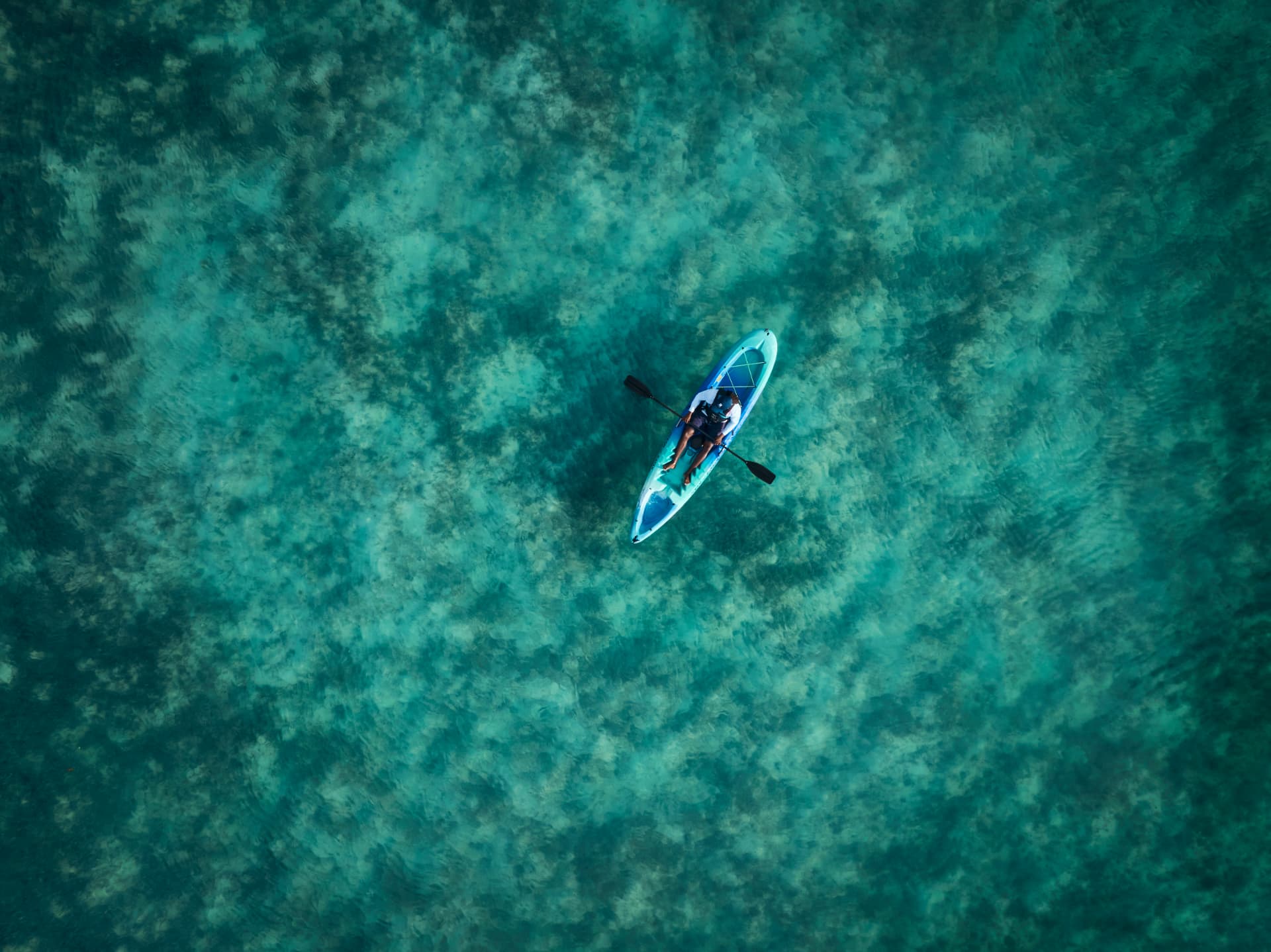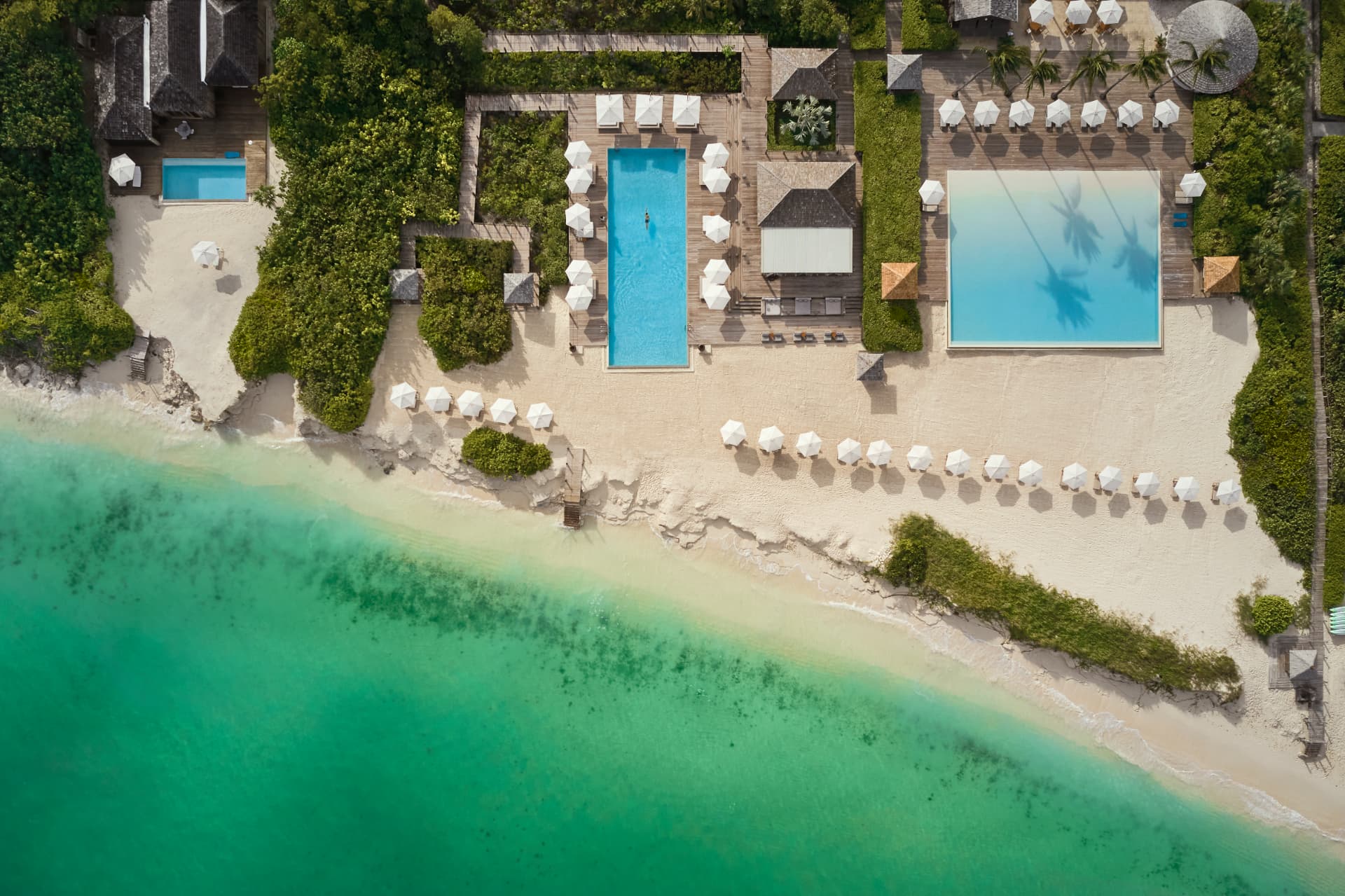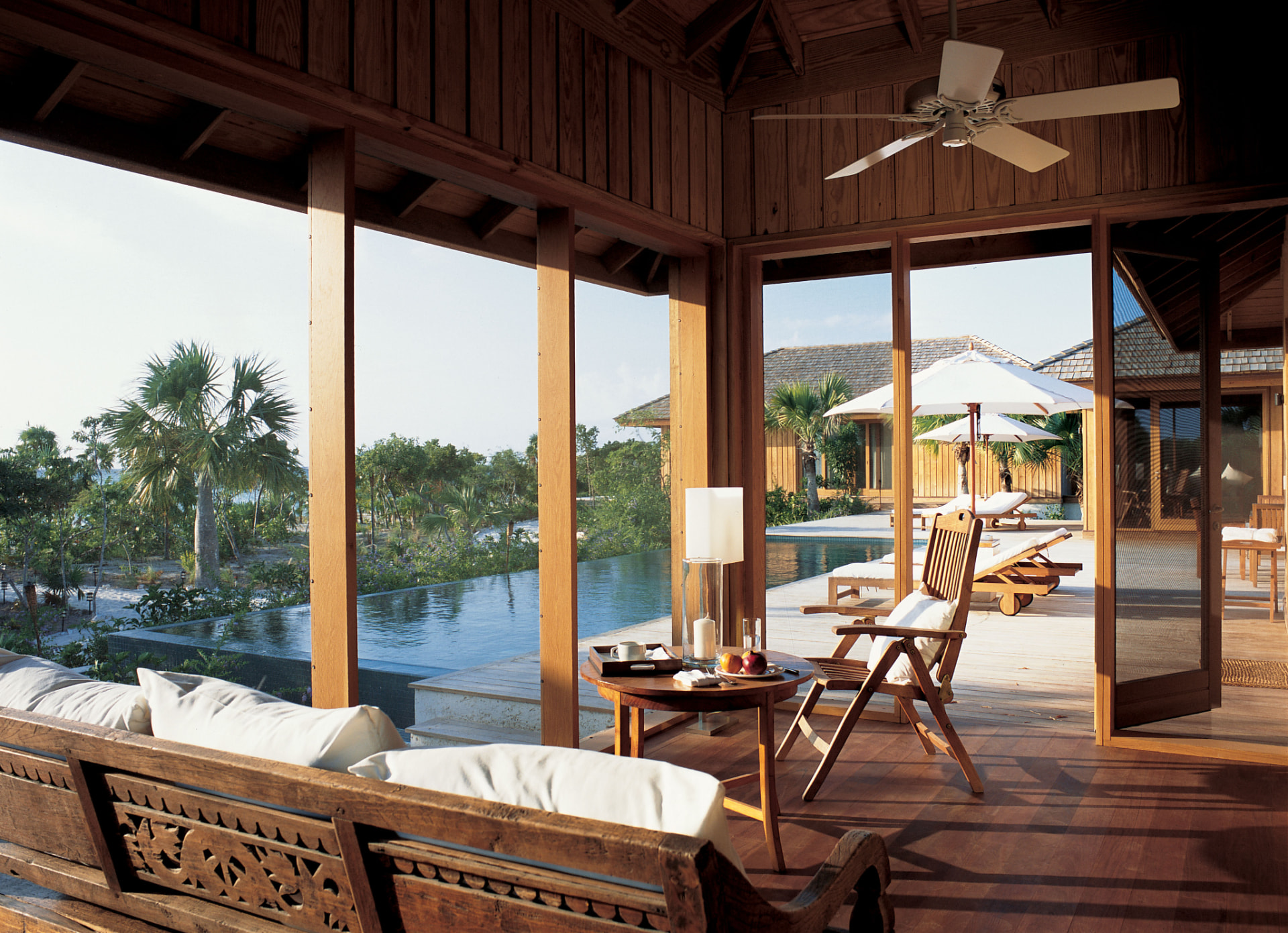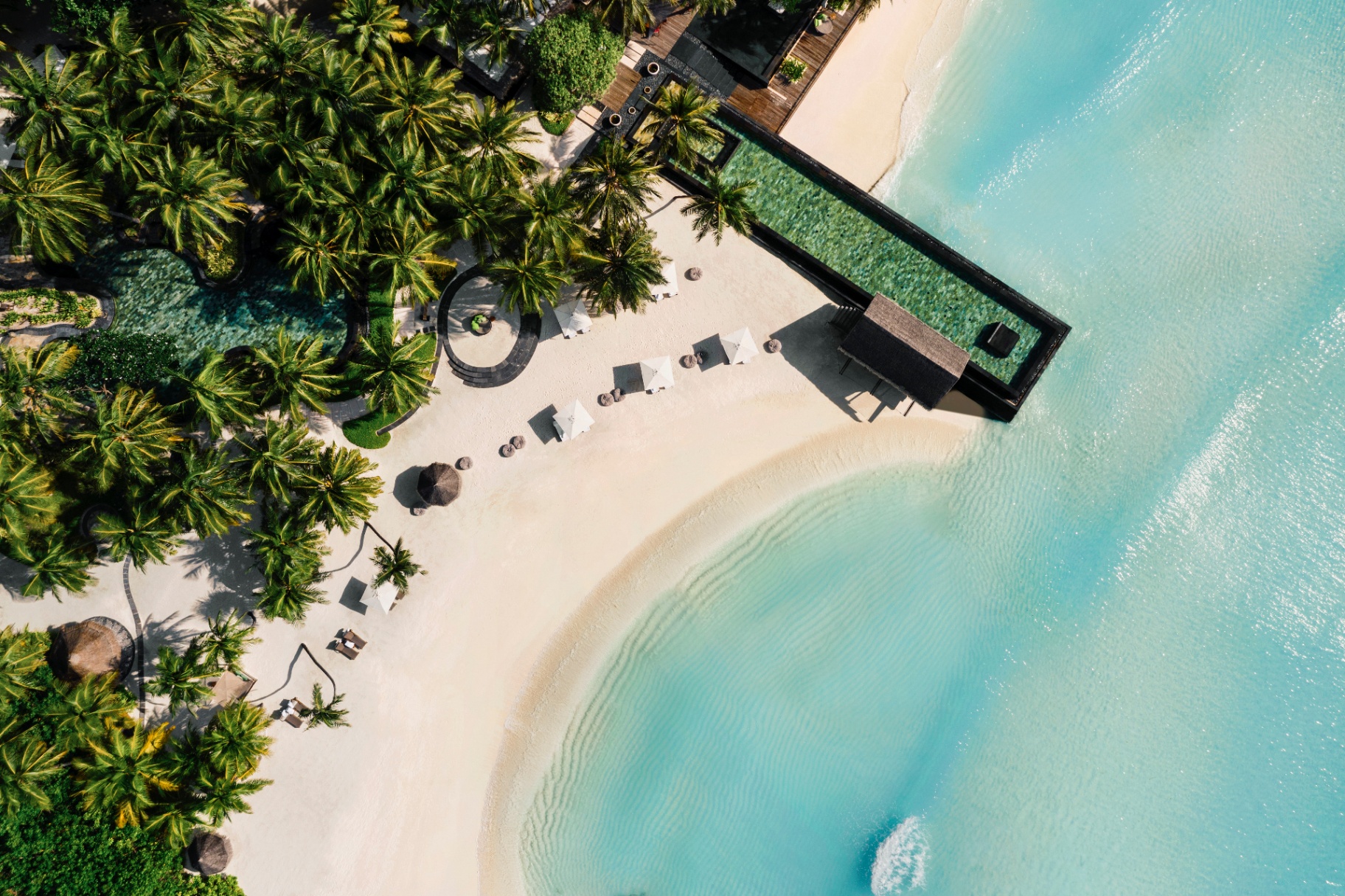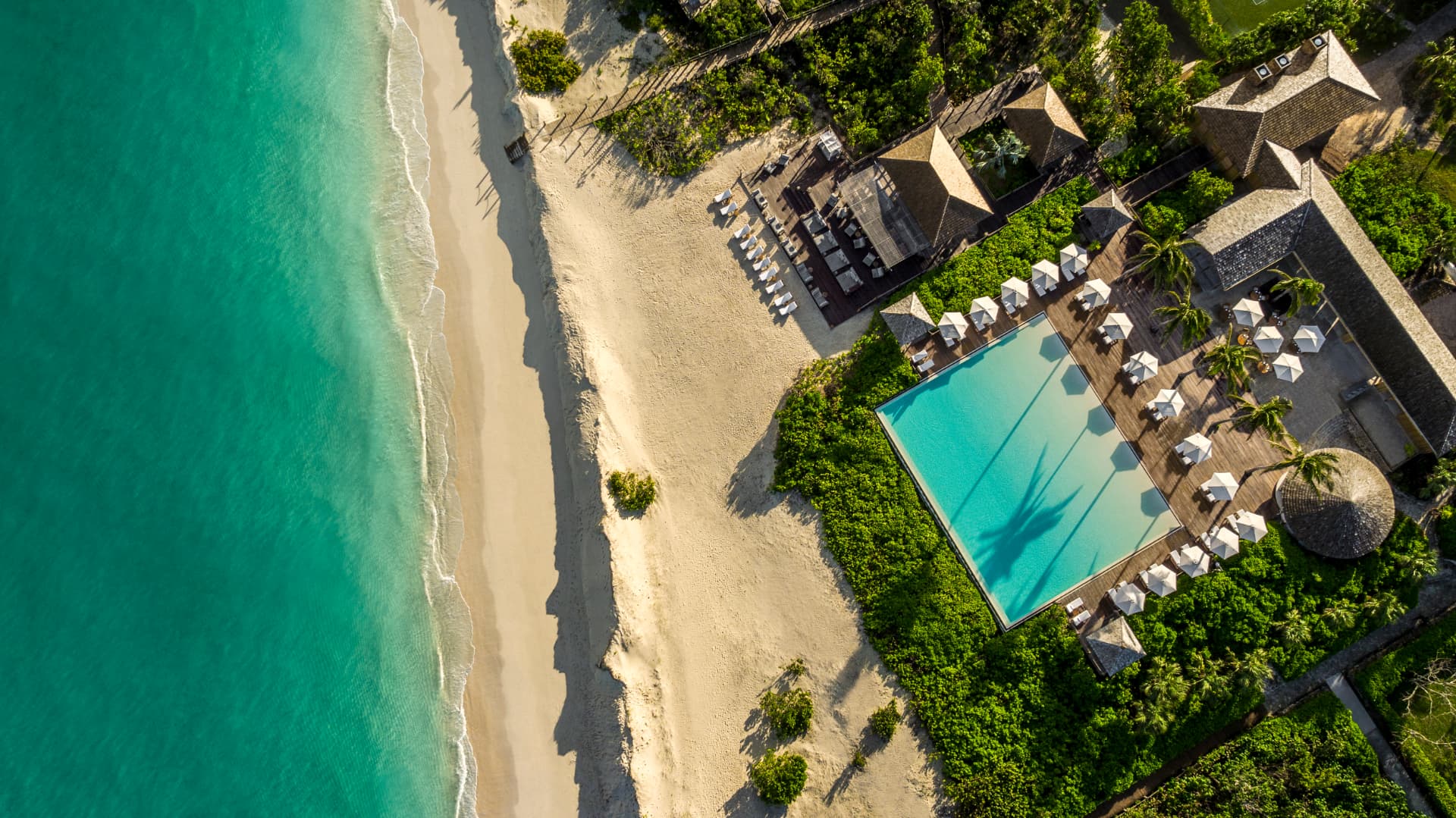
An empty powder-white Caribbean beach at sunrise with turquoise shallow water, sea grass and palms moving in a warm wind

COMO — Turks & Caicos

A Private Island Where Nothing Is Urgent

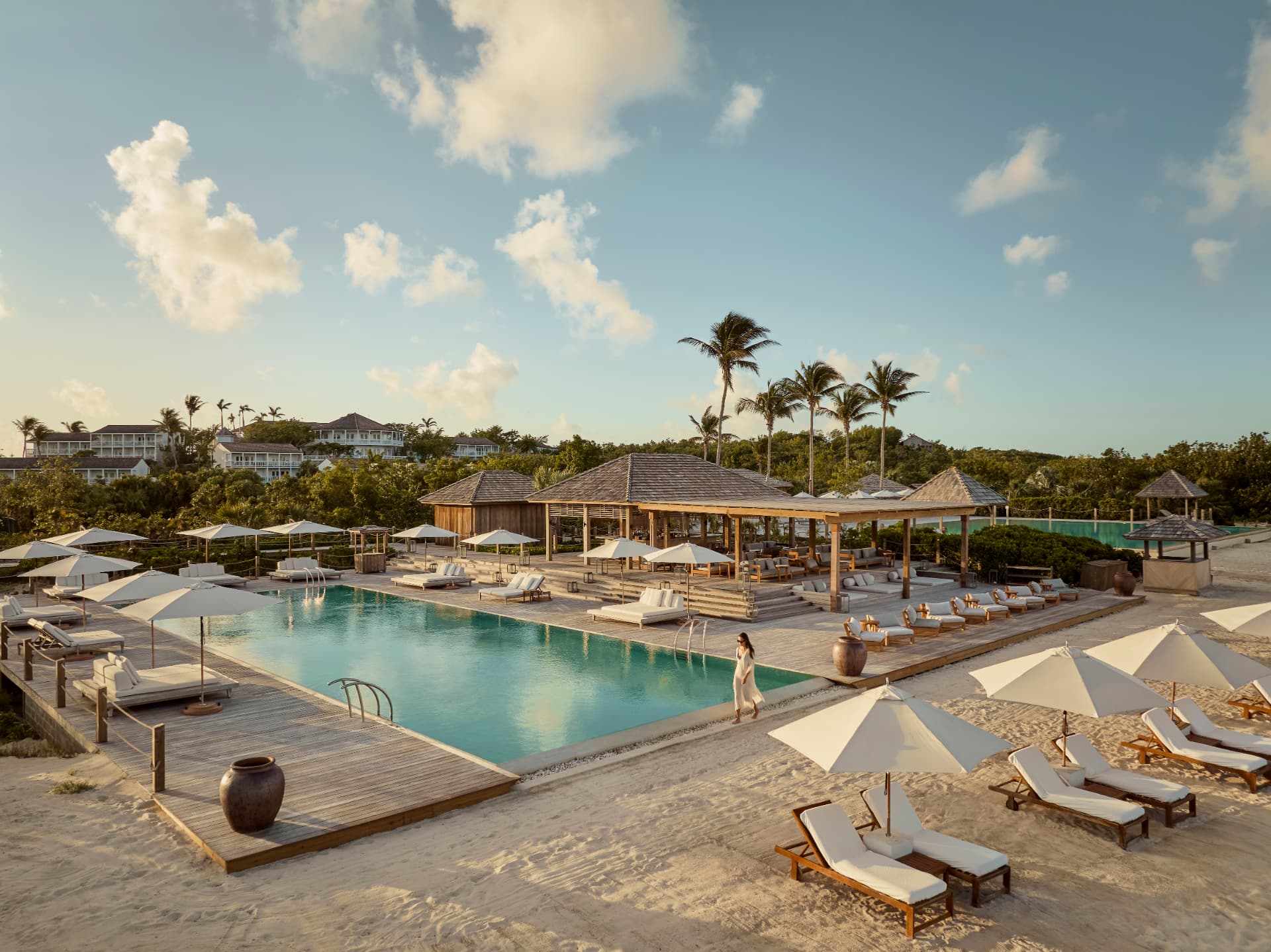
Reached only by boat, COMO Parrot Cay is a thousand acres of sand, sea grass and shallow turquoise water with three miles of beach and almost nobody on them. It is less a resort than a place to be left alone in, extremely well.

The Island

You arrive by water, and something in you slows down before the boat has docked.

The crossing takes half an hour. Providenciales falls behind, the water goes through four separate colours, and then a low green line appears with no buildings visible on it at all. That is the first thing worth understanding about Parrot Cay: from the sea, it looks uninhabited. It very nearly is. A thousand acres of sand, salt flat, mangrove and scrub, with a handful of pale houses set back behind the treeline and three miles of beach in front of them.

The island was a haven for pirates, then for nobody, and then — briefly, in the 1990s — the kind of address that appeared in magazines. It has since gone quiet again, deliberately. What COMO does here is not luxury as display but luxury as subtraction: fewer lights, fewer sounds, fewer decisions. Nobody greets you with a clipboard. Shoes are collected somewhere near the jetty and rarely reappear.

By the second morning the island has taken over your sense of time entirely. You wake with the light because there is no reason not to. You walk before breakfast because the sand is cool and empty. And you begin to notice, with something close to embarrassment, how much of ordinary life is spent being interrupted.

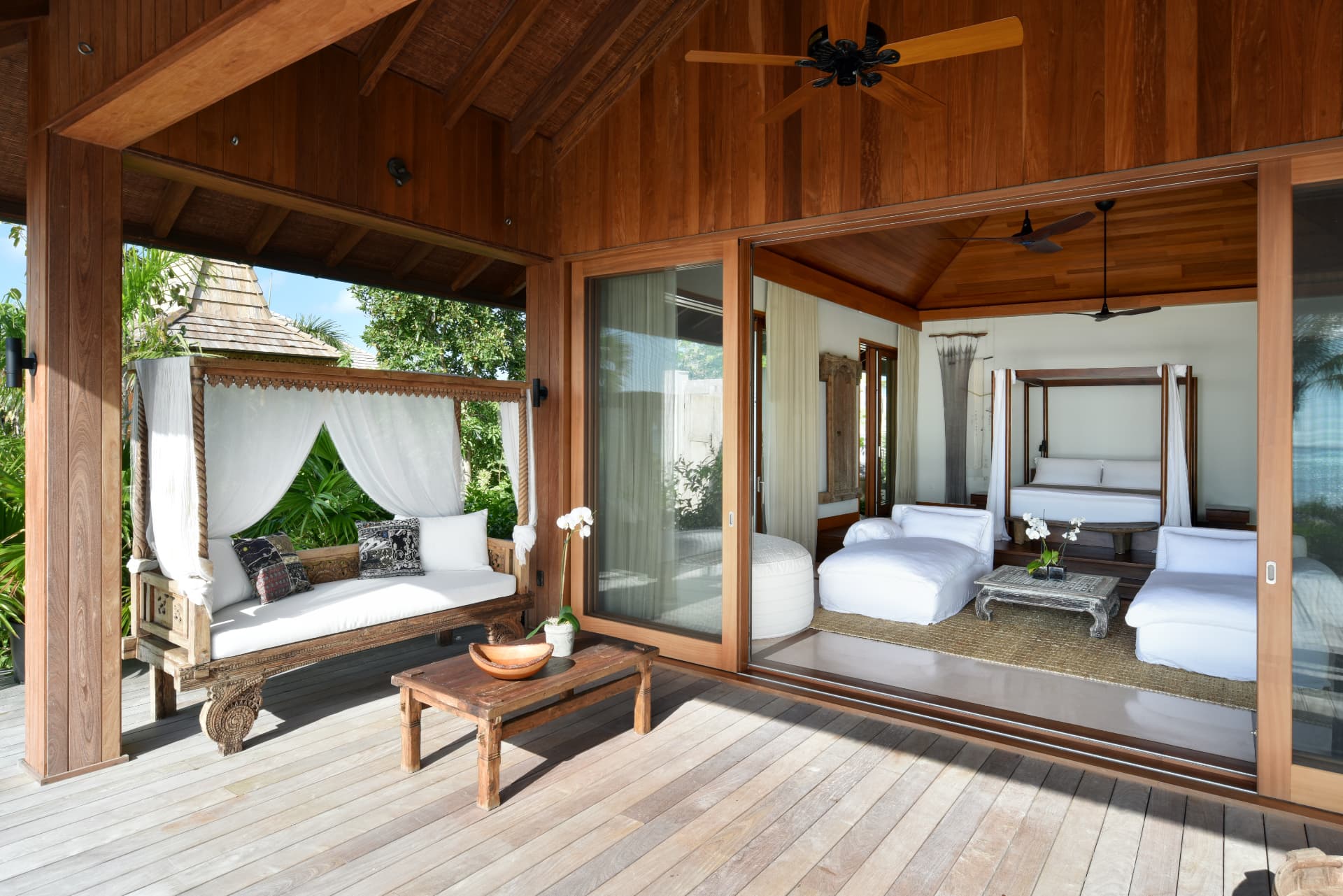
Whitewashed open-air Caribbean pavilion with teak columns, linen curtains lifting in the breeze and a view to turquoise sea

Architecture & Design

Built low, so the island stays the subject

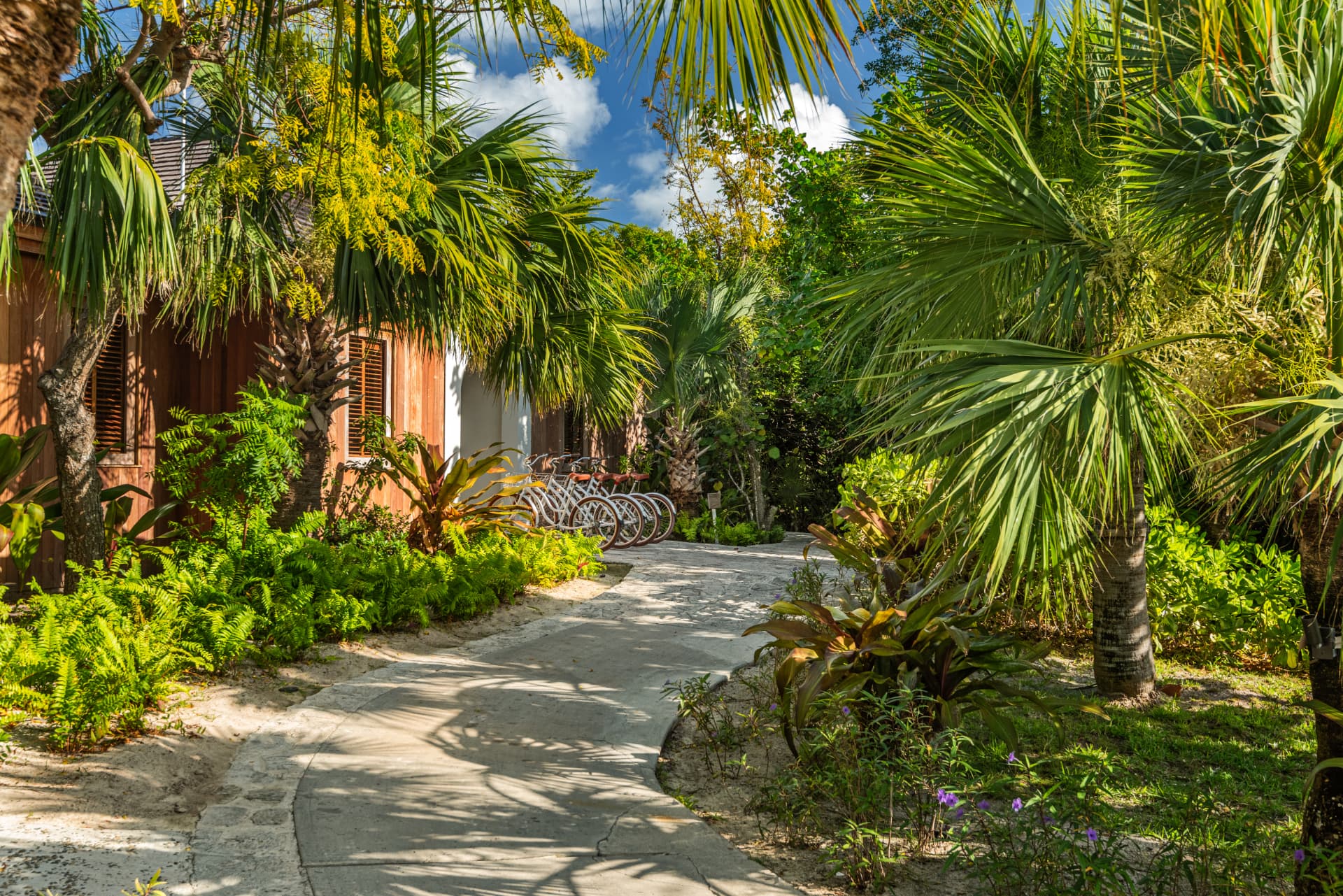
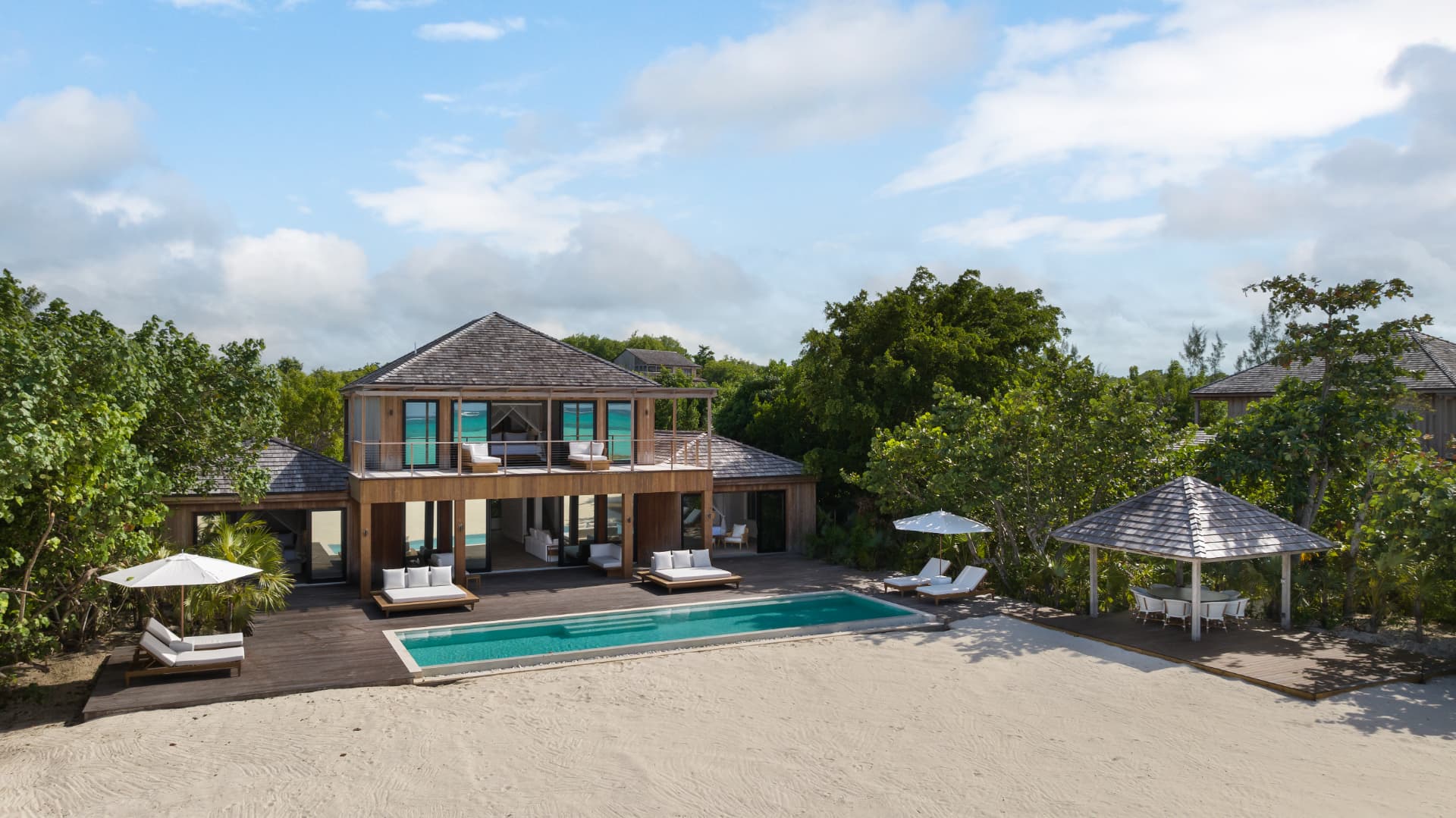
Nothing rises above the palms. The buildings are white, single-storey and set back from the sand, which means the view from the water is a treeline rather than a resort. It is the most consequential design decision on the island and the one nobody notices.

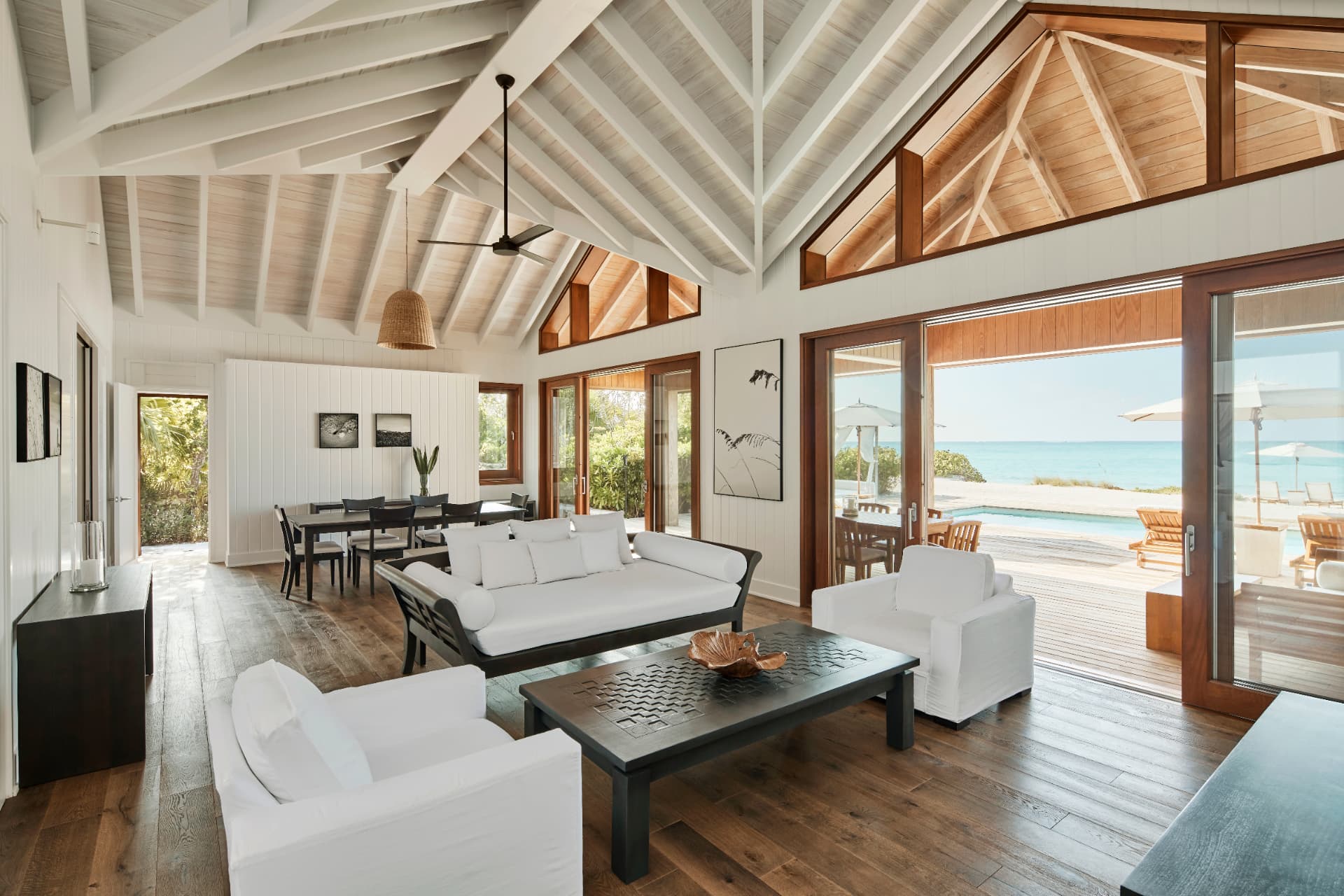
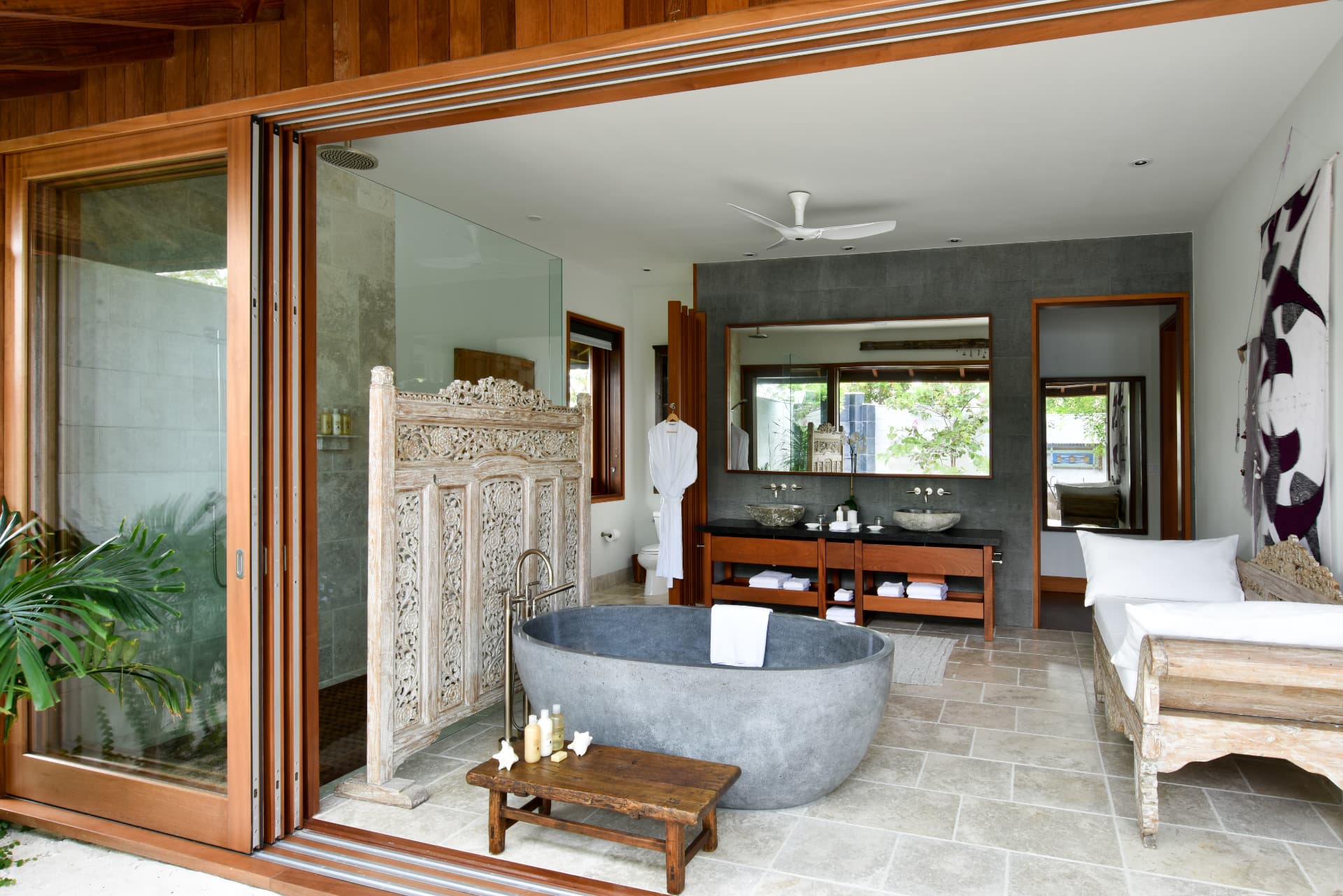
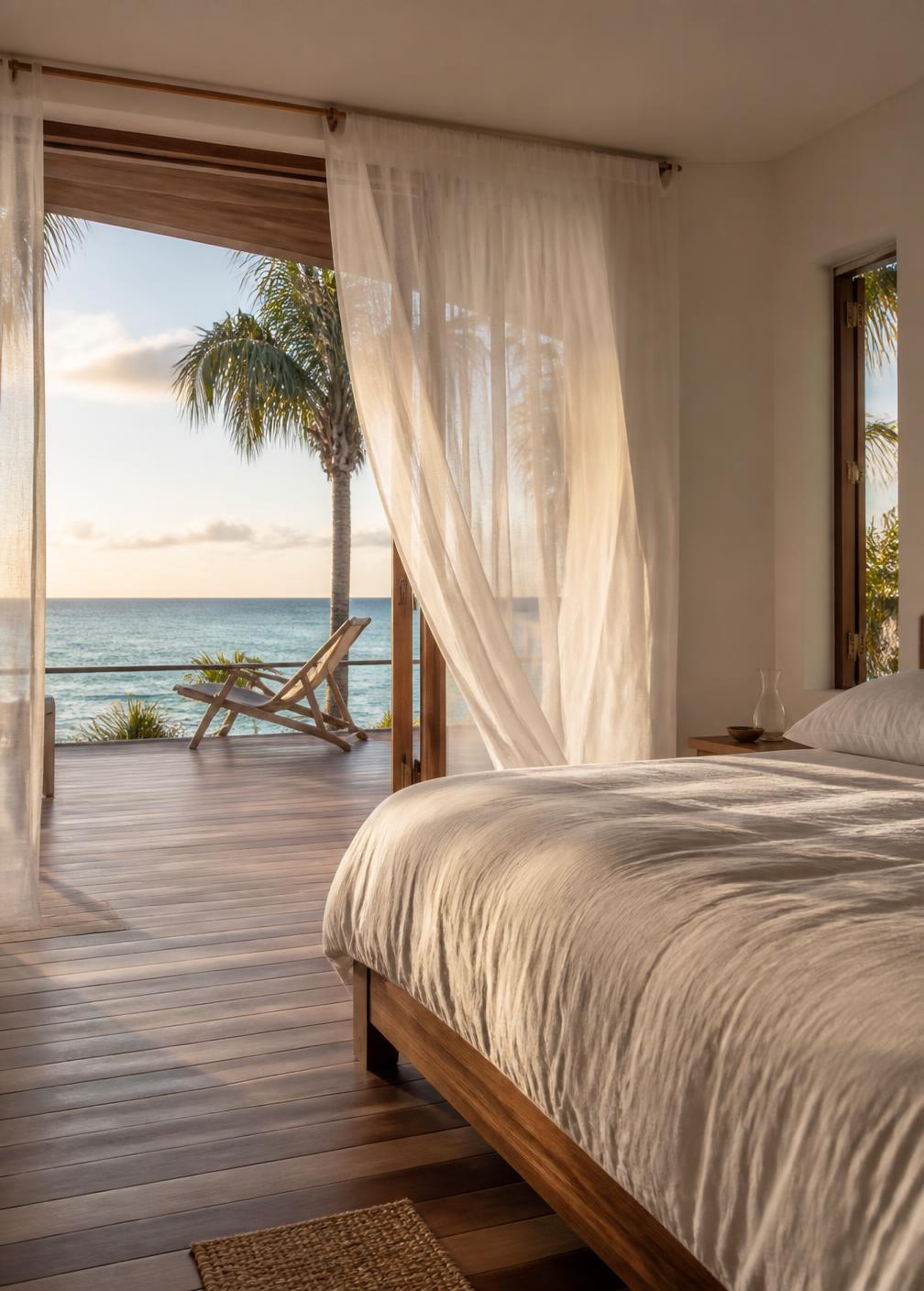
Inside: coral stone underfoot, teak that has been oiled rather than varnished, unbleached linen, four-poster frames with no canopy. Colour arrives entirely from outside — the green of sea grape, the pale blue that starts at the door. Curtains are the only moving part.

Everything is open at both ends so the trade wind can pass through, which it does all day. Air conditioning exists and is largely unnecessary. The architecture's whole argument is that a building here should do very little other than provide shade and get out of the way.

Rooms & Beach Houses

Rooms with no real walls

The categories matter less than the distance to the water and whether the doors open entirely. Here, they do.

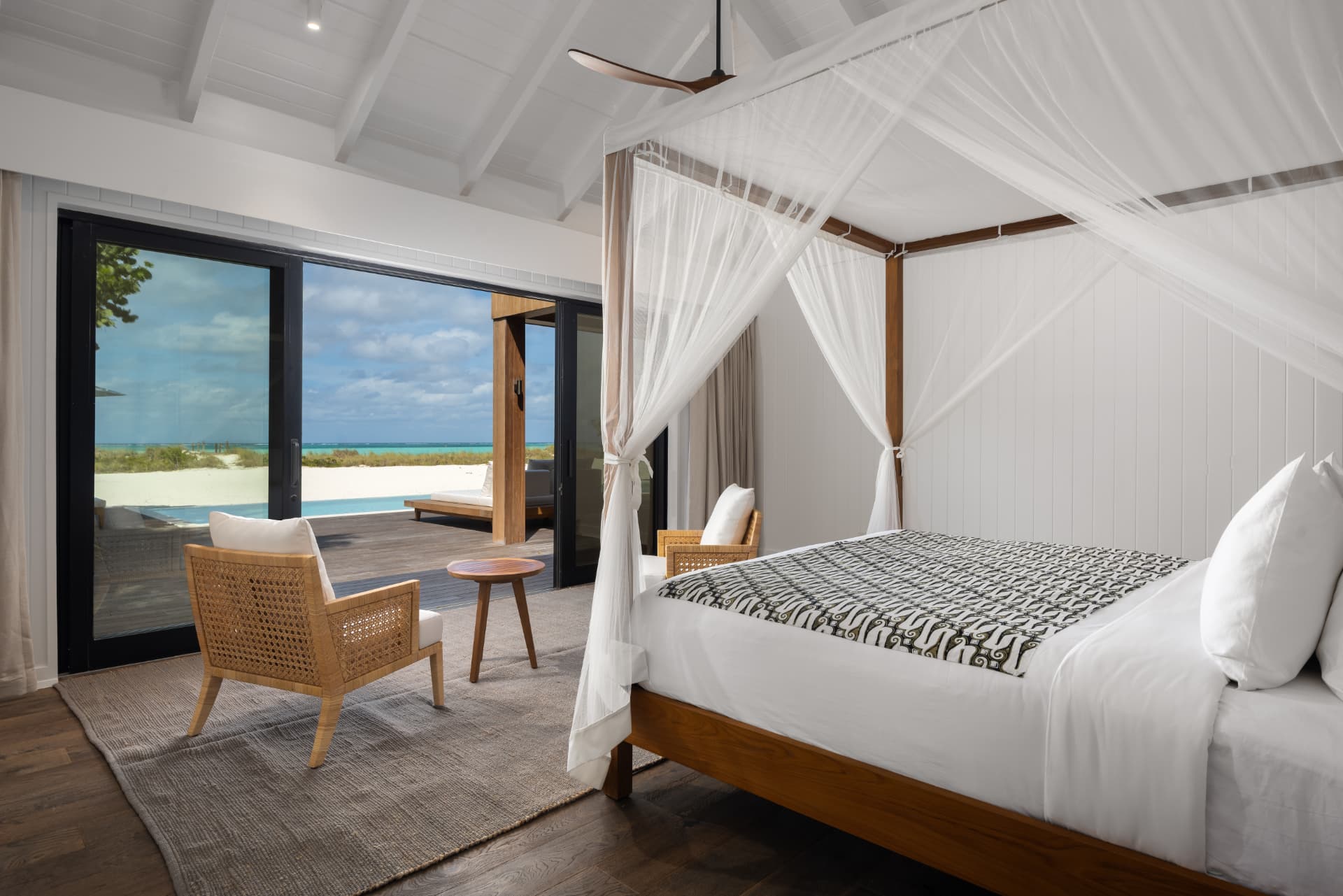
Minimal Caribbean beach house bedroom at sunrise with white linen bedding, teak floors and open doors onto turquoise sea

No. 01

A Room That Ends at the Sand

White linen, teak floors, a ceiling fan turning slowly enough to be decorative. The doors fold back completely, which means the room has no real edge — it simply becomes a terrace, and the terrace becomes sand, and the sand becomes water about forty paces later. There is no minibar theatre, no scented anything, no card explaining the philosophy of the pillow. What wakes you is light and the sound of very small waves arriving in no particular hurry.

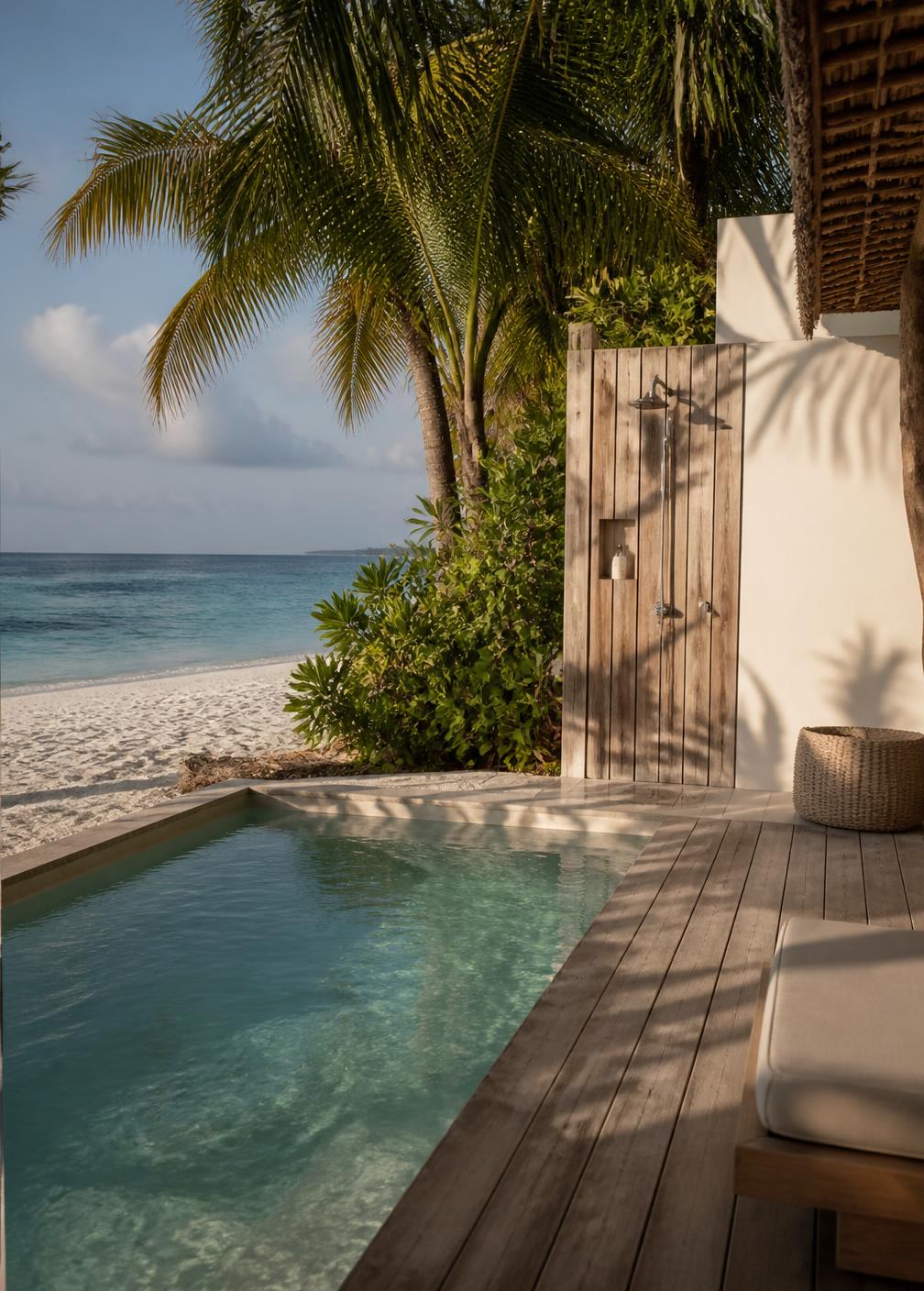
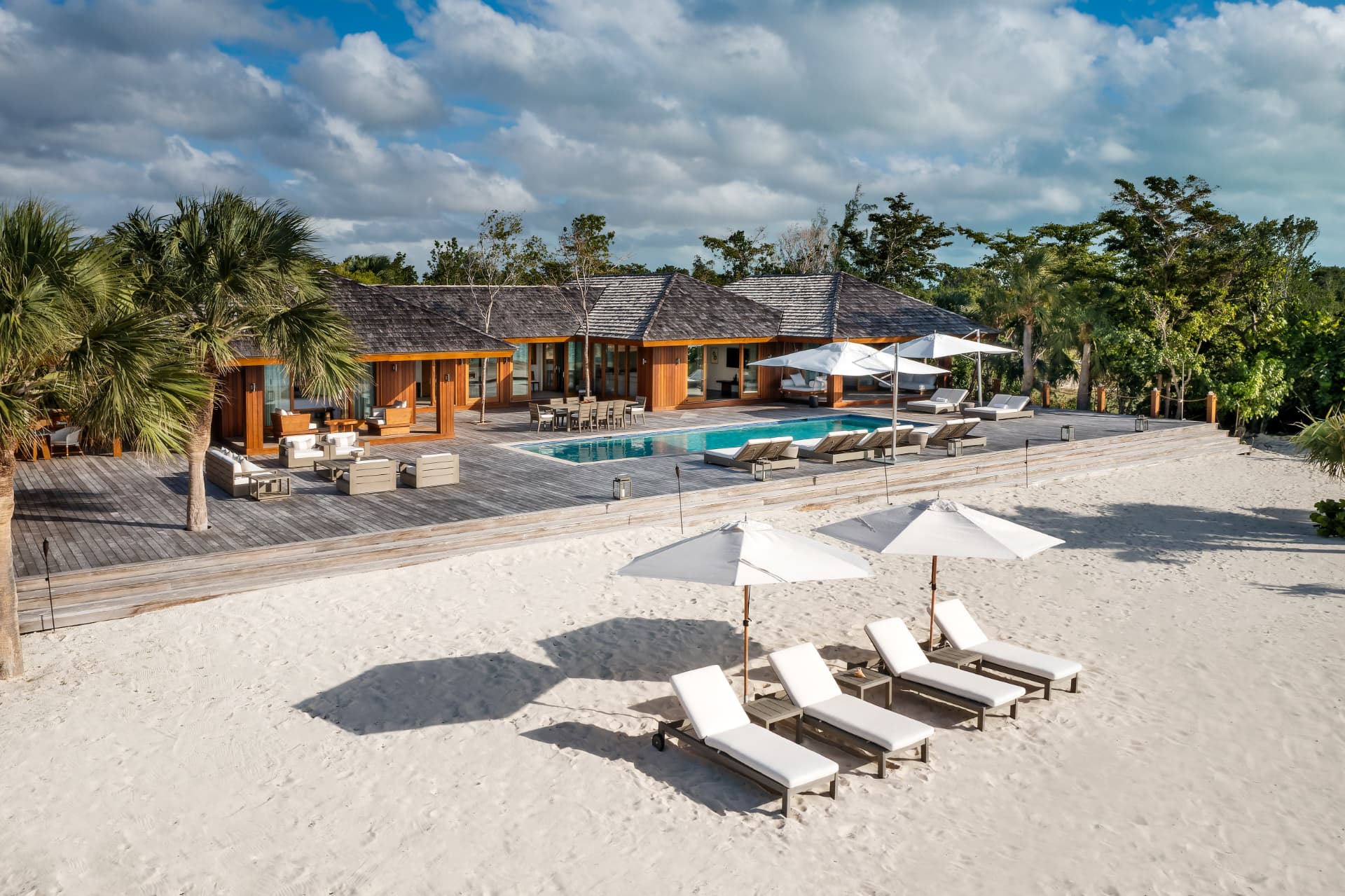
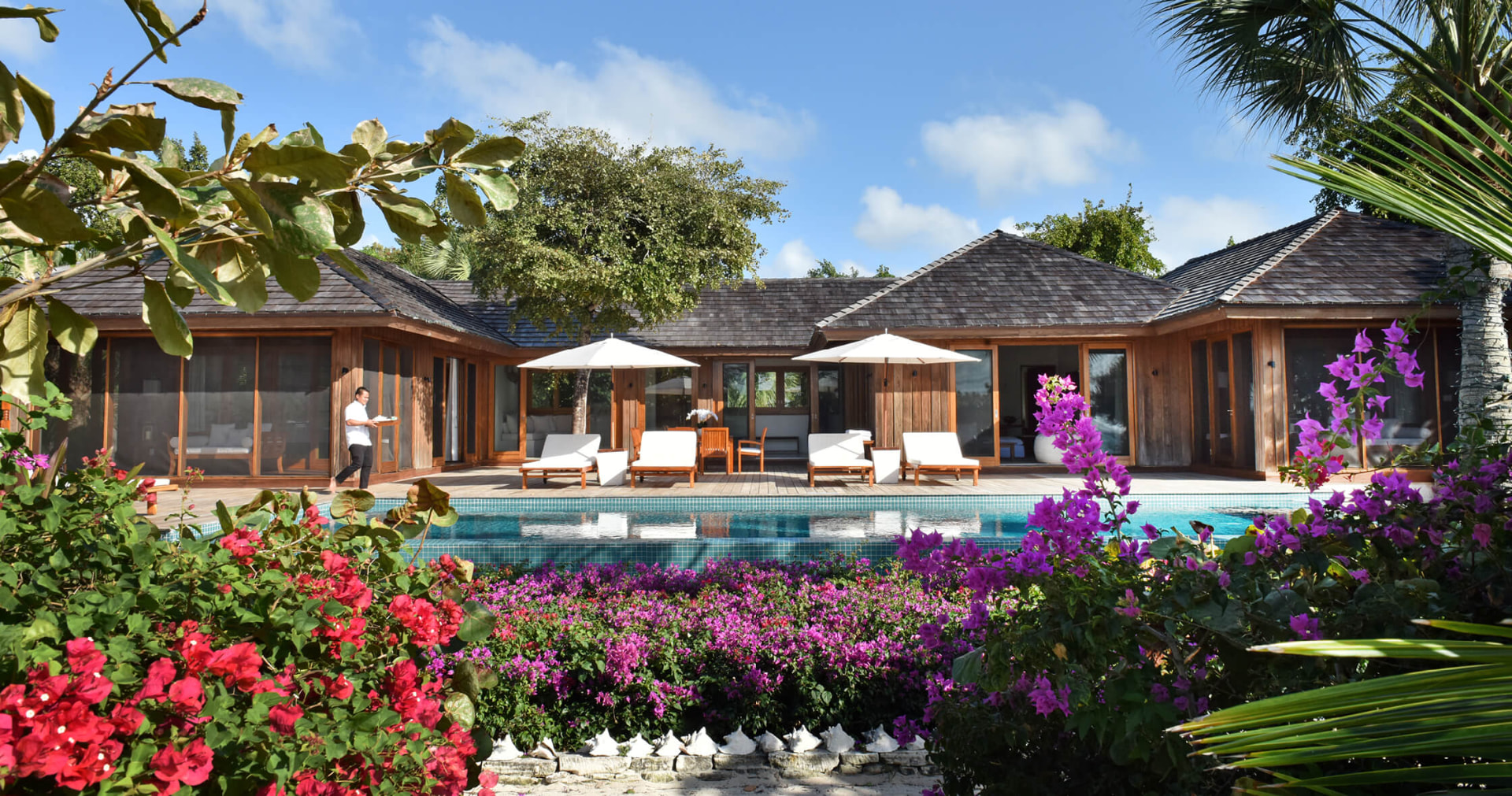
Private villa plunge pool on white sand beside a timber deck with a weathered teak outdoor shower and palms

No. 02

The Beach House Hours

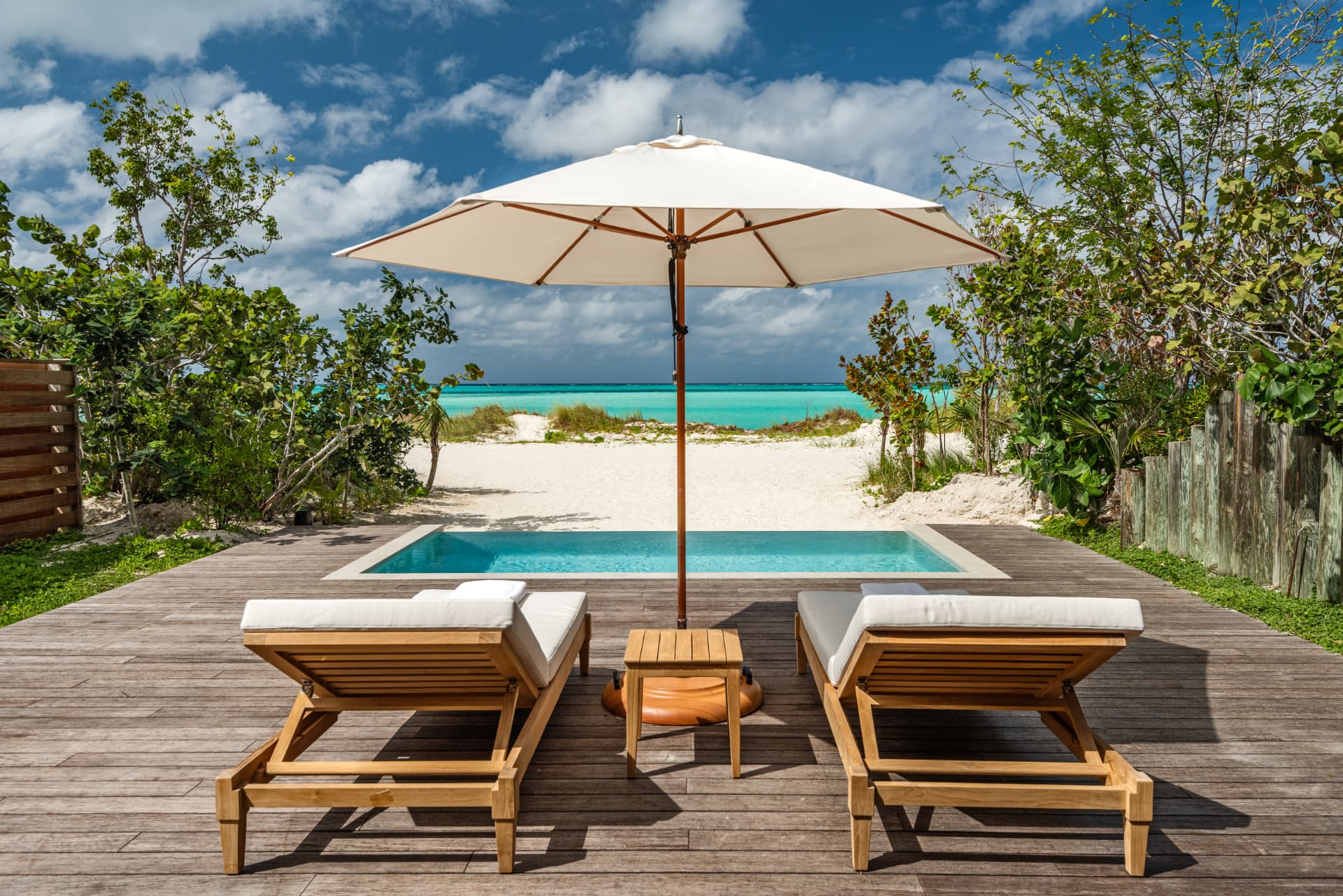
The villas have a plunge pool set into the deck, an outdoor shower of weathered teak, and a kitchen nobody uses except for cutting fruit. They are built low and pale so that from the water they almost disappear into the treeline. By the second afternoon you have found the chair that is right at four o'clock, and by the third you resent anyone sitting in it — which is the only competitive feeling the island will ever produce in you.

A simple breakfast of sliced mango and papaya on a white linen table on a Caribbean beach terrace in morning light

Dining

Food that lets you swim afterwards

Breakfast is fruit cut that morning — mango, papaya, soursop — coffee, and bread still warm. It is taken barefoot, on a terrace, usually alone, and it goes on considerably longer than intended because there is nothing to be late for.

Lunch is grilled fish landed by boats out of Blue Hills, herbs from the garden, a great deal of lime. The COMO Shambhala side of the menu is not a diet menu — it is simply cooking that does not sit on you, which in this heat is the same thing as generosity. Somewhere alongside it, a proper Caribbean kitchen: conch, scotch bonnet, jerk, rice done slowly.

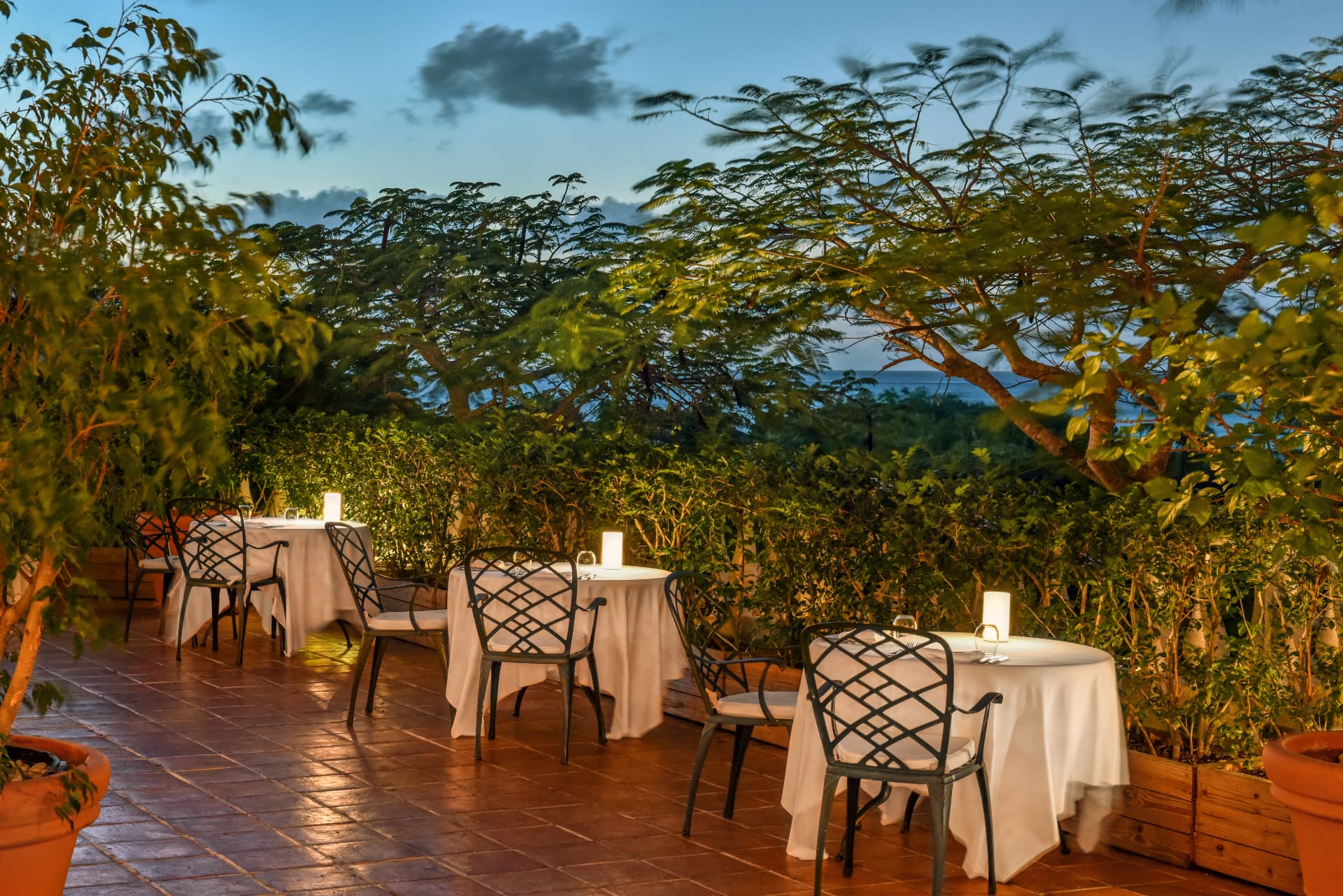
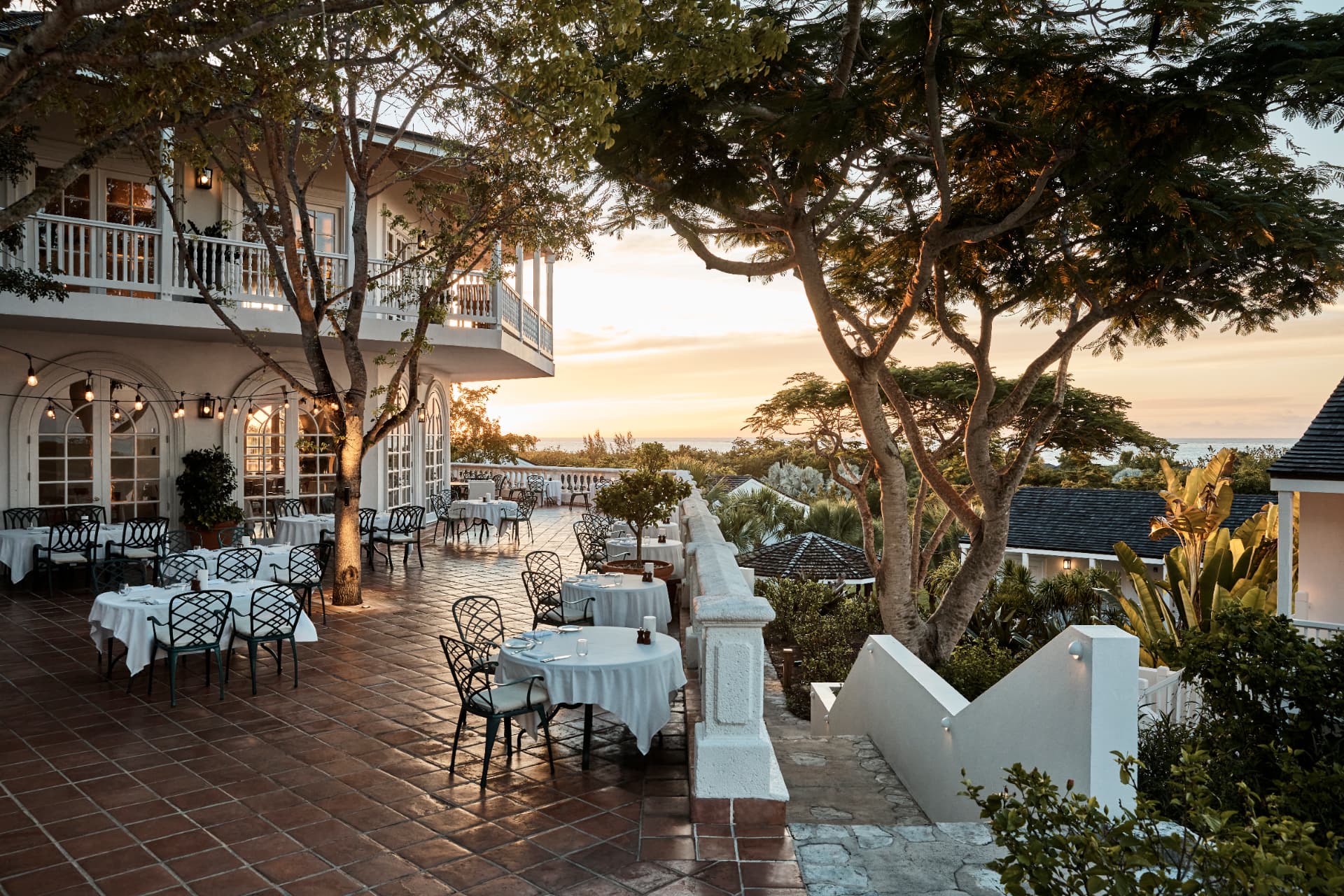
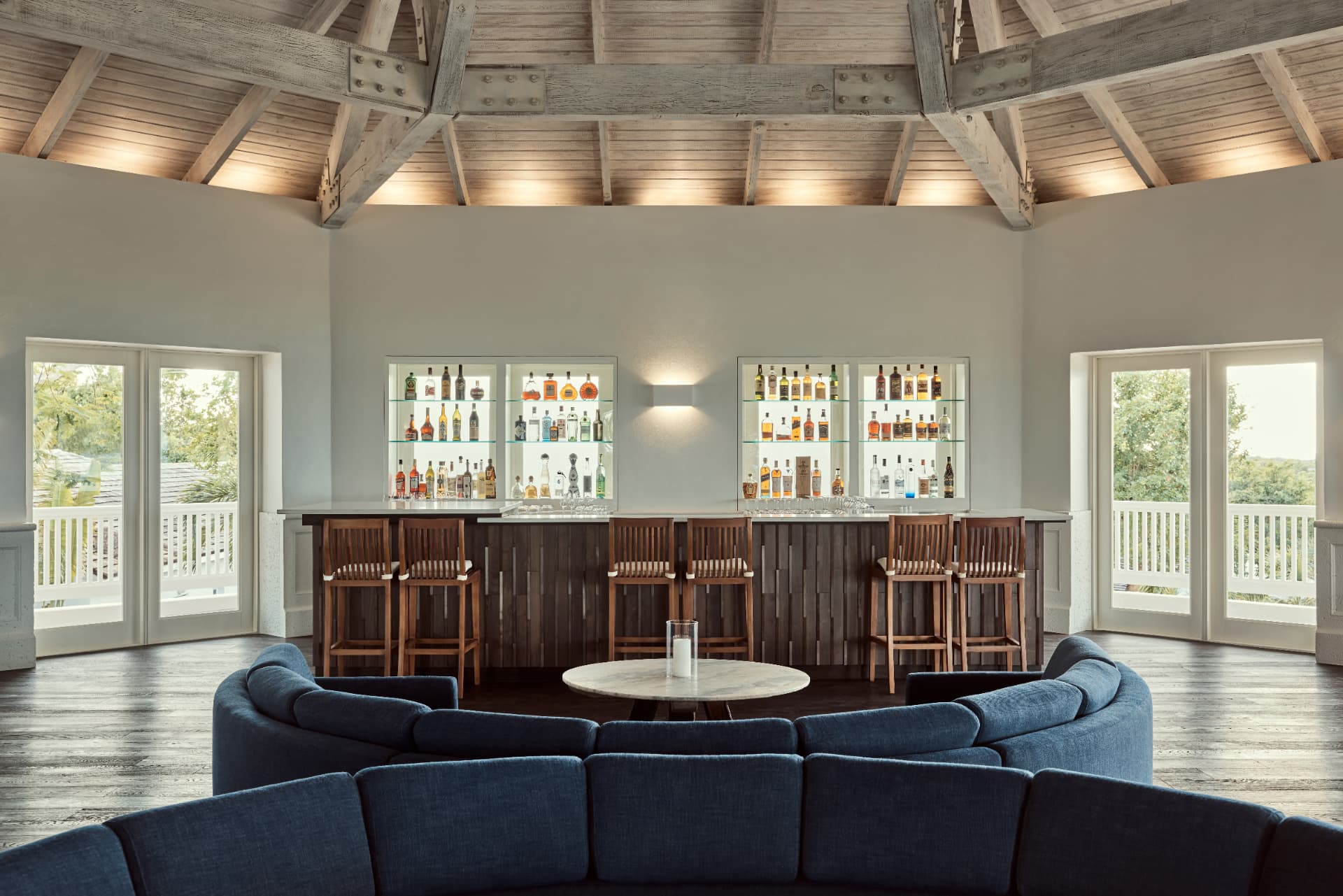
Dinner moves to the beach when the wind allows, with lanterns and no music worth mentioning. Ask, and a table will be set anywhere on three miles of sand — which sounds theatrical and, in complete darkness with the water four metres away, turns out not to be.

Open-air timber yoga pavilion facing calm turquoise water at dawn with rolled linen mats and sheer white curtains

Wellness

COMO Shambhala, in the sea air

The retreat sits above the salt flats, away from the beach, in a set of pavilions that are open on all sides. Treatments are Asian in method and unhurried in manner: warm oil, long silences, and a strong suggestion that you go and lie down somewhere afterwards rather than do anything sensible.

Yoga is early, before the heat, facing the water. There are practitioners here who have been coming for twenty years and guests who have never held a pose in their lives, and the pavilion does not distinguish between them.

What actually works, though, is the island itself: salt water twice a day, three miles to walk, no traffic, no reason to look at a screen. Most people arrive intending to be disciplined about wellness and end up simply sleeping properly for the first time in a year.

Signature Experiences

Six days, gently spent

Most of them belong to the water rather than to the resort. One a day is generous; none at all is entirely acceptable.

  • No. 01

    The beach before anyone else

    Somewhere around six the light comes in flat and pink and the sand still holds the cool of the night. Three miles of it, entirely unmarked. Walk north until the villas end and there is nothing but sea grape and shorebirds, then turn and follow your own footprints back. It is the single best thing on the island and it costs nothing.

  • No. 02

    Yoga in the pavilion, doors open

    A timber pavilion facing the water, linen curtains lifting, mats already rolled out. The practice is unhurried and largely wordless. What people remember afterwards is not the sequence but the sound underneath it — wind through palm, water arriving, nothing else at all.

  • No. 03

    A sandbank, reached by boat

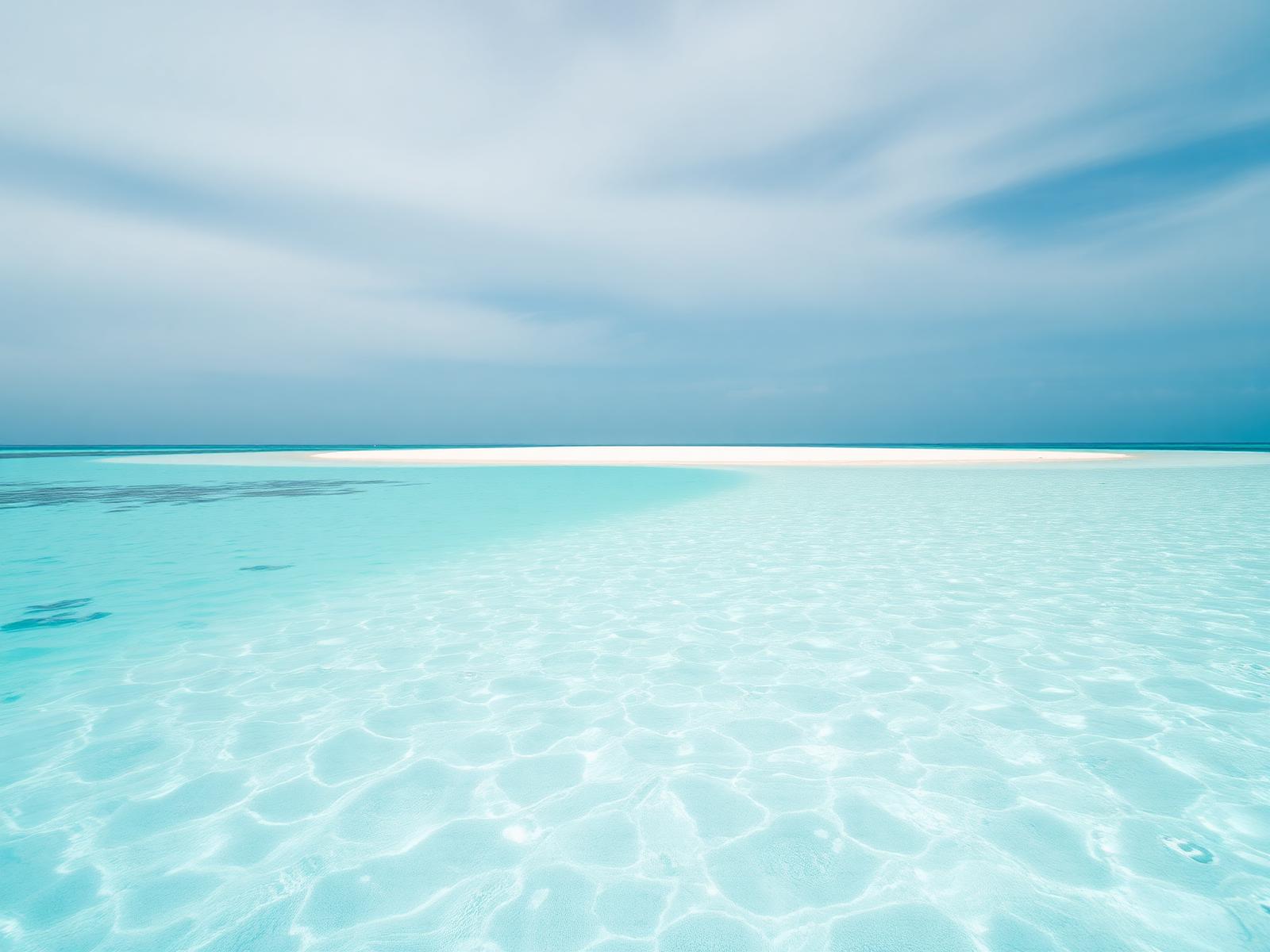
    Twenty minutes out, the water goes from turquoise to something without a name, and a strip of dry sand appears in the middle of it. You are left there with a cooler and a parasol and collected later. There is no shade, no signal and no reason to speak.

  • No. 04

    The reef, early, before the wind

    The barrier reef sits close enough to reach in a few minutes. Go at nine, when the surface is still glass: eagle rays working the sand channels, turtles that ignore you completely, and light coming down in shifting columns. Back on the boat by eleven, salt drying on your shoulders.

  • No. 05

    COMO Shambhala, then nothing

    An hour of hands and warm oil in a room open to the treeline, followed — and this is the important part — by an afternoon with absolutely nothing in it. Lie down. Fall asleep somewhere unintended. Wake up not entirely certain what day it is.

  • No. 06

    Bonefishing on the flats at dawn

    Ankle-deep water stretching further than seems reasonable, a guide who reads the surface like a page, and long stretches of standing perfectly still. Whether anything is caught turns out to be beside the point by about the second hour.

Maison Voyage Loves

Six small things

  • Walking the beach at six, before anyone else has left a footprint in it.
  • The moment the boat engine cuts on the crossing and the island goes completely silent.
  • Cold papaya and a second coffee, taken barefoot, with the morning entirely unplanned.
  • Floating on your back in water so shallow and warm it stops registering as water.
  • The trade wind moving the linen curtains all afternoon while you fail to read.
  • Dinner set on the sand in the dark, with lanterns and the sea somewhere very close.

Who This Island Is For

Travellers who want to be unreachable, and are honest about it.

It suits couples who talk to each other, readers who bring too many books, swimmers, walkers, and anyone recovering from a year that took more than it gave. It suits people who like their privacy structural rather than performed — a house set behind a treeline, a beach long enough that you never have to share a stretch of it.

It is unexpectedly good with families, because the water is shallow for a very long way and the island is entirely traffic-free. It is exceptional for a honeymoon, provided the honeymoon in question involves more sleeping than dancing.

It will not suit everyone. There is no town, no nightlife, no shopping and nothing cultural within half an hour of water. Dinner is the evening's event. If you need a reservation somewhere new every night, this is an island whose entire proposition is that nothing changes — which, given a week, turns out to be the point.

Nearby Discoveries

What we would tell a friend

Everything here needs a boat and a tide table. None of it is urgent, and most of it is better attempted before ten in the morning.

  • No. 01

    The uninhabited cays, by small boat

    Turks and Caicos is mostly empty. Fort George, Dellis, Pine Cay — low strips of scrub and sand with nothing on them but conch shells bleached to chalk. An hour each way, a captain who knows which channels carry water at low tide, and no plan beyond swimming and coming back.

  • No. 02

    North and Middle Caicos, on a long morning

    The larger, quieter islands: limestone caves, a plantation gone back to bush, and Mudjin Harbour, where the cliffs drop straight into water the colour of glass. The road has almost no traffic and the roadside stands sell cracked conch to whoever passes.

  • No. 03

    Grace Bay, once, briefly

    The famous beach is genuinely as beautiful as everyone says and rather busier than anything else here. Go for an afternoon, eat something grilled with your feet in the sand, buy a book, and be back on the boat before the light goes soft.

  • No. 04

    Whale season, January to April

    Humpbacks come through the Columbus Passage on their way to the Silver Bank. From a boat you hear them before you see them. It is not a scheduled attraction and nothing is guaranteed, which is precisely what makes it worth the early start.

  • No. 05

    The wall, for divers

    The reef drops seven thousand feet a short ride offshore. Visibility runs to forty metres, the water is warm, and the edge is close enough to swim out to. Even for those who do not dive, floating above the point where the blue stops being blue is a strange and lasting thing.

A Note from the Editor

Come in late April or early May, when the winter crowd has gone and the water is at its stillest.

Take a beach house rather than a villa; the difference is a pool you will barely use. Stay at least five nights — the island does not begin working on you until the third. And walk north along the sand before breakfast on the first morning, all the way to where the buildings stop. Everything you came for is somewhere on that walk.

Ben Trousil, Founding Editor

From the Journal

Continue reading

All stories
  • A deserted sandbank surrounded by turquoise Caribbean water beneath a wide open sky

    Island EscapesAugust 2026

    The Most Beautiful Private Islands in the Caribbean

    Ten islands where the only arrival is by boat or seaplane — chosen for their silence, their light and how quickly they change the way you keep time.

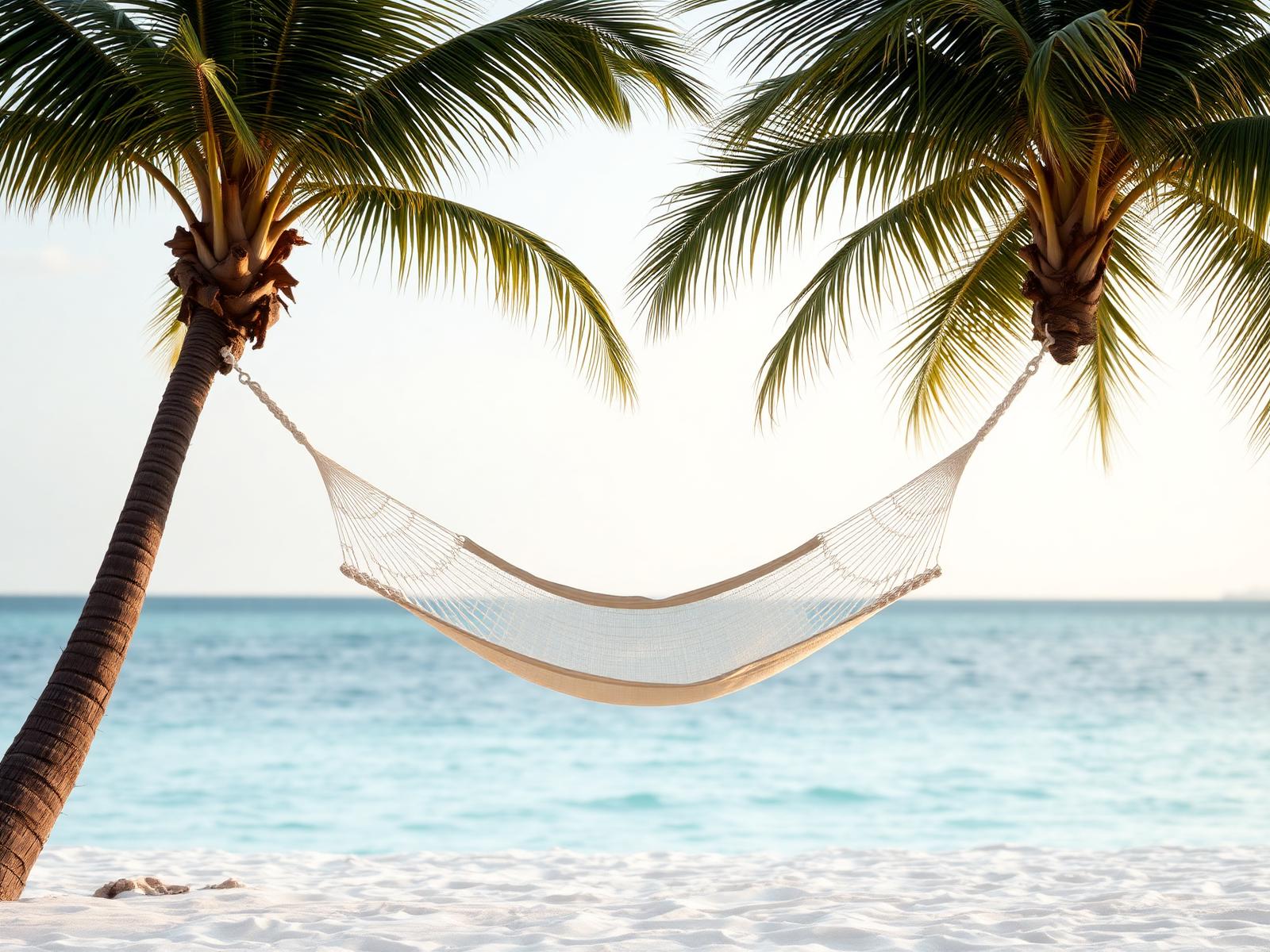
  • An empty linen hammock strung between two palms above white Caribbean sand

    Slow TravelJuly 2026

    A Guide to Slow Travel in Turks & Caicos

    Three cays, one tide table and a single rule: nothing before eight, nothing after four. Written for travellers who would rather do less, properly.

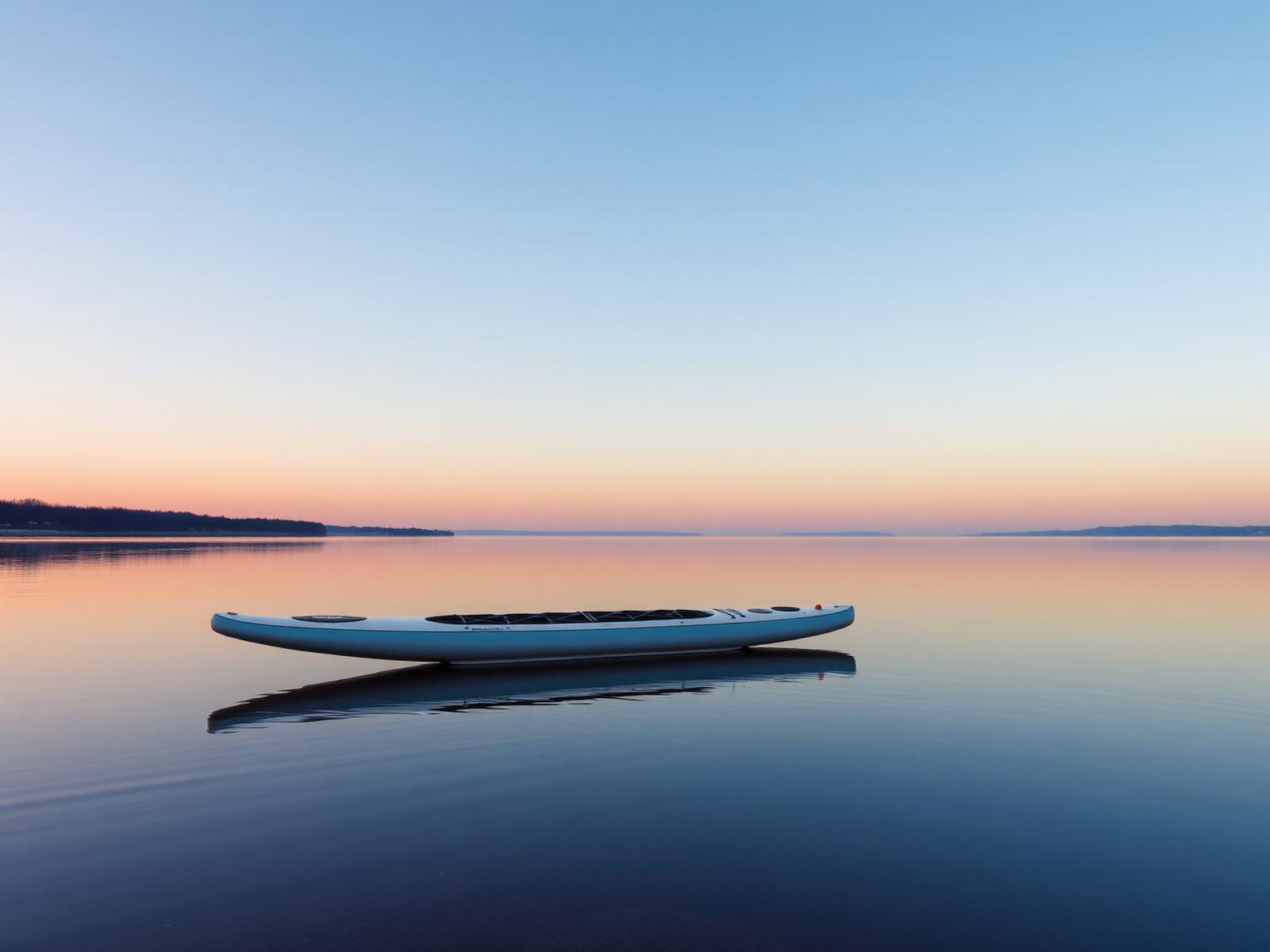
  • A solitary paddleboard resting on glassy still water at sunrise near a quiet shoreline

    Travel GuidesJune 2026

    Where to Find Silence in the Caribbean

    The Caribbean is loud in places and entirely wordless in others. A short list of the second kind, and the months in which to reach them.

Eine persönliche Anfrage

Let's Curate Your Caribbean Journey

If a private island in Turks & Caicos has begun to sound like your next journey, we would be glad to arrange it personally — the crossing, the house, and the days on either side.

A boat to a sandbank with nobody on it, the reef at the right hour, a table set on the sand, and, if it suits you, a few nights elsewhere in the islands chosen to fit the way you actually travel.

Warum über Maison Voyage buchen?

  • Persönliche Luxusreiseberatung
  • Sorgfältig kuratierte Hotelempfehlungen
  • Maßgeschneiderte Reisepläne
  • Exklusive Partnervorteile, wo immer verfügbar
  • Persönlicher Ansprechpartner von Anfang bis Ende

Es entsteht keine Buchung und keine Kosten. Wir beginnen einfach ein Gespräch.

Eine Einladung

Die Reise fortsetzen

Ein Brief jeden Monat: ein Ort, den Umweg wert, ein Objekt, das Bewahren wert, eine Seite, langsam zu lesen wert. Nicht mehr.