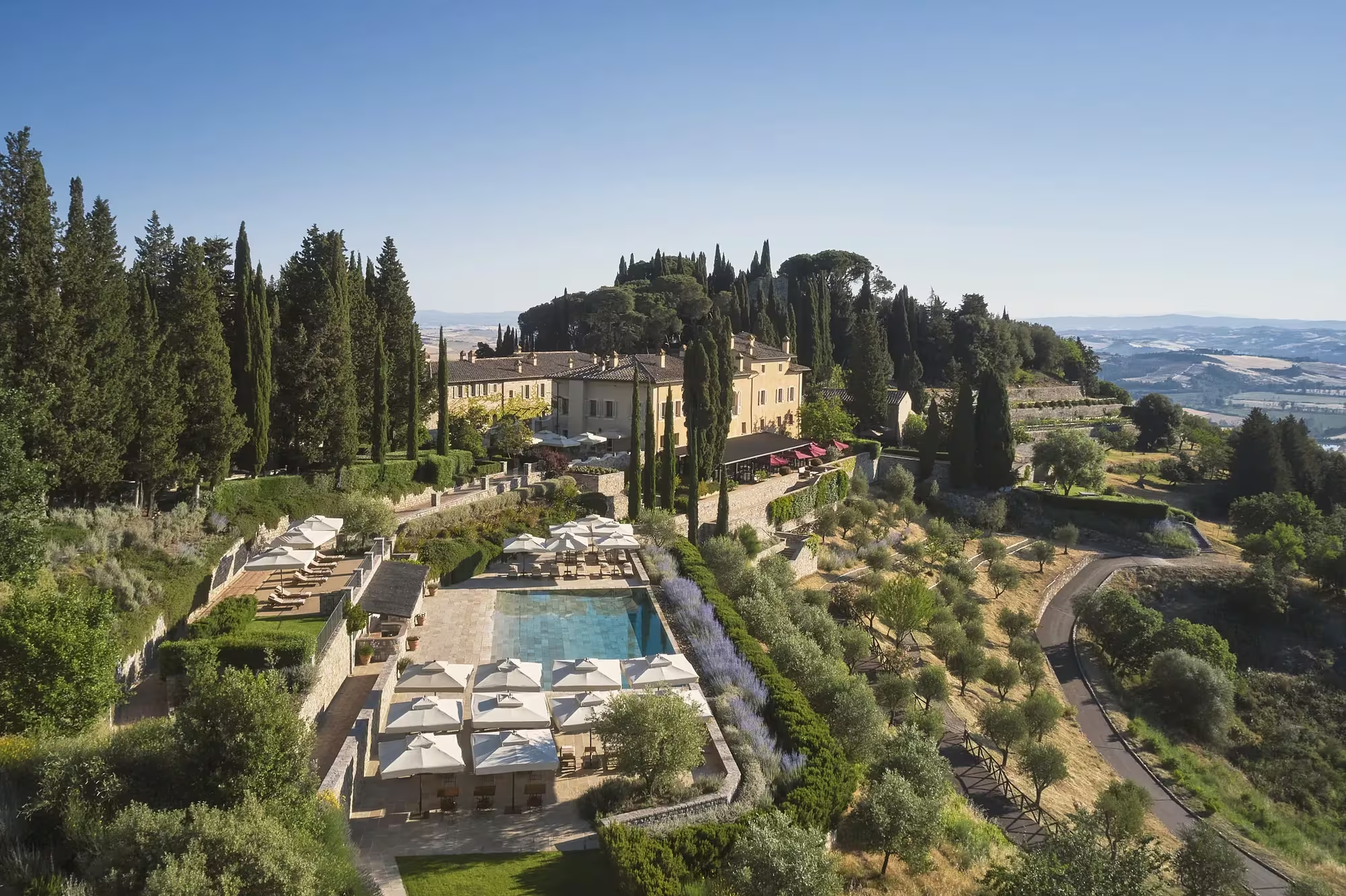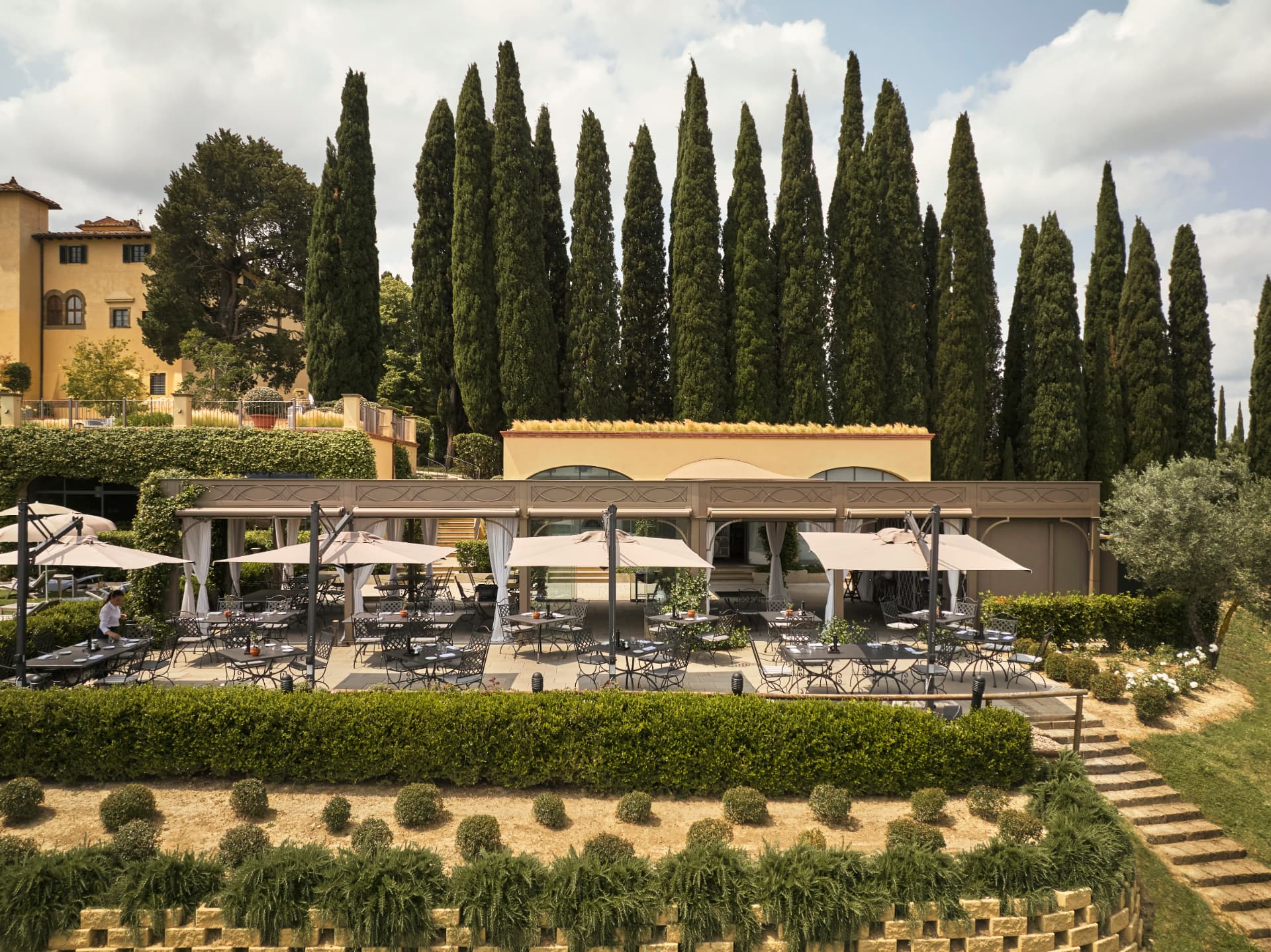
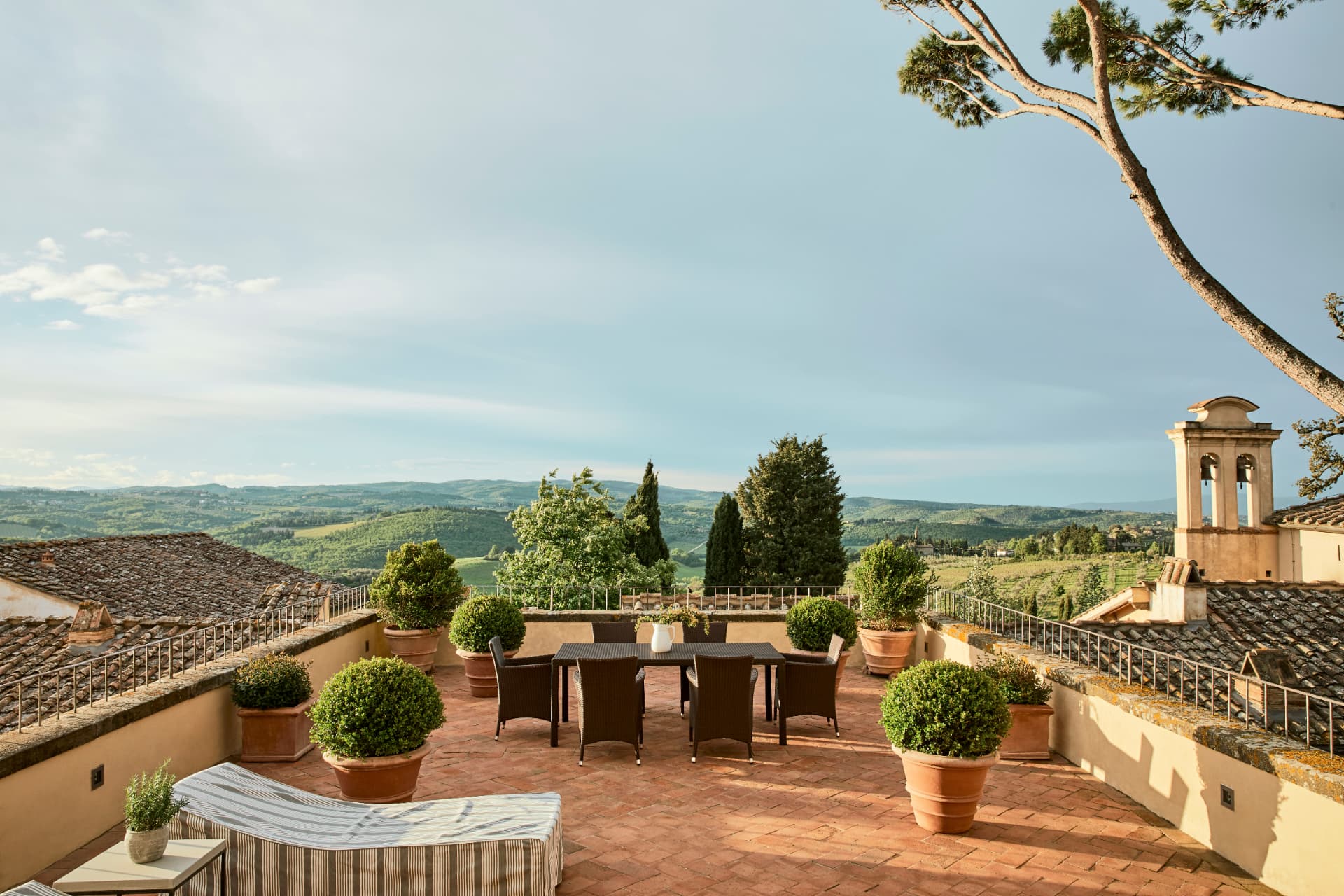
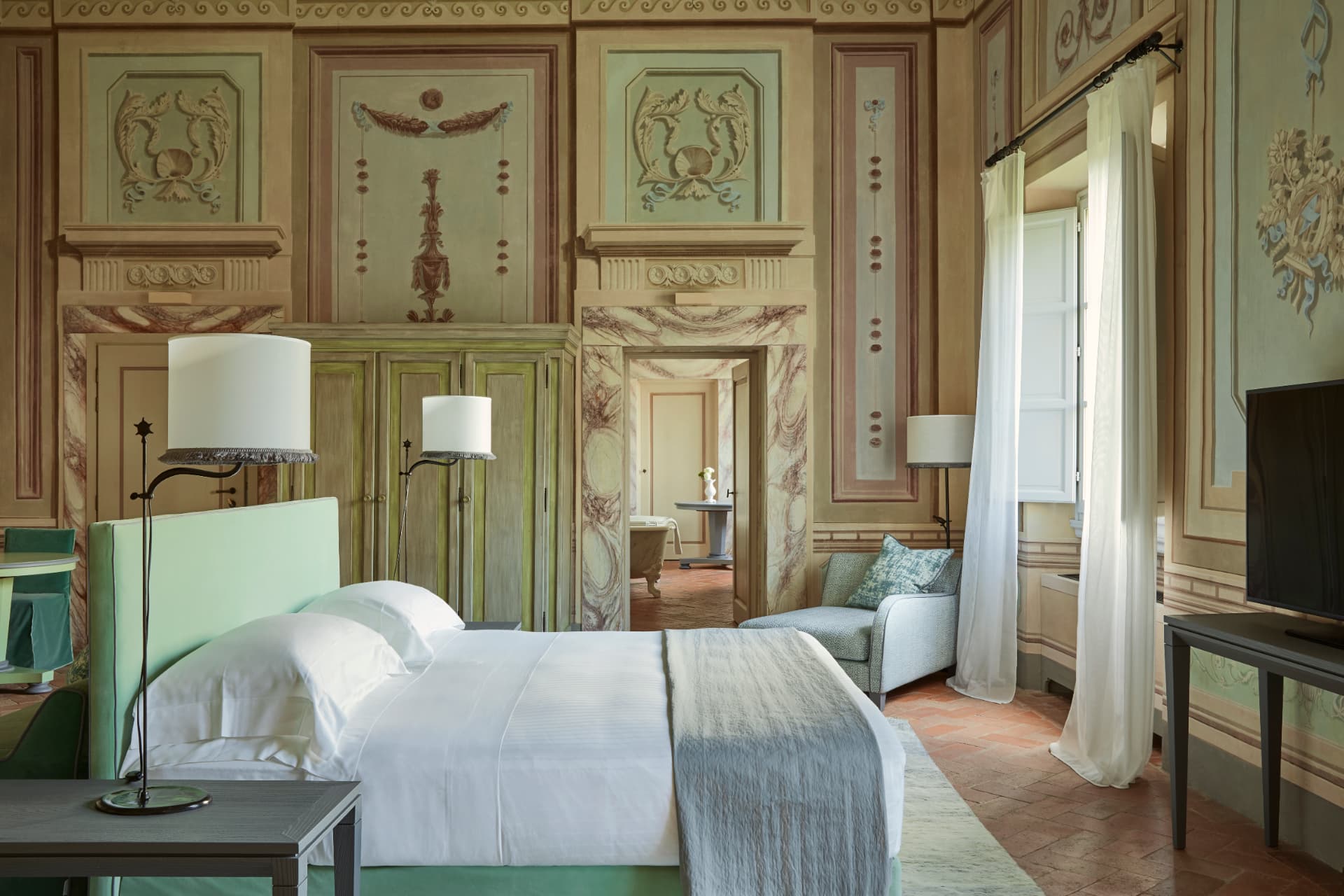
A honey-stone twelfth-century Tuscan castle estate above vineyards and olive groves at golden hour, with a cypress-lined drive and long shadows

COMO — Chianti, Tuscany

A Tuscan Estate Where Time Slows Down

Nestled among vineyards and ancient olive groves, COMO Castello Del Nero is more than a luxury hotel. It is an invitation to experience Tuscany at its most authentic, where Renaissance history meets contemporary elegance and every moment unfolds at an unhurried pace.

An Introduction

Eight hundred years of the same view, and nobody in a hurry to change it.

The drive is a kilometre of gravel between cypresses, and it is designed — by accident, by centuries — to slow you down. By the time the castle appears above the vine rows you have already dropped a gear twice and stopped thinking about whatever you were thinking about on the road from Florence. The building is the colour of dry straw in the afternoon and the colour of bread crust at six.

It was fortified in the twelfth century, fought over by families whose names are still on the wine labels in the village, and then, for a very long stretch, simply farmed. Olive terraces, vines, a chapel, a courtyard for turning a cart around. That agricultural patience is still the character of the place. It has never been a grand hotel pretending to be a castle; it is a castle that eventually agreed to have guests.

What COMO brought to Chianti was not a look but a temperament — the same one that runs through every COMO house: light, air, food that leaves you able to walk afterwards, and a refusal to fill silence. Here it landed on twelfth-century stone, and the two turned out to agree with each other almost completely. This is not a countryside hotel with history attached. It is a place with a soul that predates the idea of hotels, kept quietly in working order.

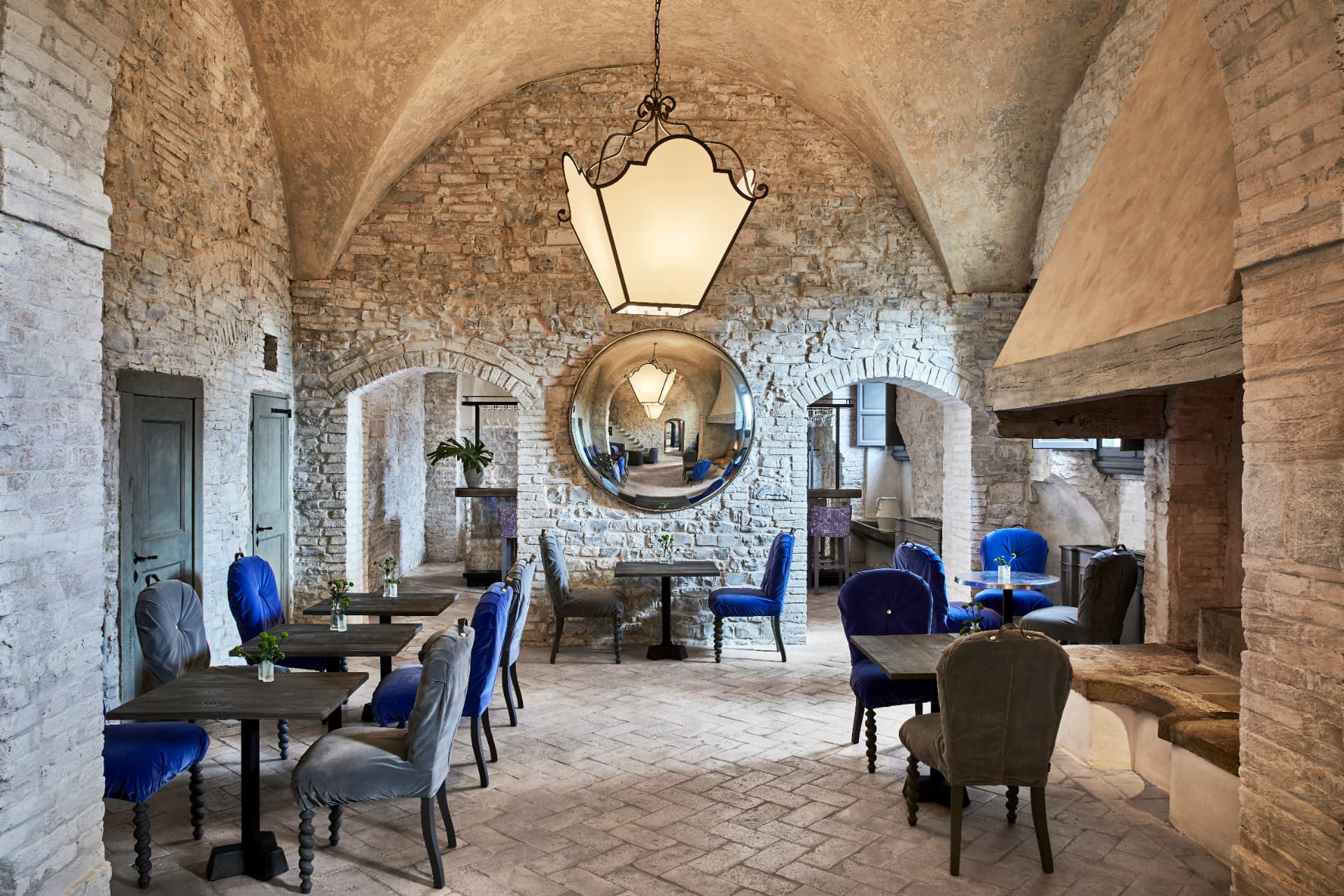
Vaulted stone hall in a Tuscan castle with fresco fragments, lime plaster, oak furniture and linen upholstery in warm daylight

Architecture & Design

History left as the protagonist

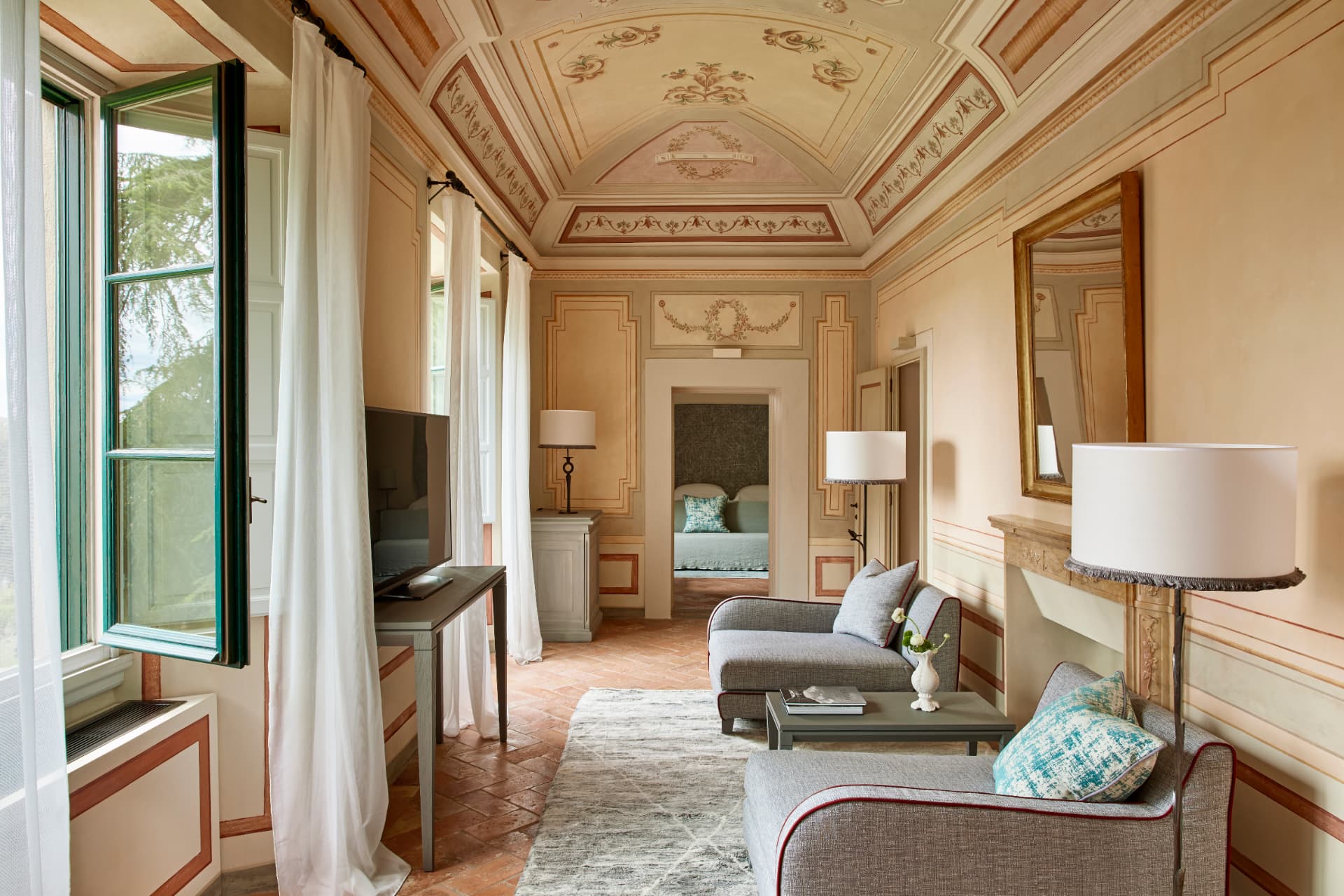
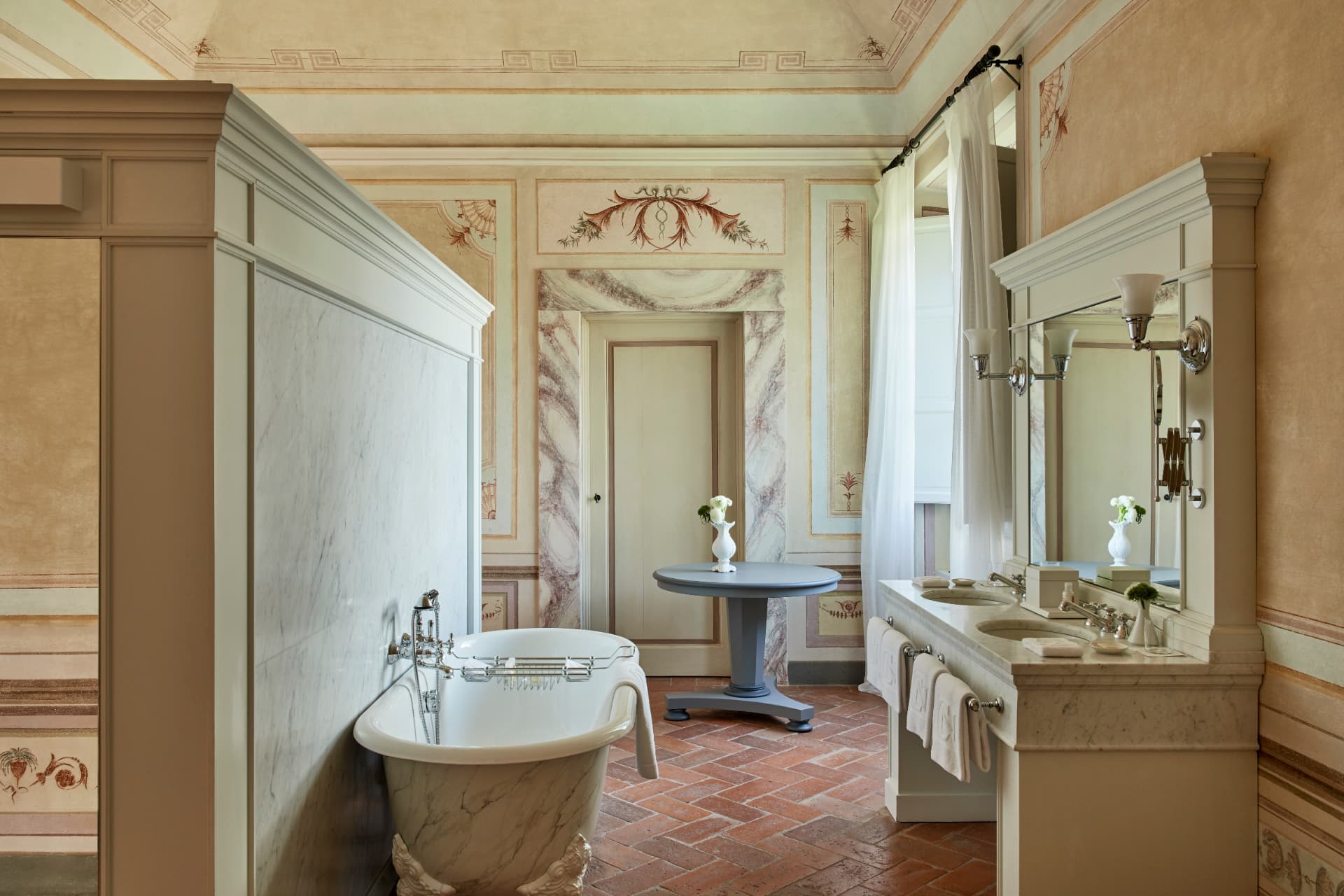
The restoration was an exercise in restraint. Vaulted ceilings were consolidated rather than smoothed. Frescoes were stabilised where they had survived and left unfinished where they had not, so that whole walls read like pages with words missing. The stone was cleaned, not replaced; you can still see where centuries of hands have worn the edge of a doorway round.

Into that, very little: warm oak, linen the colour of unbleached paper, a few contemporary Italian pieces chosen because they hold their shape without raising their voice. Nothing shines. Nothing is placed where a fresco needs the wall.

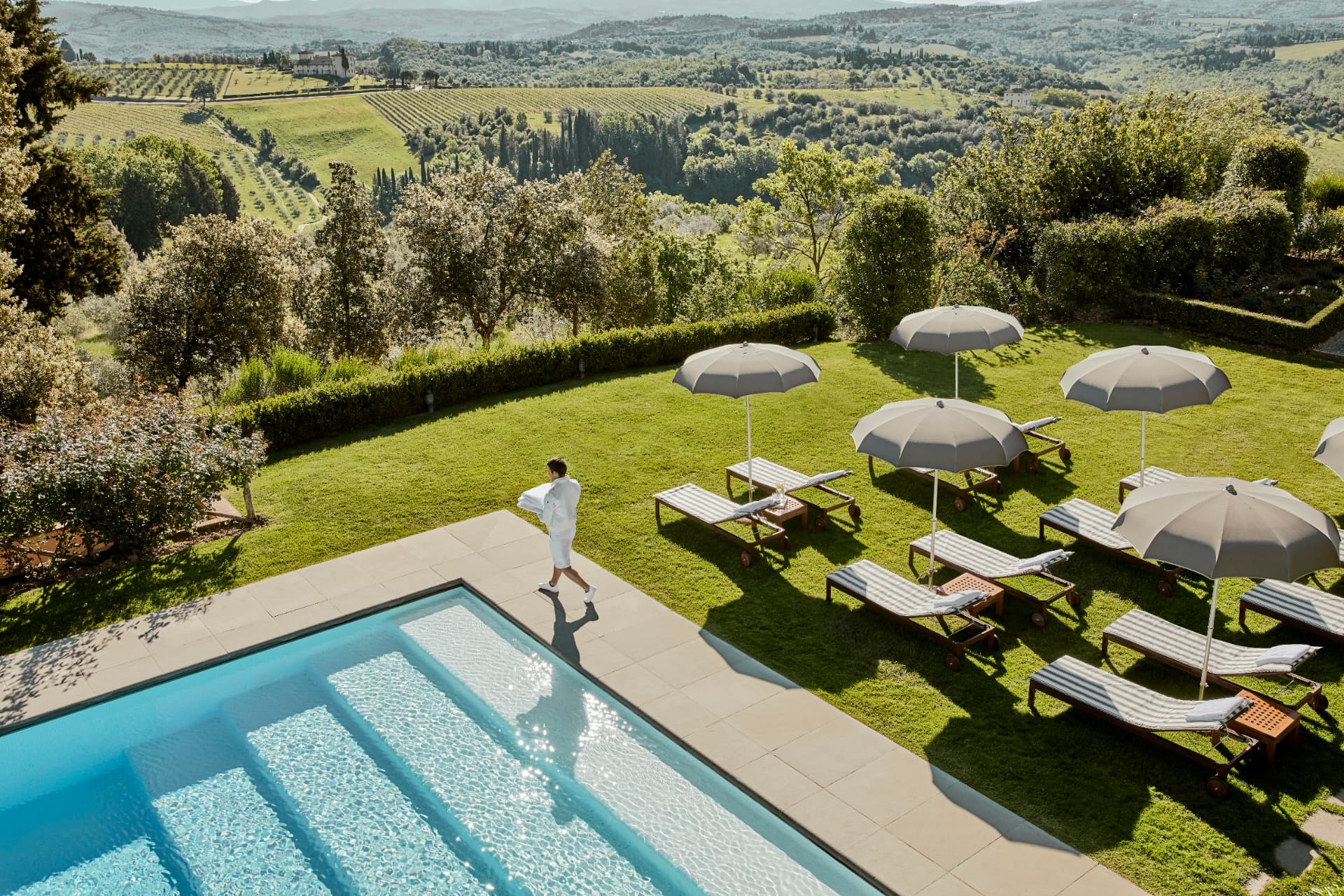
Outside, the Italian garden keeps its geometry — box hedge, gravel, a long line of cypress — and then simply gives up at the edge and becomes vineyard. That handover, from order to landscape, is the finest piece of design on the estate, and it was done long before anyone thought to call it that.

Rooms & Suites

Rooms that behave like a house

No categories worth reciting. What matters is which way the windows face and how long it takes you to stop looking out of them.

Tuscan castle bedroom at dawn with white linen bedding, timber beams and a window open onto vineyard rows and cypress trees

No. 01

Waking Into the Valley

The rooms are not decorated so much as furnished the way an old Tuscan house furnishes itself: warm stone underfoot, chestnut beams overhead, unbleached linen, a chair placed where the light lands at seven. Sleep with the shutters folded back and what wakes you is not an alarm but a change of temperature — the valley exhaling, mist still lying in the vine rows, the first tractor somewhere two hills away. You lie there a while. Nothing in the room suggests you should do otherwise.

Quiet suite corner in a restored Tuscan castle with linen armchair, oak writing desk and a faded fresco beside an arched window at dusk

No. 02

The Hours Between

Some walls still carry their frescoes, faded to the colour of weak tea and left exactly as they were found. Others were simply cleaned and let be. Around them: oak that has been waxed rather than lacquered, ceramics made forty minutes down the road, a desk broad enough to write letters nobody asked for. In the late afternoon the light comes in low and horizontal, moves slowly across the plaster, and takes about two hours to leave. Most guests stop what they are doing to watch it.

Long linen-covered lunch table beneath olive trees in Tuscany with handmade pasta, vegetables and a bottle of Chianti in dappled light

Dining

The estate, eaten in order of season

Most of what arrives at the table grew within sight of it. Vegetables from the kitchen garden, herbs cut that morning, oil from the estate's own olives — green, peppery, poured with a heavy hand in November and treated more carefully by June. The pasta is rolled by hand and cut wider than you expect.

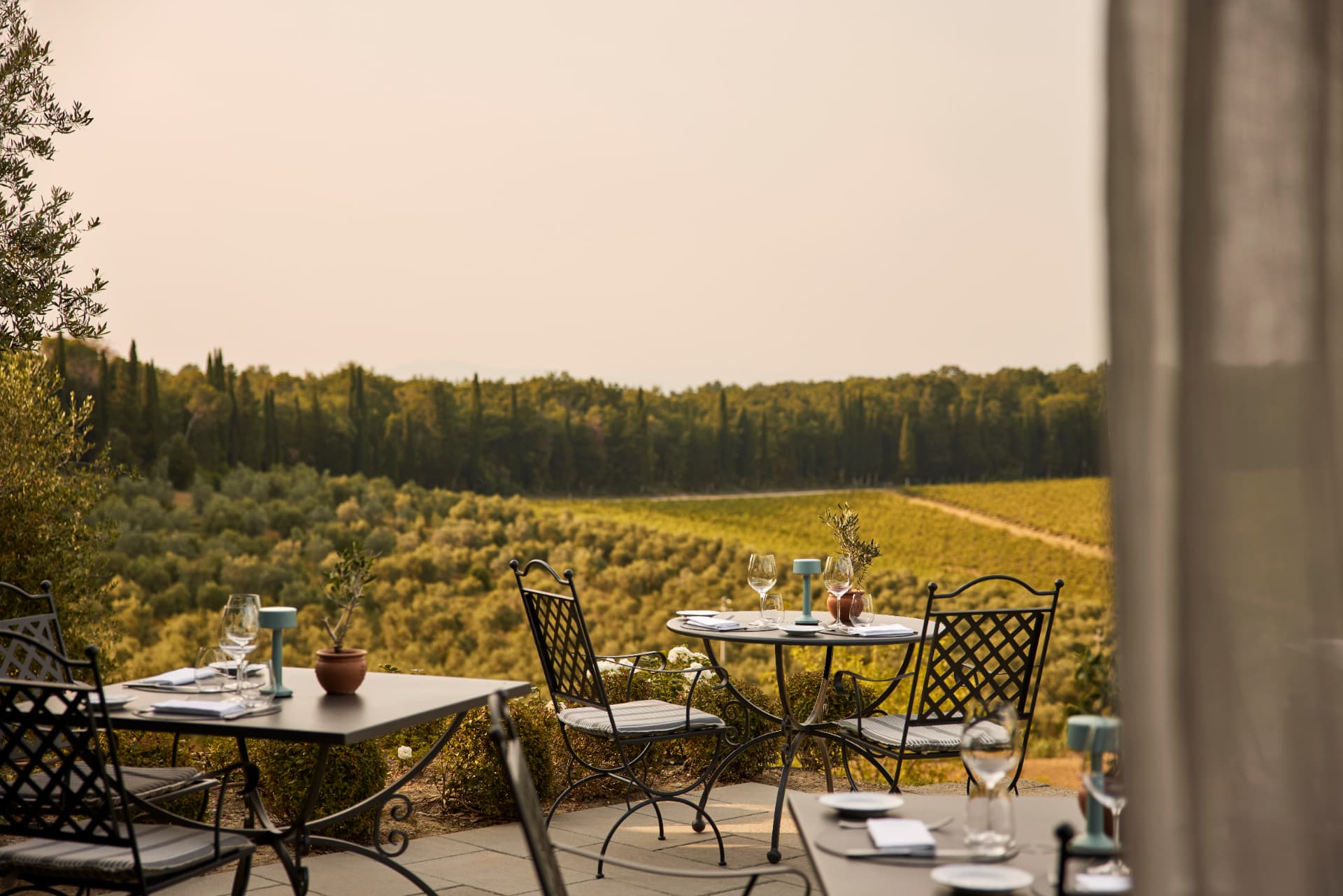
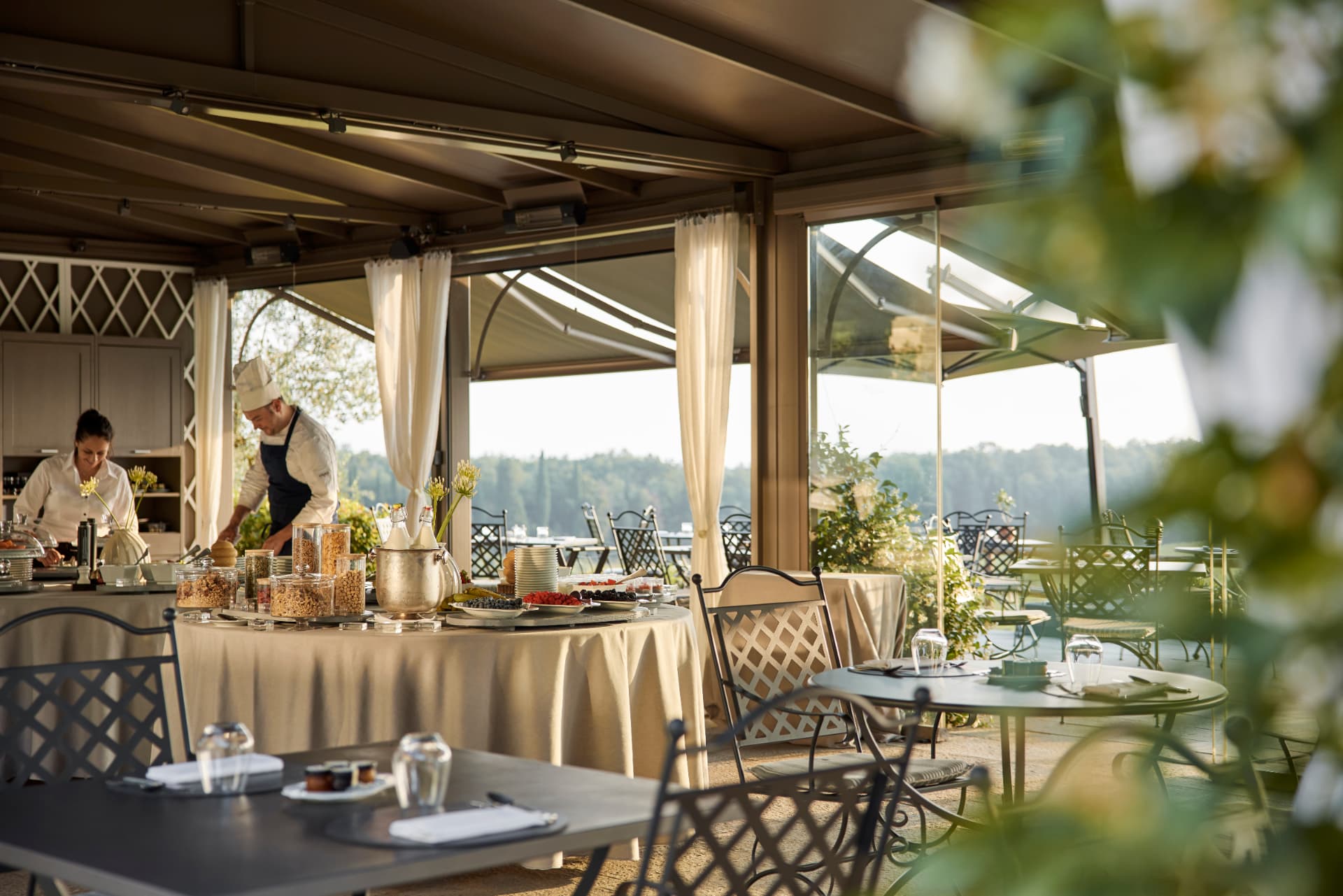
Lunch happens outside, under the olives, and tends to overrun. Dinner moves indoors to a vaulted room lit almost entirely by candles, or out onto the terrace when the evening allows it. The wine list reads like a drive through the surrounding hills: sangiovese from four kilometres away, then Brunello from south of Siena when the evening is worth it.

Nothing is elaborate. A plate of tomatoes in August, bread from the wood oven, a fig split open with a thumb. What the kitchen understands is that in Tuscany the cooking is not separate from the landscape — it is the landscape, arriving at the table about six hours later.

Quiet stone spa terrace in a Tuscan garden with a linen daybed, rolled towels and still water reflecting cypress trees

Wellness

COMO Shambhala, with the windows open

The retreat occupies the old farm buildings, and it smells of what is outside them — cut grass, rosemary, warm stone, a trace of woodsmoke in October. Treatments are unhurried and largely wordless: hands, warmth, oil pressed on the estate, and a long silence afterwards that nobody rushes you out of.

Yoga happens early in the garden, before the heat, when the valley is still white with mist and the only sound is birds working through the olive terraces. There is water — thermal, still, quietly warm — and a room where you are meant simply to lie down and stop.

None of it feels sealed off from the estate. You walk back to your room across gravel, past the vines, with your hair wet and the afternoon entirely unaccounted for. That, more than any treatment, is what people mean here when they say they feel better.

Signature Experiences

Six days you would remember

All of them belong to Chianti rather than to the estate, which is rather the point. Do no more than one a day.

  • No. 01

    Truffle hunting, before the ground warms

    You leave in the half dark with a man who has done this since he was nine and a dog who is better at it than he is. An hour of oak woods, wet leaves, and a great deal of standing still. When the dog stops, everything stops. What you carry home fits in a handkerchief and perfumes the entire car.

  • No. 02

    A balloon over Chianti at first light

    The burner is loud, then it is not, and then there is only the sound of a landscape waking underneath you — vineyards laid out in corduroy rows, farmhouses still shuttered, mist collecting in the folds between hills. It lasts an hour. People rarely speak during it.

  • No. 03

    A cellar cut into the hill

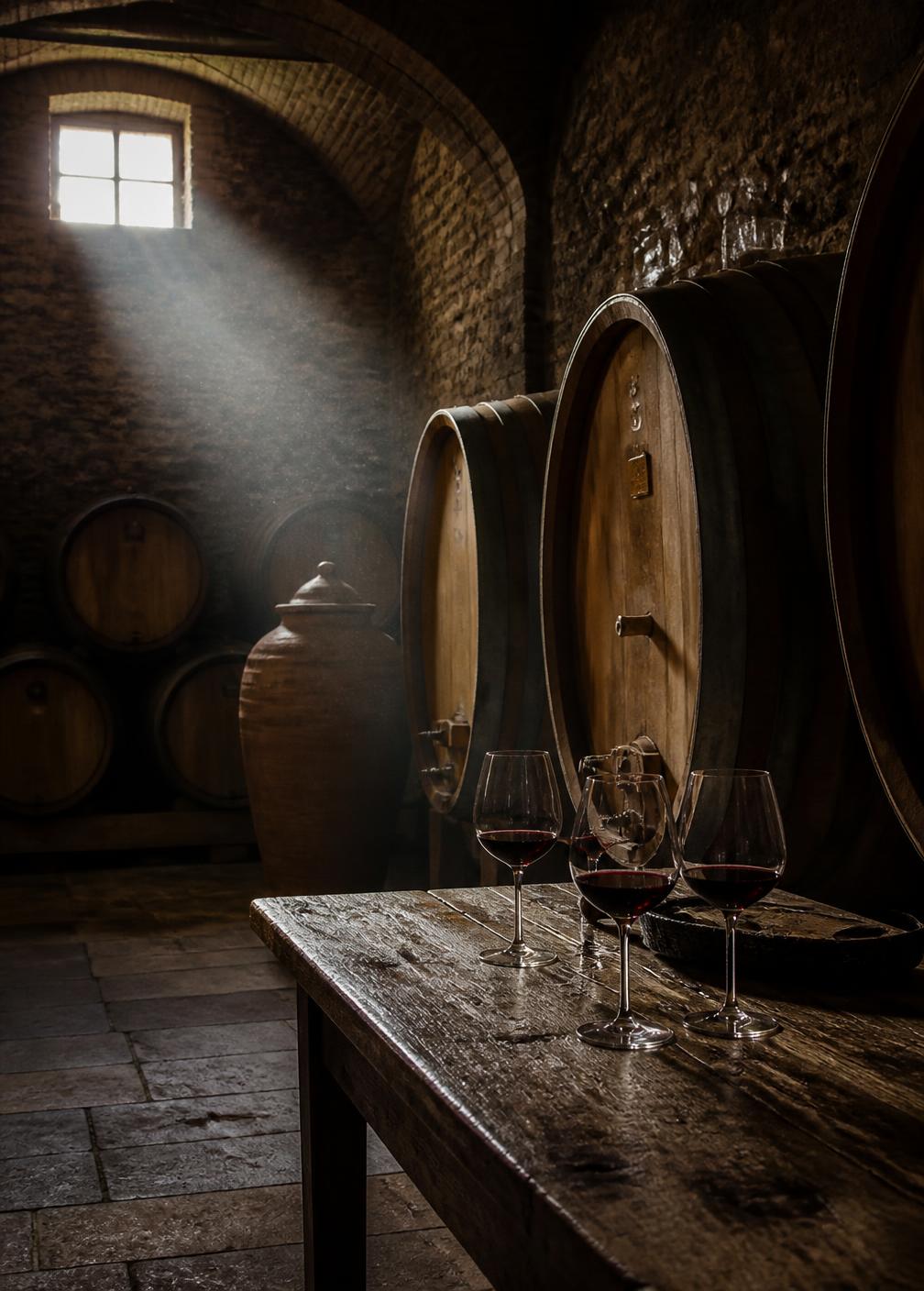
    Not a tasting room. A cellar: cool, damp, smelling of oak and old stone, where someone's grandfather's barrels are still in use and the bottles are pulled out and opened because you are there. Sangiovese from the slope you drove past this morning, poured without ceremony.

  • No. 04

    Cooking whatever the garden gave up that morning

    Two hours at a floured table with a woman who does not measure anything. Pasta made by hand until your forearms notice, tomatoes still warm from the row, oil from the estate's own press. You eat what you made, outside, and it is better than it has any right to be.

  • No. 05

    The white roads, on two wheels

    The strade bianche run between the vineyards and carry almost no traffic. Take a bicycle out after breakfast, keep to the ridge, and turn around whenever you feel like it. The gravel is loud, the cypresses throw shadows across the road at intervals, and the only decision is which way at the next fork.

  • No. 06

    Aperitivo, facing west

    The last of the day happens quickly here. A glass on the terrace at eight, olives, the hills going from green to bronze to blue in about twenty minutes, swifts working the air above the courtyard. Then the first star, and the sense that dinner can wait a little longer.

Maison Voyage Loves

Six small things

  • The morning mist lifting off the vineyards, which takes about forty minutes and is worth all of them.
  • Reading beneath an olive tree after breakfast, with the book face-down on your chest for most of it.
  • A glass of Brunello as the sun goes behind the hills and the whole valley turns the colour of old paper.
  • Figs picked from the garden and eaten warm, standing up, before anyone sees you.
  • The scent of rosemary carried across the courtyard on a warm evening breeze.
  • Dinner under the stars on the castle terrace, ending long after the kitchen has closed.

Who This House Is For

Travellers who came for Tuscany, and are willing to let it set the pace.

It suits people who care about buildings and gardens, who order the second bottle because the conversation is going well, who would rather spend a morning in one cellar than an afternoon in four. Couples looking for the authentic version of Chianti will find it here. So will design travellers, cooks, wine drinkers, and anyone whose idea of wellness involves walking uphill before breakfast.

It works beautifully for a celebration — a birthday, an anniversary, the kind of long lunch that becomes the story of the year — and it is unexpectedly good with families, provided the children are the sort who like space, animals and being outside until dark. Slow travellers will need no persuading at all.

It will not suit everyone. There is no nightlife, no beach, no shopping street, and the nearest town of any size wants a car and half an hour. In high summer the Chianti hills are hot and still, and the roads between them are narrow. If you want something to happen every evening, this is a valley that specialises in nothing happening at all — beautifully, and for days at a time.

Nearby Discoveries

What we would tell a friend

Chianti is small and slow, and rewards anyone willing to be late. None of this is a checklist; all of it needs a car and an unhurried morning.

  • No. 01

    Greve and Castellina, on a market morning

    Greve's arcaded triangle of a square is where Chianti does its shopping — a butcher who has been written about too often and is still worth the queue, a bread shop with nothing else to prove. Twenty minutes north, Castellina is quieter: an Etruscan tunnel under the old walls, a terrace looking west, and almost nobody on it before noon.

  • No. 02

    Family vineyards without a tasting counter

    The estates worth your afternoon are the ones with no sign at the gate. Ask, and someone will make a call. You will be met by whoever is not out in the rows, shown a cellar, poured three vintages from the barrel, and kept an hour longer than planned. Buy two bottles; drink one that evening.

  • No. 03

    Siena, taken late in the day

    Arrive after five, when the coaches have gone and the Campo has begun to fill with people who live there. Sit on the brick slope with your back warm from the day and watch the light climb the Torre del Mangia. The cathedral can wait until morning. Most of Siena is better empty.

  • No. 04

    Florence, for one thing only

    An hour away, and best treated with discipline: choose a single room, a single fresco, a single workshop where someone still gilds frames by hand, and refuse to add to the list. Lunch in the Oltrarno, coffee standing at a bar, and back into the hills before the evening traffic starts.

  • No. 05

    San Gimignano, at seven in the morning

    The towers are extraordinary and the town is overwhelmed by ten. So go absurdly early, with the shutters still down and the stone still cold, walk the length of it twice, drink a coffee with the men who deliver things, and leave before the first group arrives. Entirely different place.

  • No. 06

    The roads with no destination

    The finest hours here are spent driving between places you never quite reach: gravel tracks between olive terraces, a chapel with the door open, a table outside a bar in a village of forty people, a hand-lettered sign for oil sold from a garage. Take the turning. That is the trip.

A Note from the Editor

Come in late September, when the harvest is in and the light has softened.

Take a room on the vineyard side. Walk the cypress avenue before breakfast while the valley is still holding its mist, eat lunch outside for as long as it lasts, and keep one afternoon entirely unplanned. That afternoon is the one you will describe to people afterwards, and you will struggle to explain why.

Ben Trousil, Founding Editor

From the Journal

Continue reading

All stories
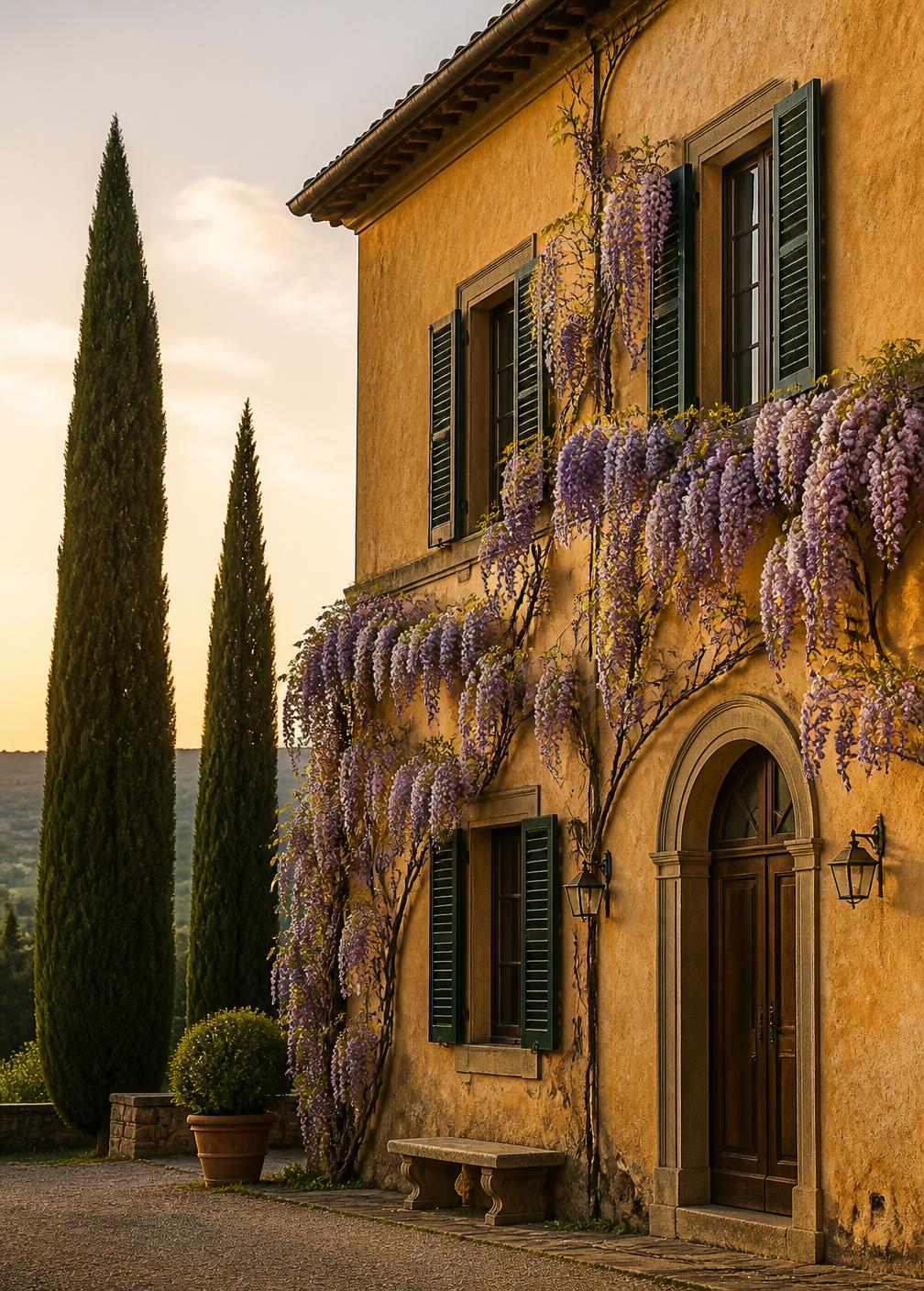
  • Honey-coloured Tuscan villa facade with green shutters and wisteria in warm evening light

    HotelsAugust 2026

    The Most Beautiful Hotels in Tuscany

    Twelve houses between the Chianti hills and the Val d'Orcia — a castle, a monastery, a farm with its own press — chosen for how they hold the morning.

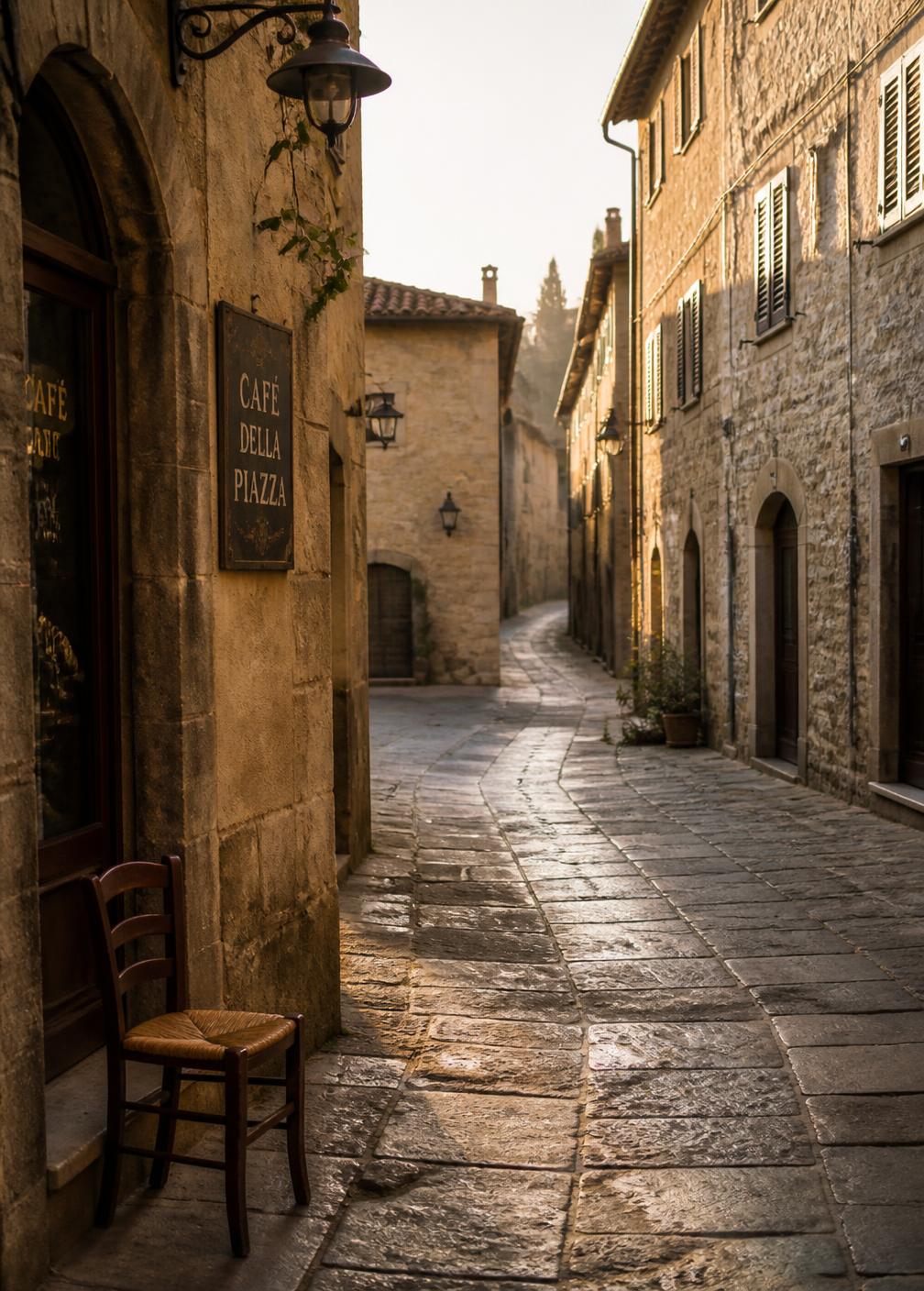
  • Narrow stone street in a small Chianti village at early morning with a wooden chair outside a café

    Slow TravelJuly 2026

    A Guide to Slow Travel in Chianti

    Four villages, three white roads and one rule: never plan more than two things in a day. Written for travellers who would rather see less, properly.

  • Old Tuscan wine cellar with oak barrels and glasses of red wine in a shaft of daylight

    Travel GuidesJune 2026

    Where to Drink Brunello in Tuscany

    South of Siena, in cellars cut into the hill, sangiovese becomes something else entirely. The small producers worth the drive, and when to go.

A Personal Enquiry

Let's Curate Your Tuscan Journey

If Chianti has begun to sound like your next journey, we would be glad to arrange it personally — the estate itself, and everything around it.

A private truffle morning, a cellar that does not take visitors, the table worth driving to, and a few nights elsewhere in Tuscany chosen to fit the way you actually travel.

Why book through Maison Voyage?

  • Personal luxury travel advice
  • Carefully curated hotel recommendations
  • Tailor-made itineraries
  • Exclusive partner benefits whenever available
  • Direct personal contact from start to finish

No booking is made and nothing is charged. We simply begin a conversation.

An Invitation

Continue the Journey

One letter each month: a place worth the detour, an object worth keeping, a page worth reading slowly. Nothing more.