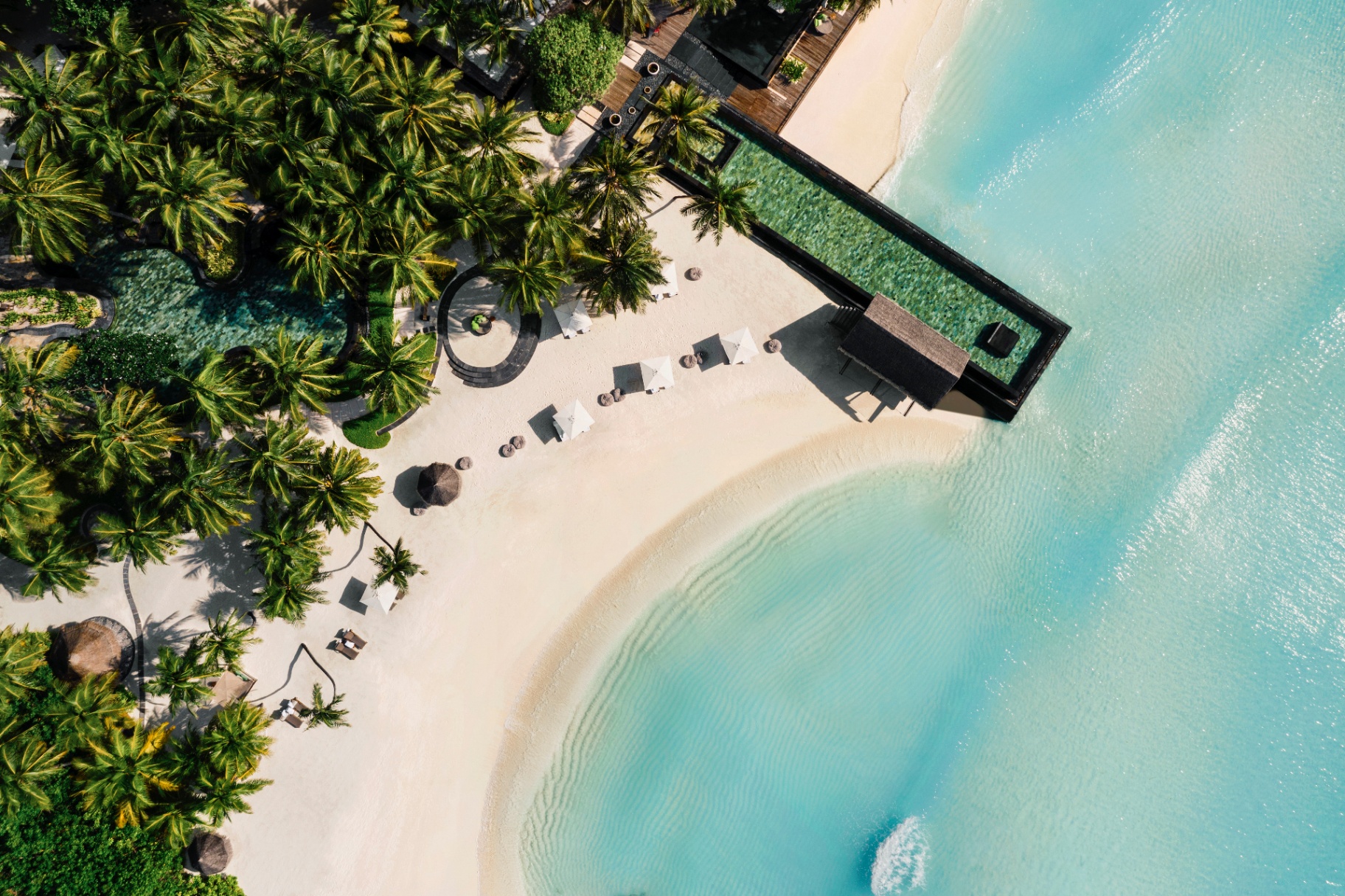
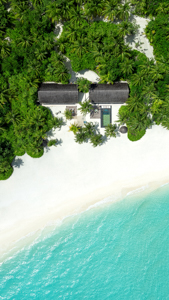
A timber jetty reaching across a calm turquoise Maldivian lagoon at golden sunrise, with palms, white sand and thatched villas in the distance

One&Only Reethi Rah — North Malé Atoll, Maldives

Where the Ocean Sets the Rhythm

Scattered across one of the Maldives' largest private islands, One&Only Reethi Rah offers a rare combination of complete privacy, extraordinary space and timeless barefoot elegance, where every day begins and ends beside the Indian Ocean.

An Introduction

An island shaped like an open hand, with twelve beaches and no reason to hurry across any of them.

You arrive by water, which is the only correct way to arrive anywhere in the Maldives. The yacht leaves Malé and within ten minutes the city is a smudge behind you and the ocean has started doing the thing it does here — changing colour every few hundred metres for reasons to do with depth and sand that nobody on board bothers to explain. Ink. Then sapphire. Then, quite suddenly, a green so shallow and so clear that you can watch the shadow of the hull travelling across the floor of it.

The island appears the way islands are supposed to: a line of palms first, then sand, then the shape of the whole thing, which is long and fingered and wraps around its own lagoons. Somebody cuts the engine. And then comes the part nobody writes about, which is the silence — not an absence of noise but a rearrangement of it. Water against timber. Wind through fronds. A bird you will not identify all week. The heat arrives at the same moment, soft and salted, and something in the shoulders lets go before you have set foot on the jetty.

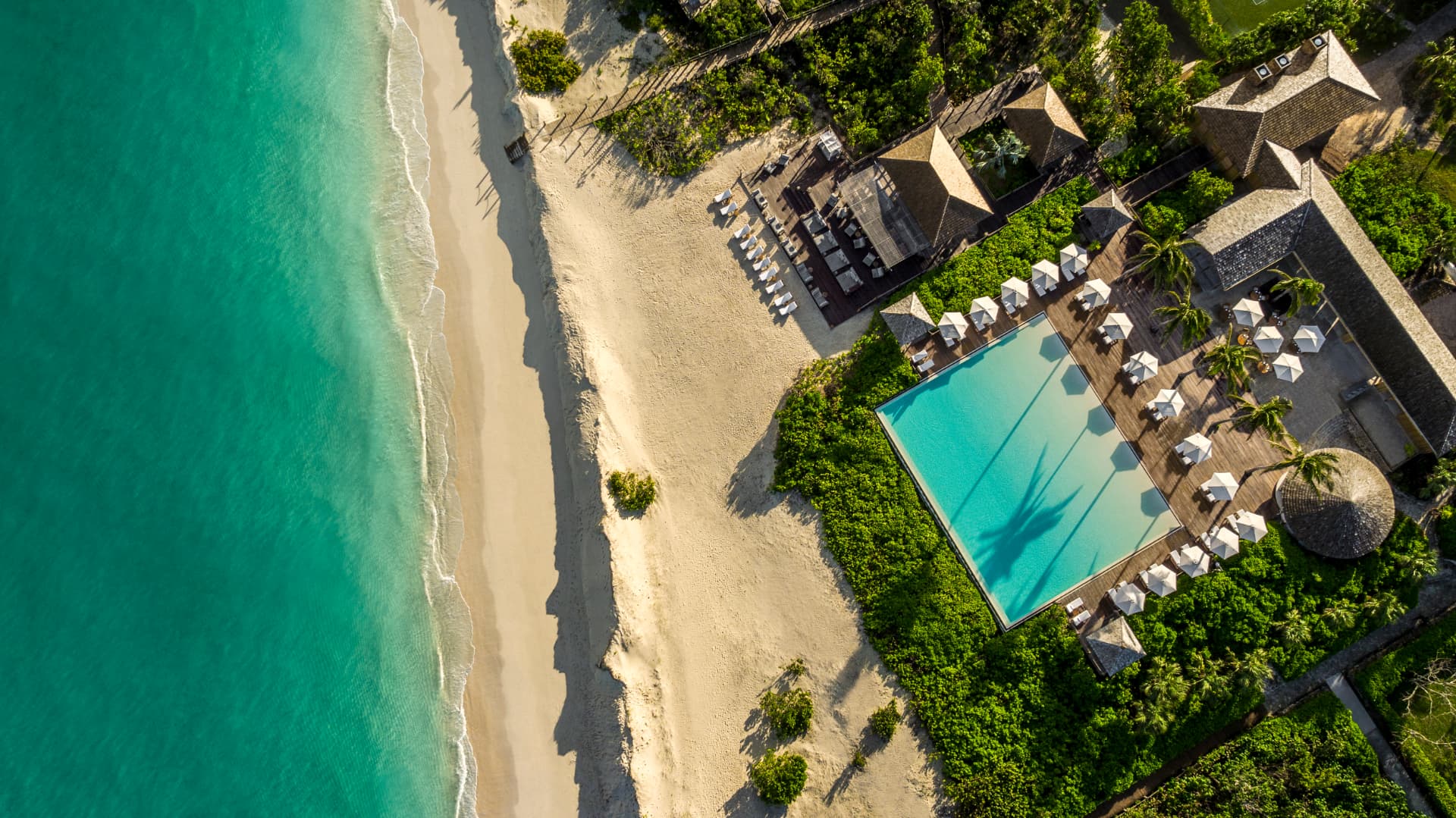
What made Reethi Rah into one of the Maldives' defining addresses is not a list of facilities. It is space. The island is enormous by atoll standards and the houses are set far apart along it, so the days acquire a distance that most resorts cannot offer at any price. Twelve separate beaches means you can walk for an hour and find sand nobody has stood on since the tide came in. It means dinner without a neighbouring table. It means the ocean is always the loudest thing.

By the second morning the rhythm has taken over entirely, and it is a tidal one. You are up before six because the light insists. You swim before you have properly woken. The middle of the day belongs to shade and a book that stays open at the same page. And at some point in the late afternoon you find yourself standing at the water's edge doing absolutely nothing at all, for a long time, and it does not occur to you that this is unusual.

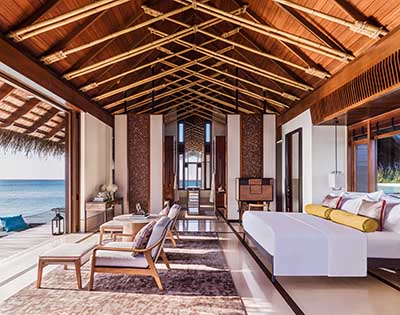
Open-air thatched pavilion with timber beams, coral stone walls, linen curtains and a tropical garden of palms beyond

Architecture & Design

Buildings that agree to come second

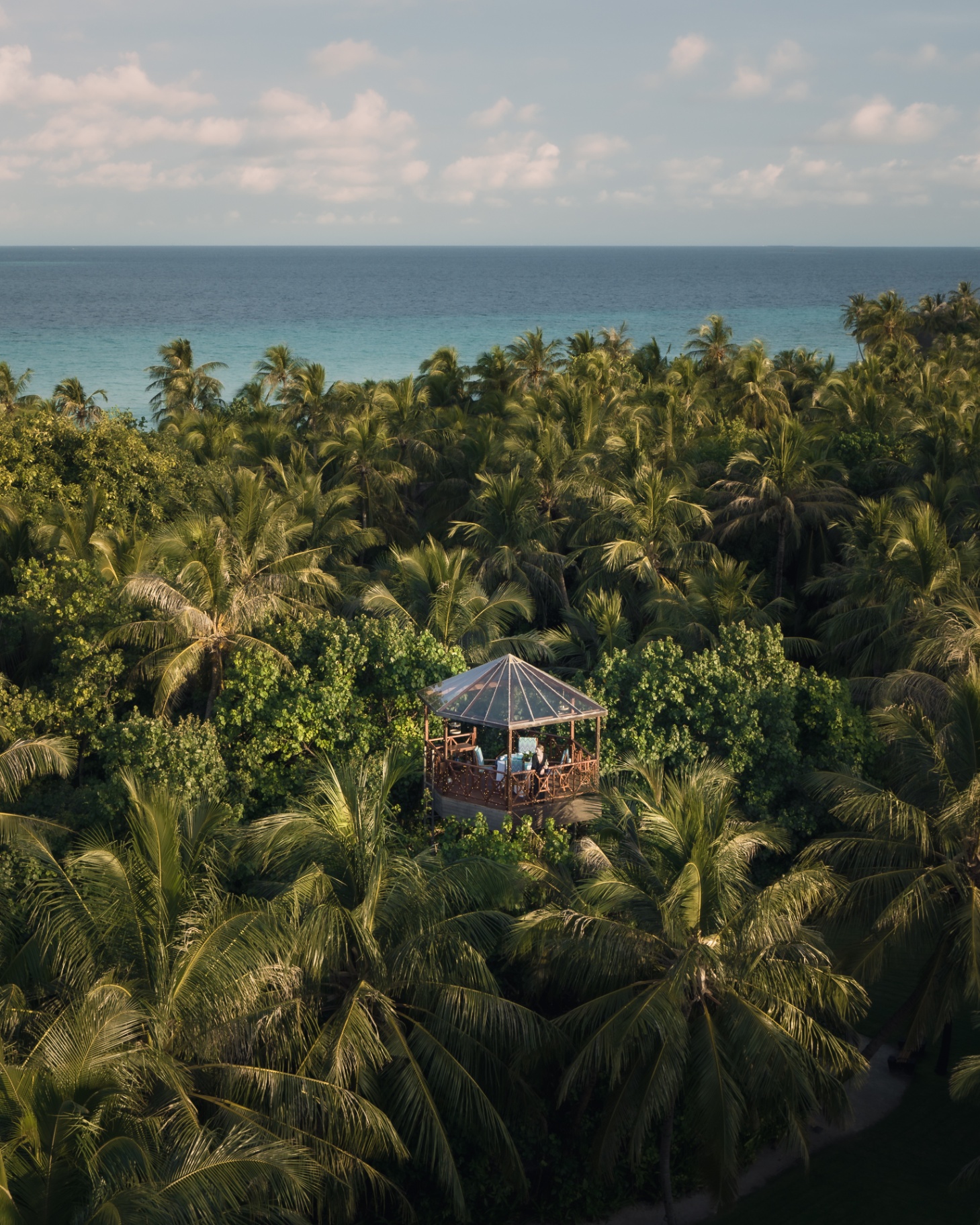
Thatch, timber, coral stone, lime plaster. The roofs are pitched steeply the way Maldivian roofs have always been pitched, because rain here arrives sideways and then stops. Nothing rises above the palms. From the water you see an island with a few roofs in it, rather than a resort with an island attached.

Inside, the walls tend to be missing. Living rooms open on two or three sides, so the breeze crosses the house all day and the difference between indoors and out becomes a question of where the floor changes. Linen, rattan, unlacquered teak, stone worn smooth underfoot — materials chosen because salt air improves them rather than ruins them.

The colours are the ones already outside: sand, shell, bleached wood, the pale green of a new frond. It is a deliberate decision not to compete. Put anything bright in a room facing that lagoon and the room loses. Here, the architecture steps back, and the ocean is left to do what it came to do.

Villas

Private island homes, spaced out under the palms

The only question worth asking is which way the house faces. Sunrise on the water, or the long light of the evening across the lagoon.

Maldivian villa bedroom at sunrise with a timber four-poster bed, white linen, sheer curtains lifting and open doors onto white sand and a turquoise lagoon

No. 01

Waking above the water

You wake before the alarm, because the light does it for you. First a pale grey that could be anywhere, then, within twenty minutes, a warmth that arrives through the linen and lands on the timber floor. The doors were left open overnight and the sea is doing what it has been doing since long before the island had a name — a rhythm, not a sound. You lie still for a while. Then you walk out barefoot, and the sand is already warm, and nobody in either direction.

Private villa pool on a timber deck with palm shadows, two linen loungers and a turquoise lagoon beyond

No. 02

A deck, a pool, and no one else

Every house here has its own water: a pool cut into the deck, a beach two steps beyond it, a lagoon that is body temperature by nine. Outdoor showers under the palms. Rope, teak, linen, coral stone — materials that improve as the salt gets into them. Villas sit far enough apart that a week can pass without a neighbour, and the only conversation you overhear is a heron on the shoreline. Privacy here is not a service. It is a matter of geography.

Dining

Nobody dresses for dinner, and the food is better for it

Most of what arrives at the table was in the water this morning: reef fish, yellowfin, lobster, whatever the dhoni came back with. It is cooked simply because it does not need help — over coals, with lime and chilli, and a bowl of rice that tastes of coconut.

Beyond that, the island eats widely. A Japanese kitchen that takes its knife work seriously; a Middle Eastern table of mezze, charcoal and flatbread torn by hand; fruit at breakfast that was picked rather than shipped — papaya, passion fruit, small sweet bananas nobody exports.

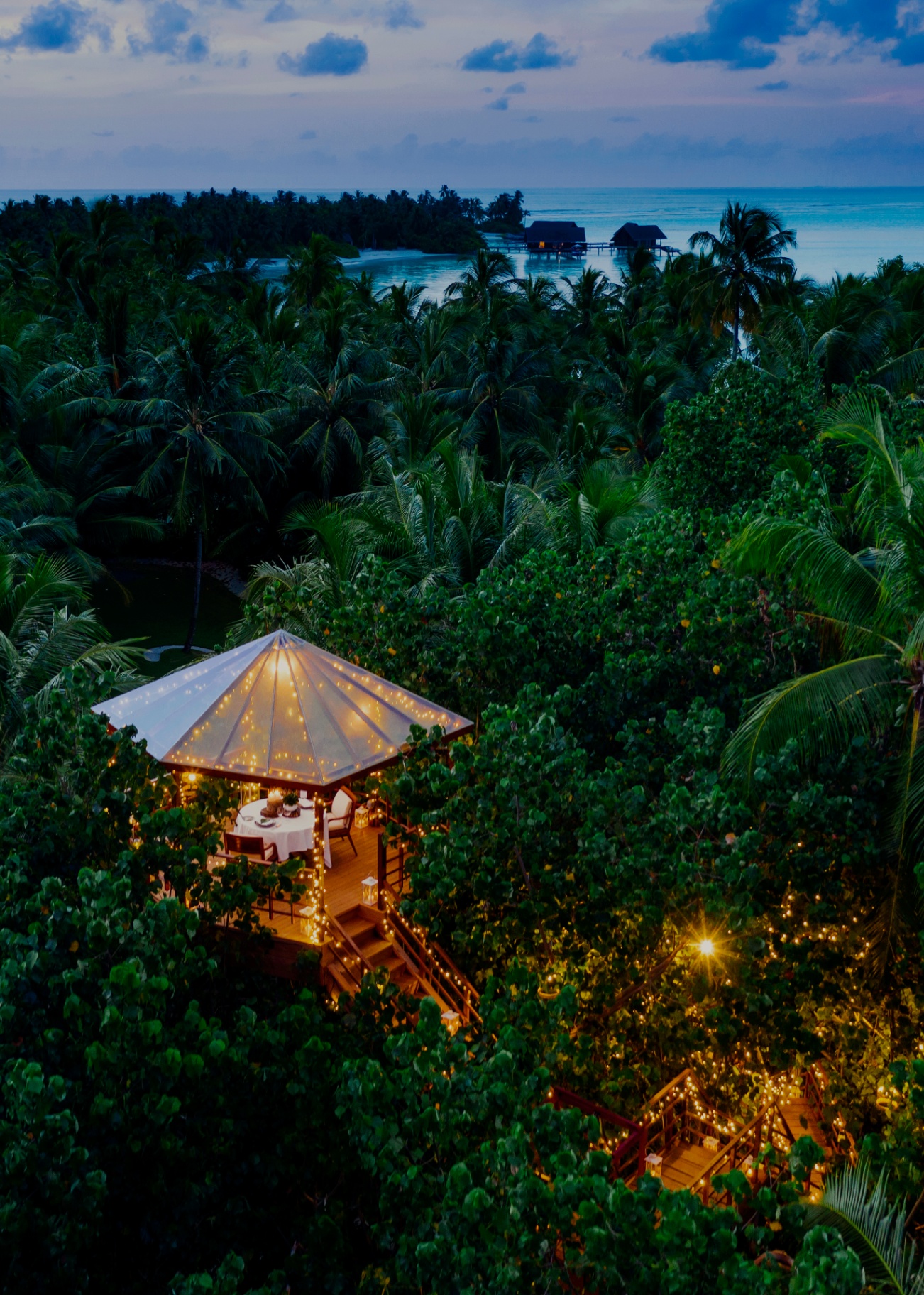
The best meal of the week will almost certainly be a table set on the sand with a lantern on it, somewhere nobody else is. Two courses, bare feet, the tide coming in about four metres away, and a drink at sunset that you will still be holding when the stars come out.

A table set with white linen on white sand at the edge of a turquoise lagoon at sunset, with seafood, tropical fruit and a lantern
Open-air spa treatment pavilion with a thatched roof, timber floor, white linen bed and a tropical garden in dappled light

Wellness

The island does most of the work

The One&Only Spa sits in its own garden, a scatter of open pavilions with thatch above and timber below, each with its own pool and its own patch of green. Treatments are holistic and unhurried; oils are pressed from coconut and frangipani, and the hands know what they are doing.

But the reason an hour here lands differently has nothing to do with technique. The sides are open. You can hear the water the entire time — a small wave, then a pause, then another — and the breeze crosses the table every thirty seconds or so. The treatment happens inside the weather rather than away from it.

There is yoga at first light on a deck facing east, breathwork, meditation with nothing to focus on but the sound of the reef. None of it is compulsory and none of it is scheduled at you. Most people find that by the fourth day they are sleeping the way they did as children.

Signature Experiences

Eight mornings and evenings worth setting an alarm for

Everything here happens at either end of the day. The middle belongs to shade, water and the reading you brought and will not finish.

  • No. 01

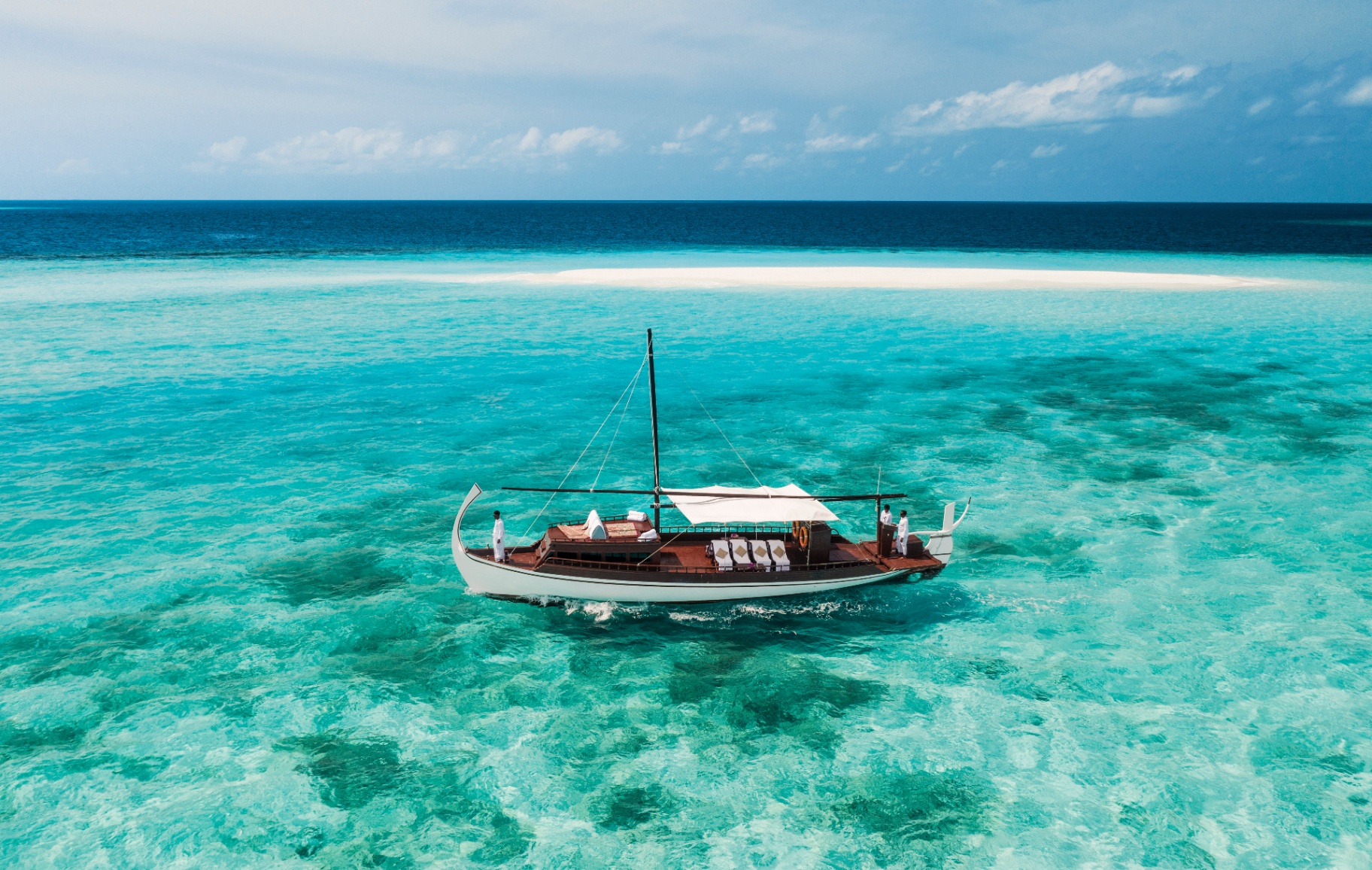
    A sandbank that exists for one afternoon

    A boat drops you on a crescent of sand with no name and no shade but an umbrella, and comes back when you signal. Lunch in a basket, water on all sides, and the particular quiet of standing somewhere the map has not bothered to record.

  • No. 02

    Paddleboarding at first light

    Out on the lagoon at six, when the water has not yet been touched. You can see your own shadow on the sand three metres below. Rays pass beneath the board without hurrying, and the island behind you is still asleep.

  • No. 03

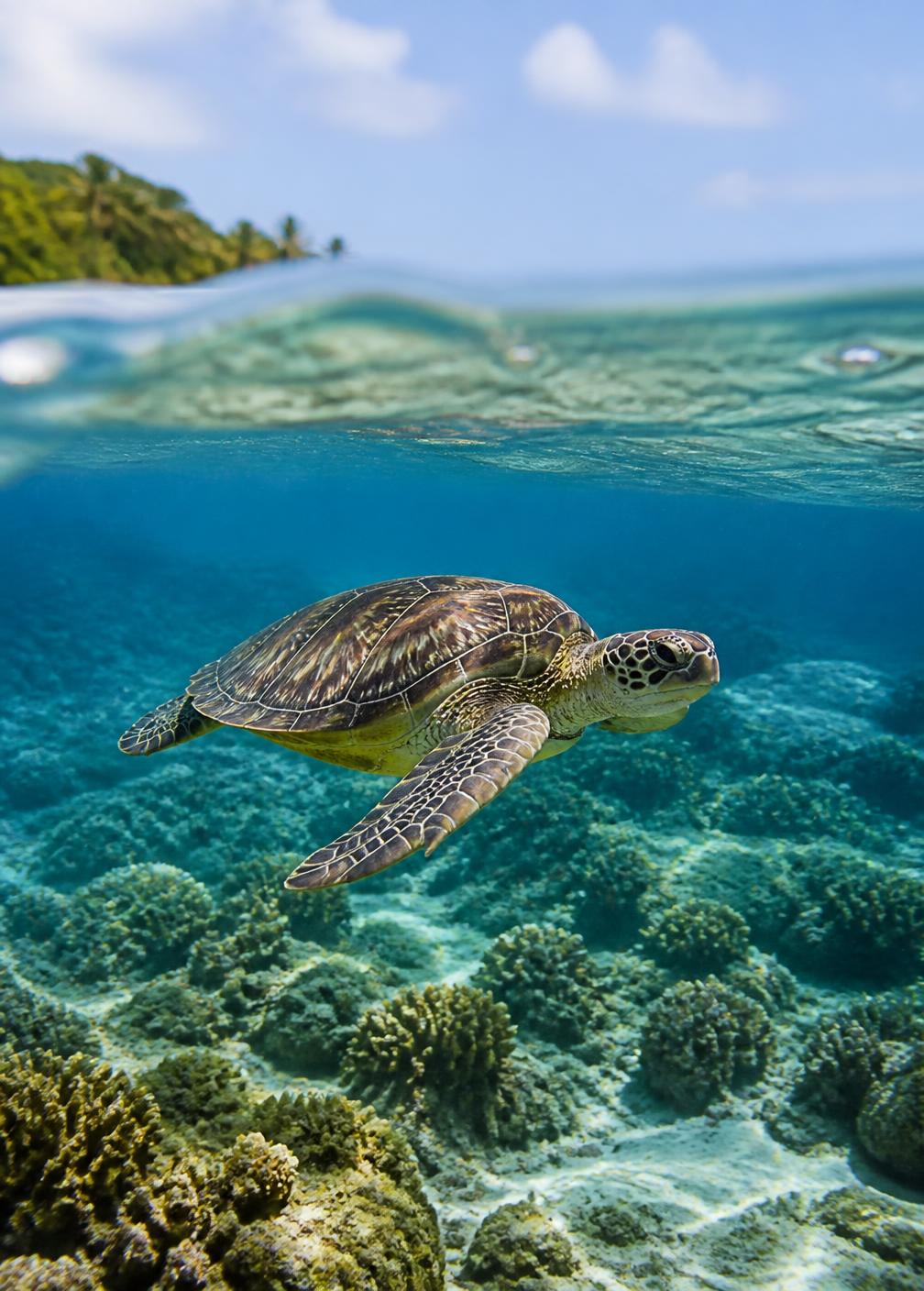
    Swimming beside a turtle

    It will be entirely unimpressed by you, which is the best part. Turtles feed on the reef most mornings and move with the economy of something that has been doing this for ninety years. You follow at a distance, then let it go.

  • No. 04

    The reef, close up

    Mask, fins, ten metres from the beach: parrotfish, a reef shark that wants nothing to do with you, coral in colours that photographs never manage. Go at slack tide, when the water is clearest and the current forgets to pull.

  • No. 05

    Dolphins at the end of the day

    A dhoni out into the channel at five. Spinner dolphins arrive in numbers that stop conversation, and the light goes from gold to rose to nothing in about forty minutes. No commentary. No music. Just the engine cut and everyone watching.

  • No. 06

    Sailing into the sunset, slowly

    A catamaran with the sails up and the motor off, moving at the speed of the wind rather than the schedule. The island turns to a green line. Somebody eventually opens something cold, and nobody says very much.

  • No. 07

    Cinema under the Milky Way

    A screen on the sand, a deck chair, bare feet, and above it all a sky with no city anywhere near it. Halfway through the film most people stop watching the film.

  • No. 08

    An hour with the marine biologists

    Coral fragments tied to frames, turtle nests counted at dawn, reef surveys logged in pencil. It is unglamorous, ongoing work, and an hour of it changes how the lagoon looks for the rest of the week.

Maison Voyage Loves

Six small things

  • Coffee on the deck at half past five, when the sky is still the colour of the inside of a shell and nothing has begun.
  • Walking the length of a beach barefoot and finding only your own footprints coming back the other way.
  • Swimming in the lagoon before breakfast, when the water is warmer than the air and clear all the way down.
  • Flying fish from the end of the jetty, skimming for twenty metres and disappearing without a sound.
  • Dinner where the only interruption is the tide, arriving steadily somewhere behind your chair.
  • Floating in the villa pool after dark and looking straight up at the Milky Way, which is genuinely there.

Who This Island Is For

People who want space, water and the freedom to do nothing in particular with either.

It suits travellers who value privacy above all else — the kind who would rather walk twenty minutes to a beach nobody is using than sit on a good one that somebody else found first. Design lovers find plenty to look at in the joinery, the thatch and the restraint of it. Anyone who travels for the ocean itself — reefs, turtles, mantas, the long swim before breakfast — will be entirely at home.

Families do unusually well here, because the scale means children can be children without anyone minding, and because a villa with its own pool and its own stretch of sand solves most of the problems of travelling with them. Couples come for honeymoons and anniversaries and find the island obliging in the way it arranges dinner for two on a beach and then leaves. And it is a natural place for a celebration among people who know each other well.

It is not for everyone, and it would be dishonest to suggest otherwise. There is no nightlife beyond a bar and a very good sky. There are no streets to wander, no markets, no museums, no city an hour away. Travellers who need a place to have something happening in it will find the Maldives a long way to come for a quiet week — and should go somewhere with pavements. For everyone else, the absence is the entire point.

Nearby Discoveries

What lies beyond the reef

The island is enough for a week. But the atoll around it is one of the great stretches of ocean on earth, and it rewards leaving.

  • No. 01

    The uninhabited islands of North Malé

    Half an hour by boat and there are islands with nothing on them at all: a ring of sand, a stand of palms, a reef. Take water, take nothing else, and stay until the light goes long.

  • No. 02

    Manta rays, in season

    Between May and November the plankton shifts and the mantas follow it. You hover at the edge of a cleaning station while animals the size of small aircraft turn slowly overhead. Nothing in the ocean prepares you for the scale.

  • No. 03

    A local island, on a weekday

    Coral-walled houses, a mosque, a football pitch of white sand, and men mending line in the shade. Go quietly, dress as the island dresses, buy something. This is the Maldives that the atolls are actually made of.

  • No. 04

    Fishing the old way, at dusk

    Hand lines from a wooden dhoni, no rods, no reels, the crew catching four to your one and finding it very funny. Whatever comes aboard is grilled on the beach an hour later.

  • No. 05

    Diving the channels

    The atoll's passes bring current, and current brings everything else: grey reef sharks, eagle rays, schooling jacks in a wall you can swim beside. For certified divers, some of the finest water in the Indian Ocean.

  • No. 06

    A yacht, and no fixed route

    Two nights across the atoll with a chart, a cook and no reservations. You anchor where the water looks right, swim before breakfast, and remember that the Maldives is mostly ocean with a few interruptions.

A Note from the Editor

Come for longer than you think you need, and ask for a house facing east.

The first two days are spent unwinding and the last is spent dreading the boat, which leaves rather few in the middle. Take a week. Book nothing beyond the arrival. Swim at six, eat late, and let the tide organise the rest — because the Maldives is not a place you visit so much as a rhythm you slowly agree to.

From the Journal

Written on the water

All stories
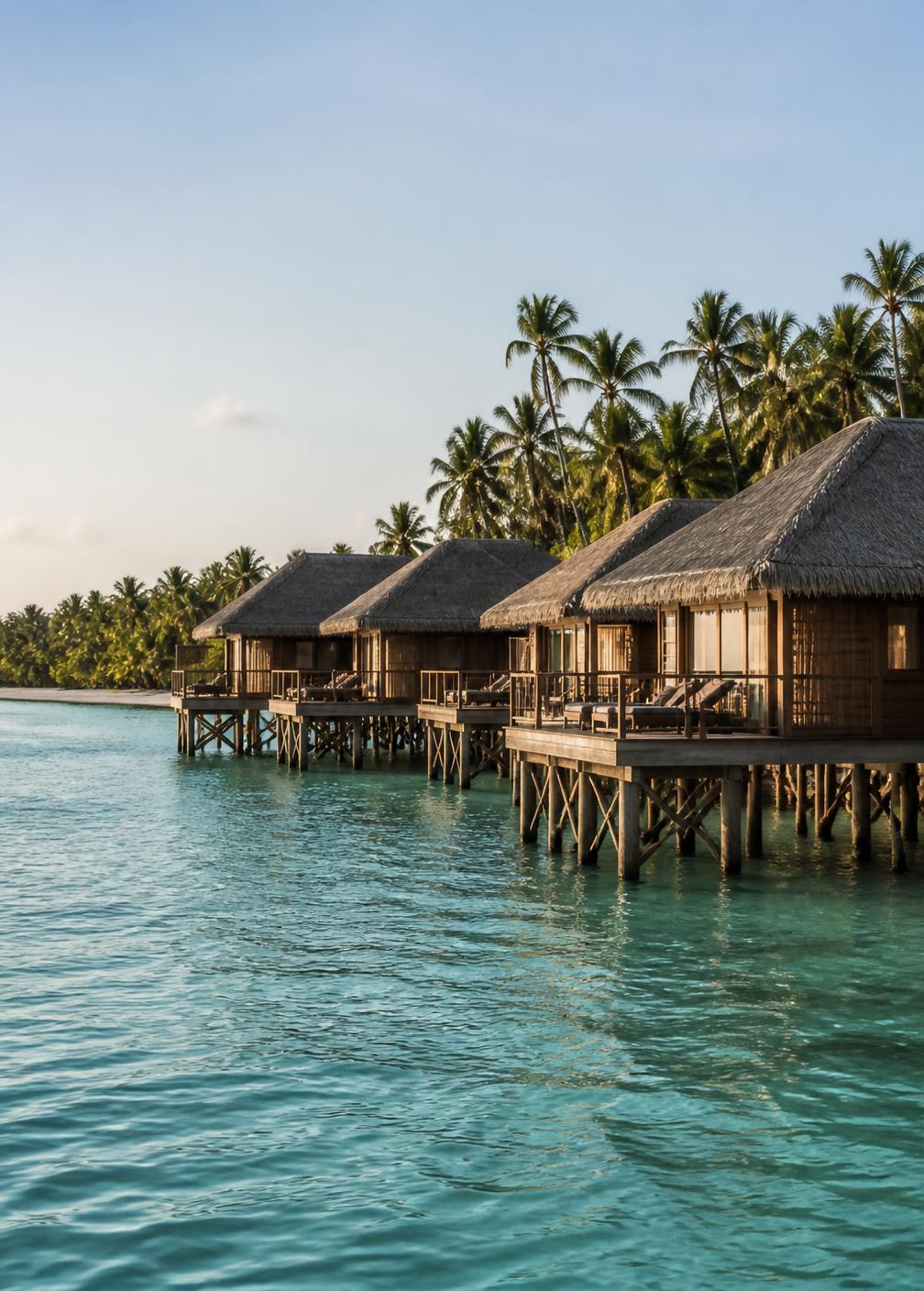
  • A row of thatched overwater villas on timber stilts above a calm turquoise Maldivian lagoon in morning light

    The World's Most Beautiful Overwater Villas

    HotelsJuly 2026

    Timber on stilts above clear water is an old idea, done badly almost everywhere. A short list of the houses that get the proportions, the privacy and the horizon right.

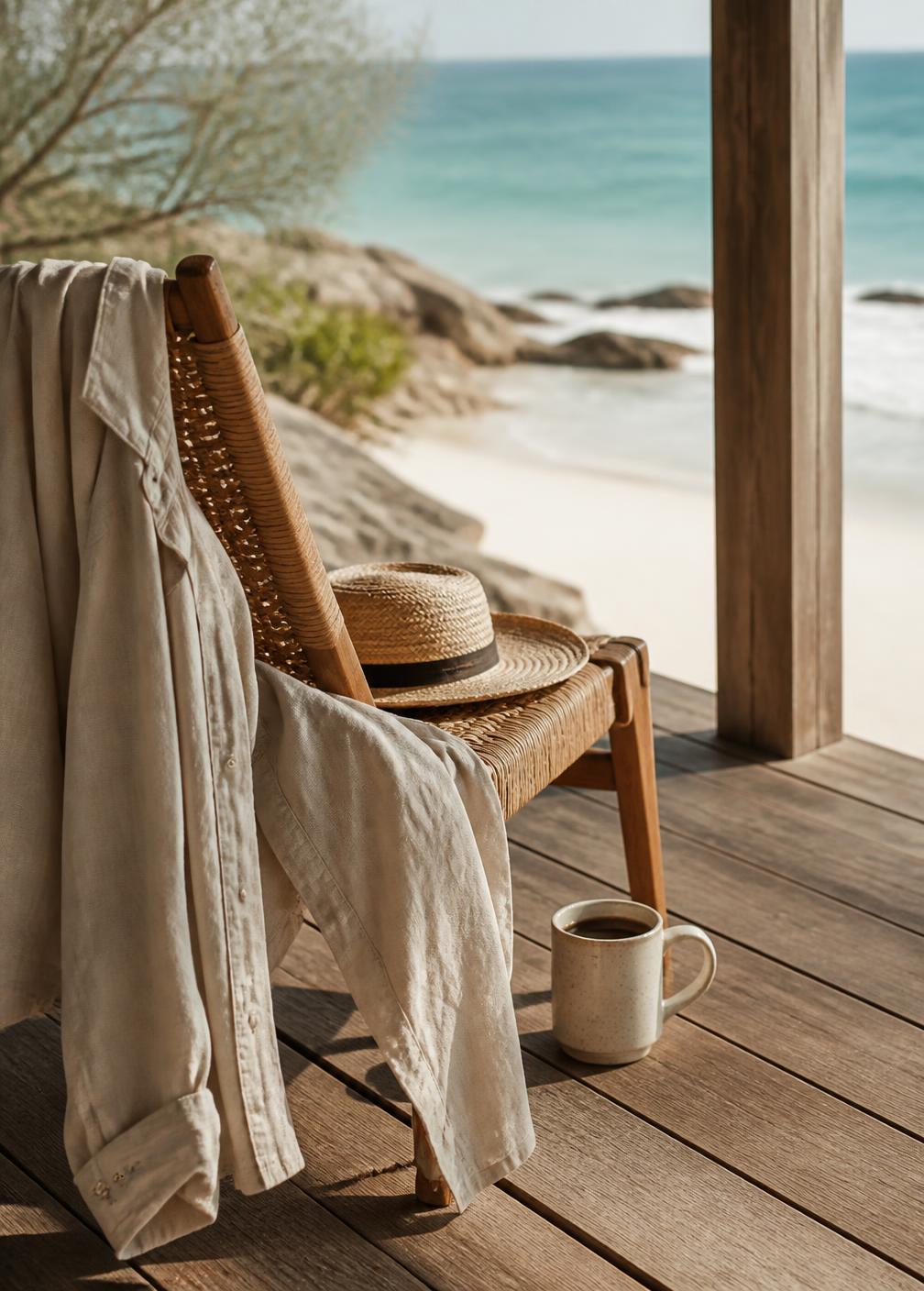
  • Linen shirt over a rattan chair with a straw hat and ceramic coffee cup on a timber deck above white sand

    Why Barefoot Luxury Never Goes Out of Style

    LivingJune 2026

    Linen, sand on the floor, no shoes and no schedule. On the enduring appeal of a kind of luxury that asks nothing of you at all.

  • A green sea turtle gliding above a coral reef in clear turquoise Indian Ocean water

    The Art of Slow Island Living

    Slow TravelMay 2026

    Seven days, one island, no plans. What happens to a person when the only appointments are the tide, the light and dinner.

A Personal Enquiry

Let's Curate Your Maldives Journey

If the Indian Ocean has begun to occupy your thinking, we would be glad to plan it properly — a private yacht or seaplane transfer timed to the light, a house chosen for the way it faces rather than its category, and a week with very little in it.

Diving the channels of the atoll, a sandbank to yourself for an afternoon, island hopping at your own pace, and stays across the Maldives arranged personally.

Why book through Maison Voyage?

  • Personal luxury travel advice
  • Carefully curated hotel recommendations
  • Tailor-made itineraries
  • Exclusive partner benefits whenever available
  • Direct personal contact from start to finish

No booking is made and nothing is charged. We simply begin a conversation.

An Invitation

Continue the Journey

One letter each month: a place worth the detour, an object worth keeping, a page worth reading slowly. Nothing more.