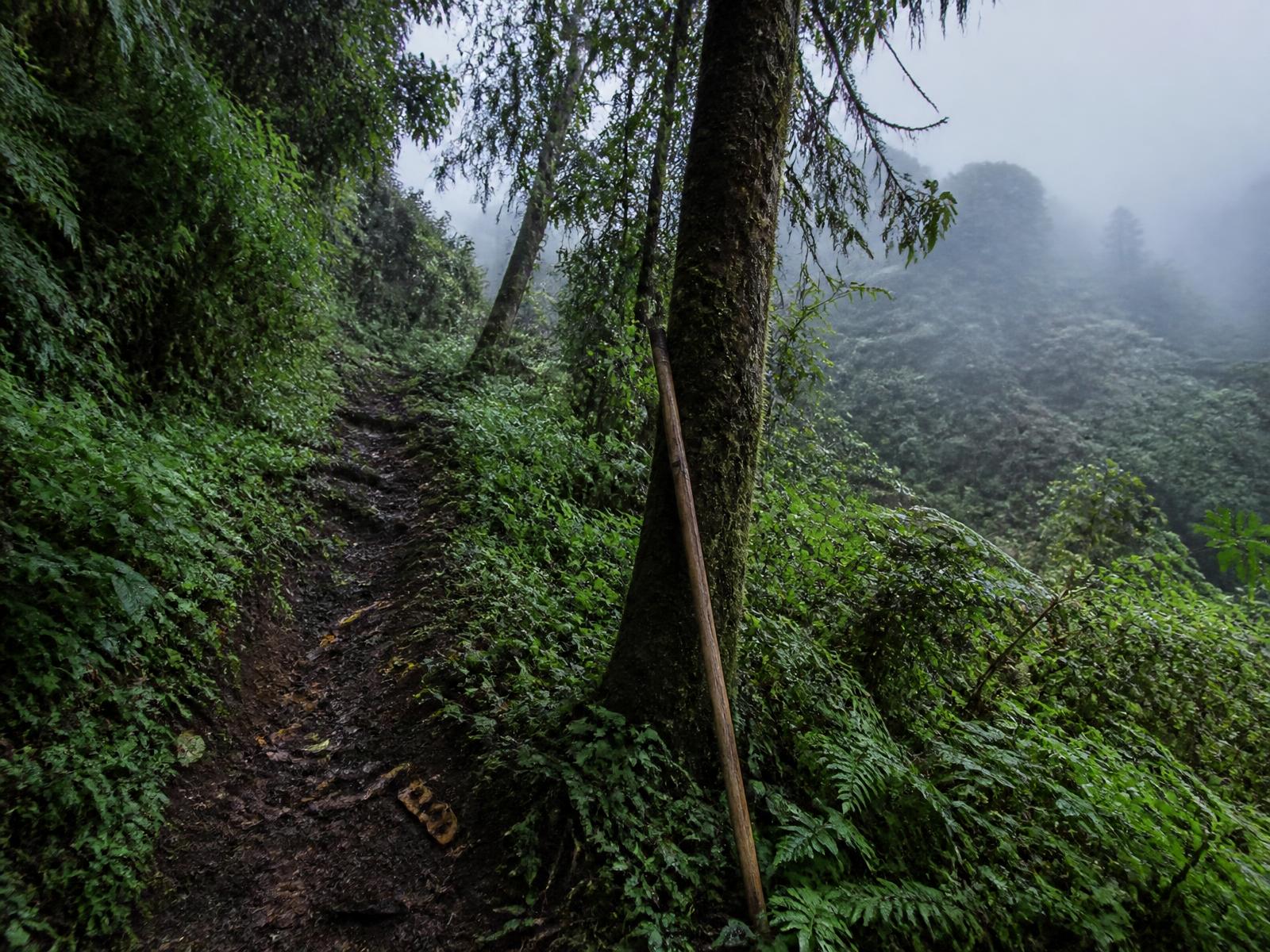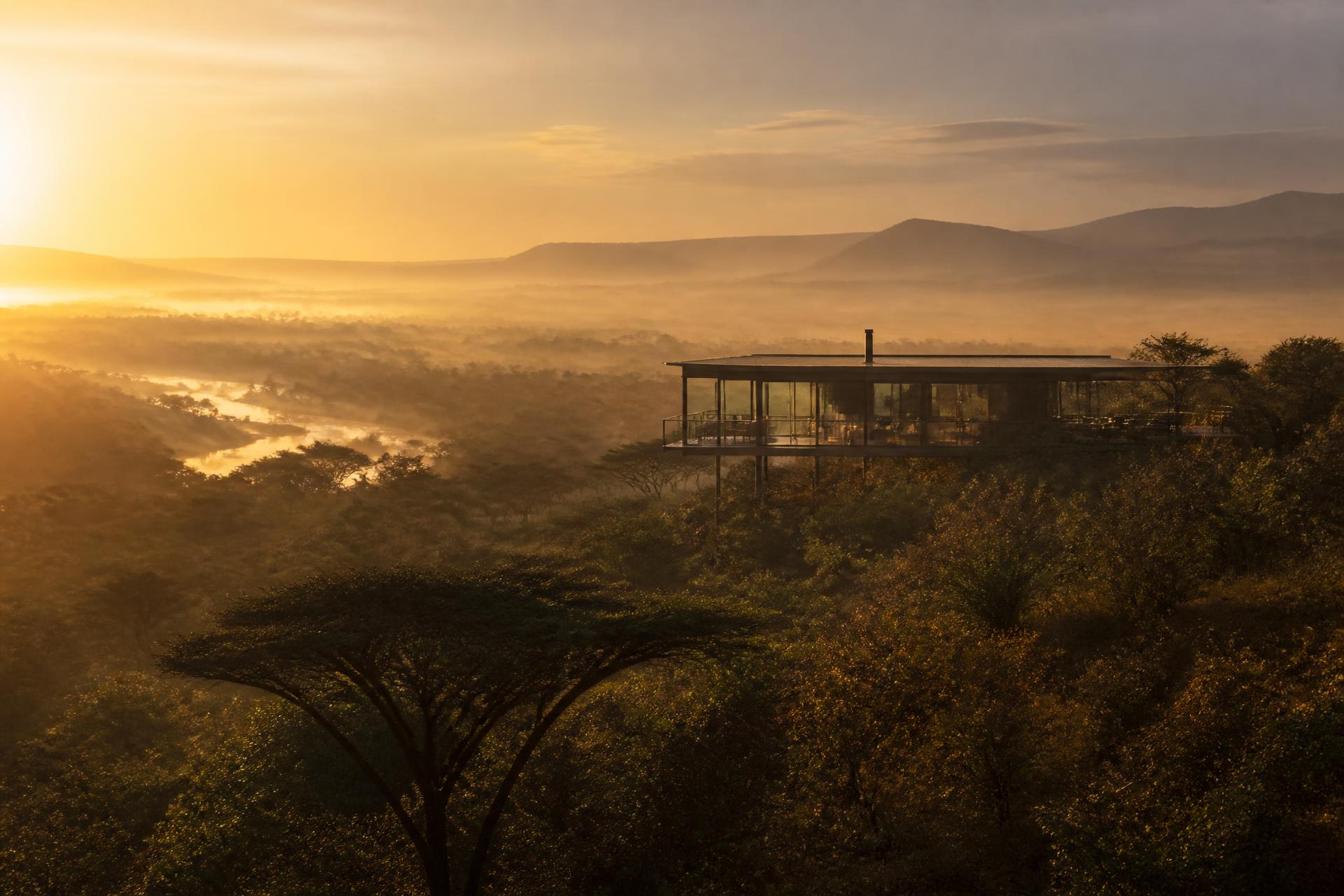
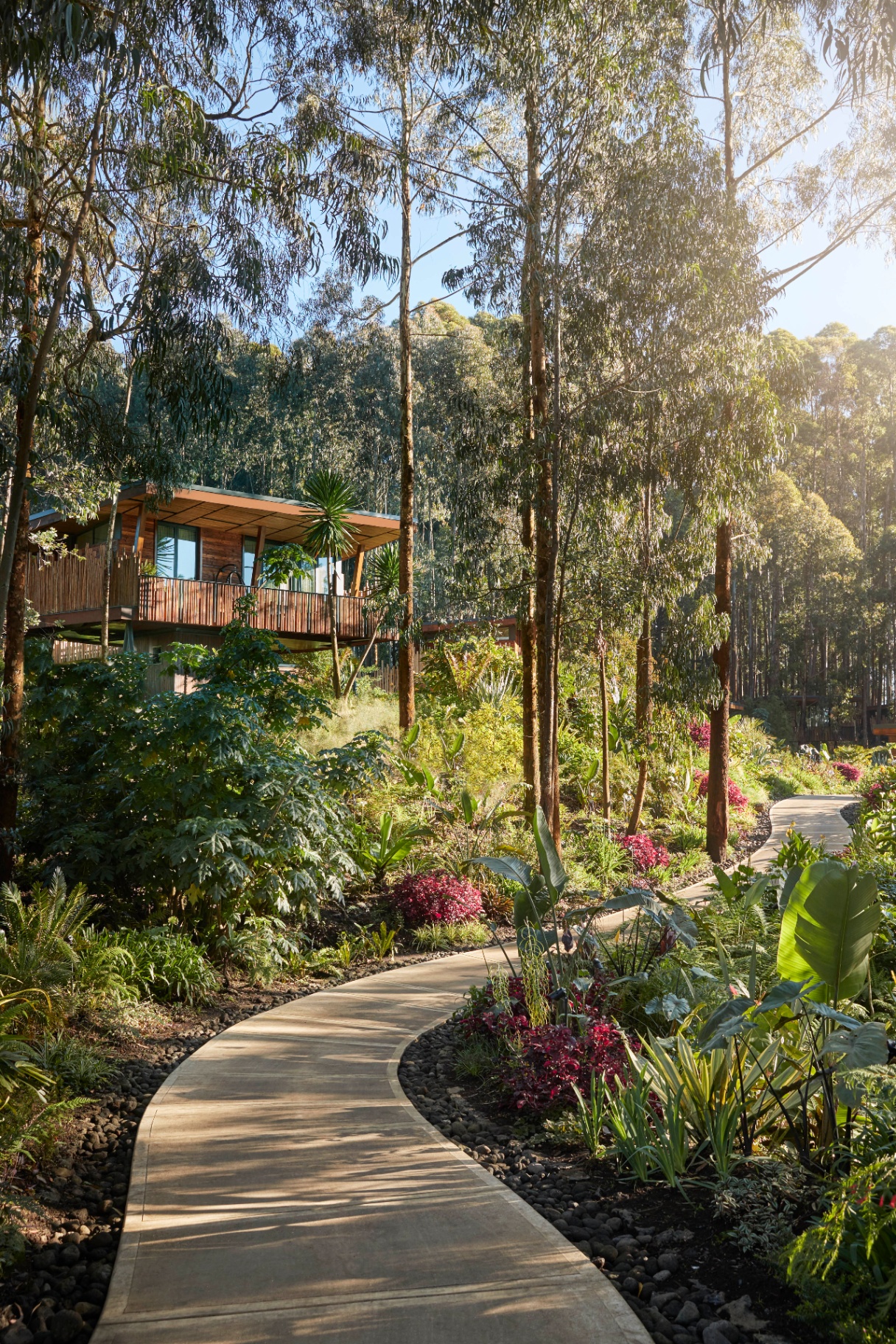
The Virunga Volcanoes of Rwanda at sunrise in soft mist above eucalyptus forest, with the timber roofs of a lodge emerging among the trees

One&Only — Volcanoes National Park, Rwanda

Where the Forest Whispers

Nestled beneath Rwanda's majestic Virunga Volcanoes, One&Only Gorilla's Nest offers an extraordinary gateway to one of the world's most moving wildlife encounters, where ancient rainforest, remarkable conservation and refined hospitality exist in perfect harmony.

An Introduction

A country of a thousand hills, and one forest that has been waiting for you to be quiet.

The road north from Kigali climbs almost immediately and then keeps climbing. Hills fold into hills, terraced to their summits, green in a way that seems slightly unreasonable. Fog sits in the valleys until nine. Children walk the verges in blue and khaki and wave without stopping, and it takes a while to understand that they are not waving at you in particular but at the morning. Somewhere past Musanze it begins to rain, briefly, and afterwards the whole country smells of eucalyptus and wet earth.

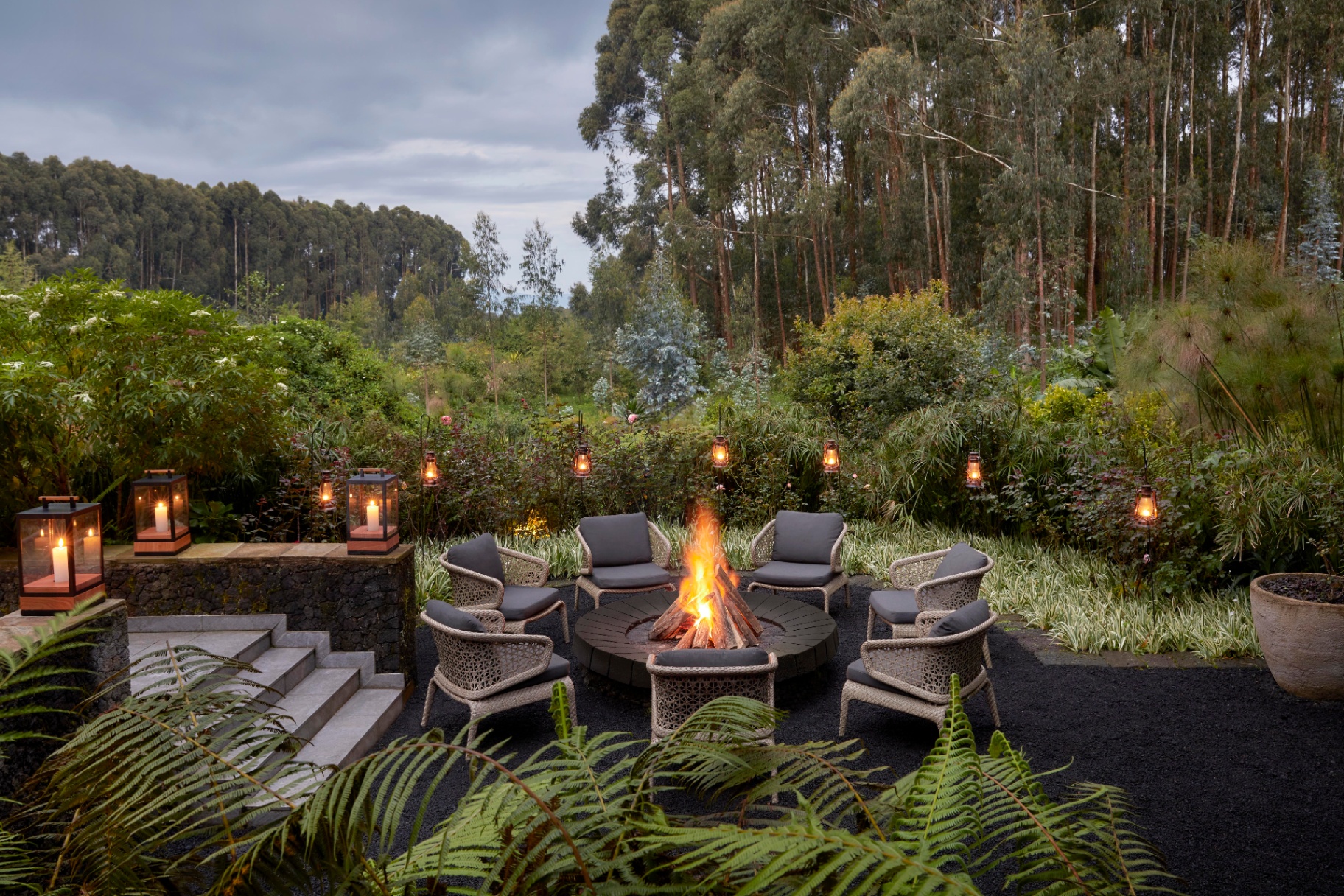
Then the tarmac ends, the forest closes over the track, and you arrive. What strikes you first at Gorilla's Nest is not the building. It is the absence of sound — no traffic, no music, no announcement of arrival. A eucalyptus plantation planted decades ago, grown into a cathedral. Birdsong in three or four registers. Mist moving between the trunks at eye level, so slowly you can watch a single strand of it cross a clearing. Somebody takes your bag. Nobody hurries.

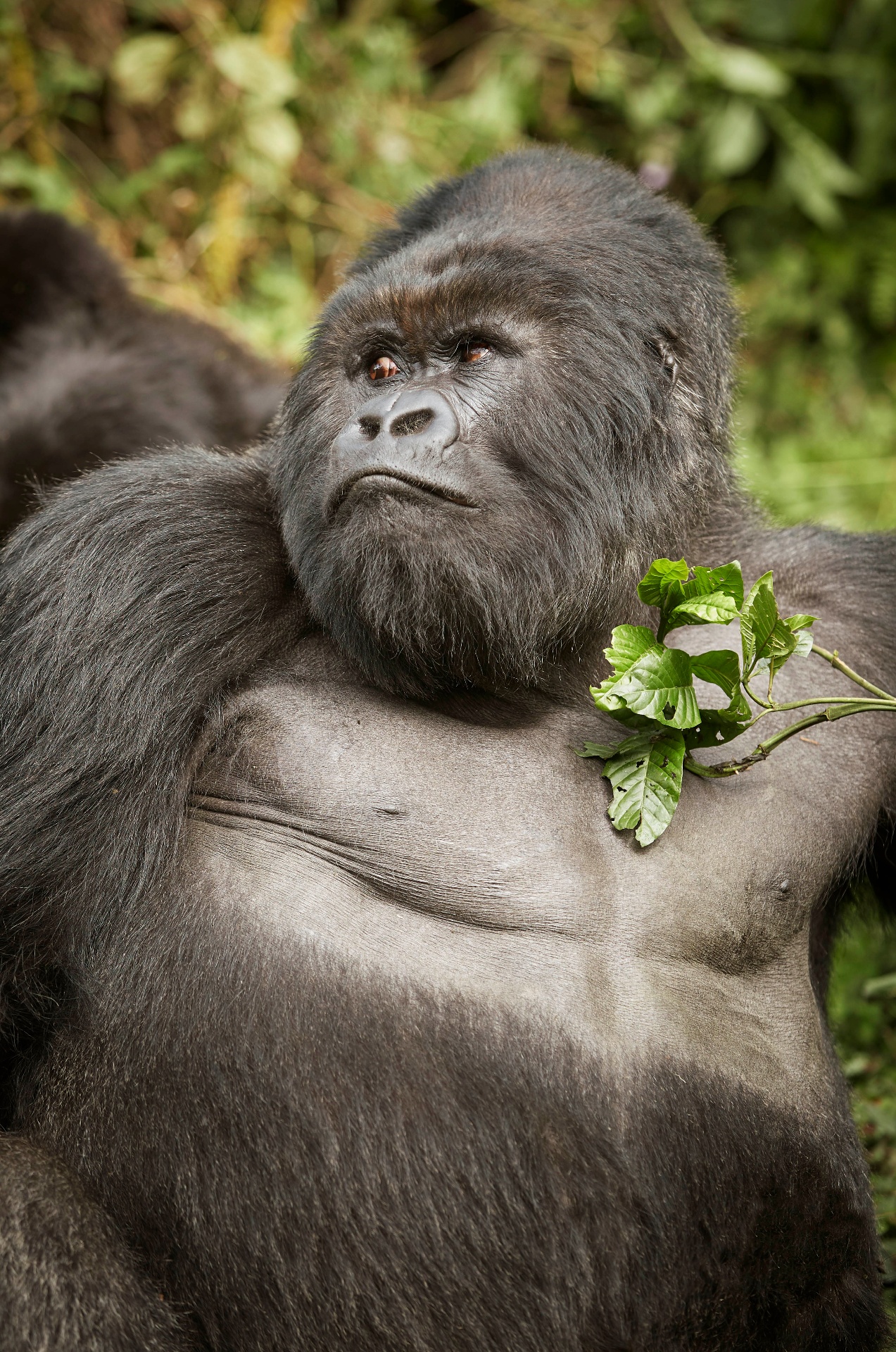
Above the lodge, on the slopes of the Virungas, live perhaps a third of the world's remaining mountain gorillas. They were nearly gone within living memory. They are not gone. Rwanda decided, at considerable cost and with unusual clarity, that a living forest was worth more than the land it stood on, and the families climbed back from a few hundred. What that means for a traveller is simple and almost unbearably rare: for one hour, on one morning, you may be permitted into their world — not to touch it, not to own it, only to stand in it, at a respectful distance, while a silverback decides you are of no consequence.

This page is not really about a lodge. The lodge is where the story begins, and it is a very good beginning: fires, timber, silence, coffee at five. But the heart of it is up the mountain, in the nettles and the mist, and it stays with you long after the fire has gone out.

Exterior of a Rwandan forest lodge built from dark volcanic stone and timber with a thatched roof, handmade ceramic vessels and mist between eucalyptus trees

Architecture & Design

Built of the mountain it stands on

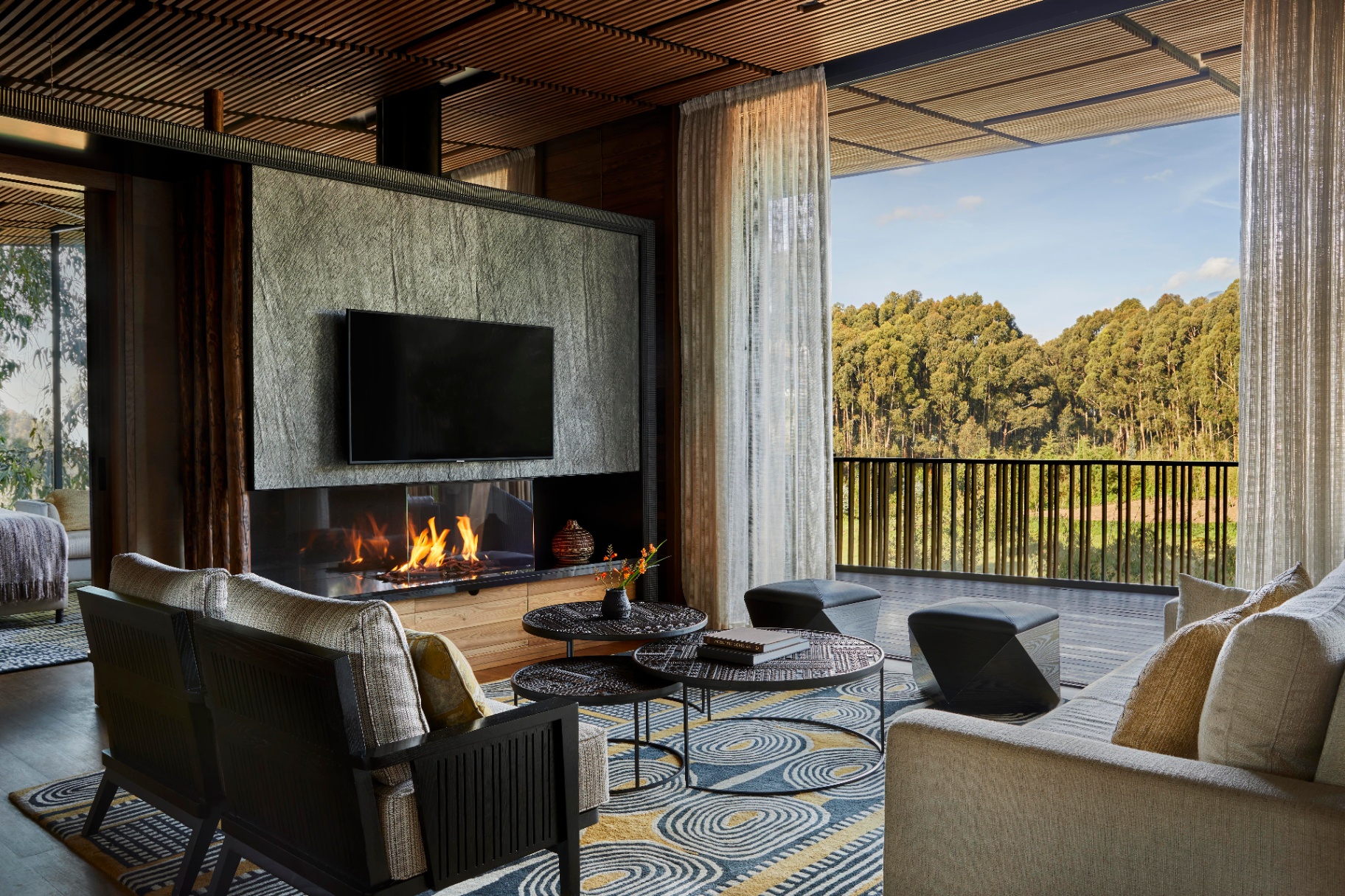
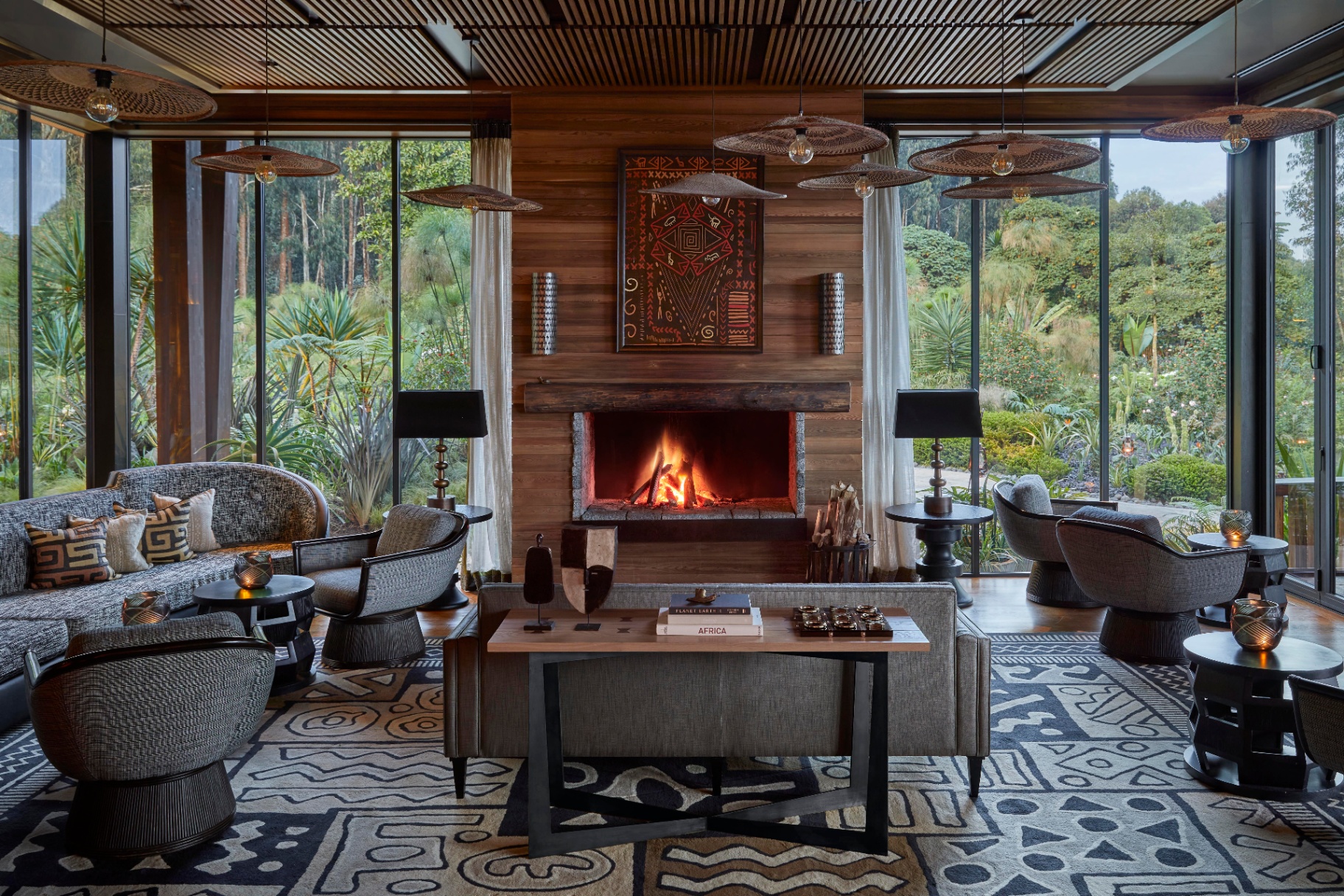
Volcanic stone, dark and porous, laid by hand. Timber that has been left to grey. Thatch and shingle, deep eaves, chimneys that are used every single evening of the year. From a distance the lodge reads as a cluster of roofs among the trees, and from certain angles you lose it altogether.

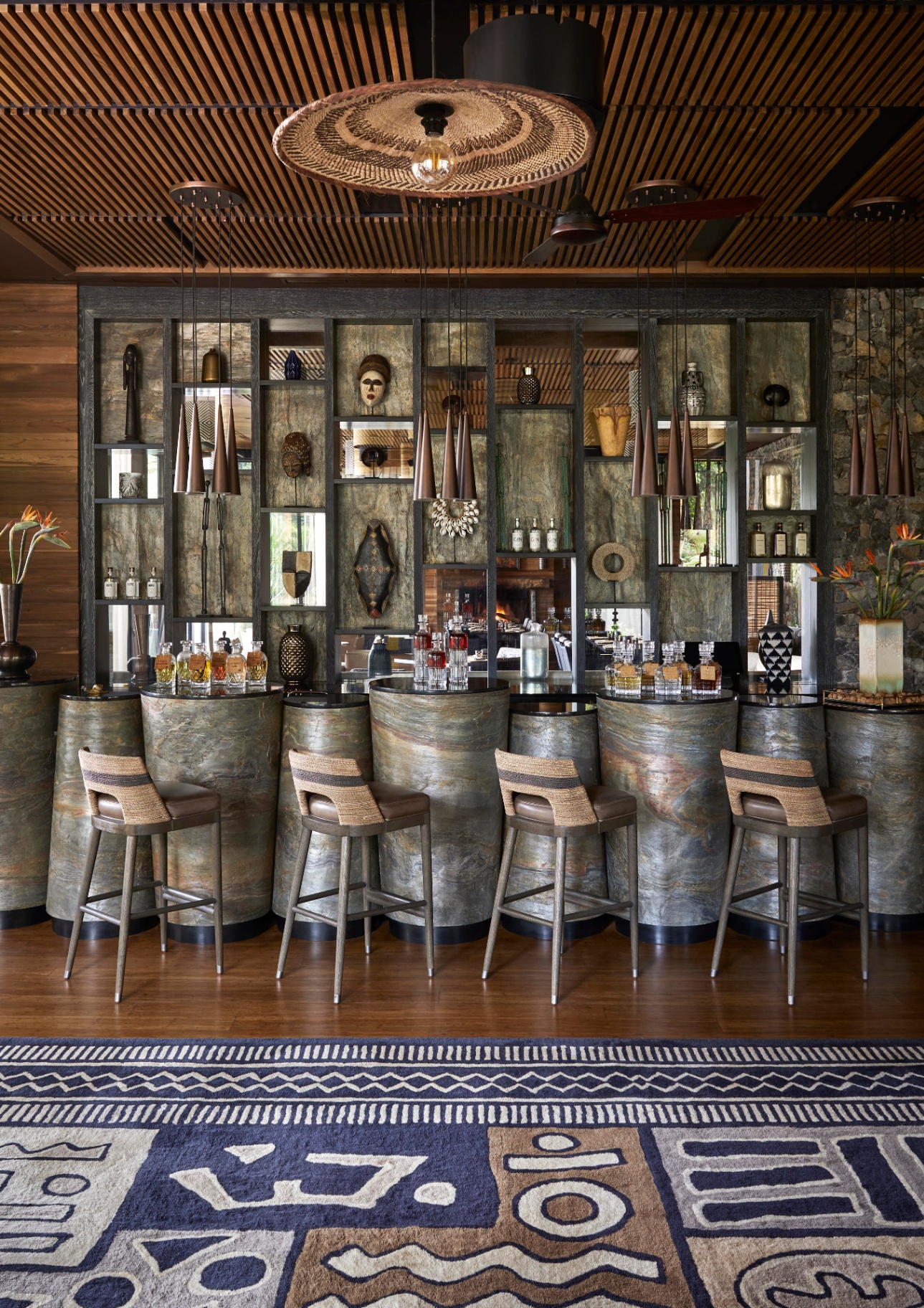
Inside, the vocabulary stays honest: woven sisal underfoot, handmade ceramics thick enough to hold heat, blankets from Rwandan looms, baskets coiled by women in the villages below. Nothing is lacquered. Nothing shines. The craftsmanship is everywhere and announces itself nowhere.

What the architecture really does is keep turning you outward. Every wall that could be glass is glass, and what it frames is not a view arranged for you but a forest going about its business — rain arriving, mist lifting, a turaco crossing a gap in the canopy. Luxury here has the good manners to stay quieter than the trees.

Suites & Lodges

Forest sanctuaries, and the mornings they hold

There is no category worth reciting here. What matters is the fire, the window, and how long you stand in front of it before anyone speaks.

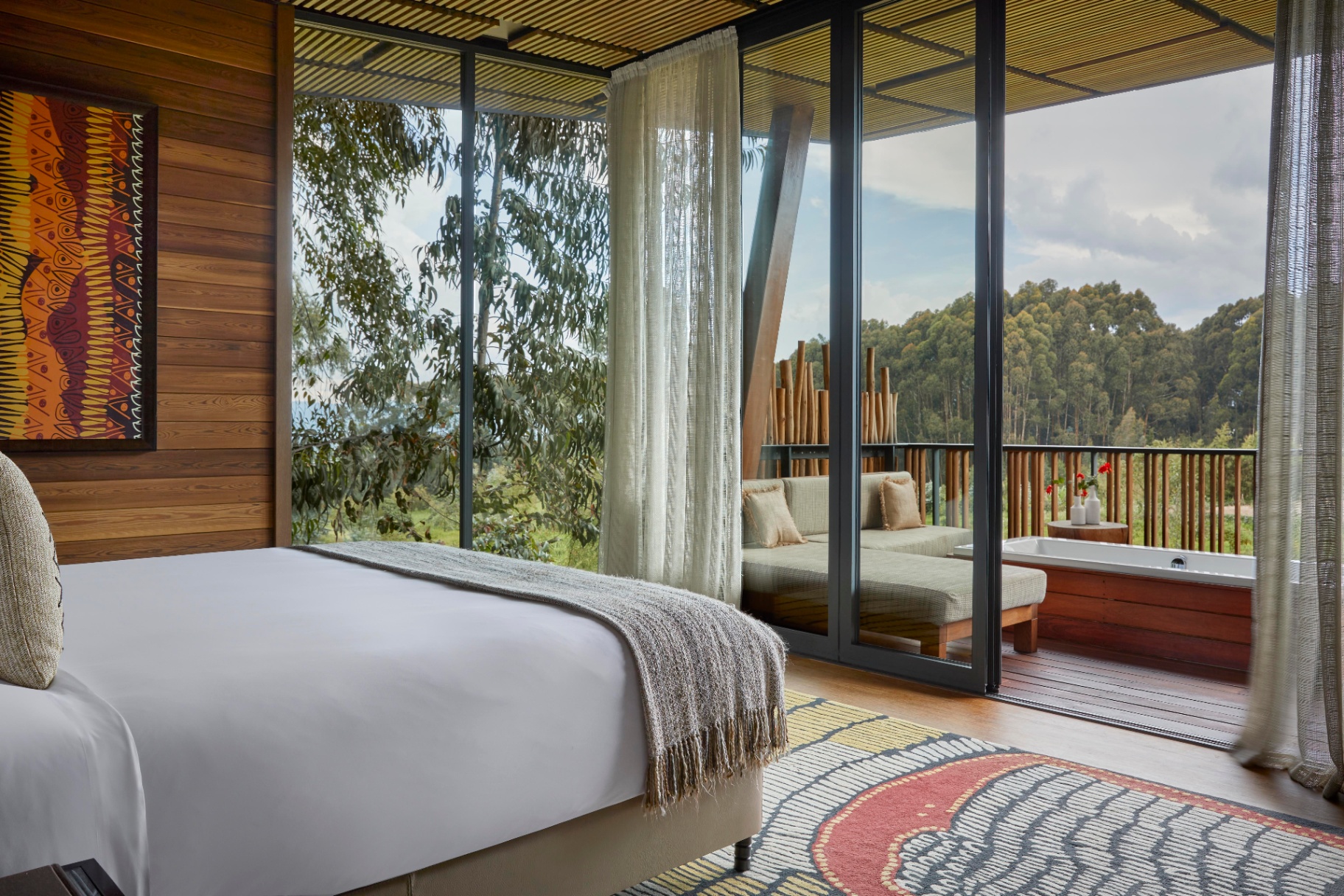
Timber and volcanic stone bedroom at a Rwandan forest lodge before dawn with a lit fireplace, white linen, walking boots by the door and misty eucalyptus beyond the glass

No. 01

The Morning Before the Forest

You wake early, and not because anything wakes you. The fire has been kept alive overnight by someone who came and went without a sound, and the room smells faintly of woodsmoke and eucalyptus. Outside the glass the forest is still deciding whether to be visible: grey, then green, then grey again as the mist moves through the trees. Your boots stand by the door, cleaned. Coffee arrives dark and hot and Rwandan. You drink it standing at the window, saying nothing, and somewhere on the mountain above you a family is also waking, in a nest of bent vegetation they built the evening before and will never use again.

Private timber terrace of a Rwandan forest lodge in morning mist with two wooden chairs, a wool throw and a handmade ceramic cup

No. 02

Afternoons of Rain and Firelight

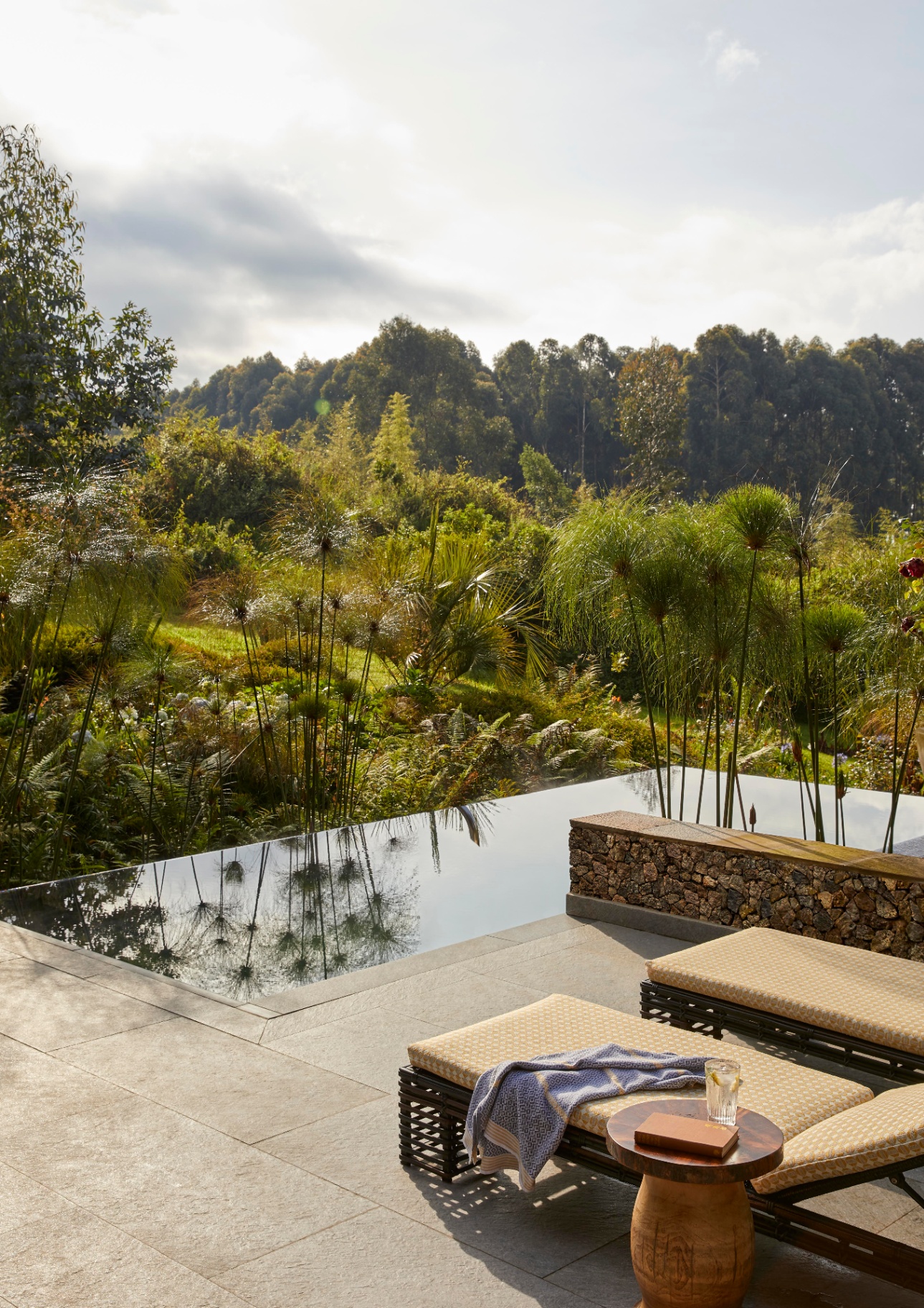
Rain here is not weather but rhythm. It arrives most afternoons, briefly and thoroughly, and the correct response is a chair on the terrace under the overhang, a wool blanket, and no intention whatsoever. Timber darkened by damp. Linen that smells of the line. A ceramic cup made in a village down the road, thick enough to hold heat for an hour. Birdsong resumes before the rain has quite finished. Nothing in the room competes for your attention, which is the whole point: the forest is the view, the sound and the subject, and the architecture has the grace to stay out of the way.

Slow breakfast beside a stone fireplace at a Rwandan forest lodge with Rwandan coffee in a handmade ceramic cup, garden vegetables and eucalyptus forest through the window

Dining

Rwanda, cooked at the pace of the fire

Breakfast is long here, because it has to be. It comes before the mountain or after it, and in either case nobody is going anywhere quickly. Coffee first — grown an hour away in volcanic soil, roasted dark, poured without ceremony, and quite possibly the best you will drink this year.

The kitchen shops the way the country eats: sweet potato, beans, plantain, amaranth and tree tomato from the garden beds, honey from the hills, tilapia from the lakes, herbs cut ten metres from the stove. East African cooking is not shy — groundnut, chilli, smoke, long-simmered greens — and it is treated here as a cuisine rather than a theme.

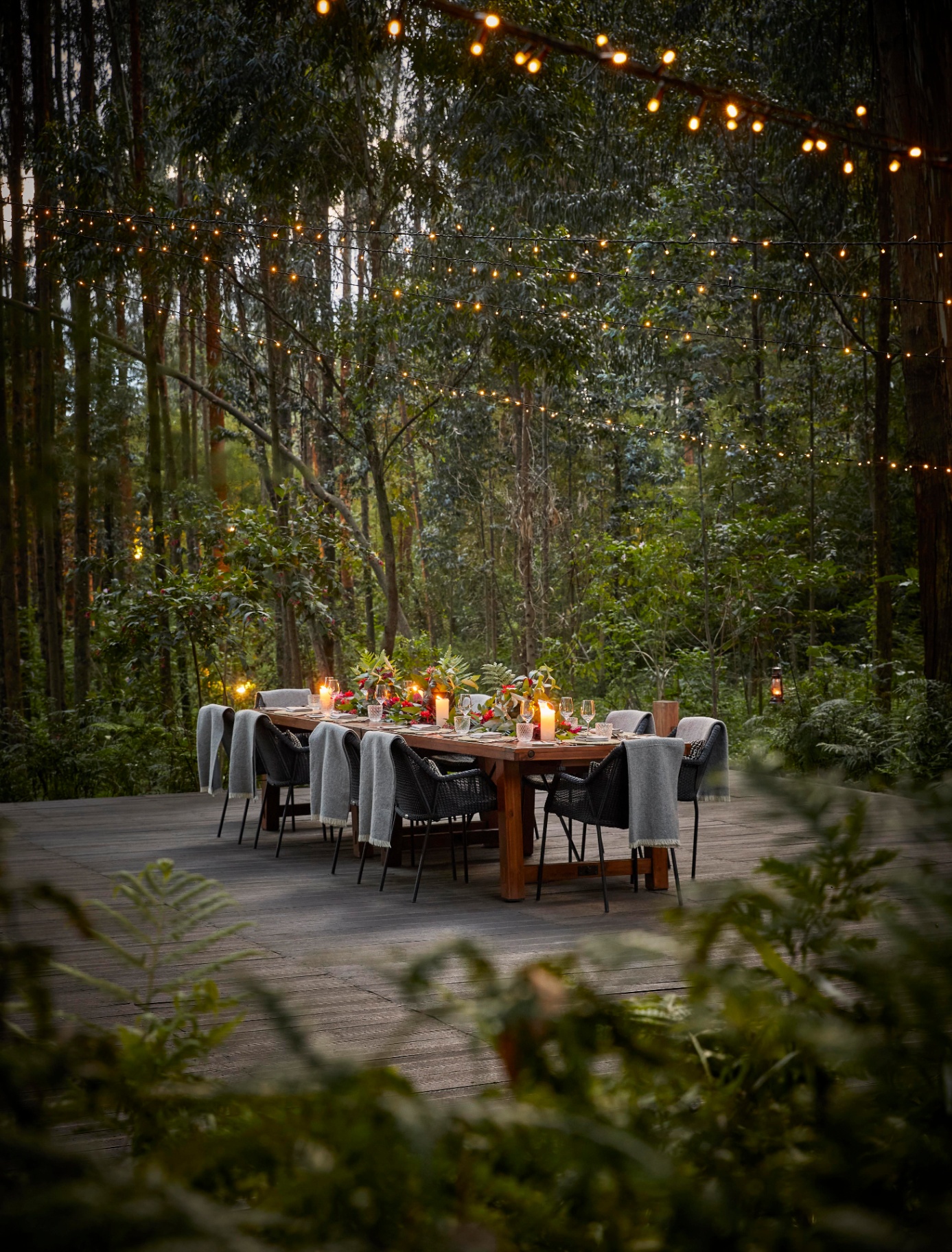
Dinner happens beside a fire, at a table set early, with the mist against the glass. The best meals are the simplest ones: a bowl of isombe, bread, a glass of something red, and a conversation that keeps returning to the morning.

Timber spa pavilion open onto misty Rwandan rainforest with warm volcanic stones in a woven basket, folded linen and botanical oils

Wellness

Warm stones, botanicals, and the forest doing most of the work

The One&Only Spa sits low among the eucalyptus with its shutters open, which means the treatment begins before anyone touches you: rain on the roof, wind through the canopy, birds working through their afternoon repertoire. The rainforest is not background here. It is part of the ritual.

Volcanic stones, warmed and laid along the spine, are the local answer to legs that have spent five hours on a mountain. Botanical oils are pressed from things that grow within sight of the door — eucalyptus, lemongrass, moringa. The pressure is firm, unhurried and entirely unconcerned with your schedule.

Afterwards there is tea on a timber deck and no reason at all to move. Yoga happens at seven in a pavilion facing the trees; meditation happens wherever you decide to stop walking. Both are optional. Silence is the actual therapy, and it is available all day.

Signature Experiences

Eight ways into Rwanda, all of them on foot

They belong to the country rather than to the lodge, which is precisely why they matter. One a day is plenty. Some days, one is too many.

  • No. 01

    An hour with a family, and the silence afterwards

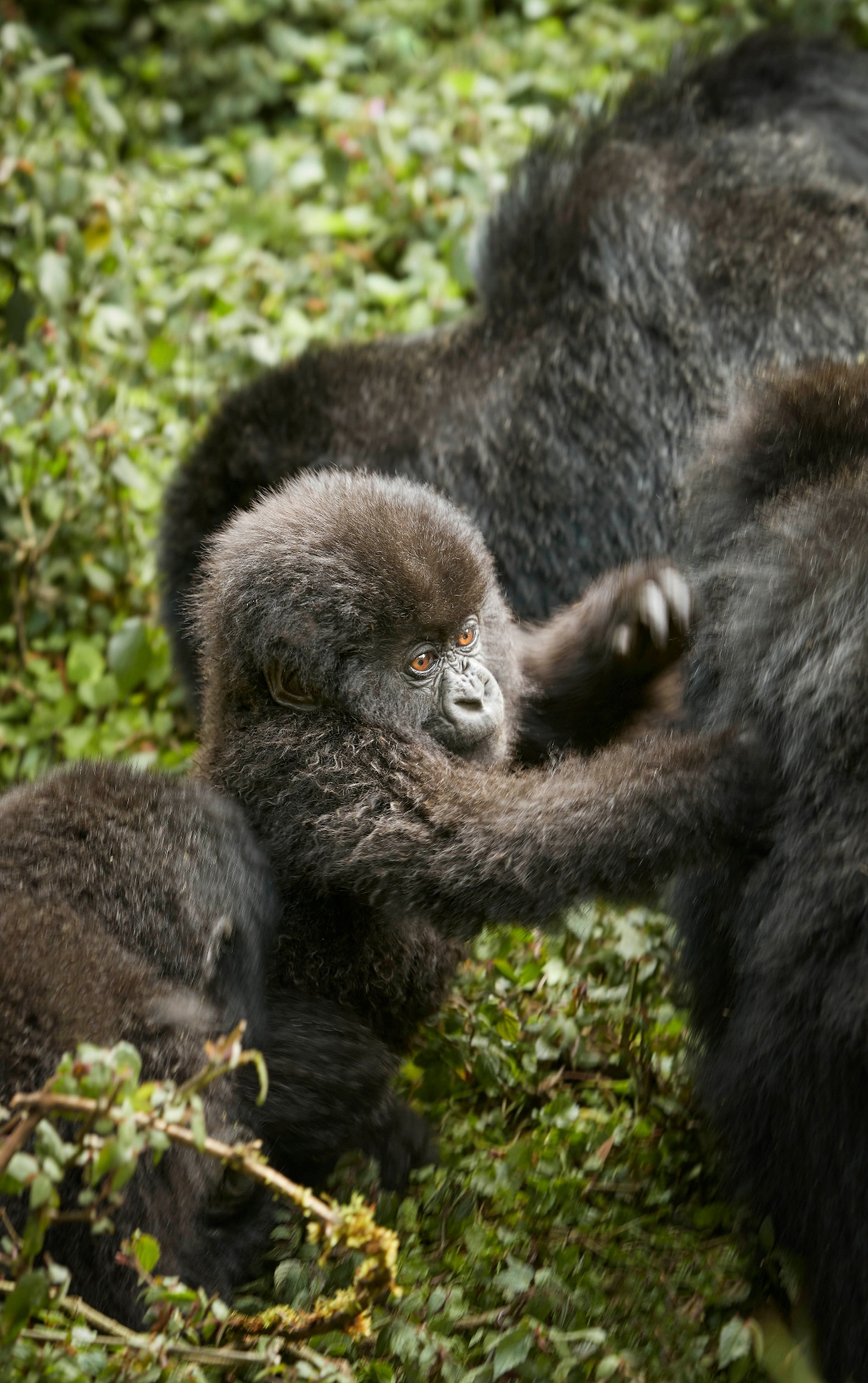
    Gorilla trekking in Rwanda begins in the dark with a briefing, a permit and a walk uphill through farmland into forest. Then the trackers stop, and everyone stops, and a few metres away a silverback is sitting in the nettles considering you with something closer to patience than curiosity. Infants tumble. A mother turns her back. Nobody speaks. When the hour is over you walk down the mountain in a silence that has nothing to do with instruction, and it holds for most of the afternoon.

  • No. 02

    Golden monkeys in the bamboo

    A different creature entirely: quick, coppery, impossible to photograph well and utterly indifferent to the attempt. They move through the bamboo in numbers, shaking the stems, dropping shoots, and the forest sounds like weather. Go the morning after the gorillas, when you have learned how to stand still.

  • No. 03

    A morning with the people who count them

    The conservation work here is not a talking point; it is the reason the forest still holds families at all. Spend a morning with the trackers and the veterinary teams who walk these slopes daily, who know each gorilla by face and name, who have watched the population climb from a few hundred. It reframes everything you saw the day before.

  • No. 04

    The climb to Bisoke's crater lake

    Six hours up and back through mud that takes the trail personally, into thinning air and hagenia forest hung with moss, and then a green crater lake at three thousand seven hundred metres with cloud pouring over the rim. It is not comfortable and it is not meant to be. Come down filthy and quiet and pleased.

  • No. 05

    An afternoon in the village

    Musanze at the ordinary hour: children walking home in blue and khaki, bicycles carrying impossible loads, a woman weaving agaseke baskets on a step with a speed that makes conversation unnecessary. Nothing here is arranged for visitors. Bring your attention and very little else.

  • No. 06

    Coffee, from the cherry

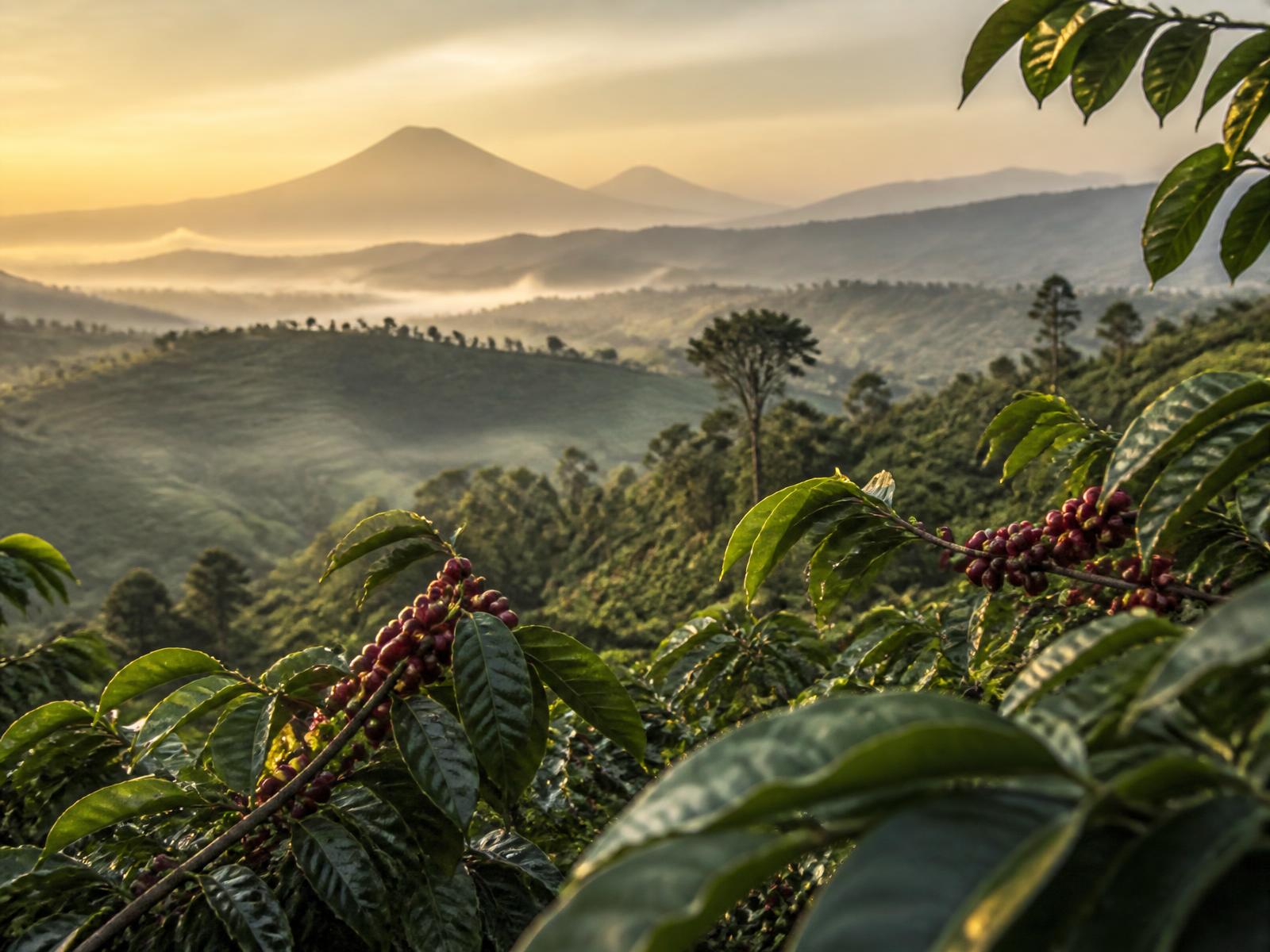
    The volcanic soil that grows the forest also grows some of the finest coffee in Africa. A morning on a smallholding above the lakes — picking, pulping, drying on raised beds, roasting over a fire — and then a cup at the end that tastes of the hillside you are sitting on. You will never buy Rwandan coffee casually again.

  • No. 07

    A kitchen, and no recipe

    Sweet potato, beans, plantain, amaranth from the garden, groundnuts pounded until the arm complains, isombe simmering for as long as it needs. Cooking here is done by hand and by memory, at the pace of the fire. Eat at a long table with the doors open onto the mist.

  • No. 08

    Sitting still, under the eucalyptus

    No guide, no route, no purpose. A bench among the trees at six in the morning while the forest wakes in layers — first one bird, then a hundred, then the wind through the leaves like distant rain. Twenty minutes is enough to change the shape of the day.

Maison Voyage Loves

Six small things

  • The first sound of the forest before sunrise — one bird, then a hundred, then the wind arriving like distant rain.
  • Rwandan coffee beside the fire at five in the morning, drunk standing up, in the dark.
  • Mist drifting through bamboo at eye level, slowly enough to watch a single strand cross a clearing.
  • The walk back down after the gorillas, when nobody in the group says anything for an hour.
  • An evening by the fire afterwards, boots by the door, still slightly unable to explain the day.
  • The scent of eucalyptus carried through the lodge after rain, which you will recognise for the rest of your life.

Who This Place Is For

Travellers who would rather be moved than entertained.

It suits people who care about wildlife rather than sightings, and about conservation as something with a cost attached. Slow travellers do well here, as do photographers, walkers, readers and anyone who has been meaning to spend a week without a schedule. Couples find it unexpectedly romantic, in the way that shared silence usually is. Families with older children find it formative.

It rewards a certain physical willingness. The trek can take one hour or six, the mud is real, the altitude is felt, and the weather does whatever it likes. None of that is a drawback; it is the price of admission, and it is what makes the hour at the top mean anything at all.

It will not suit everyone, and we would rather say so. There is no beach. There is nothing to shop for. Nothing happens after nine in the evening except the fire. Anyone travelling for nightlife, for a resort, or for a checklist of sights should choose somewhere else entirely — and go to Rwanda later, when they are ready for it.

Nearby Discoveries

What we would tell a friend

Rwanda rewards early mornings and unhurried afternoons. Most of this is reached on foot, and almost none of it needs to be photographed.

  • No. 01

    Volcanoes National Park, at the gate before six

    The forest begins where the potato fields end, abruptly, along a low stone wall. Every trek starts here in the cold with coffee, a fire and several hundred people speaking quietly in four languages. Even the waiting is worth being awake for.

  • No. 02

    The Dian Fossey Campus at Musanze

    Half a day among the researchers who inherited her work — the archives, the skeletal collection, the maps of families going back fifty years. Go before your trek if you want context, after it if you want to understand what you were standing next to.

  • No. 03

    Karisoke, and the walk to her grave

    A steep, wet, unglamorous hour up through the forest to the site of the old research camp, where Fossey is buried beside the gorillas she knew. There is nothing to see and everything to feel. Go with a guide who knew the story before it was a film.

  • No. 04

    The Twin Lakes, Burera and Ruhondo

    Two crater lakes cupped between hills, black water, dugout canoes, terraced slopes running to the shore and the volcanoes standing behind the whole arrangement. Take a boat in the late afternoon. Bring nothing. It is the calmest hour in the country.

  • No. 05

    The smallholdings above Kinigi

    Coffee and pyrethrum grown in soil so dark it looks wet. Walk the rows with the farmer, see the drying beds, and understand how directly the price of a permit reaches these hills. Conservation here is an economy, not a sentiment.

  • No. 06

    Agaseke weavers, and a workshop with no sign

    The peace baskets are woven from sisal and sweetgrass in cooperatives run largely by women, many of whom learned across old divides. Sit for an hour. Watch the coil grow. Buy one from the person who made it, and let her tell you what the pattern means.

A Note from the Editor

Stay four nights. Trek twice. Keep the day after entirely empty.

Permits are limited and taken months ahead, so decide early. Come in the drier months if the mud worries you, and in the green ones if it does not. Take fewer photographs than you think you should — the hour goes quickly, and what you will want afterwards is the memory of having looked. When a silverback turns his head and holds your eye for two long seconds, do nothing at all. That is the whole journey, and everything else on this page is only the way there.

Ben Trousil, Founding Editor

From the Journal

Continue reading

All stories
  • A young mountain gorilla resting among wet green ferns in misty Rwandan rainforest

    WildlifeAugust 2026

    Walking With Mountain Gorillas

    One hour, a few metres, and the long quiet walk back down. On what it actually feels like to be permitted into someone else's forest.

  • Rwandan coffee plantation on a misty hillside at sunrise with volcanoes on the horizon

    DestinationsJuly 2026

    Rwanda Beyond Expectations

    Coffee grown in volcanic soil, hills terraced to the summit, and a country that has quietly become one of the most graceful places to travel in Africa.

  • A narrow muddy forest trail climbing into misty vegetation on the slopes of the Virunga volcanoes

    Slow TravelJune 2026

    The Future of Conservation Travel

    When a permit funds a ranger and a ranger keeps a family alive, travel stops being consumption. On the economics of wilderness, honestly told.

Eine persönliche Anfrage

Let's Curate Your Rwanda Journey

If the forest has begun to sound like your next journey, we would be glad to arrange it personally — the lodge itself, and the mountain above it.

Gorilla permits secured early, trekking groups matched to your pace, a morning with the conservation teams, golden monkeys in the bamboo, the crater lakes at dusk, and a few nights afterwards on Lake Kivu or under canvas in Akagera, shaped around the way you actually travel.

Warum über Maison Voyage buchen?

  • Persönliche Luxusreiseberatung
  • Sorgfältig kuratierte Hotelempfehlungen
  • Maßgeschneiderte Reisepläne
  • Exklusive Partnervorteile, wo immer verfügbar
  • Persönlicher Ansprechpartner von Anfang bis Ende

Es entsteht keine Buchung und keine Kosten. Wir beginnen einfach ein Gespräch.

Eine Einladung

Die Reise fortsetzen

Ein Brief jeden Monat: ein Ort, den Umweg wert, ein Objekt, das Bewahren wert, eine Seite, langsam zu lesen wert. Nicht mehr.