01
Tokyo
Suits: Three nights at the start, city, food
Too large to grasp and easy to enjoy: one district, one restaurant, one morning. Three nights are enough; more rarely improves it.
Destination
The country where planning changes more than budget.
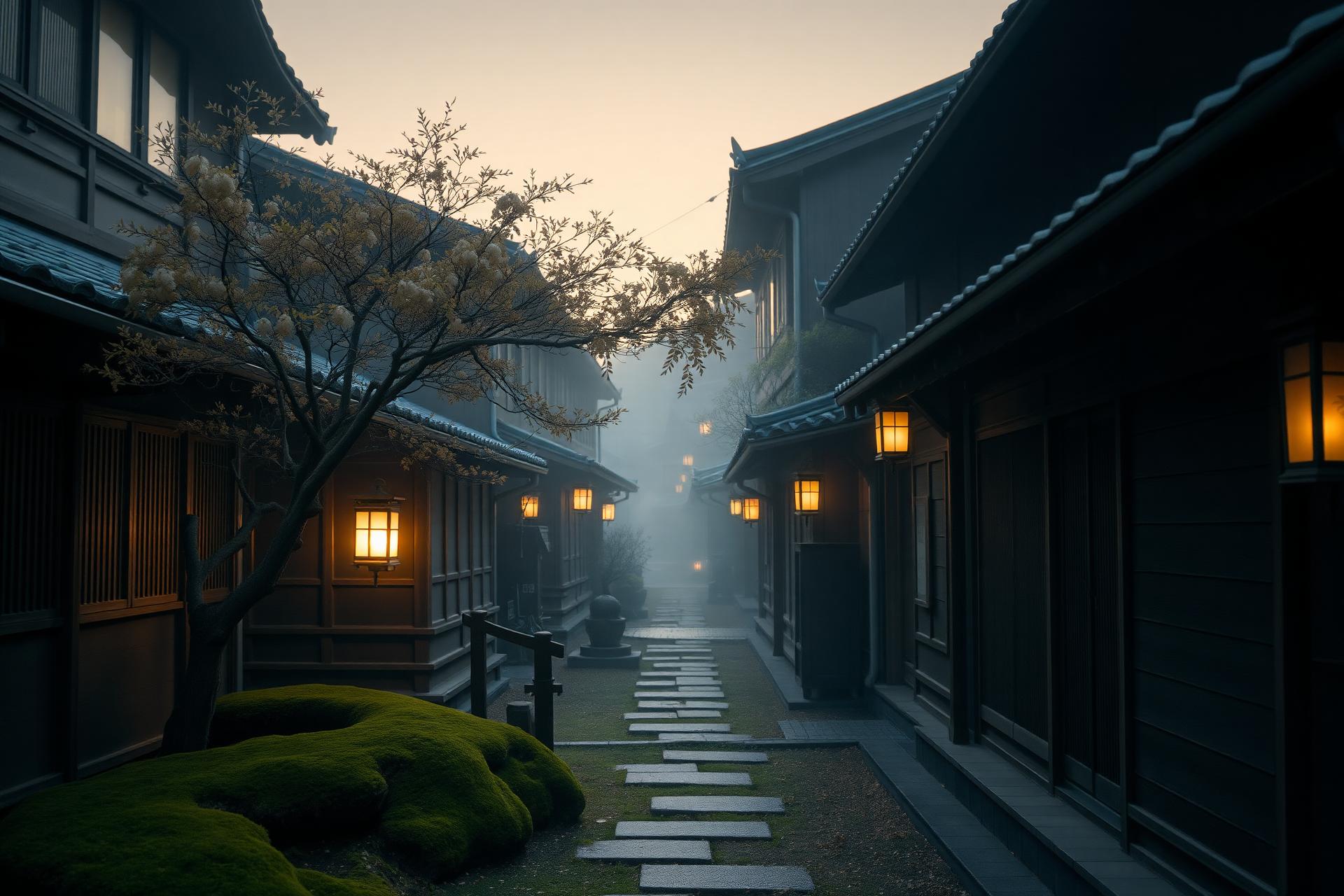
Japan repays preparation like few other destinations. Not because it is complicated, but because the good things — a six-room ryokan, a table for two, a temple before eight in the morning — are limited and given away early.
For a first journey we recommend two cities and one place in the country. Anything beyond that becomes a collection of railway stations.
Why we recommend it
Regions
Four parts of the country and the role each plays in a journey.
01
Suits: Three nights at the start, city, food
Too large to grasp and easy to enjoy: one district, one restaurant, one morning. Three nights are enough; more rarely improves it.
02
Suits: A first journey to Japan, spring and autumn
Temples, gardens, craft. Finest early in the morning and outside cherry-blossom season; the city is fullest between 10am and 4pm.
03
Suits: A second journey, ryokan, onsen
Here begins the Japan many are looking for: small inns, hot springs, cooking by season. Easily reached by train.
04
Suits: Art, islands, slow days
Naoshima and the inland sea, for guests who like museums and do not mind ferry timetables.
Hotels
Retreats in Japan we arrange personally; here more than anywhere, the choice depends on season and availability.
Price range
Guide prices per person sharing, per night, excluding flights — based on the houses we recommend here. Not a quote, but enough to avoid the first surprise.
from around €350 per person per night
Very good city hotels in Tokyo and Kyoto outside cherry-blossom season.
€700 to €1,400 per person per night
Aman Tokyo, a ryokan with a private onsen, suites in Kyoto during the maples.
What moves the price
Two windows: cherry blossom and autumn maples. Both sell out early, often a year ahead.
What we combine
The order we almost always suggest: city, history, then two nights in which nothing happens.
For travellers drawn to art and architecture. Three nights are enough.
When a journey is dense, a week with nothing planned afterwards helps.
Best time to travel
Two windows carry a Japanese journey: late spring and autumn.
Late March to May
Cherry blossom in late March and early April — beautiful and very busy. The weeks after are mild, green and far quieter.
June to August
Rainy season in June, humid after. Worthwhile in the mountains and the north; hard work in Kyoto.
October and November
Our recommendation: clear air, autumn colour, comfortable temperatures. Ryokan and good restaurants book out early.
Our Recommendations
Travel examples
Not packages, but journeys in the form we have already planned them. Prices are a guide per person, including hotels, transfers and support on the ground.
City, ryokan, temples and one island for the art. With rail seats booked, an English-speaking guide on three days and restaurant reservations you cannot get from home.
The Pure Voyage view
Japan needs fewer cities and more transitions.
Tokyo, Kyoto and Osaka in ten days is possible and rarely the better trip. We build two fixed points and one quiet step in between — a ryokan in Hakone, a address on Naoshima, two nights in the mountains. The Shinkansen makes those moves effortless, and that is where the sense of having been in the country rather than in its stations comes from. April and November are beautiful and busy; late May and early December are underrated.
Suitability
Ideal for
Less suited for
What travellers often underestimate
How much advance planning matters. Restaurants, ryokan and trains go months ahead — that shapes the trip more than the hotel.
If this is not the right fit
If Asia stays but Japan is too structured or too far:
01 · Seoul und Süden
Similar food and craft culture, easier to travel spontaneously.
02 · Bangkok und Süden
Warmer, easier, with a beach as the second chapter.
03 · Norditalien
If craft, food and gardens matter but the distance does not.
See moreNot better, not a step up — simply different, and right for different travellers.
How do you plan a first journey to Japan?
Three nights in Tokyo, four in Kyoto, two at a ryokan in the mountains — in that order, because jet lag is easier to carry in the city. Reserve the main train legs in advance, and restaurants too. Leave one day unplanned: Japan is denser than the map suggests.
Noted by Pure Voyage
Common questions
Pure Voyage Signatures
Recurring thoughts rather than categories. They appear where they explain something.
Related travel thoughts
Not the most similar, but the most natural next step: places, routes and essays that belong to this way of travelling.
Continue through Pure Voyage
Not a catalogue, but a next step: the retreats, routes, countries and essays we would mention at this point in a conversation.
Hotels
Addresses that belong beside this page.
Journeys
Routes that open up this region.
Recommendations
What we suggest for this occasion.
Journal
Further reading before you decide.
Further reading
Seasonal Travel
Cherry blossom and autumn colour are rightly famous and also the hardest weeks of the year. What we suggest instead.
Seasonal Travel
The month when Europe is still warm and the rest of the world already open.
Guest Voices
Not stars or ratings — but what you remember afterwards.
We had two retreats in mind and booked a third in the end. The reasoning was so clear that the decision became easy.
The advice on which weeks to avoid changed our journey. We went two weeks later — and had the river to ourselves.
Published with consent, shortened and anonymised.
A Personal Enquiry
Tell us when you would like to travel and with whom — we suggest the houses that genuinely suit Japan in your period.
A first assessment is without obligation and free of charge.
Why book through Pure Voyage?
Price guidance
What a journey in Further afield costs, roughly
On long-haul trips the routing often matters more to the price than the hotel.
Guide prices per person per night in a double room, excluding flights. Not a quote — an orientation before the first conversation.
An Invitation
One hotel that convinced us. One new opening we are watching. And one travel idea for the right season. Carefully selected and reduced to the essentials.