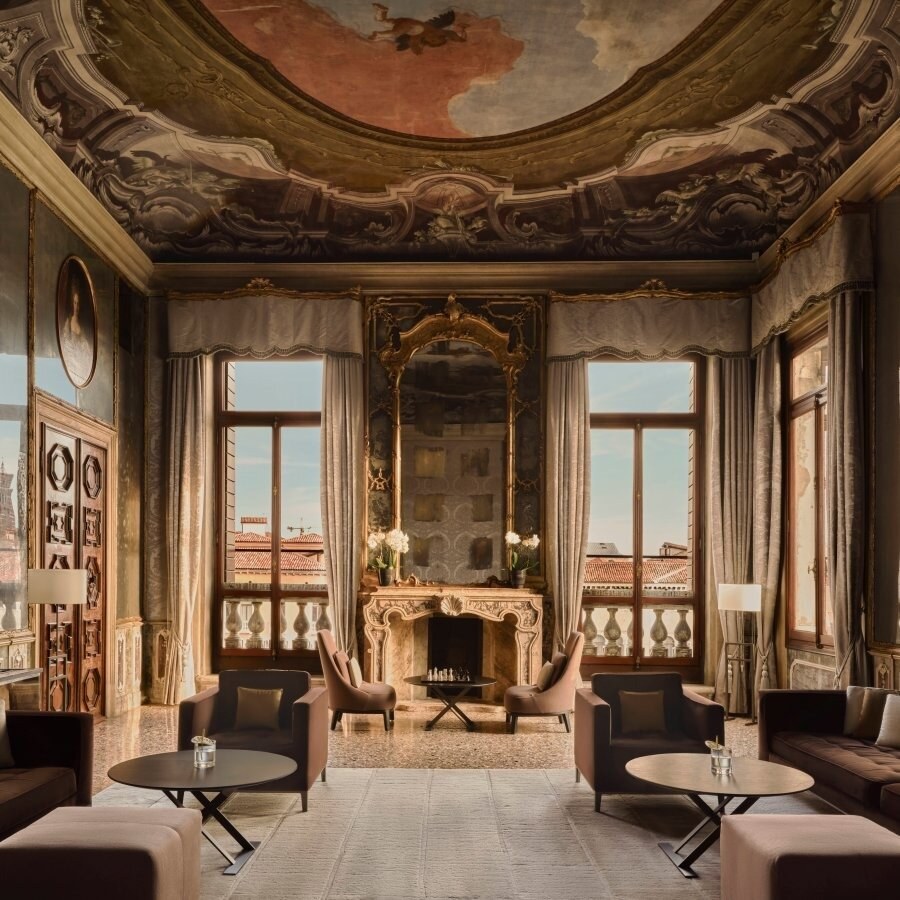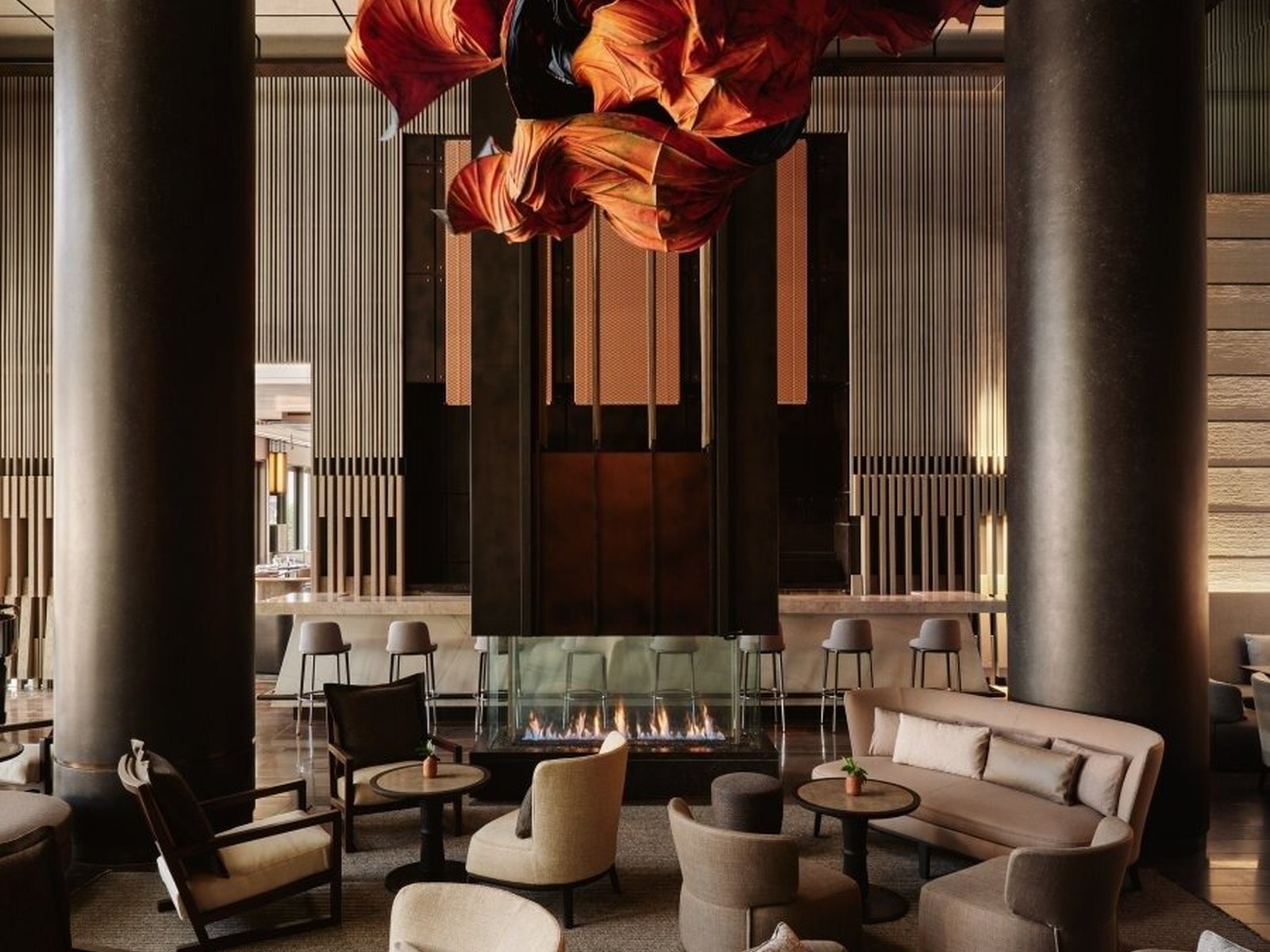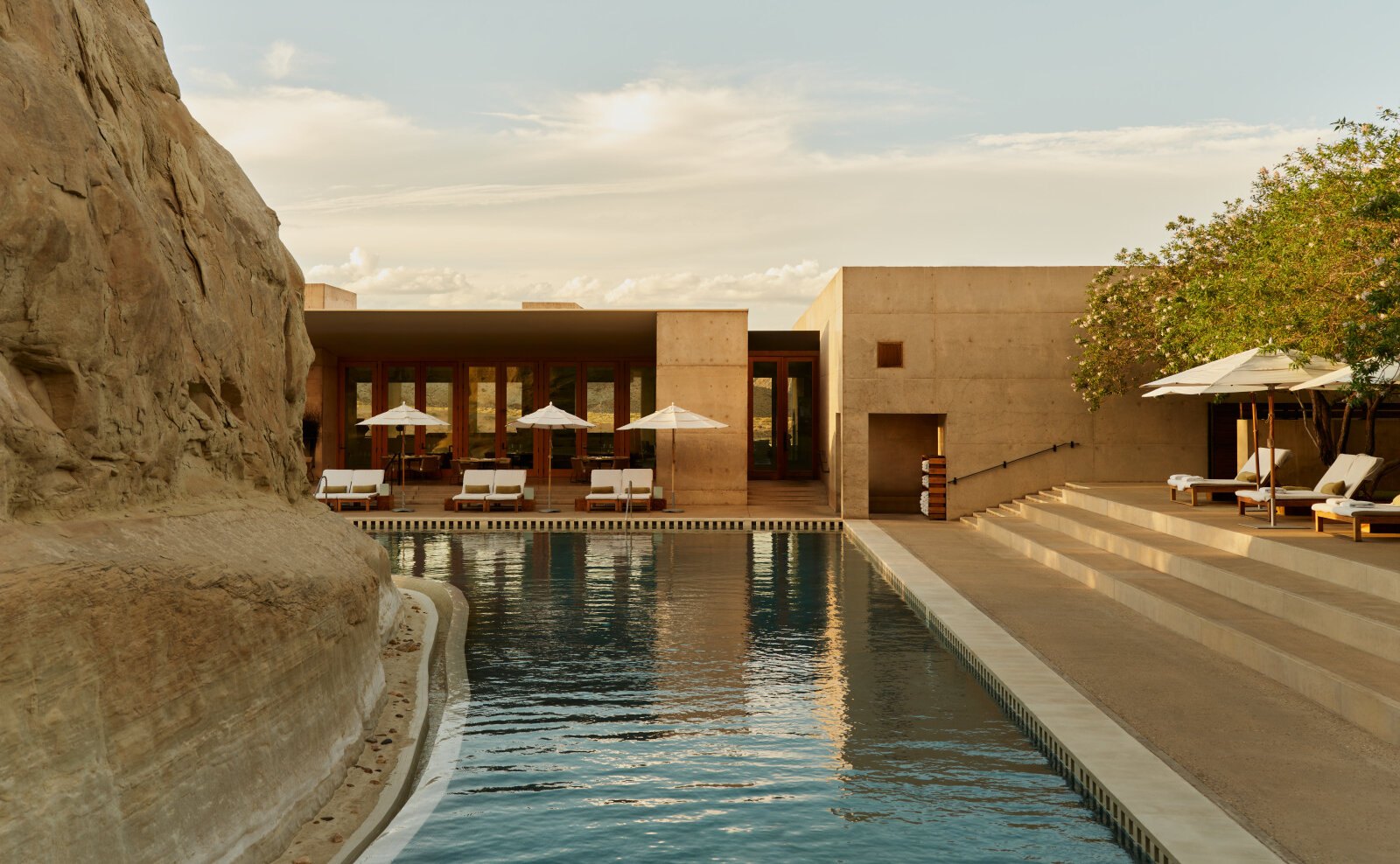
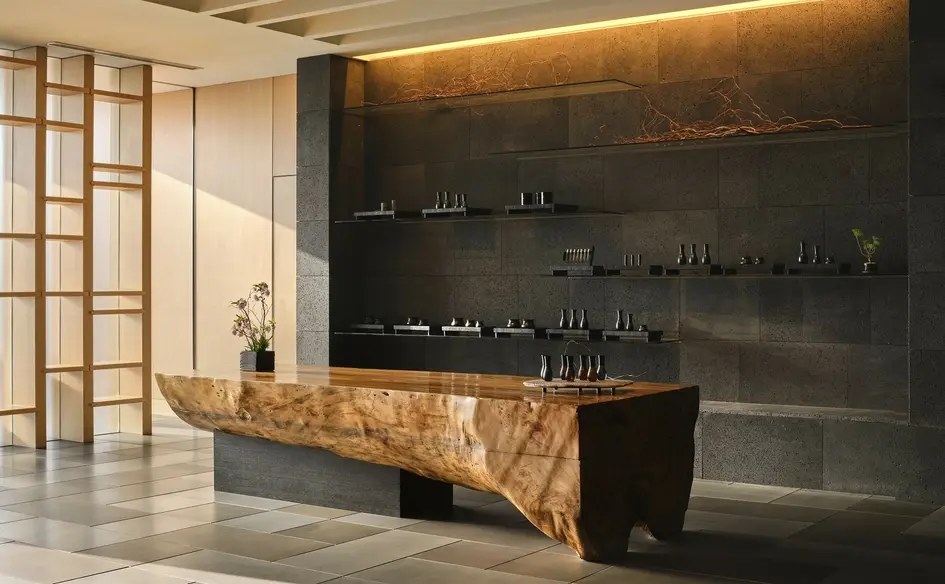
Vast hotel lobby high above Tokyo with a washi paper lantern ceiling, camphor wood lattice, stone floor and a still black water basin

Aman — Tokyo, Japan

A Sanctuary Above Tokyo

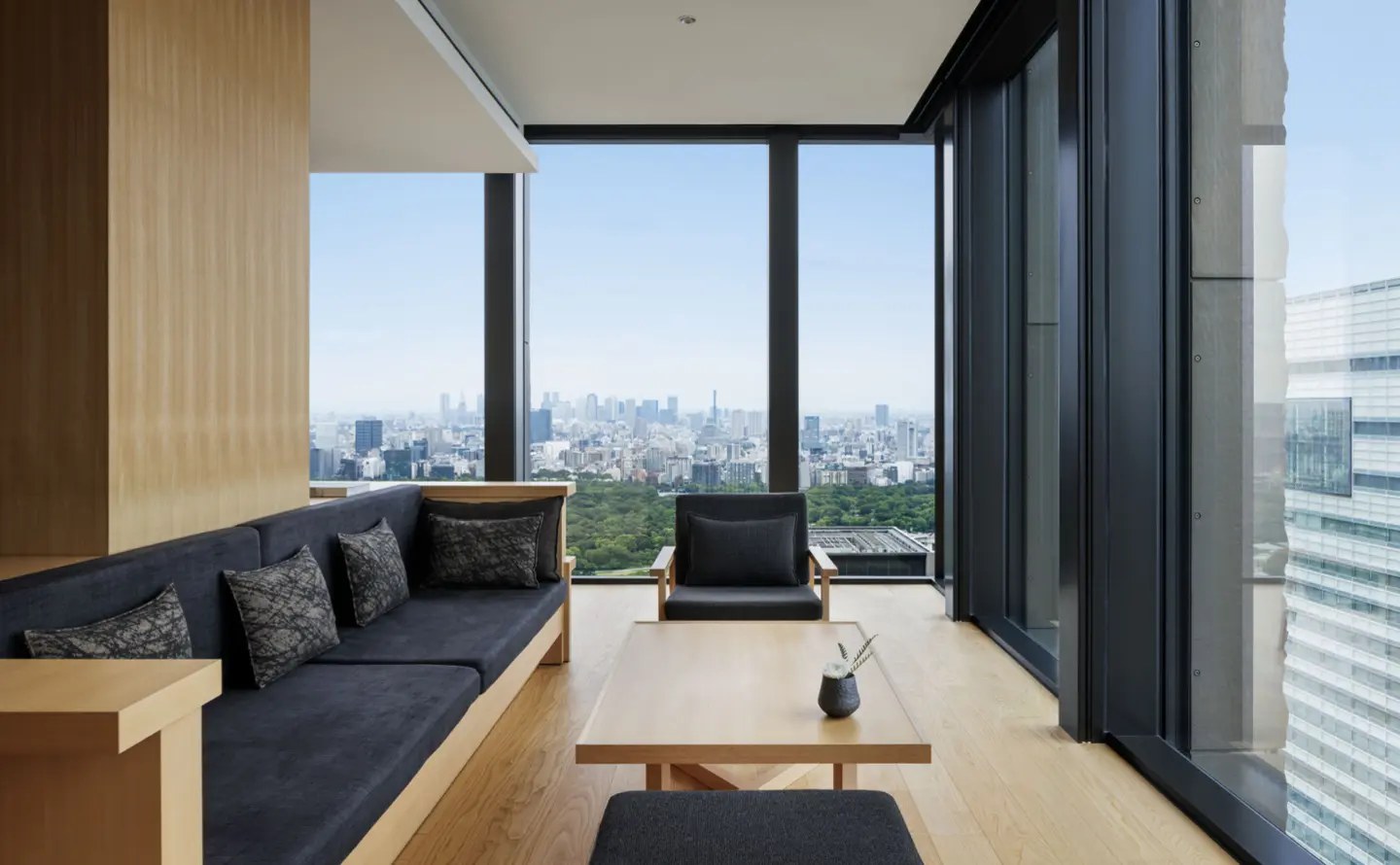
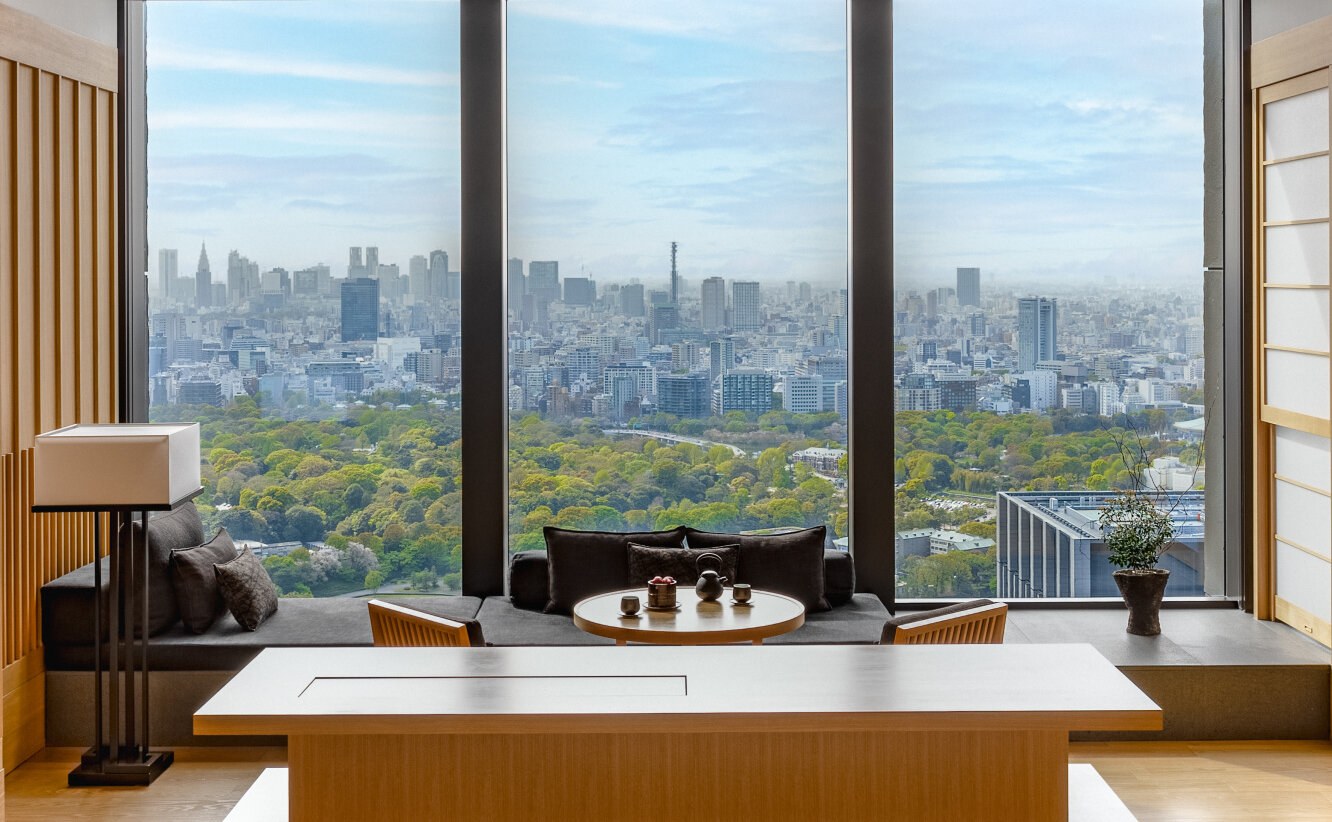
Aman Tokyo reads as a contemporary Japanese residence rather than a luxury hotel — washi, stone and camphor wood raised thirty floors above the metropolis, where the city becomes something you watch rather than something you are in.

An Introduction

A company built on remoteness came to the largest city on earth, and did not raise its voice.

For three decades Aman built where there was nothing: a Balinese headland, a bend of the Mekong, red rock in southern Utah. Tokyo was the argument against the whole idea — thirty-seven million people, a horizon that does not end, a city that never fully stops. The house they made here is the answer to it, and the answer was silence.

You come up through the Otemachi Tower to the thirty-third floor, and the lift opens onto a room thirty metres high with a washi lantern hung in the middle of it like weather. Below the windows, Marunouchi is at full speed. Inside, there is water moving over stone, the smell of camphor, and no music. The change of state happens in about four seconds and never quite stops being surprising.

What makes it unlike any other luxury hotel in Tokyo is not the altitude. It is that the building refuses to perform the city back at you. There is no skyline bar theatre, no lobby scene. Tokyo is kept behind glass, at a distance, and the distance is the entire proposition.

Japanese minimalist corridor with washi paper screens, dark camphor columns, a rough stone wall and long shafts of daylight

Architecture & Design

A ryokan, lifted into the sky

Kerry Hill took the plan of a traditional inn — engawa, shoji, the low horizontal line — and gave it a tower to live in. Washi filters the light the way paper has filtered it here for four hundred years. Camphor wood warms the corners. Stone holds the floor down.

The material list is short on purpose. Paper, timber, stone, water, and the space between them, which is treated as a material in its own right. Nothing is added where nothing is needed, and the emptiness is not austerity — it is where the calm comes from.

Walk the corridors slowly and the building keeps giving you the same instruction in different words: fewer things, more air, softer light. By the second evening you are moving at its speed rather than the city's.

Rooms & Suites

Private sanctuaries, thirty floors up

Eighty-four rooms in a tower that could have held five hundred. What that space buys is not grandeur but quiet, and a great deal of daylight.

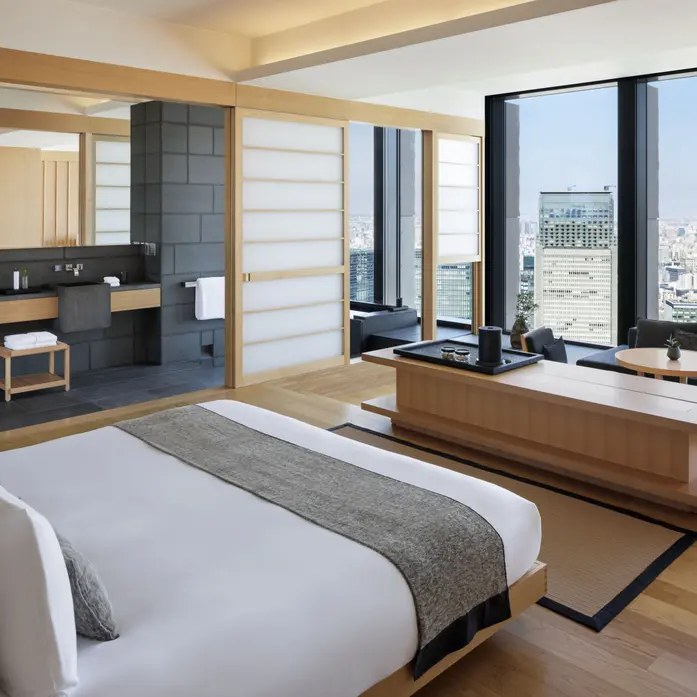
Minimal Japanese-inspired suite with pale wood floor, low bed in white linen and a floor-to-ceiling window over Tokyo

No. 01

The Deluxe Rooms

They begin at seventy-one square metres, which in this city is not a statistic but a philosophy. A low bed, a wall of washi that glows rather than lights, a bench at the window and very little else. The room asks you to sit down and look out, and after the second morning you find you have stopped filling the silence with anything.

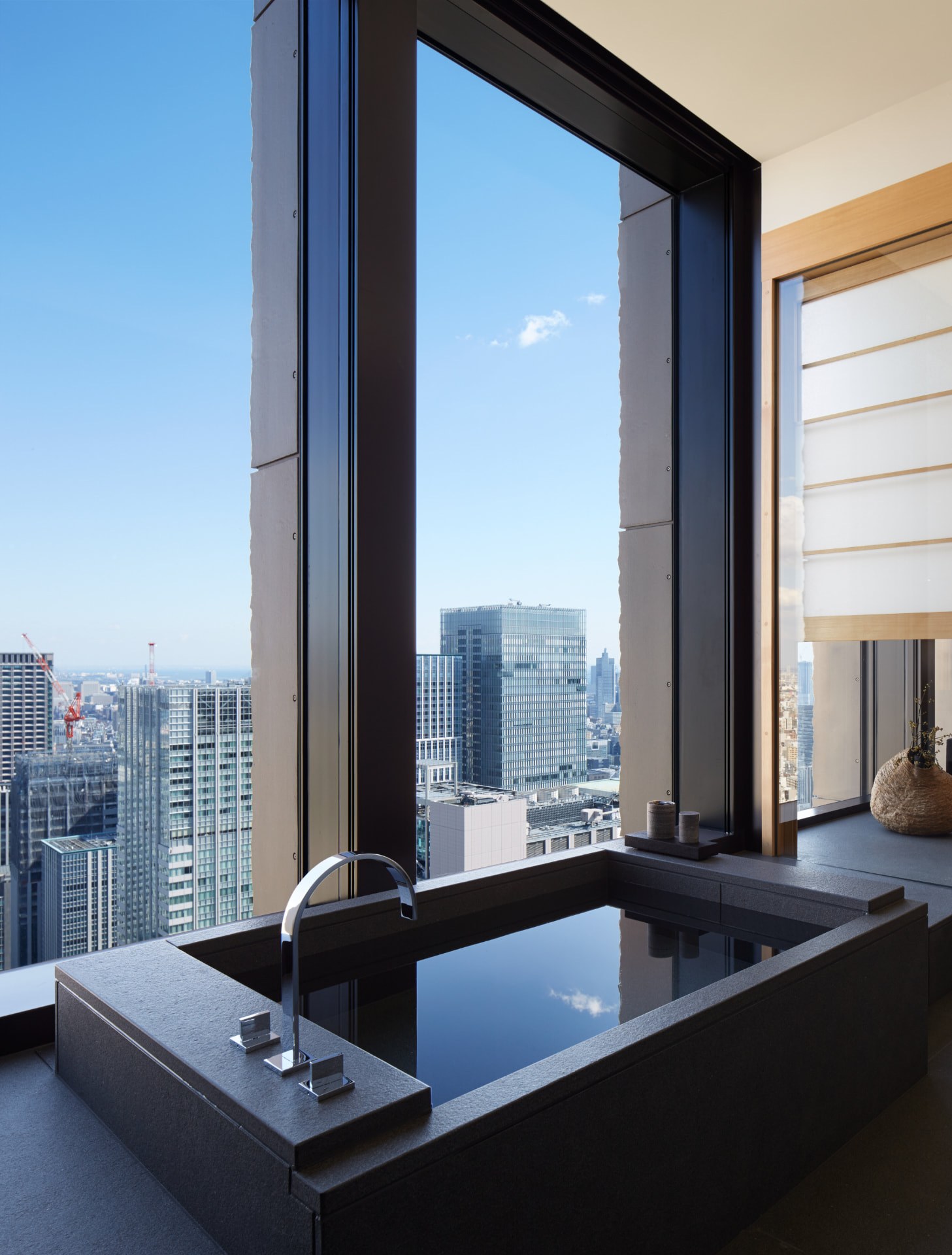
Deep stone soaking tub beside a tall window with a hazy Tokyo view, folded white towels on a timber stool

No. 02

The Bath, and the Hour Around It

Each room holds a deep stone furo set against the glass, and it changes the shape of the day. You come back from Ginza at six, fill it, and watch the light go out of the city from the water. Nothing is scented, nothing plays. The ofuro is not a facility here; it is the oldest domestic ritual in Japan, given a window.

Japanese breakfast tray of small ceramic dishes, grilled fish, rice and miso on pale wood beside a tall window over the city

Dining

The season, read aloud

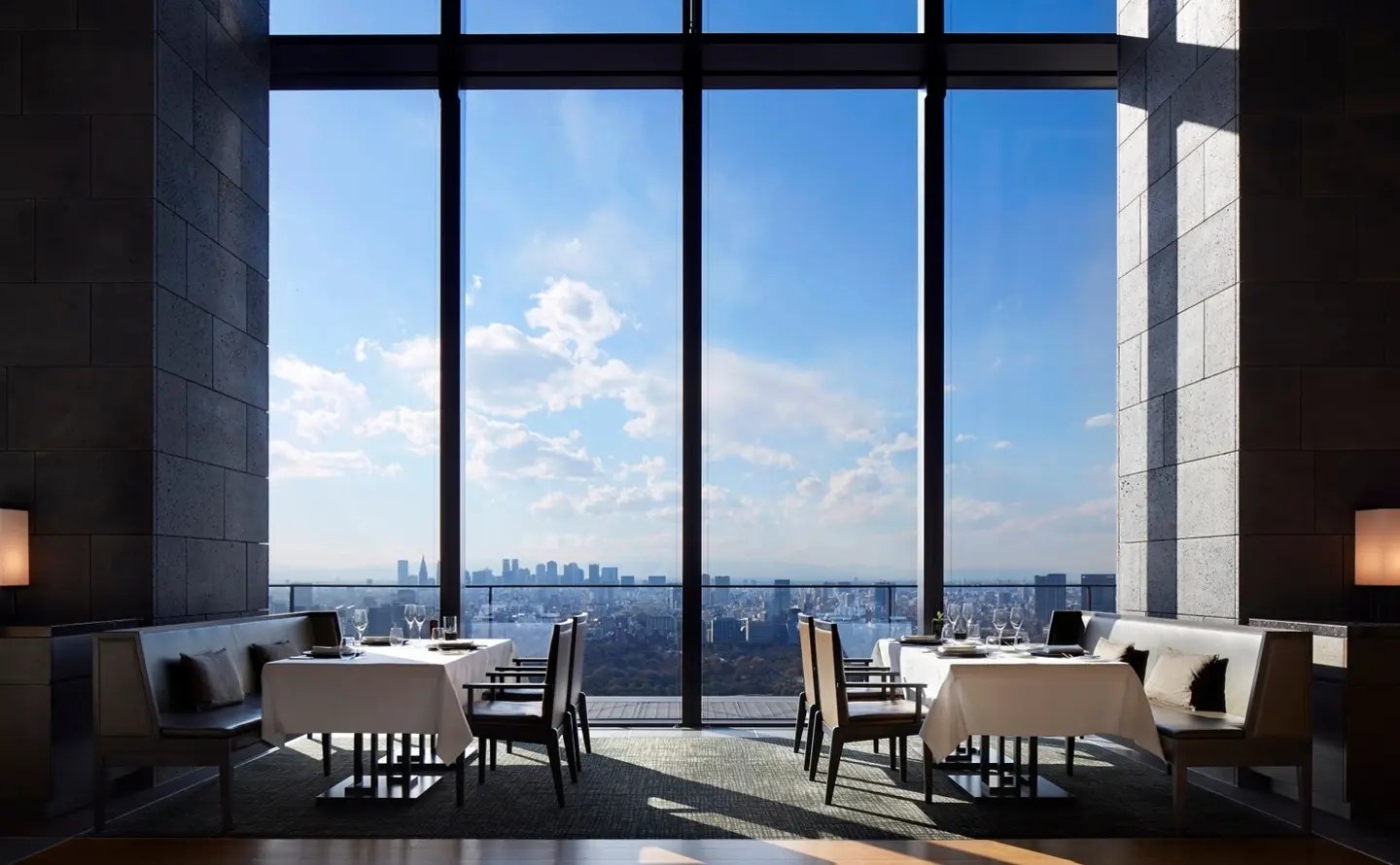
The Restaurant by Aman cooks Italian with a Japanese hand — a short menu built on what came up from the market that morning, plated without decoration. Precision here is not showmanship; it is the ordinary standard of a country that has never separated craft from cooking.

The Lounge sits under the lantern and runs all day: tea in the afternoon, a glass at dusk when the lights come on below. It is the one room where the house lets the city in a little.

Take the Japanese breakfast, and take it slowly. Grilled fish, rice, miso, small dishes of pickles in their own ceramics, all arriving at once on a wooden tray. It tells you what season you are in more clearly than the window does.

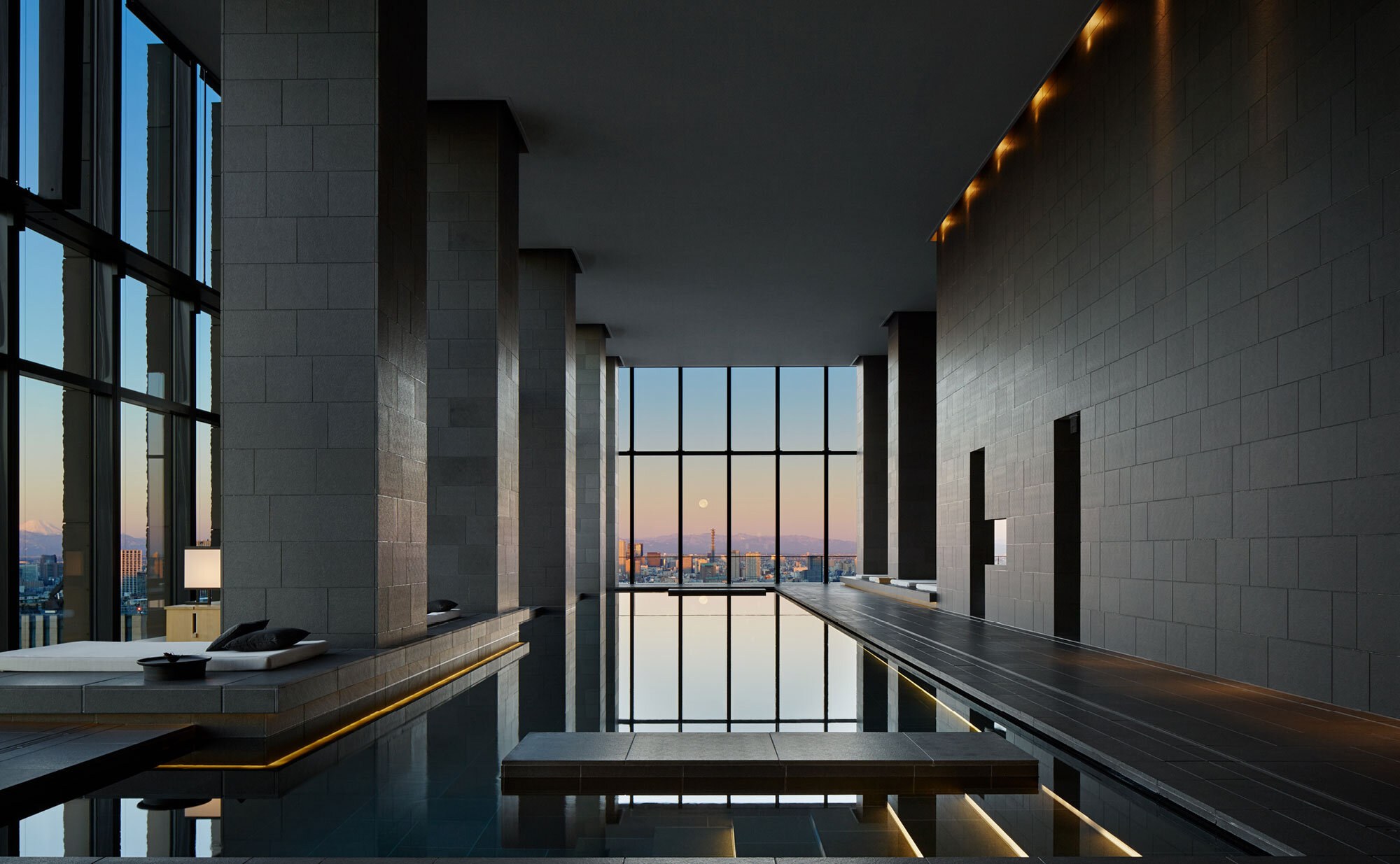
Long still indoor swimming pool in dark stone beside a floor-to-ceiling window overlooking Tokyo at dusk

Wellness

Two floors of quiet, and thirty metres of water

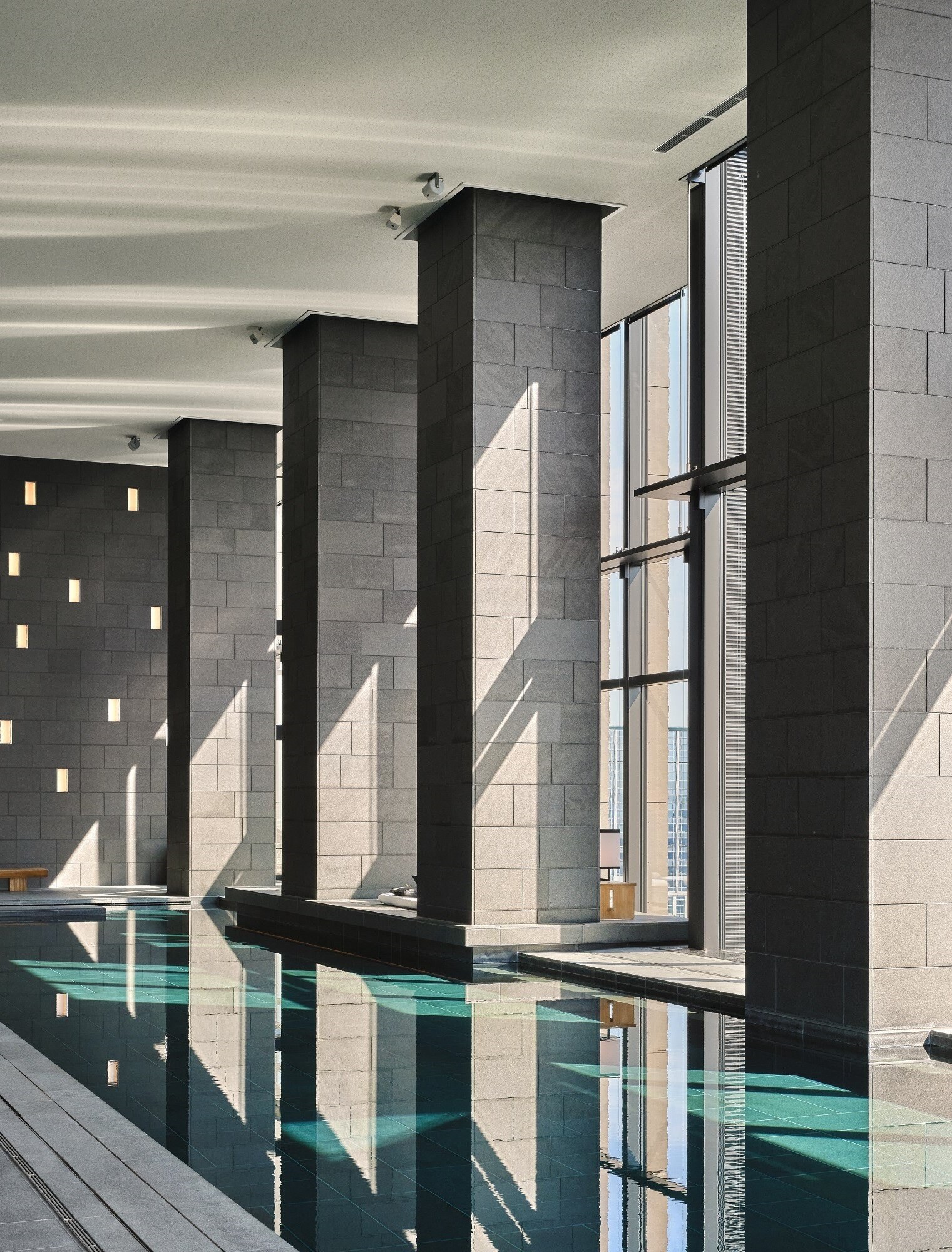
The Aman Tokyo spa occupies two floors, which in this city is close to extravagance and here reads as restraint: long corridors, low light, stone underfoot, and the sound of water somewhere you cannot place.

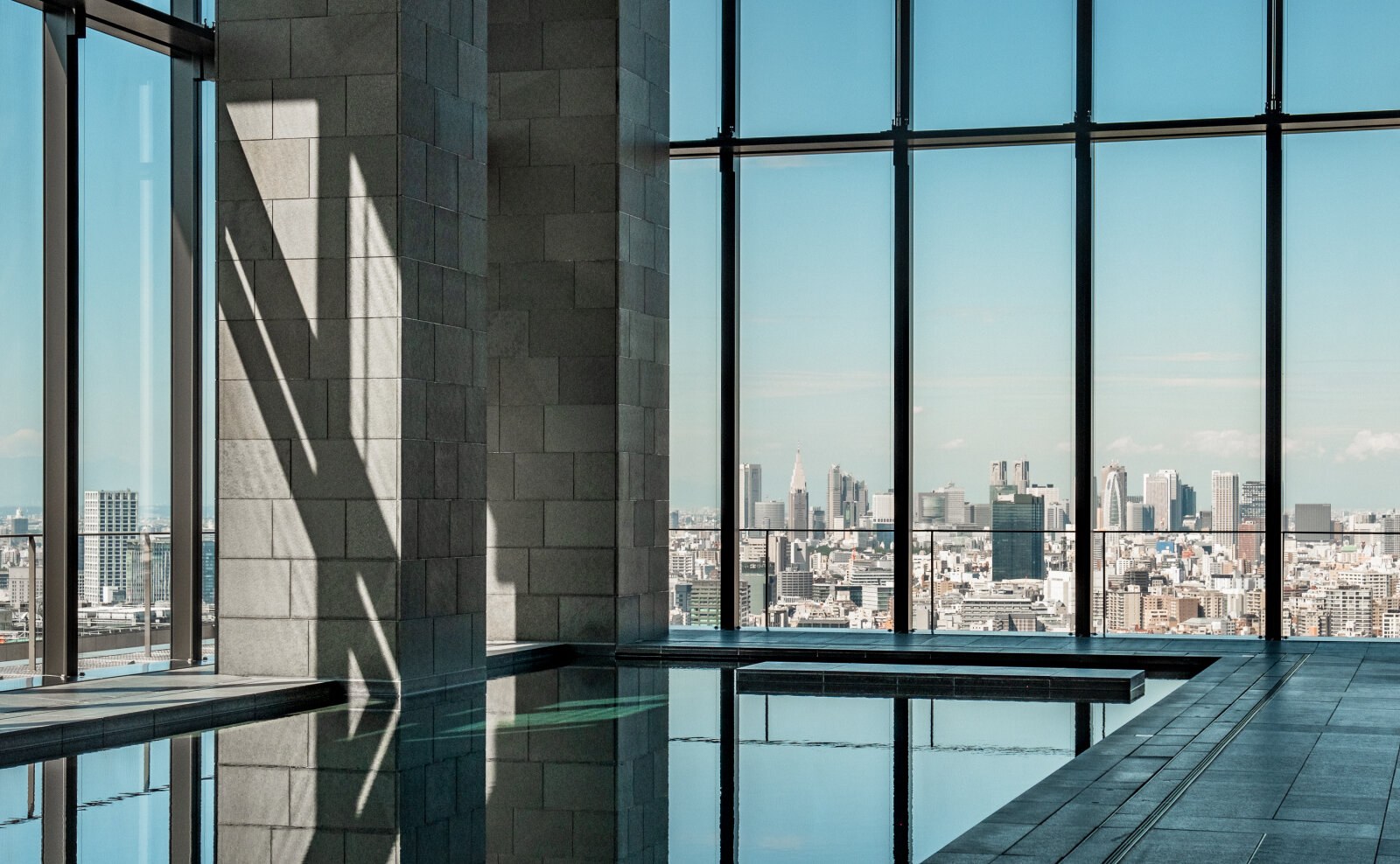
The pool runs thirty metres along a wall of glass, black water against a city that has begun to switch itself on. Swim at dusk with the lights coming up below and the only sound your own breathing, and the day empties out of you completely.

Around it sit the bathing rooms — furo, steam, cold water — arranged in the order Japan has used for centuries, because the sequence is the treatment. Nothing is rushed, nothing is explained. You are simply left in the warm dark until you have stopped thinking.

Maison Voyage Loves

Five small things

  • Sunrise on a clear winter morning, when Fuji appears on the western horizon for about twenty minutes and then withdraws for the day.
  • The pool at dusk, alone, with the lights of Marunouchi coming up through the glass.
  • Tea in the lobby at seven, before anyone else is down, when the lantern is the brightest thing in the room.
  • Marunouchi on foot before the shutters lift, and a coffee taken standing at a counter.
  • A last glass by the window after dinner, watching a city of thirty-seven million make no sound at all.

Who This House Is For

Travellers who want the city on their own terms.

It suits people who read buildings — who will spend the first hour looking at how the paper meets the timber. It suits anyone travelling for design, for craft, for the bathing culture, or for the long unhurried version of Japan that slow travel is really about. It suits those who value privacy above being seen, and quiet above address.

It suits a first visit to Tokyo too, provided you accept the geography: Otemachi is a business district, calm in the evening and quiet at weekends, which is exactly why the hotel is so still.

It will not suit everyone. If you want Shibuya at your door, a bar with a scene, a large family suite or a room with visible personality, Tokyo has better answers elsewhere. And if you plan to be out from eight until midnight, you will pay for a great deal of silence you never hear.

Nearby Discoveries

Four things worth leaving for

Not a list of sights. Four hours of the city that reward being early, all of them within half an hour of the lobby.

  • No. 01

    The Imperial Palace gardens at seven

    Ten minutes on foot, and for an hour the moat belongs to herons and a handful of runners. The East Gardens open early; the stone ramparts of the old keep are the only place in central Tokyo where you can stand on something built in the seventeenth century and see nothing modern in one direction.

  • No. 02

    The Nezu Museum, and its garden

    Kengo Kuma's long bamboo approach is worth the journey on its own, but the reason to go is behind the galleries: a hillside garden of moss, stone lanterns and tea houses that has no business existing between Omotesando and Aoyama, and does.

  • No. 03

    Hamarikyu, and tea over the water

    A feudal duck-hunting garden hemmed in by Shiodome towers, with a tea house on stilts in a tidal pond. Matcha and a wagashi, twenty minutes of nothing, and the strange pleasure of drinking it with skyscrapers reflected in the same water.

  • No. 04

    Marunouchi and Ginza before the shutters lift

    The blocks below the hotel are at their best between six and eight, when the delivery vans have gone and the pavements are being swept. Walk Naka-dori to Ginza, take a coffee standing at a counter no wider than a doorway, and be back before the city has properly begun.

A Personal Enquiry

Planning Your Stay?

If this hotel feels like the right place for your next journey, we would be delighted to curate your stay personally.

Maison Voyage specialises in carefully crafted luxury travel experiences tailored entirely to you.

Why book through Maison Voyage?

  • Personal luxury travel advice
  • Carefully curated hotel recommendations
  • Tailor-made itineraries
  • Exclusive partner benefits whenever available
  • Direct personal contact from start to finish

No booking is made and nothing is charged. We simply begin a conversation.

From the Journal

Related reading

All stories
  • Cast iron kettle and a small ceramic cup on a dark tray set on tatami beside a paper screen

    The Art of Japanese Hospitality

    ServiceJuly 2026

    Omotenashi is usually translated as hospitality, which misses it. On anticipation, restraint, and why nobody here asks whether everything is to your liking.

  • Quiet Tokyo back street at dawn with wet asphalt, a shuttered shopfront and a single bicycle

    Tokyo Beyond the Neon

    TravelJune 2026

    The city photographs loudly and lives quietly. Three days spent entirely in back streets, tea houses and the hour before the shutters go up.

  • Japanese garden pond with clipped pines and moss reflected in still water under morning mist

    Why Aman Changed Urban Luxury

    DesignMay 2026

    A resort company put its first city house at the top of a Tokyo tower and brought the garden indoors. Every urban hotel built since has been answering it.

A Note from the Editor

Come in January, and take a west-facing room.

The winter air over Tokyo is at its clearest, and on the right morning Fuji stands on the horizon before the city has warmed up. Arrive in the afternoon, do nothing on the first evening, and be awake before the light. Then swim, eat breakfast slowly, and walk out into Marunouchi while it is still being swept.

Ben Trousil, Founding Editor

An Invitation

Continue the Journey

One letter each month: a place worth the detour, an object worth keeping, a page worth reading slowly. Nothing more.