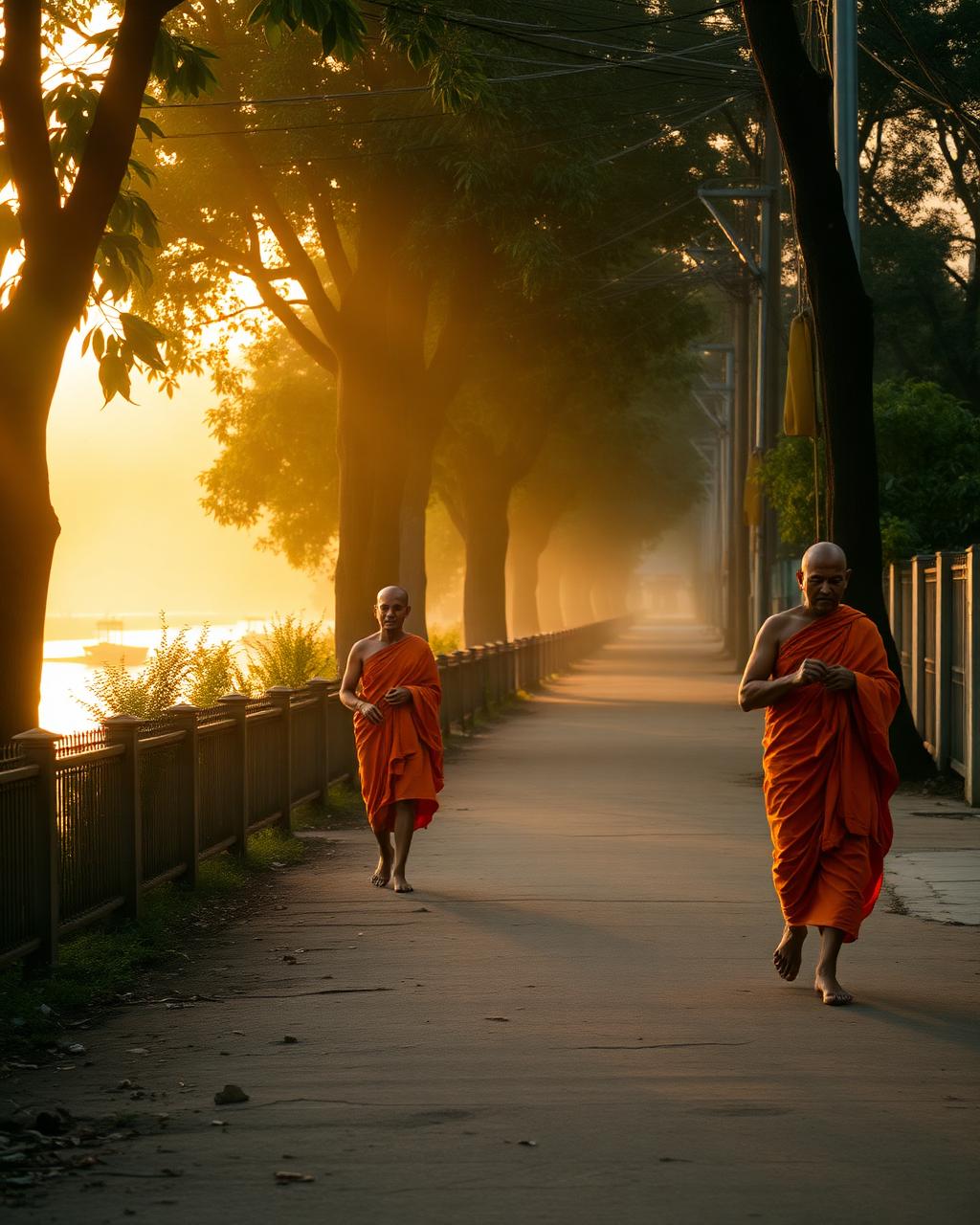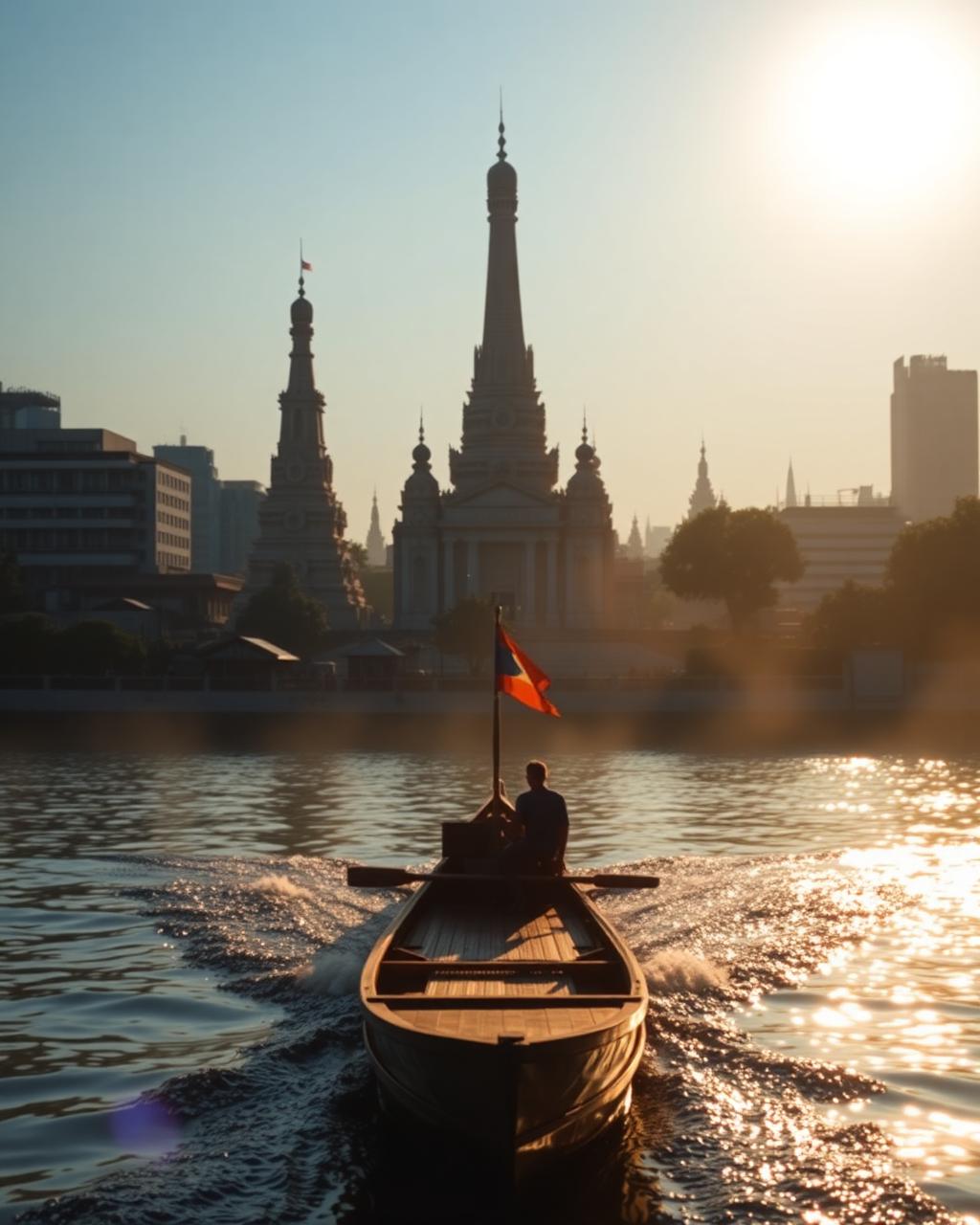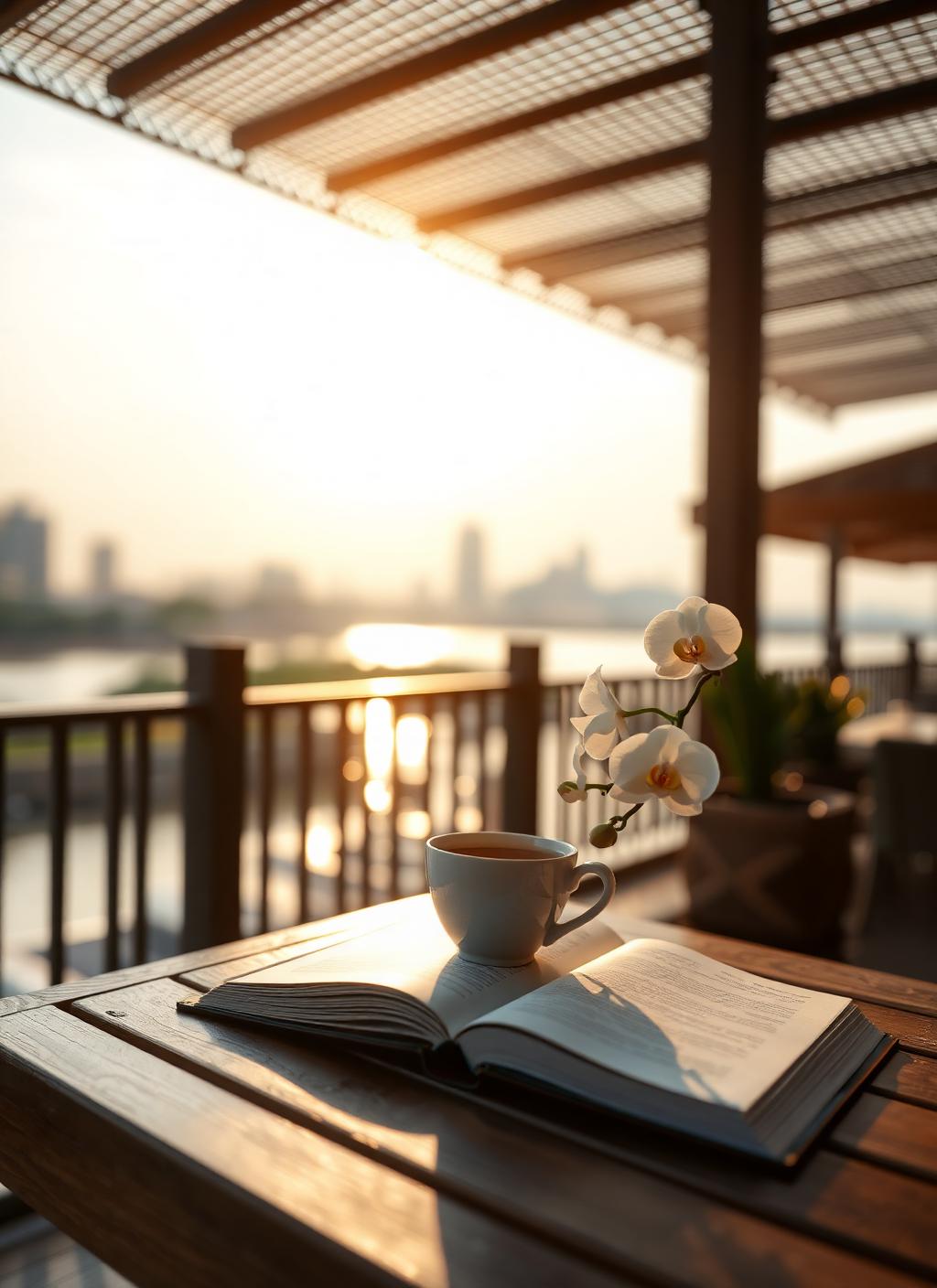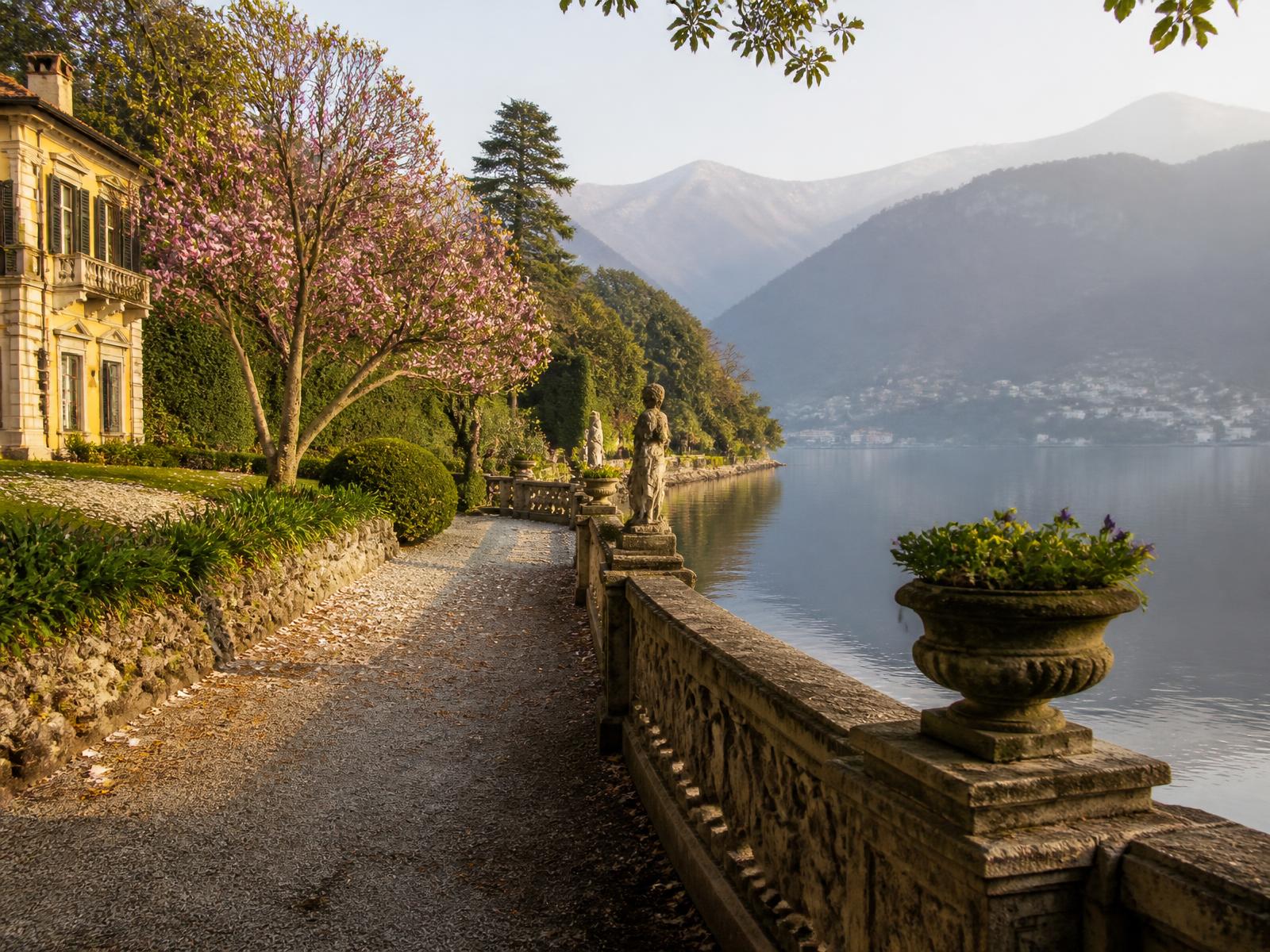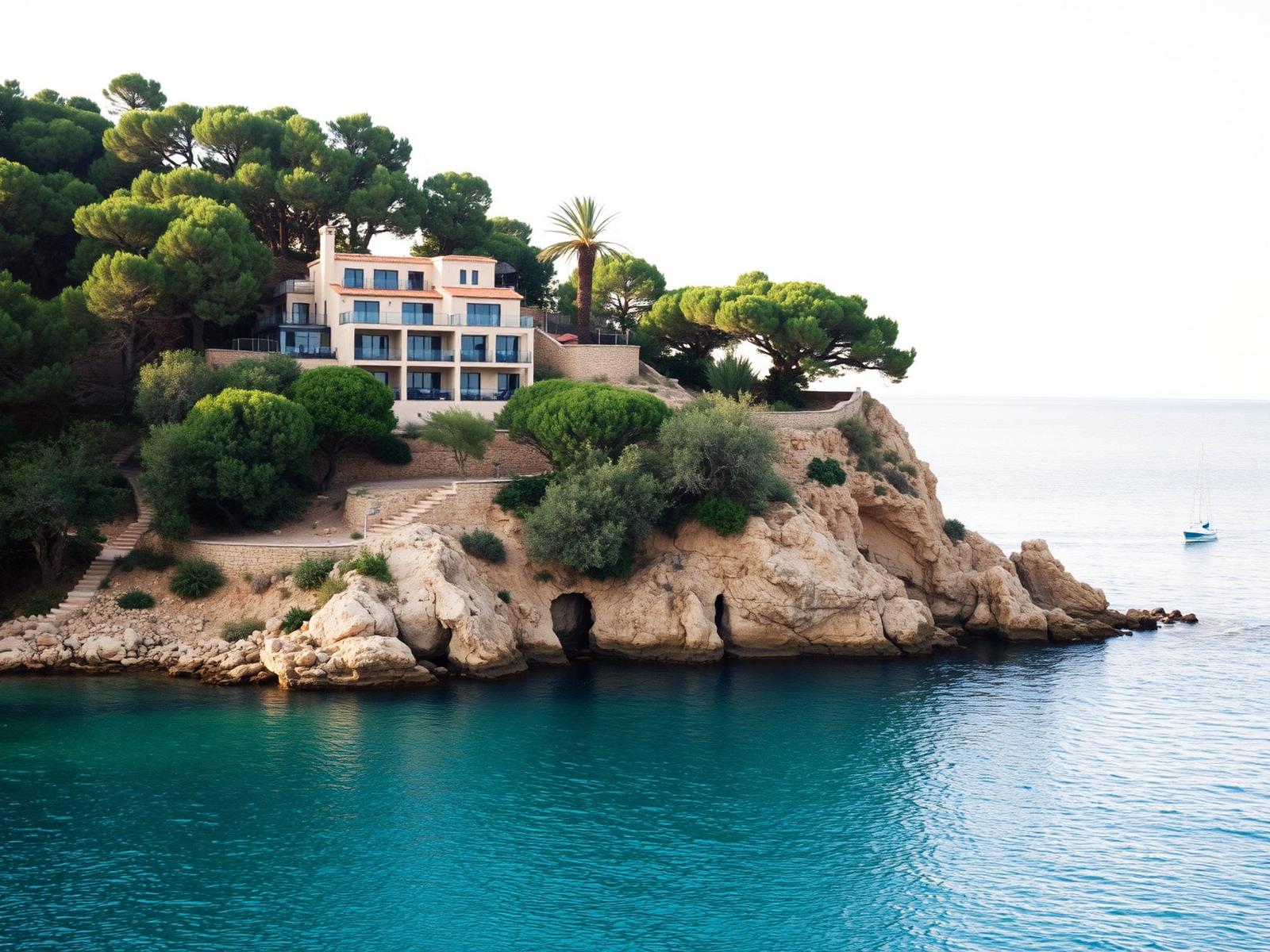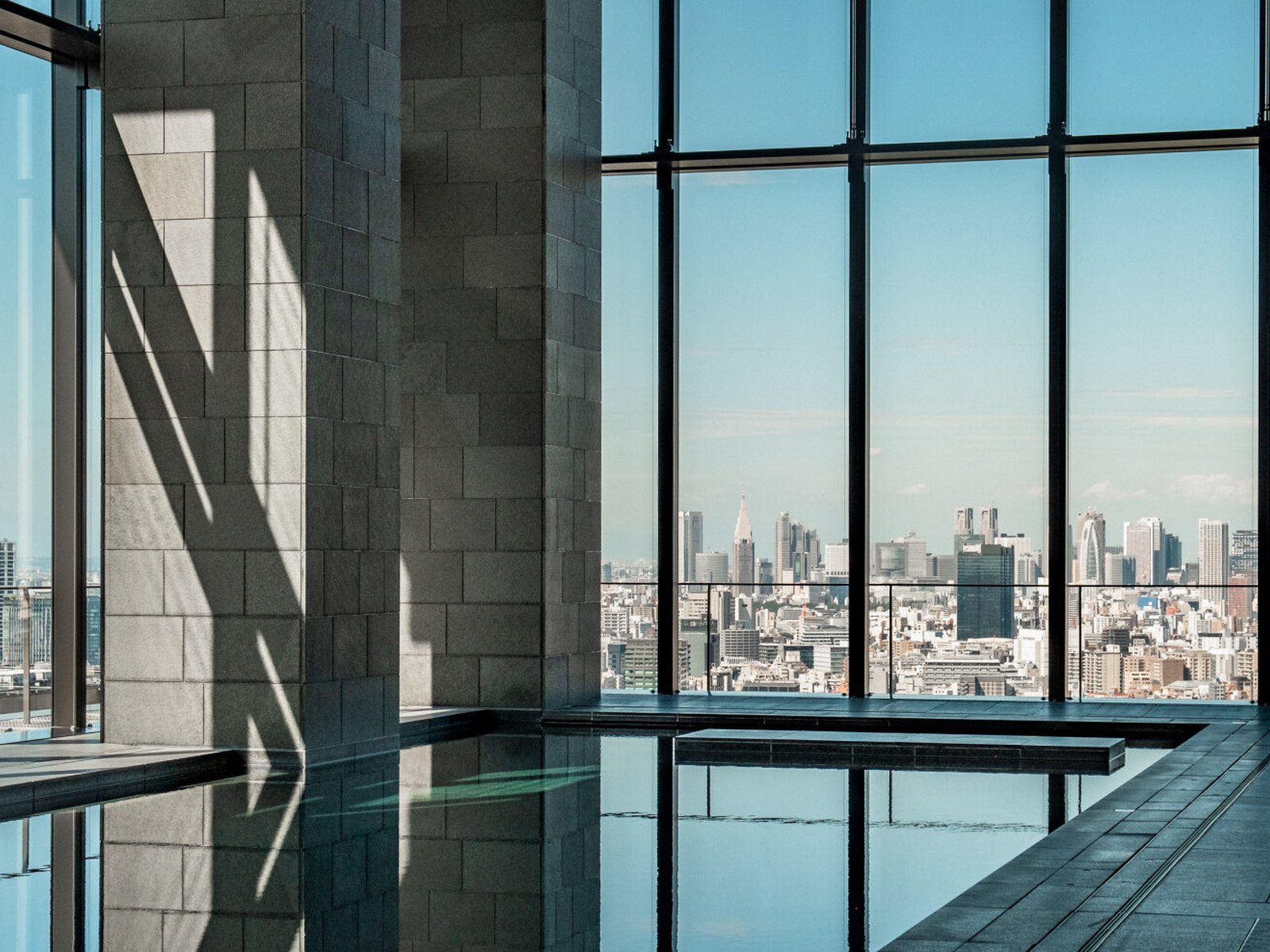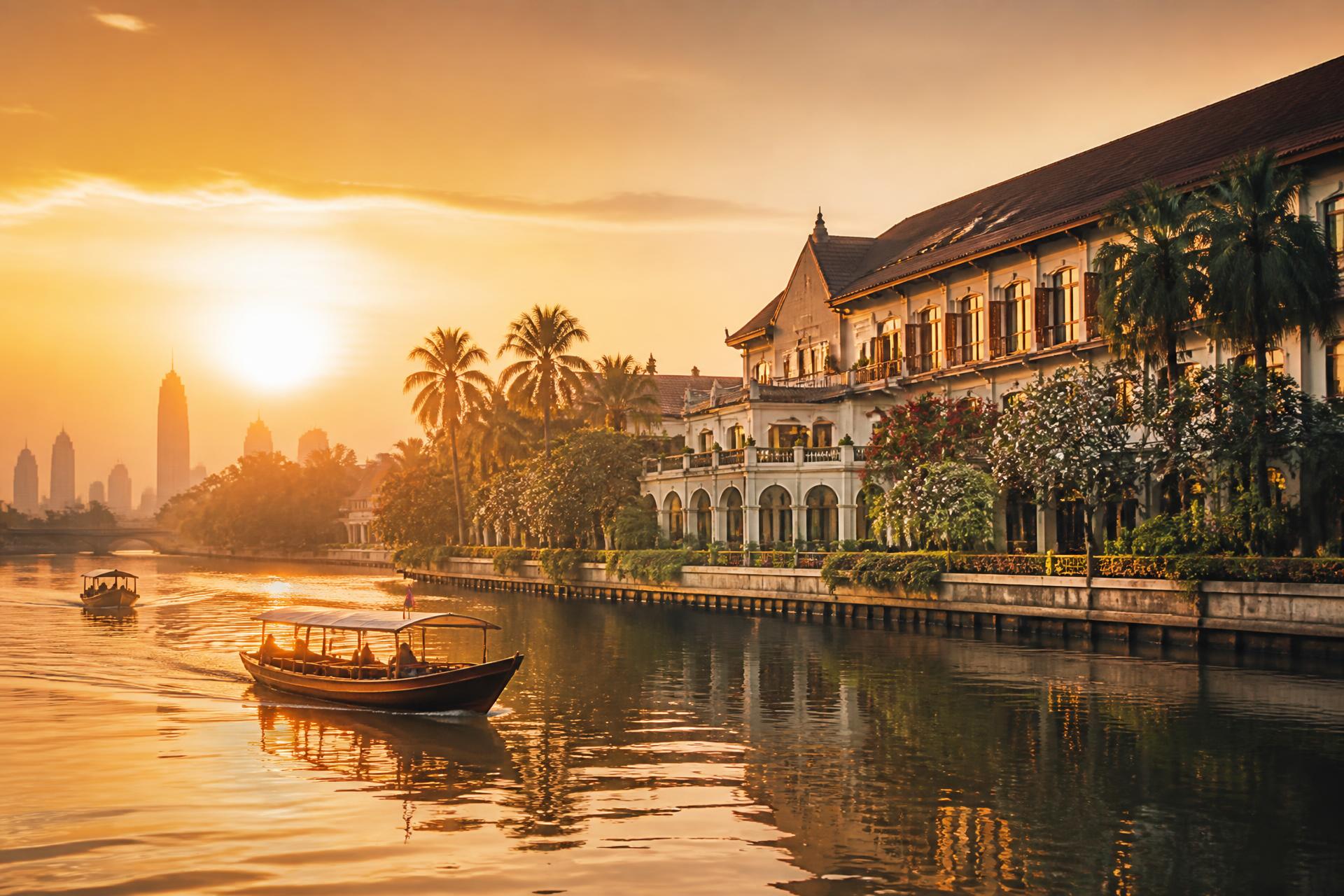
Sunrise over the Chao Phraya River in Bangkok with a wooden long-tail boat, temple spires in golden mist and the terrace of a historic riverside hotel

Mandarin Oriental — Bangkok, Thailand

The Legend on the Chao Phraya

For nearly one hundred and fifty years, Mandarin Oriental Bangkok has stood on the banks of the Chao Phraya as the finest expression of Thai hospitality — a house of writers and travellers where the river still sets the rhythm of the day.

An Introduction

A city of eleven million people, and the one address in it where you can hear the water.

It opened in 1876, when Bangkok was still a city of canals and the only sensible way to arrive was by boat. Sailors came first, then the writers: Joseph Conrad, Somerset Maugham, Graham Greene, Noël Coward — enough of them, and staying long enough, that the oldest part of the building is simply called the Authors' Wing. It is a two-storey colonial house with louvred shutters and a ceiling fan turning slowly over wicker chairs, and it is still the quietest room in Bangkok.

Everything here faces the Chao Phraya. The river is not scenery; it is the reason. It carried teak and rice down from the north for centuries and it still carries barges, ferries and long-tail boats past the terrace all day, close enough to see the boatmen's faces. The hotel keeps its own landing and its own wooden shuttles, which means you leave and return by water. After a day or two you stop thinking of Bangkok as a city with a river in it and start thinking of the river as the city.

What has kept it legendary is not the building. It is the service, which is unhurried, unfussy and startlingly personal — staff who have worked here for thirty years, who remember what you drank last time, who greet you with a wai and mean it. Thai hospitality at this level is not a performance of luxury. It is attention, quietly and continuously offered, and there is nowhere in Asia that does it better.

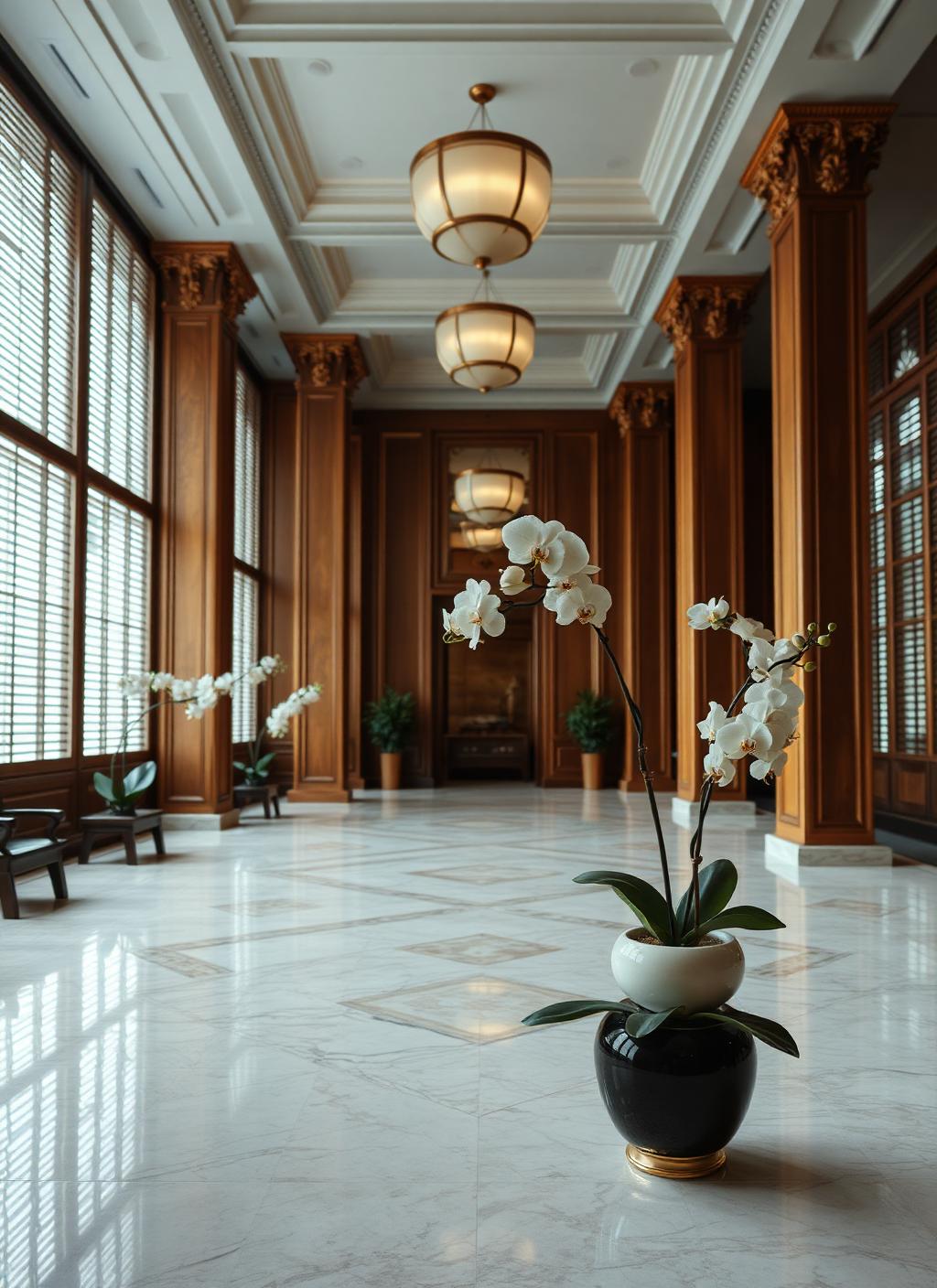
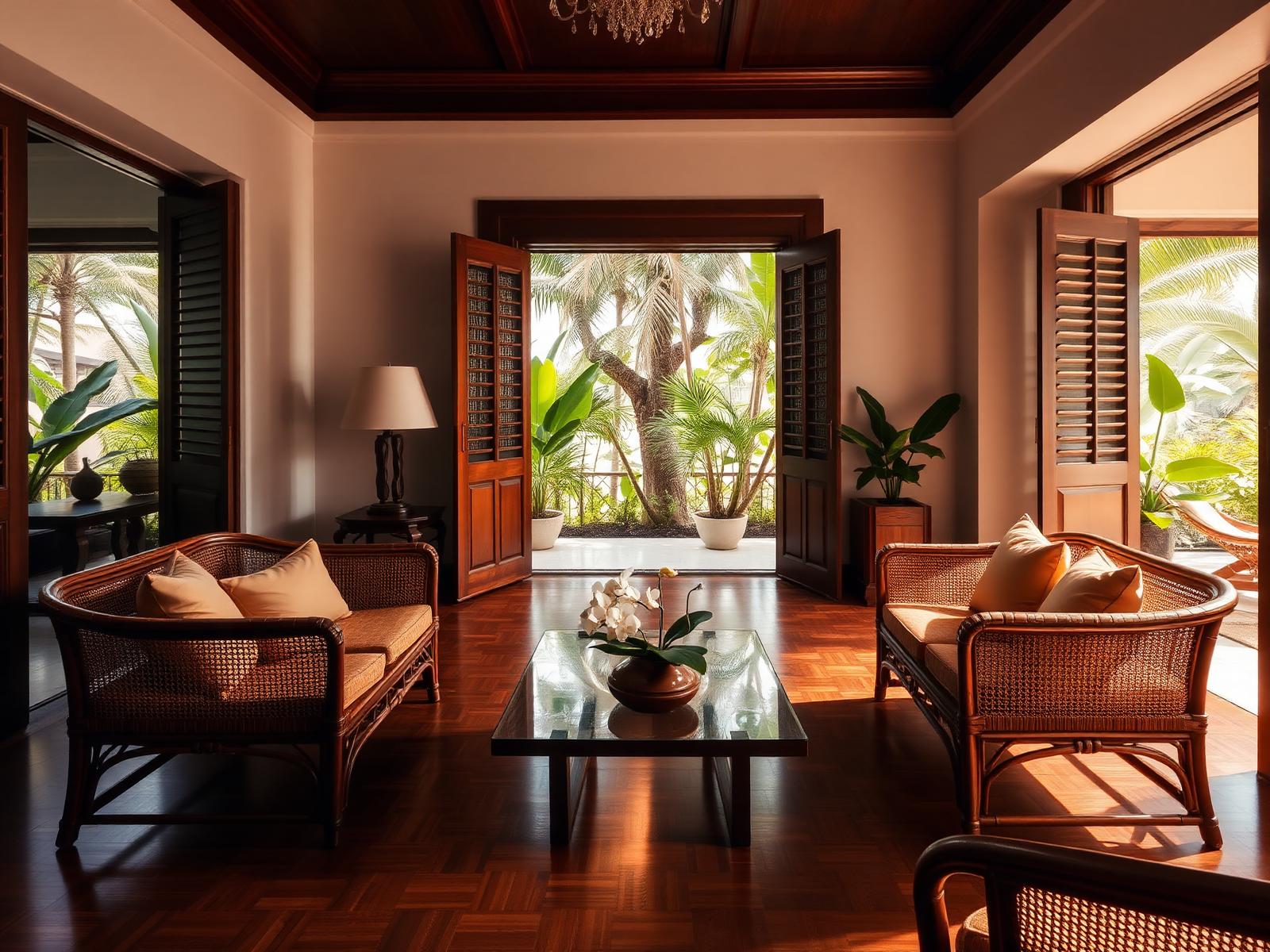
Colonial Authors' Wing interior of a historic Bangkok hotel with teak columns, white louvred shutters, rattan chairs, marble floor and white orchids in warm morning light

Architecture & Design

Colonial bones, Thai hands

The Authors' Wing is the original house: white stucco, deep verandas, shutters built to move air before anyone had another way to do it. Inside, teak that has darkened for a century, marble worn smooth in the doorways, and rattan furniture arranged for conversation rather than photography.

The later wings are taller and calmer, but the vocabulary holds — teak, silk, lacquer, celadon, orchids replaced daily by someone whose entire job that is. Thai craft appears everywhere and announces itself nowhere: a carved panel, a length of hand-woven cloth, a bowl of jasmine floating in water by the lift.

What the architecture really does is keep turning you towards the water. Every corridor ends in a window, every terrace steps down towards the landing, and the river arrives in the building as light long before you reach it.

Rooms & Suites

Riverside residences, and the mornings they hold

What matters is which way the balcony faces, and how long it takes you to stop looking at the water. Usually longer than expected.

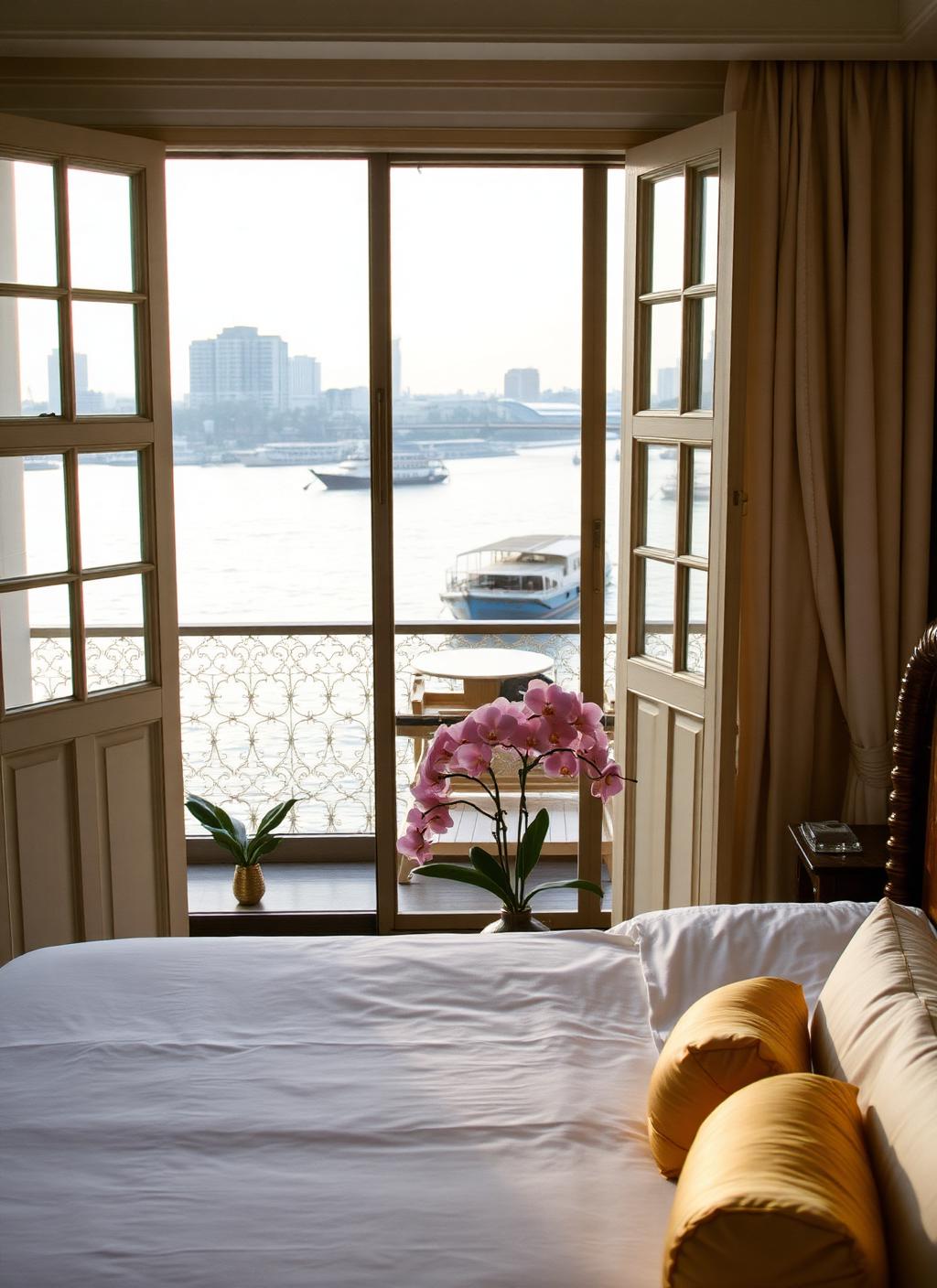
Bedroom in a historic Bangkok riverside hotel at dawn with white linen, teak headboard, Thai silk cushions, orchids and open doors onto a balcony above the Chao Phraya River

No. 01

The Hour Before the City

You wake early here, and not because anything asks you to. The light comes off the water first, grey then apricot, and it finds the ceiling before it finds you. The doors onto the balcony are worth opening at once: the river is already working, a long-tail boat somewhere out of sight, the low knock of a barge going down towards the gulf. Behind you the room is teak and white cotton and a single stem of orchid that someone changed while you were at dinner. Tea arrives without a sound. You drink it standing up, watching the water, and the day starts on the river's terms rather than yours.

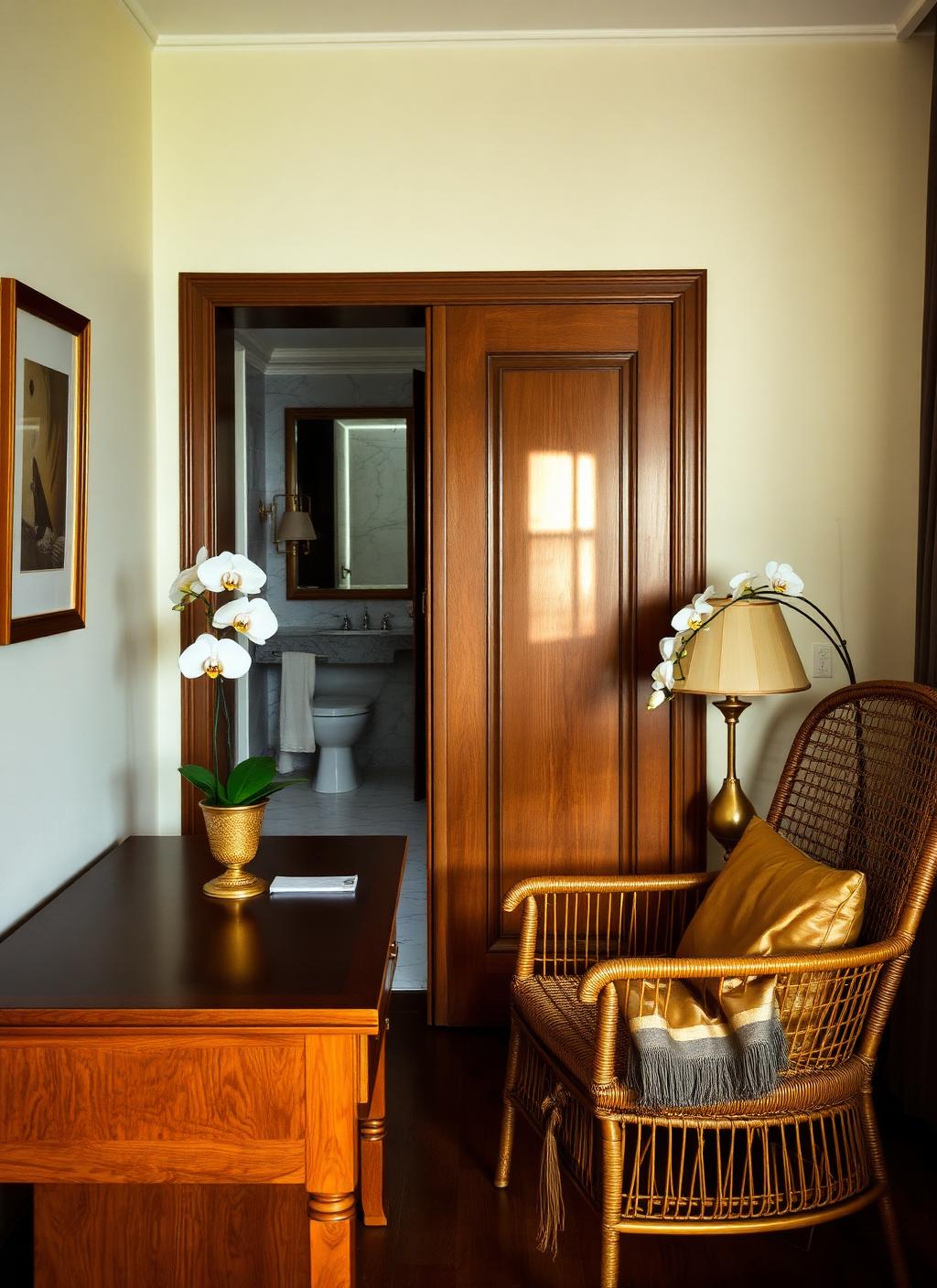
Corner of a suite in a colonial Bangkok hotel with teak writing desk, rattan armchair, Thai silk throw, brass lamp and a marble bathroom beyond a teak doorway

No. 02

Afternoons Measured in Silk

There is no category worth reciting. What matters is the teak, dark and warm and older than anyone still working here; the silk, woven somewhere upriver in colours that were dyed rather than chosen; the marble underfoot in a bathroom that stays cool through the whole of April. A writing desk broad enough for letters no one is expecting — the Authors' Wing has that effect on people. In the late afternoon the sun leaves the river and climbs the wall, and the correct response is to stop, sit in the rattan chair, and let it.

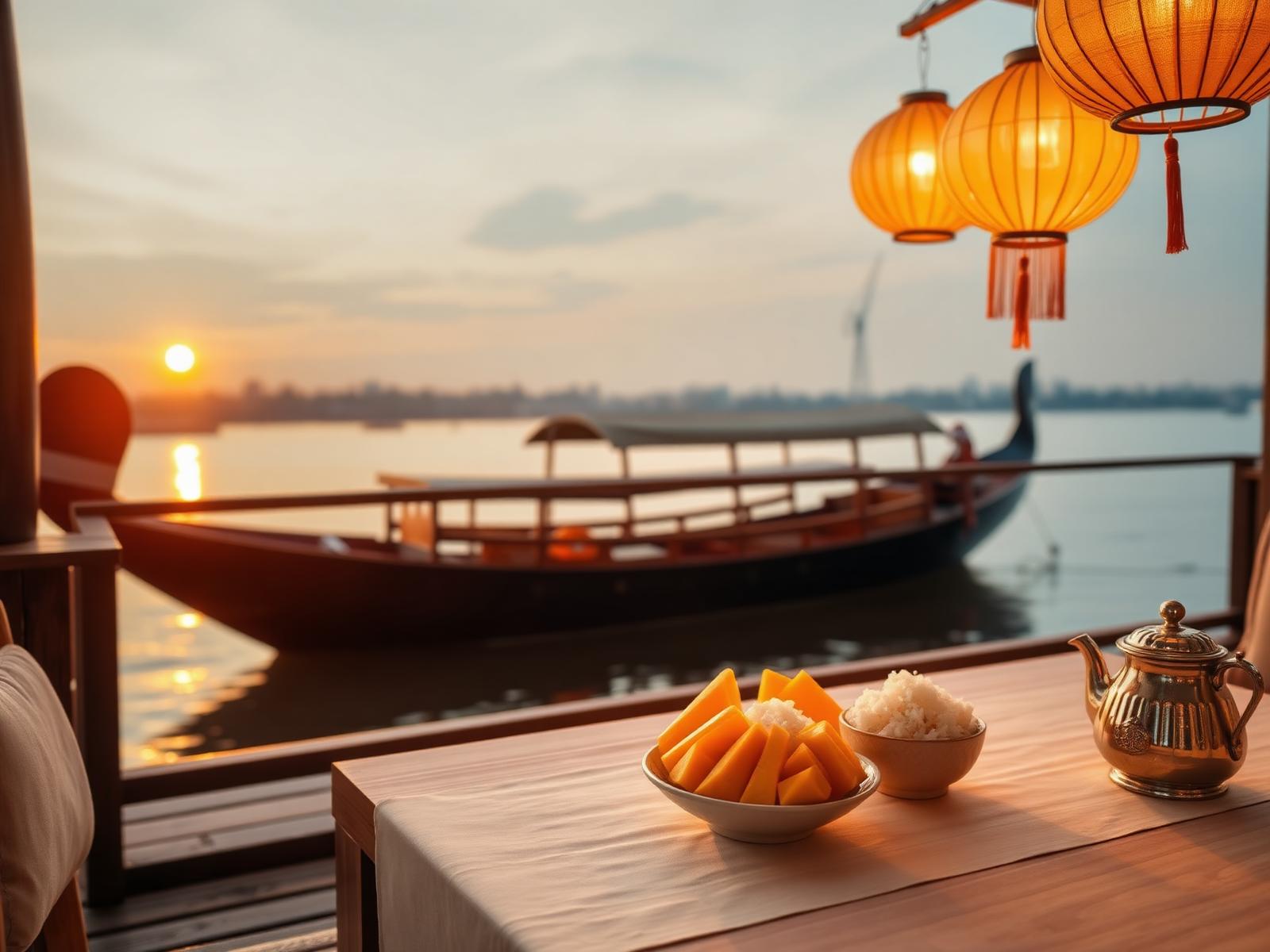
Riverside terrace dining at a historic Bangkok hotel at dusk with linen-laid tables, candlelight, orchids and the Chao Phraya River glowing beyond

Dining

Ten kitchens, and one long table by the water

Le Normandie has been serving classical French cooking on the top floor since 1958, with two Michelin stars and a river view that has outlasted several generations of chefs. It is formal in the old sense — jackets, a wine list of real depth, service that moves like choreography — and entirely worth an evening.

Sala Rim Naam sits on the far bank, reached by the hotel's own boat: royal Thai cooking in a pavilion of teak and gold, with dishes that predate the recipes most people think of as Thai food. The Verandah does the opposite job, all day, with the river a few metres away and the best breakfast in the city.

And then afternoon tea in the Authors' Lounge, which is not a novelty but an institution: white wicker, palms, a string quartet somewhere behind you, and two hours that pass without anybody noticing. The Bamboo Bar, later, is where Bangkok has been drinking jazz and gin since 1953.

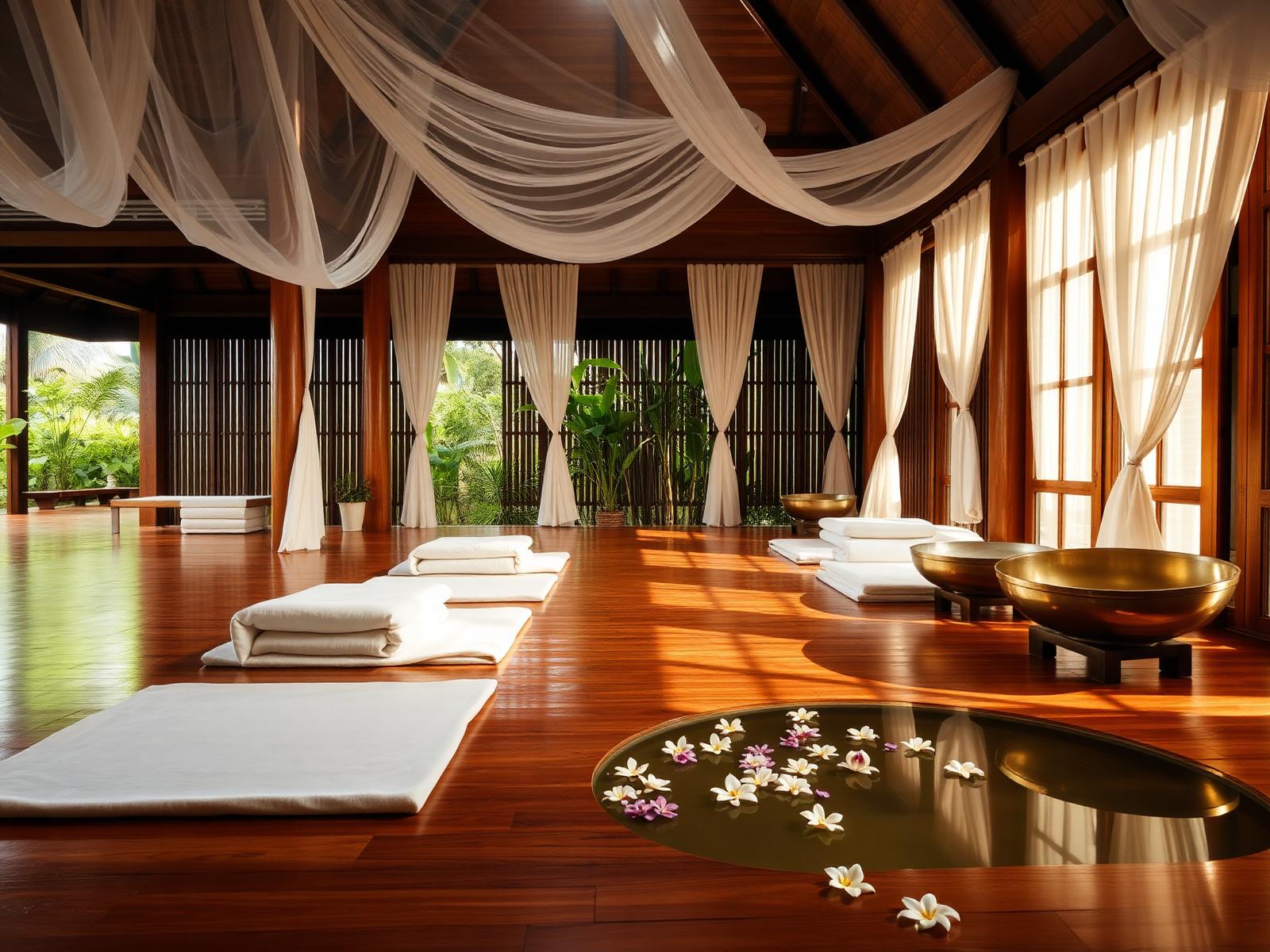
Teak spa pavilion in a tropical Bangkok garden with a treatment bed, folded white towels, frangipani flowers and soft morning light through palms

Wellness

A crossing of the river, and then nothing for three hours

The Oriental Spa occupies a century-old teak house on the opposite bank, which means the treatment begins with a boat. Four minutes across the water, sandals off at the door, and the city is simply no longer audible.

Traditional Thai massage here is the real discipline — stretching, pressure, forearms and elbows, performed by therapists trained in the temple lineage rather than the hotel one. It is not gentle and it is not meant to be. You leave two inches taller and slightly rearranged.

Afterwards there is ginger tea on a veranda over the garden, and no reason at all to hurry back. Take the boat when you feel like it. The river will still be doing exactly what it was doing before.

Signature Experiences

Eight ways into the city, most of them by water

They belong to Bangkok rather than to the hotel, which is precisely why they are worth doing. One a day is plenty; none at all is also an answer.

  • No. 01

    The klongs, before the heat

    A long-tail boat leaves the hotel's landing while the river is still the colour of tea with milk, then turns off into the canals of Thonburi where Bangkok keeps its older self. Teak houses on stilts, laundry, a dog asleep on a jetty, a woman selling coffee from a boat. The engine drops to nothing under the trees and for twenty minutes nobody says anything at all.

  • No. 02

    Wat Arun at first light

    Cross before the ferries begin and the Temple of Dawn is yours: porcelain fragments catching the sun one tier at a time, the steps steep enough to require attention, the city still lying flat and quiet below. Come down slowly. The best part is turning around at the bottom and looking back up.

  • No. 03

    A morning at the flower market

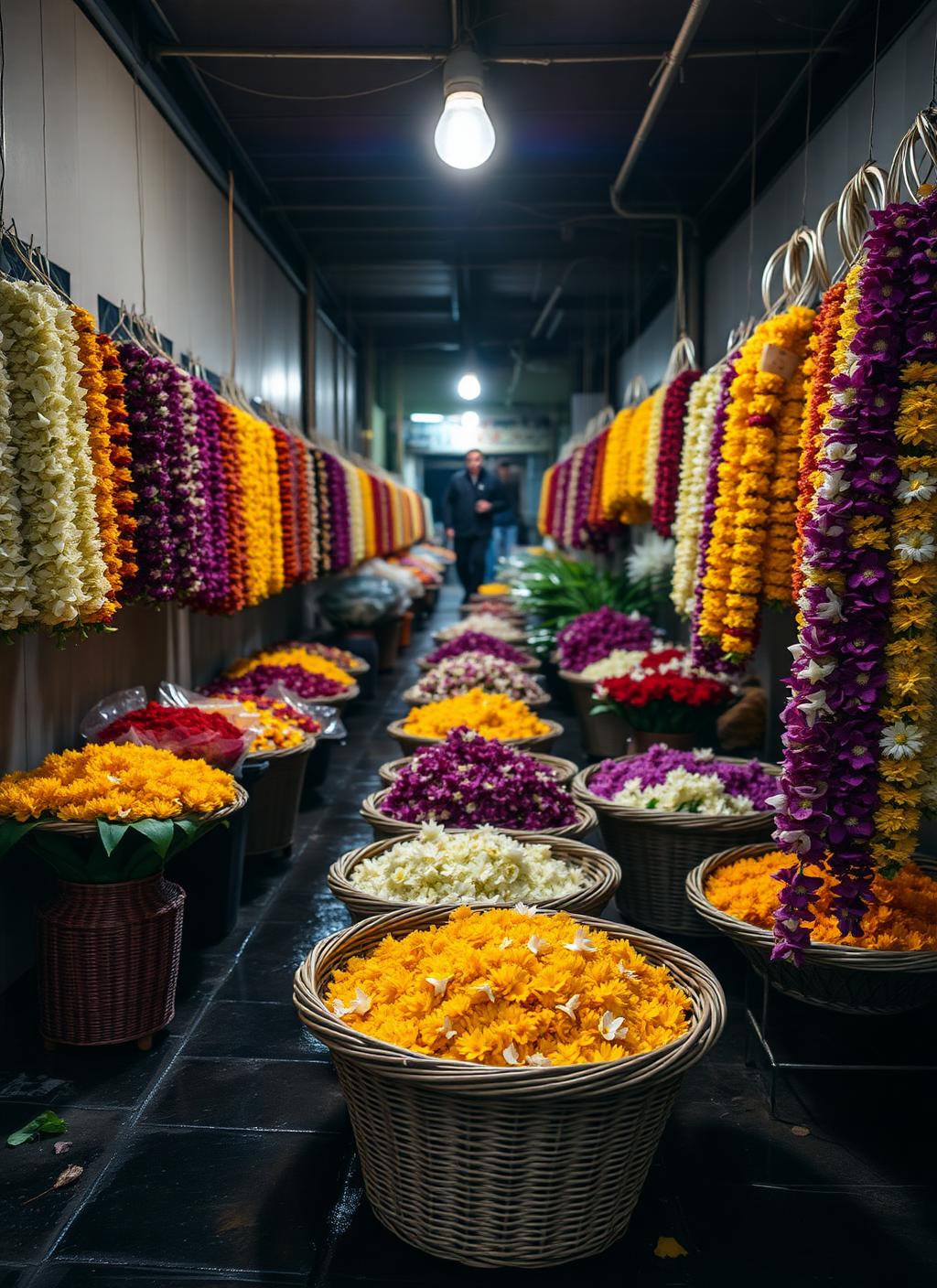
    Pak Khlong Talat works through the night, so arrive at four when the trucks are still unloading and the whole street smells of jasmine and cut stems. Garlands are strung by hand, tens of thousands of them, by people who have done it since they were children. Buy one. Give it away.

  • No. 04

    The stove, and someone who does not measure

    The market first — galangal, bird's eye chillies, kaffir lime, a fish still arguing — and then a teak kitchen with the fans on. You learn one curry properly instead of six things badly, pound the paste until your arm complains, and eat it at a long table with the doors open onto the garden.

  • No. 05

    A blessing, quietly given

    In a small temple away from the tour boats, a monk ties white cotton around your wrist and speaks in Pali for a while. You will not understand the words. You will understand what is being offered, which is the point. Leave the thread on until it falls off by itself.

  • No. 06

    Silk, at the loom

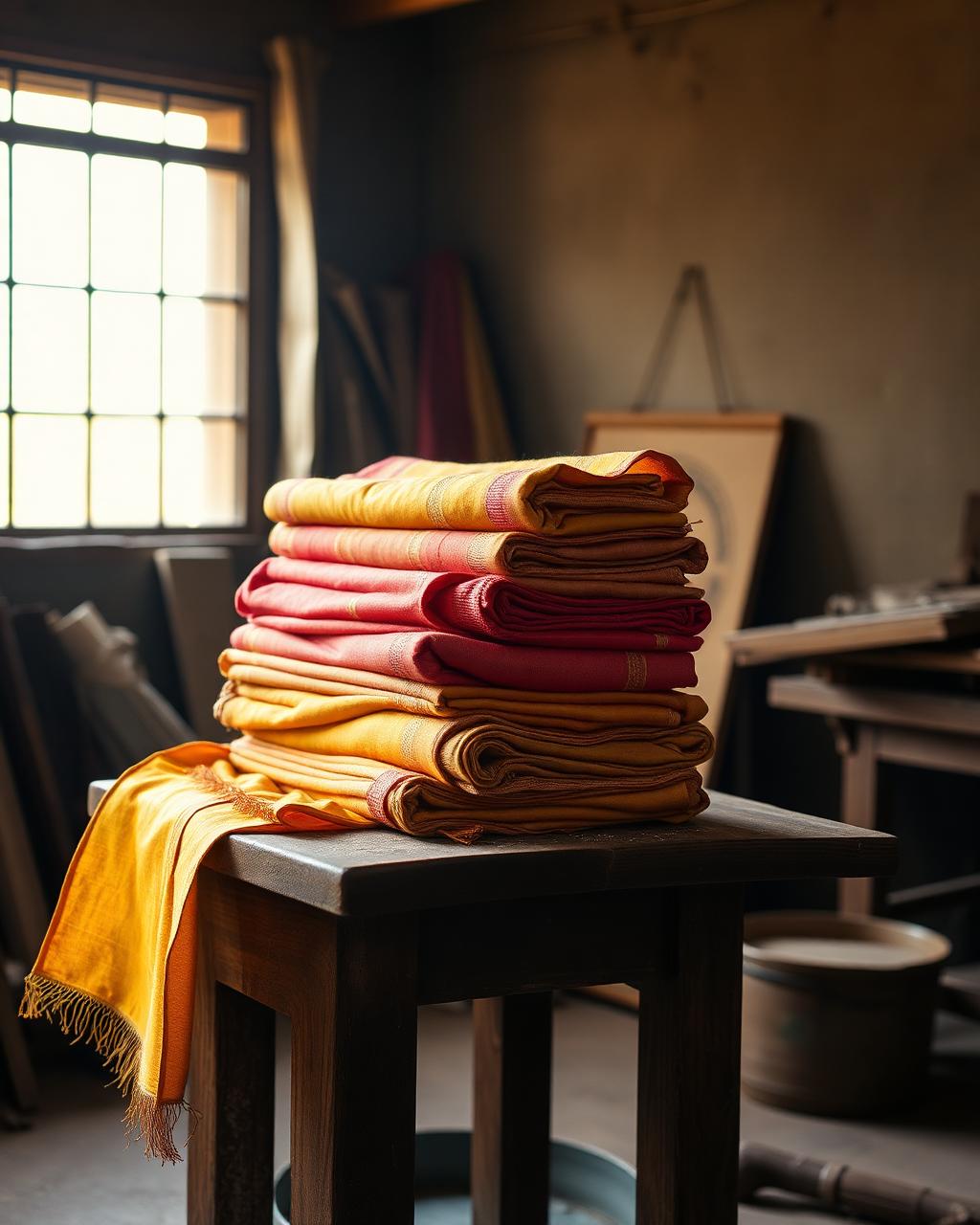
    Upriver, in a workshop with a tin roof and three looms, the shuttle goes back and forth at a rhythm nobody has needed to change. Watch the dye baths, the reeling, the way a length of raw silk turns from string into cloth. An hour here rearranges what you think a scarf is worth.

  • No. 07

    The river at dusk, from a rice barge

    A converted teak barge, a glass of something cold, the temples going gold and then black against the sky while the whole traffic of the river — ferries, tugs, garlands of lights — moves around you. Dinner happens somewhere in the middle of it. Nobody looks at their phone.

  • No. 08

    Temples nobody photographs

    Away from the Grand Palace there are courtyards where the paint is peeling, the dogs are asleep, and an old man sweeps the same square of stone he has swept for thirty years. No tickets, no queue, no explanation. Sit at the back for ten minutes and Bangkok makes a different kind of sense.

Maison Voyage Loves

Six small things

  • The first long-tail boat of the morning, heard before it is seen, cutting a line across still water.
  • Afternoon tea in the Authors' Lounge, taken slowly, with a book you have no intention of finishing.
  • A jasmine garland on the pillow, replaced each evening by someone you never see.
  • Crossing to the spa by wooden shuttle, four minutes, standing at the rail.
  • The Bamboo Bar after eleven, when the trio stops taking requests and plays for itself.
  • Breakfast on the Verandah with the river going about its business a few metres away.

Who This House Is For

Travellers who want the city and the calm, and refuse to choose between them.

It suits people who read, and who like the idea of staying somewhere Conrad and Maugham stayed without needing it explained. Couples find it romantic in the old manner — river, candles, boats, no theatre. Design travellers come for the teak and the craft; cooks come for the market and the stove; anyone interested in Buddhist Bangkok has the temples of Rattanakosin a short crossing away.

It is one of the great stopover hotels of the world — three nights between Europe and the Thai islands and you arrive at the beach already unwound — and one of the great celebration hotels, if the occasion deserves a table on the terrace at dusk. Solo travellers do particularly well here: the Authors' Lounge is a fine place to be alone in company.

It will not suit everyone. Bangkok is hot, loud and enormous, and the hotel does not pretend otherwise the moment you leave the gate. Those who want a resort, a beach or a hotel that keeps the city at arm's length should go elsewhere. This one sits in the middle of everything and simply chooses, very deliberately, to be quiet.

Nearby Discoveries

What we would tell a friend

Bangkok rewards early risers and slow afternoons. Most of this is reached by boat, and almost none of it needs to be booked.

  • No. 01

    Wat Arun, and the crossing to it

    Two minutes on a wooden ferry for the price of nothing, and then the Temple of Dawn rising in porcelain and shell above you. Go at seven or at six in the evening, when the light is low enough to find every fragment. The crossing back, with the river turning, is the part people remember.

  • No. 02

    The Grand Palace and Wat Pho, in that order

    The Palace first, early, before the heat and the coaches. Then walk south to Wat Pho, which is calmer, older in spirit, and has the reclining Buddha and the country's first school of massage in the same set of courtyards. An hour on a mat there is the correct end to the morning.

  • No. 03

    Talad Noi, on foot

    A grid of lanes behind the river where Chinese-Thai families have been trading engine parts for a century. Shrines between workshops, cats on scooter seats, a coffee stand with four stools. Nothing is arranged for visitors, which is why it is the best walk in Bangkok.

  • No. 04

    Pak Khlong Talat at four in the morning

    The flower market never quite closes, but it is at its most alive in the dark: marigold by the sackful, jasmine strung at speed, roses arriving from the north. Go with someone who knows which alley to turn down, and take nothing but a coffee and your attention.

  • No. 05

    Jim Thompson House

    Six teak houses moved from upcountry and rebuilt around a garden by the man who put Thai silk back on the world's looms — and who then walked into a Malaysian jungle and never came out. Go at opening. The rooms are dim, the collection is personal, and the story stays with you.

  • No. 06

    Artisans, and one enormous mall

    The weavers, lacquer workers and bronze casters still keep small workshops in the old quarters; ask and doors open. Then ICONSIAM on the far bank for the opposite lesson — contemporary Thailand at full volume, with a food hall arranged as a floating market and a river view worth the ferry.

A Note from the Editor

Come in December, take a room facing the water, and be awake before the city is.

Ask for the Authors' Wing if it is free, and for a table on the terrace on your first evening rather than your last. Cross to the spa at least once. Keep one morning entirely empty and spend it watching the boats — that is the morning you will describe to people afterwards, and you will struggle to explain why.

Ben Trousil, Founding Editor

From the Journal

Continue reading

All stories
  • Grand historic Asian hotel interior with teak columns, marble floor, tall louvred windows and white orchids in morning light

    HotelsAugust 2026

    Asia's Grand Historic Hotels

    The houses that were built when travel took weeks — and are still, a century later, the most graceful rooms in their cities.

  • Bangkok flower market before dawn with garlands of jasmine and marigold in woven baskets under a single warm bulb

    Travel GuidesJuly 2026

    48 Hours in Bangkok

    Two days, one boat, and a rule against planning more than two things a day. Written for travellers who would rather see less, properly.

  • Teak table on a Bangkok riverside terrace at sunrise with a cup of tea, a white orchid and an open book

    Slow TravelJune 2026

    Why the Chao Phraya Defines Bangkok

    The city was built facing the water, and it still keeps its best hours there. On river light, temple bells and the art of Thai hospitality.

Eine persönliche Anfrage

Let's Curate Your Bangkok Journey

If the river has begun to sound like your next journey, we would be glad to arrange it personally — the house itself, and everything the water leads to.

A long-tail boat through the klongs before the heat, Wat Arun without the crowds, a private table at Le Normandie, a morning with a silk weaver upriver, and a few nights afterwards on the Andaman coast chosen to fit the way you actually travel.

Warum über Maison Voyage buchen?

  • Persönliche Luxusreiseberatung
  • Sorgfältig kuratierte Hotelempfehlungen
  • Maßgeschneiderte Reisepläne
  • Exklusive Partnervorteile, wo immer verfügbar
  • Persönlicher Ansprechpartner von Anfang bis Ende

Es entsteht keine Buchung und keine Kosten. Wir beginnen einfach ein Gespräch.

Eine Einladung

Die Reise fortsetzen

Ein Brief jeden Monat: ein Ort, den Umweg wert, ein Objekt, das Bewahren wert, eine Seite, langsam zu lesen wert. Nicht mehr.