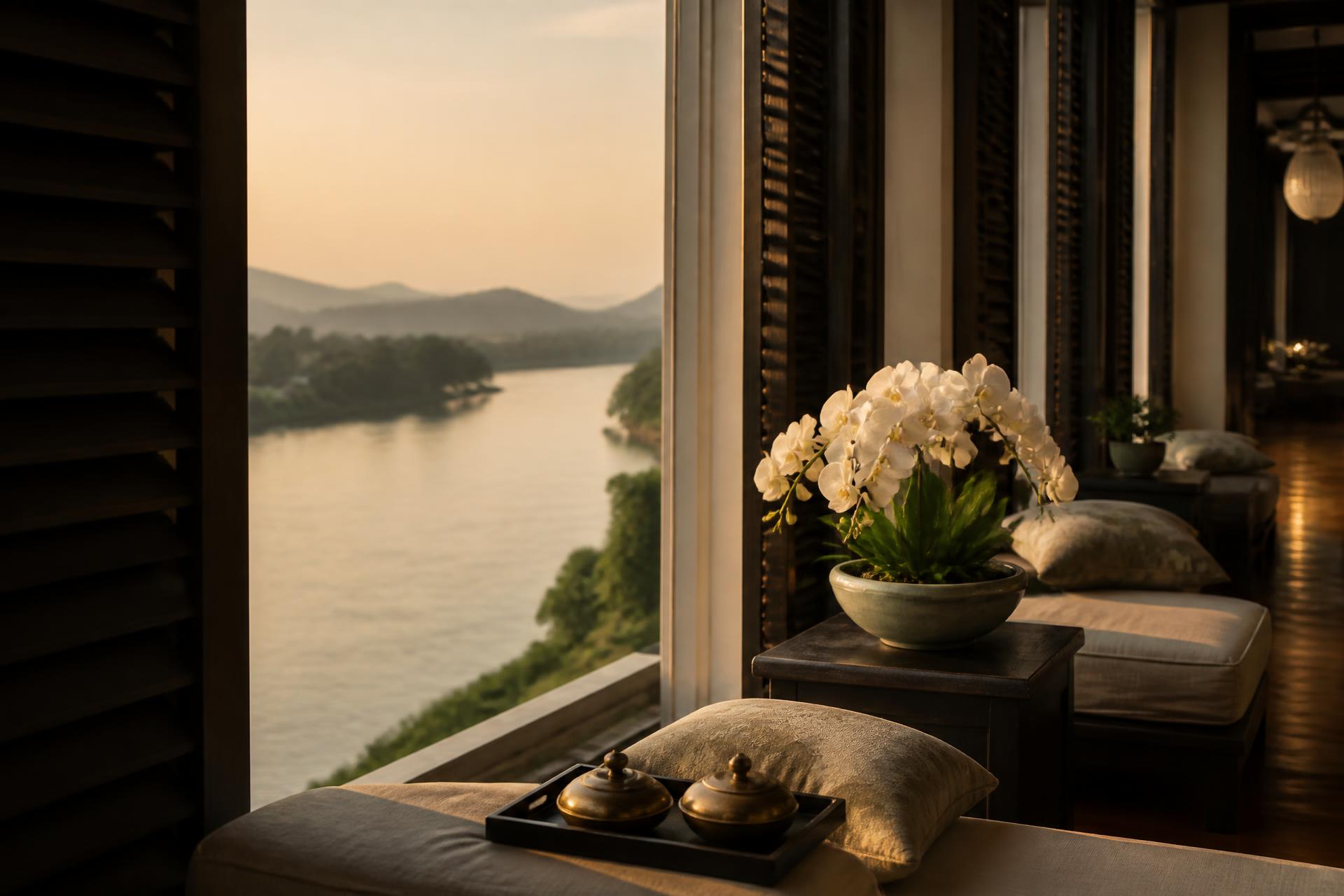

Shuttered hotel terrace at golden hour with silk cushions, white orchids and a wide river below

Luxury Hotels — House No. 09

Mandarin Oriental

Asian hospitality kept at its own pace — where being looked after properly is the architecture, and the rest is quietly arranged around it.

An Introduction

A group that learned hospitality on a river, and has never entirely left it.

It begins in 1876, on a stretch of the Chao Phraya where the ships came in, and in Hong Kong eighty-seven years later. Two houses, both built for people arriving from a long way off, both organised around the idea that a guest should be read rather than processed. Everything the group has done since is a variation on that.

What it has not done is impose a style. Bangkok is teak and river light; Nihonbashi is pale wood and paper; the Saint-Honoré is Art Deco stone around a courtyard garden. The constant is temperament — an unhurried, watchful, slightly formal care that most of the industry has spent forty years failing to copy.

The Philosophy

Service as the first material

In most hotels service is a department. Here it is the structure the building is hung on. Staff stay for decades, are promoted from the floor rather than imported, and are trusted to act without asking — which is why the good ones can anticipate a request you had not yet made a sentence out of.

The design follows the same restraint. Rooms are furnished by makers who work within reach of the house: lacquer and silk in Bangkok, washi and hinoki in Tokyo, zellige and pisé in Marrakech. The fan motif appears once, in stone or thread, and is never explained.

And the table is treated seriously everywhere, without the fuss that usually accompanies it. A group with this many serious kitchens could easily have become a restaurant company with rooms attached. It has stayed, deliberately, a house that also feeds you extremely well.

The finest service is the kind you only notice afterwards, on the way home.

Featured Houses

Six houses, one temperament

A river, a lake, a courtyard, a rooftop, a grove and a bay — held together by a way of being looked after rather than by a look.

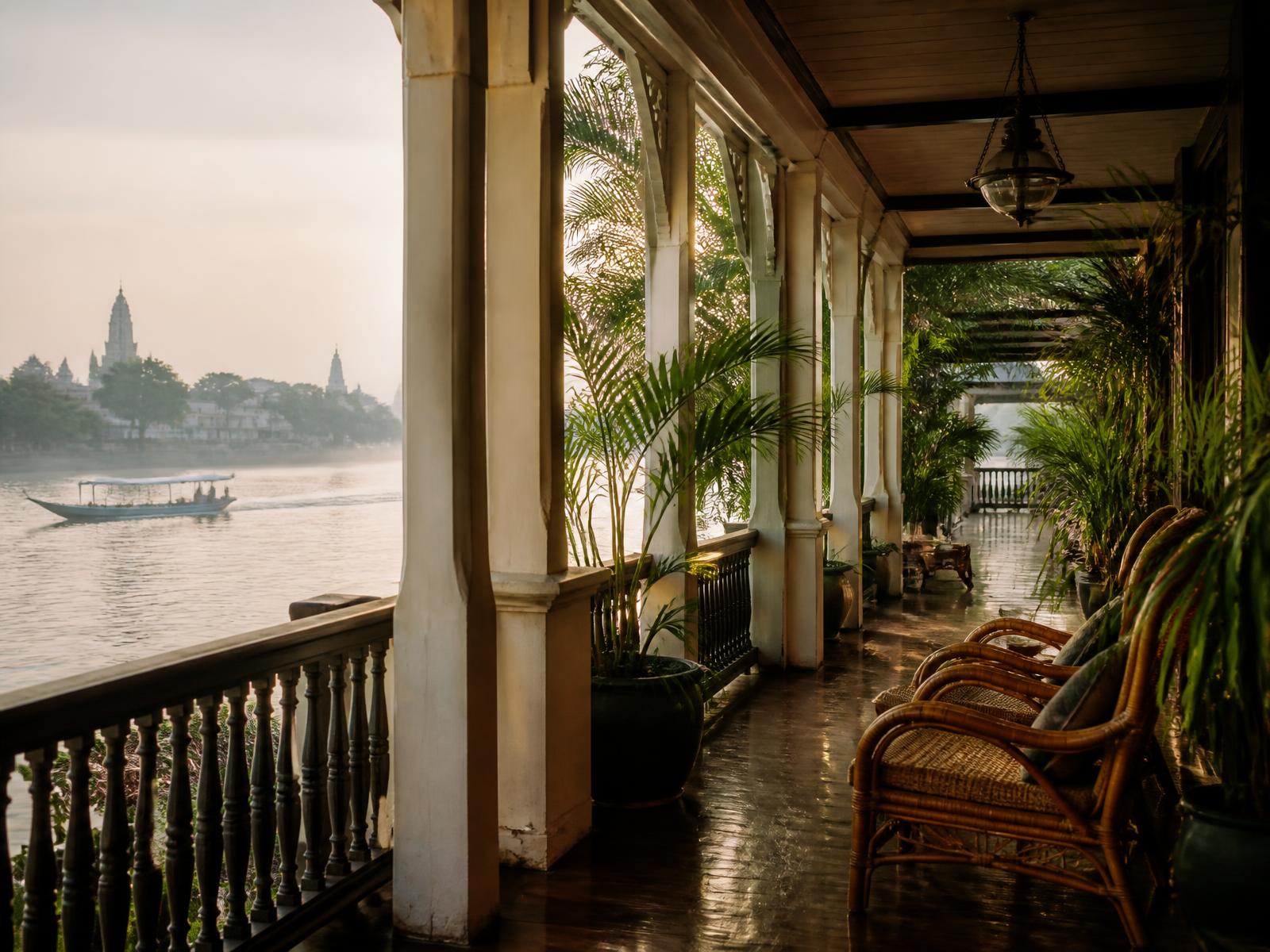
Colonial riverside veranda in Bangkok with rattan chairs, palms and a long-tail boat on the Chao Phraya at dawn

No. 01Chao Phraya River, Thailand

Mandarin Oriental Bangkok

The house the whole group is measured against, standing on the river since 1876 and still keeping the manners of a much older Bangkok. The Authors' Wing is a working part of the hotel rather than a museum, breakfast is taken on the terrace as the barges go by, and there are staff here who have known returning guests for thirty years. Nothing about it hurries.

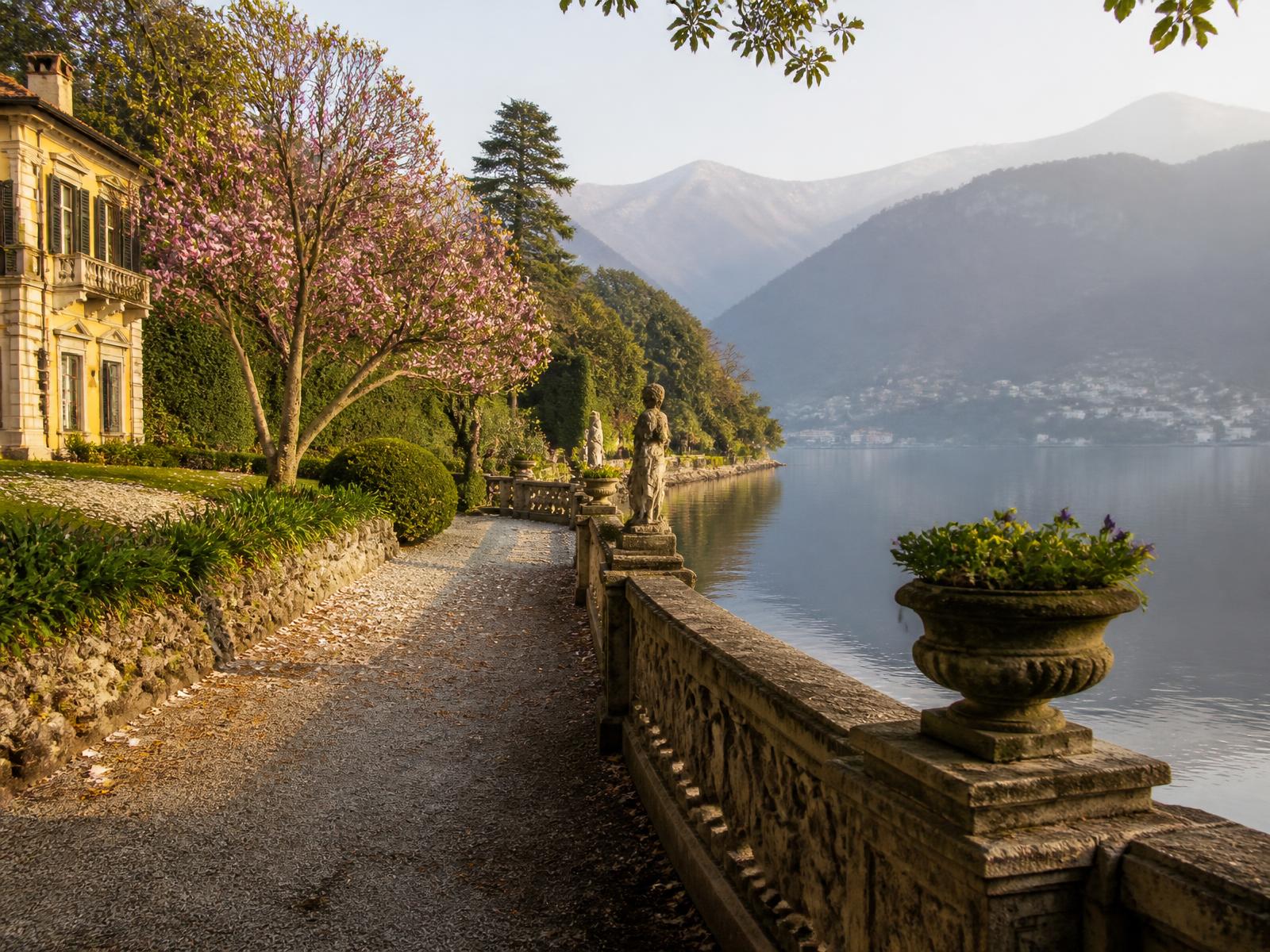
Historic Italian lakeside villa garden on Lake Como with magnolia trees, stone balustrade and mountains in morning haze

No. 02Blevio, Italy

Mandarin Oriental Lake Como

An eighteenth-century villa and its terraced gardens on the quiet eastern shore, a few minutes by boat from Como and mercifully far from the coach traffic. Magnolias, a floating pool, and the particular lake light that arrives around seven in the evening and settles the whole place down.

Read the Guide
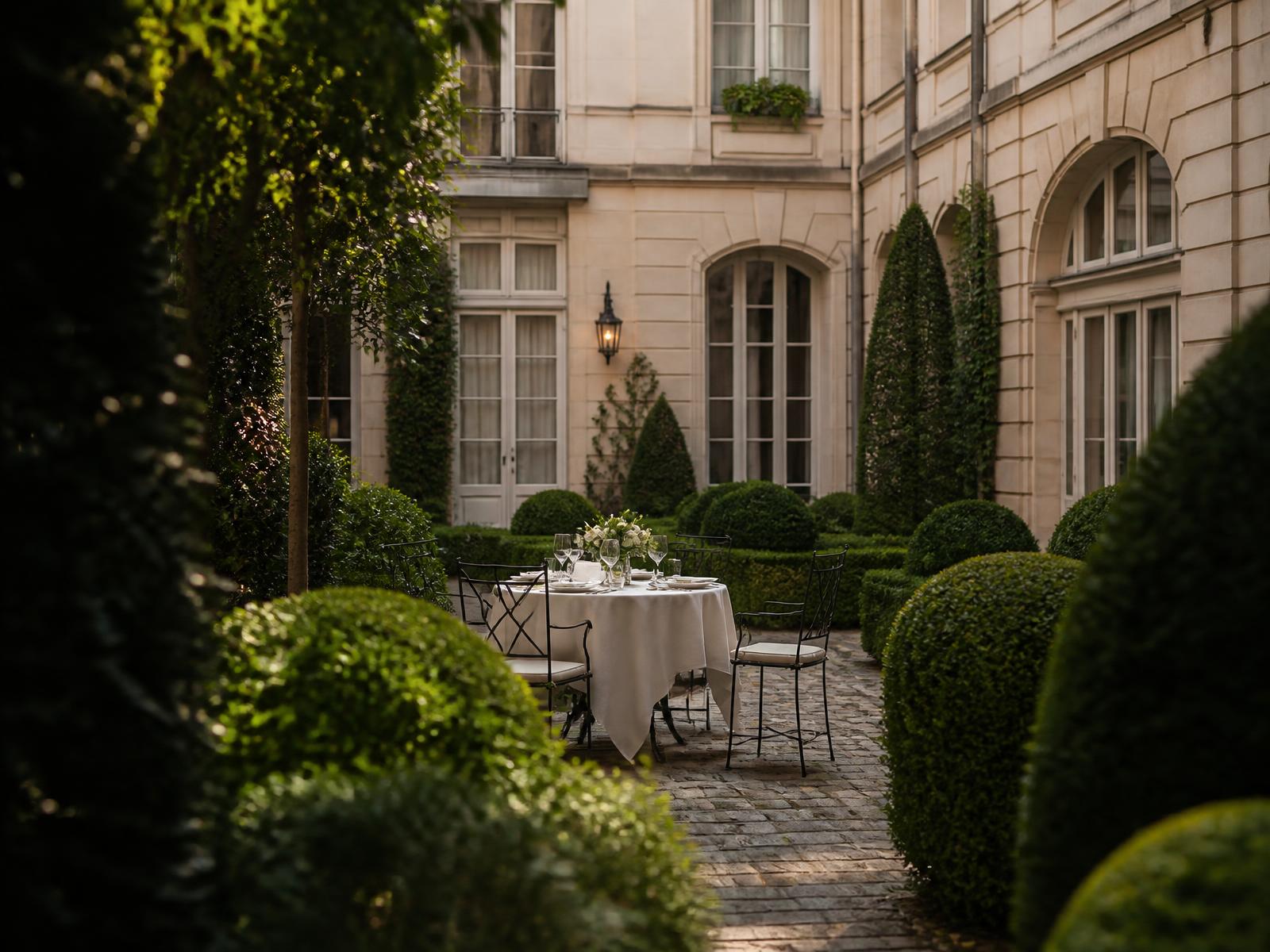
Elegant Parisian hotel courtyard garden with cream stone facade, clipped greenery and a single table set with white linen

No. 03Rue Saint-Honoré, France

Mandarin Oriental Paris

Behind an Art Deco facade on the Saint-Honoré, a courtyard garden that the street gives no warning of at all — the rarest thing in the first arrondissement, which is silence. The pâtisserie counter is treated with the seriousness of a laboratory, and the service has the light, unforced formality Paris does well when it is not performing.

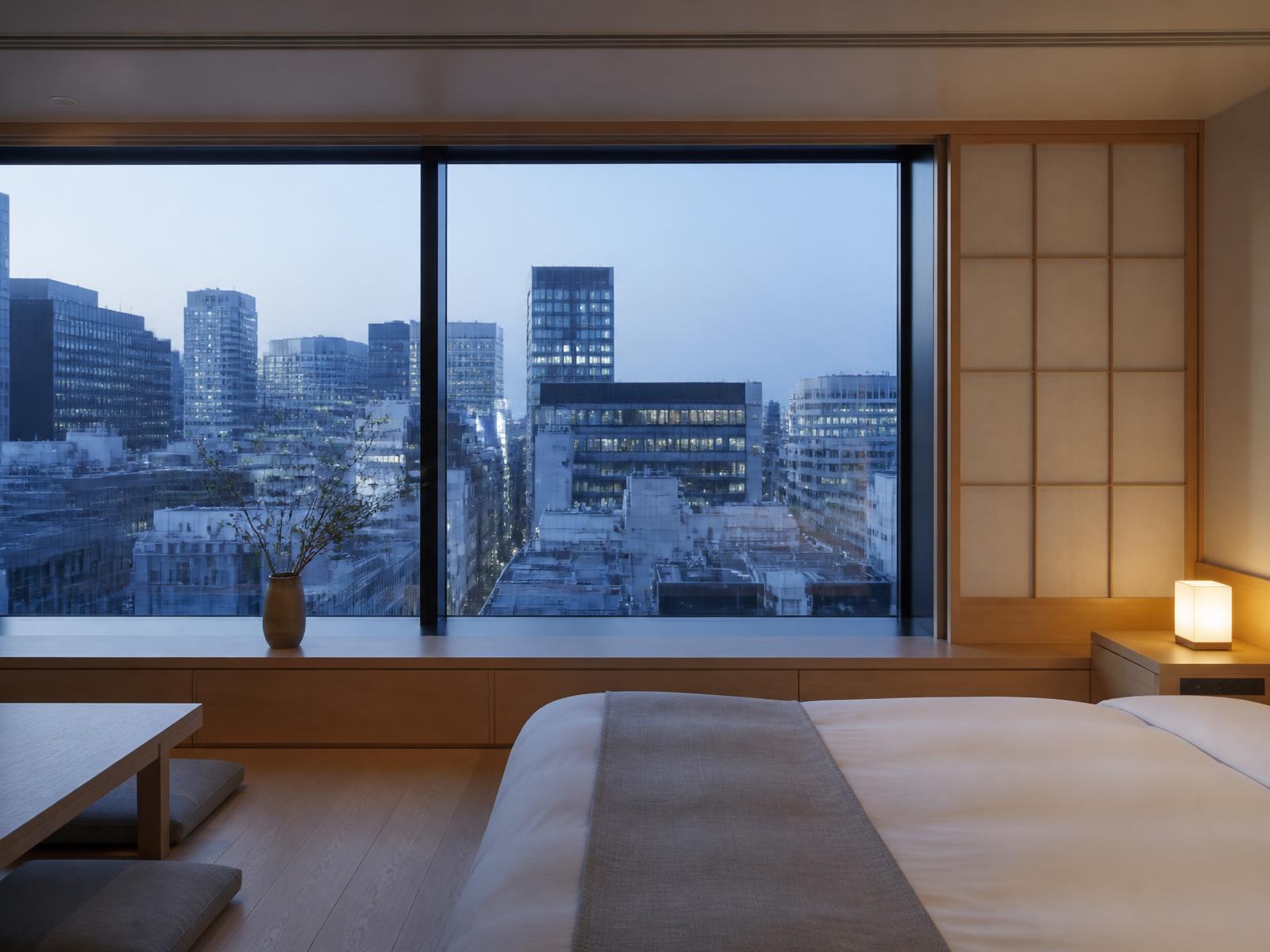
Minimalist Tokyo hotel room with floor to ceiling window over rooftops at blue hour, pale wood and washi paper screen

No. 04Nihonbashi, Japan

Mandarin Oriental Tokyo

High above Nihonbashi, the old merchant quarter, in the part of Tokyo where the city's craftsmen still keep shops at street level. Rooms in pale wood and washi, a single seasonal branch where another hotel would put an arrangement, and a view that empties out into the Kanto plain when the air is clear.

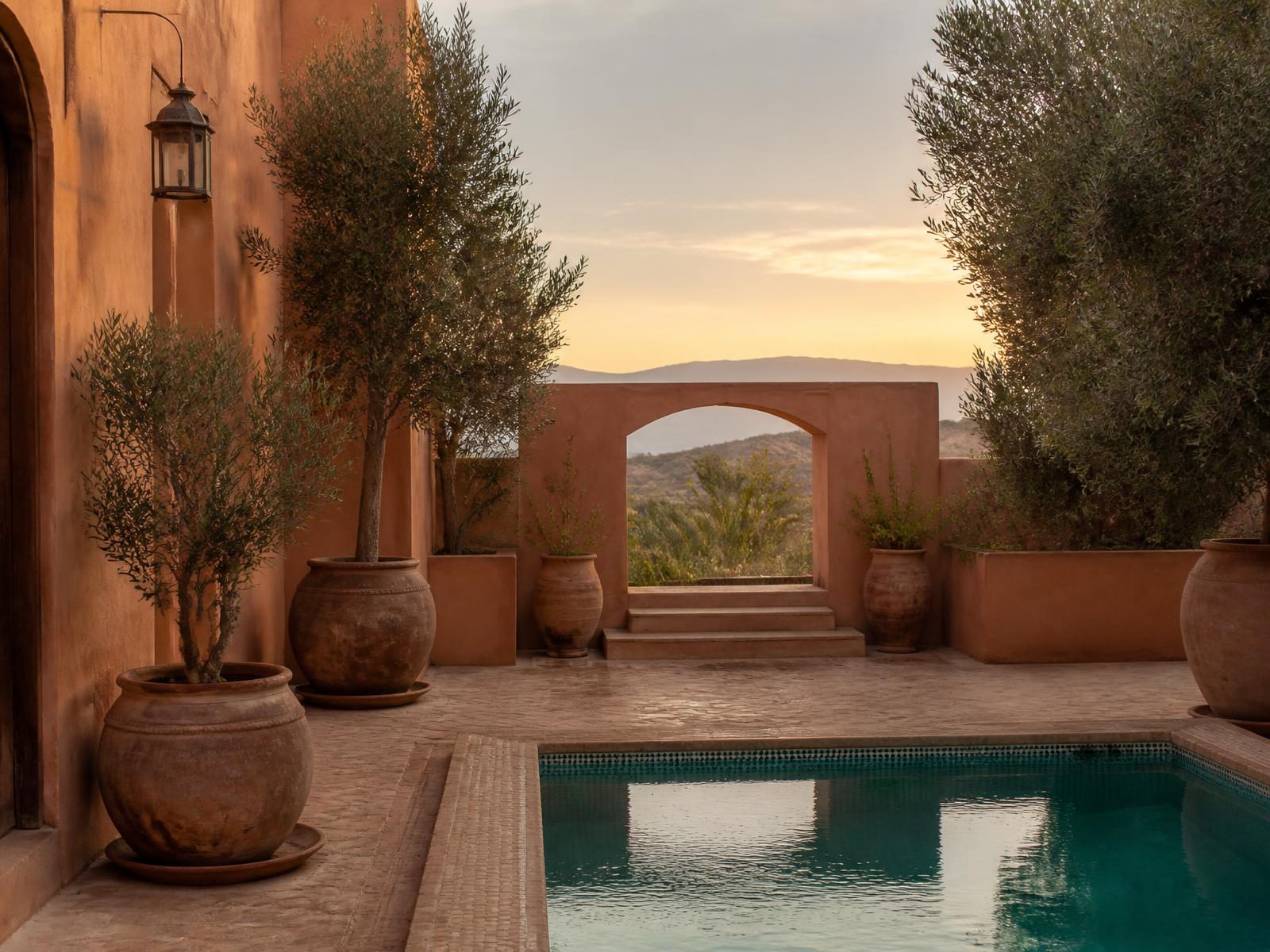
Moroccan riad villa courtyard in Marrakech with ochre earth walls, olive trees and a still turquoise pool at golden hour

No. 05Palmeraie, Morocco

Mandarin Oriental Marrakech

Twenty hectares of olive groves and rose gardens outside the medina, arranged as private villas rather than a single building. Ochre pisé walls, zellige laid by hand, the Atlas visible on a cold morning — and the walk to your own door at night, which is when the gardens are at their best.

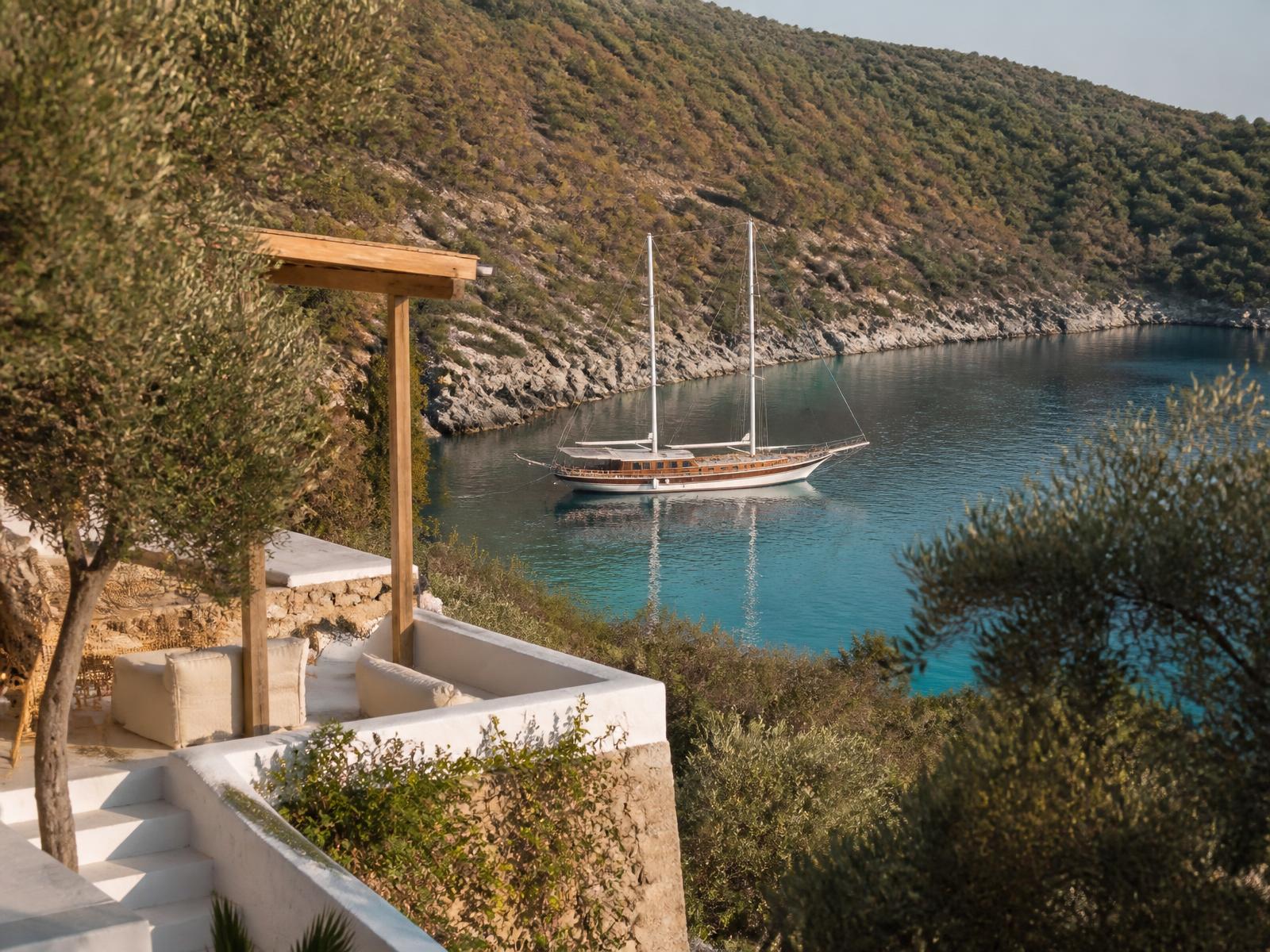
Aegean hillside terrace in Bodrum with whitewashed stone, olive trees and a wooden gulet moored in a turquoise bay

No. 06Paltrbükü Bay, Türkiye

Mandarin Oriental Bodrum

Cut into a hillside above a private Aegean bay, all whitewashed stone and olive terraces stepping down to the water. Boats come and go rather than arrive; lunch runs long; and the light off the water in late September does something to the afternoon that nobody has yet managed to describe properly.

Where They Are

An eastward map, kept deliberately short

The group grew out of Hong Kong and Bangkok, and the collection still reads as though Asia is the first language and everything else the accent.

  • Asia

    • Bangkok
    • Tokyo
    • Hong Kong
    • Singapore
    • Bali
  • Europe

    • Lake Como
    • Paris
    • London
    • Milan
    • Geneva
  • The Americas

    • New York
    • Miami
    • Boston
    • Santiago
  • Elsewhere

    • Marrakech
    • Bodrum
    • Doha
    • Dubai

From the Journal

Written along the way

All stories
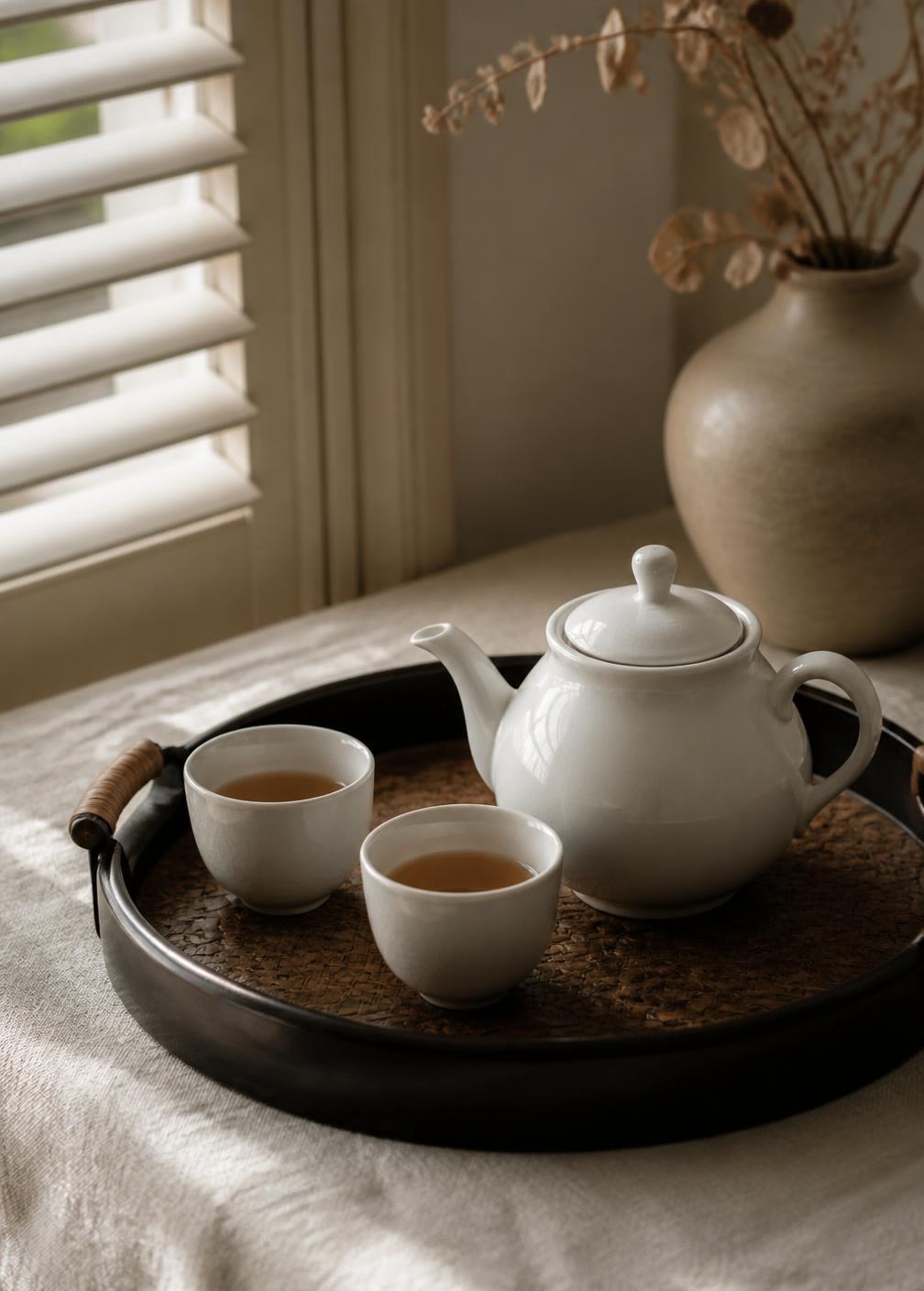
  • White porcelain teapot and two cups on a dark lacquer tray beside a shuttered window in morning light

    The Long Apprenticeship

    ServiceJuly 2026

    On why the best floor staff in Asia are rarely the youngest, and what thirty years in the same building actually teaches a person.

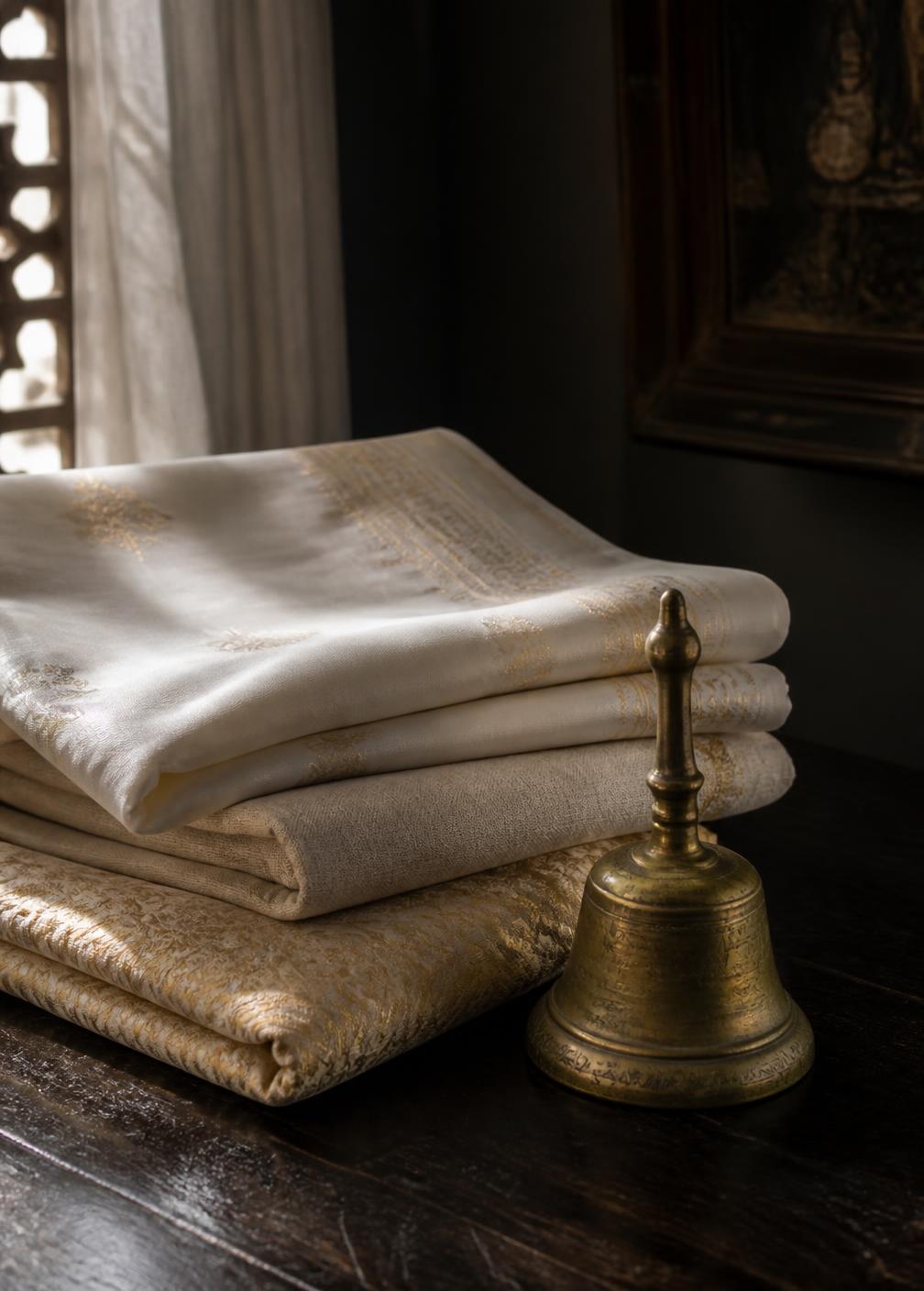
  • Folded cream and gold silk textiles on a dark wooden table beside a brass hand bell

    Silk, Lacquer, Celadon

    CraftJune 2026

    The workshops behind the rooms — weavers, lacquer masters and potters whose names never appear on a wall, and whose work you sleep in.

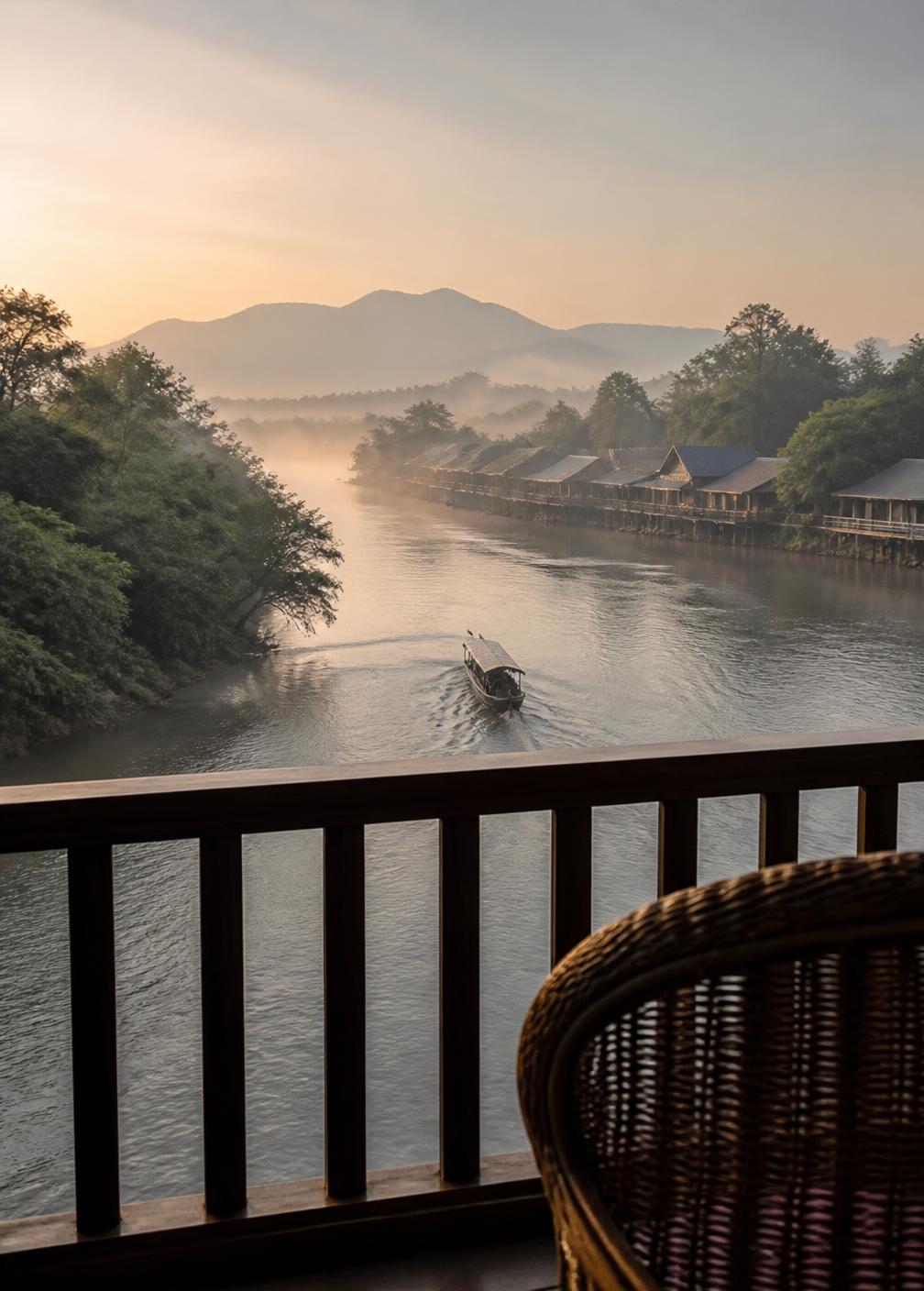
  • River at dawn seen from a hotel balcony with mist, a wooden boat and a rattan chair in the foreground

    Six in the Morning on the River

    Slow TravelMay 2026

    Bangkok before the heat arrives, from a balcony chair — the hour that makes the argument for staying a week rather than three nights.

Maison Voyage Recommends

If you go once, go to Bangkok, and stay longer than you planned.

Take a river-facing room in the old wing, be awake by six for the first week of January light, and cross to the far bank for lunch rather than eating in. Give one afternoon entirely to doing nothing on the terrace. The house will do the rest, and you will understand the whole collection by the third morning.

Ben Trousil, Founding Editor

Questions

The things readers ask us most

What exactly is meant by Asian hospitality here?
Anticipation rather than attention. Staff who notice what you did yesterday and quietly arrange for it again, without announcing that they have. It is a slower, less visible form of service than the European kind, and it is the reason people return.
Which house would you suggest for a first stay?
Bangkok, without hesitation. It is where the group's manner was formed, and everything else in the collection reads more clearly once you have spent a few mornings on that terrace.
Are the houses very different from one another?
In appearance, entirely — a river hotel from the 1870s and a Nihonbashi tower have nothing in common architecturally. What travels is the standard of care and a taste for restraint over spectacle.
When is the light at its best?
Bangkok in the dry months from December, Lake Como in late September, Paris in October, Tokyo in the first fortnight of April, Marrakech in March, Bodrum at the very end of the season.
Does Maison Voyage take a commission?
No. We are an editorial house, not an agency. Nothing on this page has been paid for, and every house here has been stayed in by one of our editors.

An Invitation

Continue the Journey

One letter each month: a place worth the detour, an object worth keeping, a page worth reading slowly. Nothing more.