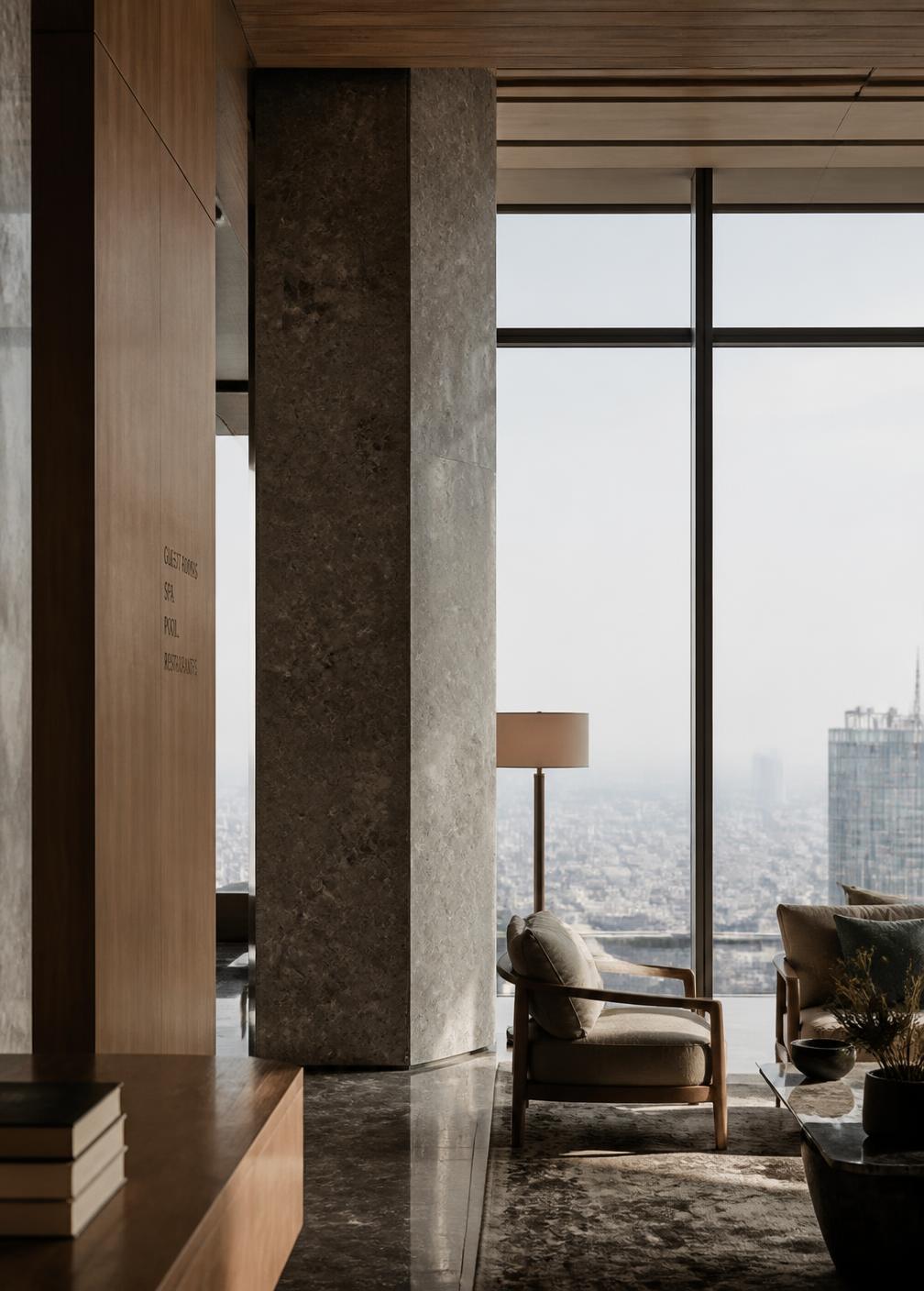
Hotels — November 2026
Die bemerkenswertesten urbanen Hotels der Welt
Zwölf Hotels in zwölf Städten, ausgewählt für den Moment, in dem sich die Tür hinter einem schließt. Über Stein, Stille und die Architektur der Ankunft.
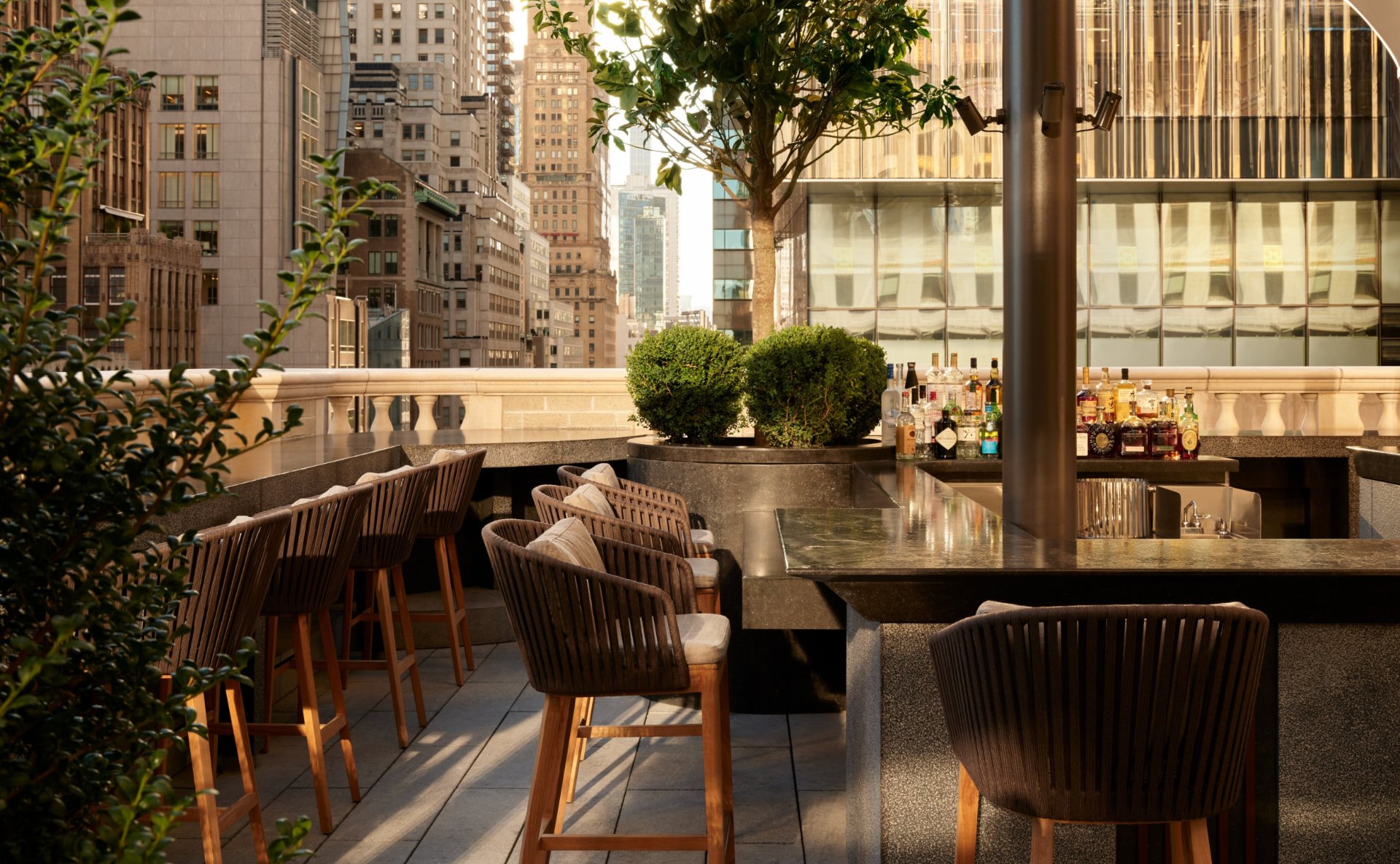
Aman — Fifth Avenue, New York
Hoch über Manhattan, im denkmalgeschützten Crown Building gelegen, verwandelt Aman New York eine der geschäftigsten Städte der Welt in eine Oase von seltener Ruhe, in der japanischer Minimalismus auf zeitlose New Yorker Eleganz trifft.
Warum wir es gewählt haben
New York verkauft Hotels über Höhe, Lage und Namen. Bemerkenswert ist hier etwas anderes: die Stille. Die Fenster sind schwer, die Flure gedämpft, in jedem Zimmer brennt ein Kamin — und die Fifth Avenue liegt vierzig Meter tiefer, sichtbar, aber ohne Zugriff auf den Tag.
Wir setzen das Hotel dort ein, wo eine Reise ohnehin laut ist: nach Tagen mit Terminen, vor einem langen Flug, als Gegengewicht. Was Gäste beschreiben, wenn sie zurück sind, ist nicht der Blick auf den Central Park, sondern wie wenig Anstrengung der Aufenthalt gekostet hat.
Was den Unterschied macht
Eignung
Besonders geeignet für
Weniger geeignet für
Was oft unterschätzt wird
Die Adresse zieht Gäste nach innen. Wer New York vor allem draußen erleben will, nutzt einen großen Teil dessen nicht, wofür er zahlt.
Wenn das nicht das Richtige ist
Wenn Manhattan richtig ist, das Hotel als Rückzugsort aber zu weit geht:
01 · Upper East Side, New York
Städtischer, lebendiger, näher an der Stadt als an ihrem Gegenteil.
02 · Hongkong
Gleiche Ruhe im Hochhaus, dazu Blick über Wasser statt über Straßenschluchten.
Ansehen03 · Paris
Ähnlich zurückgenommen, aber europäischer im Ton und leichter im Tag.
AnsehenKeine Steigerung, keine Rangfolge — nur andere Wege, die zu anderen Reisenden passen.
Eine Einführung
Die Fifth Avenue an der Siebenundfünfzigsten wartet auf niemanden. Gelbe Taxis drei Reihen tief an der Ampel, ein Bus, der am Bordstein ausatmet, Gerüste, Sirenen irgendwo im Norden, der eigentümliche Druck von zehntausend Menschen, die zielstrebig unterwegs sind. Es ist eine der dichtesten Energiezonen der Welt, und sie ist etwa elf Minuten lang berauschend.
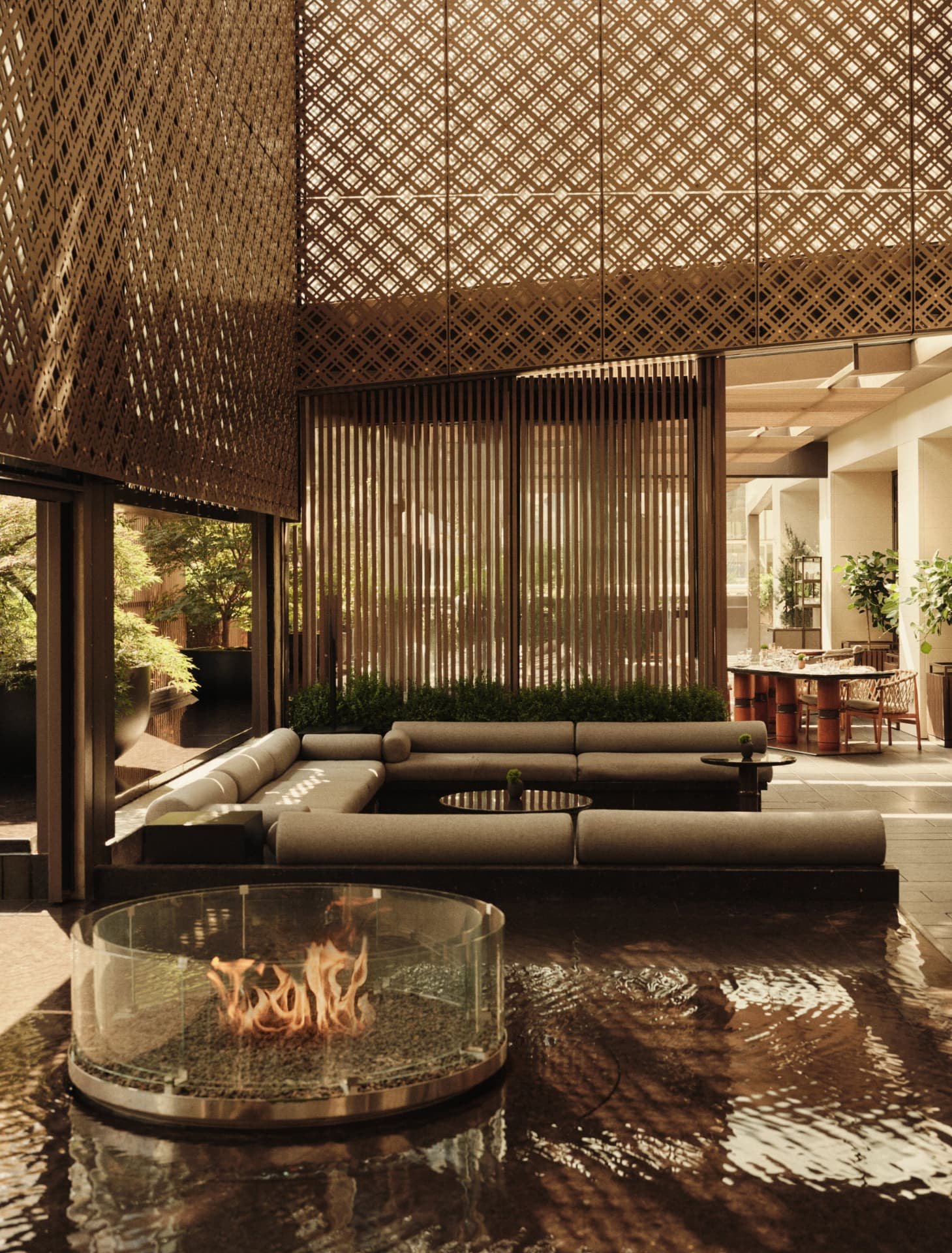
Dann eine Bronzetür, ein kurzer Aufzug, und die Lautstärke sinkt, als hätte jemand einen Deckel geschlossen. Was folgt, ist Luxus in keiner ausgestellten Form. Es ist Stein unter den Füßen, ein niedriges Feuer, Wasser, das irgendwo außer Sicht fließt, warmes Licht, das von unten statt von oben kommt. Die Avenue liegt noch immer dort unten. Man hört sie nur nicht mehr, und nach wenigen Minuten sucht man auch nicht mehr danach.
Aman kam spät nach New York – und mit Absicht. Jede andere Adresse der Gruppe war dort entstanden, wo Stille bereits existierte: eine Wüste, eine Plantage, eine Lagune. Hier musste sie erst geschaffen werden, in der Höhe, mitten in der lautesten Stadt überhaupt. Das Ergebnis ist kein Luxushotel in Manhattan, das mit der Energie draußen konkurriert. Es ist ihr Gegenteil, an genau derselben Adresse.
Architektur & Design
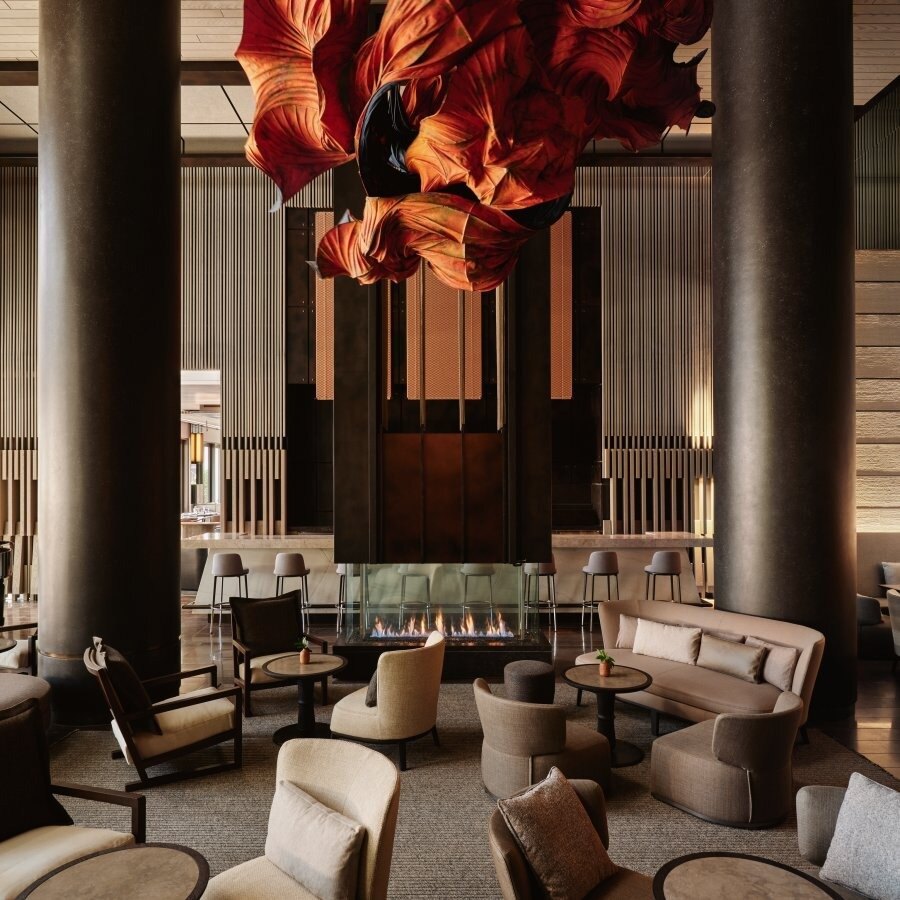
Jean-Michel Gathy arbeitete, wie ein japanischer Tischler arbeitet: durch Weglassen. Bronze, Eiche, schwarzer Stein und hauchdünnes Licht, kaum etwas sonst. Kein Muster, keine Vergoldung, keine Geste in Richtung der Erhabenheit, die das Crown Building mühelos hätte liefern können. Die Materialien dürfen sein, was sie sind, und werden dann in Ruhe gelassen.
Die Proportionen sorgen für das Verlangsamen. Decken heben sich auf doppelte Höhe an, verdichten sich dann wieder an einer Tür; ein Korridor biegt ab, statt zu verlaufen; Wasser liegt flach und schwarz auf dem Boden, sodass die einzige Bewegung im Raum seine eigene ist. Man geht hier langsamer, ohne es zu entscheiden – der älteste Trick der Architektur und der schwierigste in der Ausführung.
Feuer ist überall – in der Lobby, in den Salons, in den Zimmern –, und Licht bleibt gedämpft, warm und meist verborgen. Nichts glänzt. Die Stadt sitzt hinter Bronzerahmen wie ein Gemälde an jeder Wand. Es ist das ruhigste urbane Luxushotel, das wir kennen, und es erreicht das durch Weglassen statt durch Dekoration.
Suiten
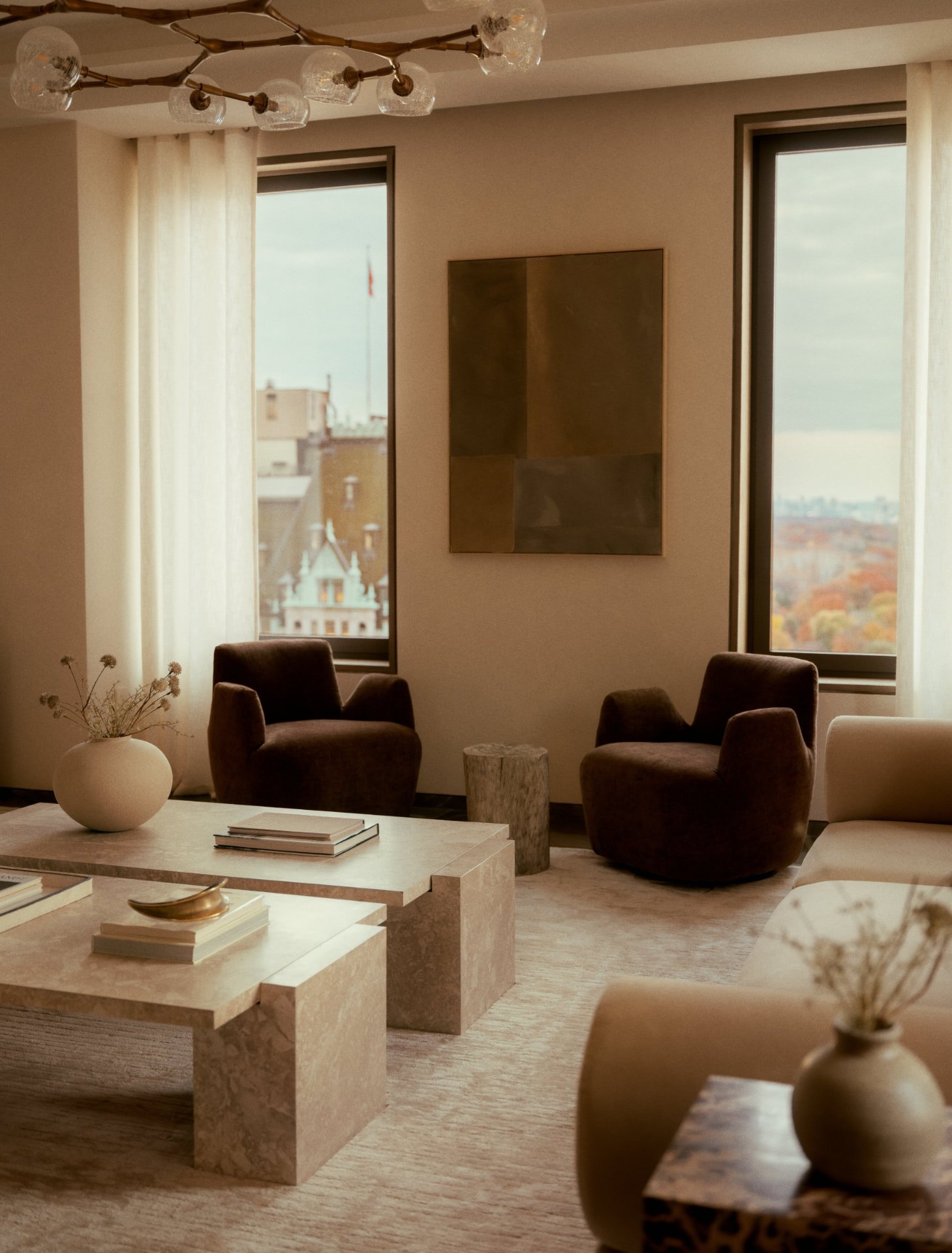
Man kommt um sieben zurück, vierzig Blocks weit gegangen in kalter Luft, und der Raum tut, was Räume selten tun: Er nimmt einem den Tag ab. Das Feuer brennt bereits. Die Vorhänge geben den Blick frei auf eine Skyline, die sich gerade einzuschalten beginnt. Niemand spricht, nichts piept, und der Mantel wandert über einen Stuhl.
Eiche an den Wänden, Leinen auf dem Bett, Wolle unter den Füßen, eine einzige niedrige Lampe, eine Farbpalette aus etwa drei Tönen – Sand, Rauch und die Bronze der Fensterrahmen. Eine tiefe Wanne mit heißem Wasser und Blick auf Midtown, genommen zu einer Stunde, in der niemand erreichbar ist. Das Bad ist hier keine Annehmlichkeit; es ist mehr oder weniger der Abend selbst.
Am meisten fällt auf, was fehlt. Kein Flurlärm, keine Avenue, kein Nachbar, kein Gefühl, dass vierhundert andere Menschen in der Nähe dasselbe tun. Die Privatheit ist vollständig, und in Manhattan ist das ein selteneres Material als Stein.
Küche
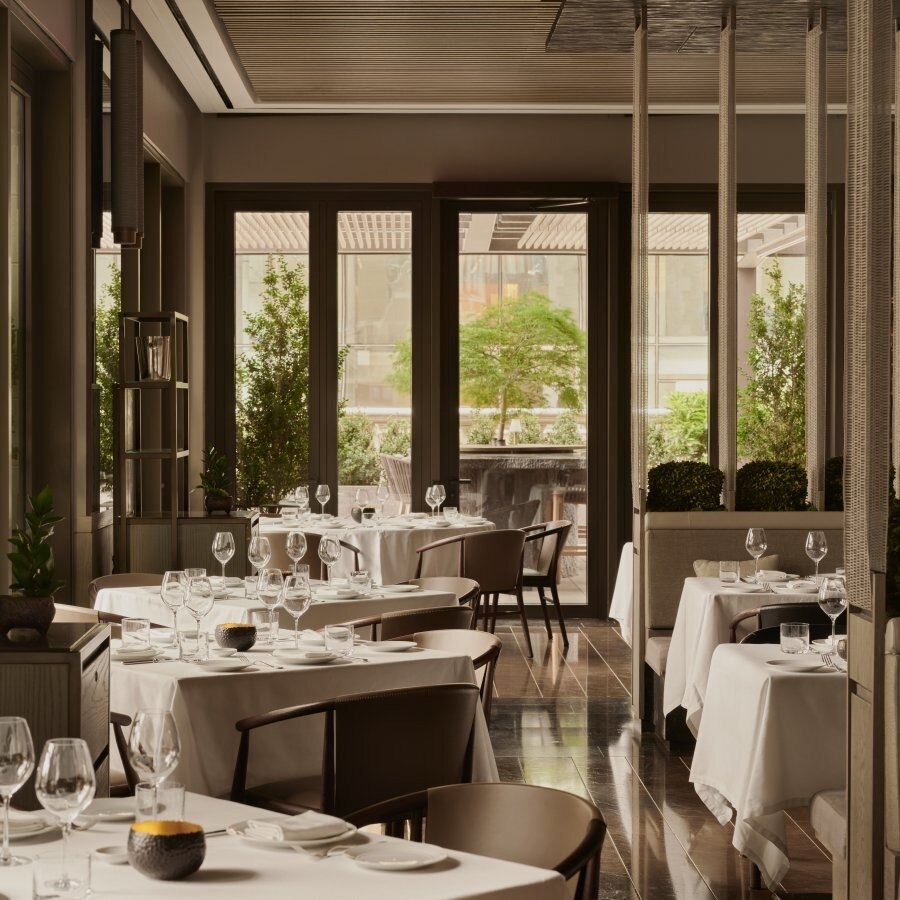
Arva ist italienisch, so wie eine gute italienische Küche tatsächlich ist: vier Dinge auf dem Teller, drei davon vom Markt an diesem Morgen. Pasta breit geschnitten, Olivenöl mit schwerer Hand gegossen, ein Fisch, der weitgehend in Ruhe gelassen wird. Nichts wird konstruiert. Die Küche geht davon aus, dass man eine Tomate lieber schmecken als bewundern möchte.
Nama antwortet darauf auf Japanisch – eine Theke, ein Messer, ein Stück Fisch und die Präzision von jemandem, der Jahrzehnte an einer einzigen Geste gefeilt hat. Reis in Körpertemperatur, Wasabi frisch gerieben, und lange Pausen, in denen sich niemand zum Sprechen verpflichtet fühlt. Handwerk, still ausgeführt, einen Meter vor einem.
Das Frühstück ist hier die unterschätzte Mahlzeit: langsam eingenommen, meist schweigend, während die Avenue darunter erwacht. Später gibt es ein Feuer, einen niedrigen Sessel und einen Drink, der um elf Uhr ohne Zeremonie erscheint. Das Essen unterbricht die Architektur nicht. Es ist derselbe Gedanke, warm serviert.
Wellness
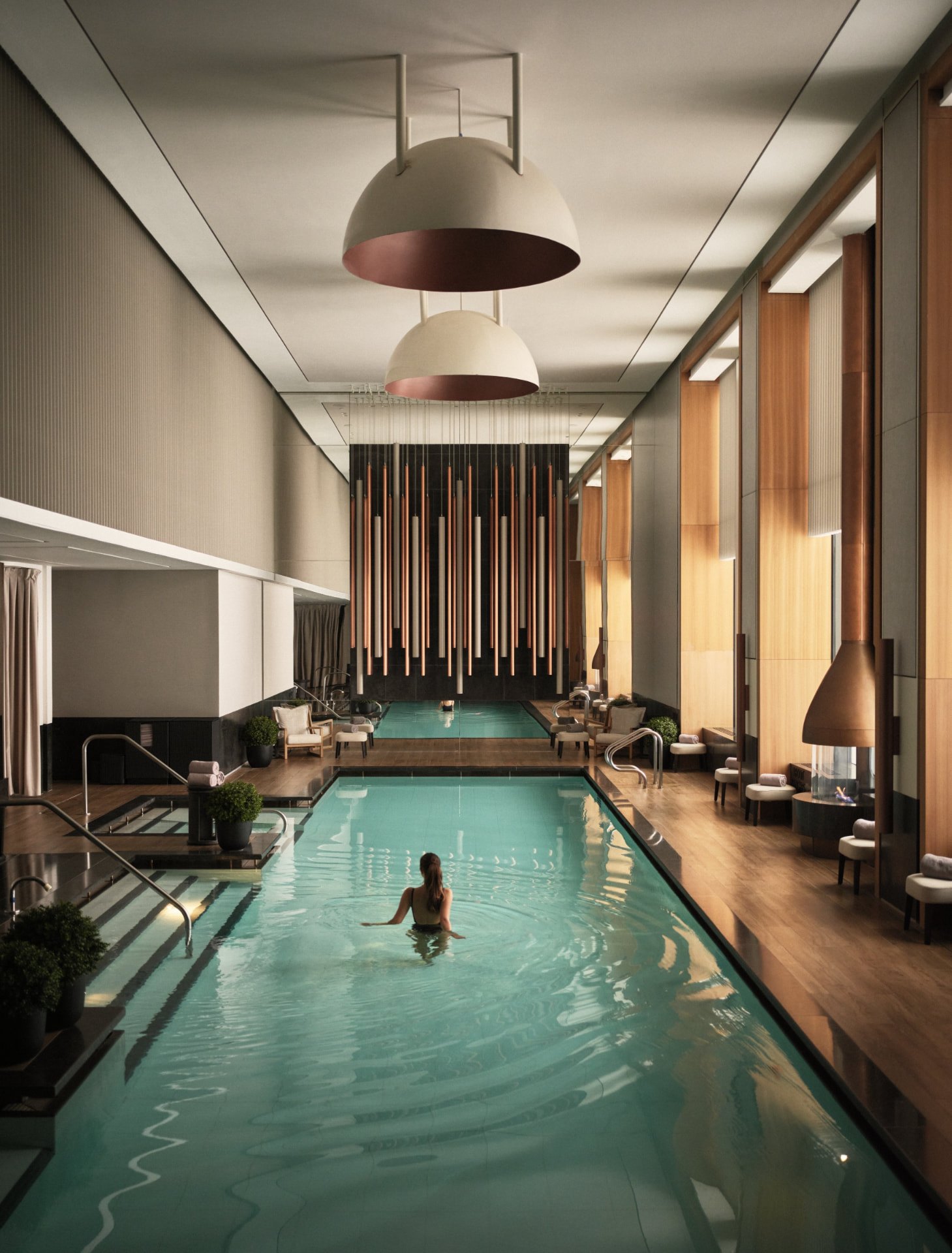
Die meisten Hotels platzieren ein Spa irgendwo praktisch. Hier ist das Spa das zentrale Argument, und die Zimmer sind um es herum angeordnet. Drei Etagen aus Stein, Wasser und gedämpftem Licht, erreichbar über eine Treppe statt einen Aufzug, sodass der Abstieg Teil der Behandlung ist.
Ein langes, von unten beleuchtetes Becken, Laternen an seinem Rand, die Decke so niedrig gehalten, dass sich Schall nicht ausbreitet. Warme und kalte Räume in Abfolge; Kryotherapie, nach der man anders atmet; Hydrotherapie, richtig und langsam ausgeführt. Private Spa-Häuser mit eigenem Feuer, Terrasse und Bad, für jene, die lieber niemanden sehen möchten.
Bewegung am Morgen, Stille am Nachmittag, eine Therapeutin, die wenig sagt. Wellness ist hier nicht zwischen anderen Dingen eingeplant und wird nicht als Programm verkauft. In diesem Gebäude ist sie der eigentliche Zweck, und der Rest – die Suiten, die Feuer, die Restaurants – setzt dasselbe Argument in anderen Räumen fort. Es ist das stärkste Plädoyer für ein Wellnesshotel in New York, das wir kennen.
Was wir vor Ort empfehlen
Keines davon ist eine Veranstaltung. Es sind privat arrangierte Stunden, und jede einzelne lebt davon, die einzige Person im Raum zu sein.
Nr. 01
Kaffee ans Fenster gebracht, zehn nach sechs im November. Der Park unten noch dunkel, der Reservoir hält ein blasses Lichtblatt, die Türme entlang des Central Park West färben sich nacheinander bronzen. Die Stadt hat noch nicht begonnen. Für rund zwanzig Minuten gehört sie jedem, der wach ist.
Nr. 02
Eine vor Öffnung vereinbarte Stunde, in einem Hotel, das seit Jahrzehnten an der Avenue steht. Keine Warteschlange, keine Musik, niemand sonst. Stoff wird abgenommen und über einen Tisch gelegt, eine Anprobe in Ruhe, ein Kaffee, während die Änderungen markiert werden. Man verlässt das Hotel mit leeren Händen; das Stück folgt später.
Nr. 03
Das Licht wird auf das gedimmt, was die Kuratoren selbst verwenden, die Räume sind leer, und eine Stimme, die man sonst nie hören würde, erklärt, worauf man achten sollte und warum. Allein vor einem Bild zu stehen, so lange man möchte, erweist sich als eine völlig andere Kunstform.
Nr. 04
Das Theater, die Menge, der Lärm danach auf der Forty-Fourth Street – und dann acht Minuten nördlich vollkommene Stille. Ein bereits brennendes Feuer, ein Drink, kein Gespräch nötig. Der Kontrast ist der Sinn der Sache, und er lässt sich sonst kaum irgendwo in der Stadt so arrangieren.
Nr. 05
Westwärts über den Hudson, nordwärts entlang des Parks, die Insel reduziert auf Geometrie und Wasser. Zwanzig Minuten, größtenteils wortlos. Am schönsten im Januar, wenn die Luft klar ist und man die Brücken bis zur Verrazzano sehen kann.
Nr. 06
Ein Raum mit Stein unter den Füßen und einem einzigen gedämpften Licht, zu einer Stunde, in der auf der Fifth Avenue nur Lieferwagen unterwegs sind. Eine halbe Stunde Nichtstun, zunächst leise angeleitet, dann gar nicht mehr. Was der Tag danach für einen bereithält, beginnt auf gänzlich anderen Bedingungen.
Pure Voyage Loves
Für wen diese Adresse ist
Es passt zu Menschen, die Gebäude betrachten, die einen Tag um ein Museum herum planen statt um vier, die lieber zweimal gut essen als fünfmal modisch. Design- Reisende verbringen den ersten Abend mit der Tischlerarbeit. Paare finden es ungewöhnlich privat. Kreative und Geschäftsreisende entdecken, dass die Stille keine Dekoration ist – sie ist der Grund, warum die Reise gelingt.
Wellness-Reisende sollten das Spa als Reiseplan behandeln, nicht als Zugabe. Kunst, Architektur, die Avenue und der Park sind alle zu Fuß erreichbar, und das Hotel ist eine gute Adresse für die Art von Einkauf, die per Termin geschieht, nicht im Schaufenster.
Es wird nicht allen gefallen. Wer klassischen New Yorker Glamour sucht – eine Marmorlobby, die man durchquert, um gesehen zu werden, eine Bar voller Stadt, das Theater eines historischen Grandhotels –, wird das hier bewusst vermisst finden. Es gibt keine Szene, und das ist Absicht. Unter den bemerkenswerten Luxushotels in New York ist dieses der Introvertierte, und es entschuldigt sich dafür in keiner Weise.
Entdeckungen in der Nähe
Alles hier liegt einen kurzen Fußweg oder eine kurze Autofahrt entfernt. Keine Checkliste; alles funktioniert besser zu einer unpassenden Stunde.
Nr. 01
Nicht die Loop, nicht die Kutschen. Gehen Sie vor acht Uhr an der Seventy-Second Street hinein, wandern Sie nordwärts durch den Ramble, wo die Wege die Orientierung verlieren, und kommen Sie am Reservoir heraus, wo sich die Türme der West Side der Länge nach spiegeln. Im Schnee ist es eine der großen Stillen jeder Stadt.
Nr. 02
Ein Wohnhaus, kein Museum: Vermeer, Bellini und Rembrandt hängen dort, wo jemand tatsächlich mit ihnen lebte. Setzen Sie sich in den Gartenhof, während der Brunnen läuft und das Licht sinkt, und verstehen Sie, warum New Yorker, die ein Museum lieben, meist dieses lieben.
Nr. 03
Der Fehler ist, alles sehen zu wollen. Gehen Sie um zehn Uhr, nehmen Sie das fünfte Stockwerk und bleiben Sie dort. Eine Stunde mit dem frühen 20. Jahrhundert und nichts sonst ist mehr wert als vier Stunden mit allem. Kaffee danach auf der Fifty-Third statt im Café.
Nr. 04
Regen gegen das Glas des Tempels von Dendur ist ein besonderes New Yorker Vergnügen. Betreten Sie das Hotel durch die Tür an der Eighty-First Street, meiden Sie die Great Hall, und lassen Sie eine einzige Abteilung den ganzen Besuch tragen. Dann zurück die Fifth Avenue entlang, den Park zur Rechten.
Nr. 05
Buchen Sie spät in der Saison, sitzen Sie hoch im ersten Rang der Carnegie Hall, wo der Klang am fokussiertesten ist, oder nehmen Sie ein Rezital in der Alice Tully statt des großen Programms. Beide liegen zehn Minuten entfernt. Der Heimweg danach, Kragen hochgeschlagen, gehört zur Vorstellung.
Nr. 06
Zwischen Sixty-Second und Seventy-Eighth Street ist die Avenue ein ruhiger Streifen unabhängiger Händler, Rahmenmacher und Buchläden, an denen die meisten Besucher vorbeigehen. Später sind die guten Adressen jene mit einer einzigen Tür und keinem Namen – fragen Sie, und jemand wird Ihnen sagen, welche für den Abend die richtige ist.
Galerie
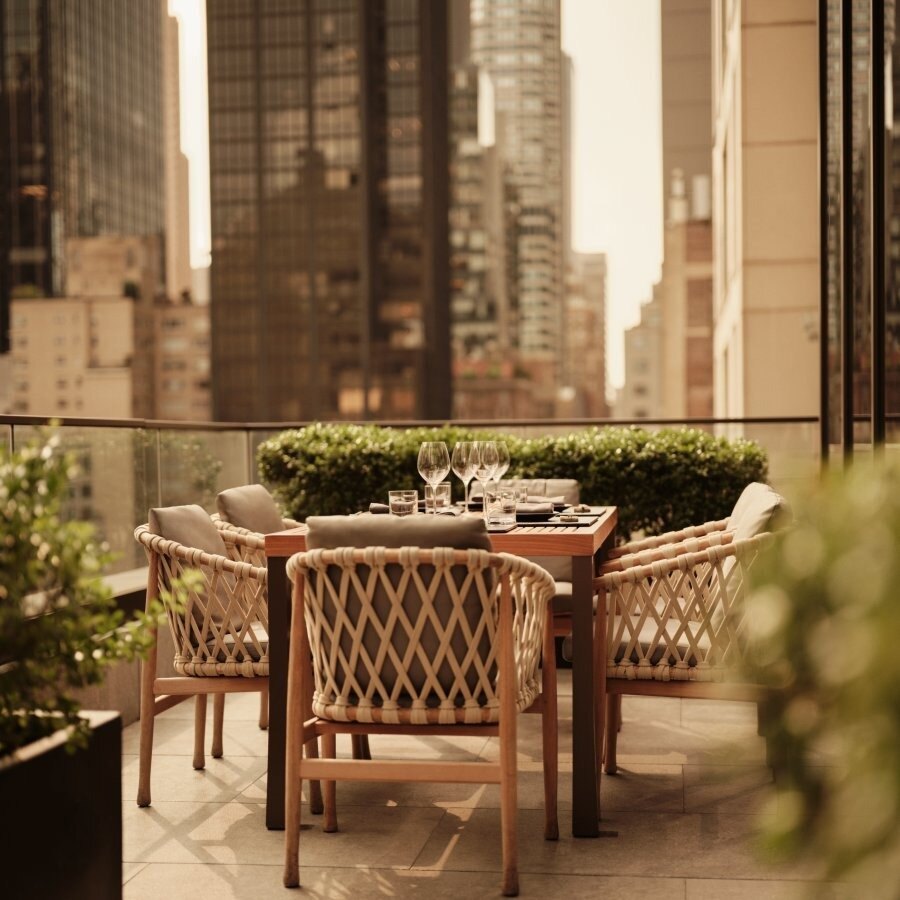
Eine Anmerkung unseres Teams
Nehmen Sie ein Zimmer mit Blick nach Norden über den Park. Gehen Sie morgens, bis die Hände schmerzen, verbringen Sie den Nachmittag unter der Erde im Wasser und den warmen Räumen, und lassen Sie einen Abend gänzlich unverplant. Das ist der Abend, den Sie später erzählen werden – und Sie werden Mühe haben zu erklären, warum eigentlich nichts geschah.
The Pure Voyage Team
Aus dem Journal
Hotels — November 2026
Zwölf Hotels in zwölf Städten, ausgewählt für den Moment, in dem sich die Tür hinter einem schließt. Über Stein, Stille und die Architektur der Ankunft.
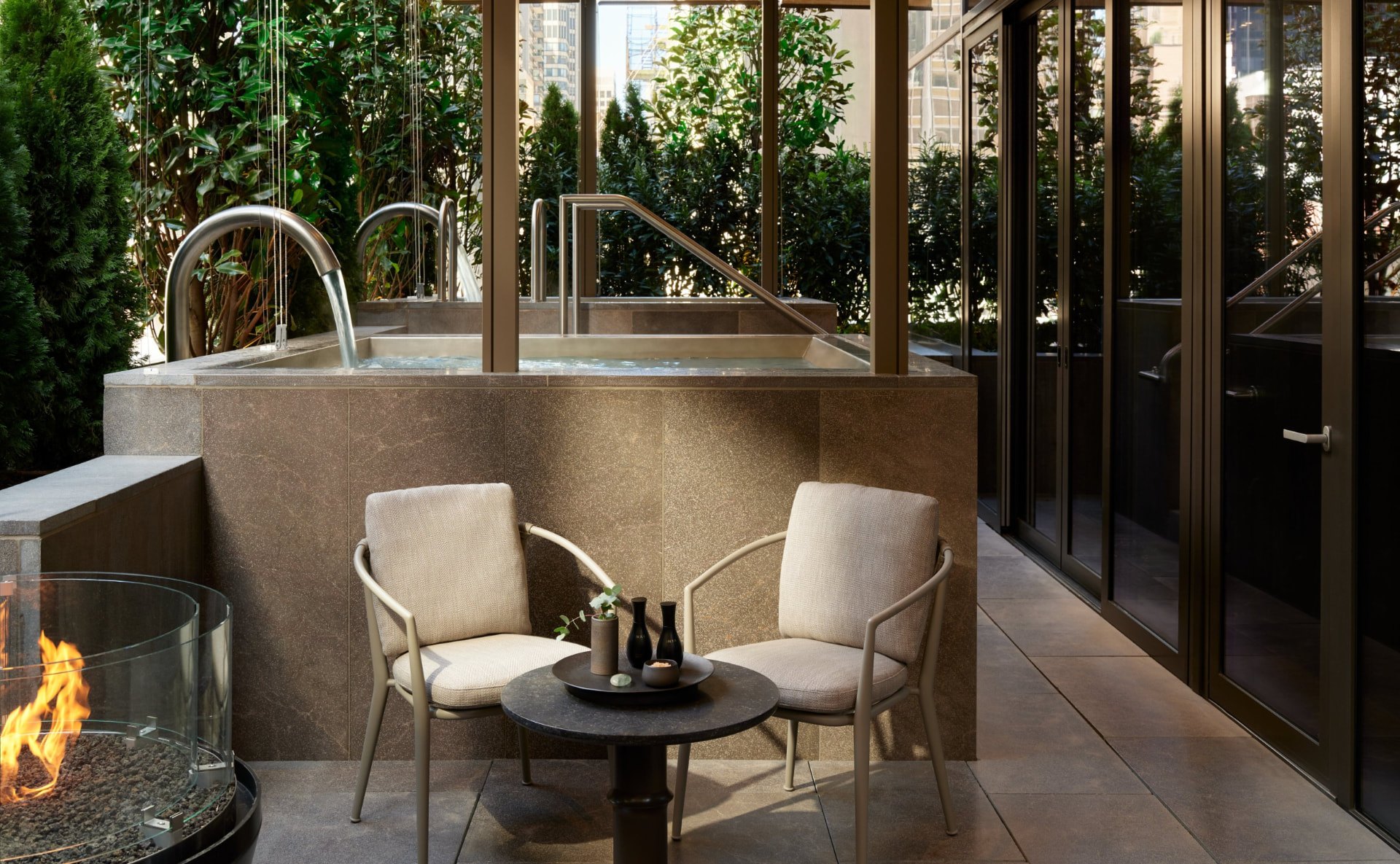
Reiseführer — Oktober 2026
Zwei Tage, vier Viertel und eine feste Regel: nichts vor zehn Uhr buchen. Wo man geht, wo man hinschaut, und zu welcher Stunde man das Hotel verlässt.
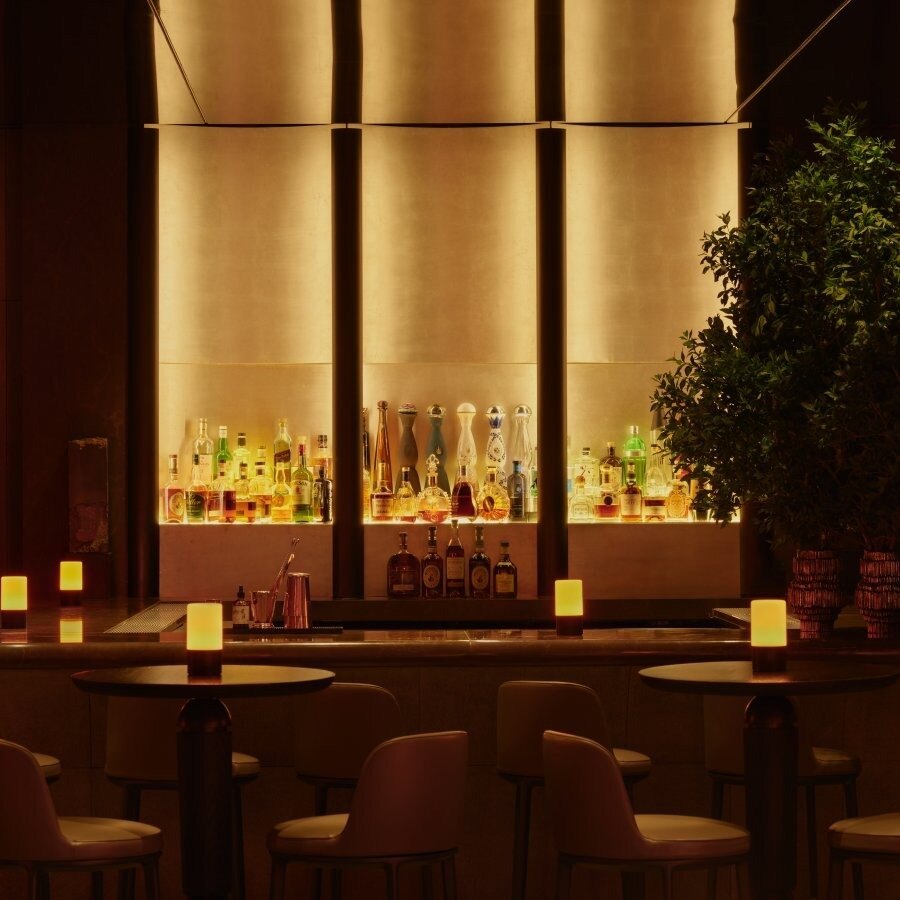
Design — September 2026
Über Proportion, gedämpftes Licht und den bewussten Verzicht auf Dekoration – und warum die durchdachtesten Räume jene sind, die man nach einem Tag nicht mehr bemerkt.
Eine persönliche Anfrage
Wenn Manhattan in seiner ruhigsten Form nach Ihrer nächsten Reise klingt, arrangieren wir sie gerne persönlich – die Adresse selbst und die Stadt darum herum.
Eine private Museumsstunde vor Öffnung, Plätze im Theater, die sich wirklich lohnen, ein Architekturspaziergang mit jemandem, der mitgebaut hat, ein Tisch ohne Reservierungsmöglichkeit und einige weitere Nächte, ausgewählt nach Ihrer Art zu reisen.
Warum über Pure Voyage buchen?
Preisrahmen
Was eine Reise in Weiter entfernt ungefähr kostet
Bei Fernzielen entscheidet die Streckenführung oft mehr über den Preis als das Hotel.
Richtwerte pro Person und Nacht im Doppelzimmer, ohne Flüge. Kein Angebot — eine Orientierung vor dem ersten Gespräch.
Unsere Einschätzung
Aman New York — Fifth Avenue, New York
Passt besonders für
Unser Lieblingsraum
Premier Room mit Blick auf den Central Park
Nordausrichtung, Kamin, ruhige Etage — der Unterschied zu den Südzimmern liegt weniger im Raum als im Morgenlicht.
Wann hinreisen
Mai und Oktober für Spaziergänge, die ersten Dezemberwochen für die Stadt vor dem Feiertagsandrang.
Verwandte Erlebnisse
Welche Zimmerkategorie lohnt den Aufpreis?
Die Kategorien mit Blick nach Süden über die Fifth Avenue. Der Unterschied liegt weniger im Raum als im Abend: Das Licht über den Dächern verändert sich hier über eine Stunde hinweg, und man bleibt tatsächlich am Fenster. Zimmer nach Norden sind ruhiger, aber deutlich weniger New York. Wer nur eine Nacht bleibt, sollte den Aufpreis nehmen.
Notiert von Pure Voyage
Aus der Suite Collection
Innerhalb eines Hotels entscheidet oft ein einzelner Raum darüber, wie ein Aufenthalt in Erinnerung bleibt. Diese Suiten haben uns überzeugt.
Pure Voyage Atlas
Der Atlas verbindet, was zusammengehört: die Region, die Kollektionen, die passende Reisezeit und die Hotels, die in derselben Erzählung stehen.
Weiter in der Kollektion
Adressen, die Gäste dieses Hotels erfahrungsgemäss ebenfalls schätzen — als Fortsetzung derselben Reise oder als Gegenstück dazu.
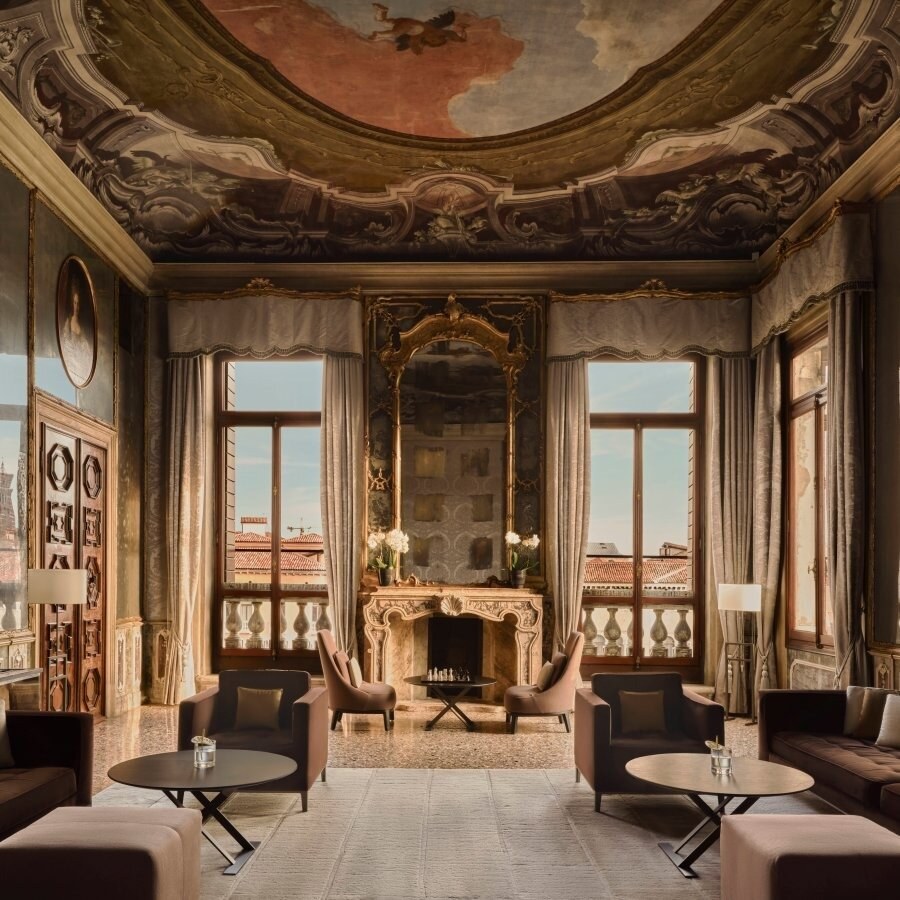
San Polo, Venedig
Vierundzwanzig Zimmer in einem Palazzo aus dem 16. Jahrhundert, Ankunft über das Wassertor, ein privater Garten mitten in Venedig.
Empfohlene Dauer: Vier Nächte
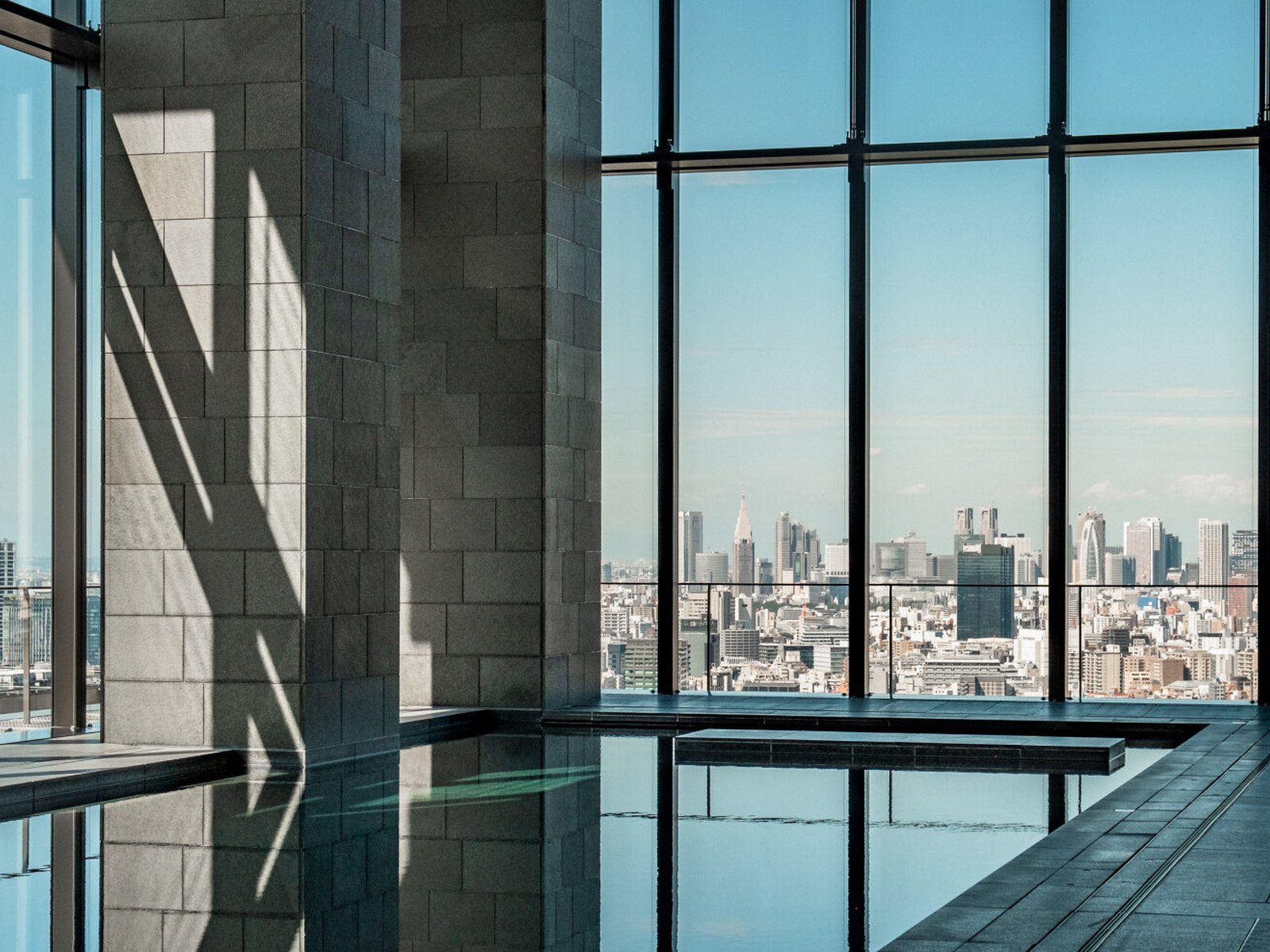
Otemachi, Tokio
Ein japanisches Haus, das in den 33. Stock gehoben wurde: Washi, Stein, Zedernholz und eine Lobby von dreissig Metern Höhe.
Empfohlene Dauer: Vier Nächte, gern kombiniert mit Kyoto
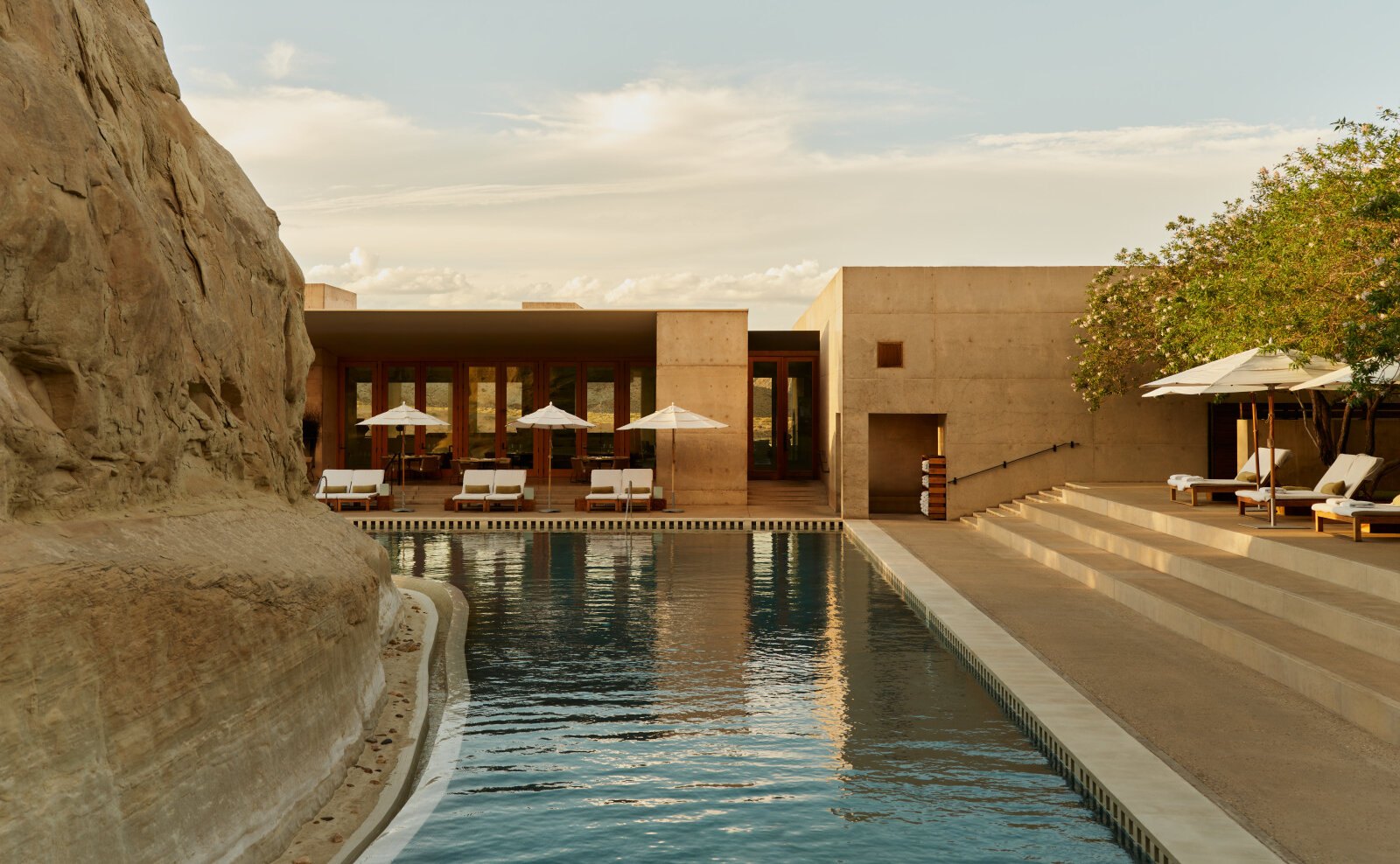
Canyon Point, Utah
Sichtbeton in der Wüste, um einen Felsen herum gebaut — Landschaft, die grösser bleibt als das Hotel.
Empfohlene Dauer: Drei bis vier Nächte
Verwandte Reisegedanken
Nicht das Ähnlichste, sondern das Naheliegendste: Orte, Wege und Texte, die zu dieser Art zu reisen gehören.
Häufige Fragen
Weiter im Pure Voyage Universum
Kein Katalog, sondern der nächste Schritt: die Hotels, Wege, Länder und Texte, die wir im Gespräch an dieser Stelle nennen würden.
Journeys
Wege, die diese Region erschliessen.
Destinationen
Das Land im Überblick.
Empfehlungen
Was wir für diesen Anlass vorschlagen.
Journal
Weiterlesen, bevor Sie entscheiden.
Eine Einladung
Ein Hotel, das uns überzeugt hat. Eine Neueröffnung, die wir im Blick haben. Und eine Reiseidee zur richtigen Jahreszeit. Sorgfältig ausgewählt und auf das Wesentliche reduziert.