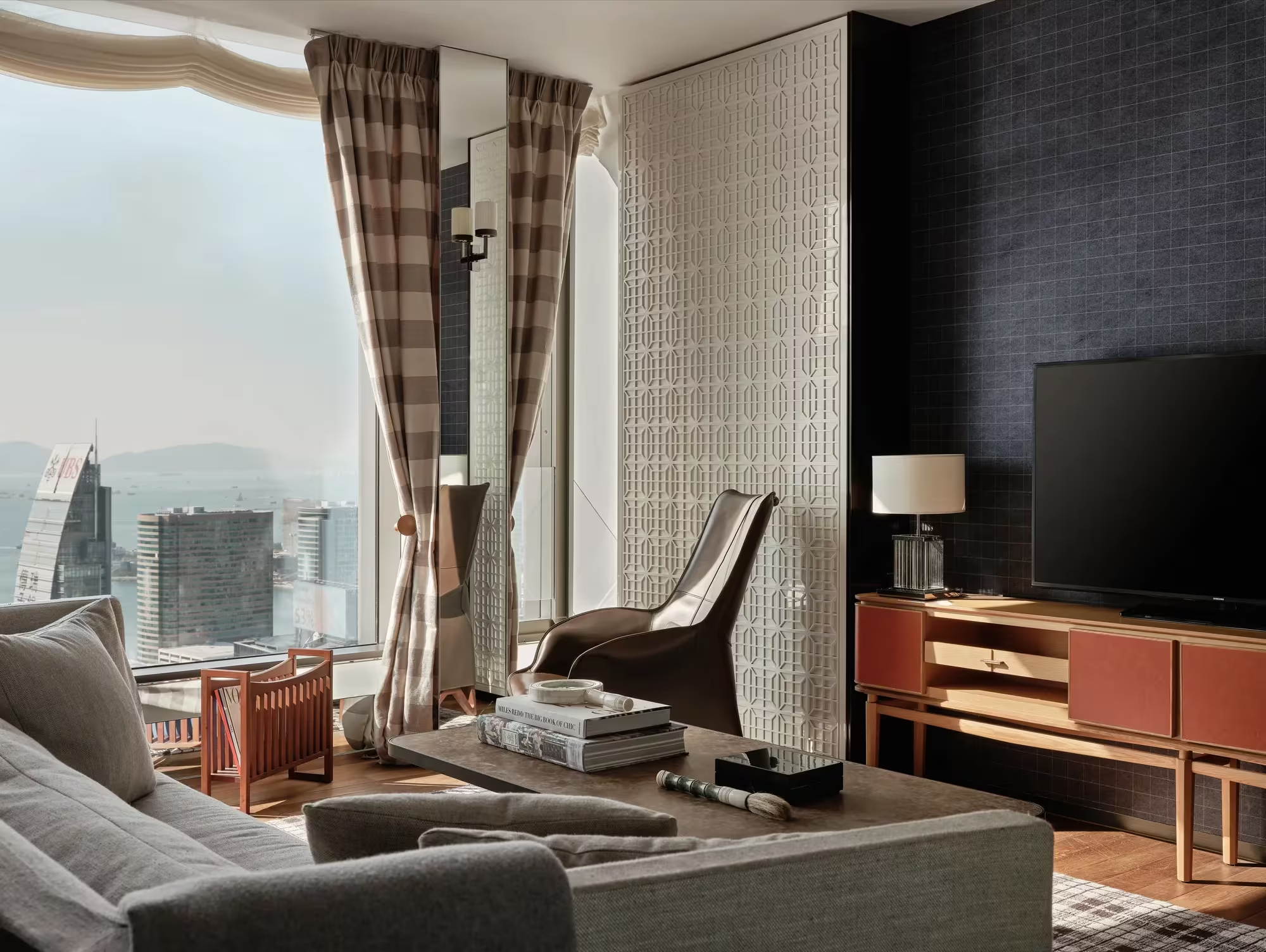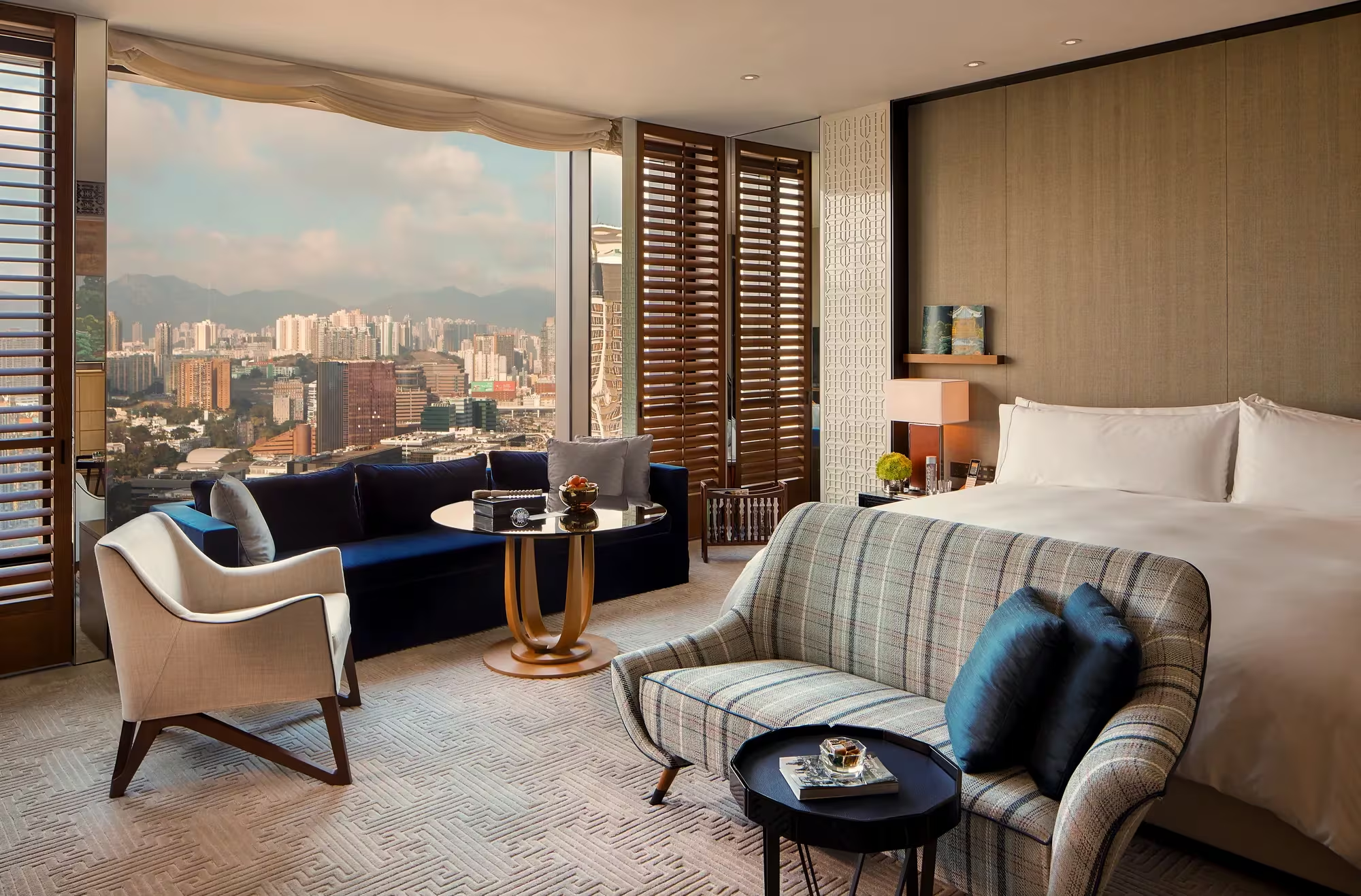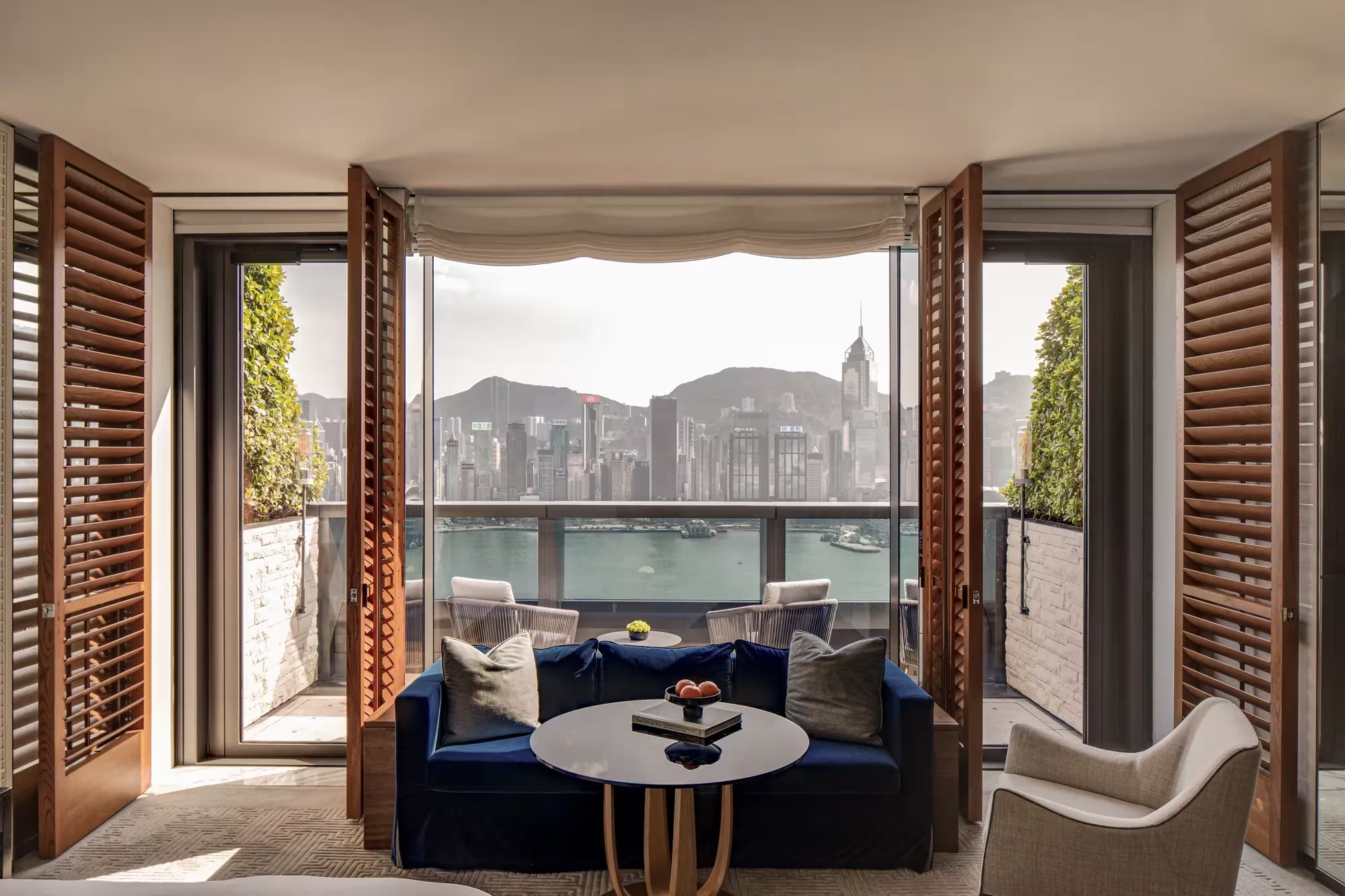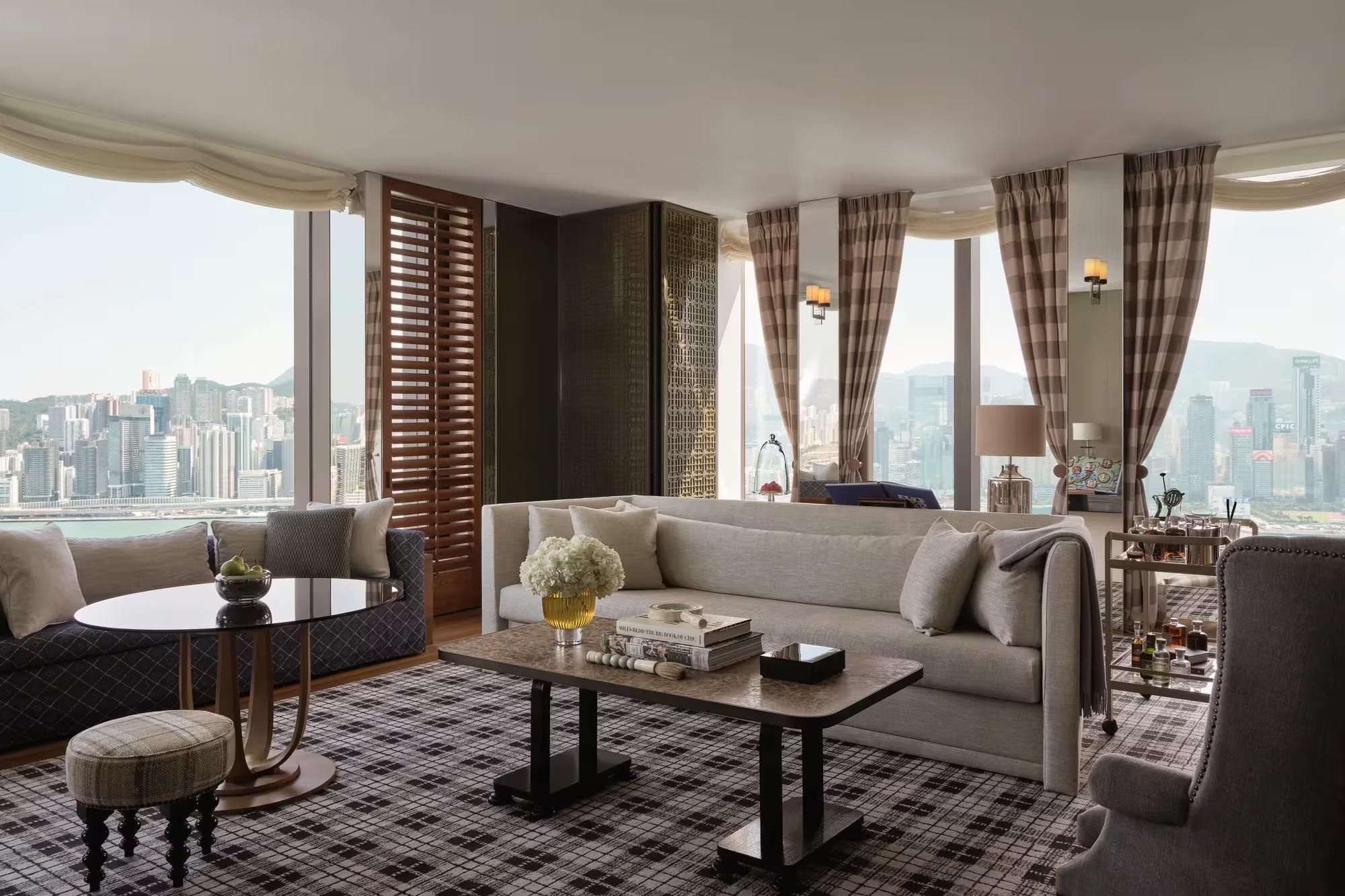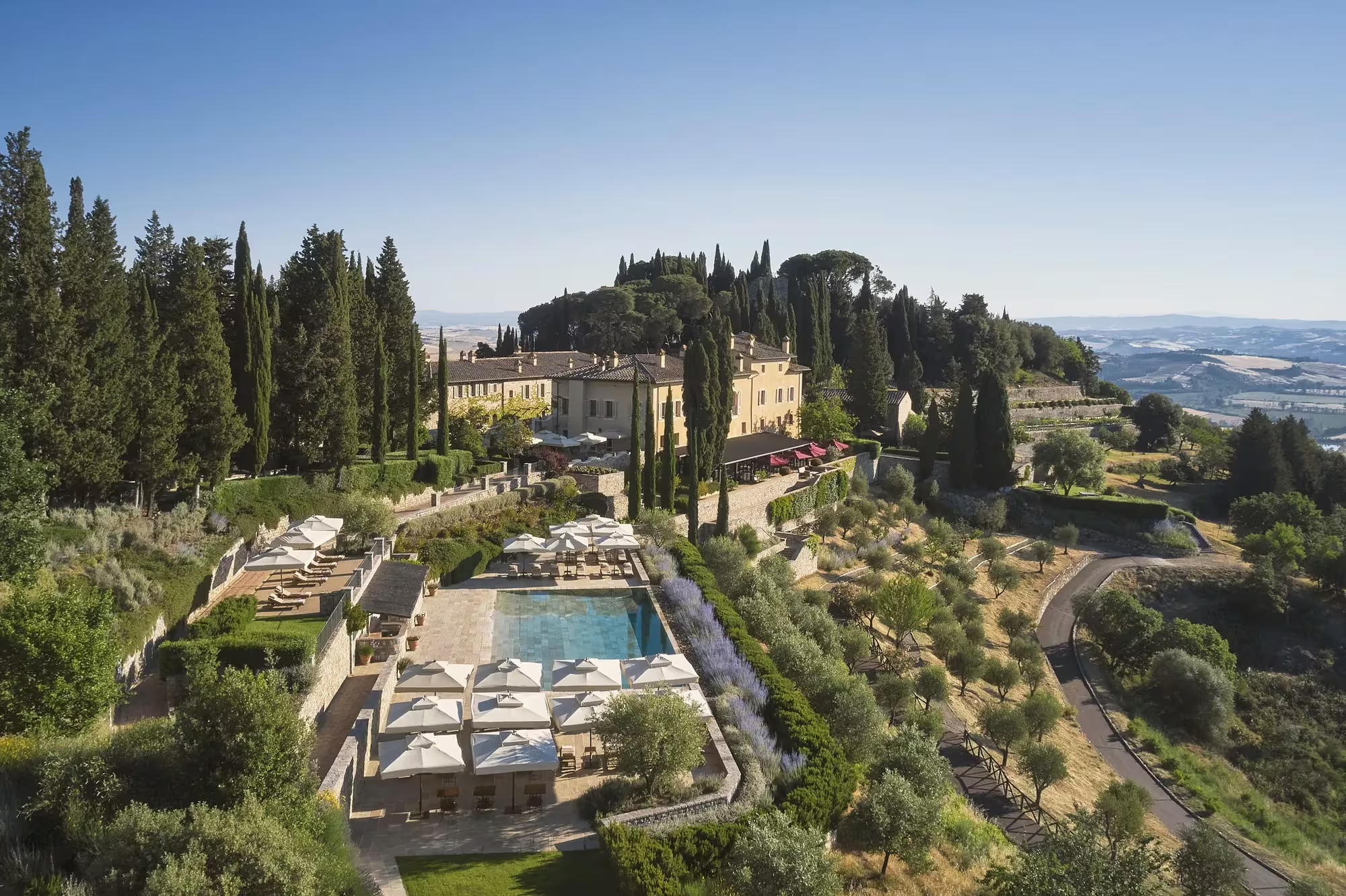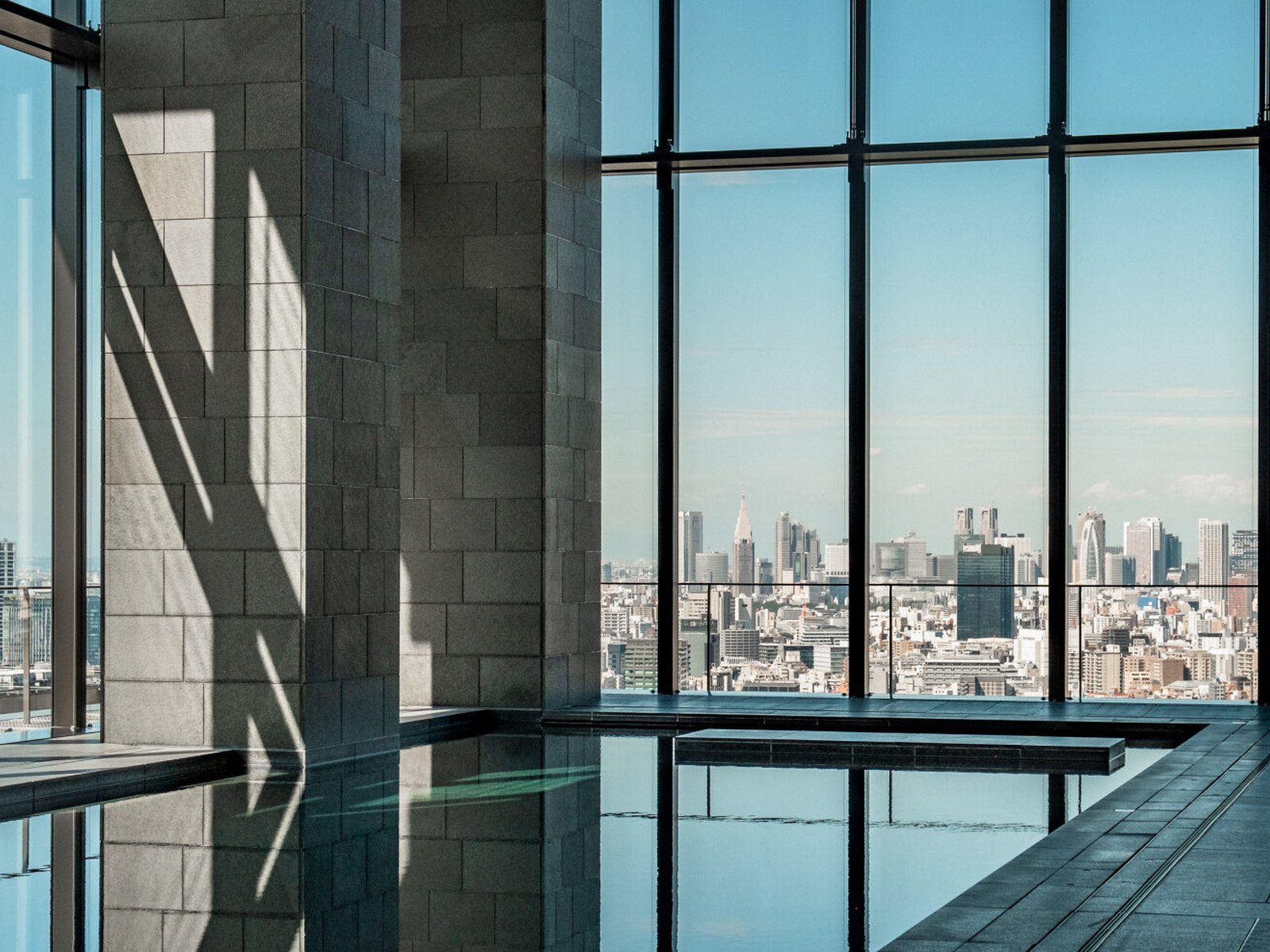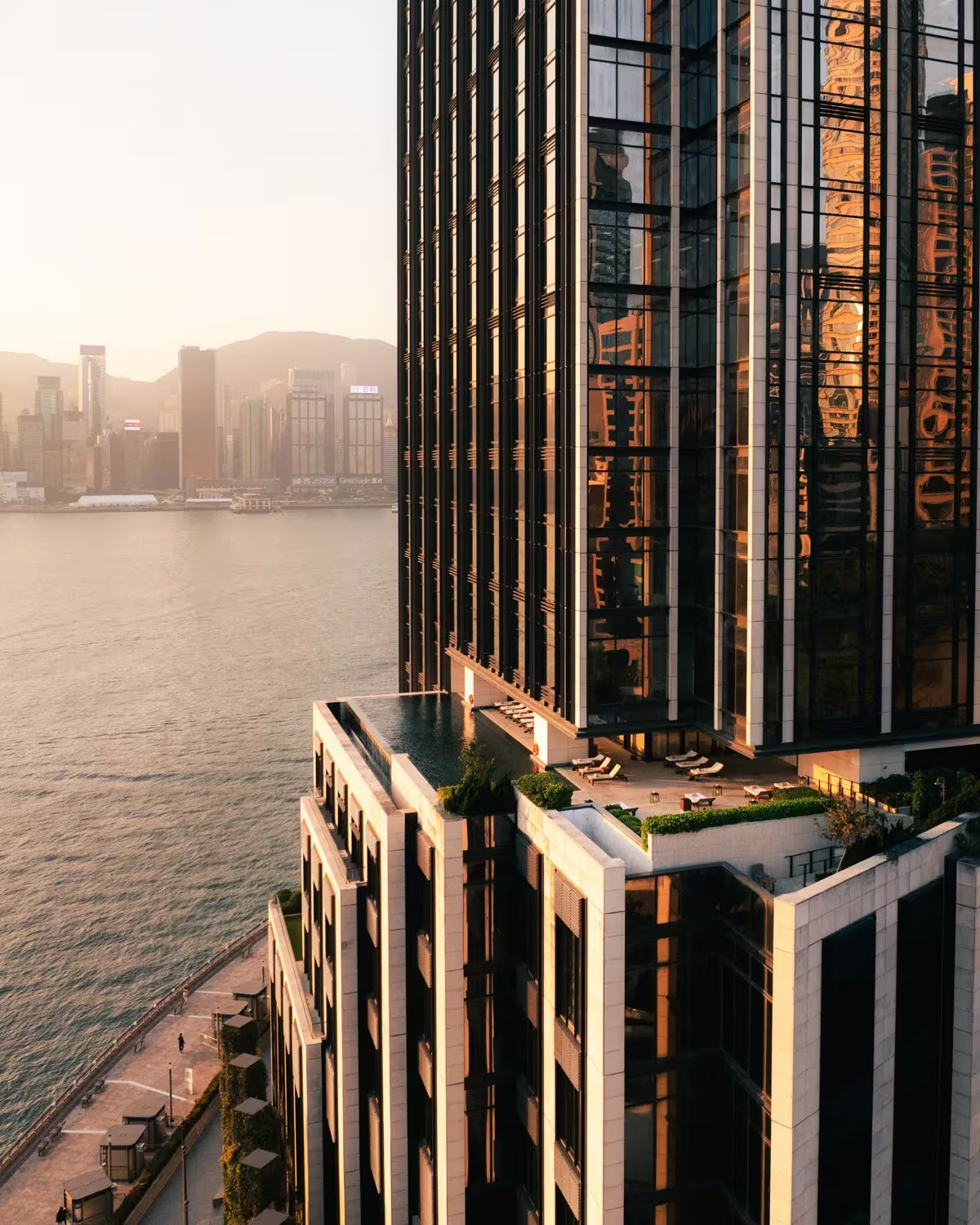
Sunrise over Victoria Harbour in Hong Kong with morning mist, the island skyline in silhouette, a traditional junk on the water and warm interior lighting in a waterfront tower

Victoria Dockside — Tsim Sha Tsui, Hong Kong

Where The City Meets The Sea

Overlooking Victoria Harbour from the vibrant Tsim Sha Tsui waterfront, Rosewood Hong Kong combines contemporary architecture, exceptional craftsmanship and one of the world's most spectacular urban landscapes into an unforgettable editorial experience.

An Introduction

Hong Kong is loud for eight minutes, and then it is water.

Arrive on the Star Ferry if you can. It costs almost nothing, it has been making the same crossing since 1888, and there is no better introduction to this place than standing at the rail of a green and white boat while a hundred and fifty years of ambition comes towards you out of the haze. The engine sounds like machinery rather than transport. The deck smells of diesel and salt. Somebody folds a newspaper.

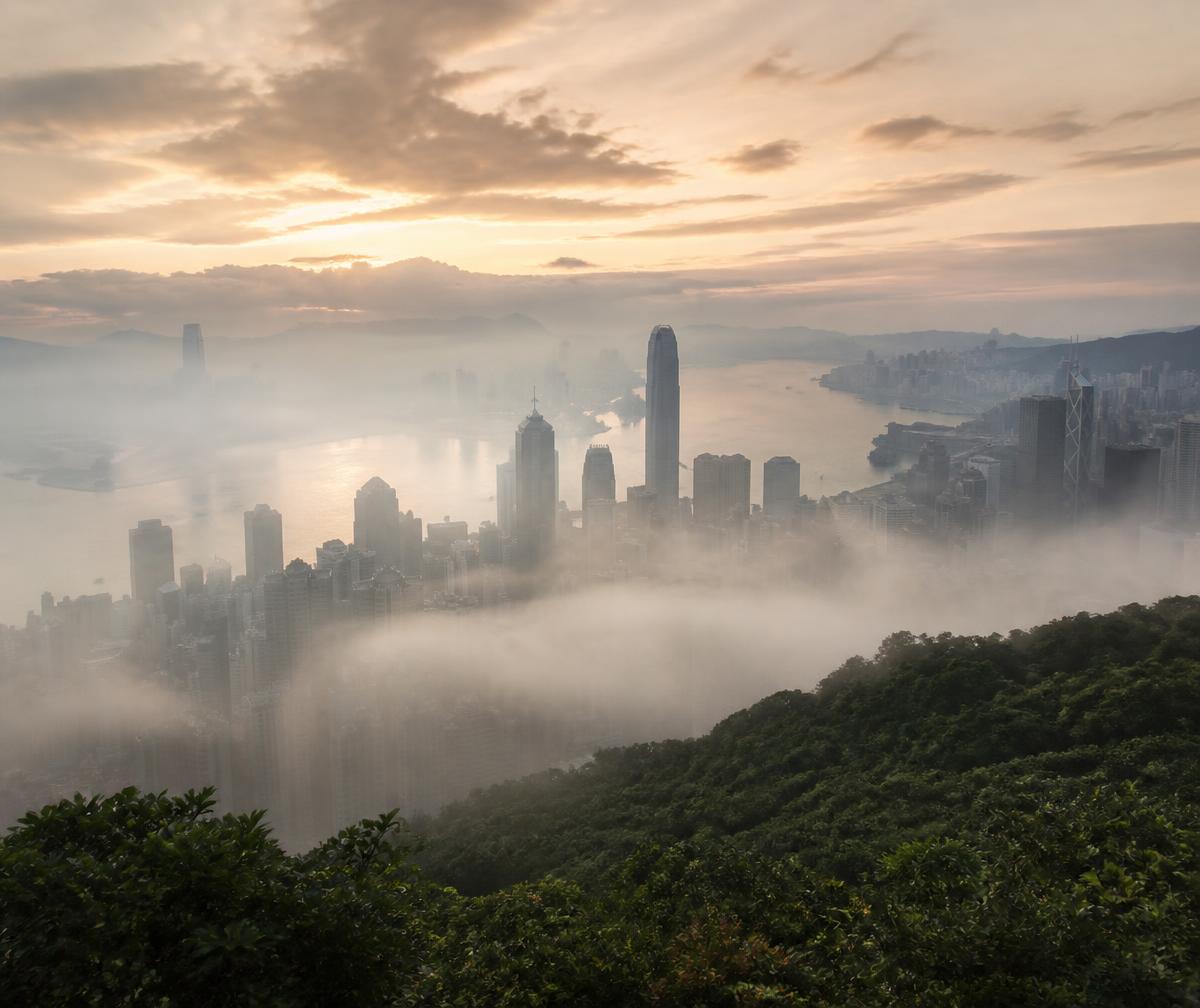
At this hour the harbour is still assembling itself. Mist lies on the water in loose bands and the Peak keeps its cloud until seven. A junk crosses with its ochre sails up — a working shape, older than the skyline behind it. Container ships wait offshore. Hydrofoils leave for Macau. The towers on the island are not yet lit; they are simply grey, layered, receding into the mountain, and the whole thing looks less like a city than a piece of geology that learned to build.

Then you step off at Tsim Sha Tsui and the volume arrives all at once. Trams, drills, delivery trolleys, a man arguing tenderly with a fishmonger, the particular Cantonese acoustics of a street where nothing has ever been quiet. Hong Kong does not ease you in. It assumes you can keep up.

Which is why what happens next is so peculiar. You turn off the promenade, pass through a doorway, and the city closes behind you like a window shutting. Not silence — the harbour is still there, filling the glass, ferries still crossing, the light still moving on the water. But the sound has gone. The pace has gone. There is stone underfoot and warm oak at shoulder height, a low table with a single ceramic vessel on it, an ink painting lit from above and nothing else competing for the eye.

This is the trick of the house, and it is an old one done well: it does not try to be more interesting than Hong Kong. It simply stops shouting, and gives you somewhere to stand while the city goes on being extraordinary in front of you. By the second morning you will have chosen a chair. By the third you will know which ferry is which by its wake.

The city is the protagonist here; it was before anyone built on this wharf and it will be long afterwards. The harbour is the reason for all of it — the trade, the towers, the light at six in the evening. Everything else belongs quietly to both, and understands, sensibly, that it is only the newest thing on the waterfront.

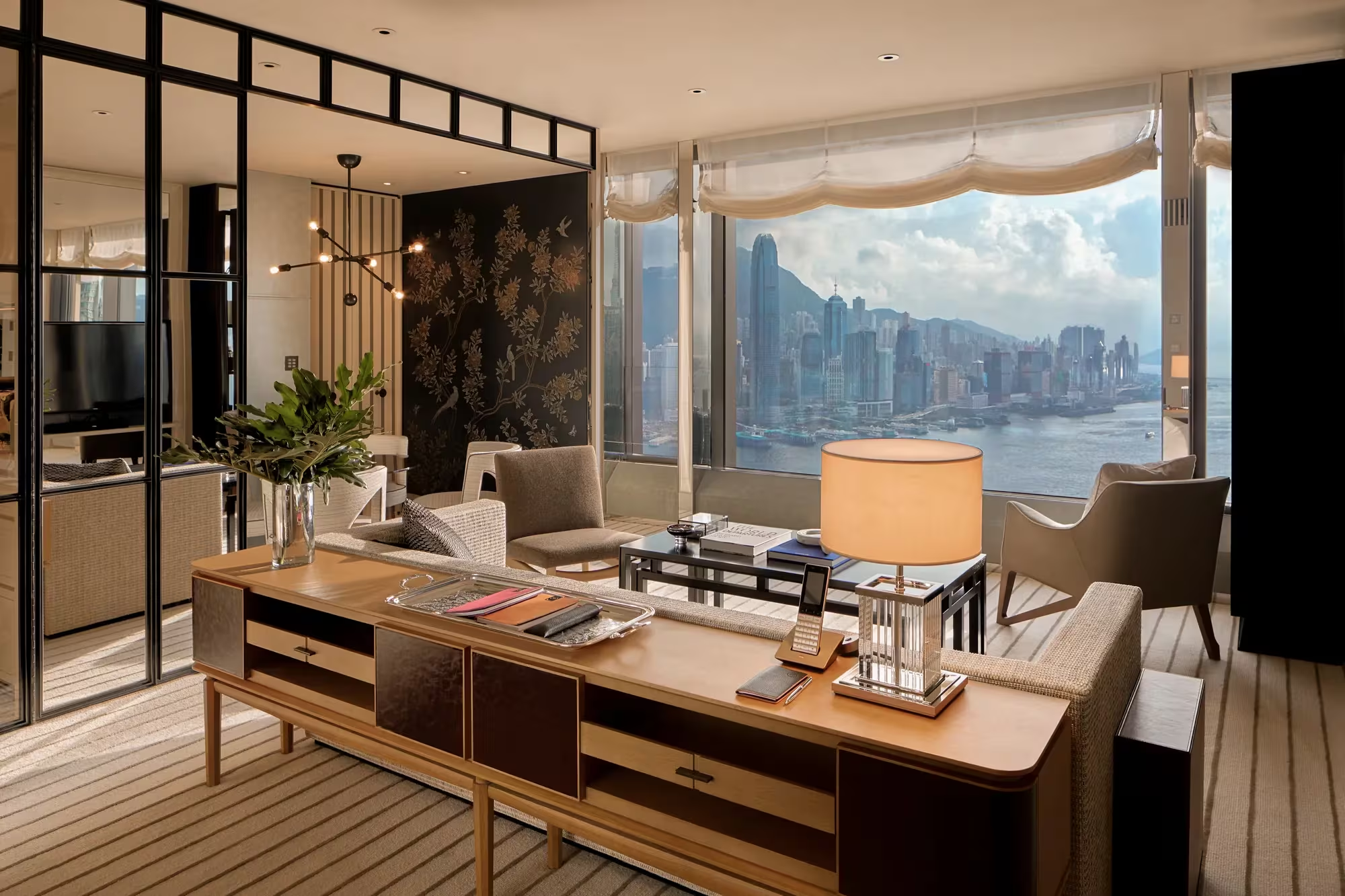
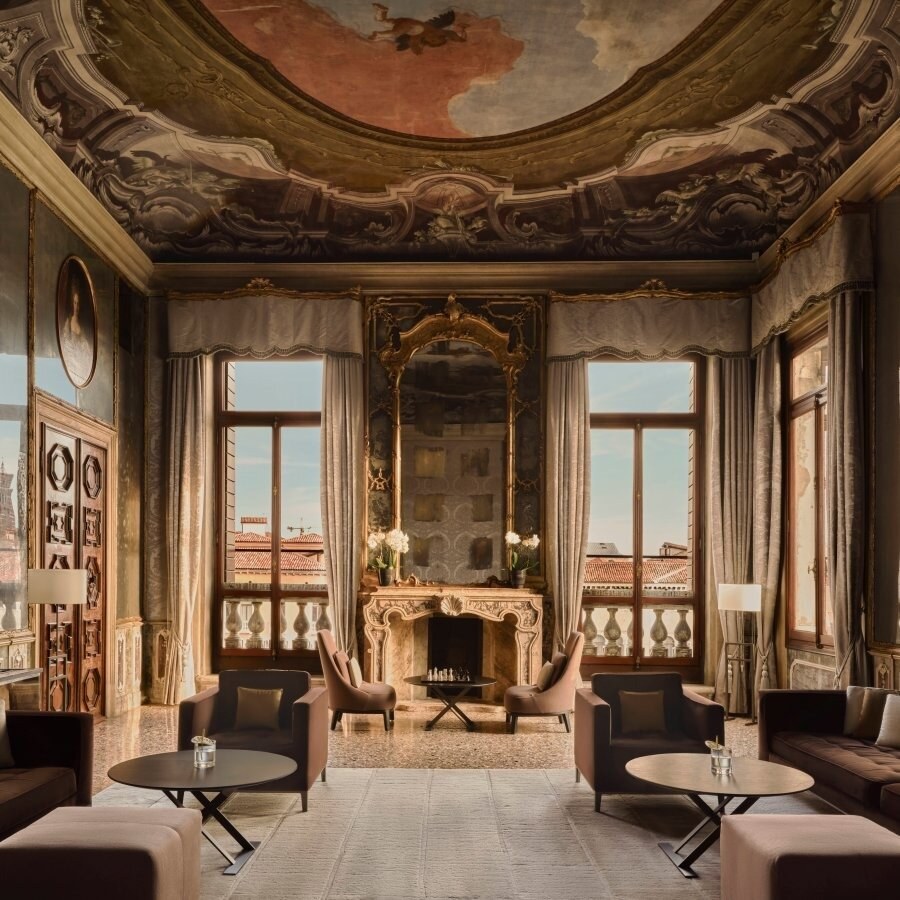
Hotel lounge in Hong Kong with natural stone floors, warm oak panelling, bronze detail, custom linen furniture and a contemporary Chinese ink painting lit softly

Architecture & Design

A vertical house, not a tower

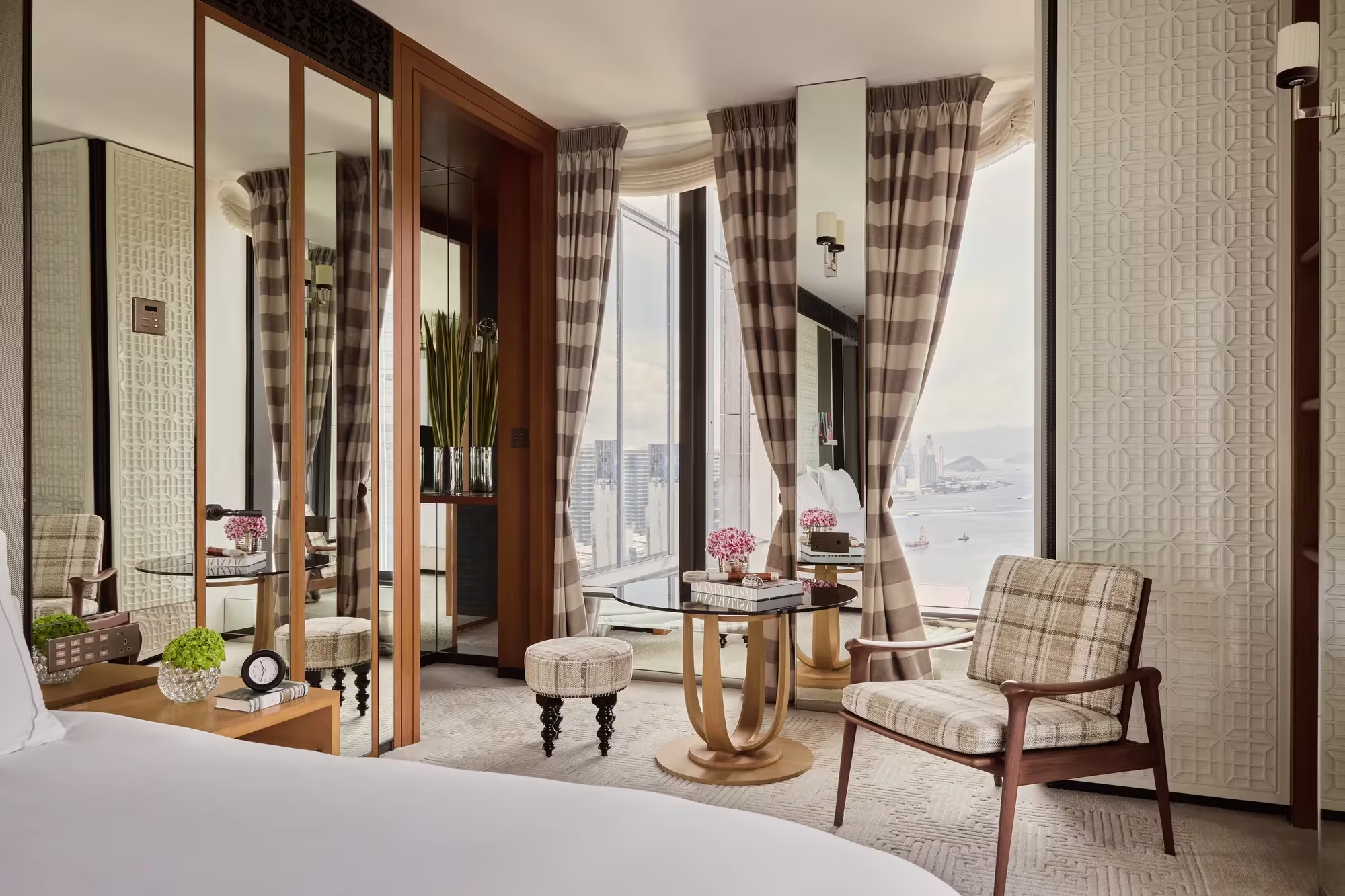
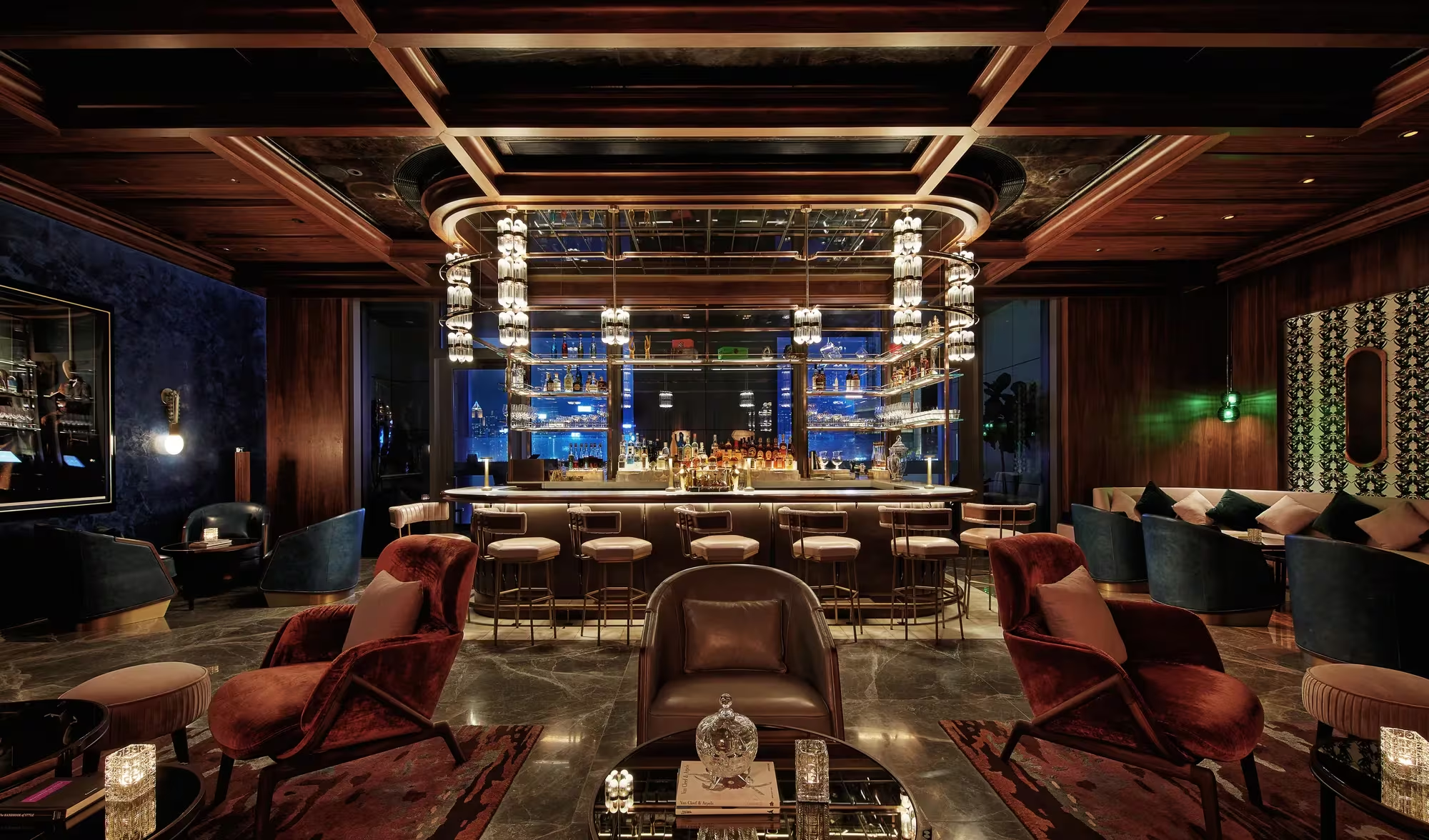
From the water it reads as a single quiet volume among many. Inside it behaves like a residence: rooms rather than halls, thresholds rather than corridors, materials chosen to be touched. Stone underfoot, warm oak on the walls, bronze at every hand — doors, rails, the edge of a table — and all of it left to darken with use rather than polished into pretending it is new.

The art is not decoration and it is not a collection assembled by telephone. Ink on paper, contemporary Chinese sculpture, a commissioned piece that only resolves from the far side of the room. Furniture made for these dimensions and no others. Lighting kept low and warm, so that at dusk the interior recedes and the harbour takes the wall.

What is remarkable is the restraint. Everything faces the water and nothing argues with it. This is craftsmanship in the older sense — a joint, a hinge, a stone edge finished by hand where nobody was ever likely to look. Luxury of that kind is not announced. It is simply noticed, slowly, over three days.

Rooms & Suites

Harbour residences

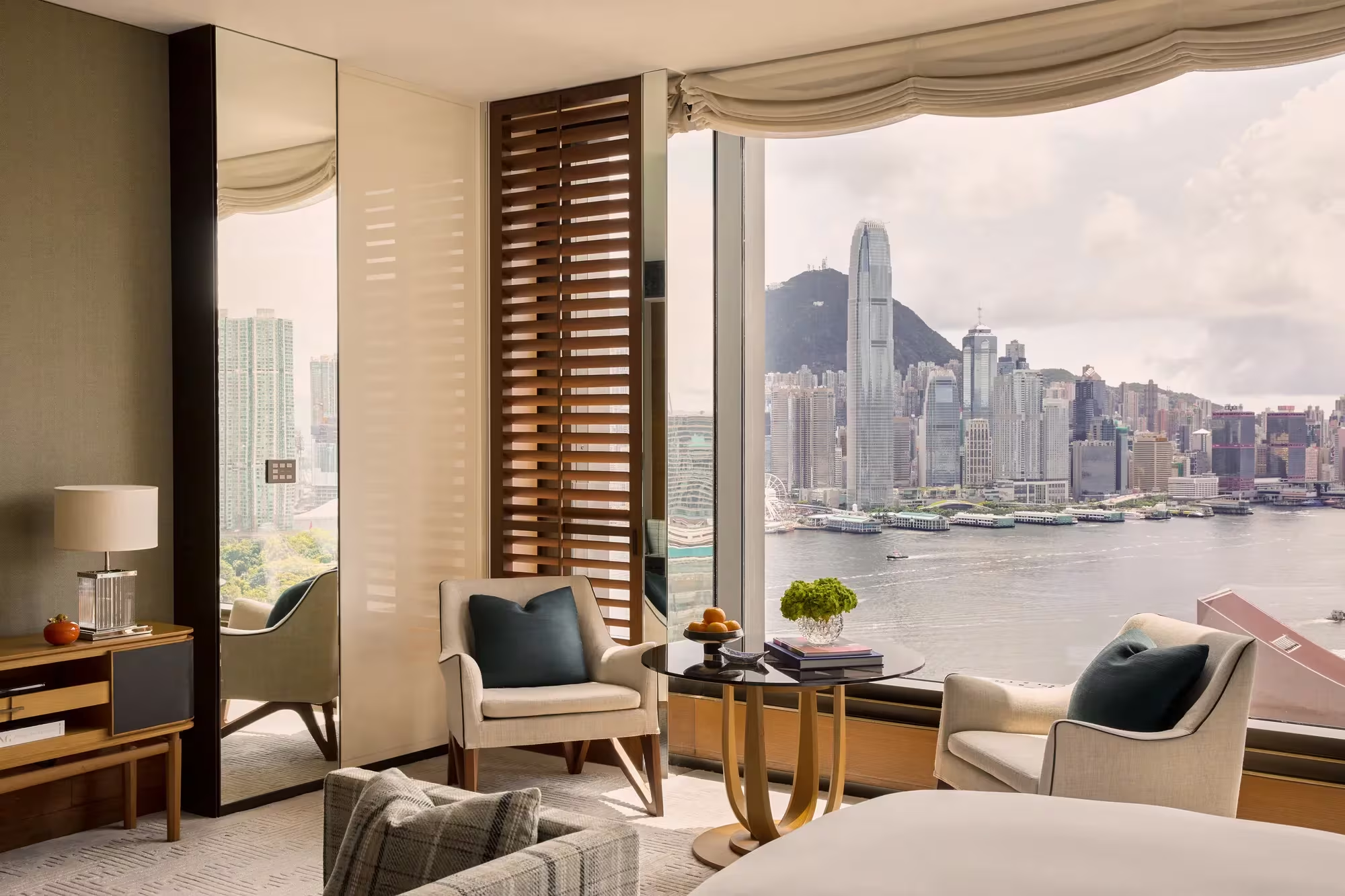
There is nothing worth listing. What matters is the light on the water at half past six, and how long you stay at the window afterwards.

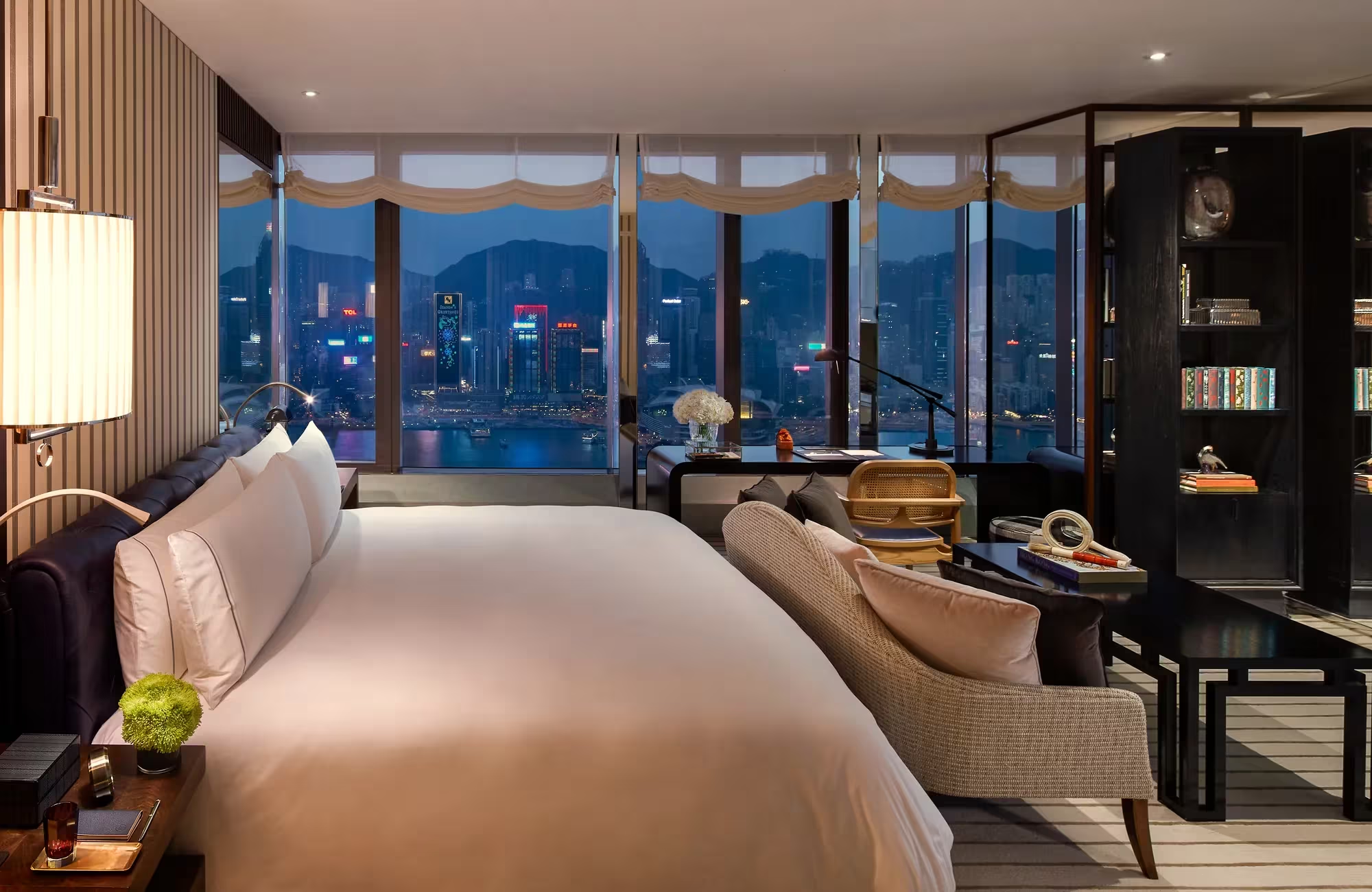
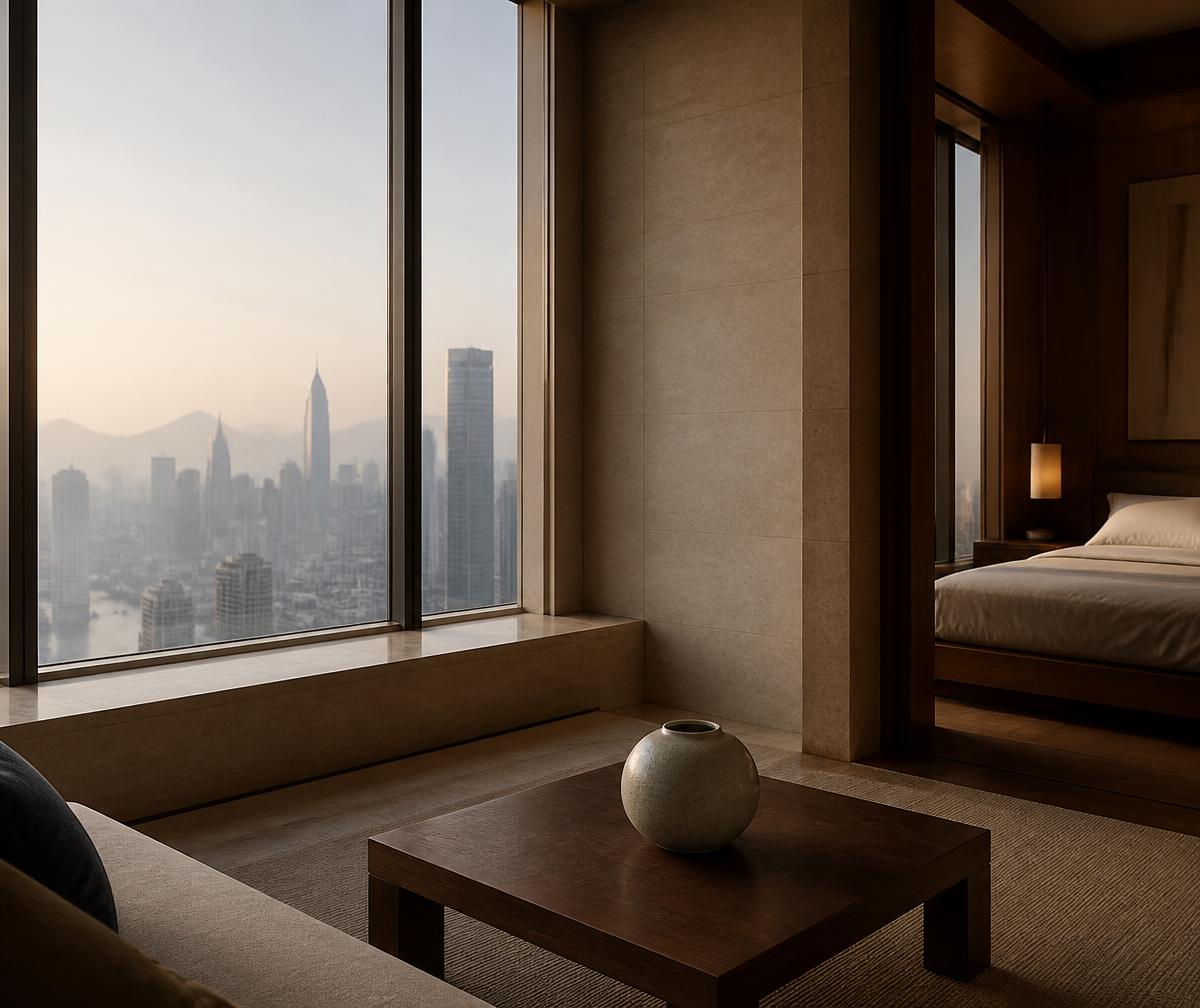
Hotel bedroom high above Victoria Harbour at first light with a floor-to-ceiling window, oak panelling, pale linen bedding and a misty Hong Kong skyline

No. 01

The Hour Before The Harbour Wakes

You wake early here without meaning to, and the reason is the window. It runs the full height of the room, and behind it the harbour is doing what it has done every morning for a century and a half: turning from grey to pearl to something faintly gold, with the ferries already crossing and the Peak still holding its cloud. The room itself is very quiet — oak underfoot, linen cool against the arm, a marble ledge with nothing on it. Nobody has arranged this view for you. It simply happens, and you lie there and let it.

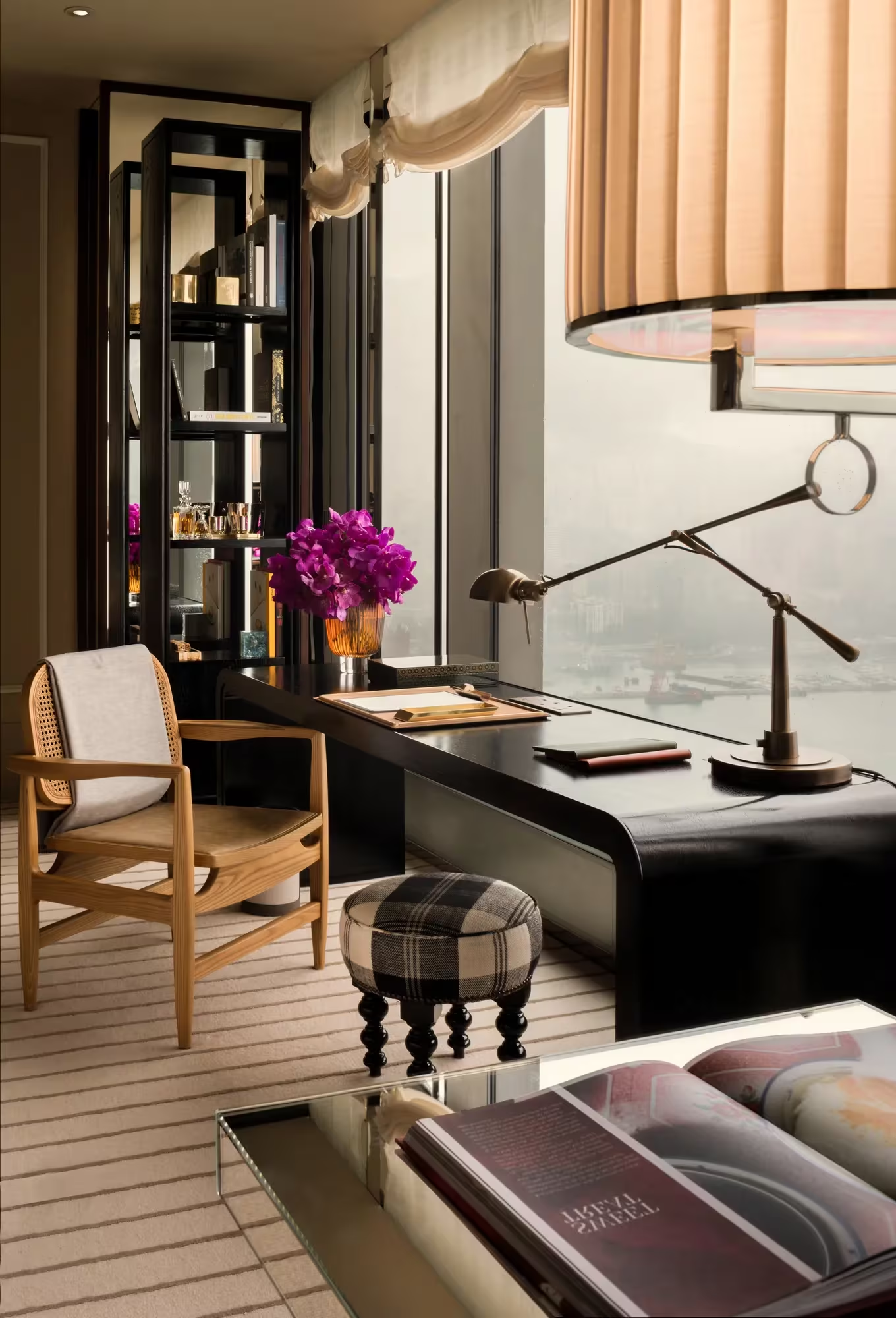
Private library corner of a Hong Kong hotel suite at dusk with oak shelves of art books, a bronze reading lamp, a linen armchair and harbour lights beyond the window

No. 02

Evening, And The Small Library In The Corner

By six the glass has changed sides. The city is lit and the room is not, and the whole skyline arrives inside as a soft field of amber on the marble. There are shelves here, and real books on them — monographs, poetry, a photographic survey of Kowloon before the airport moved. A bronze lamp. A chair that has been sat in properly. This is the difference between a hotel room and a residence: a residence assumes you might want to stay in for the evening, and makes that the better option.

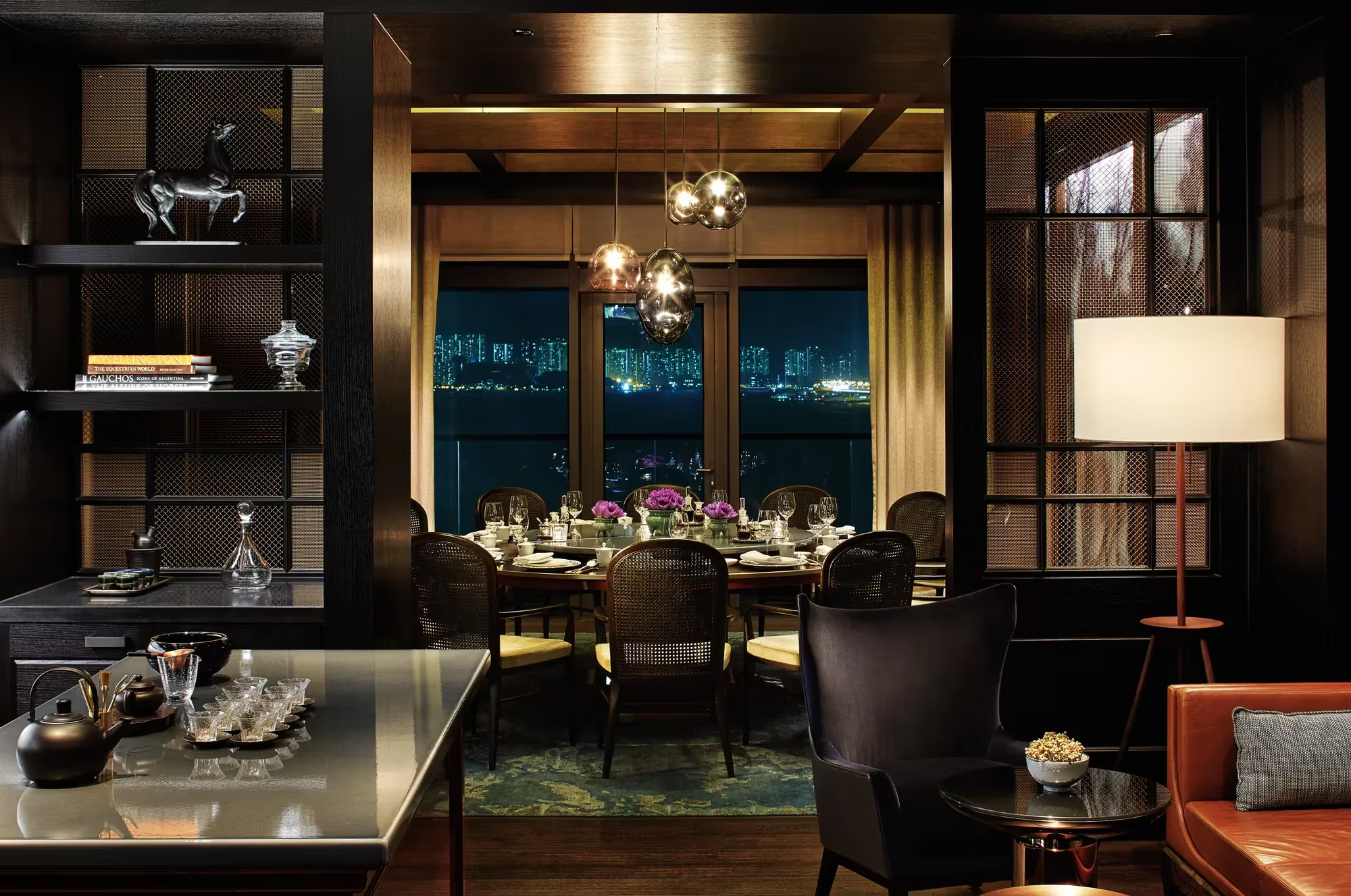
An elegant Cantonese dining room in Hong Kong at dusk with dark lacquer, a round table set with porcelain tea ware and bamboo steamers, harbour lights beyond gauze curtains

Dining

A city that eats seriously, and early

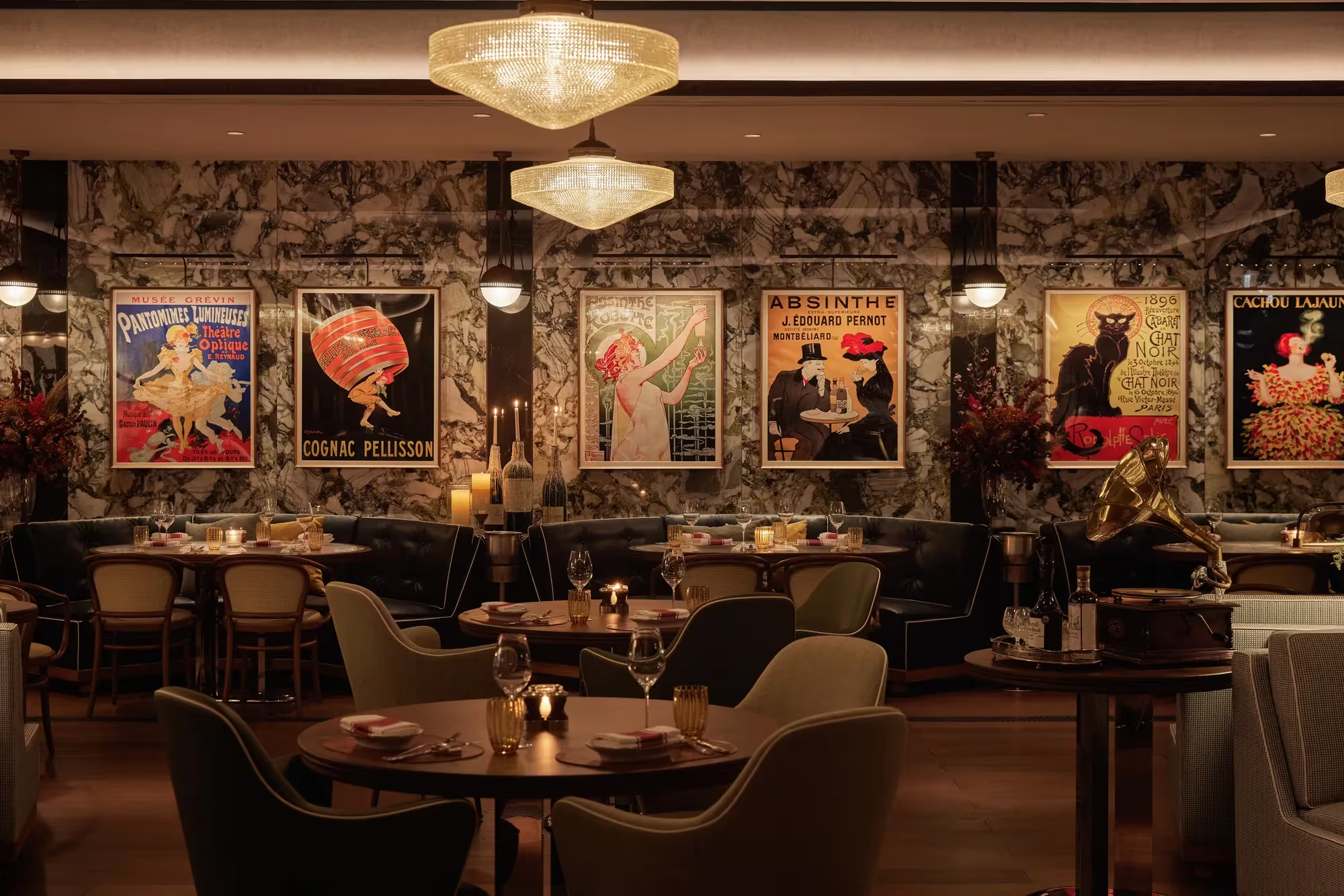
Cantonese cooking is the least showy of the great cuisines and the hardest to do honestly: steam, a clean wok, an accurate second, and produce good enough to be left alone. At The Legacy House that inheritance is taken at its word — old recipes from Shunde, slow soups, a fish that arrives without ceremony because the fish is the ceremony. Tea is poured throughout, and the pot is topped up without anyone asking.

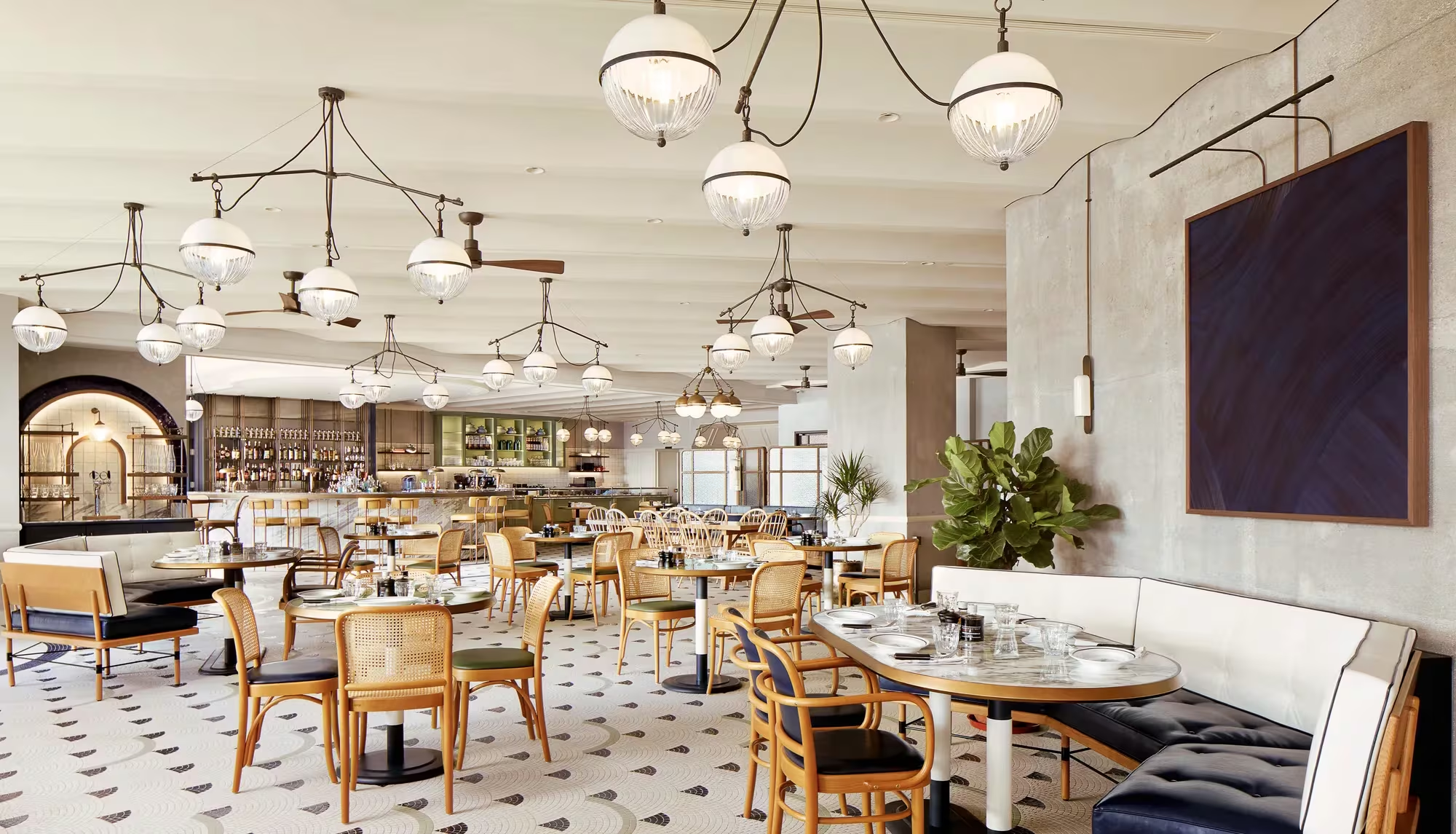
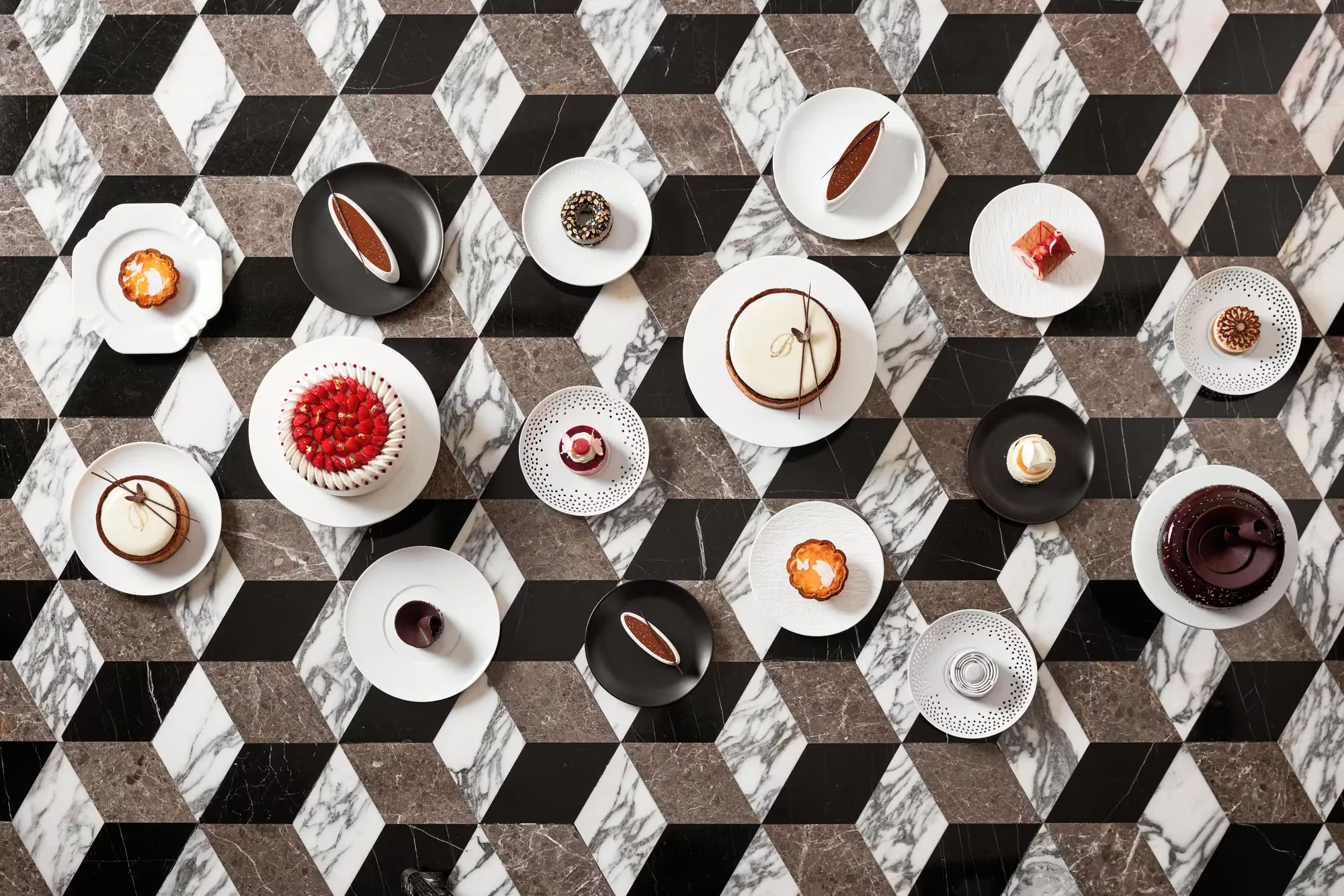
Mornings belong to Holt's Café, which is Hong Kong's own particular hybrid — congee beside eggs, milk tea beside coffee, the whole cheerful collision of a port city that has been arguing with itself about breakfast for a century. Henry works over fire and smoke, plainly and well. Afternoon tea happens at the hour the light turns, and it is worth stopping for even if you have no intention of eating.

Dinner tends to run late, near the glass, in the hour when the towers switch on across the water and the ferries become strings of light. Seasonal, mostly local, unhurried. Sit longer than the meal requires. The harbour is not going anywhere and neither, tonight, are you.

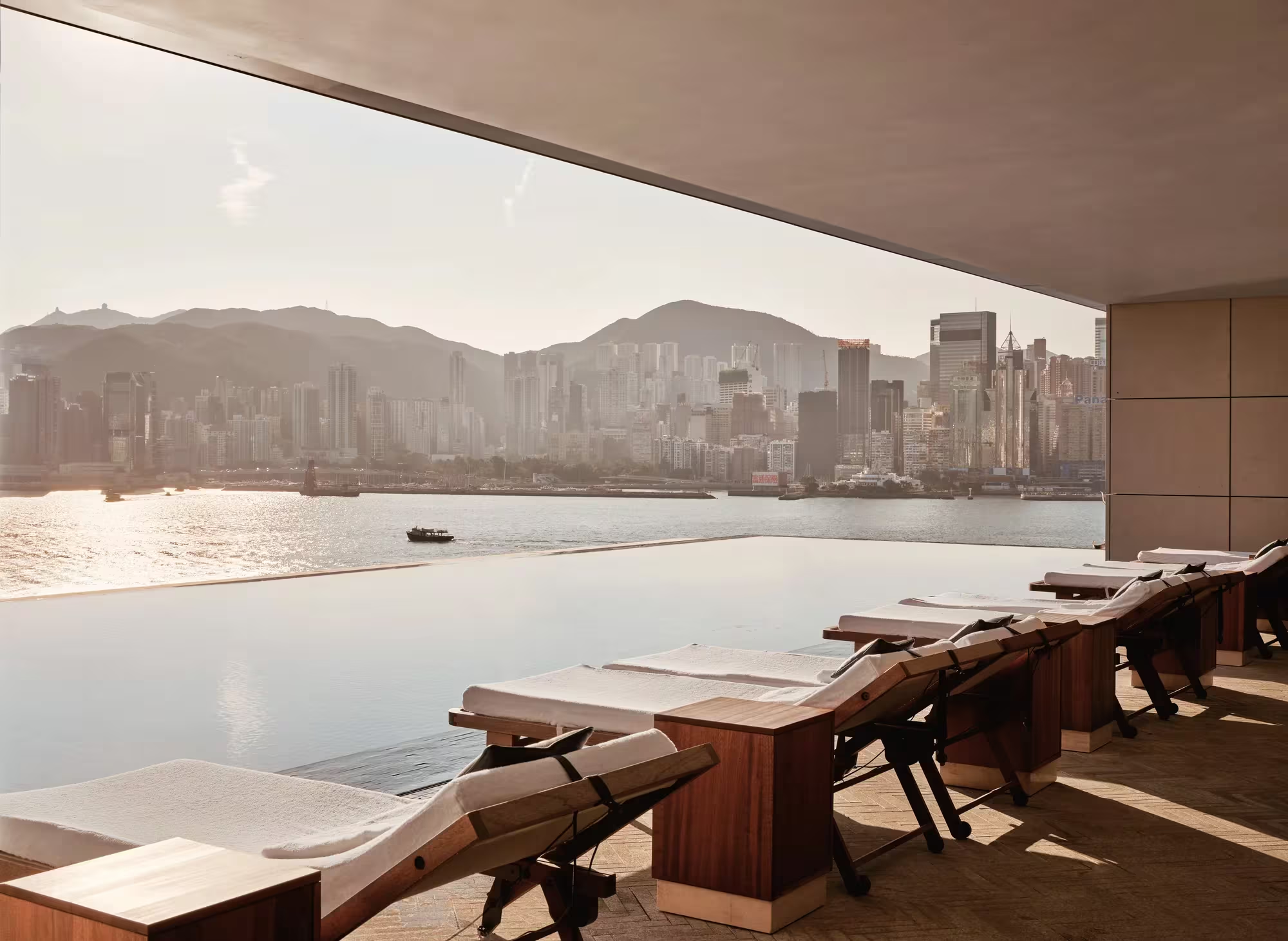
Urban spa sanctuary above a hazy skyline with a pale stone bathing pool, warm oak slatted screens, linen curtains and morning light

Wellness

Asaya, and the argument for slowing down in a fast city

The floors given over to Asaya are the quietest in the building. Pale stone, oak screens, water held still in a shallow basin, linen moving very slightly in conditioned air. There is a garden terrace, which in this city is a small act of generosity. What you notice first is the absence of music.

The thinking is holistic rather than cosmetic — sleep, breath, movement, the nervous system of someone who has just crossed eight time zones or spent four days in meetings. Treatments draw on Chinese medicine as a working tradition rather than a theme. Hands that were taught this. Warm oil, warm stone, considerable silence.

Afterwards there is tea and no particular reason to move. Movement, when you want it, is at the top of the building with the harbour laid out below; most mornings the better version is simply walking the promenade before the heat arrives. Hong Kong is a city that rewards stamina. This is where you get it back.

Signature Experiences

Eight ways to meet the city

None of it is arranged for effect. Hong Kong was doing all of this long before anyone thought to watch it from a window.

  • No. 01

    The Star Ferry, taken alone and early

    Eight minutes across the harbour on a green and white boat that has been making the same crossing since 1888. Sit on the lower deck, where the diesel and the salt are honest. Nothing in Hong Kong explains the city faster than watching the island come towards you from the water, and nothing costs less.

  • No. 02

    The harbour from above, briefly

    A short flight over the water — Kowloon, the container terminals, the green spine of the island, the outlying islands scattered south into haze. Ten minutes is enough. What stays with people is not the towers but how much of Hong Kong turns out to be mountain and sea.

  • No. 03

    Ink, paper and the contemporary Chinese eye

    A morning with a curator through a private collection, then a walk into two or three galleries that do not advertise. The conversation tends to move from Song landscapes to a video work made last year, and the line between them turns out to be shorter than anyone expects.

  • No. 04

    Tea, properly, with someone who has time

    A small room, a clay pot, water at the right temperature and a first infusion poured away. Puer, oolong, a single-tree Fenghuang. The ceremony is not decorative — it is simply the correct pace at which to drink something that took a mountain a year to make.

  • No. 05

    Dim sum with someone who eats here every week

    Not the famous rooms. A tiled floor, a trolley, a paper card stamped at the table, and a cook who has been folding har gow since before the handover. Go at eleven. Order the things you cannot pronounce. Drink the tea that arrives without being asked for.

  • No. 06

    The Peak, at the hour nobody goes

    First light rather than sunset, and the old path rather than the tram. Cloud usually sits in the ravines until seven, and then lifts in one piece. From the top the harbour is silver and completely silent, which is a thing very few people believe about this city until they have seen it.

  • No. 07

    A walk through three centuries in one afternoon

    Colonial stone, tenement shophouses, bamboo scaffolding on a fifty-storey tower, a temple wedged between two banks. An architect leads it. You end up somewhere in Sheung Wan with a much clearer idea of why the city looks the way it does.

  • No. 08

    The harbour after dark, from the water

    A small boat, no commentary, out past the ferry lanes once the light has gone. The skyline from sea level is a different thing entirely — softer, taller, reflected and broken by the wake. Stay out for the twenty minutes after everyone else has turned back.

Nearby Discoveries

The city, as an editor walks it

Not a checklist. Eight places we return to, in the order the day tends to arrange them.

  • No. 01

    M+, on a weekday morning

    The building is enormous and the collection is still deciding what it is, which makes it more interesting than most museums twice its age. Go for the ink galleries and the archive of Hong Kong design. Then sit on the terrace and look back at the skyline you slept above.

  • No. 02

    Tai Kwun

    A Victorian police compound and prison turned over to art and to sitting outside. The granite yards are the point — one of the very few open spaces in Central where nobody is trying to sell you anything. The contemporary galleries upstairs are consistently good.

  • No. 03

    The Hong Kong Museum of Art

    Directly on the Tsim Sha Tsui waterfront, and quieter than it deserves to be. Chinese antiquities on one floor, the Wu Guanzhong holdings on another, and windows that keep offering the harbour back to you between rooms.

  • No. 04

    PMQ, and the makers upstairs

    Former married quarters for police officers, now small studios stacked around a courtyard. Ceramics, bookbinding, textiles, a jeweller working in the open. Buy from the person who made the thing; it is a rarer transaction here than it should be.

  • No. 05

    Sheung Wan, slowly, before noon

    Dried seafood, herbal shops, incense coils, and stairs — a great many stairs. The oldest working part of the island, and still a neighbourhood rather than a district. Turn uphill whenever you have the choice.

  • No. 06

    Temple Street, late

    It has been photographed to death and it is still worth an hour after ten at night, when the tables come out onto the road, the fortune tellers set up and the Cantonese opera singers start somewhere down the block. Eat standing up.

  • No. 07

    A tea house without a sign

    There are perhaps a dozen left in Kowloon where the tea is weighed by hand and the owner remembers what you drank last time. Ask, and someone will take you. Order the second-cheapest thing on the wall; it is almost always the one they are proudest of.

  • No. 08

    The islands, when the city gets loud

    Forty minutes by ferry and Hong Kong becomes fishing villages, footpaths and water buffalo. Lamma for the walk and the seafood; Cheung Chau for the alleys. Both are proof that this is a territory of two hundred and sixty islands that happens to have a city on one of them.

Maison Voyage Loves

Six small things

  • The skyline waking before breakfast — grey, then pearl, then a single tower catching the sun on its eastern face.
  • Tea taken at the window at seven, when the harbour has traffic on it but the room does not.
  • The rhythm of the ferries, which you stop noticing on the first day and cannot stop watching on the third.
  • Rain against the glass, the whole city dissolved into amber, and no reason at all to go out.
  • Sunset thrown back off ten thousand windows, so that for four minutes the island is the light source.
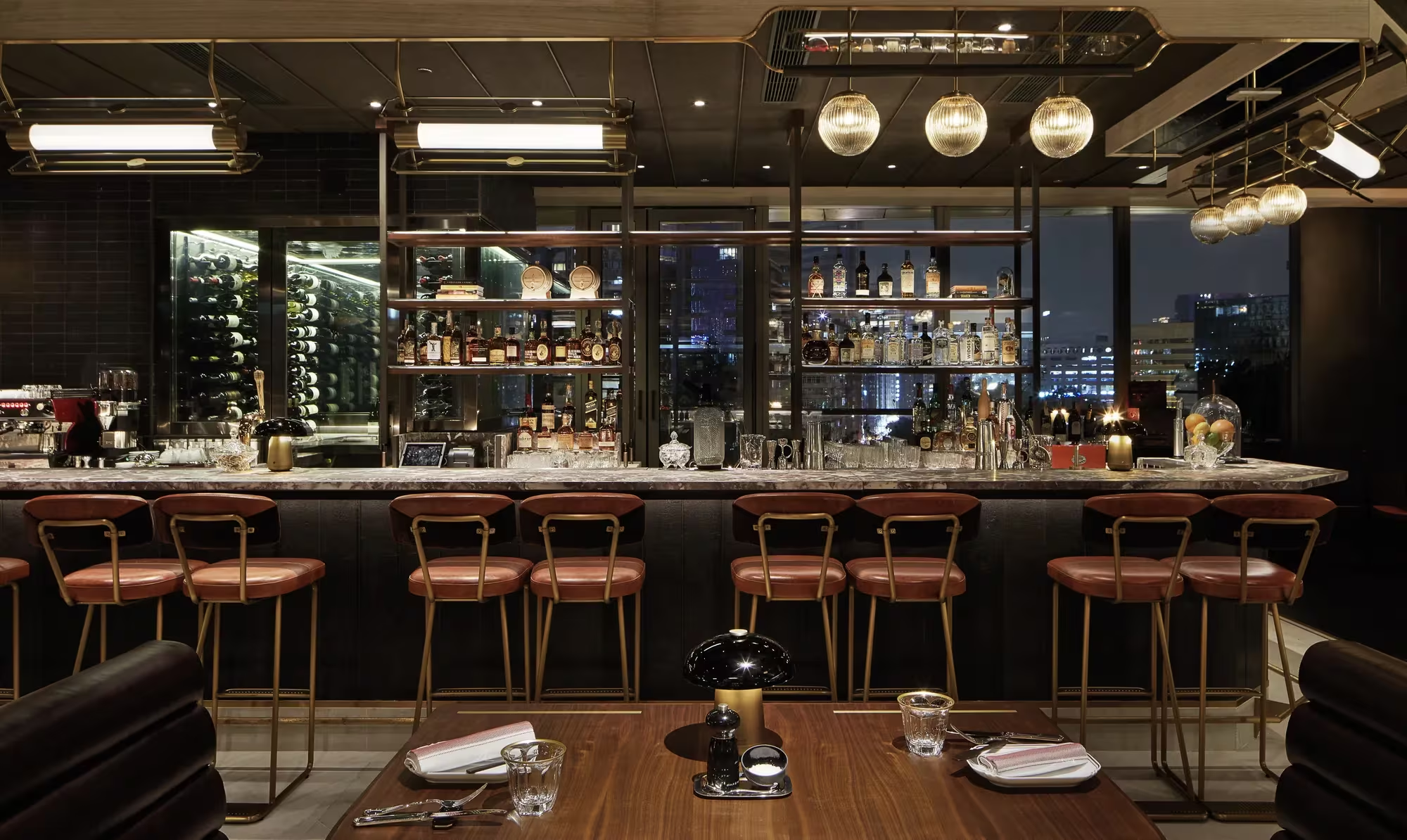
  • A cocktail after dark with the lights below and the sound of the city arriving only as a suggestion.

Who This Hotel Is For

Travellers who came for the city, and want somewhere to think about it from.

It suits people who read buildings — who will happily spend an afternoon between a Victorian granite yard, a temple wedged under a flyover and a fifty-storey tower still wearing bamboo scaffolding. It suits those who look at art seriously, who eat seriously, who would rather understand Cantonese cooking than photograph it, and who consider a walk uphill through Sheung Wan a good use of a morning.

It suits creative people, who tend to work well here for reasons nobody has satisfactorily explained. It suits those travelling on business who have learned that the difference between a hard week and a good one is a quiet room and a bath at four in the afternoon. And it suits anyone who wants wellness without leaving the city — an increasingly reasonable request.

It will disappoint anyone hoping for a tropical beach holiday. There is no sand here, the water is a working harbour, and the summers are humid in a way that has to be experienced to be believed. Come for the city, the art, the food and the light. Come in autumn if you can.

A Note from the Editor

Come in October. Stay four nights. Cross the water at least twice a day.

October to December is the season this city is at its clearest; the light in November is the best of the year. Give one whole day to the islands and one whole evening to nothing at all. And on one morning, wake before the sky has any colour in it, sit at the glass with a cup of tea and watch the harbour come out of the dark — ferries first, then the mountain, then ten thousand windows at once. The room will still be there afterwards. Hong Kong, quietly, is the reason you came.

Ben Trousil, Founding Editor

From the Journal

Continue reading

All stories
  • Serene Asian city hotel interior at dawn with pale stone, warm timber and tall windows over a misty metropolis

    Luxury Hotels AsiaAugust 2026

    Asia's Most Beautiful City Hotels

    Tokyo, Bangkok, Hong Kong, Singapore. A slow survey of the urban houses that manage to be quieter than the cities they stand in.

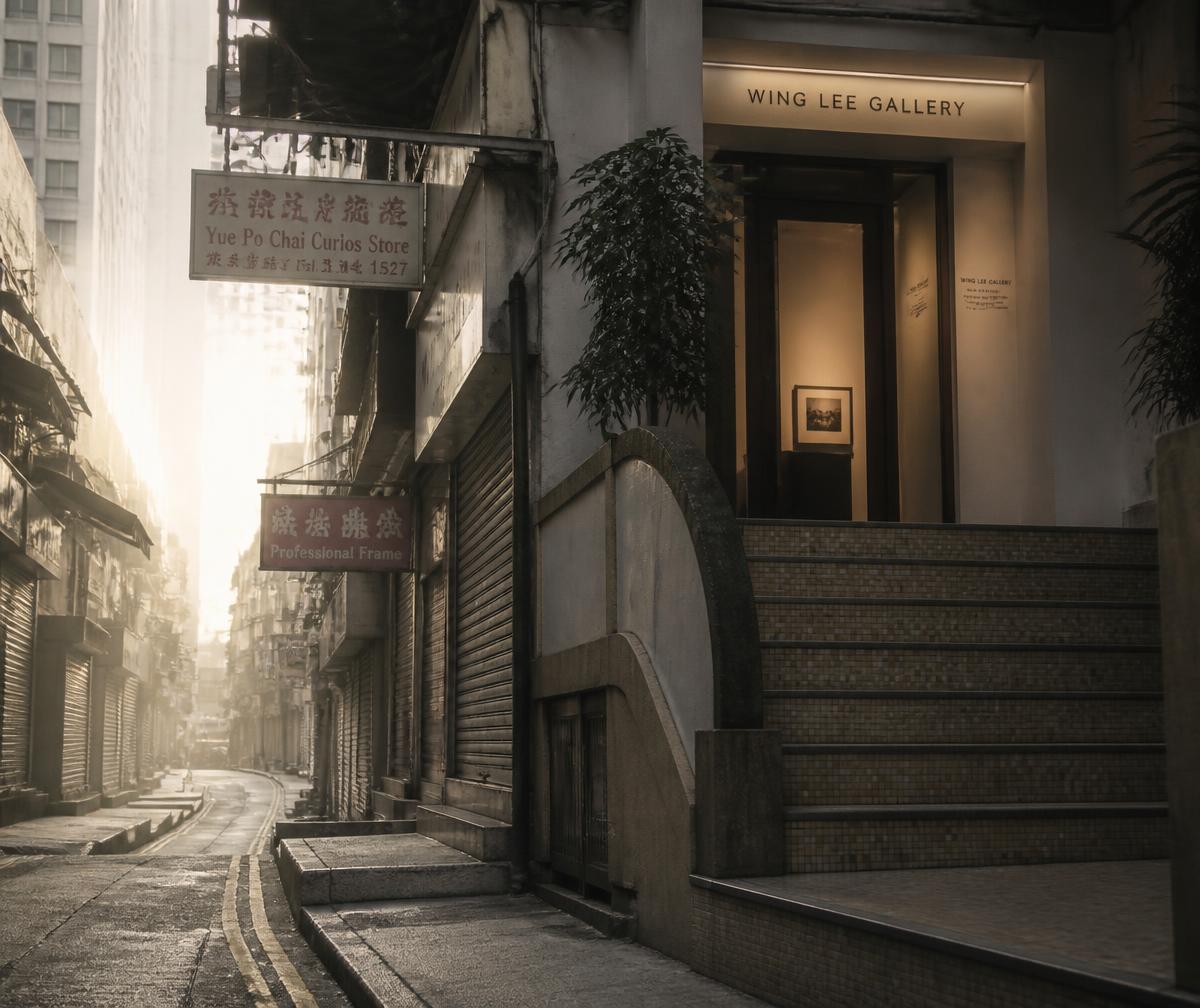
  • Narrow Hong Kong street in early morning light with old shophouse shutters, hanging signs and a small gallery entrance

    City GuideJuly 2026

    48 Hours In Hong Kong

    Two days on both sides of the water: the ferry at dawn, an hour in Sheung Wan, tea nobody advertises, and the last boat back to Kowloon.

  • Victoria Harbour at first light seen from Victoria Peak with layered mist and the skyline emerging from cloud

    LandscapesJune 2026

    Why Victoria Harbour Never Stops Inspiring

    On mist, mountains and a stretch of water that has been the reason for everything here since 1841. A quiet argument for looking longer.

Eine persönliche Anfrage

Let's Curate Your Hong Kong Journey

If the harbour has begun to sound like your next journey, we would be glad to arrange it personally — the city, the water and the long, unhurried hours between them.

A private crossing at first light, a morning in the galleries with someone who knows the collections, dim sum where the trolleys still run, an architect's walk through three centuries, tea poured properly, and the islands on the day the city gets loud — shaped entirely around the way you actually travel.

Warum über Maison Voyage buchen?

  • Persönliche Luxusreiseberatung
  • Sorgfältig kuratierte Hotelempfehlungen
  • Maßgeschneiderte Reisepläne
  • Exklusive Partnervorteile, wo immer verfügbar
  • Persönlicher Ansprechpartner von Anfang bis Ende

Es entsteht keine Buchung und keine Kosten. Wir beginnen einfach ein Gespräch.

Eine Einladung

Die Reise fortsetzen

Ein Brief jeden Monat: ein Ort, den Umweg wert, ein Objekt, das Bewahren wert, eine Seite, langsam zu lesen wert. Nicht mehr.