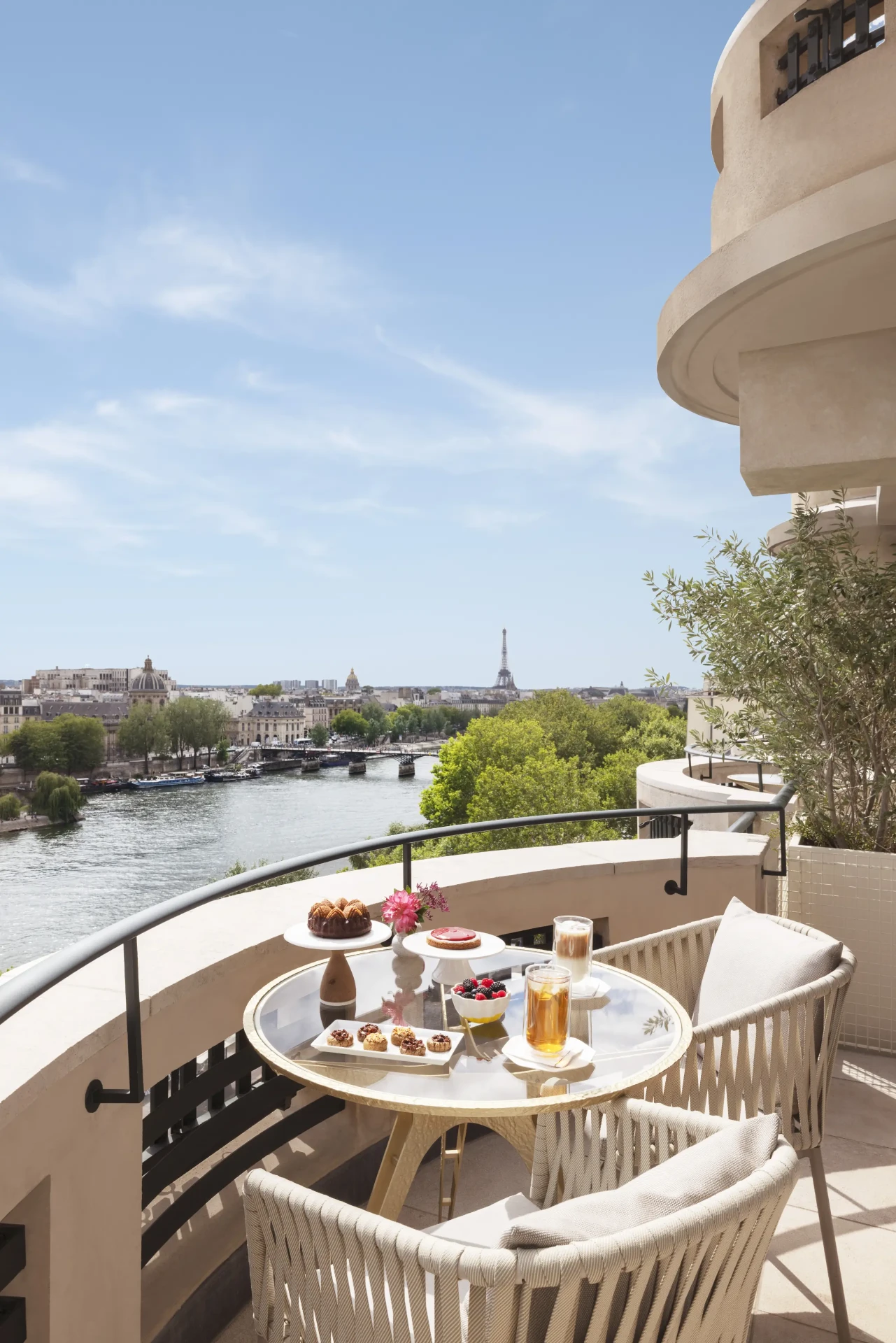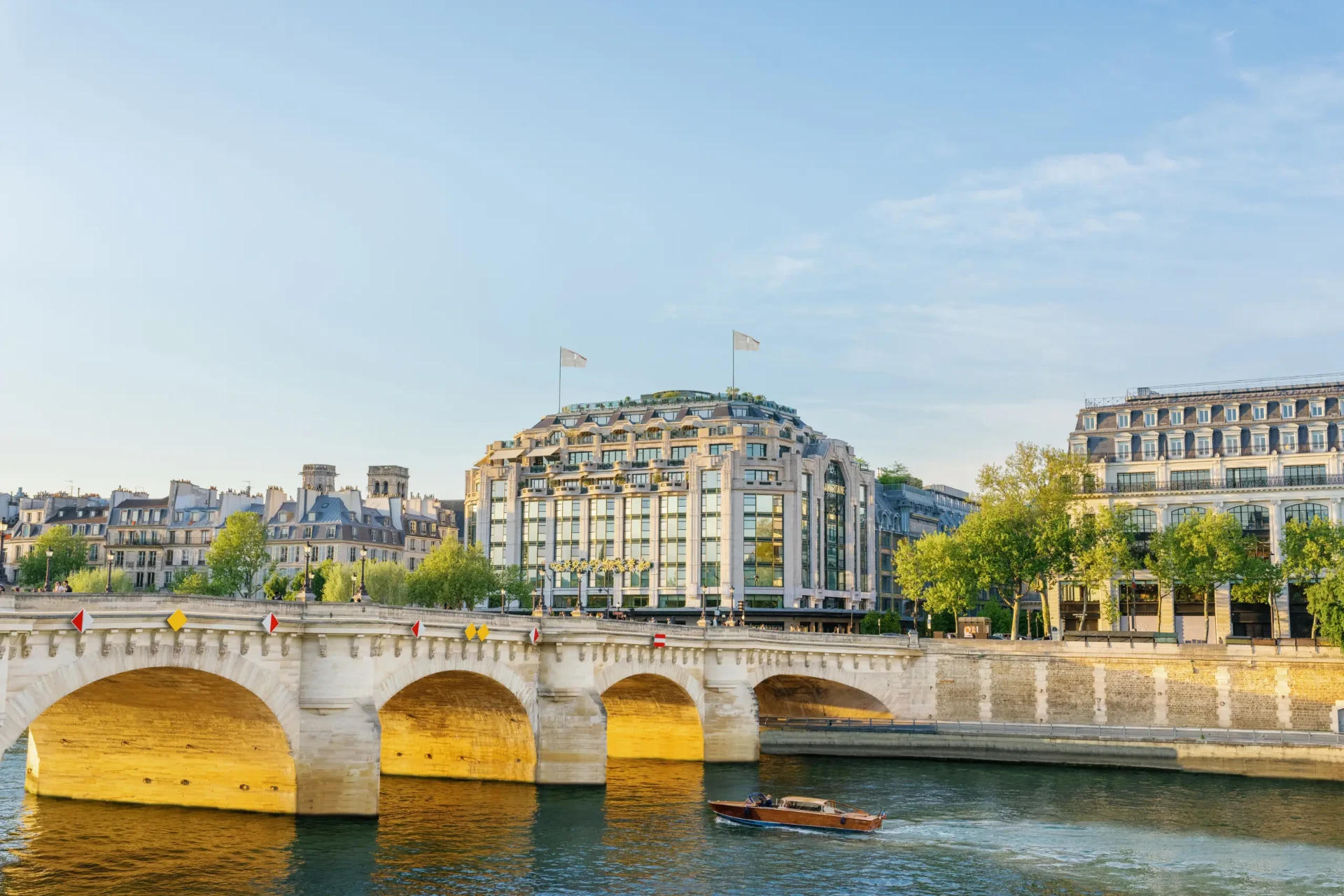
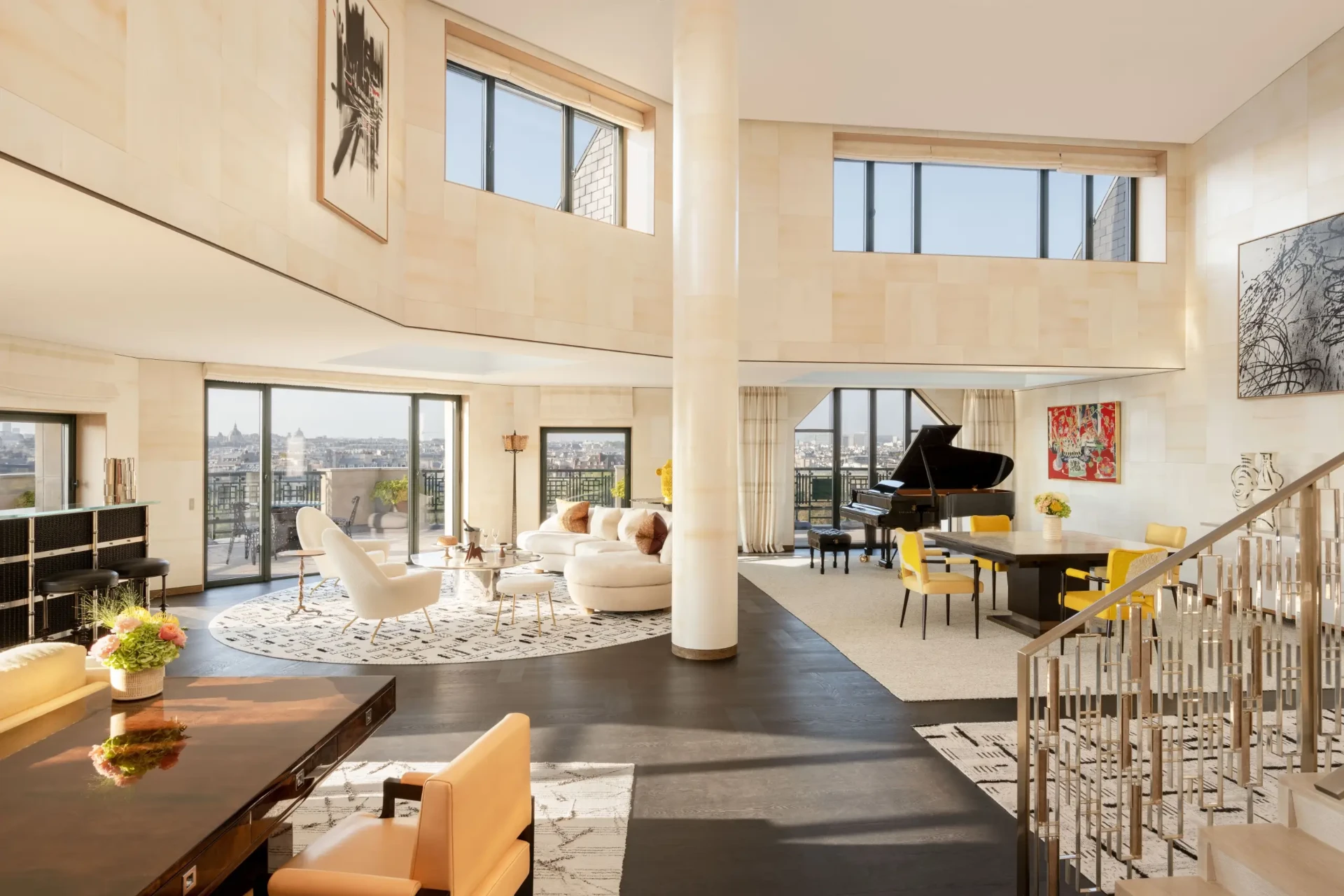
Cheval Blanc Paris limestone façade above the Seine at soft morning light with the Pont Neuf, French balconies and Parisian rooftops beyond

Cheval Blanc — Quai du Louvre, Paris

Paris, At Its Most Refined

Overlooking the Seine in the heart of historic Paris, Cheval Blanc redefines contemporary French hospitality through exceptional craftsmanship, intimate elegance and an uncompromising attention to detail.

An Introduction

A department store closed for sixteen years, and reopened as a place to sleep above the river.

For most of a century, La Samaritaine sold Parisians their saucepans. It was the city's great democratic emporium — iron, glass, gold lettering, a rooftop where shop girls ate lunch above the Pont Neuf — and then, in 2005, it closed, and the quai went quiet in a way that a building of that size has no business doing. What happened next took sixteen years, several hundred craftsmen and an argument or two about glass. When the doors opened again, a small hotel had appeared behind the Art Deco wing on the Quai du Louvre: seventy-two rooms, all of them facing water.

You feel the address before you feel the hotel, which is the correct order. Come down early — six, half past — and the first thing is the smell of butter from a bakery on the rue de l'Arbre-Sec, where a man in a T-shirt is carrying trays with his forearms. The bouquinistes' boxes are still padlocked. A cleaner hoses the pavement outside a café whose chairs are stacked and turned inward, like people asleep on a train. Two joggers on the Pont Neuf, one dog, and the river doing what the river does: carrying the light around slowly, taking the buildings apart on its surface and putting them back together.

It is at that hour that Paris makes its case. Not the Paris of postcards but the narrower one — limestone the colour of unbleached linen, zinc gone soft grey, the Institut's dome catching the sun a full ten minutes before the streets do. You walk to the tip of the Île de la Cité, stand under the willow, and come back with a croissant you eat standing at a counter because that is how it is eaten. By the time the cafés fill and the traffic thickens on the quai, you have already had the best of the day.

Which is really what this house is for. Among the luxury hotels in Paris it is not the loudest, nor the oldest, nor the most gilded; what it does is stand very quietly in the middle of everything and open its windows. The Louvre is a five minute walk. The Marais is fifteen. The Left Bank begins at the end of the bridge. And from a chair by the glass, at almost any hour, Paris is simply there — unhurried, self-possessed, entirely uninterested in whether you are watching.

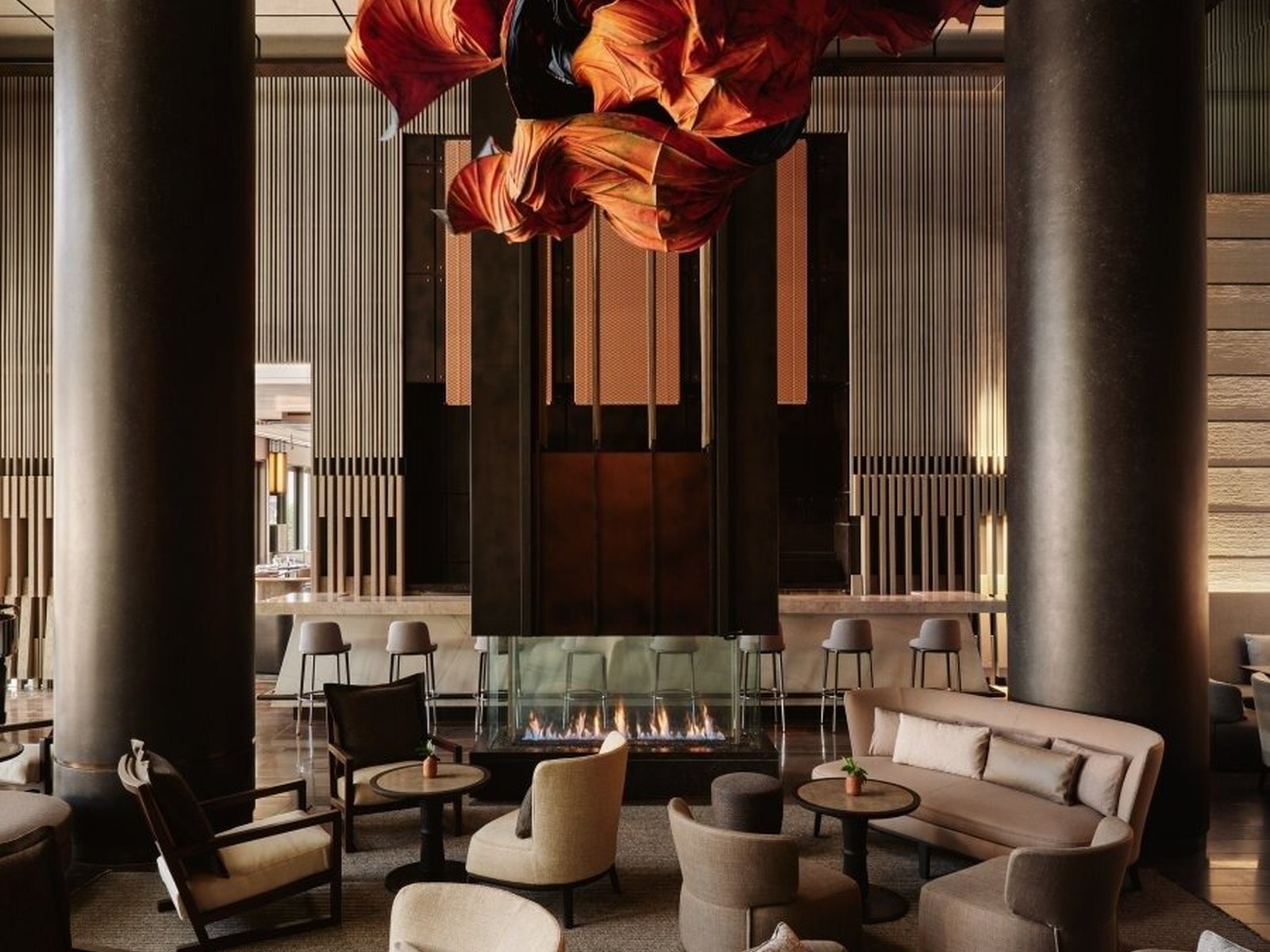
Contemporary French salon with limestone walls, oak panelling, black marble fireplace, a modern artwork and tall windows onto the Seine

Architecture & Design

Luxury that never announces itself, because it does not need to

The bones are Art Deco: 1928, Henri Sauvage, a façade of pale limestone cut with the confidence of a decade that believed in itself. Inside, the language is contemporary and French — oak panelling with the grain running the long way, walls of stone left honest, black marble around a fireplace, floors that were laid by hand and sound like it.

Almost nothing here was ordered from a catalogue. Chairs were made for their corners; textiles came from Lyon and the Pyrenees; a bronze handle was cast, filed and left to age rather than lacquered. Art hangs as it would in a private apartment: good pieces, no labels, and the occasional one you have to walk back to.

What results is a particular Parisian idea of restraint. Nothing shines. Nothing is scaled up to impress. The luxury is in the joinery, in the way a door closes, in the fact that the window is enormous and clean and pointed at the river. It does not feel expensive. It feels inevitable.

Rooms & Suites

Parisian residences, above the river

The difference between them is a matter of light and of which bridge you can see. Ask which way the room faces, and at what hour the sun reaches the floor.

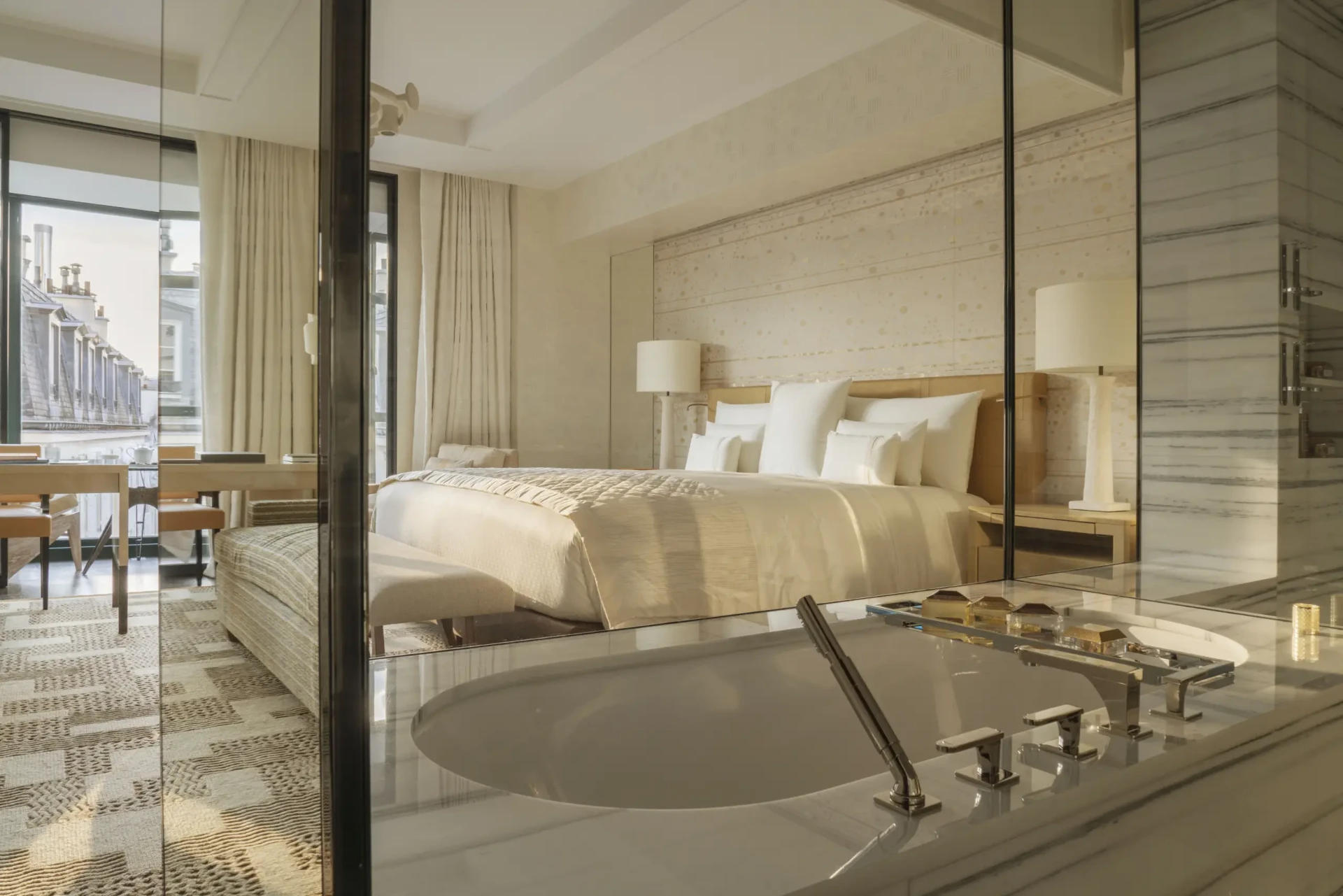
Parisian suite bedroom with floor-to-ceiling windows over the Seine, warm oak panelling, white linen and a sheer curtain lifting in morning light

No. 01

Waking above the Seine

The windows run from the floor to the ceiling, and the first thing that arrives is the river — grey at six, pewter at seven, and by half past eight the colour of weak tea with the light coming off it in pieces. Linen is cool. The oak is warm underfoot. Somewhere below, a delivery van reverses down a quai that has been receiving deliveries since the twelfth century. You lie there and let Paris assemble itself, and it takes about an hour, and it is the best hour of the day.

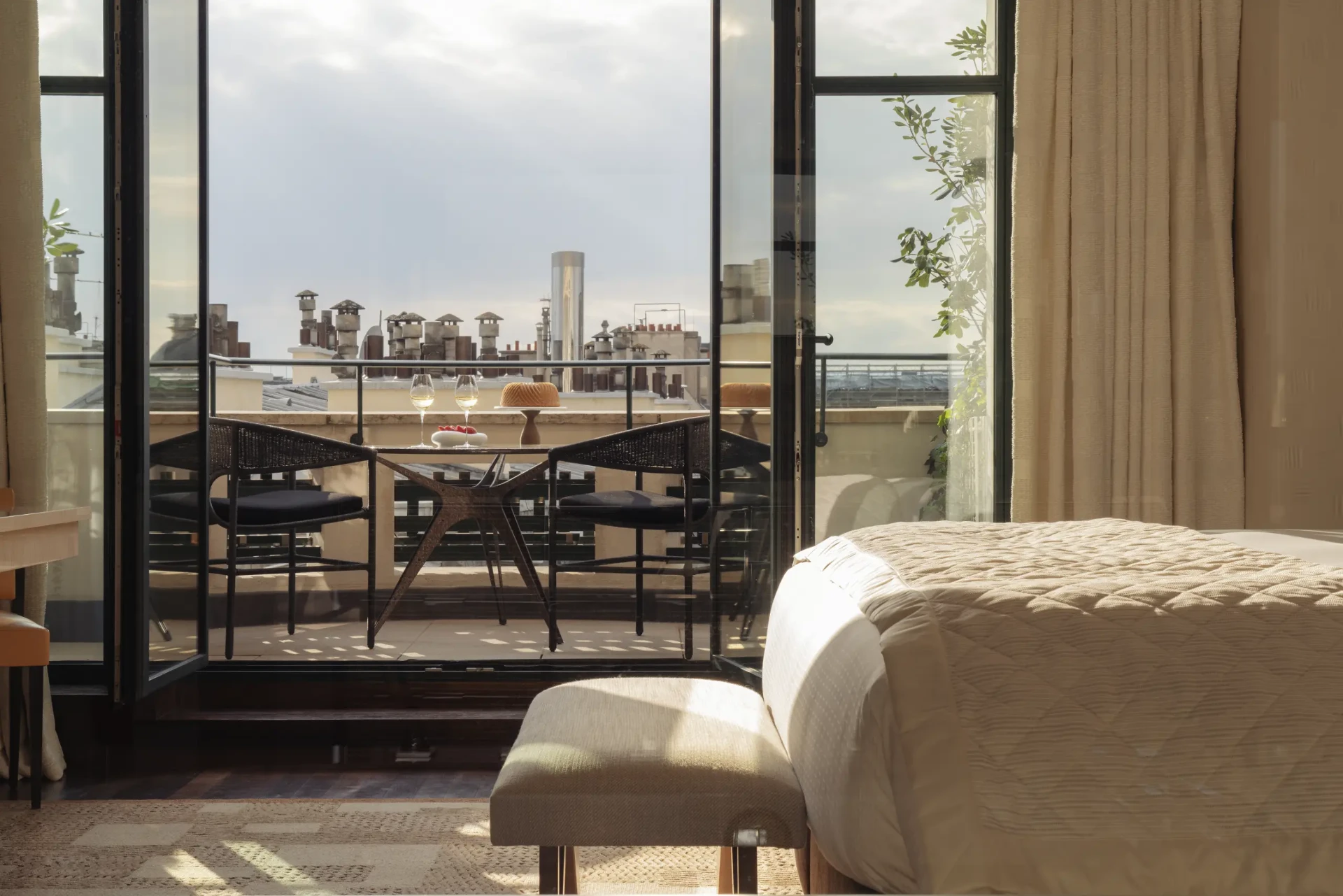
Corner of a Parisian residence with a private terrace, French doors open onto rooftops, marble table and a tailor-made boucle armchair in morning sun

No. 02

A residence rather than a room

French doors give onto a terrace, and the terrace gives onto roofs: zinc, chimney pots, a dome in the distance that is either the Institut or the Panthéon depending on which way you are facing. Inside, everything has been made rather than bought — a marble table cut for this corner, textiles woven in Lyon, a chair covered in a wool that takes the light without shine. You unpack properly. By the second morning you have a preferred chair, and you take your coffee outside in a dressing gown, and nobody in Paris minds.

Dining

In France, a meal is not an amenity. It is the conversation.

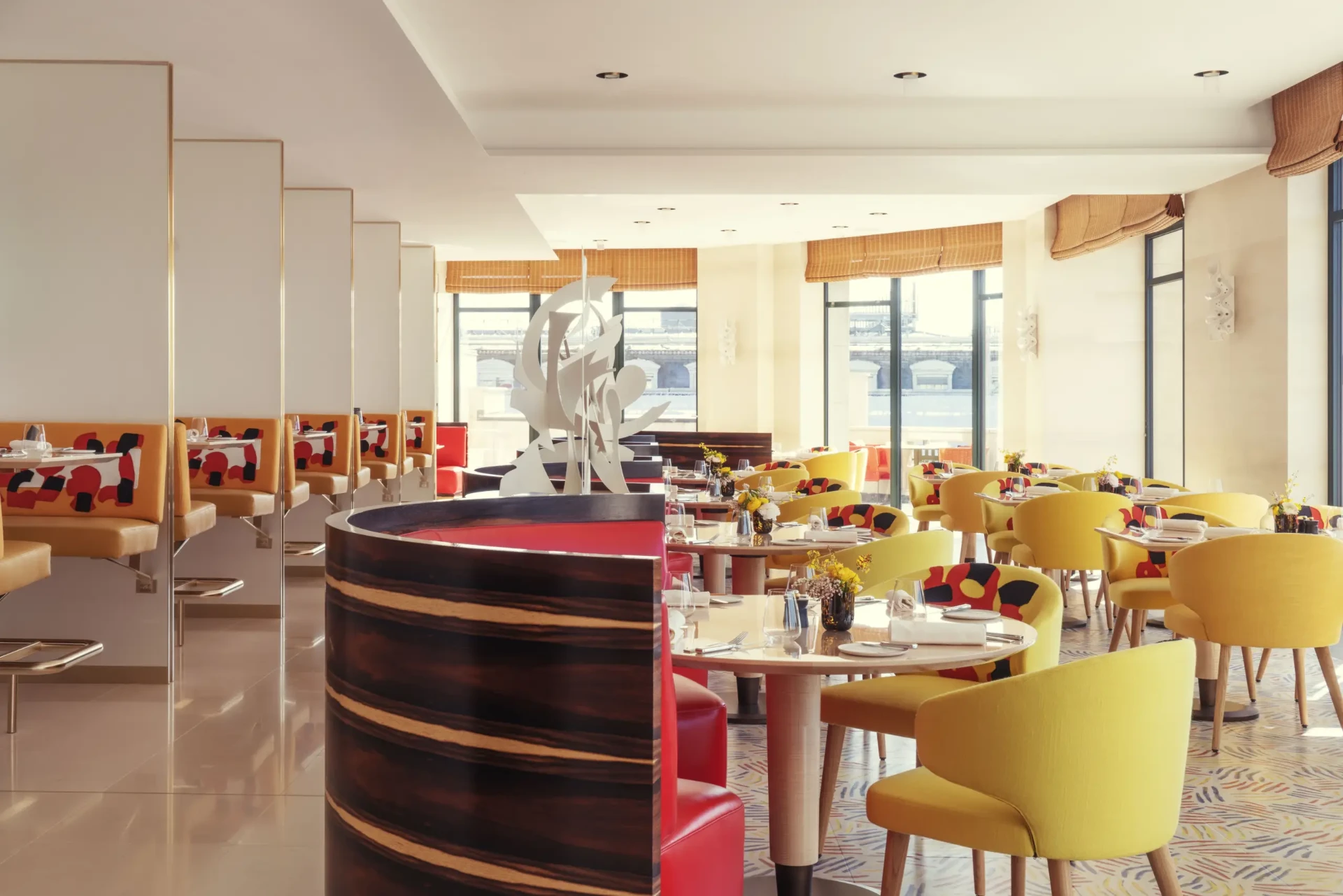
Arnaud Donckele came north from Saint-Tropez and brought his sauces with him. At Plénitude, the cooking is built around them — reductions, infusions, vinegars kept like perfumes — and the room is small enough that you watch the river while you eat. It is the most serious French table on the quai and, oddly, one of the calmest.

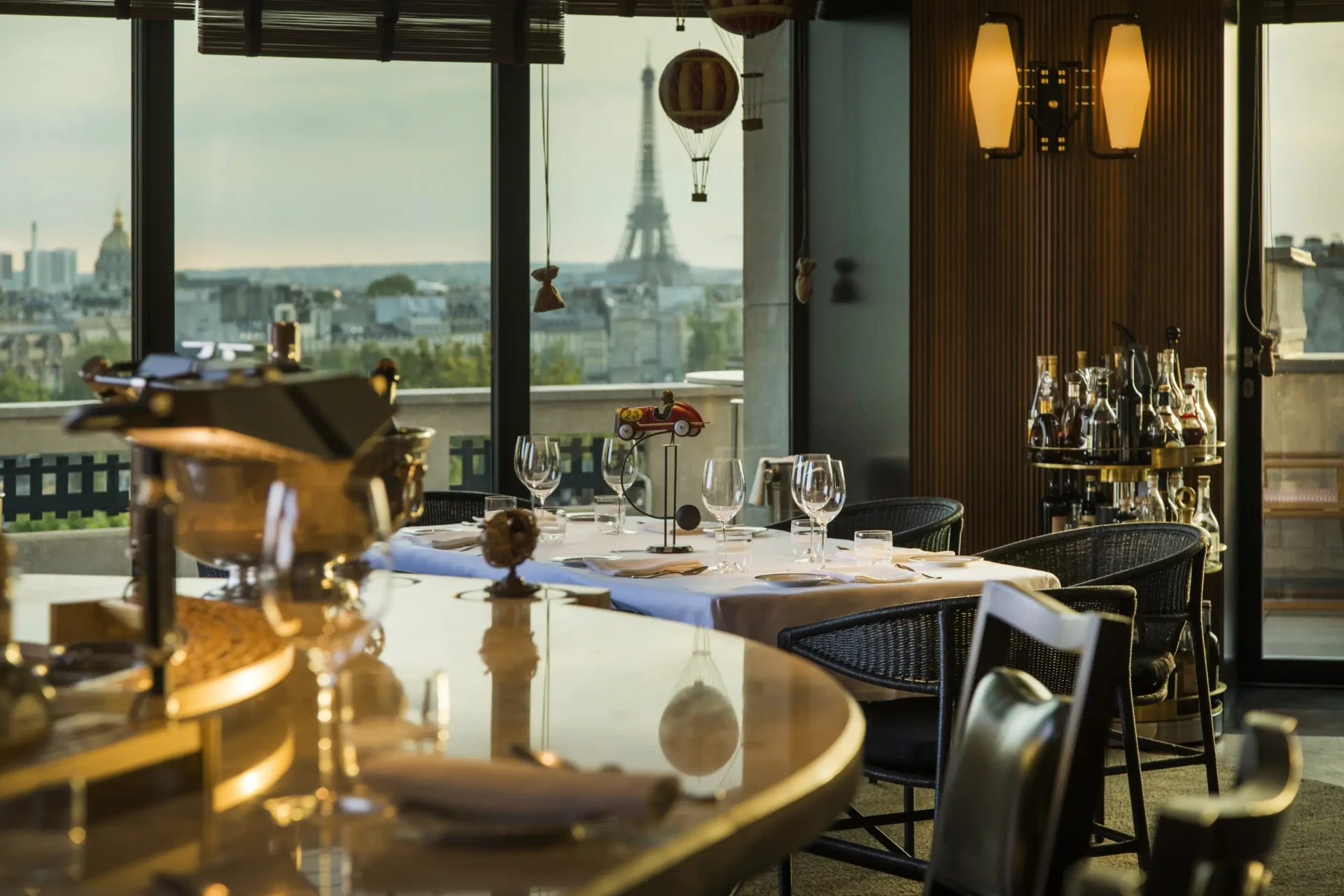
Langosteria arrived from Milan with crustacea and no ceremony; Le Tout-Paris, seven floors up, does brasserie food with the whole city laid out behind the glass, and is the room to book when nobody wants to behave. Le Bar is dark oak and low light, and stays open later than it admits.

Beneath all of it: markets, seasons, wine from growers rather than labels, and pastry made at five in the morning by someone who will be finished before you have woken. Eat the way Paris eats — slowly, at a table, with an opinion — and the city explains itself.

Table set with white linen and a single plate beside tall windows overlooking Parisian rooftops at golden hour
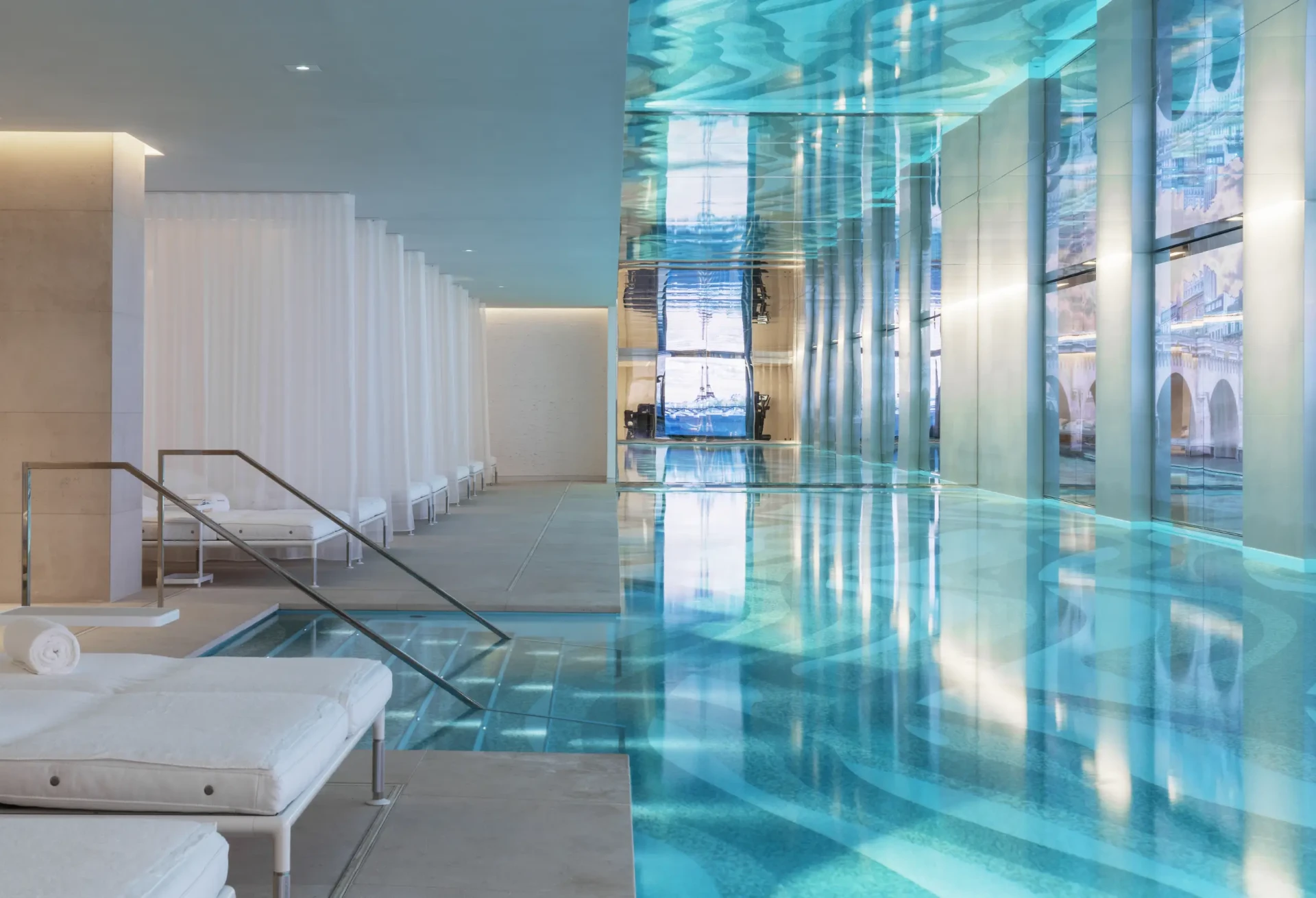
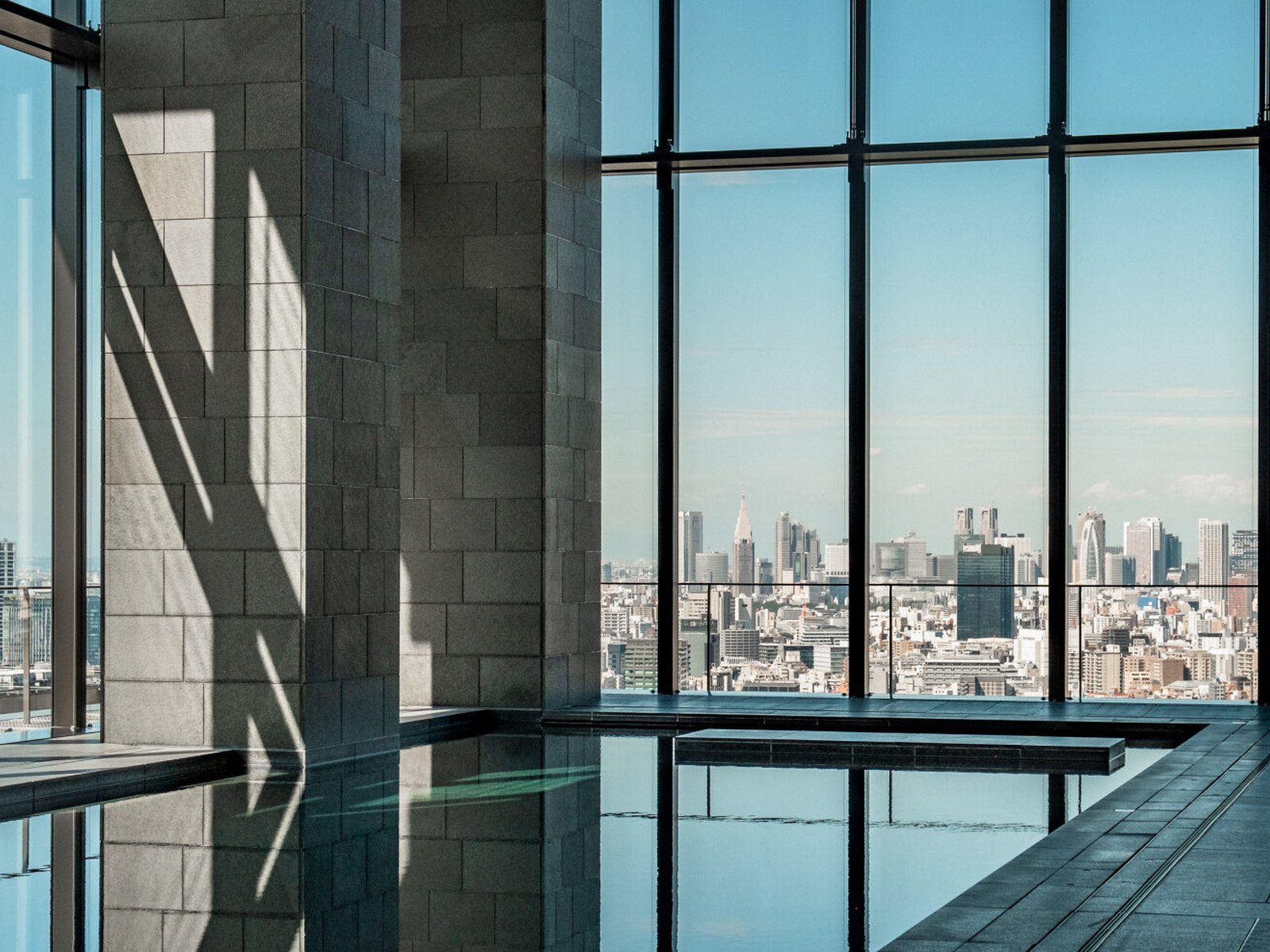
Still indoor swimming pool lined in pale limestone with columns, folded white towels and soft daylight

Wellness

Thirty lengths under limestone, and the city put on hold

The pool sits below the street in a long room of pale stone and columns, lit the way a chapel is lit. Water still as a table at seven in the morning; the sound of the quai entirely gone. You swim, you sit, and Paris waits, which it is perfectly willing to do.

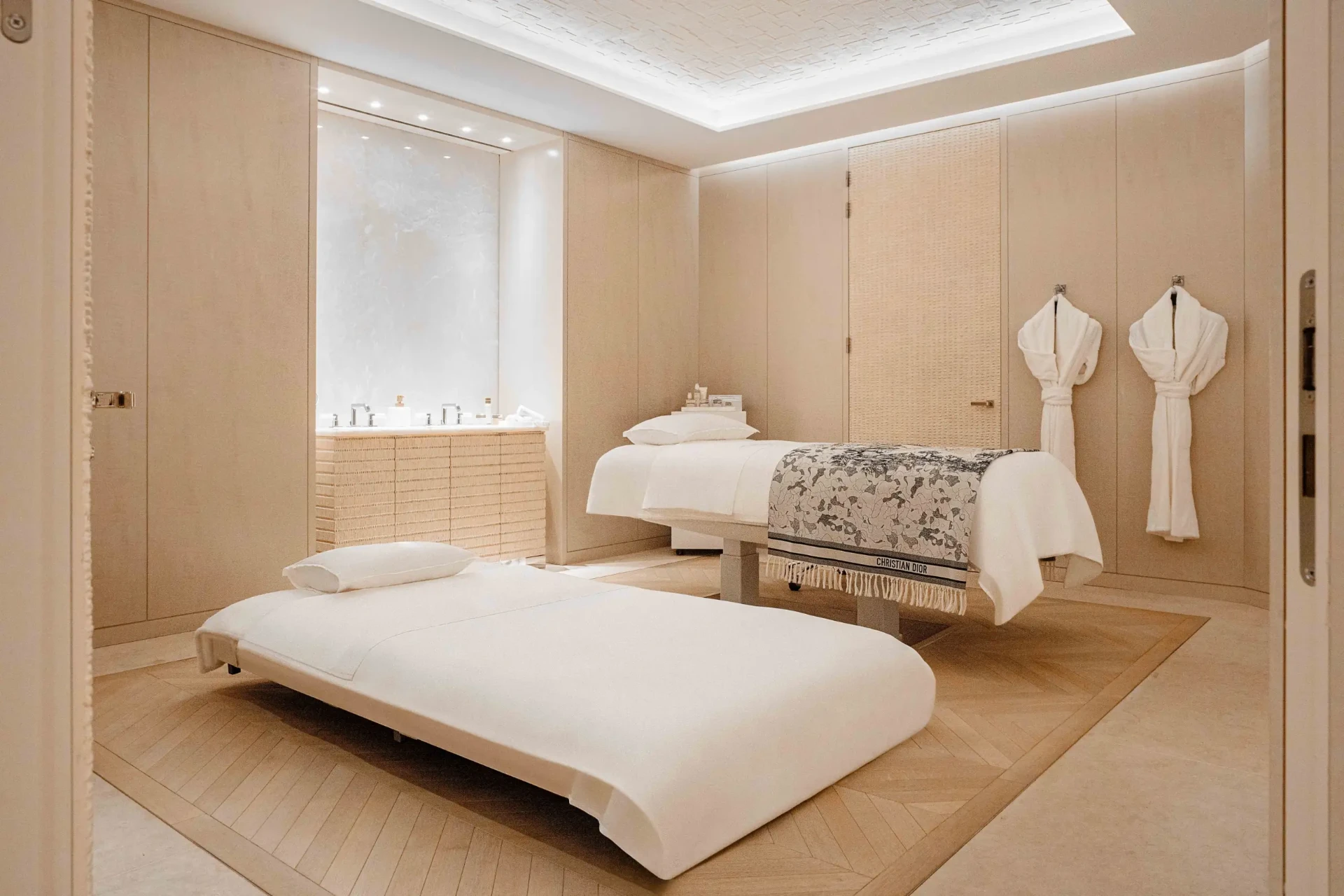
The Dior Spa keeps its treatment suites private and its hands unhurried — flowers, oils, warmth, time, and a facial tradition that this country has been refining since long before anyone called it wellness. Nothing is prescribed. Nothing runs to a schedule you did not choose.

The whole thing rests on a very French conviction: that calm is not a treatment but a condition, and that the point of a beautiful room is to slow the person inside it. You leave rested, having completed no programme whatsoever.

Signature Experiences

Seven ways into the city

Most of them are best before nine in the morning or after seven in the evening, when Paris belongs to the people who live in it.

  • No. 01

    The Louvre before it opens

    Eight in the morning, the parquet still being swept, and the Grande Galerie entirely yours for an hour with a curator who would rather talk about one painting than thirty. You will remember the silence longer than the pictures.

  • No. 02

    The Seine at the end of the day

    A small varnished boat from a private mooring, no commentary, one bottle of something cold. The bridges go gold, then blue, then the lamps come on along the quais and the city stops performing.

  • No. 03

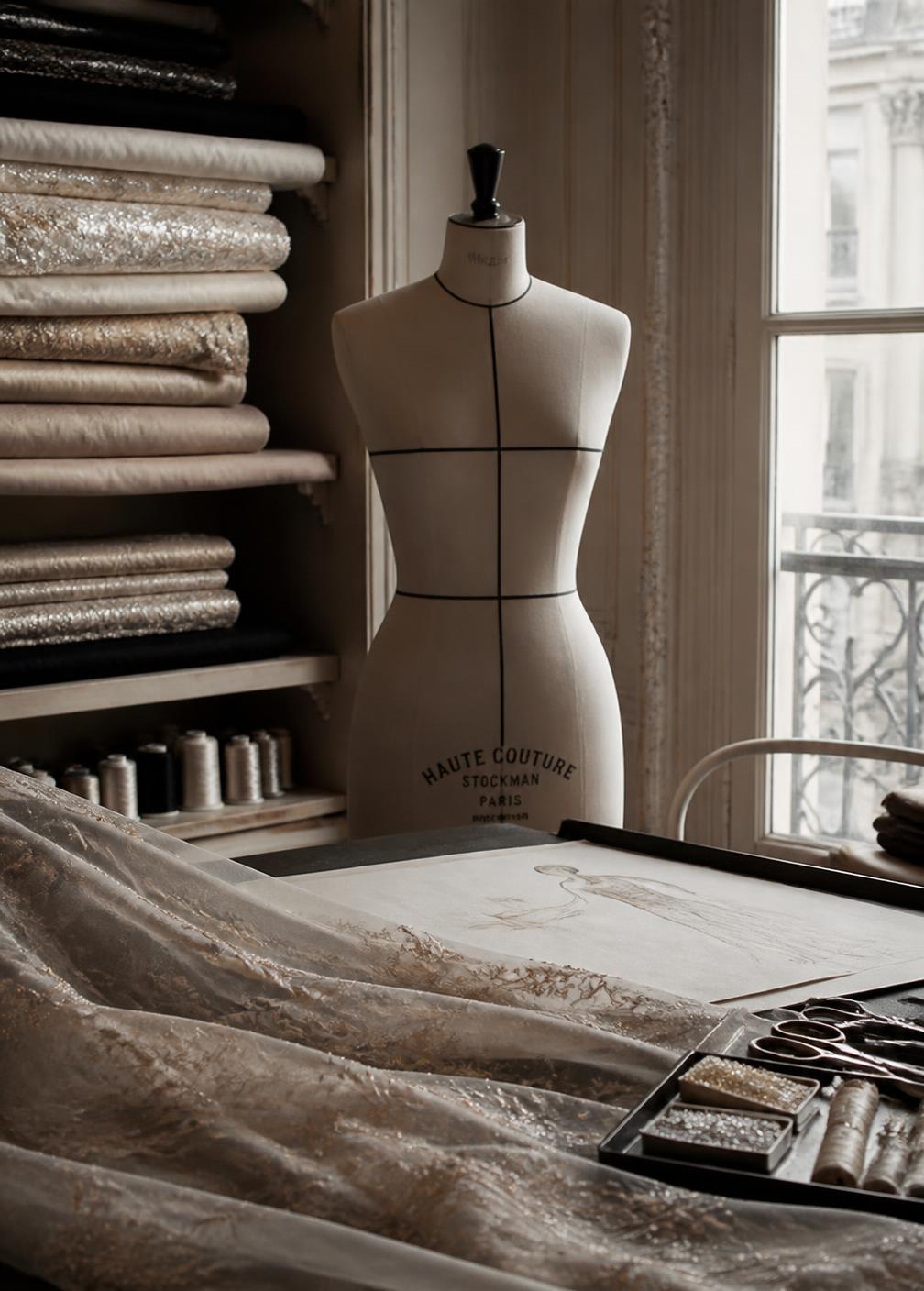
    Inside a couture atelier

    A morning among bolts of silk and thread the colour of dust, watching hands do in six hours what a machine cannot do at all. Few doors in Paris are harder to open, and none are more worth opening.

  • No. 04

    A perfume made for you

    An afternoon with a nose in a small studio, learning the difference between iris and orris, and leaving with a bottle nobody else will ever wear. The scent will bring back the street outside for years.

  • No. 05

    Champagne, properly explained

    A tasting with a sommelier who talks about chalk, cold cellars and the growers nobody exports. Six glasses, no ceremony, and an entirely different idea of what the wine is for.

  • No. 06

    Île de la Cité on foot, early

    Across the Pont Neuf at seven, along the flower market, around the back of Notre-Dame while the stone is still cold. Coffee standing at a zinc counter. Back before breakfast has finished.

  • No. 07

    Avenue Montaigne, unhurried

    A private appointment where the shop is quiet and someone remembers what you wore last time. Fitting rooms with daylight, a chair for whoever came with you, and nothing carried back by hand.

Maison Voyage Loves

Six small things

  • Watching the Seine wake up: barges, one rower, the light changing colour twice before anyone else is on the bridge.
  • The first espresso of the day taken standing, with the Pont Neuf filling the window.
  • Sunset laid flat across the river, when the limestone goes apricot and the water holds it for a quarter of an hour.
  • Le Marais before the crowds, when the courtyard doors are open and the streets smell of water and stone.
  • A late walk along the Left Bank with no destination, past shuttered bookshops and lit first-floor windows.
  • The smell of pastry drifting up a narrow street at six in the morning, which is reason enough to be awake.

Who This House Is For

People who came for the city and want to be in the middle of it, with somewhere very quiet to return to.

It suits those who travel for architecture, art and the table: people who will spend two hours in one wing of the Louvre, walk to the d'Orsay for the light at five, and then argue amiably about dinner. Design lovers find their week here — the joinery, the textiles, the ateliers a taxi ride away. So do those who come to Paris for fashion, and appreciate a fitting room with daylight in it.

Couples do particularly well. A city break here is short, dense and romantic in the unforced way: a bridge at midnight, a small restaurant found by accident, a morning that begins with a swim and ends with a market. Anyone who values calm after a full day, and rooms that face water, will understand it immediately.

It is not, honestly, for everyone. Travellers who want a resort — a pool to lie beside for six days, a beach, a schedule of nothing — will find this the opposite of a holiday; Paris will keep asking them to come out, and they should go somewhere that does not. And if you prefer a hotel set back from the city in gardens and silence, the quai is a working riverside and the Louvre is around the corner. For everyone else, that is precisely the appeal.

Nearby Discoveries

What we would do with three days

Not a list to complete. Six things, unhurried, with long gaps between them for coffee, walking and sitting down again.

  • No. 01

    The Louvre, one wing only

    Two hours, never four. Choose the Italian drawings or the Objets d'Art and leave the rest for another year. Enter through the Porte des Lions and walk out along the Tuileries.

  • No. 02

    Musée d'Orsay, late afternoon

    A railway station full of light and pastels. Go up to the clock face at five, look through the glass at the Right Bank, and understand why the Impressionists never left.

  • No. 03

    Île Saint-Louis before breakfast

    One street, a handful of shops, a bridge with a busker who is often very good. The most village-like place in Paris, and empty until about ten.

  • No. 04

    Le Marais, early

    The Place des Vosges under the arcades, a bookshop that opens at eleven, courtyards behind carriage doors left ajar. Go on a Sunday morning before the queues form for falafel.

  • No. 05

    Saint-Germain and the Palais Royal

    Cross the river for the old cafés and the small galleries; cross back for the arcades of the Palais Royal, where the gardens are gravel and lime trees and almost nobody is in a hurry.

  • No. 06

    Galerie Perrotin and the independent shelves

    Contemporary work in the Marais, then an afternoon among the second-hand booksellers of the sixth. Buy something in French that you cannot yet read. You will, eventually.

A Note from the Editor

Come in late September, and ask for a room facing the Pont Neuf.

Set the alarm once, for six, and walk to the tip of the Île de la Cité before the city has decided what kind of day it is going to be. Everything else — the museums, the tables, the shopping, the long lunch that ruins the afternoon — will arrange itself around that hour. Paris is not a place you see. It is a place you keep returning to at the right time of day.

From the Journal

Written in the city

All stories
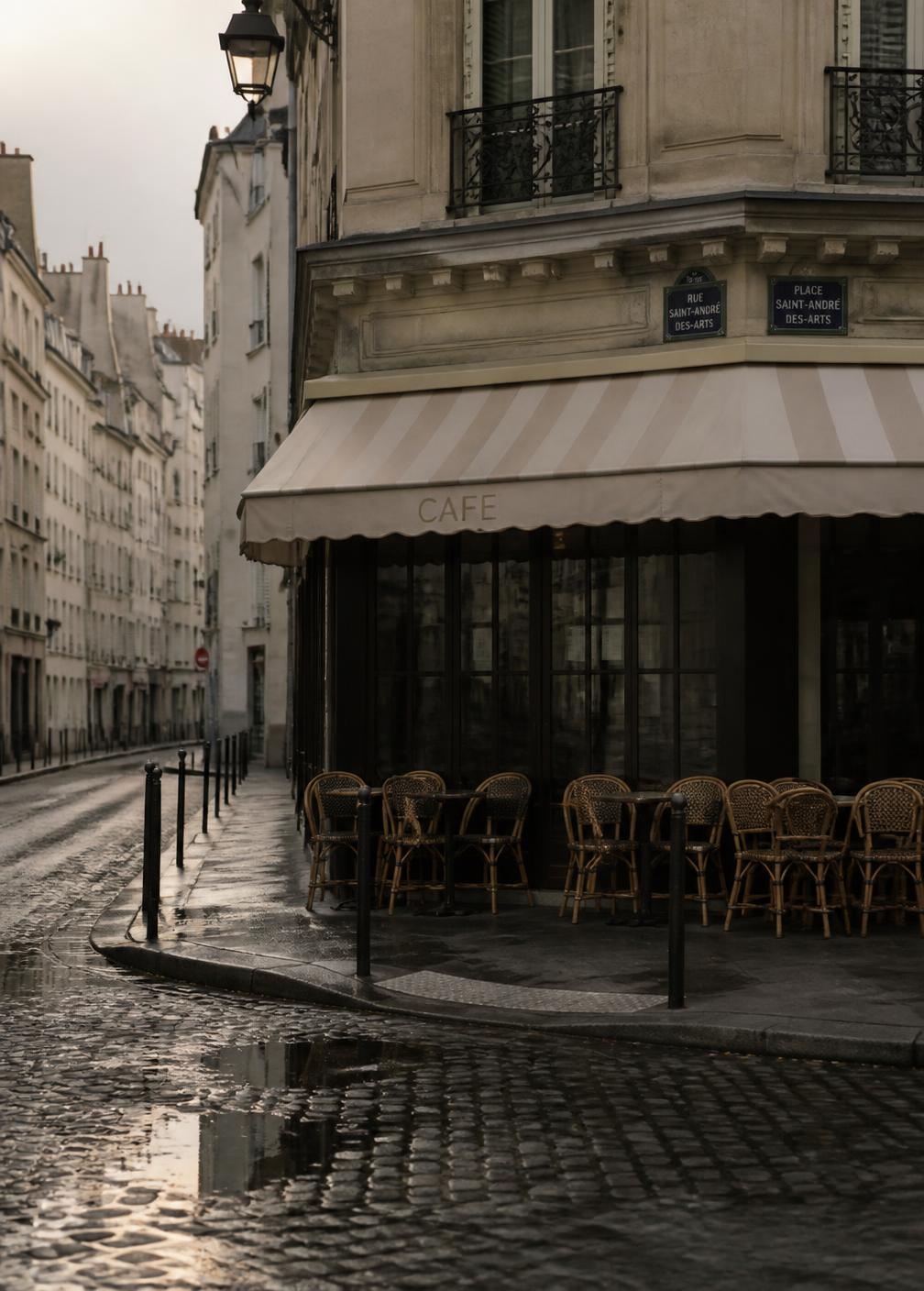
  • Empty Parisian street corner at early morning with wet cobblestones and a closed café terrace of rattan chairs

    Paris Through an Editorial Lens

    TravelJune 2026

    The city has two timetables. Learn the earlier one and Paris hands back the version everyone assumes has been photographed away.

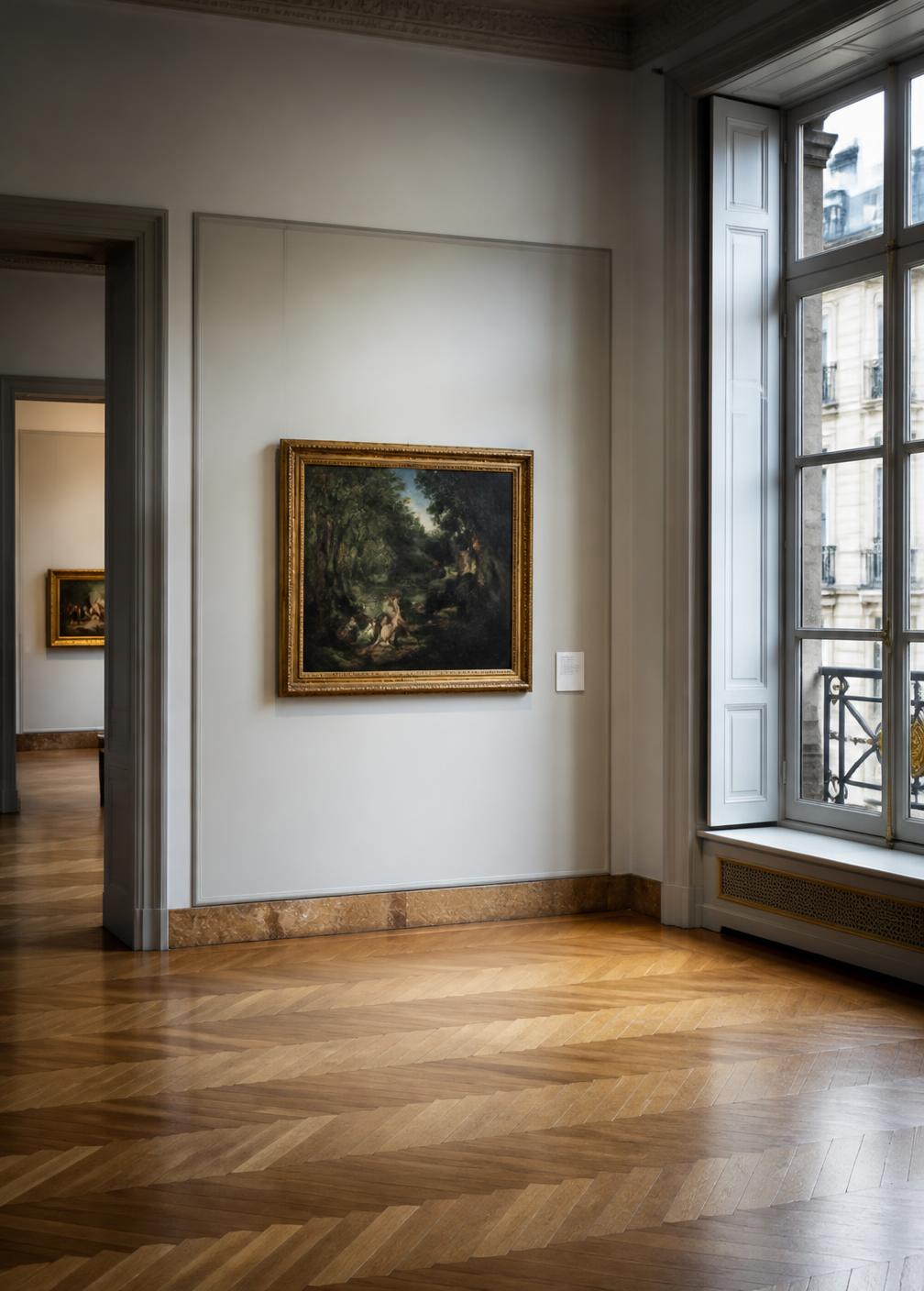
  • Quiet gallery room in a Paris museum with herringbone parquet, a single framed painting and daylight from tall windows

    The Art of French Hospitality

    CraftMay 2026

    Why the finest rooms in France are governed less by service than by attention — and what a concierge learns in twenty years on the same street.

  • Haute couture atelier in Paris with bolts of silk, thread spools and a tailor's dummy in soft window light

    Why Cheval Blanc Redefined Parisian Luxury

    HotelsApril 2026

    Silk, limestone and a department store turned inside out: how one address changed what a luxury hotel in Paris is allowed to feel like.

A Personal Enquiry

Let's Curate Your Paris Journey

If Paris has begun to occupy your thinking, we would be glad to plan it properly — museum hours before the doors open, tables that are difficult in the ordinary way, and rooms chosen for their view of the river rather than their category.

Ateliers that rarely receive visitors, a private appointment on Avenue Montaigne, an evening on the water, and stays across France arranged personally and at your pace.

Why book through Maison Voyage?

  • Personal luxury travel advice
  • Carefully curated hotel recommendations
  • Tailor-made itineraries
  • Exclusive partner benefits whenever available
  • Direct personal contact from start to finish

No booking is made and nothing is charged. We simply begin a conversation.

An Invitation

Continue the Journey

One letter each month: a place worth the detour, an object worth keeping, a page worth reading slowly. Nothing more.