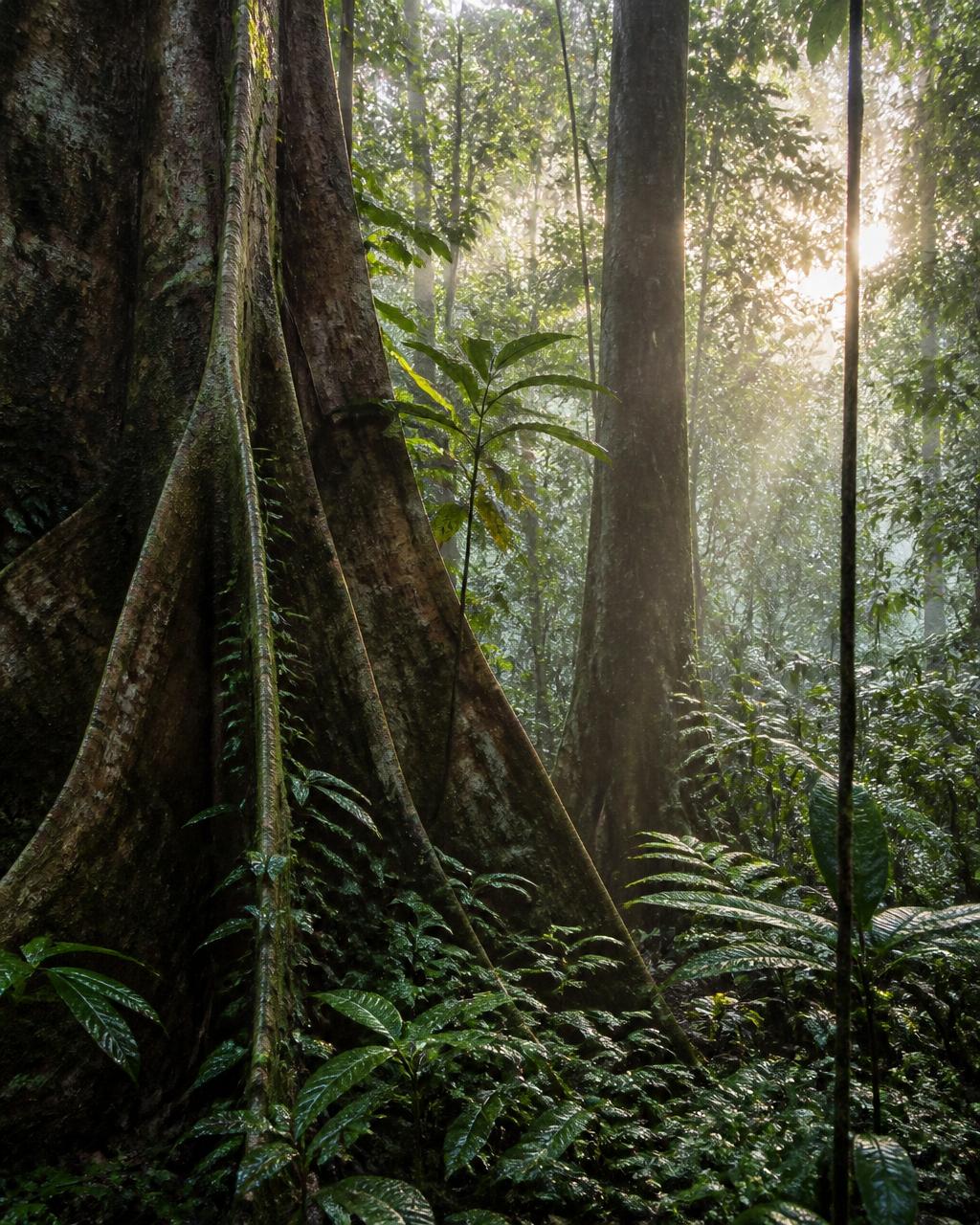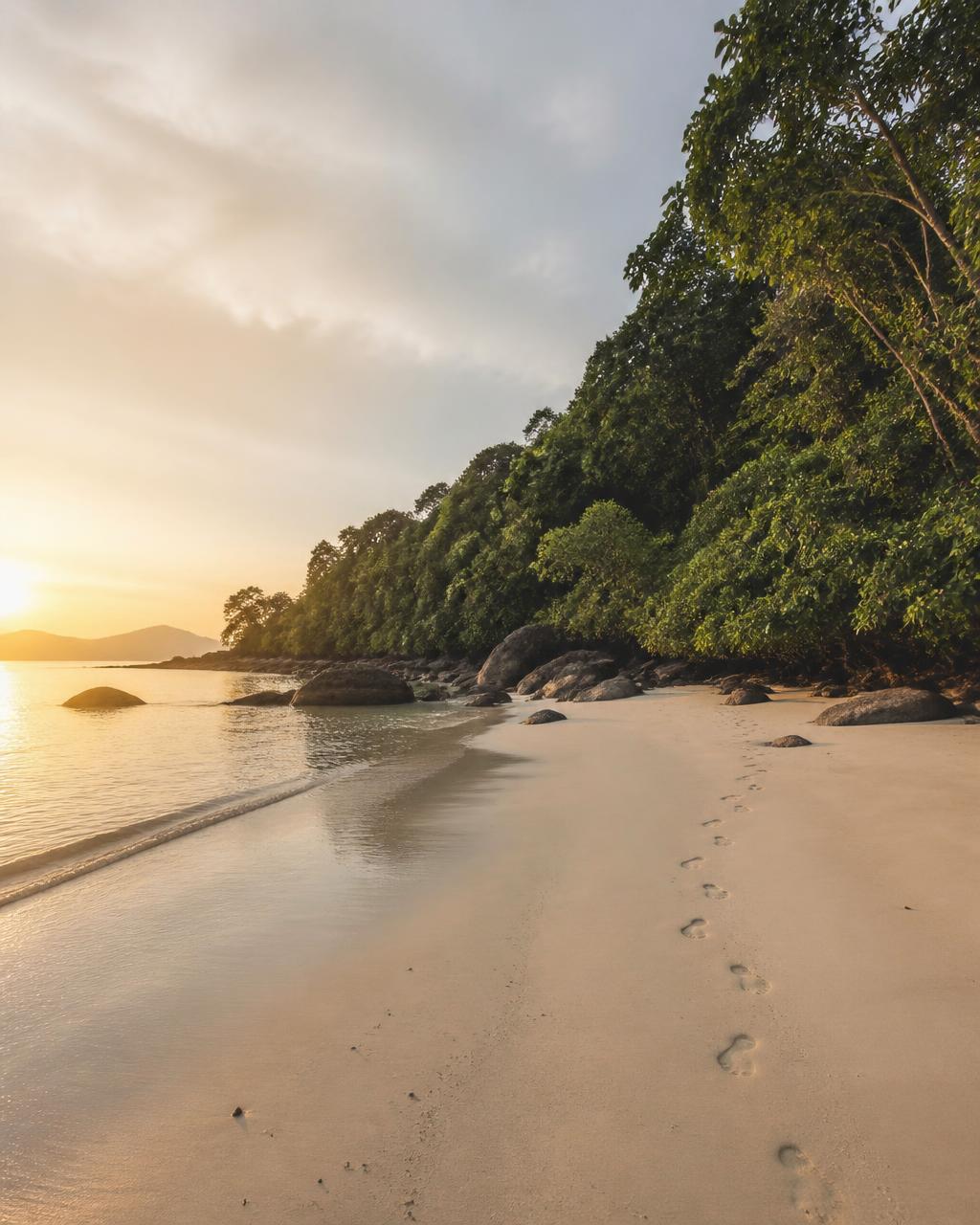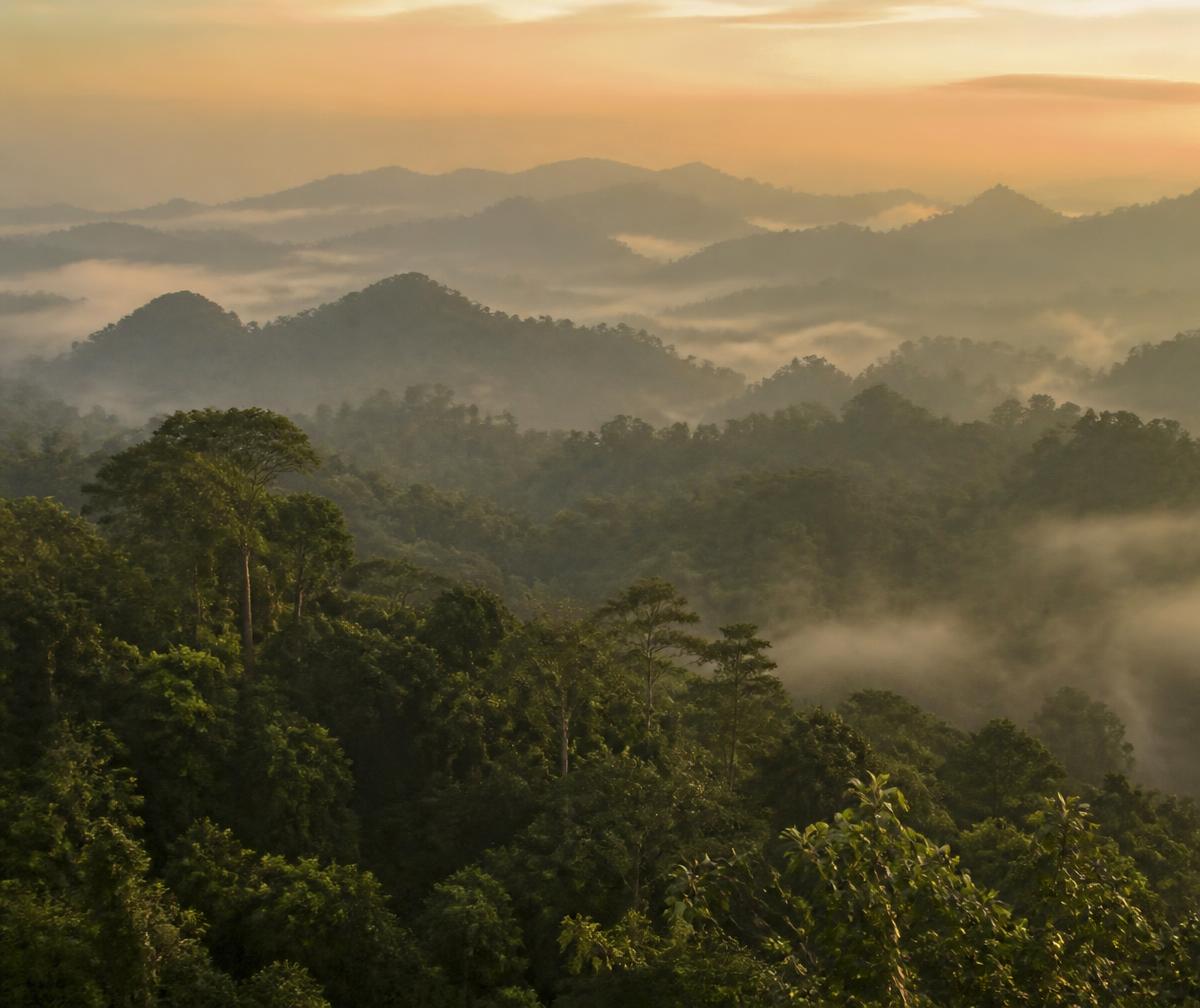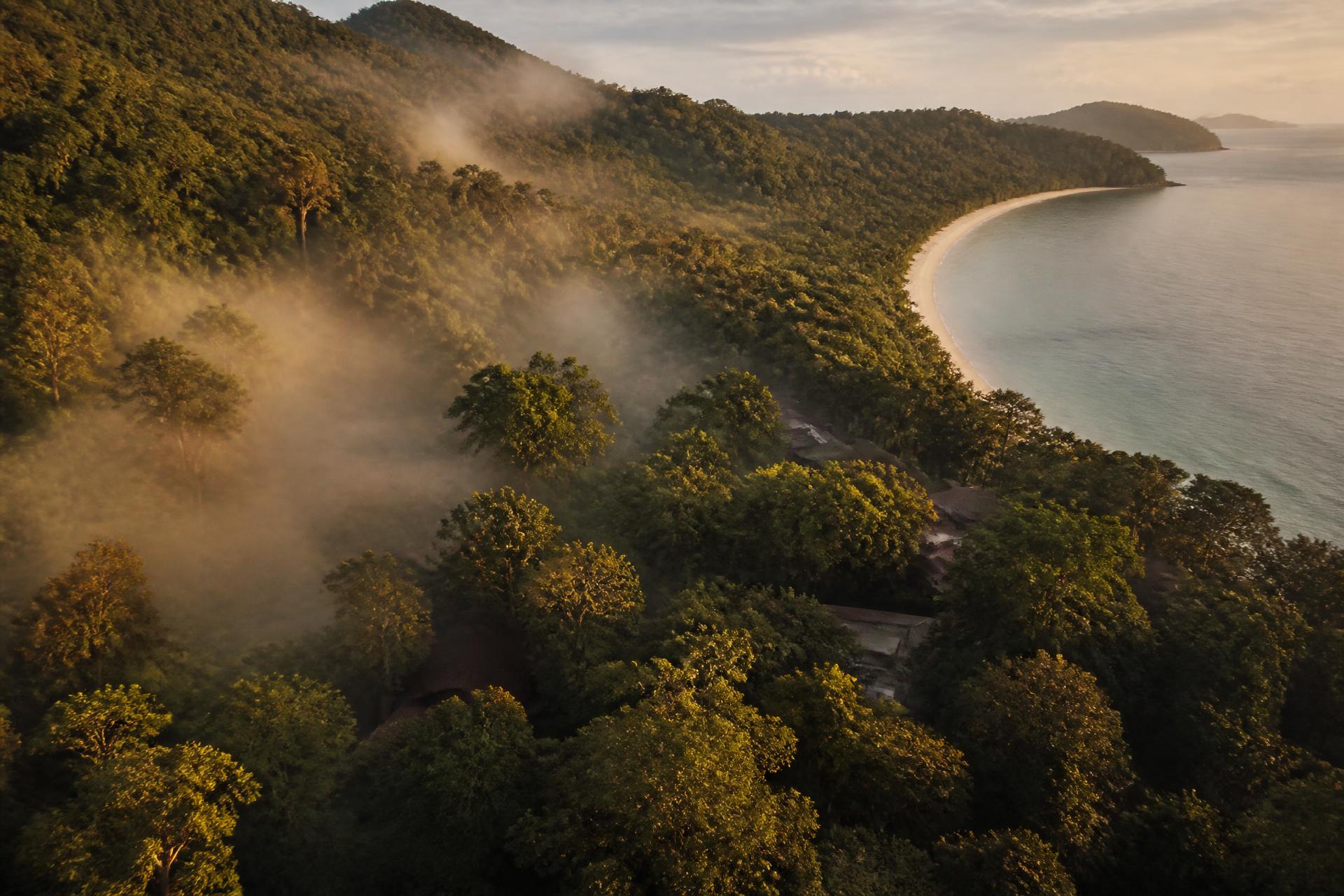
Ancient rainforest canopy in morning mist on Langkawi's north-west coast with the white sand of Datai Bay and the emerald Andaman Sea at sunrise

The Datai — Datai Bay, Langkawi, Malaysia

Where The Rainforest Meets The Sea

Hidden within a 10-million-year-old rainforest on Langkawi's north-west coast, The Datai is a place where extraordinary architecture disappears into nature, allowing one of the world's oldest ecosystems to become the true luxury.

An Introduction

A forest that was already ancient when the Himalaya were still deciding what to be.

The air meets you before anything else. You step out onto the tarmac at Langkawi and it arrives all at once — warm, heavy, entirely unlike the air you left, carrying salt and something green and faintly sweet that you will spend the rest of the week trying to name. It has rained recently. It has almost always rained recently. The island smells of wet leaves and warm stone, and within a minute your shoulders have dropped without asking permission.

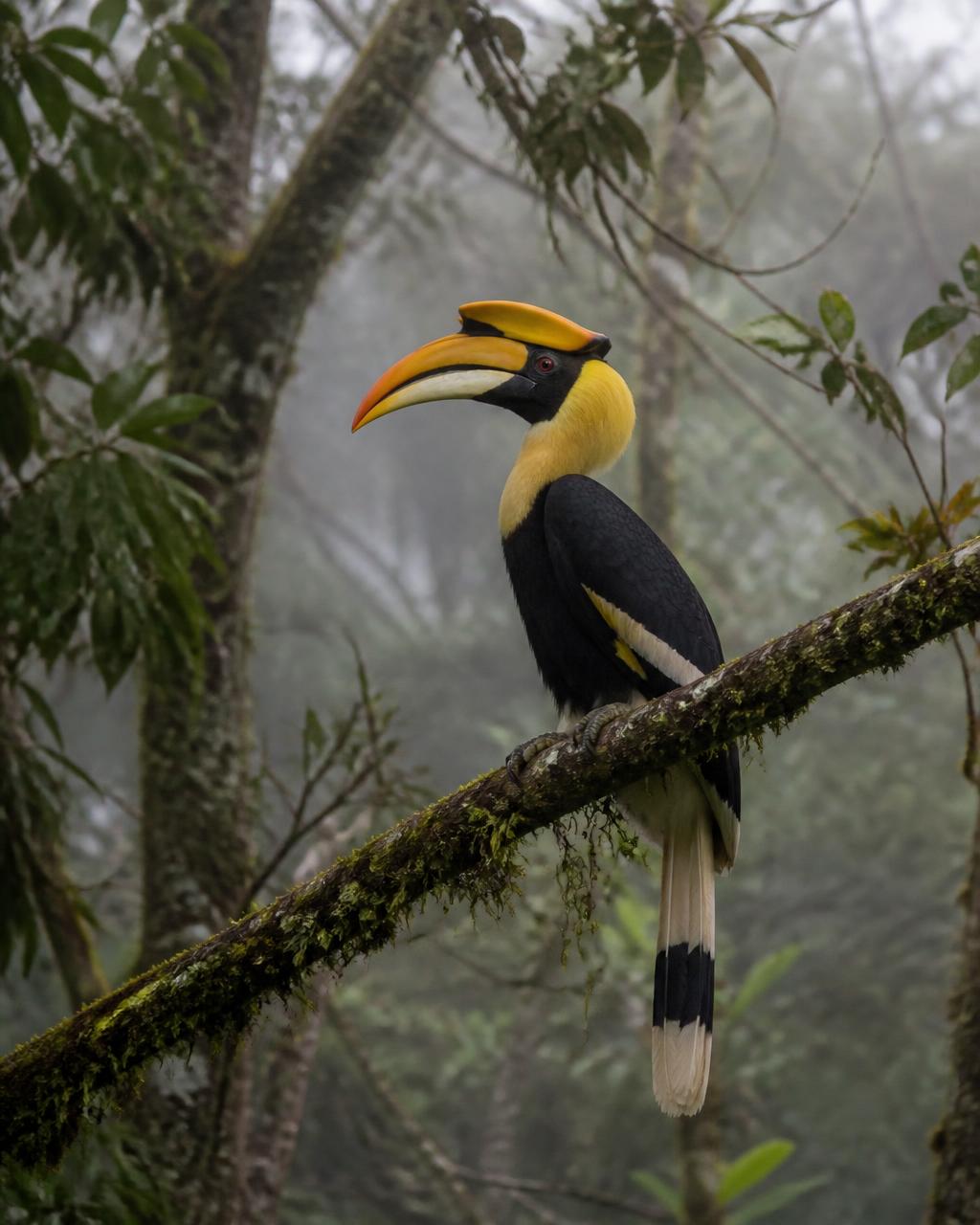
Then the road north, which narrows and darkens and begins to climb. Rubber plantations first, in their disciplined rows, then paddy, then a village or two, and then the forest closes in properly and the light turns green. Vines the thickness of an arm. Trunks that go up and up before they bother with branches. Somewhere above, a beating of wings so heavy it sounds mechanical — hornbills, crossing the valley, doing what they have done here for longer than there have been people to look up.

This forest is around ten million years old. It survived the last ice age intact, which most of the world's rainforest did not, and it has simply carried on compounding: more species, more layers, more relationships between things than anyone has finished counting. You are not, at this point, thinking about a hotel. You are thinking about how little of this you understand.

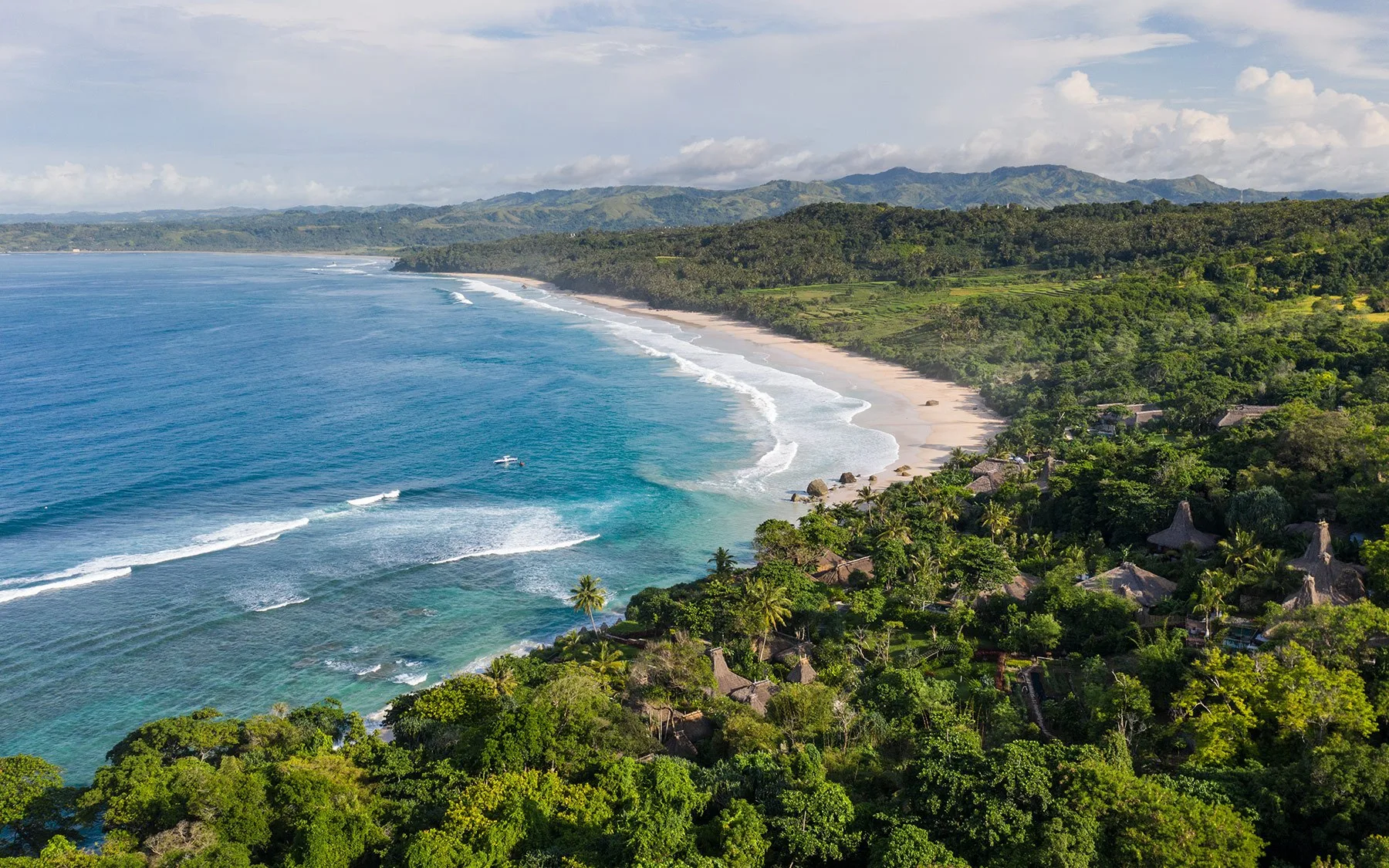
And then the descent, the last turn, and the sea appears — sudden and impossibly green, the Andaman lying flat between two headlands, a white crescent of sand below, and the forest running all the way down to the water's edge as though nobody had ever thought to stop it. It is a moment people remember for years. What they tend not to remember is the building, and this is the whole point.

The Datai has been here since 1993, designed by Kerry Hill and set so far back into the trees that from the bay you would struggle to find it. It does not sit on the landscape. It sits inside it, quietly, at a lower volume than everything around it. Nothing here competes with the canopy. Nothing tries. The luxury on offer is not the architecture, generous as it is — it is the ten million years standing outside the window, and the extraordinary good manners of a place that knows it is a guest.

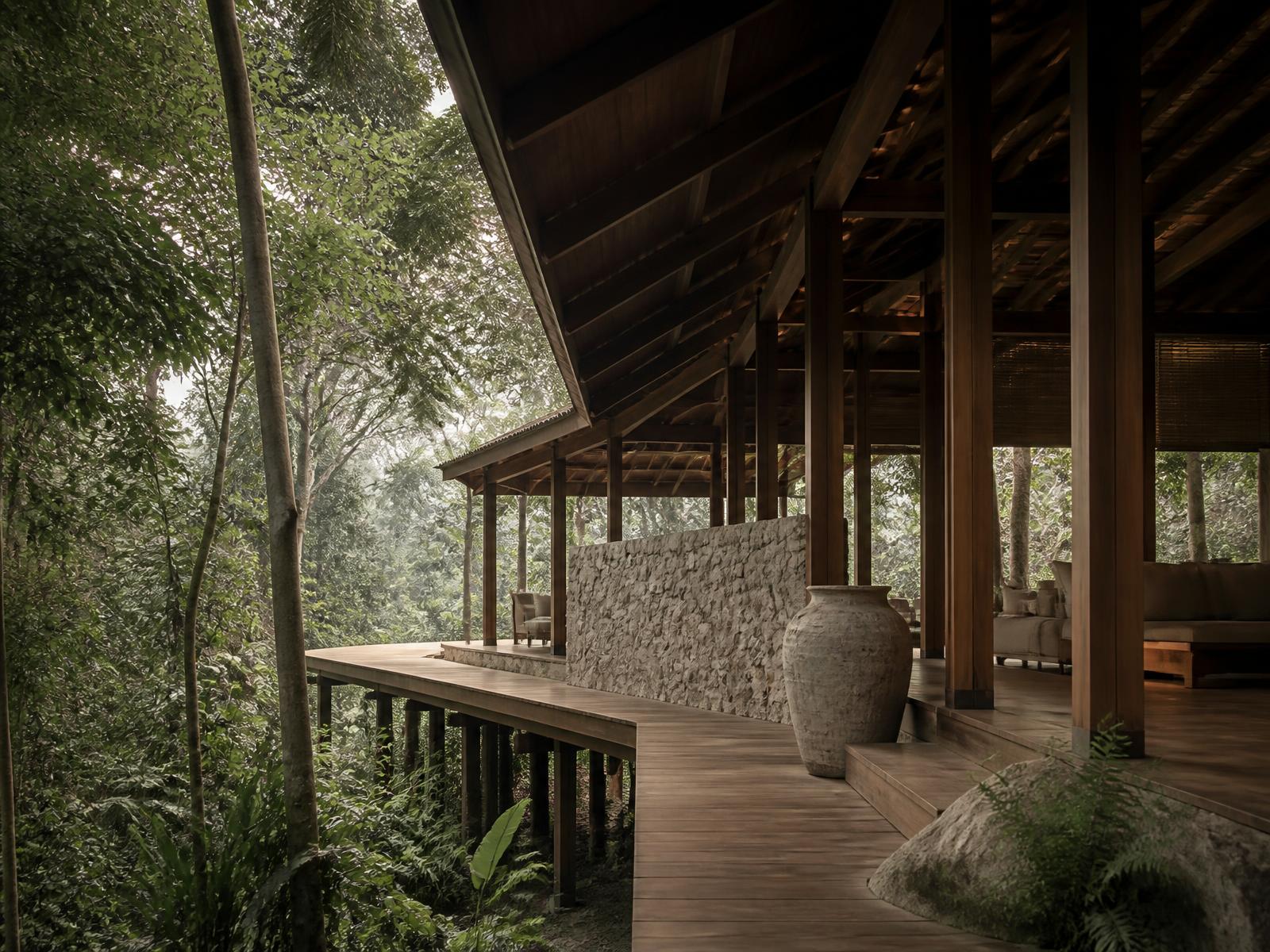
Open-air timber and natural stone pavilion with deep eaves and an elevated walkway disappearing into Malaysian rainforest

Architecture & Design

Buildings that agreed to come second

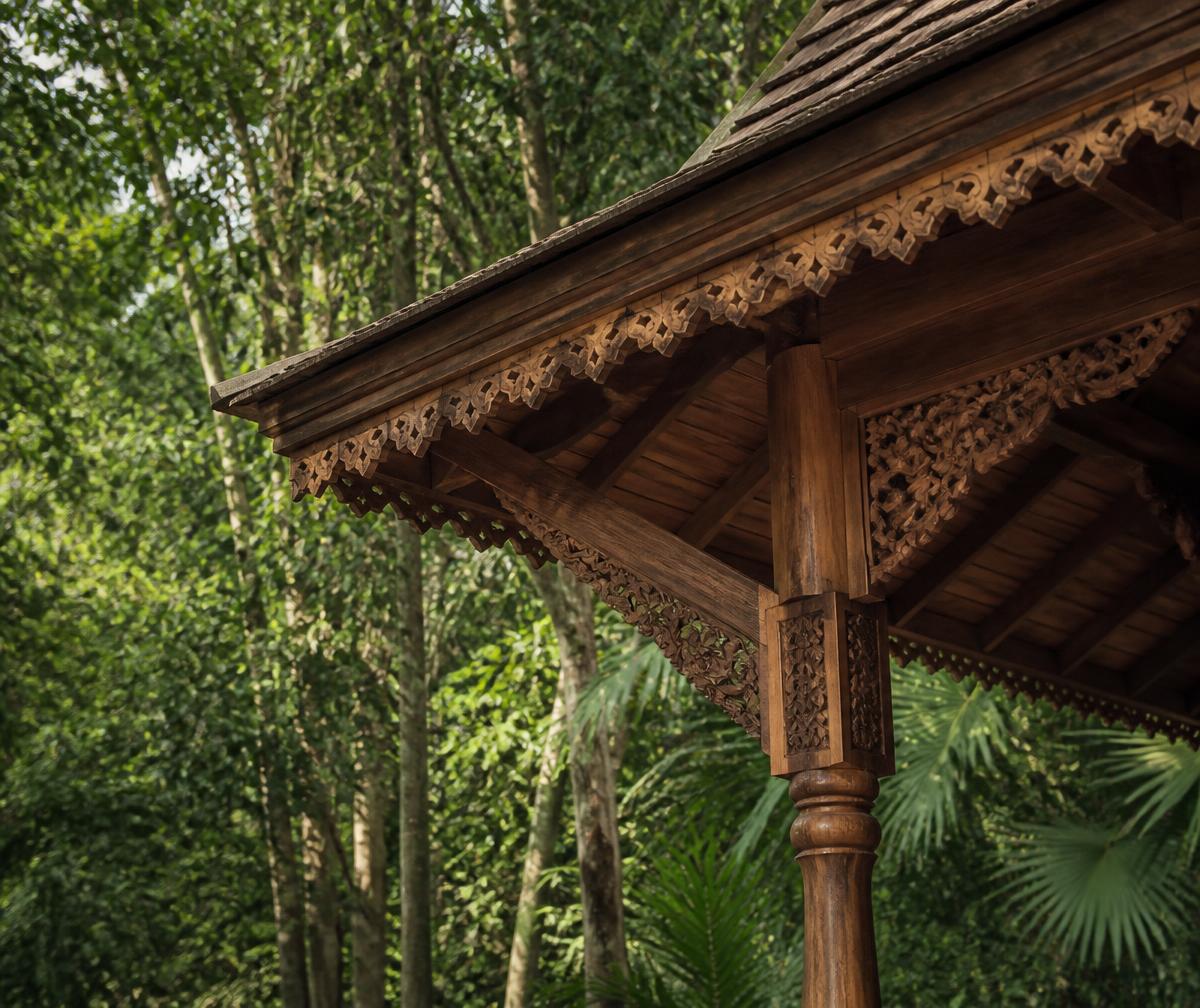
Almost nothing here is enclosed. Roofs are deep and pitched and carried on dark chengal posts; walls stop where they can, and the space between them is simply air. Rain comes in at the edges and is allowed to. The forest is not framed through glass but continues, uninterrupted, through the room and out the other side.

Walkways run on stilts through the canopy, timber underfoot, everything a little damp, so that arriving at dinner involves ten minutes of walking through trees in the dark with cicadas at full volume. Natural stone at the base, dark hardwood above, rattan and hand-carved detail from Malaysian workshops in the joinery. Nothing polished. Nothing that shines.

The lighting is the quiet masterstroke: low, warm, pooled, never enough to flatten the darkness. At night the buildings register as a few soft amber marks among black trees. Kerry Hill's discipline was subtraction — take away everything that competes, and what remains is the forest, doing what it does. That is the luxury, and it took considerable restraint to arrive at it.

Villas & Suites

Sanctuaries the forest agreed to

There is no list worth reciting. What matters is the sound through the shutters, and how long you stay in bed listening to it.

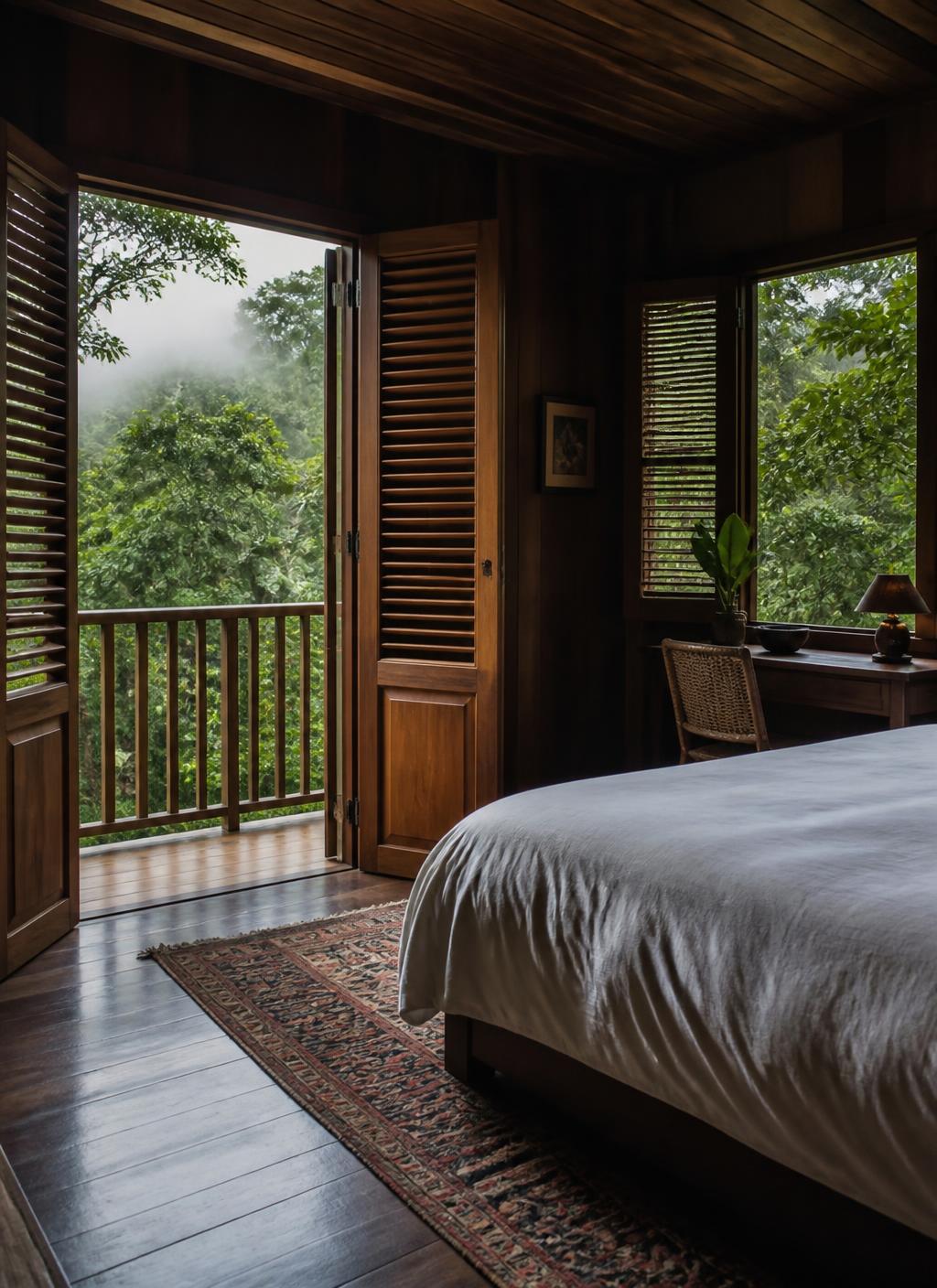
Timber rainforest villa bedroom at dawn with white linen, dark hardwood floors and open shutters onto misty Malaysian jungle canopy

No. 01

Waking Inside the Canopy

You wake before the alarm, because something else is already awake. The shutters were left open — they always are, after the first night — and the forest is arriving in layers: a single call at first, then answers from three directions, then the whole canopy at once. Rain came through at four and left the timber dark and the air washed clean. The room is dim and warm and smells of chengal wood and wet leaves. Nothing here asks anything of you. You lie still and listen, and by the time the green has come back into the leaves you have understood that the building is not the point. It never was. It is simply the quietest place from which to watch a ten-million-year-old forest begin its day.

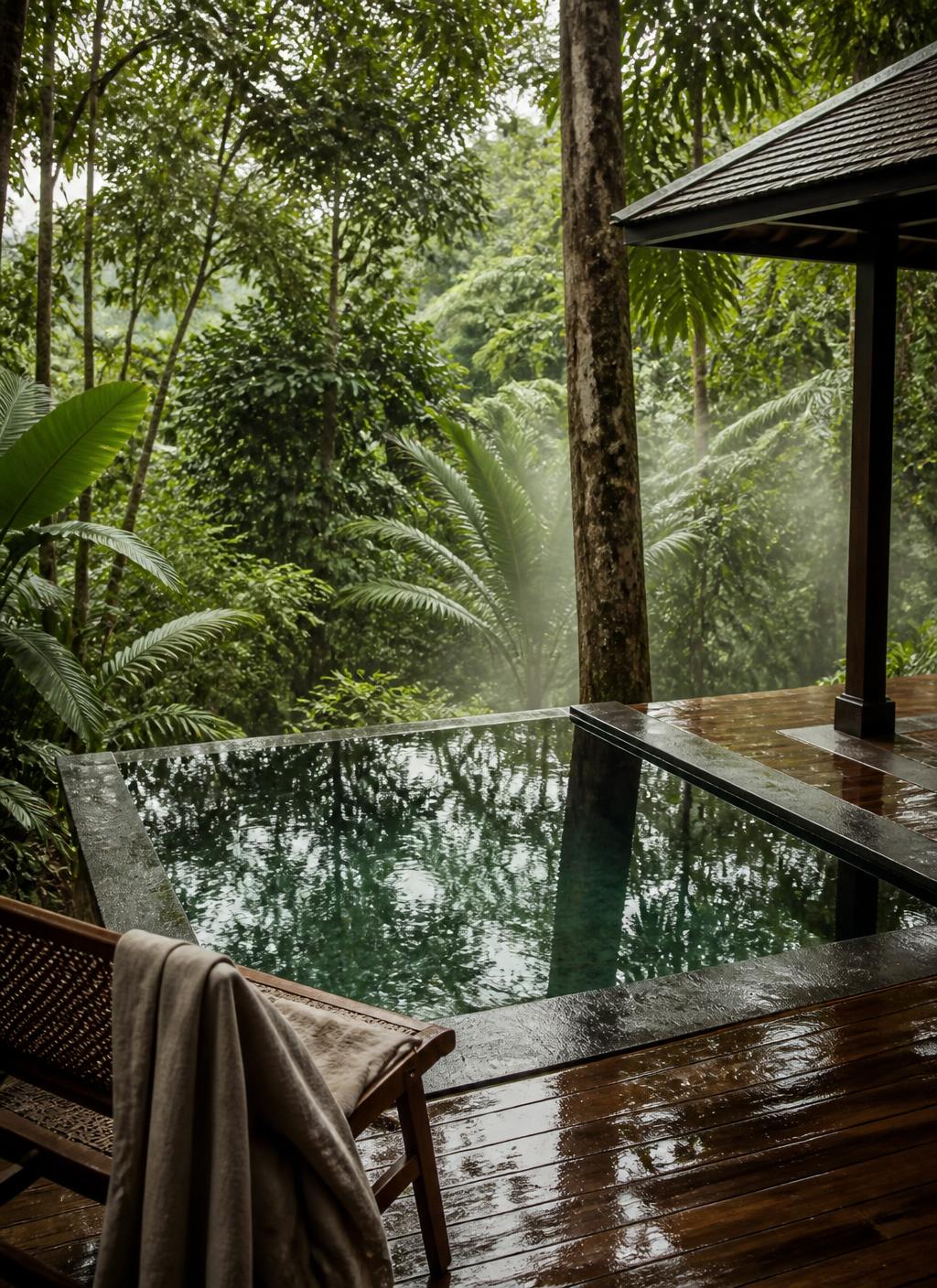
Private plunge pool on a wet timber deck surrounded by dense Malaysian rainforest canopy with mist rising after rain

No. 02

Rain, and the Small Green Pool

The afternoon rain is not an interruption. It is the appointment. It arrives with warning — a shift in the light, a sudden hush among the cicadas — and then falls straight down through the canopy for half an hour with the seriousness of something that has been doing this for millennia. From the deck, under the eave, you watch the plunge pool fill with the reflection of leaves. Steam lifts off the timber afterwards. A dusky langur crosses the branch above without acknowledging you. There is a book somewhere and it stays closed. Privacy here is not a feature; it is simply what happens when the forest is thick enough that nobody, including you, can quite find the next villa.

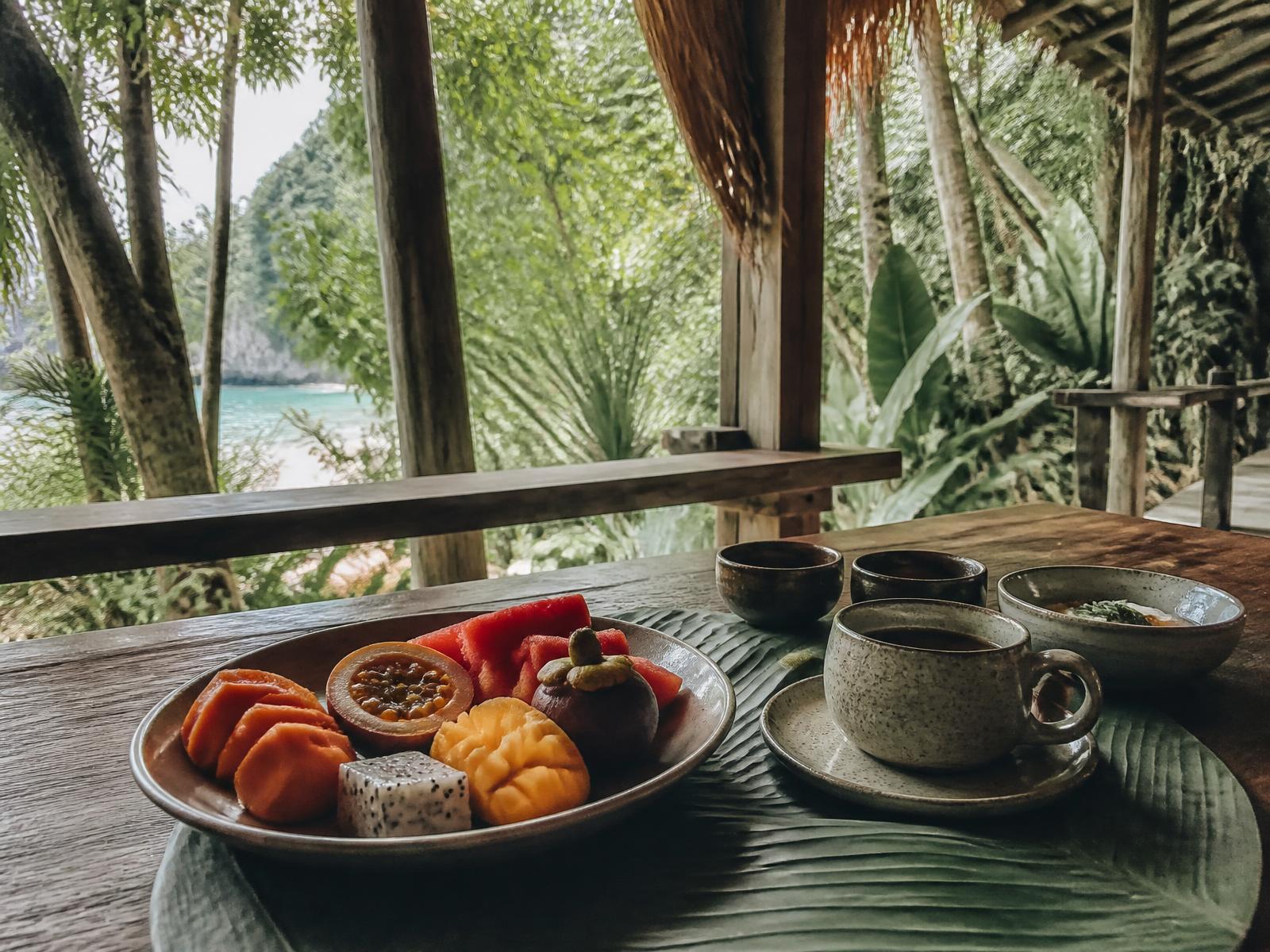
Slow tropical breakfast on a timber table in an open-air rainforest pavilion with fresh fruit, local coffee and a sliver of emerald sea beyond

Dining

Malaysia, cooked where it grows

Breakfast happens slowly in an open pavilion with the forest three metres away. Mangosteen, rambutan, dragonfruit, papaya still cold from the morning; strong local coffee; the smell of nasi lemak somewhere behind you, coconut rice and sambal and the little crisp anchovies that make it. Monkeys audit the perimeter. Nobody minds.

The Gulai House stands alone in the jungle at the end of a lit path — an old-fashioned Malay kampung structure, timber and lamplight, where the cooking is unapologetically regional: rendang left to reduce for hours, tandoor smoke, coconut and turmeric and enough chilli to be honest about itself. The walk there is half the meal.

Elsewhere, The Pavilion sits up in the treetops and cooks Thai — the border is barely thirty kilometres north, and the food knows it. The Dining Room is quieter and more European in temperament. And on the beach, at the hour when the sea goes from emerald to bronze, someone grills whatever came in off the boats that afternoon. Eat late. Sit longer than the meal requires.

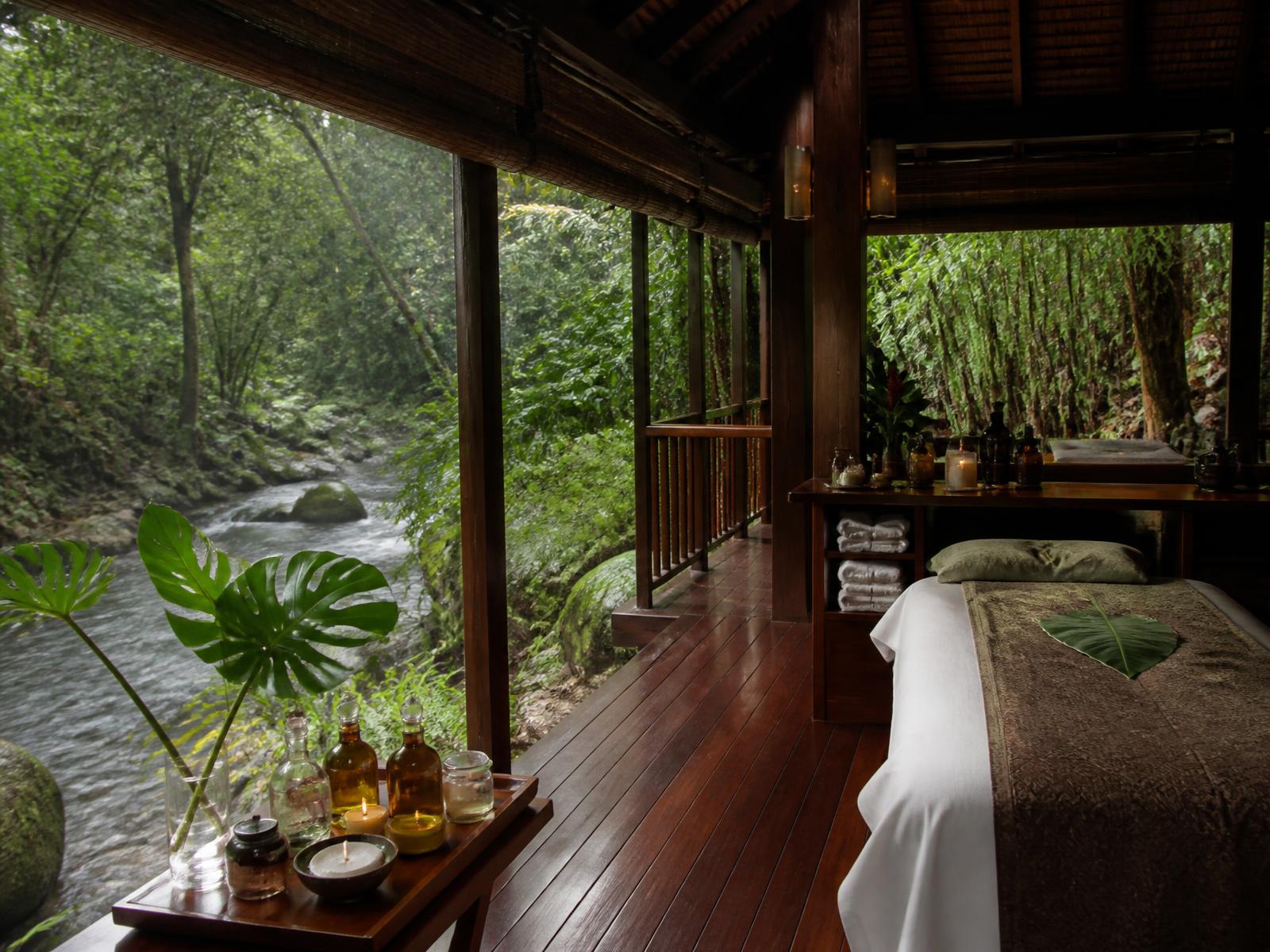
Open timber spa pavilion above a natural jungle stream in Malaysian rainforest with folded linen and botanical oils

Wellness

The stream is doing most of the work

The spa is a set of timber pavilions built over a freshwater stream, deep enough into the trees that you arrive slightly damp and already slower. The shutters are open. The water runs underneath, continuously, and it is loud in the way that natural sound is loud — completely, and without becoming noise.

Ramuan, the old Malay tradition of healing plants, still shapes what happens here. Turmeric, lemongrass, pandan, ginger, tamarind: things pounded rather than decanted, warm compresses of bruised leaves, oils that smell of the garden they came from. The pressure is firm and unhurried, the hands belong to someone who learned this from someone else, and nothing about it feels imported.

Afterwards there is tea on a deck above the water and no reason at all to move. Meditation happens at dawn on a platform in the canopy; yoga happens somewhere among the trees. Both are optional. What actually restores you here is simply being inside something older and larger and entirely indifferent to your schedule, until your own pace quietly resets to match it.

Signature Experiences

Eight ways into the forest and the sea

They belong to Langkawi rather than to the hotel, which is exactly why they matter. One a day is plenty. Some days none at all is better.

  • No. 01

    The forest, walked slowly, with someone who knows it

    The resident naturalists have spent years in these trees and it shows in the way they stop rather than the way they speak. A dipterocarp older than most European cities. A colugo folded flat against bark, invisible until it is not. Ants that farm, figs that strangle, a canopy that has been quietly rearranging itself since before the Himalaya finished rising. You come back knowing perhaps six things, which is five more than you knew, and you look at the trees differently for the rest of your life.

  • No. 02

    Hornbills, at the hour they choose

    You hear them first — a beating of wings that sounds mechanical, almost industrial, carrying across the valley long before anything appears. Then a great hornbill crosses the gap between two crowns, ridiculous and prehistoric and entirely unbothered. Ten species live along this coast. Sit on the terrace at six with something warm and wait. They are never late, only unannounced.

  • No. 03

    Mangroves, at the top of the tide

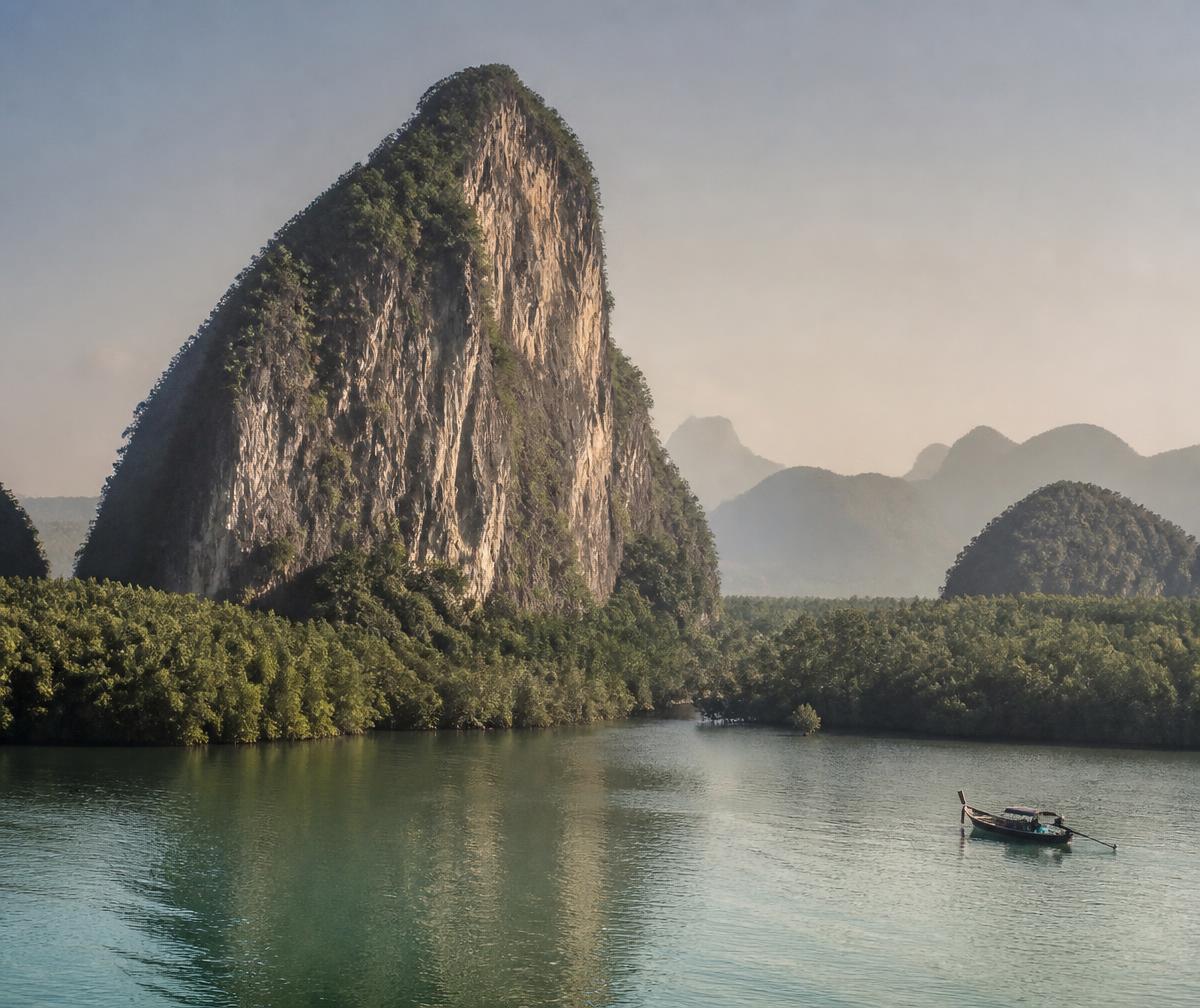
    A small boat, an early start, and the channels of Kilim at the hour when the light is still low and flat. Limestone karst rising straight out of green water, roots gripping the mud like fingers, a brahminy kite turning overhead. Cut the engine and the silence is enormous. Mangroves are not scenic in the obvious way; they are simply the most alive place on the island, and an hour of drifting through them corrects a great deal.

  • No. 04

    Sunrise on the water, without a paddle in a hurry

    Datai Bay at six is glass. A kayak, the coastline, the sea warm enough to be irrelevant, the rainforest standing over you the whole way like a held breath. Hornbills above, occasionally a hawksbill turtle below, and no other boat between here and the horizon. Go out for an hour. Come back for breakfast with salt on your arms.

  • No. 05

    The reef, and the people rebuilding it

    There is quiet, unshowy marine work happening along this bay — coral nurseries, giant clams returned to the seabed, reef surveys done by hand. An afternoon with the biologists is not an activity so much as an education. Snorkel out and see what patience looks like underwater, and then come in and understand what the tide chart has to do with any of it.

  • No. 06

    Forest bathing, which is only sitting still

    No route, no destination, no explanation. A wooden platform in the trees at seven in the morning, twenty minutes, nothing to do. The forest arrives in stages — sound, then smell, then temperature, then something harder to name. Most people resist it for the first ten minutes. Almost nobody wants to leave at the end.

  • No. 07

    A picnic on the sand, and the whole bay to yourself

    Late afternoon, a linen cloth, cold fruit, a bottle in the shade, the tide going out and the light turning the sea from emerald to bronze. Datai Bay was consistently named among the world's finest beaches long before anyone was measuring, and at five in the afternoon you will most likely have several hundred metres of it entirely alone.

  • No. 08

    Photographing green, which is harder than it looks

    Rainforest defeats most cameras: too dark, too busy, too green. Go out with someone who shoots here — before dawn for mist in the valleys, after rain for saturation, at dusk for the silhouettes of hornbills against a pale sky. You will take fewer photographs and keep more of them.

Maison Voyage Loves

Six small things

  • Morning mist lying along the canopy at six, moving so slowly you can watch a single strand cross a valley.
  • Hornbills overhead — the beating of wings arriving before the bird, every time.
  • Rain falling straight down through ten million years of forest, and the half hour of silence that follows it.
  • Cold mangosteen and papaya on a timber table, with a sliver of emerald sea between the trunks.
  • The smell of the rainforest after sunset, warm and green and impossible to describe accurately.
  • Walking the length of Datai Bay barefoot before anyone else is awake, and leaving the only footprints.

Who This Place Is For

Travellers who would rather be absorbed than entertained.

It suits people who notice architecture, and people who notice birds, and the considerable overlap between the two. Slow travellers do well here. So do photographers, readers, walkers, anyone with a working curiosity about biodiversity, and anyone who has been meaning to spend a week without deciding anything in advance. Couples find it quietly romantic, in the way that shared silence usually is. Families with children old enough to be interested find that the forest does the teaching. Writers and designers come here to finish things.

It rewards a certain willingness to be uncomfortable in small ways. It is humid. There are insects, because there is a functioning ecosystem. It rains hard and often, sometimes for an afternoon. The walkways are long and the hills are steep. None of that is a shortcoming; it is simply what a rainforest is, and pretending otherwise would be the only real failure of taste available here.

It will not suit everyone, and we would rather say so plainly. There is no nightlife. There is nothing urban within an hour. Very little happens after nine in the evening except cicadas and the sound of the sea. Anyone travelling for entertainment, for shopping, or for a list of sights should choose somewhere else — and come to Langkawi later, when stillness has started to sound like a good idea.

Nearby Discoveries

What we would tell a friend

Langkawi rewards early mornings and long afternoons. Most of this is reached slowly, and almost none of it needs to be photographed.

  • No. 01

    Datai Bay, before six

    The sand is cool, the sea is unmoving, and the rainforest along the shoreline is at its loudest. Walk the length of it barefoot with nothing in your hands. Everything else on this list is optional; this is not.

  • No. 02

    Kilim Geoforest Park, by small boat

    Four hundred million years of limestone standing in mangrove water, and a geology that predates almost everything else in the region. Go at first light with a guide who talks about tides rather than eagles, and skip the feeding boats entirely.

  • No. 03

    The Sky Bridge at Machinchang, at opening

    A curved span suspended above ancient forest on a Cambrian ridge. It is undeniably a piece of engineering theatre, and it is also the only place you will stand level with the canopy while cloud moves through it. Be on the first cable car or do not bother.

  • No. 04

    The fishing villages of the north coast

    Wooden jetties, drying nets, boats painted in colours nobody chose from a scheme. Late afternoon is when the day's catch comes in. Buy nothing, photograph little, sit for a while and let the place carry on without you.

  • No. 05

    The waterfalls above Temurun

    A short, steep, humid climb to cold water falling through a gap in the trees. Go on a weekday morning after rain, when the volume is serious and there is nobody else on the rocks.

  • No. 06

    A morning market in Kuah, then a workshop

    Mangosteens, rambutan, chillies by the sack, and the smell of coconut and dried fish at seven in the morning. Afterwards, the batik and pandan weavers who work in small studios inland — an hour spent watching a wax line drawn by hand is worth a day of shopping.

  • No. 07

    The Andaman under sail, at dusk

    A private yacht out of Telaga, the islands of the archipelago turning black against a pink sky, and the sea flat enough to make dinner on deck a reasonable idea. Two hours is enough. Silence, and the last light on the water.

A Note from the Editor

Stay six nights. Walk the forest twice. Leave one whole day undecided.

Come in the drier months if rain worries you, and in the green ones if it does not — the forest is at its most extraordinary when it is wet. Take the naturalist walk on your first morning rather than your last; everything you see afterwards will make more sense. And on one of the mornings, get up before light, walk down through the trees to the bay, and stand in the water while the sky changes. The hotel will still be there when you come back up. The forest, quietly, is the reason you came.

Ben Trousil, Founding Editor

From the Journal

Continue reading

All stories
  • Misty rainforest canopy at sunrise in Southeast Asia with layers of green ridges fading into fog

    NatureAugust 2026

    The Oldest Forests On Earth

    Older than the Amazon, older than the Himalaya. On the rainforests of the Malay Peninsula and what ten million years of continuity actually sounds like at dawn.

  • Limestone karst cliffs rising from calm turquoise water among mangrove channels in Langkawi at dawn

    DestinationsJuly 2026

    Why Langkawi Belongs On Every Traveller's Radar

    Cambrian rock, mangrove channels and an archipelago of ninety-nine islands. A quiet argument for Malaysia's north-west coast, made slowly.

  • Hand-carved Malaysian timber joinery on a tropical pavilion roof against dense green jungle

    DesignJune 2026

    Rainforest Architecture

    Timber, stone, deep eaves and the discipline of disappearing. On buildings that agree to be secondary to the landscape they stand in.

Eine persönliche Anfrage

Let's Curate Your Malaysian Journey

If the forest has begun to sound like your next journey, we would be glad to arrange it personally — the rainforest, the coast, and the country either side of them.

A few nights in Kuala Lumpur before the quiet, the crossing north to Langkawi, mornings with the resident naturalists, the mangroves at first light, a private sail through the archipelago, and time on one of the smaller islands afterwards — shaped entirely around the way you actually travel.

Warum über Maison Voyage buchen?

  • Persönliche Luxusreiseberatung
  • Sorgfältig kuratierte Hotelempfehlungen
  • Maßgeschneiderte Reisepläne
  • Exklusive Partnervorteile, wo immer verfügbar
  • Persönlicher Ansprechpartner von Anfang bis Ende

Es entsteht keine Buchung und keine Kosten. Wir beginnen einfach ein Gespräch.

Eine Einladung

Die Reise fortsetzen

Ein Brief jeden Monat: ein Ort, den Umweg wert, ein Objekt, das Bewahren wert, eine Seite, langsam zu lesen wert. Nicht mehr.