Safari
Botswana by Air
Okavango Delta, Linyanti, Kalahari
Three landscapes in one journey, linked by short flights in small aircraft.
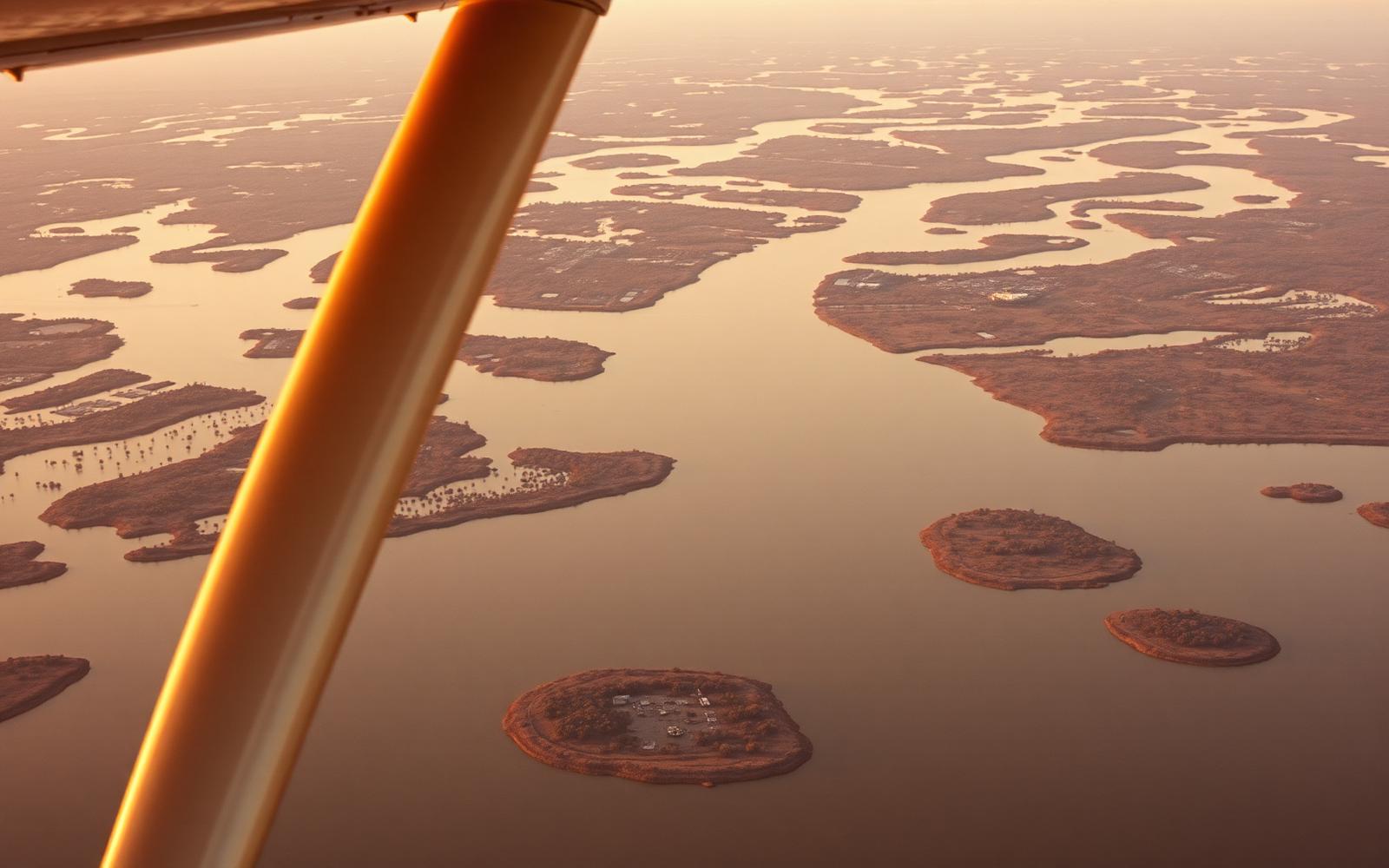
Botswana works differently from most safari countries. There are few roads between camps, but sand strips serve as runways and a Cessna covers in twenty minutes what a vehicle would take six hours to drive. You change landscape, not country.
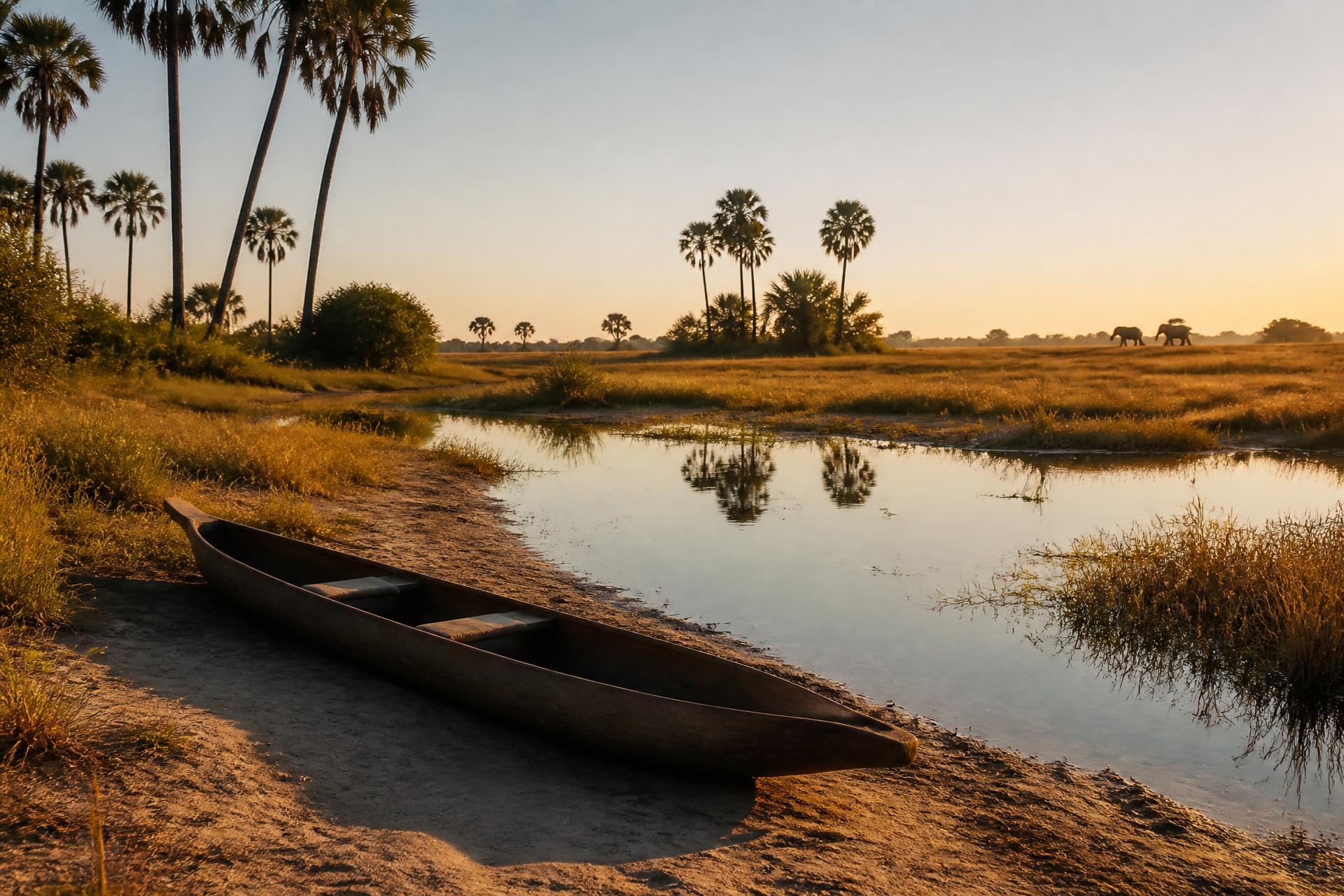
The Delta is water, reed and palm islands; Linyanti is dry bush holding the greatest elephant concentrations in southern Africa; the Kalahari is space, light and a silence that is almost uncomfortable at first.
Camps are small — six to twelve tents, often unfenced. At night you hear what moves around you; in the morning the tracks outside the tent tell you who passed.
The Pure Voyage view
Why we recommend it
Because Botswana only shows its range if you move between camps.
Delta, salt pans and dry bush are minutes apart by air and feel like different countries. Three camps of three nights each is the shape we suggest most often — anything shorter is spent in light aircraft. Guest numbers are legally low, and that is the real luxury: you rarely share a sighting with a second vehicle. From June to October the water is high and the game concentrated.
- Who it suits
- A second safari, or an ambitious first, for couples and small groups
- What stays
- A mokoro in the late afternoon, with no engine noise
Suitability
Who it is for
Ideal for
- A second safari, or an ambitious first
- Couples and small groups
- Travellers who want contrasting landscapes
- Eight to ten nights
Less suited for
- Guests uneasy in small aircraft
- Families with very young children
- Travellers with a lot of luggage
What travellers often underestimate
Bush-plane luggage limits are strict: soft bags, usually 20 kilos. Best settled before booking.
If this is not the right fit
You may also want to consider
If Botswana stays but the light aircraft hops are a concern:
01 · South Luangwa
Zambia Walking Safari
One or two camps, fewer transfers, a far slower rhythm.
See more02 · Südafrika
Singita Lebombo
Low-malaria region, reached by road or a single short flight.
See more03 · Botswana, Simbabwe
Okavango & Victoria Falls
Two fixed bases rather than five camps in ten days.
See moreNot better, not a step up — simply different, and right for different travellers.
Our view
Why we recommend it
Because no other country of this scale enforces low visitor numbers so strictly. You rarely share a sighting with another vehicle, and that changes what you feel.
- Best time to travel
- May to October for the dry season and concentrated game. The green season, December to March, brings young animals, birds and markedly lower rates.
- Suggested duration
- Nine to twelve days, three to four nights per camp. Fewer than three nights does not justify the flight.
- Who it is best for
- Travellers who take safari seriously and value remoteness over refinements. Less suitable for small children — weight limits and flight times are strict.
Pure Voyage note
The 20-kilogram soft-bag limit is a condition, not a suggestion. We arrange storage in Maun, which spares the conversation on the airstrip.
Along the way
Retreats along the way
The addresses we suggest most often for this journey — as a starting point, not a fixed route.
Mombo Camp
Chief's Island, Okavango
The Delta's richest game, in a camp without fences.
Duba Plains
Northern Okavango
Lion and buffalo across open floodplain; five tents only.
Jack's Camp
Makgadikgadi, Kalahari
Meerkats, salt pans and a 1930s expedition aesthetic.
And then
Journeys that sit well beside it
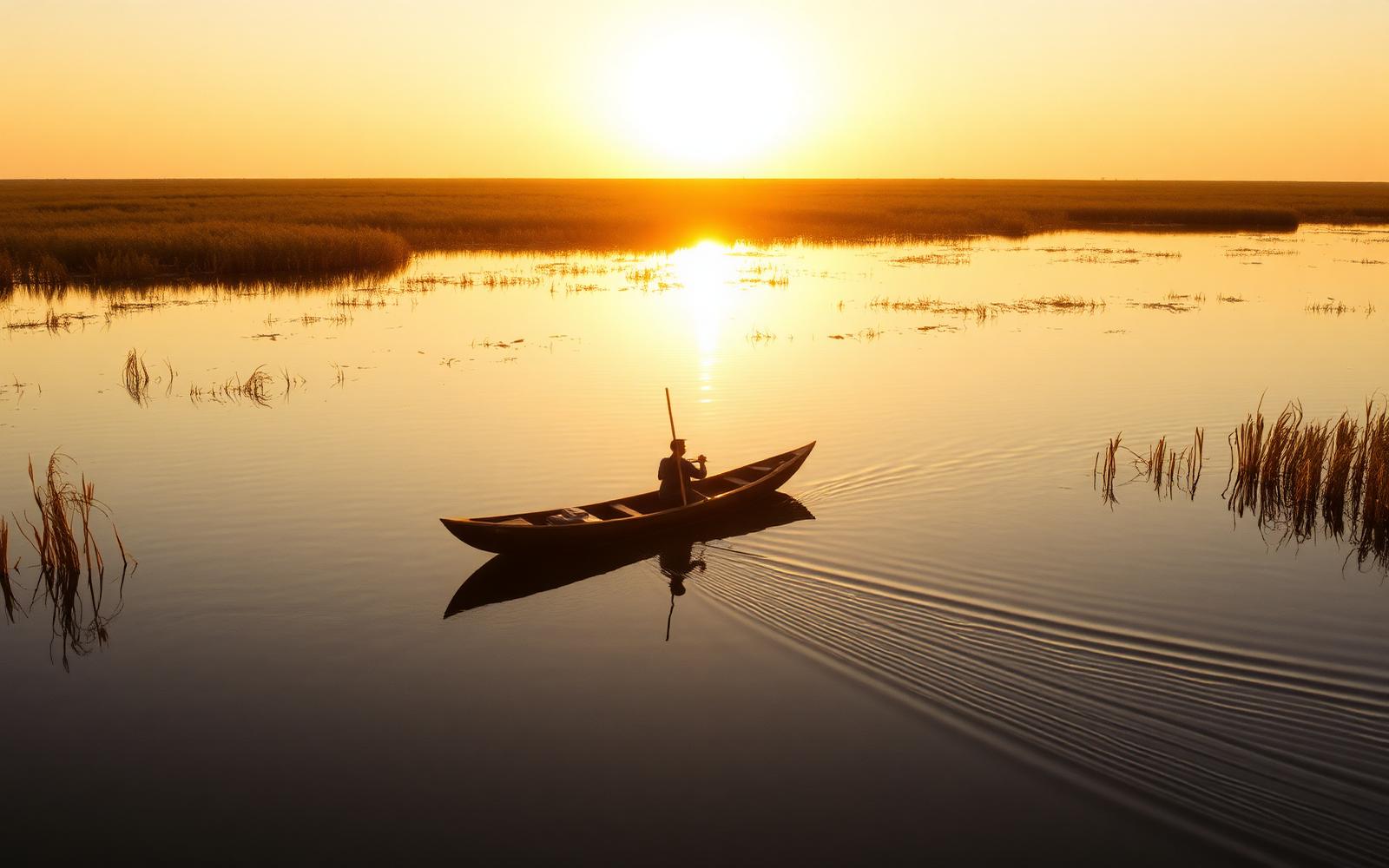
Okavango & Victoria Falls
Water in two forms: still in the Delta, thunderous at the falls.
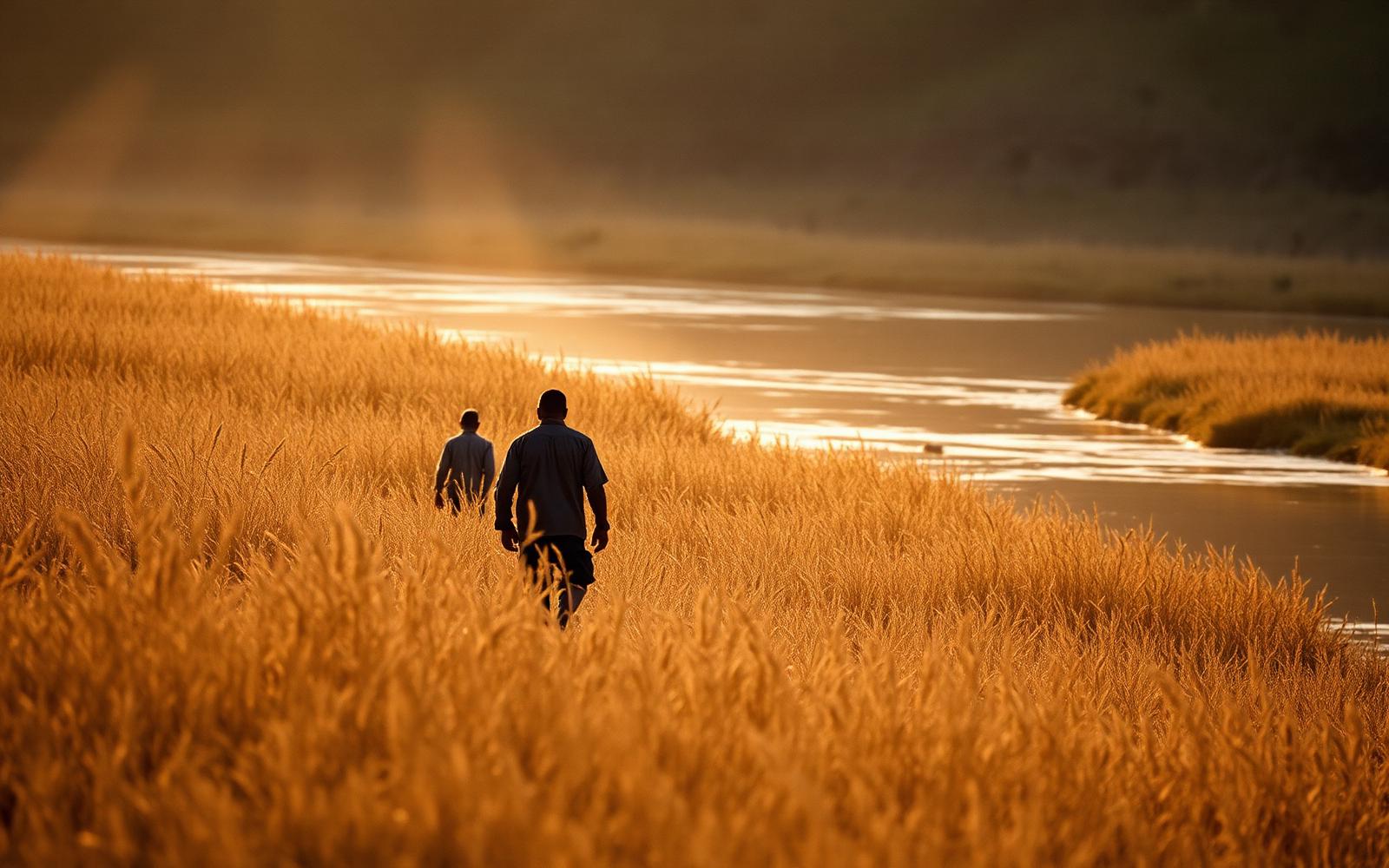
Zambia on Foot
The safari with nothing between you and the bush.
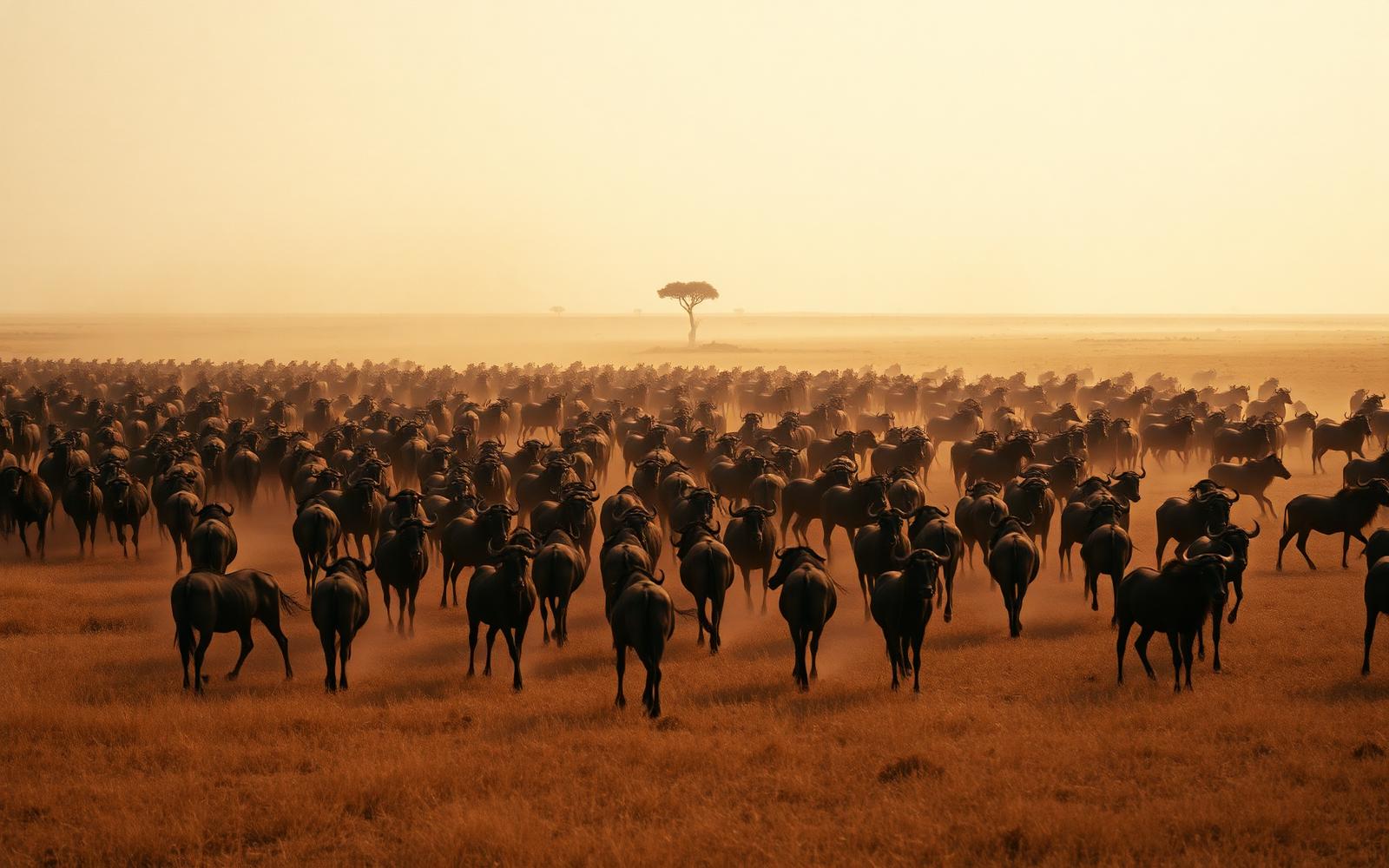
The Great Migration
Not an event but a movement that lasts all year.
Whether this journey suits you is settled fastest in conversation.
Season, length and the hotels before and after shape the result more than the route ever does.
Speak with the conciergeWhat matters most about the flights between camps?
Luggage. The light aircraft usually allow 20 kilos in soft bags; hard cases stay behind. Plan two nights per camp as a minimum, three is more comfortable — arrival days are largely transfers. Laundry is included in nearly every camp, so you need far less clothing than most guests pack.
Noted by Pure Voyage
Common questions
What guests ask us about this
- What does a safari day look like?
- Early start, a drive through the morning, rest through the heat, out again in the late afternoon. Little happens in between — which is exactly what makes the days long and restful.
- From what age does safari work for children?
- Many camps accept children from six, some from twelve, and family-minded retreats often at any age with a private vehicle. We check this before every recommendation.
Pure Voyage Signatures
Themes that run through our work
Recurring thoughts rather than categories. They appear where they explain something.
In a similar spirit
What shares the same spirit
Travellers who fly camp to camp rarely think in single lodges, but in movement across a landscape.
- JourneyThe Great MigrationSerengeti, Ngorongoro, Masai MaraThe same expanse, a different spectacle — East Africa rather than the delta.
- JourneyZambia on FootSouth Luangwa, Lower ZambeziIf the wish is closeness rather than overview: on foot, slowly, very precisely.
- JourneyOkavango & Victoria FallsBotswana and the ZambeziThe same region, with a second chapter on the water.
- RecommendationHotels Worth the JourneyHideaways, island resorts and lodges where the journey is part of the experience.Camps and retreats that justify the long way there.
Continue through Pure Voyage
Where to go from here
Not a catalogue, but a next step: the retreats, routes, countries and essays we would mention at this point in a conversation.
Hotels
Addresses that belong beside this page.
Destinations
The country at a glance.
Recommendations
What we suggest for this occasion.
Journal
Further reading before you decide.
Further reading
What we have written on this
Journeys
Safari With Children: What Actually Works
From what age, which region, how long — and which camps genuinely welcome a family.
Journeys
Why Africa Is Best Travelled Slowly
Three camps in ten days is a common recommendation. We almost always suggest two.
Seasonal Travel
When to Travel to Botswana, Month by Month
Botswana has no bad season, only very different ones. Which month suits which kind of trip.
Guest Voices
What stays with you
Not stars or ratings — but what you remember afterwards.
We had two retreats in mind and booked a third in the end. The reasoning was so clear that the decision became easy.
M. K. — HamburgAmalfi Coast, May The advice on which weeks to avoid changed our journey. We went two weeks later — and had the river to ourselves.
Dr. A. S. — MünchenTanzania, family journey
Published with consent, shortened and anonymised.
A Personal Enquiry
Shall we plan Botswana by Air for you?
Tell us when you would like to travel and with whom — we check availability, cabins or rooms and the right opening to the trip.
A first assessment is without obligation and free of charge.
Why book through Pure Voyage?
- Personal luxury travel advice
- Carefully chosen hotel recommendations
- Tailor-made itineraries
- Partner benefits wherever they apply
- Direct personal contact from start to finish

An Invitation
Once a month: hotels, new openings and travel ideas
One hotel that convinced us. One new opening we are watching. And one travel idea for the right season. Carefully selected and reduced to the essentials.