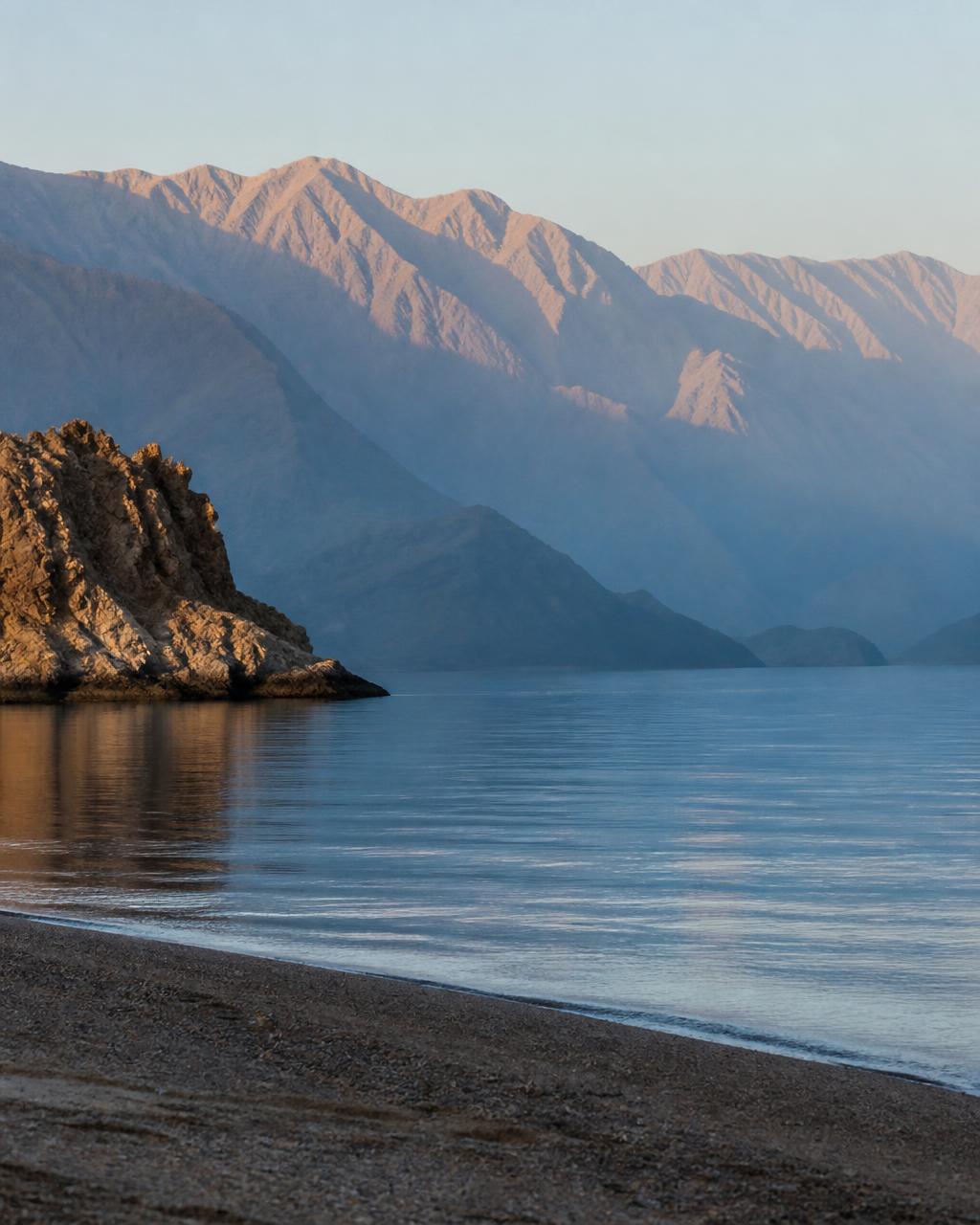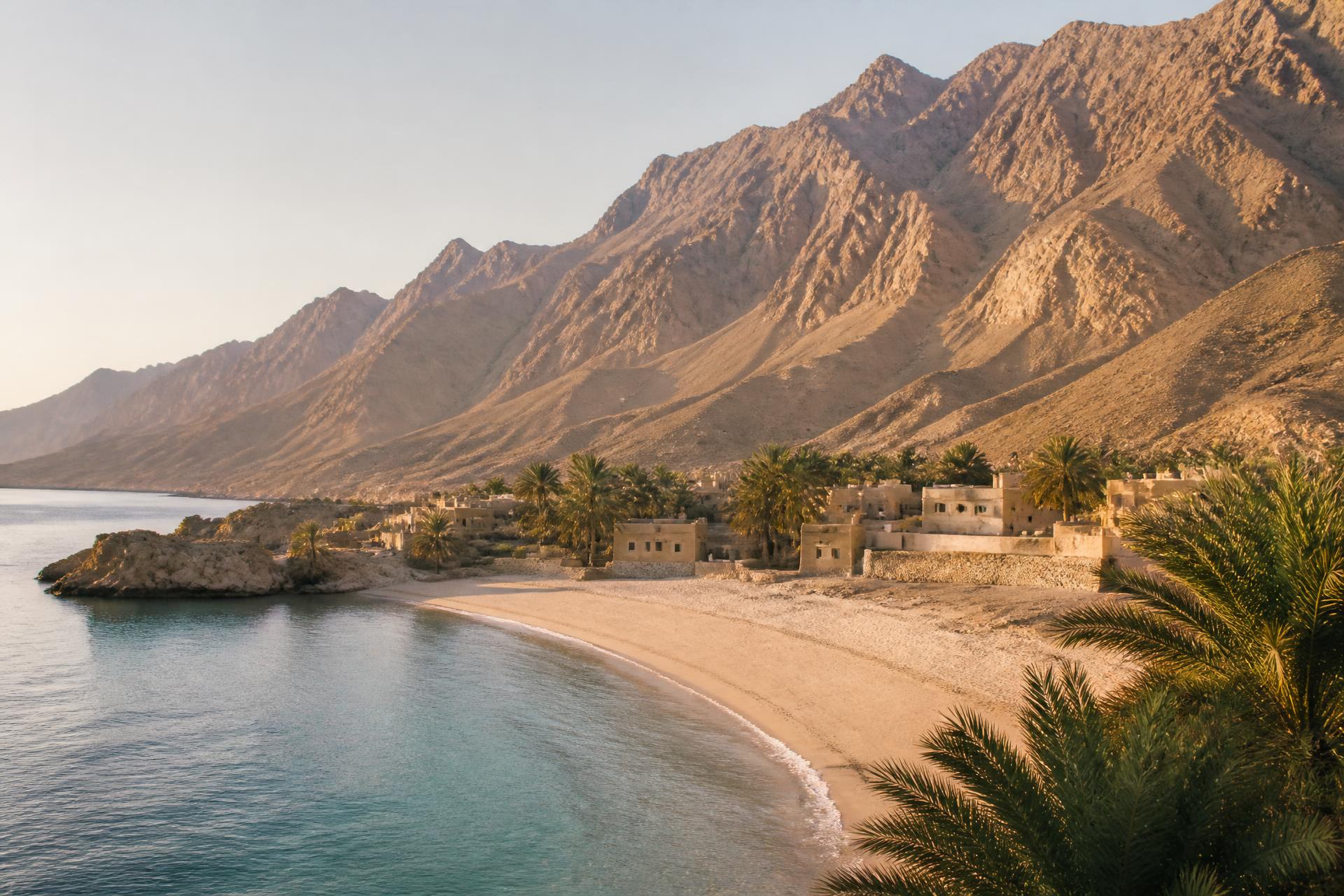
Golden sunrise over a secluded bay on the Gulf of Oman, with a traditional stone village and palm groves along a private beach beneath the dramatic bare Hajar Mountains

Musandam Peninsula — Oman, Gulf of Oman

Where Mountains Meet The Sea

Hidden between the dramatic Hajar Mountains and the Gulf of Oman, Six Senses Zighy Bay invites travellers into a world where authentic Omani heritage, extraordinary landscapes and mindful hospitality exist in perfect harmony.

An Introduction

You do not arrive at Zighy Bay. You come down into it.

The road leaves the coast and turns inland, and almost immediately the world becomes rock. Not the soft, vegetated kind, but bare Hajar limestone — grey where the shadow falls, apricot where the light lands, folded and split and stacked in ways that suggest enormous violence a very long time ago. Nothing grows. Nothing moves. There is a goat, once, standing on something no goat should be standing on, and then nothing again for twenty minutes.

The climb is slow and the surface is loose, and after a while you stop checking how far there is to go. The temperature drops slightly with the altitude. The engine works. Somewhere near the top the driver stops, without being asked, at a place where the mountain simply ends.

And then the sea. All of it at once, a thousand metres below and impossibly blue, held in a single curve of pale sand between two headlands. Palm groves, dark green against the ochre. Flat stone roofs among them. A village, apparently very old, lying along the shore exactly where a village on this coast would have to lie. The silence up here is total and slightly disorienting, and for a moment the sensible response is to say nothing at all.

The descent takes a while. The switchbacks are steep enough that the bay disappears and returns, disappears and returns, growing each time, until you are on the flat and driving between stone walls and date palms with the sound of water running somewhere in a channel beside the road.

What was built here was not designed to be looked at. It was designed to be walked through. Sandy lanes rather than corridors. Low houses of local stone with earth-coloured walls and flat roofs, each behind its own wall, each with its own courtyard, arranged the way an Omani coastal village arranges itself — for shade, for breeze, for privacy, for the water that has always had to be carried and shared. There is no lobby that announces anything. There is a doorway, and then another doorway, and then the sea.

The mountains are the protagonist here; they were before anyone came and they will be afterwards. The village is the soul — the pattern, the rhythm, the reason the place feels inhabited rather than installed. Everything else belongs quietly to both, and understands, sensibly, that it is the newest thing in the bay.

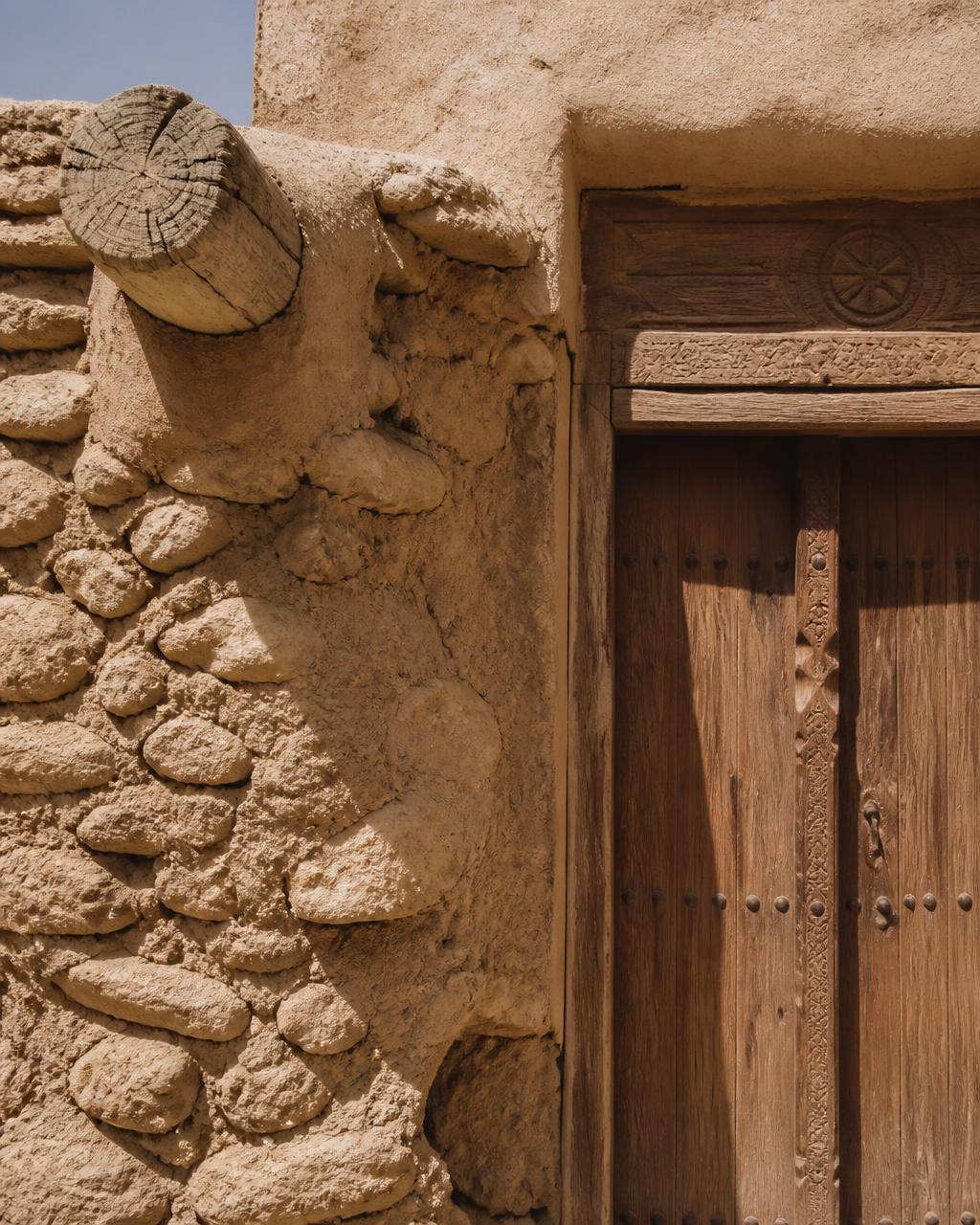
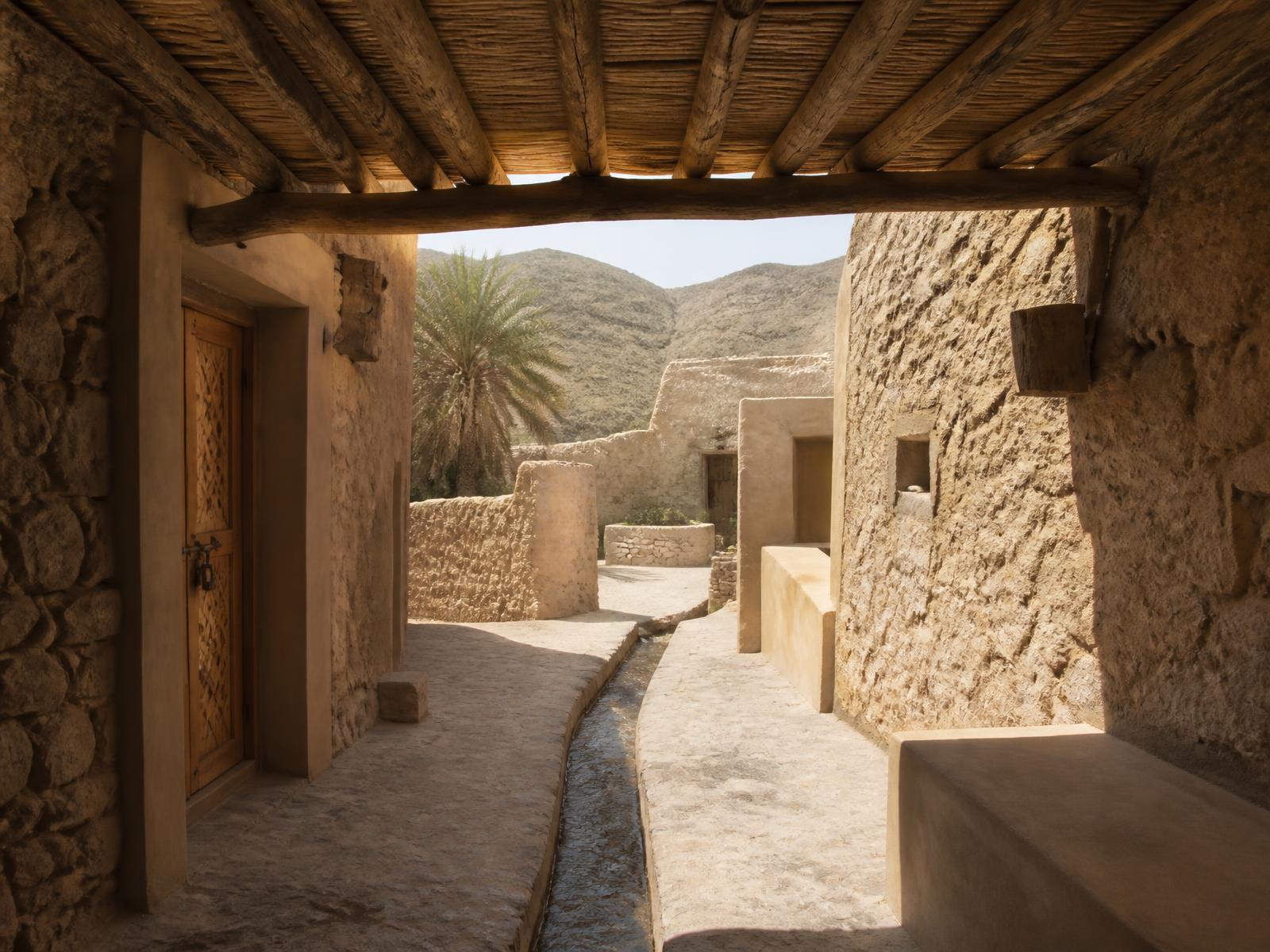
Shaded lane in a traditional Omani village with rough stone walls, earth-coloured plaster, palm-wood ceiling beams, a carved timber door and a narrow stone water channel

Architecture & Design

Built the way the coast has always built

Stone laid by hand, earth-coloured render, flat roofs carried on palm trunks and split beams. Walls thick enough to hold the night's cool until midday. Doors of heavy timber, carved by someone who has carved a great many of them. Nothing here is taller than the palms, and from the water the whole settlement reads as shadow and grove rather than architecture.

Water moves through the lanes in narrow open channels, the way a falaj has moved water through Omani villages for two thousand years — audible before it is visible, cooling the air as it goes. Courtyards do the work that corridors do elsewhere. Living happens half outdoors, under beams, in shade that shifts through the afternoon.

None of it is imitation. Imitation copies a picture; this copies a method — the same materials, the same orientation to sun and breeze, the same instinct to keep everything low and heavy and close together. The result is a place that feels considerably older than it is, and luxury of the only kind that survives: materials that improve as they weather, and rooms that were arranged around comfort long before comfort had a market.

The Villas

Houses, not rooms

There is nothing worth listing. What matters is the temperature of the stone at six in the morning, and how long you stay in the courtyard afterwards.

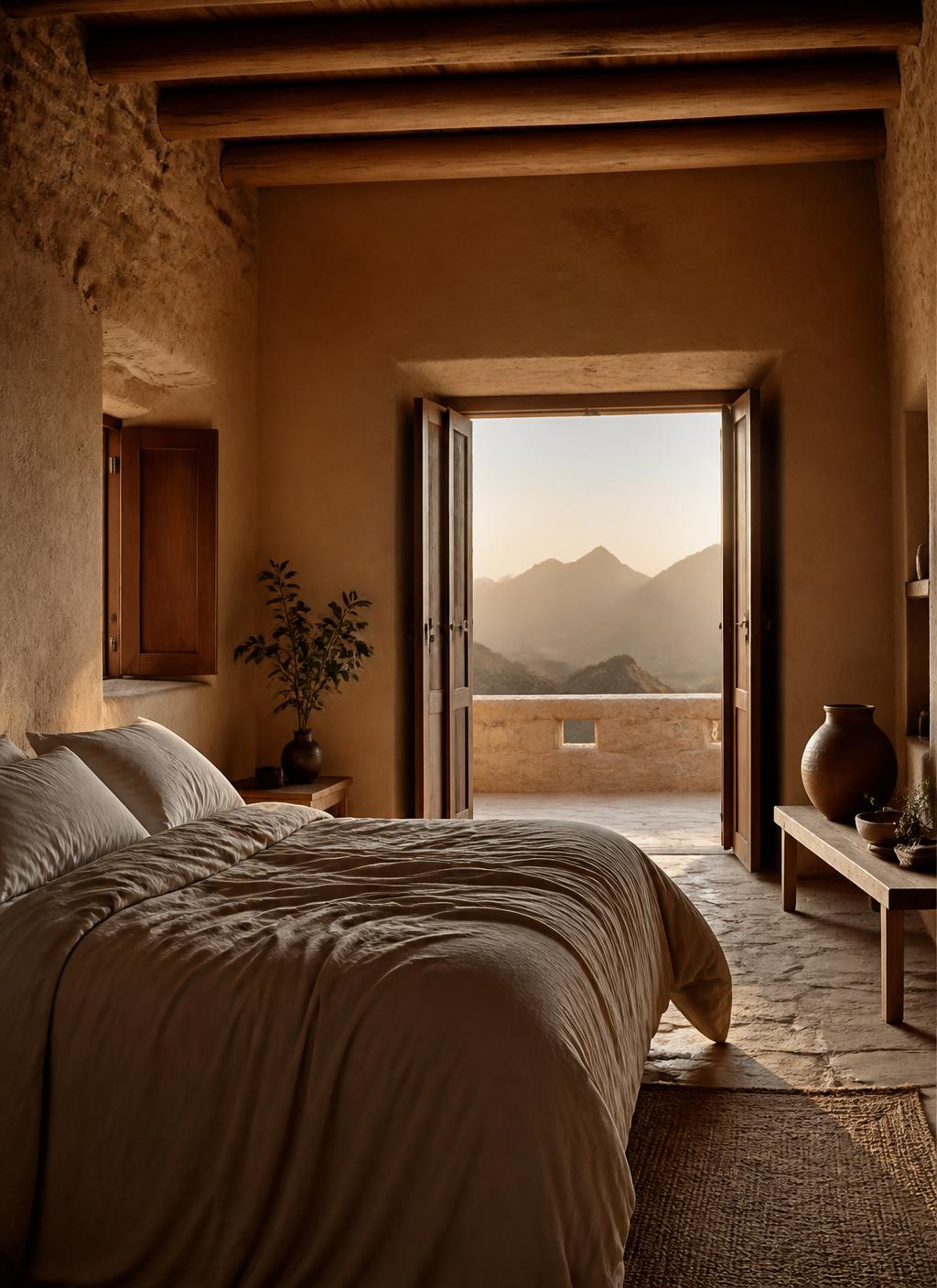
Bedroom in a traditional Omani stone house at sunrise with earth-plaster walls, palm-wood ceiling beams, natural linen bedding and open shutters framing bare desert mountains

No. 01

The Hour Before The Mountains Arrive

You wake before you intend to, and not because of a sound. The room is grey and cool, the shutters were left open, and the mountains outside are still a single flat shape with no detail in them at all. Then the light begins somewhere behind the ridge and the whole wall of rock arrives slowly, ravine by ravine, going from violet to rose to the plain dry gold it will stay for the rest of the day. The linen is cool. The ceiling above you is palm wood laid the way it has been laid here for centuries. Nothing asks anything of you for another hour, and you spend it lying still, watching a landscape assemble itself.

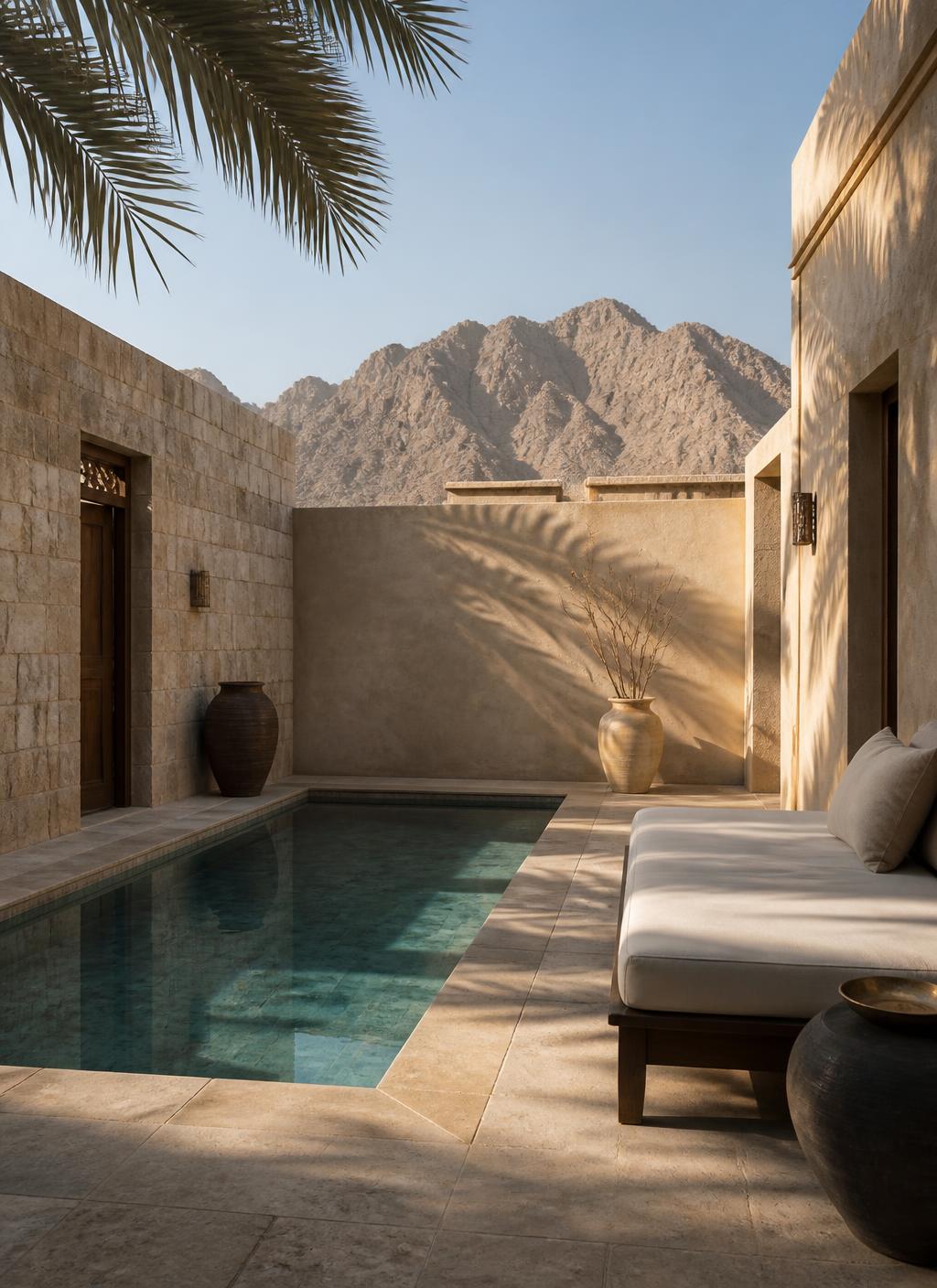
Private walled courtyard of an Omani stone villa in late afternoon with a still turquoise plunge pool, palm shadows on plaster walls and bare mountains beyond

No. 02

Water, Shade, And The Long Middle Of The Day

By noon the courtyard has become the whole world. Stone walls high enough that nobody exists beyond them, a pool holding the sky, and the shadow of a date palm moving across the plaster with the patience of something that has nowhere else to be. The heat is dry and clean; the water is the temperature of relief. You swim four strokes, which is all the pool allows, and then simply stand in it. Somewhere over the wall a goat, a boat, the sea. Privacy here is not a service. It is architecture — walls built by people who have always understood that shade and water are the two most valuable things a house can hold.

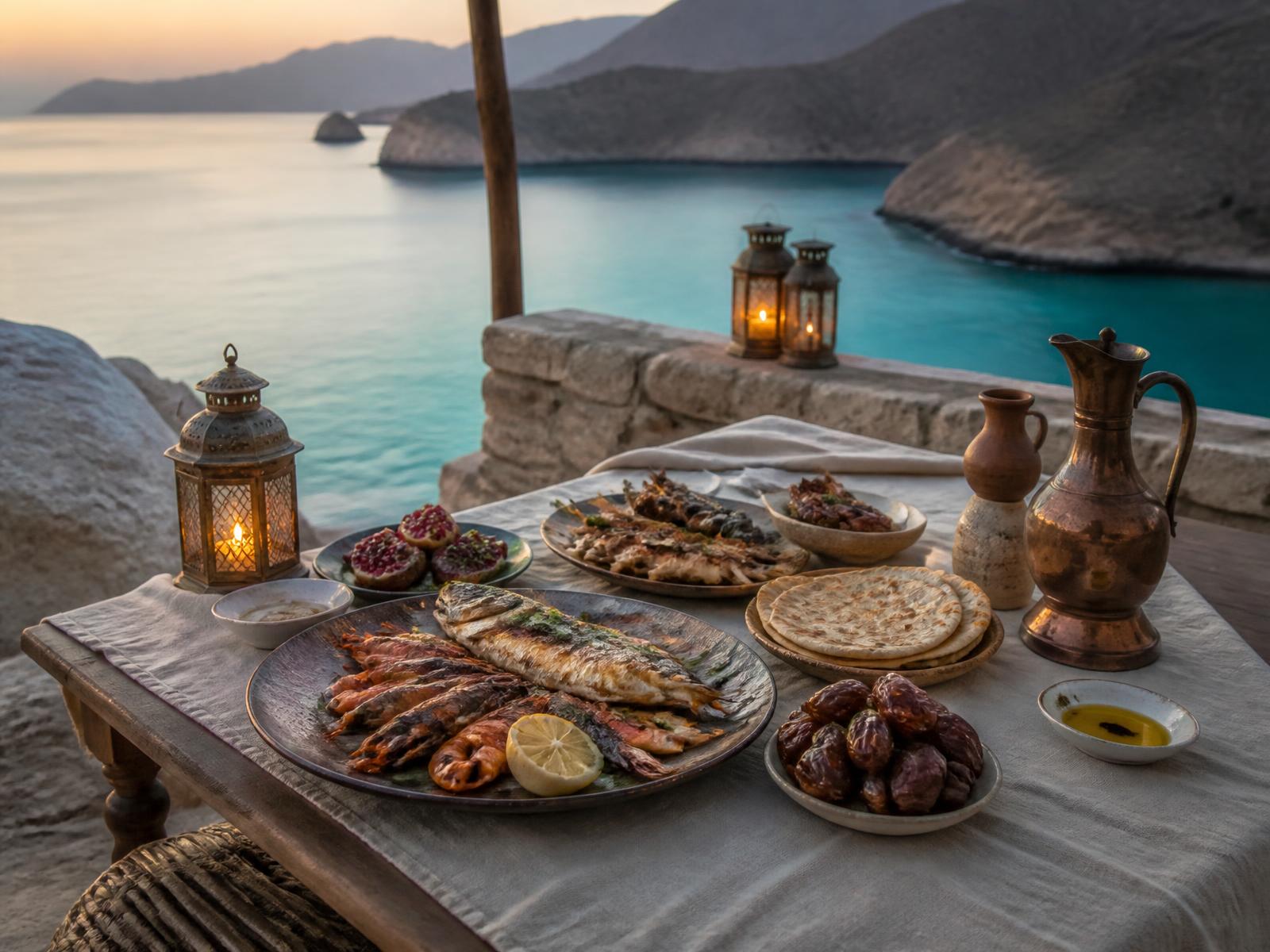
A low table set on a stone terrace above a calm turquoise Omani bay at dusk with grilled seafood, dates, flatbread, olive oil and copper vessels lit by lanterns

Dining

Two seas, one table

Breakfast begins with dates and cardamom coffee, which is not a flourish but the correct order of things on this coast — the sweetness first, then the bitterness, then conversation. Bread comes off the iron plate thin and blistered and folded while it is still too hot to hold. Yoghurt, honey, pomegranate seeds. The bay is flat and pale and doing nothing at all.

The sea supplies most of what follows. Kingfish, hammour, small silver fish grilled whole over coals with lime and a green sauce of coriander and chilli; prawns from the boats at Dibba. The Mediterranean is here too, quietly, in the olive oil and the herbs and the vegetables that arrive raw and unimproved. Nobody is trying to impress anybody.

Dinner tends to happen late, outdoors, under lanterns, in the hour when the rock across the bay holds its warmth and the water goes from copper to slate to black. Somebody puts down a plate of dates at the end. Sit longer than the meal requires; there is nowhere on this peninsula that you need to be.

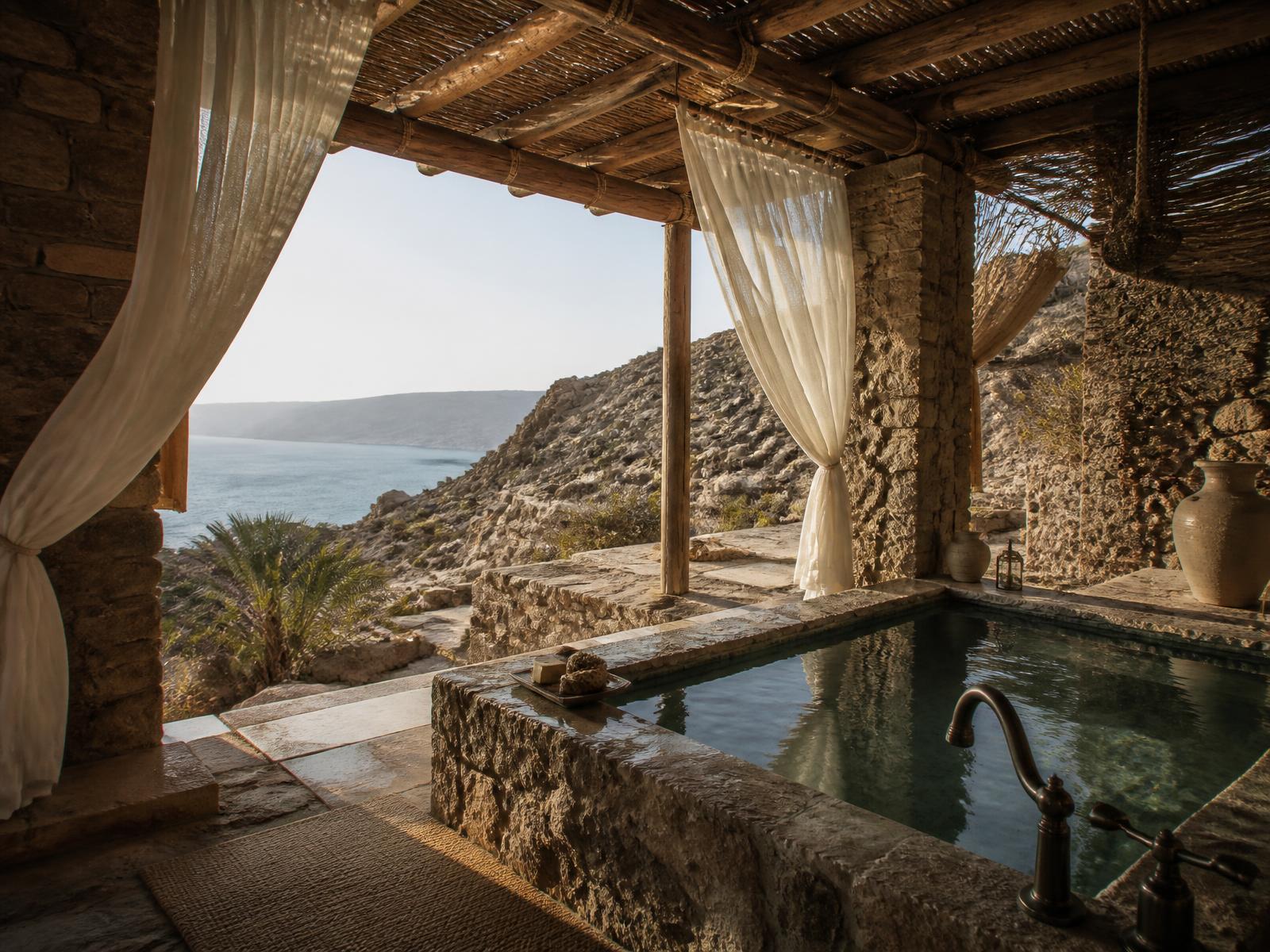
Open-air spa pavilion of natural stone and palm wood built into a rocky Omani mountainside, with linen curtains, a stone bathing pool and a view over the bay

Wellness

Heat, water, shade — an old arithmetic

The spa is set back into the rock, above the village, reached along a path where you will meet nobody. Open pavilions of stone and palm wood, linen moving in the breeze, a bath cut into the mountain with the bay laid out below it. The shutters are open. What you hear is wind and, distantly, water.

The oils are frankincense and date, rose from the terraces at Jebel Akhdar, and the pressure is unhurried in the way of people who were taught this rather than trained in it. Warm stones from the wadi. Sand. Nothing perfumed beyond what grows or burns here.

Afterwards, tea, and no particular reason to move. Yoga happens on a platform facing the water if you want it; most mornings the better version is simply walking the length of the beach before the heat arrives. What actually restores people in this bay is harder to arrange elsewhere — several consecutive days without traffic, without a glow on the horizon, and without anywhere to be.

Signature Experiences

Eight ways to meet the landscape

None of it is arranged for effect. The mountains and the water were doing all of this long before anyone thought to stay here.

  • No. 01

    The pass, taken slowly, at first light

    The road over the mountain is unpaved, steep and entirely serious, and it is the reason arriving here feels like a decision rather than a transfer. Go back up it once, early, with a driver who knows every switchback. From the top the bay is a single curve of turquoise with a village lying along it, and the silence at that altitude is the kind that makes people stop talking mid-sentence.

  • No. 02

    Descending by air, which sounds like theatre and is not

    Some guests arrive over the ridge under a paraglider, running three steps off a rock and then simply hanging above the Gulf while the mountains fall away beneath them. It lasts a few minutes. What people remember is not the drop but the quiet — no engine, no rush, just warm air rising off stone and a bay coming slowly up to meet them.

  • No. 03

    A dhow into the fjords

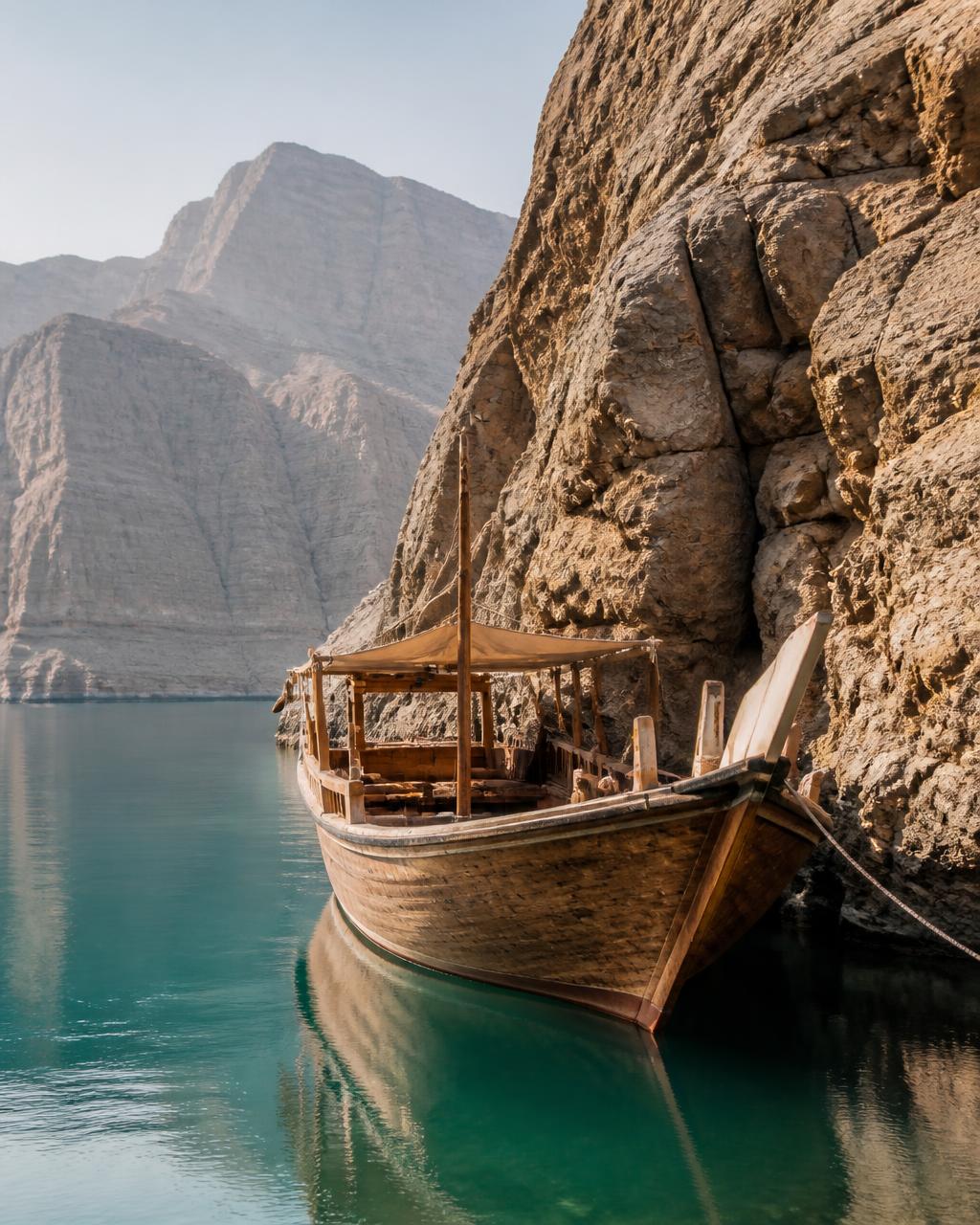
    North of the bay the coast breaks into khors — deep flooded valleys where sheer rock falls straight into still water and there is no beach, no road and no sound at all. A wooden dhow, no particular destination, several hours. Dolphins usually. Fishermen occasionally. Mostly the strange experience of scale in a place with nothing built in it.

  • No. 04

    The reef, which almost nobody talks about

    The Musandam sits where two seas meet, and the water is busier than the landscape suggests. Twenty minutes out, a metre down: reef fish in absurd numbers, rays in the sand, and visibility that changes with the tide. Go early, before the wind gets up.

  • No. 05

    Bread, and the woman who makes it

    Rakhal is cooked in seconds on a domed iron plate, thin as paper, folded warm. Watching it made is a small ceremony of wrist and heat and timing. Eat it standing up, with date syrup, and understand that everything else in Omani cooking is built on this patience.

  • No. 06

    Frankincense, which explains the country

    This coast traded resin before it traded anything else. The smoke is bitter, then sweet, then something like cold pine, and it clings to linen for days. Buy a small piece of the pale grade and burn it once in the courtyard at dusk. Oman is easier to understand afterwards.

  • No. 07

    Sunset from the mountain, with nothing to do

    A short drive up the ridge, a rug, a flask, and the whole Gulf of Oman turning from silver to copper to a colour there is no useful word for. The light goes quickly at this latitude. Stay for the twenty minutes afterwards, when the rock keeps its heat and the sky does not.

  • No. 08

    The sky, undamaged

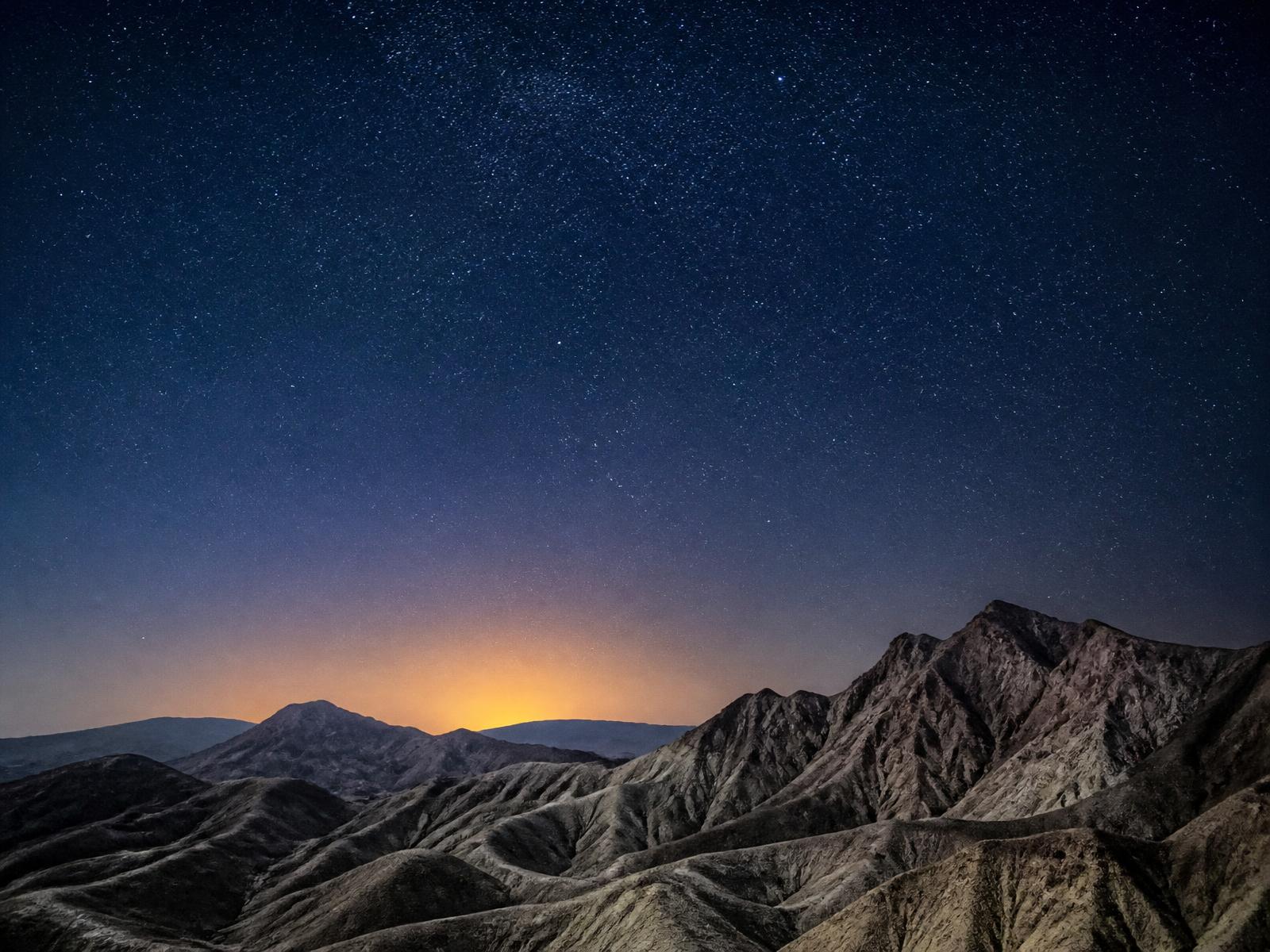
    There is no city within sight of this bay and nothing on the horizon to spoil the dark. Lie on the sand after dinner, give your eyes their twenty minutes, and watch the Milky Way come up over the ridge behind the village. Nobody stays out long enough. Stay out longer.

Nearby Discoveries

What we would tell a friend

The Musandam rewards early starts and unhurried afternoons. Almost none of this needs to be photographed.

  • No. 01

    Khasab, on a working morning

    The small port at the top of the peninsula, where fishing boats unload and the mountains come down to the quay. Go early, walk the harbour, buy nothing. It is not picturesque and that is exactly the point.

  • No. 02

    Telegraph Island

    A bare rock in a fjord where British telegraph operators were once stationed and reportedly lost their minds from the heat and the silence. Twenty minutes ashore is plenty. The water around it is extraordinary.

  • No. 03

    A mountain village that never left

    Above the coast there are settlements of stone and mud brick with falaj channels still running through them, terraces still worked, doors still carved by hand. Go with someone local, ask before photographing, and accept the coffee.

  • No. 04

    The wadi, after rain

    Rain here is rare and briefly transformative — dry riverbeds run, the rock darkens, and green appears in places that looked incapable of it. If it happens during your stay, cancel whatever you had planned.

  • No. 05

    Dates, properly

    Khalas, fard, khenaizi — the varieties matter, and the difference between a good date and an ordinary one is not subtle. Taste several with cardamom coffee. You will never look at the tin ones again.

  • No. 06

    The old fort at dusk

    Squat, pale, sun-warmed, built for a coast that once needed defending. It takes forty minutes to walk and the light in the last hour makes the stone look like it is still cooling from the day.

  • No. 07

    Photographing rock, which defeats most people

    The Hajar range flattens completely in midday light. Shoot at dawn or in the final hour, from low, with something small in the frame — a boat, a palm, a doorway. Fewer photographs, better ones.

Maison Voyage Loves

Six small things

  • Sunrise over the Gulf, watched from the sand, while the mountains behind you slowly acquire their detail.
  • The sound of water running in a stone channel through a lane you are walking barefoot.
  • Cardamom coffee and three dates, taken standing in the shade at eleven in the morning.
  • The moment on the pass when the sea appears and nobody in the car says anything.
  • The courtyard at four in the afternoon, when the palm shadow has crossed the whole wall.
  • Frankincense burning somewhere at dusk, and the way it stays in the linen for days afterwards.

Who This Place Is For

Travellers who would rather be absorbed than entertained.

This is a landscape of rock and salt and very little else, and it is not gentle with people who need constant occupation. The days here are long, hot in the middle and extraordinary at either end, and the pleasure of them is cumulative rather than immediate. By the third morning you will be awake before the light without intending to be.

It suits those who like arriving somewhere difficult to reach; who would rather walk a village lane than cross a lobby; who understand that a courtyard, a wall and a palm tree are a complete architectural argument. It suits people travelling together who are comfortable being quiet in each other's company.

It will disappoint anyone looking for a scene. There is no scene. There is a bay between two mountains, a village along it, and a great deal of sky.

A Note from the Editor

Come in the cool months. Stay five nights. Take the mountain road at least twice.

October to April is the season the coast is comfortable; the light in January is the best of the year. Give one whole day to the fjords by dhow and one whole day to nothing at all. And on one morning, get up before the sky has any colour in it, walk to the far end of the beach with nothing in your hands, and stand there while the Hajar range comes out of the dark. The villa will still be there afterwards. The mountains, quietly, are the reason you came.

Ben Trousil, Founding Editor

From the Journal

Continue reading

All stories
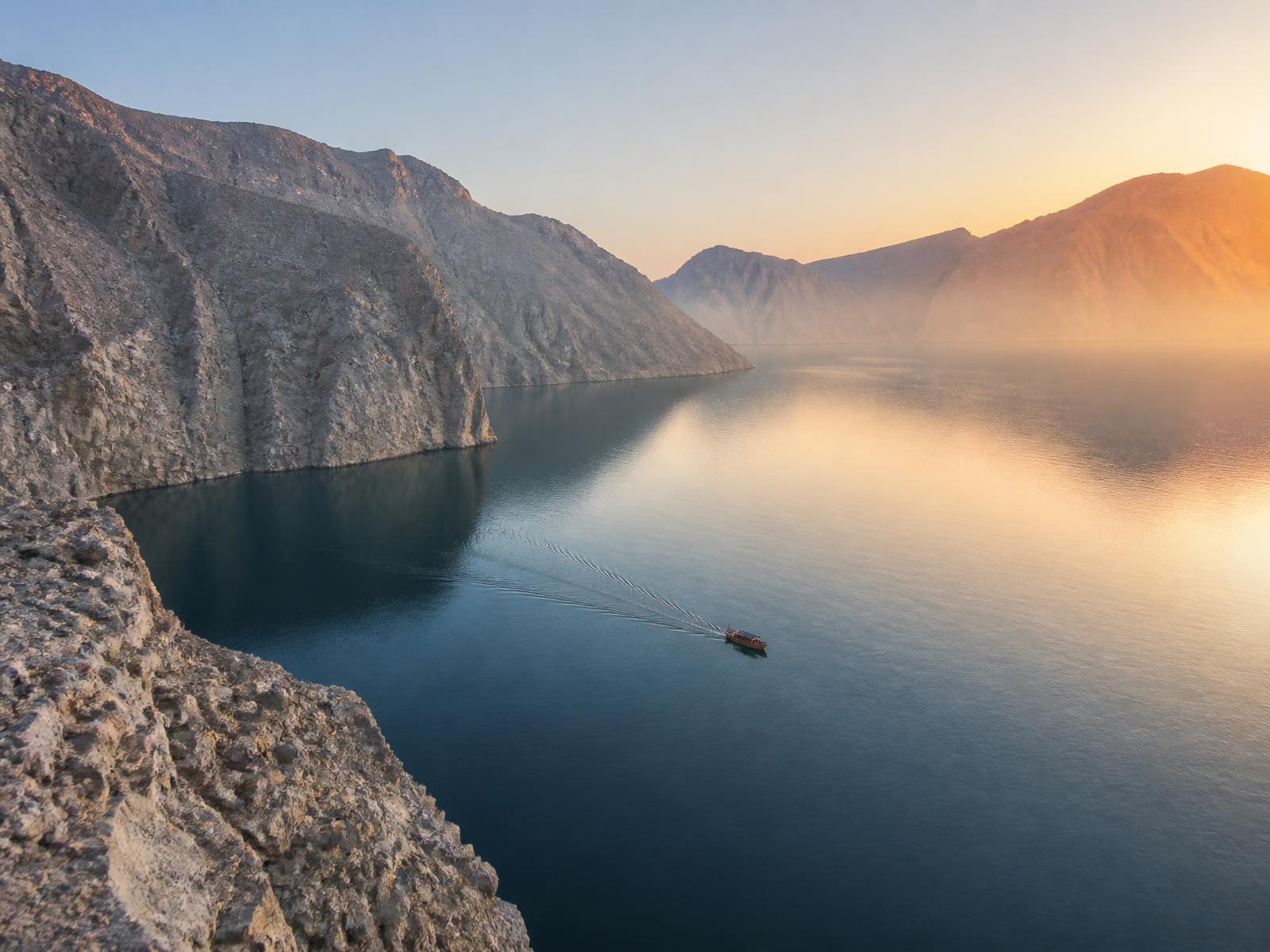
  • Sheer bare rock walls of the Musandam fjords falling into deep still water at dawn with a small wooden boat far below

    LandscapesAugust 2026

    The Musandam, By Water

    Flooded valleys, vertical rock and a coastline with almost nothing built on it. A slow argument for the least visited corner of Arabia.

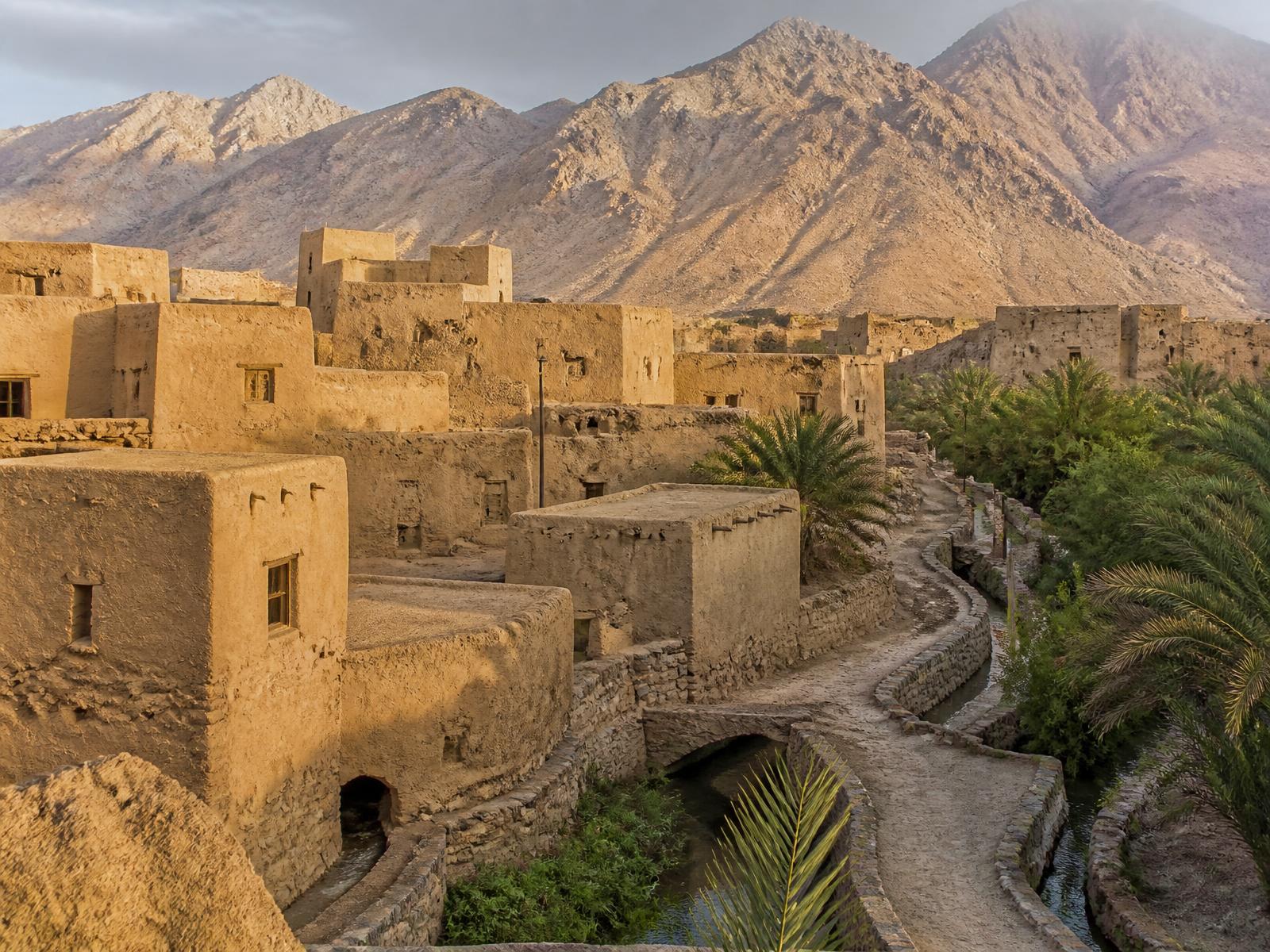
  • An old mud-brick and stone Omani mountain village at golden hour with flat roofs, a falaj water channel and date palms

    ArchitectureJuly 2026

    Building With Earth

    Stone, mud brick, palm wood and shade. What the oldest houses in Oman still understand about heat that modern architecture keeps forgetting.

  • A vast star-filled desert night sky above bare rocky mountains with a faint warm glow on the horizon

    Slow TravelJune 2026

    Where The Dark Is Still Dark

    On night skies, silence and the small number of places left on earth where the horizon does not glow. A quiet survey.

Eine persönliche Anfrage

Let's Curate Your Omani Journey

If the bay has begun to sound like your next journey, we would be glad to arrange it personally — the mountains, the fjords and the long, slow days between them.

A night in Muscat before the drive north, the pass taken at first light, a private dhow into the khors, a mountain village with someone whose family has always lived there, the desert at Wahiba or the terraces of Jebel Akhdar afterwards — shaped entirely around the way you actually travel.

Warum über Maison Voyage buchen?

  • Persönliche Luxusreiseberatung
  • Sorgfältig kuratierte Hotelempfehlungen
  • Maßgeschneiderte Reisepläne
  • Exklusive Partnervorteile, wo immer verfügbar
  • Persönlicher Ansprechpartner von Anfang bis Ende

Es entsteht keine Buchung und keine Kosten. Wir beginnen einfach ein Gespräch.

Eine Einladung

Die Reise fortsetzen

Ein Brief jeden Monat: ein Ort, den Umweg wert, ein Objekt, das Bewahren wert, eine Seite, langsam zu lesen wert. Nicht mehr.