Florenz — Toskana
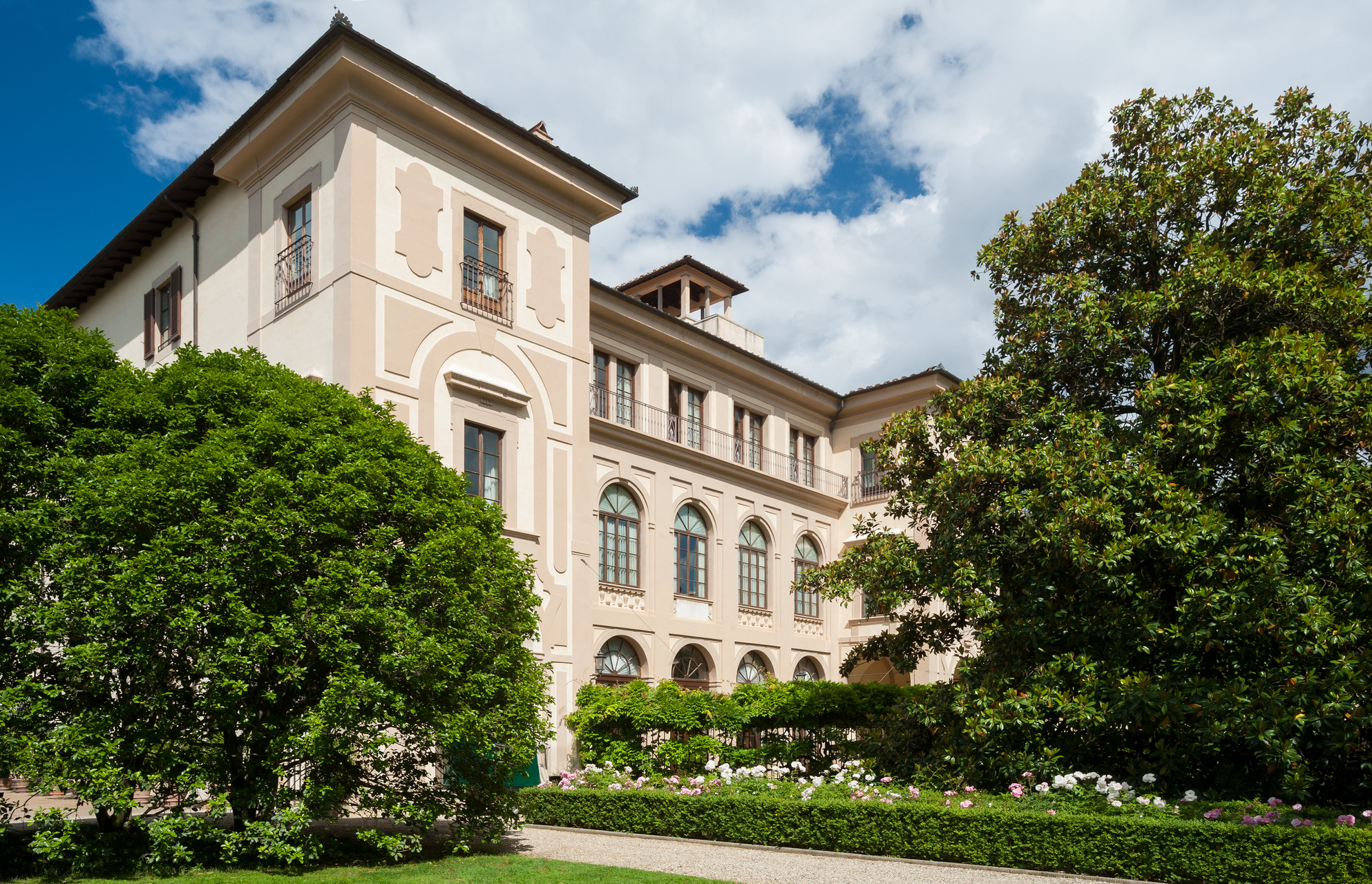
Ein Palazzo mit eigenem Park, zehn Minuten vom Dom
Der Palazzo della Gherardesca aus dem 15. Jahrhundert, dahinter fünfzehn Hektar Garten — in einer Stadt, in der sonst jeder Quadratmeter verplant ist.
Warum wir es empfehlen
Warum wir in Florenz meistens hier unterbringen
Florenz ist im Frühjahr und Herbst voll. Wer abends aus dem Gedränge kommt, merkt sofort, was dieses Haus ausmacht: Man tritt durch das Tor und steht im größten Privatgarten der Stadt. Zikaden statt Vespas.
Der Palazzo selbst ist kein rekonstruiertes Museum, sondern bewohnt. Fresken, Stuck, Reliefs und bemalte Decken sind erhalten und restauriert; die Möblierung hält sich zurück, damit die Räume wirken können.
Dazu kommt ein Service, der ruhig arbeitet und Florenz gut kennt — Uffizien vor Öffnung, ein Tisch in Oltrarno, ein Wagen ins Chianti am nächsten Morgen.
Der Garten
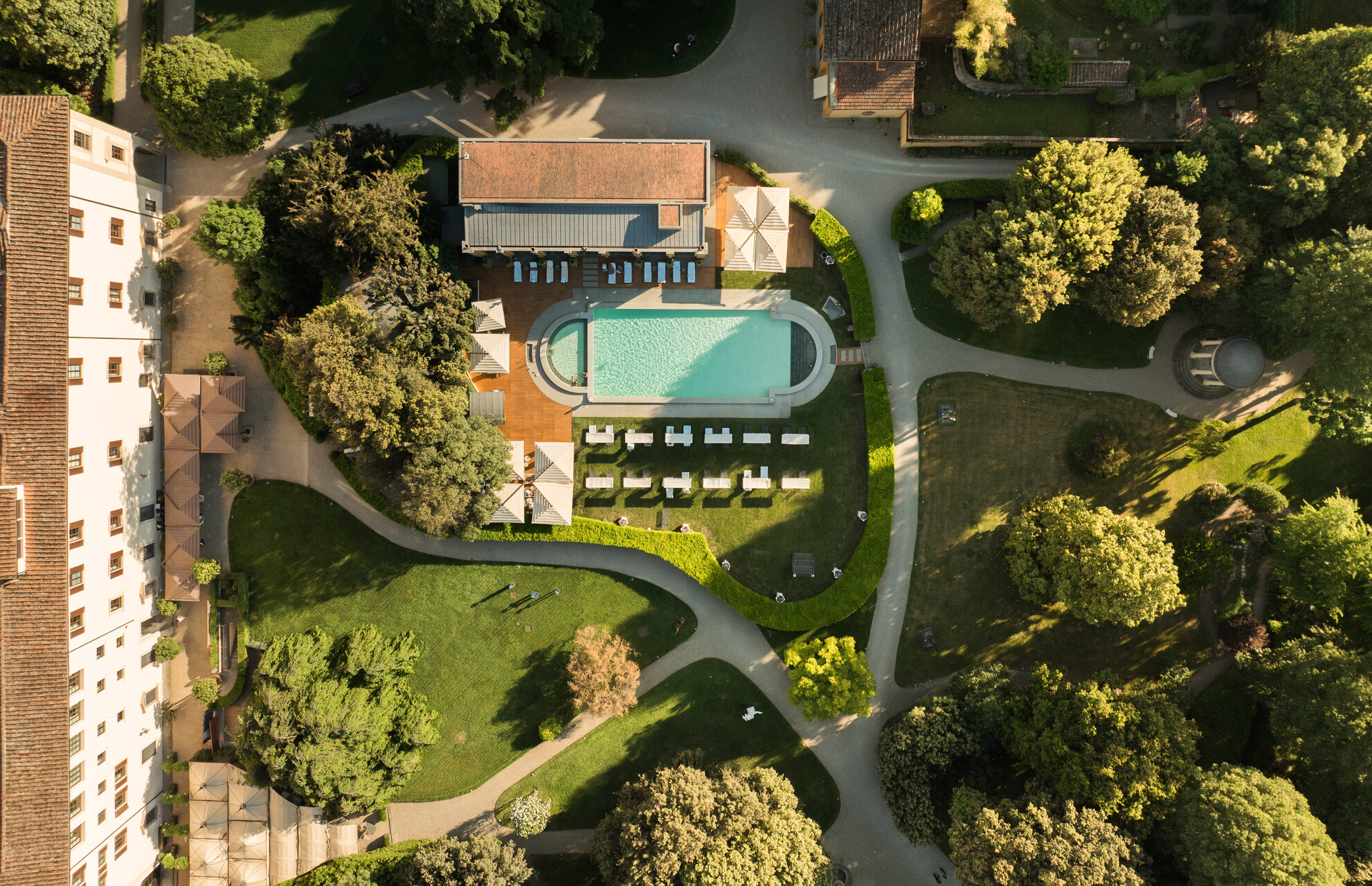
Fünfzehn Hektar hinter einer Stadtmauer
Alte Zedern, Magnolien, ein Tempietto, Rosenbeete und ein langer Pool zwischen den Bäumen: Der Giardino della Gherardesca ist der Grund, warum man hier länger bleibt als geplant.
Im Sommer verschiebt sich das ganze Haus nach draußen — Frühstück unter den Bäumen, später Aperitif am Wasser.
Tisch
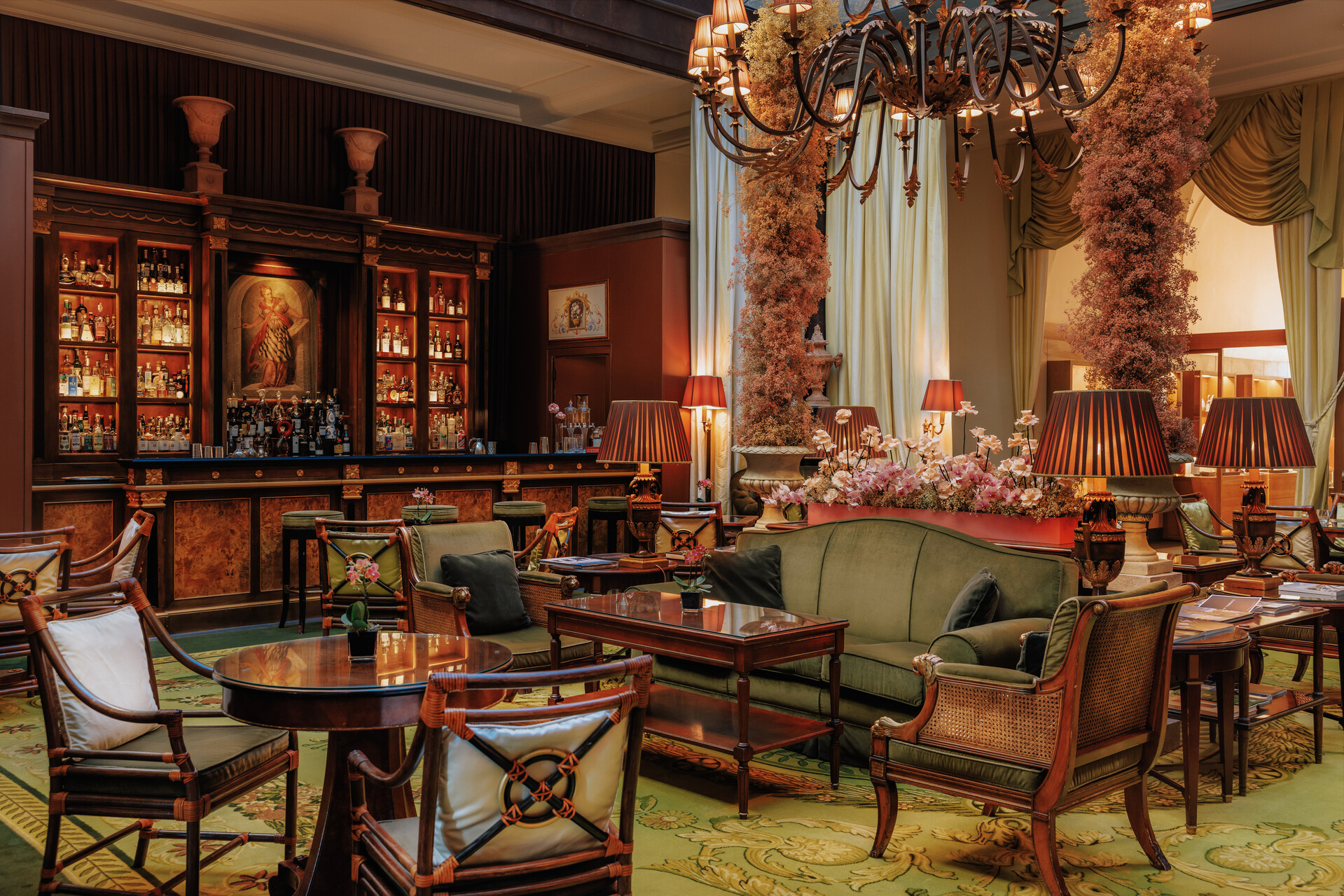
Bar im Atrium, Küche mit toskanischer Handschrift
Die Atrium-Bar unter dem Glasdach ist der Treffpunkt des Hauses: grüne Samtsofas, dunkles Holz, große Blumenarrangements, abends Klavier.
Gegessen wird toskanisch und ohne Effekthascherei; im Sommer draußen im Garten, im Winter in den freskierten Sälen.
Ruhe
Spa und Pool im Park
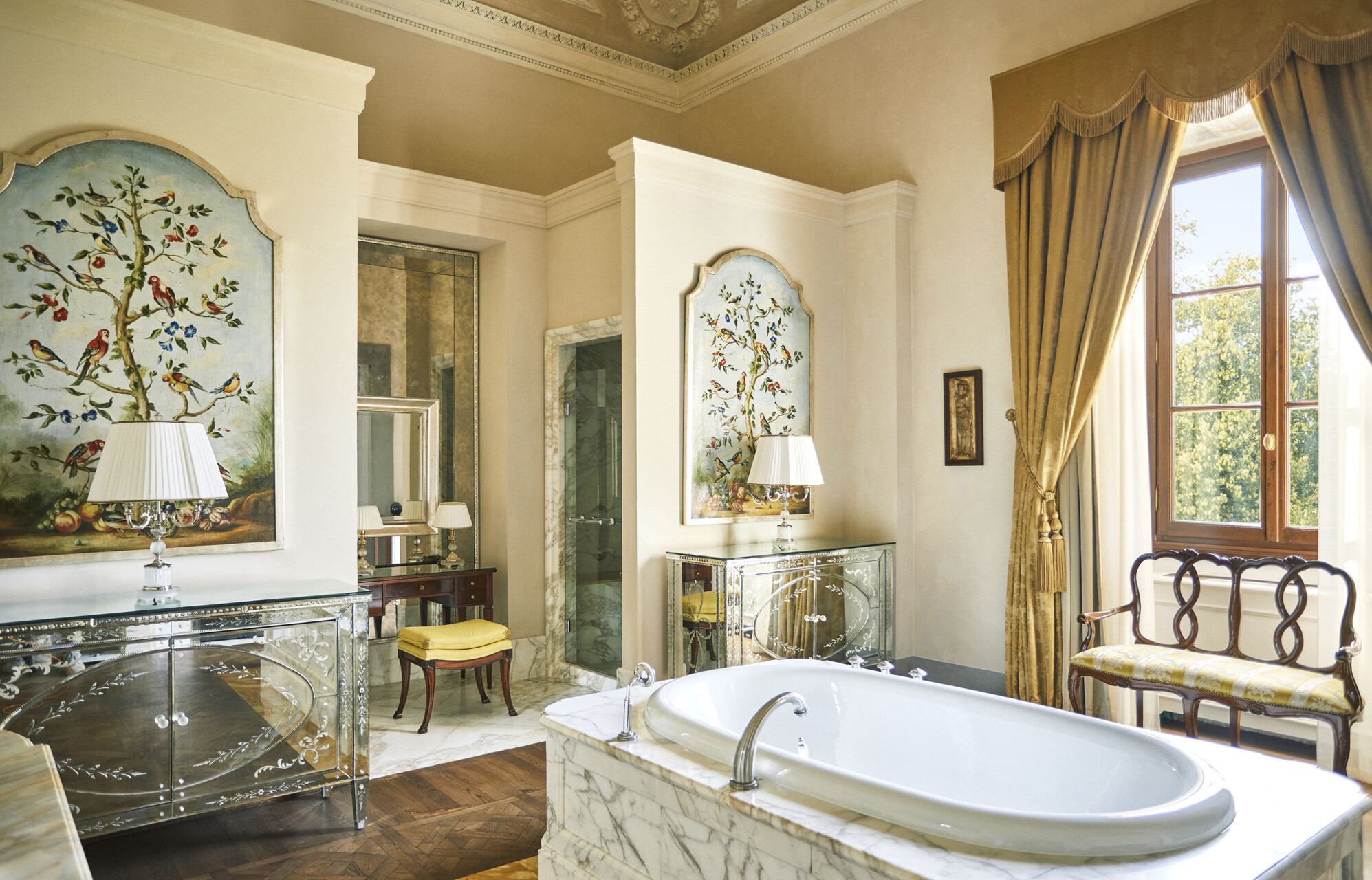
Der Spa liegt in der ehemaligen Conventino und arbeitet mit toskanischen Ölen und Kräutern; die Bäder der Suiten sind mit Marmor, Wandmalereien und Tageslicht selbst schon ein Argument.
Nach einem langen Museumstag ist der Pool zwischen den Bäumen der bessere Plan als ein weiteres Programm.
Wohnen
Unsere Empfehlung: eine Suite im Palazzo, nicht in der Conventino.
Die historischen Zimmer im Palazzo tragen Fresken, Kassettendecken und Stuck — hier zahlt sich die Kategorie sichtbar aus. Die Räume in der Conventino auf der anderen Gartenseite sind ruhiger und moderner geschnitten, ideal für Familien. Zimmer zum Garten sind den Zimmern zur Straße in jedem Fall vorzuziehen.
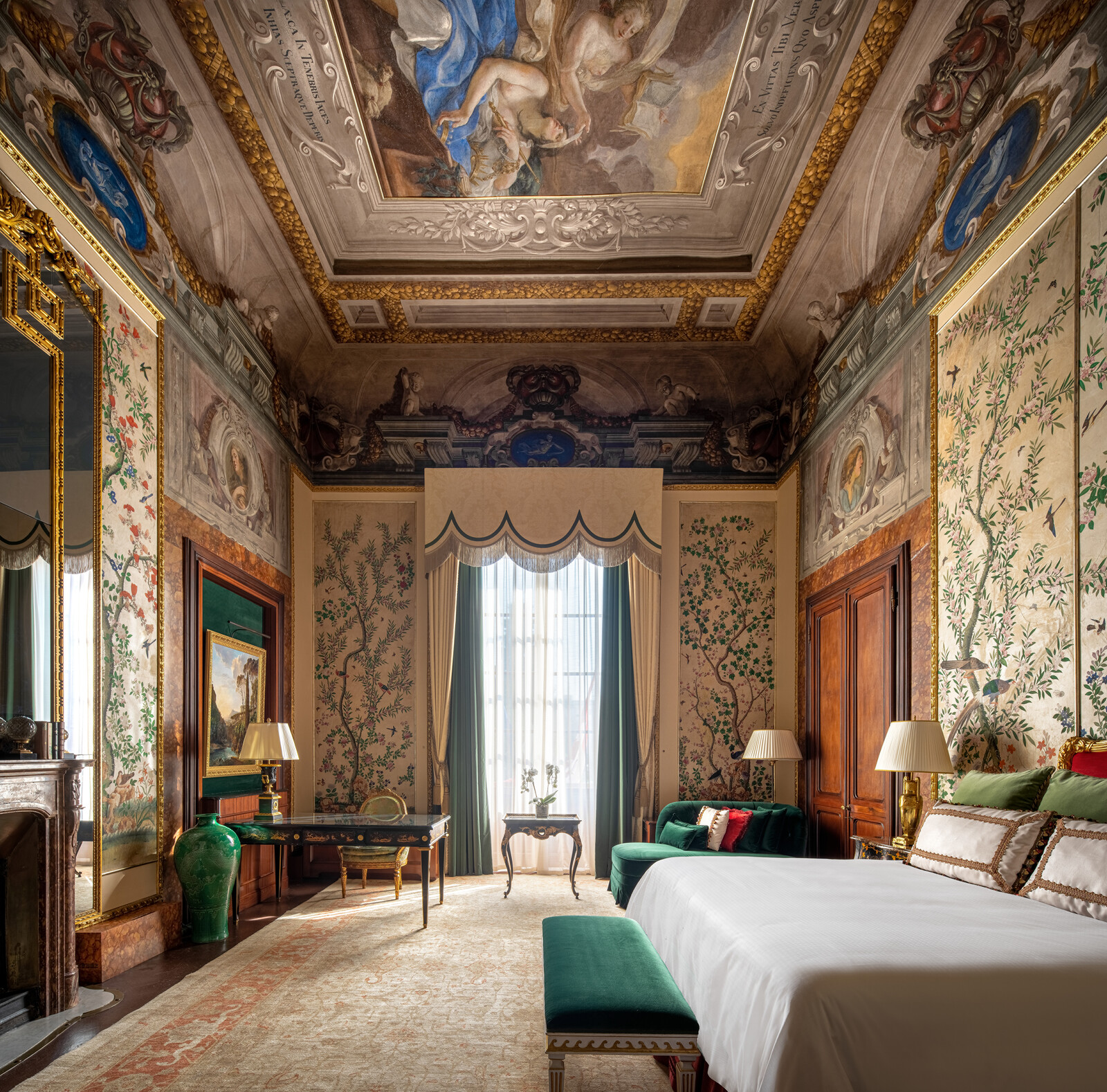
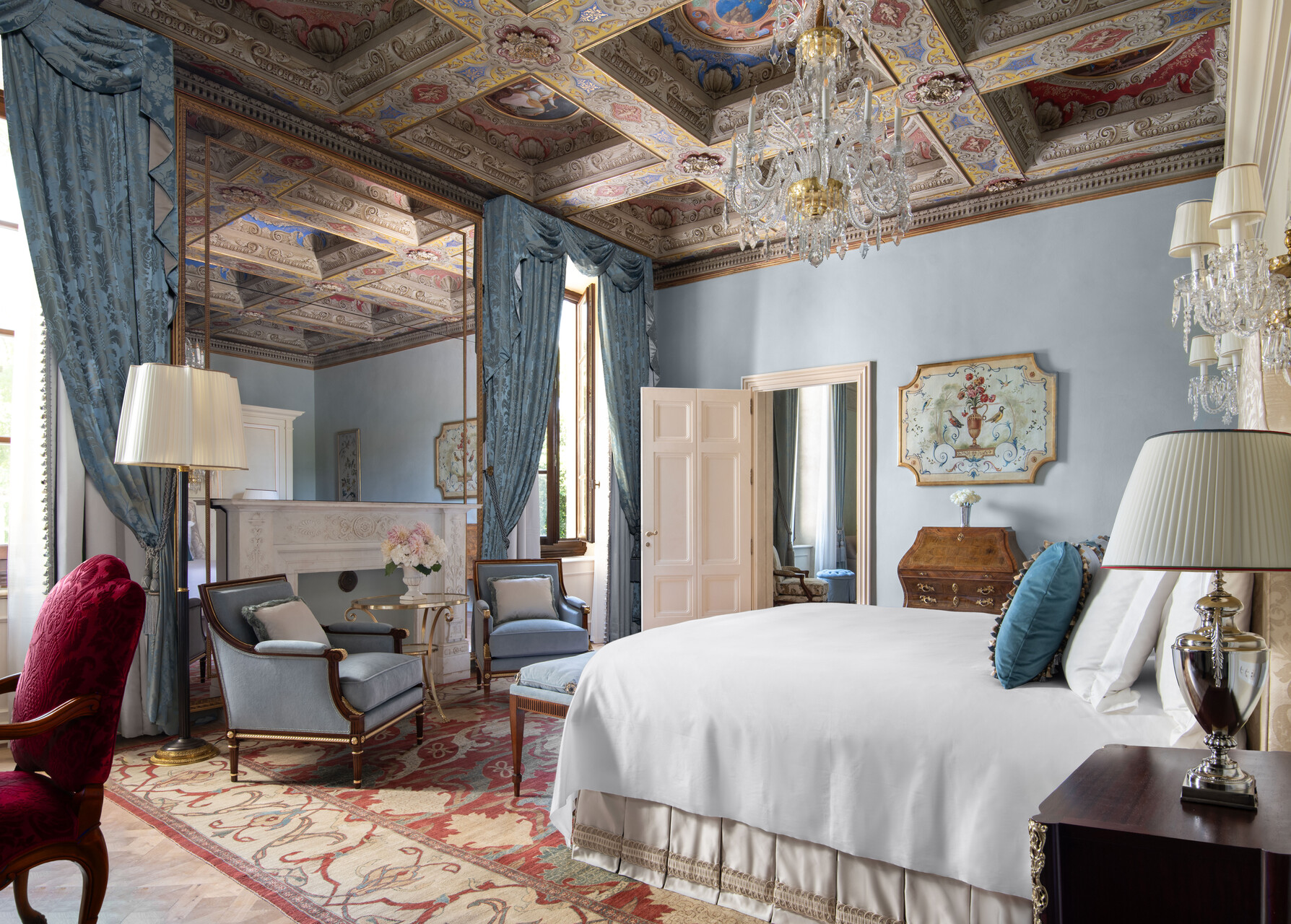
Impressionen
Drei Bilder aus dem Palazzo
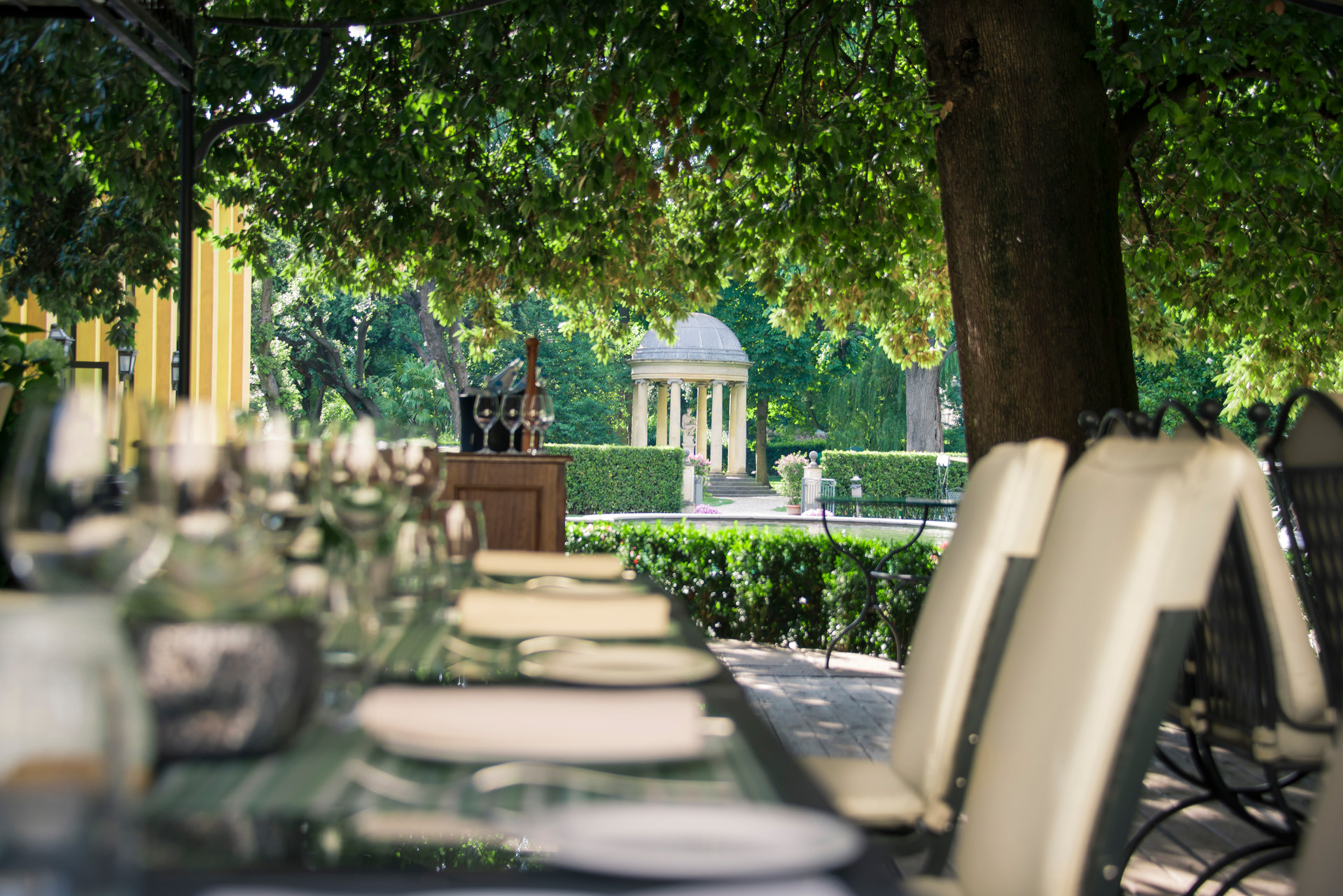
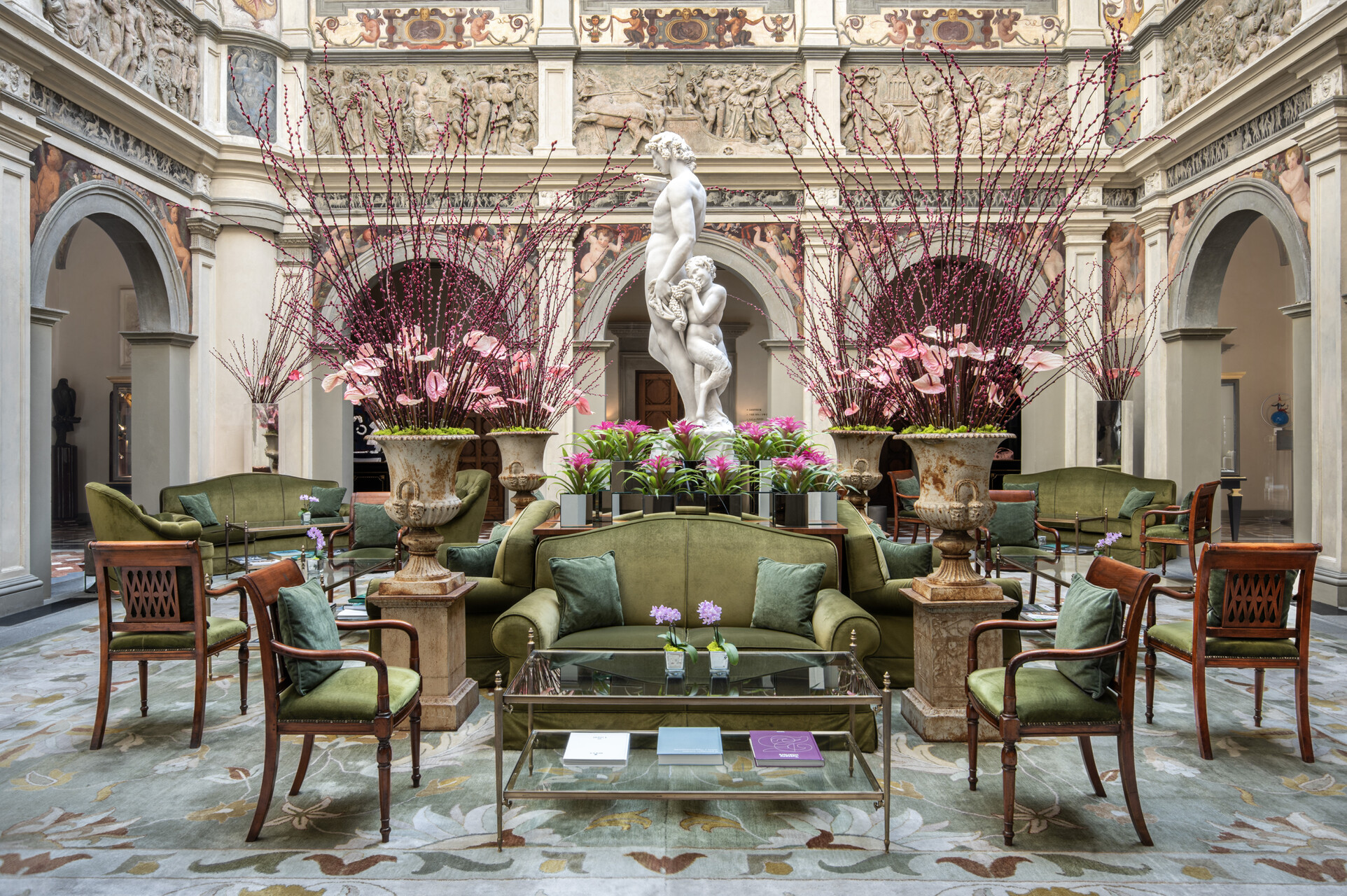
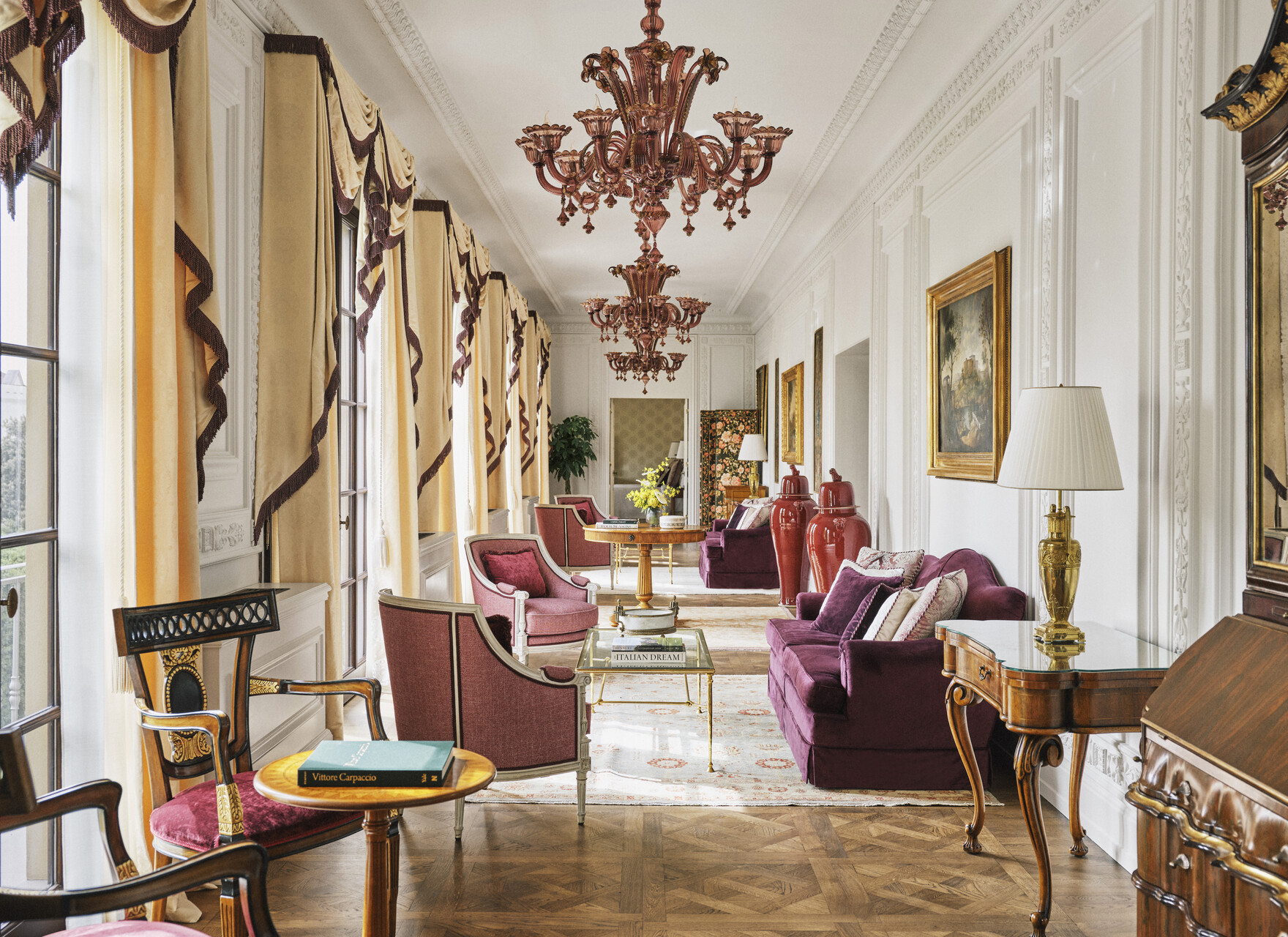
Fotografie: Four Seasons Hotel Firenze
Unsere Einschätzung
Für wen — und wann
- Passt zu Reisenden, die Florenz zu Fuß erleben und abends echte Ruhe möchten.
- Passt gut als Auftakt einer Toskana-Reise mit Wagen ins Chianti oder nach Siena.
- Passt weniger, wenn Sie direkt an Dom und Ponte Vecchio wohnen wollen — es sind rund fünfzehn Minuten zu Fuß.
- Beste Zeit: April bis Anfang Juni und September bis Oktober; im Hochsommer rettet der Garten den Tag.
- Drei bis vier Nächte; Uffizien und Accademia am besten früh, Oltrarno am späten Nachmittag.
Lage
Wo das Haus liegt
Der Palazzo liegt am Borgo Pinti, nordöstlich des Zentrums — nah genug für alles zu Fuß, weit genug weg vom Betrieb.
- Nächster Flughafen
- Florenz (FLR) rund 20 Minuten, Pisa (PSA) rund 80 Minuten.
- Anreise
- Mit dem Zug nach Firenze Santa Maria Novella, von dort zehn Minuten mit dem Wagen.
- In Reichweite
- Dom und Uffizien zu Fuß, Chianti und Siena als Tagesetappen.
Kartendaten: Google Maps
Eine persönliche Anfrage
Lassen Sie uns Ihre Tage in Florenz planen
Wir wählen Zimmer und Lage im Haus, reservieren Museen vor Öffnung und die Tische, die sich lohnen.
Häufig verbinden wir Florenz mit ein paar Nächten im Chianti oder an der toskanischen Küste.
Warum über Pure Voyage buchen?
- Persönliche Luxusreiseberatung
- Sorgfältig gewählte Hotelempfehlungen
- Ein Reiseplan, der zu Ihnen passt
- Partnervorteile, wo sie verfügbar sind
- Persönlicher Ansprechpartner von Anfang bis Ende
Unsere Einschätzung
Was wir über dieses Resort sagen würden
Four Seasons Firenze — Florenz, Toskana
Passt besonders für
- Erstbesucher mit vollem Museumsprogramm
- Familien, die einen Garten brauchen
- Sommeraufenthalte mit Pool
Unser Lieblingsraum
Zimmer im Palazzo della Gherardesca
Der historische Flügel ist stimmiger als das Conventino; hohe Decken, Fresken, Blick in den Park.
Wann hinreisen
April bis Juni und September bis Oktober. Im Hochsommer wird der Garten zum Hauptgrund.
Verwandte Erlebnisse
- Uffizien vor der Öffnung
- Ein Vormittag bei einem Goldschmied am Ponte Vecchio
- Fahrt in den Chianti mit Mittagessen auf einem Weingut
Wie viele Nächte sind ideal?
Vier. Florenz selbst braucht zwei konzentrierte Tage; der Garten dieses Hotels rechtfertigt einen dritten ohne Programm. Der vierte Tag gehört der Toskana — Chianti oder Val d'Orcia, mit Fahrer sinnvoller als mit Mietwagen. Wer nur drei Nächte hat, streicht besser einen Ausflug als den freien Vormittag.
Notiert von Pure Voyage
Pure Voyage Atlas
Wohin dieser Ort führt
Der Atlas verbindet, was zusammengehört: die Region, die Kollektionen, die passende Reisezeit und die Hotels, die in derselben Erzählung stehen.
Die Region
In diesen Kollektionen
- Italy We LoveSieben italienische Adressen und die Regionen, für die sie stehen.
- Remarkable City HotelsAdressen, die eine Stadt erklären, statt sie nur zu beherbergen.
- Grand Hotels & Timeless IconsAdressen mit Gedächtnis — und mit einem Standard, der geblieben ist.
- Spring JourneysApril und Mai — Europa, bevor es voll wird.
Passende Reisezeiten
Im Journal
Verwandte Hotels
Weiter in der Kollektion
Ebenfalls empfohlen
Adressen, die Gäste dieses Hotels erfahrungsgemäss ebenfalls schätzen — als Fortsetzung derselben Reise oder als Gegenstück dazu.
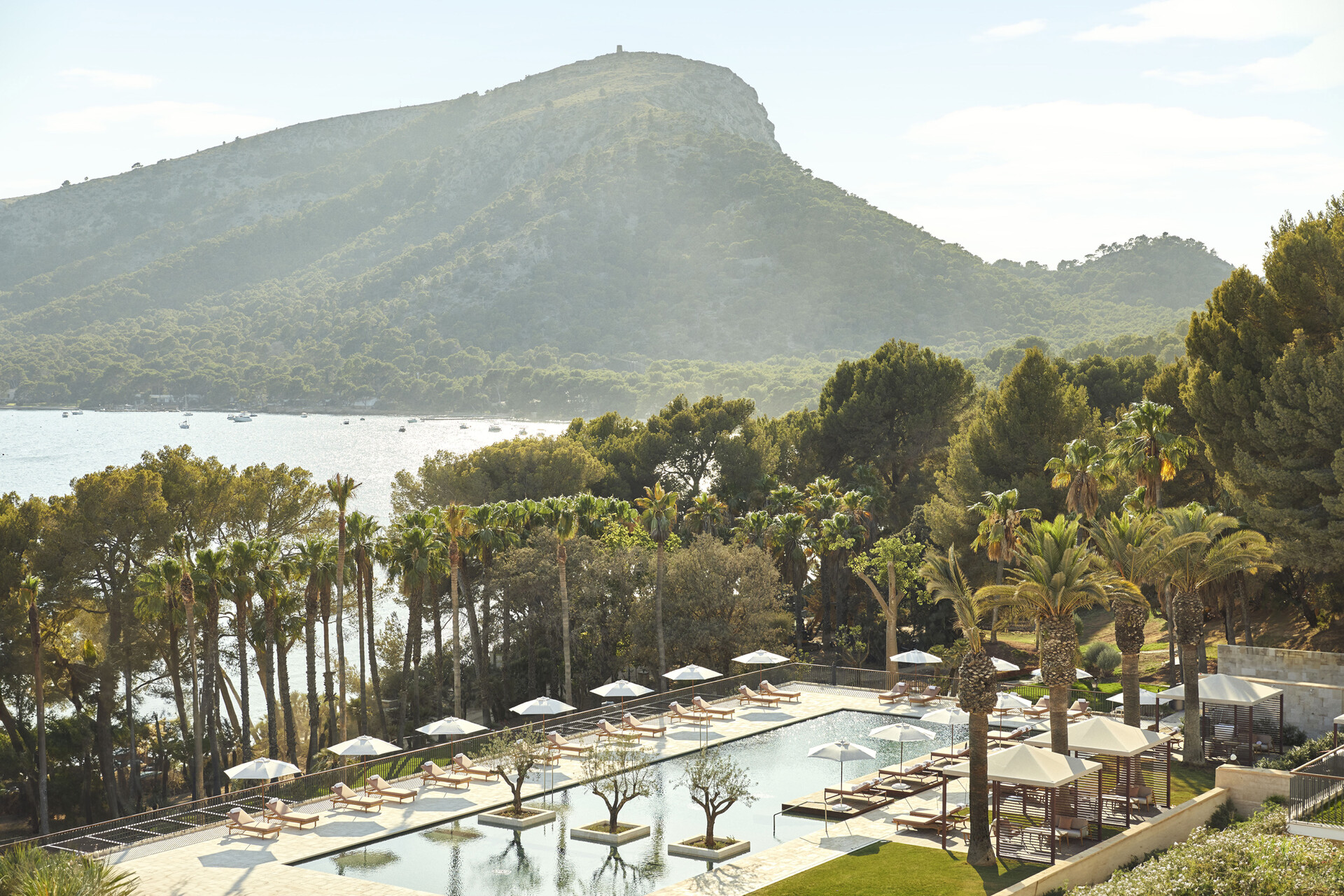
Formentor, Mallorca
Four Seasons Mallorca at Formentor
Das Grandhotel von 1929 an der Bucht von Formentor, sorgfältig zurückgeholt statt neu erfunden.
Empfohlene Dauer: Fünf Nächte
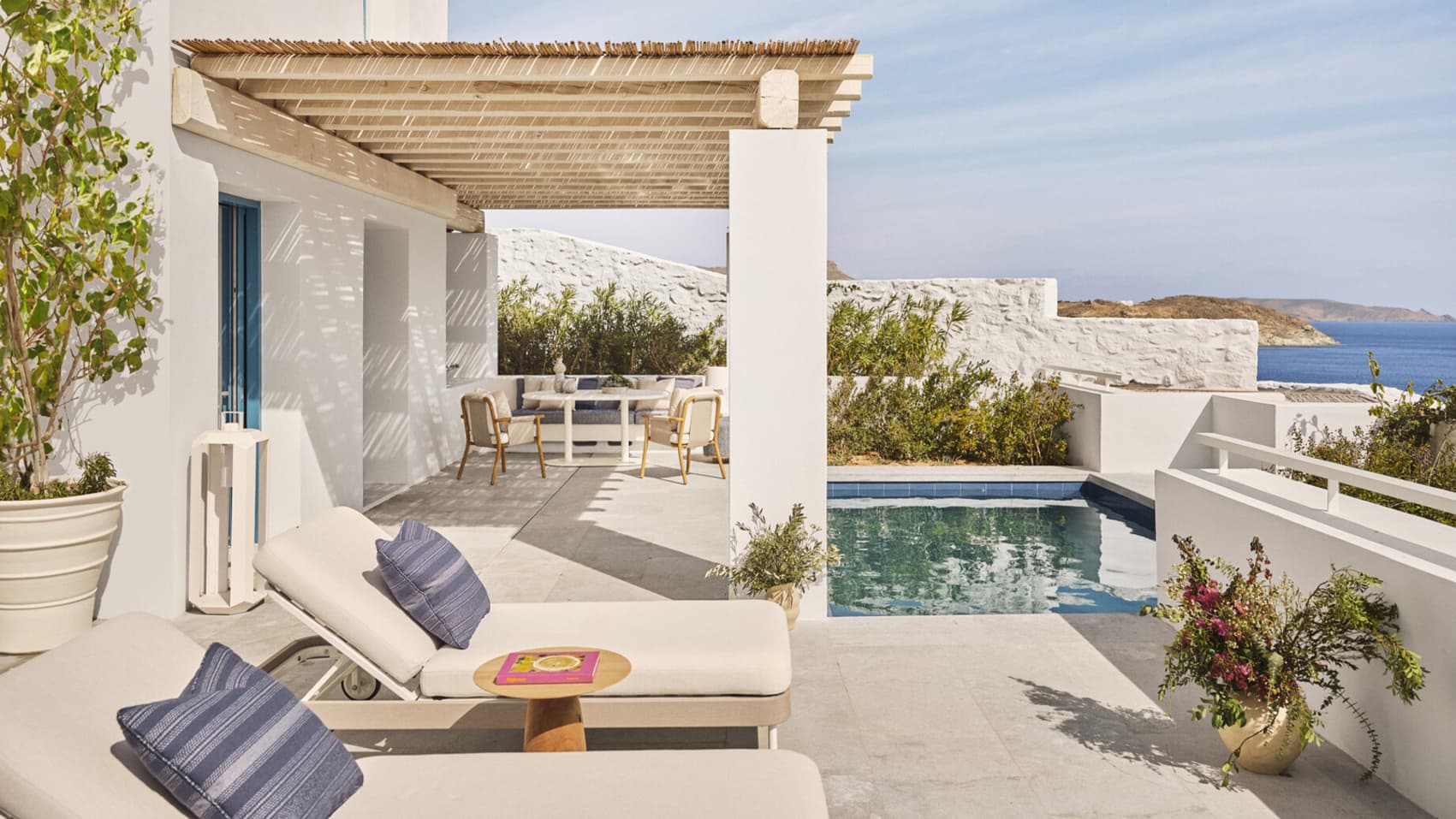
Mykonos, Kykladen
Four Seasons Mykonos
Mykonos an einer ruhigen Südbucht: kykladische Bauweise, weite Terrassen, kurze Wege zum Wasser.
Empfohlene Dauer: Vier bis fünf Nächte
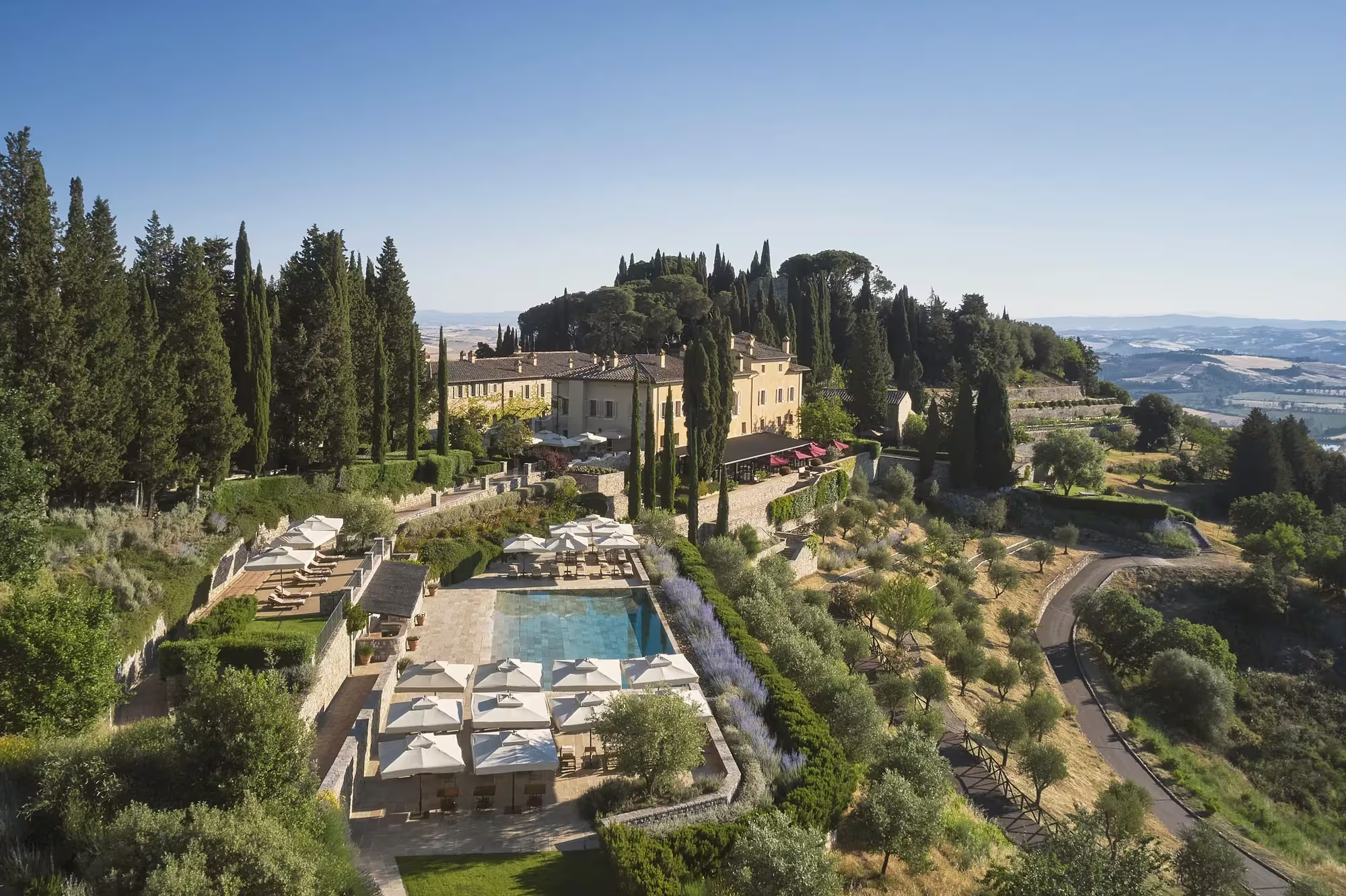
Val d'Orcia, Toskana
Rosewood Castiglion del Bosco
Ein mittelalterlicher Borgo auf 1.100 Hektar Val d'Orcia, mit eigenem Brunello und Suiten in den alten Bauernhäusern.
Empfohlene Dauer: Fünf bis sieben Nächte
Das könnte Ihnen ebenfalls gefallen
Wohin wir Sie sonst schicken würden
Nicht das Ähnlichste, sondern das Naheliegendste: Orte, Wege und Texte, die zu dieser Art zu reisen gehören.
- HotelAman VeniceCanal Grande, VenedigEin Resort, das wir im selben Gespräch nennen würden.
- JourneyVenice Simplon-Orient-ExpressLondon, Paris, die Alpen, VenedigEin Weg, der zu dieser Art zu reisen passt.
- DestinationItalienDas Land, das am häufigsten falsch geplant wird — und am dankbarsten, wenn es stimmt.Das Land dahinter — wie sich alles verbinden lässt.
- EmpfehlungFirst Time ItalyFür die erste Italienreise, die den Ton für alle weiteren setzt.Unsere Auswahl für Reisende mit dieser Haltung.
- JournalWelches Aman passt zu Ihnen?9 MinutenEin Text, der diesen Gedanken weiterführt.
Häufige Fragen
Was Gäste uns dazu fragen
- Wie wählt Pure Voyage die Resorts aus?
- Wir empfehlen nur Hotels, die wir aus eigener Erfahrung, aus der Recherche und aus dem Rückblick unserer Gäste einschätzen können. Entscheidend sind Lage, Haltung und Verlässlichkeit im Alltag — nicht Sterne und nicht Ausstattungslisten.
- Kostet die Buchung über Pure Voyage mehr?
- Nein. Sie zahlen die Rate des Hauses. Über unsere Partnerprogramme kommen in vielen Adressen Leistungen hinzu — Frühstück, ein Guthaben, ein späterer Check-out oder ein besseres Zimmer, wenn verfügbar.
- Welches Zimmer sollte man buchen?
- Fast überall gibt es eine Kategorie, die deutlich mehr bringt als ihr Aufpreis — und eine, die sich nicht lohnt. Auf jeder Hausseite steht unter „Unser Lieblingszimmer“, welche wir nehmen würden.
Weiter im Pure Voyage Universum
Was als Nächstes passt
Kein Katalog, sondern der nächste Schritt: die Hotels, Wege, Länder und Texte, die wir im Gespräch an dieser Stelle nennen würden.
Journeys
Wege, die diese Region erschliessen.
Destinationen
Das Land im Überblick.
Empfehlungen
Was wir für diesen Anlass vorschlagen.
Journal
Weiterlesen, bevor Sie entscheiden.

Eine Einladung
Einmal im Monat: Hotels, Neueröffnungen und Reiseideen
Ein Hotel, das uns überzeugt hat. Eine Neueröffnung, die wir im Blick haben. Und eine Reiseidee zur richtigen Jahreszeit. Sorgfältig ausgewählt und auf das Wesentliche reduziert.