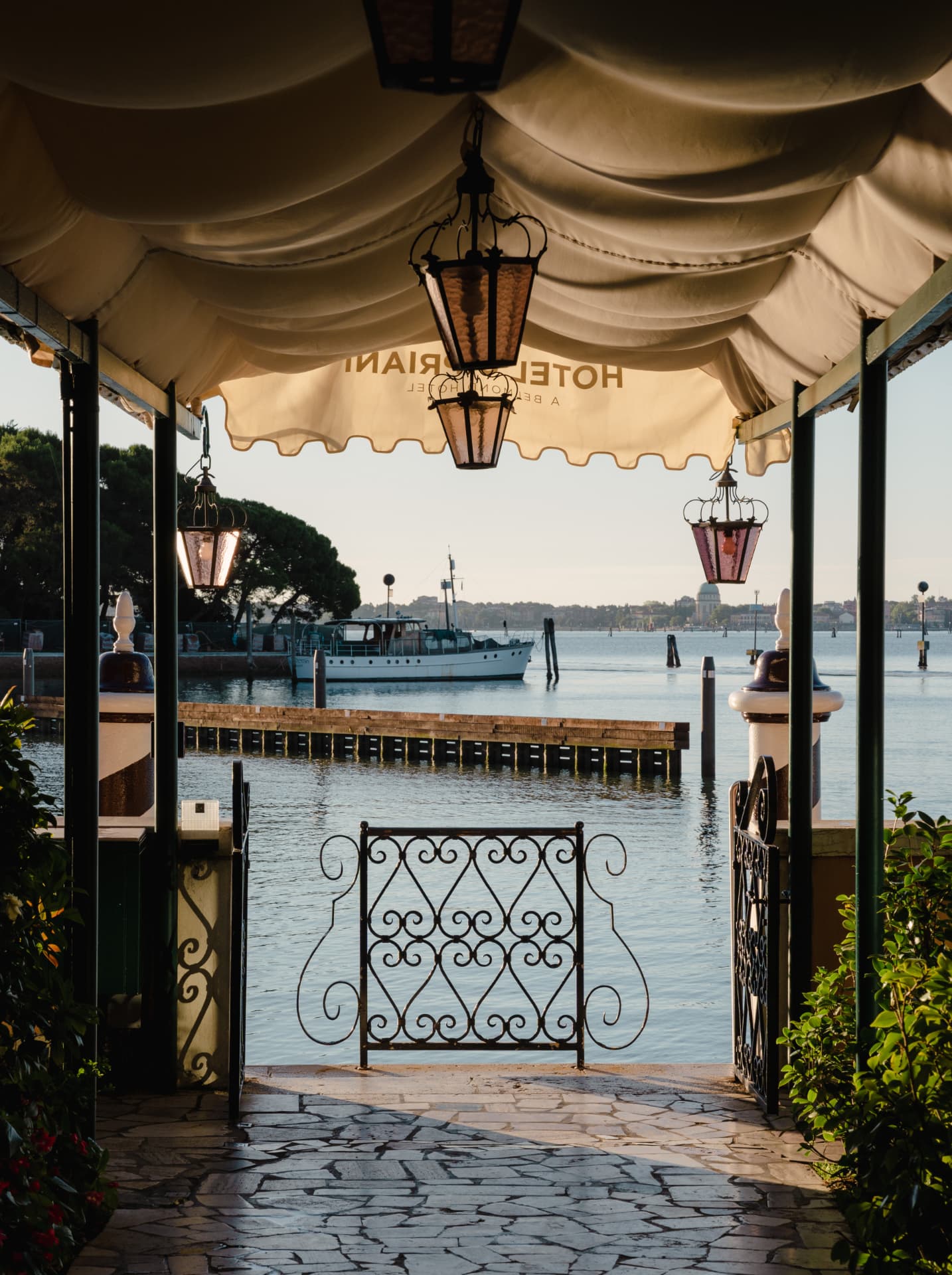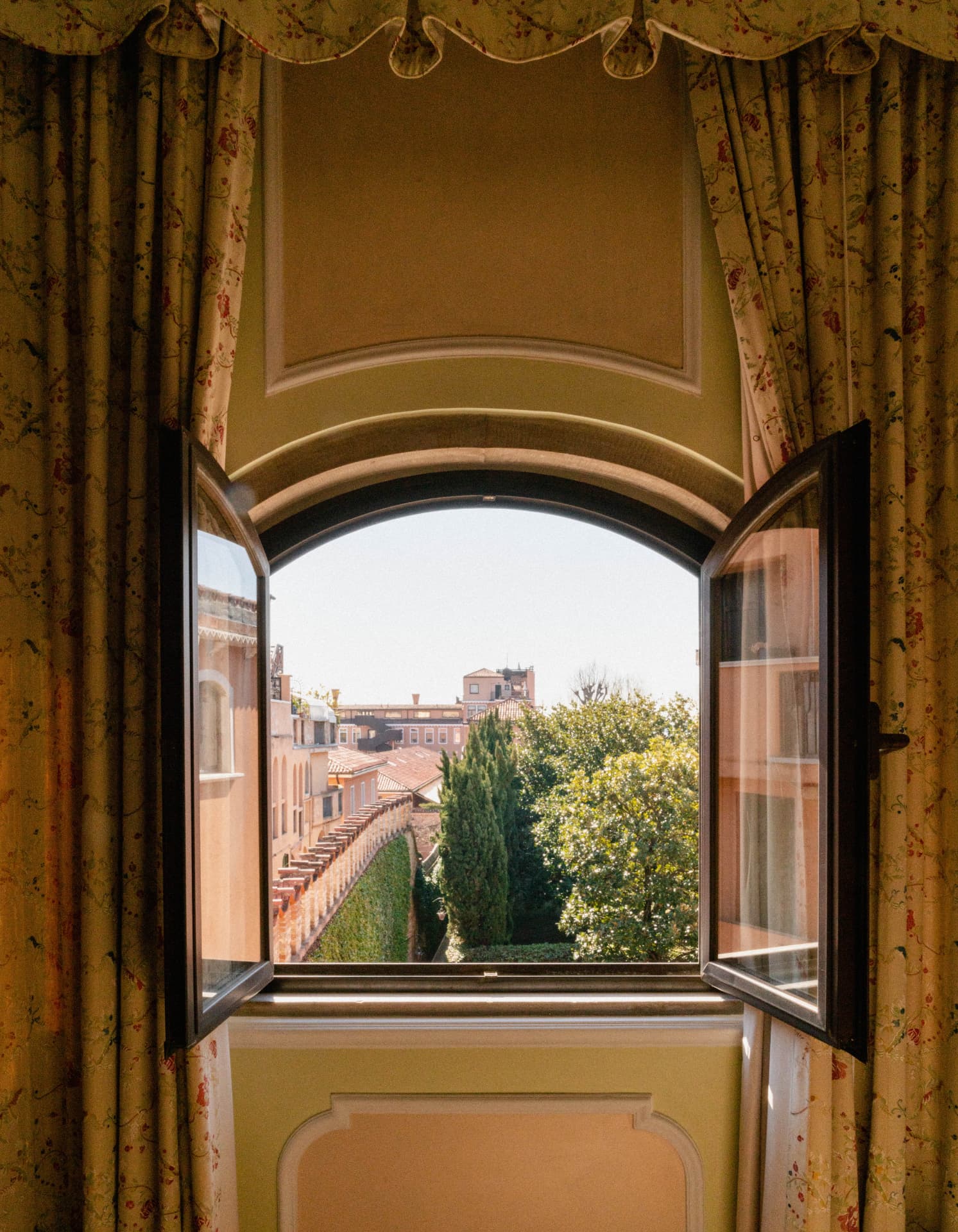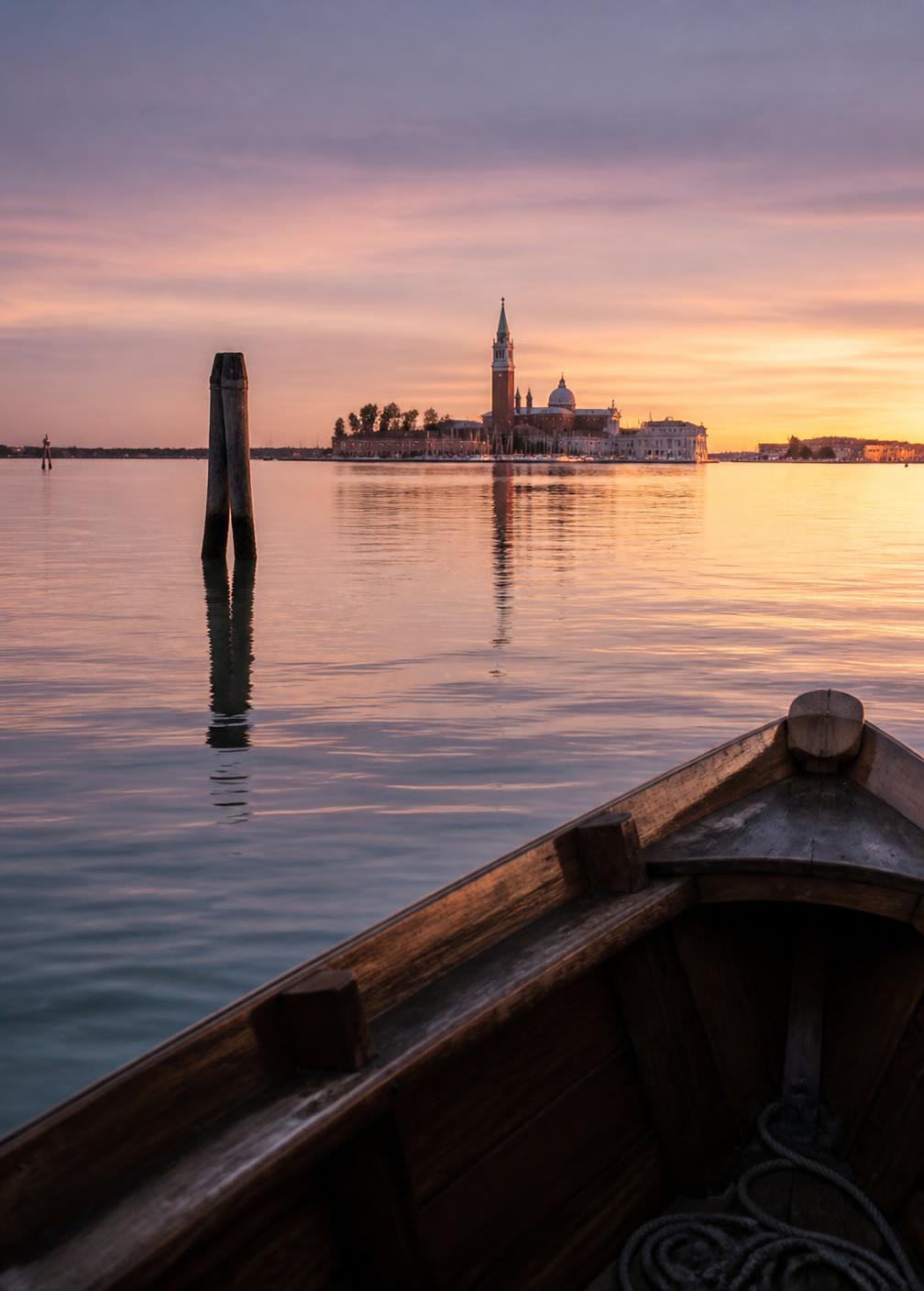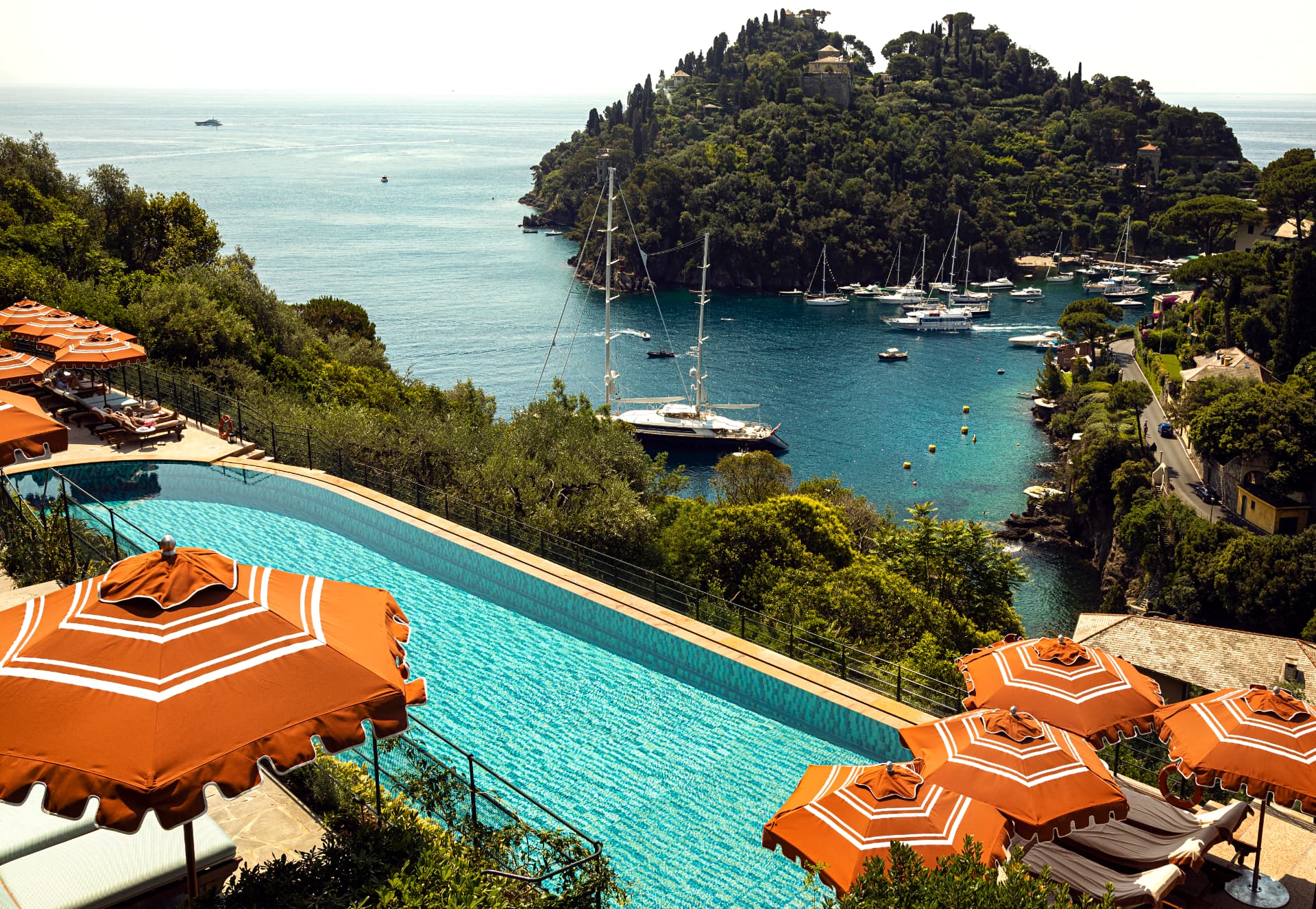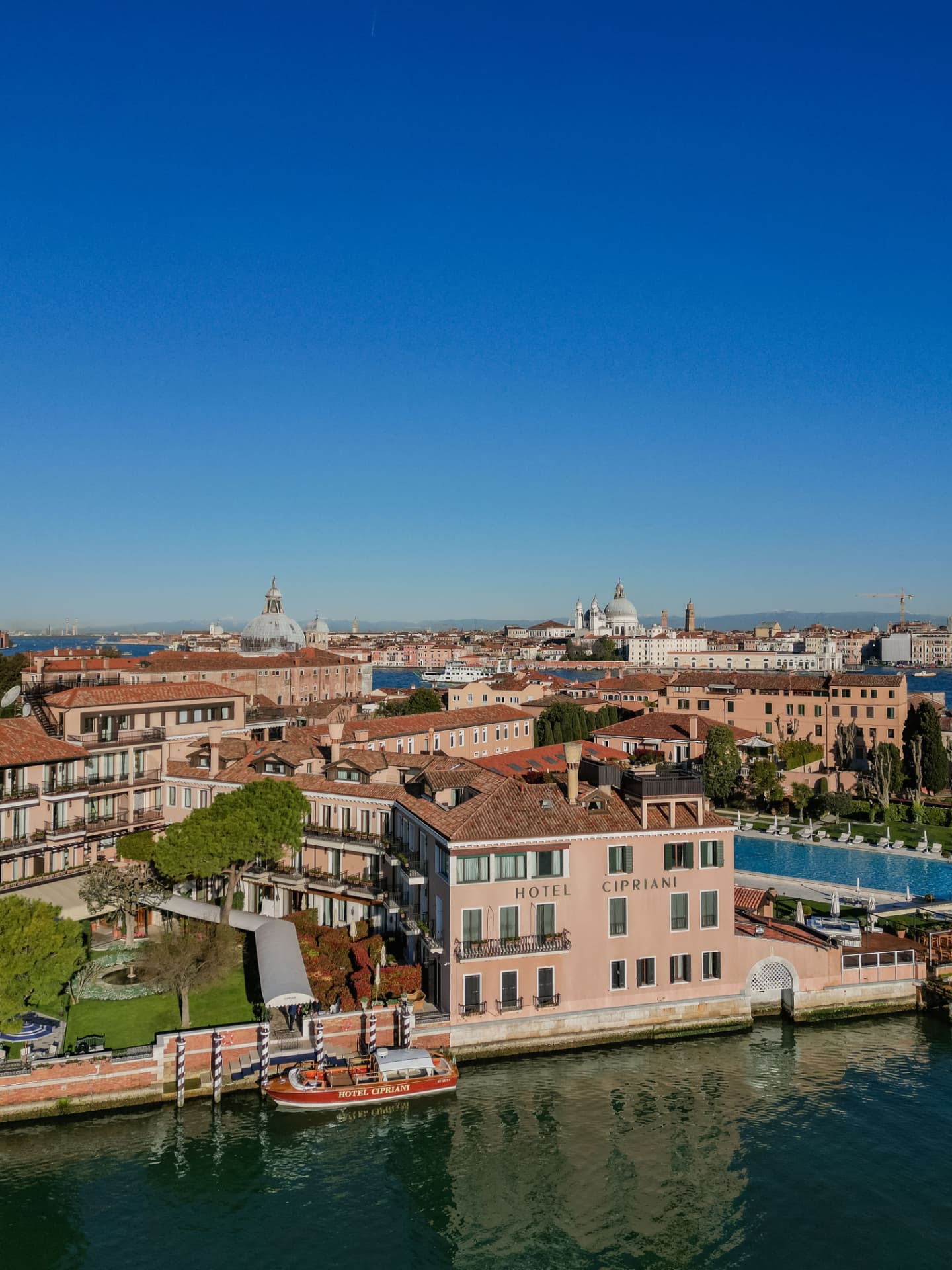
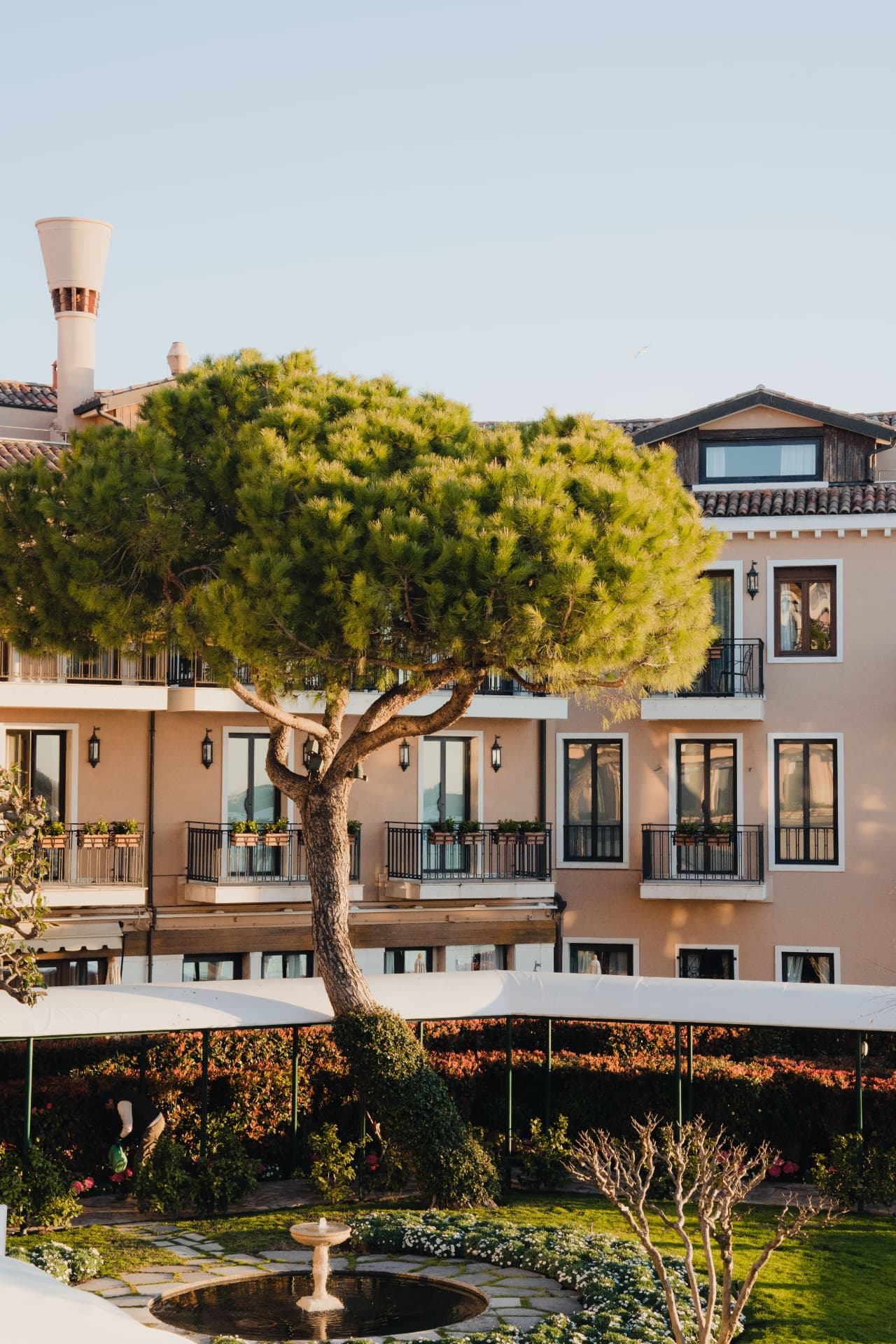
Sunrise over the Venetian lagoon from the gardens of Hotel Cipriani on Giudecca, with marble terrace, cypresses and a wooden Riva boat at the private pier

Belmond — Giudecca, Venice

Venice, Before the City Awakens

Hidden on the peaceful island of Giudecca, Hotel Cipriani has welcomed generations of artists, royalty and discerning travellers. Here, timeless Venetian elegance unfolds far from the crowds, while St. Mark's Square remains only moments away across the lagoon.

An Introduction

A man who already had the most famous bar in Italy decided what he really wanted was a garden.

Giuseppe Cipriani had spent years behind a counter learning what people actually want, which is rarely what they ask for. They ask for a table by the window; they want to be left alone with someone they love. They ask for a cocktail; they want the summer they remember. At Harry's Bar he had perfected the art of giving them the second thing while appearing to give them the first — and then, some time after the war, he went looking for space, which is the one commodity Venice has never had.

He found it across the water, on Giudecca, at the tip of an island of boatyards and kitchen gardens where the city keeps its back turned. There had been a convent orchard here, and a vineyard, and a wall high enough to hold the noise out. He built a low house among the trees, put a swimming pool where nobody in Venice had thought to put one, and told his guests to arrive by boat. Everything that has happened since — the artists, the royalty, the film people who came for a night and cancelled a week of work — followed from that one decision about distance.

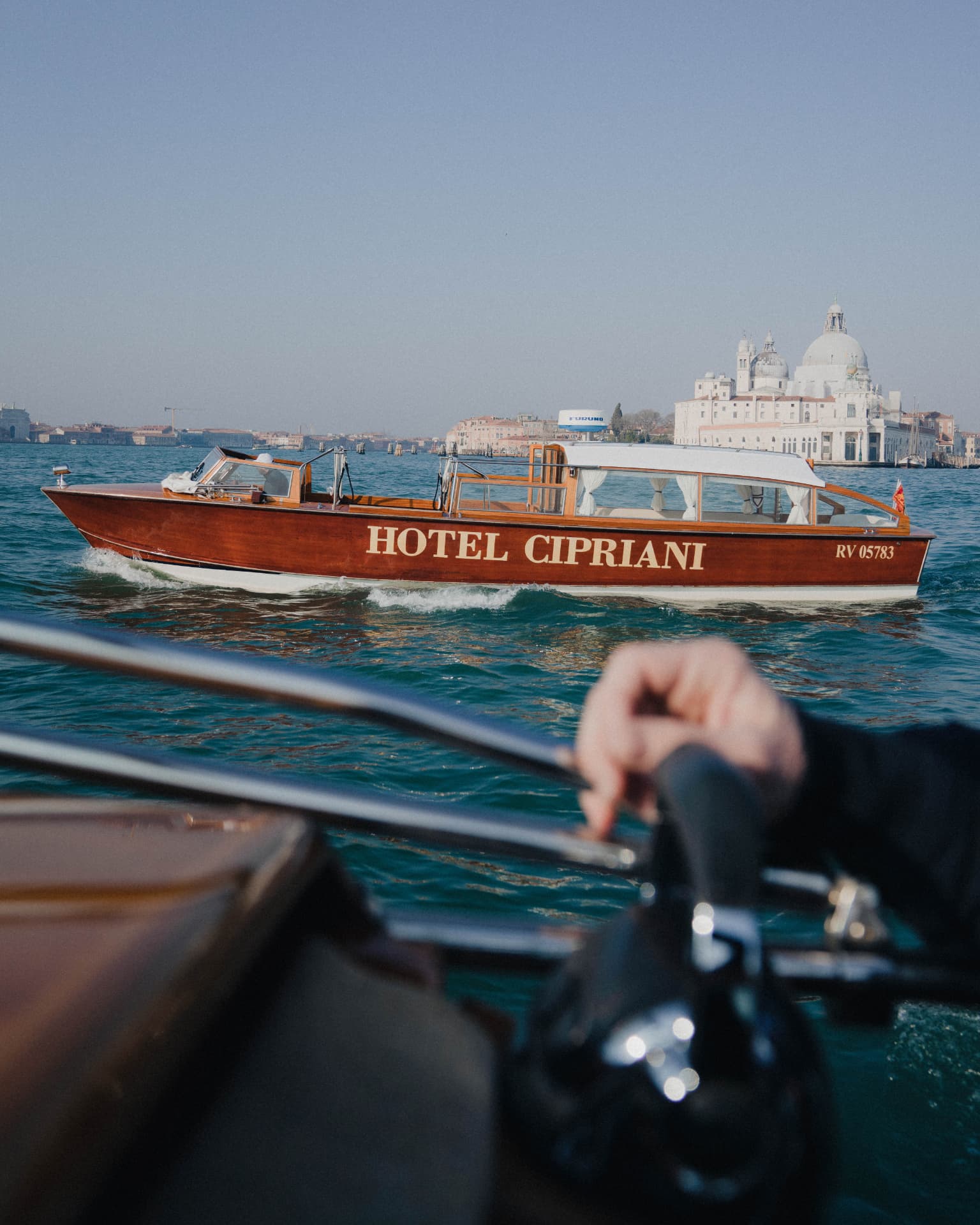
Because the point of Hotel Cipriani is not that it is in Venice. It is that it is three minutes away from it. You look at the city rather than stand in it. In the morning you watch San Marco catch the light from a garden that smells of oleander and cut grass; at eight in the evening you cross the water in a varnished mahogany launch and are set down at the piazzetta like someone in a novel. Then, when the crowds thicken and the vaporetti groan, you go home to an island where the loudest thing is a church bell over the water.

Seventy years on it remains, quietly, one of the great luxury hotels in Venice — and one of the great romantic addresses in Italy — for a reason that has very little to do with grandeur. It understood, early and completely, that in a city everyone wants a piece of, the rarest luxury is a little air.

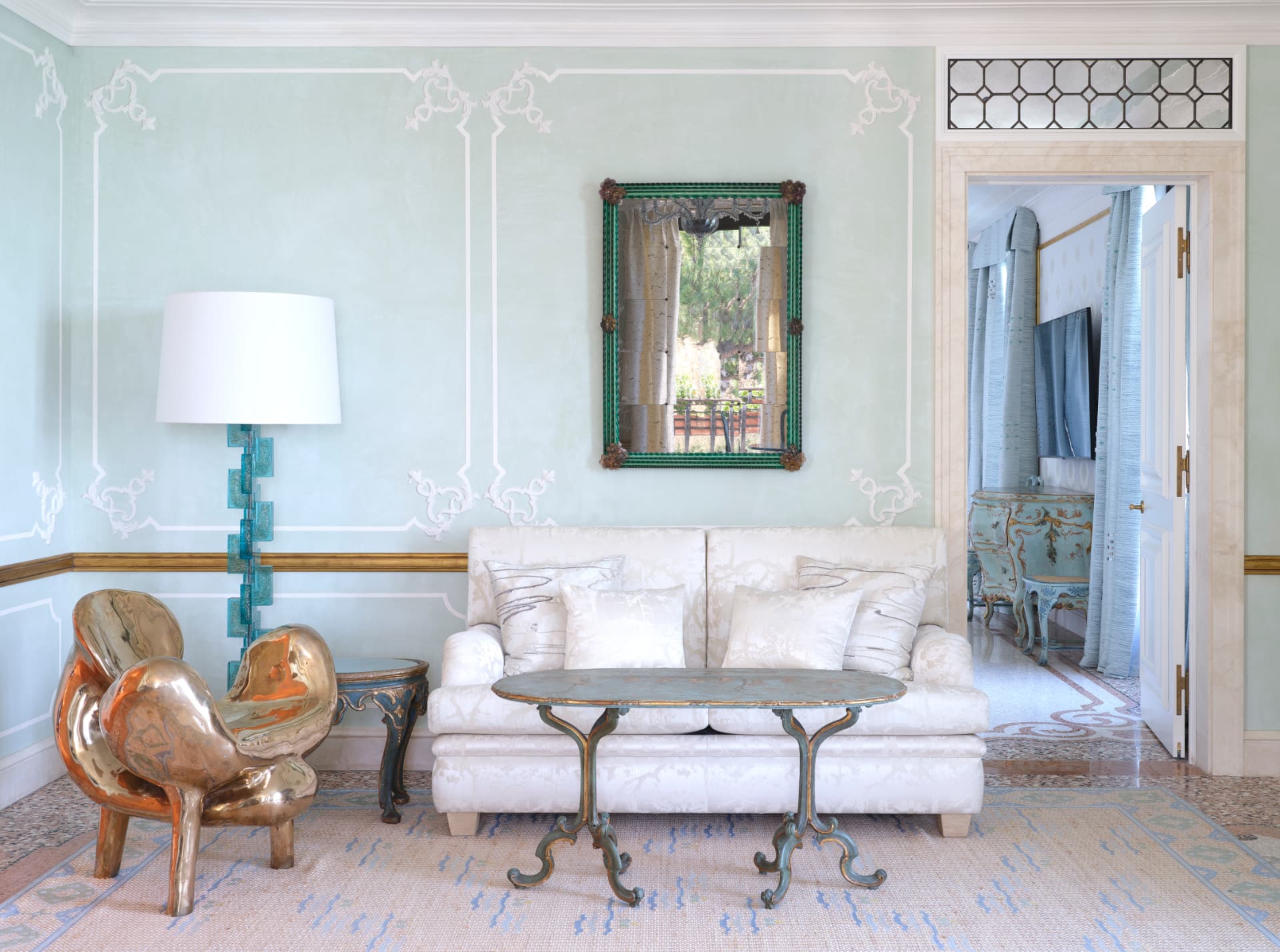
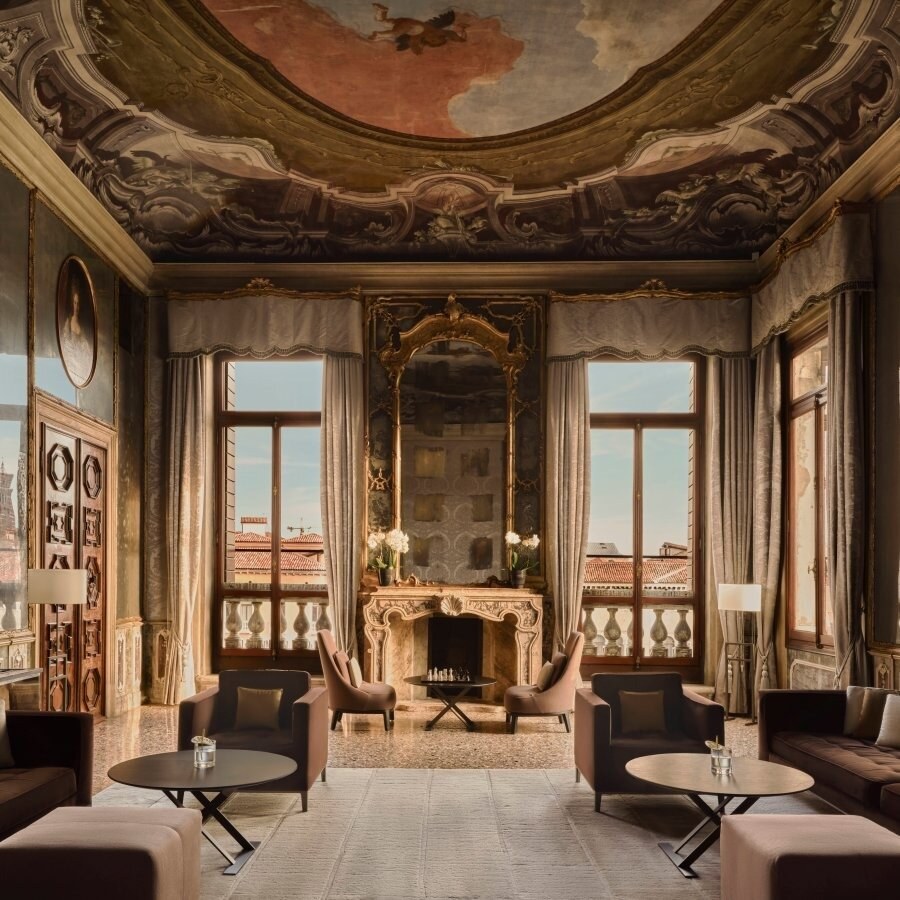
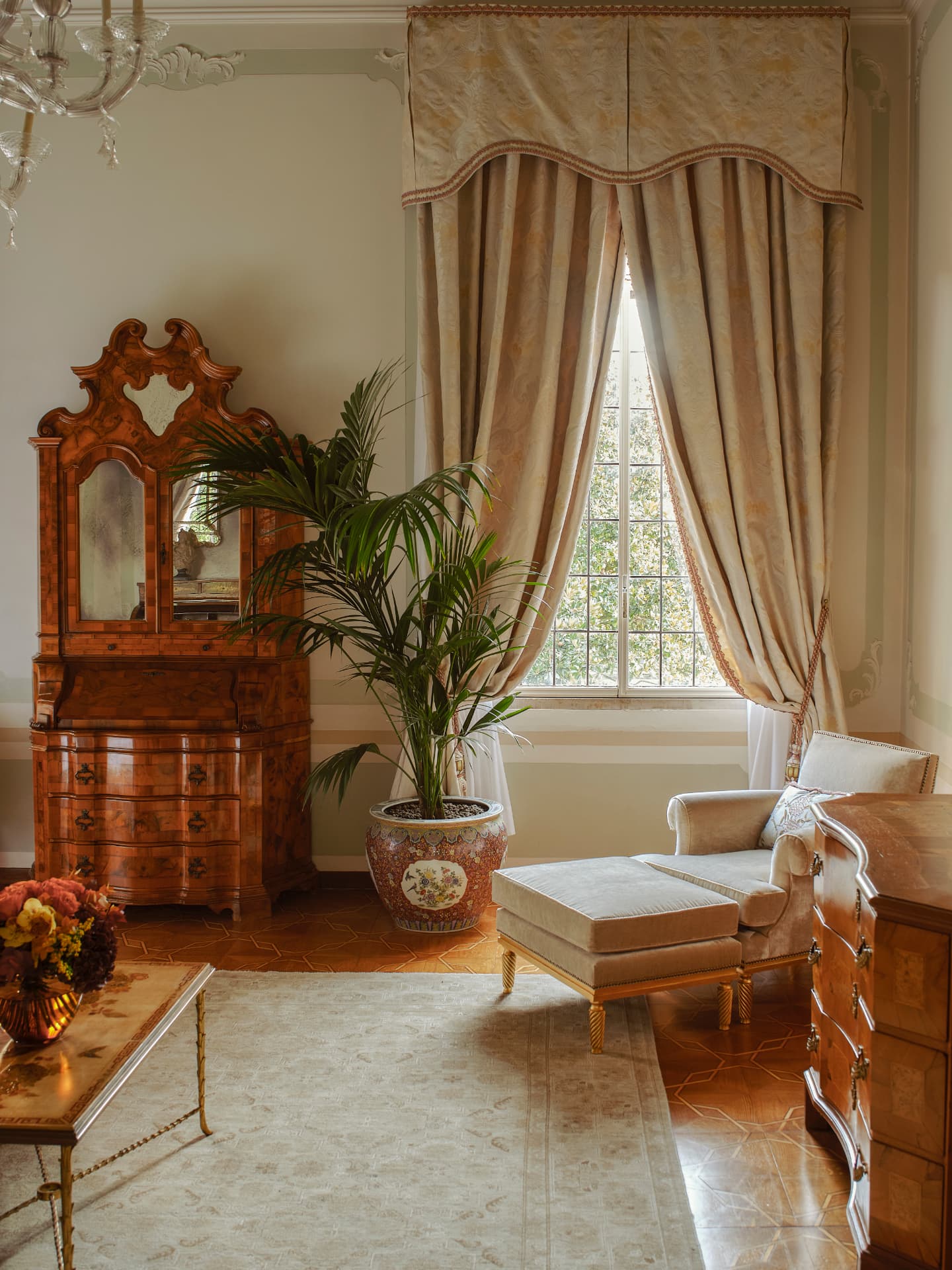
Grand Venetian salon with antique furniture, hand-painted panels, a Murano glass chandelier and tall arched windows onto the lagoon

Architecture & Design

A grand private house that happens to take guests

Nothing announces itself. The buildings are low and ochre, half-hidden by cypress, wisteria and a vineyard that still produces a few hundred bottles. Gravel paths run between them; marble terraces catch the sun at different hours and are furnished for the hour they catch.

Inside, the vocabulary is entirely Venetian and entirely local: hand-painted fabrics, terrazzo laid by hand, antique walnut, mirrors that have gone soft at the edges, and Murano chandeliers made two islands away by people whose grandfathers made the last ones. The craftsmanship is the decoration. There is no scheme.

What keeps it from feeling like a resort is scale and manners. Rooms open onto gardens rather than corridors, flowers are cut here in the morning, and the staff greet you the way a household does. You are not checked in so much as absorbed.

Rooms & Suites

Elegant Venetian residences

No two are alike, and the difference between them is a matter of light rather than category. Ask which way the room faces, and at what hour.

Venetian hotel bedroom with silk headboard, Murano glass lamp and open balcony doors overlooking the lagoon at morning

No. 01

Waking above the water

The light arrives before anything else does. It comes off the lagoon, is bent once by the water and again by the old glass in the windows, and lands on the ceiling in a pattern that moves all morning. Beds are dressed in cool white linen; a Murano lamp stands where a book was left the night before; someone has put flowers on the table and said nothing about it. You open the shutters onto a balcony, and Venice is there, still half asleep, a mile of pale water away.

Corner of a Venetian suite with a hand-painted floral armchair, antique writing desk and sheer curtain lifting at an open window

No. 02

Rooms with their own history

Hand-painted fabrics that were woven a short walk from here. Terrazzo underfoot, cool in July. An antique desk that has been written at by people who came for a week in 1958 and stayed until October. Nothing has been restored back to newness, and nothing needs to be. These are Venetian residences rather than hotel rooms — the difference is that you unpack properly, and by the second evening you know which floorboard sings.

Dining

Dinner with the city as the view, and the lagoon as the larder

At Oro the room is round and lined in gold, and yet the cooking is quieter than that suggests: Adriatic fish that came off a boat at Chioggia this morning, castraure from Sant'Erasmo in spring, bitter leaves from the lagoon gardens, risotto stirred for as long as it takes. The wine list reads like a tour of Italy conducted by someone with strong opinions and no interest in showing off.

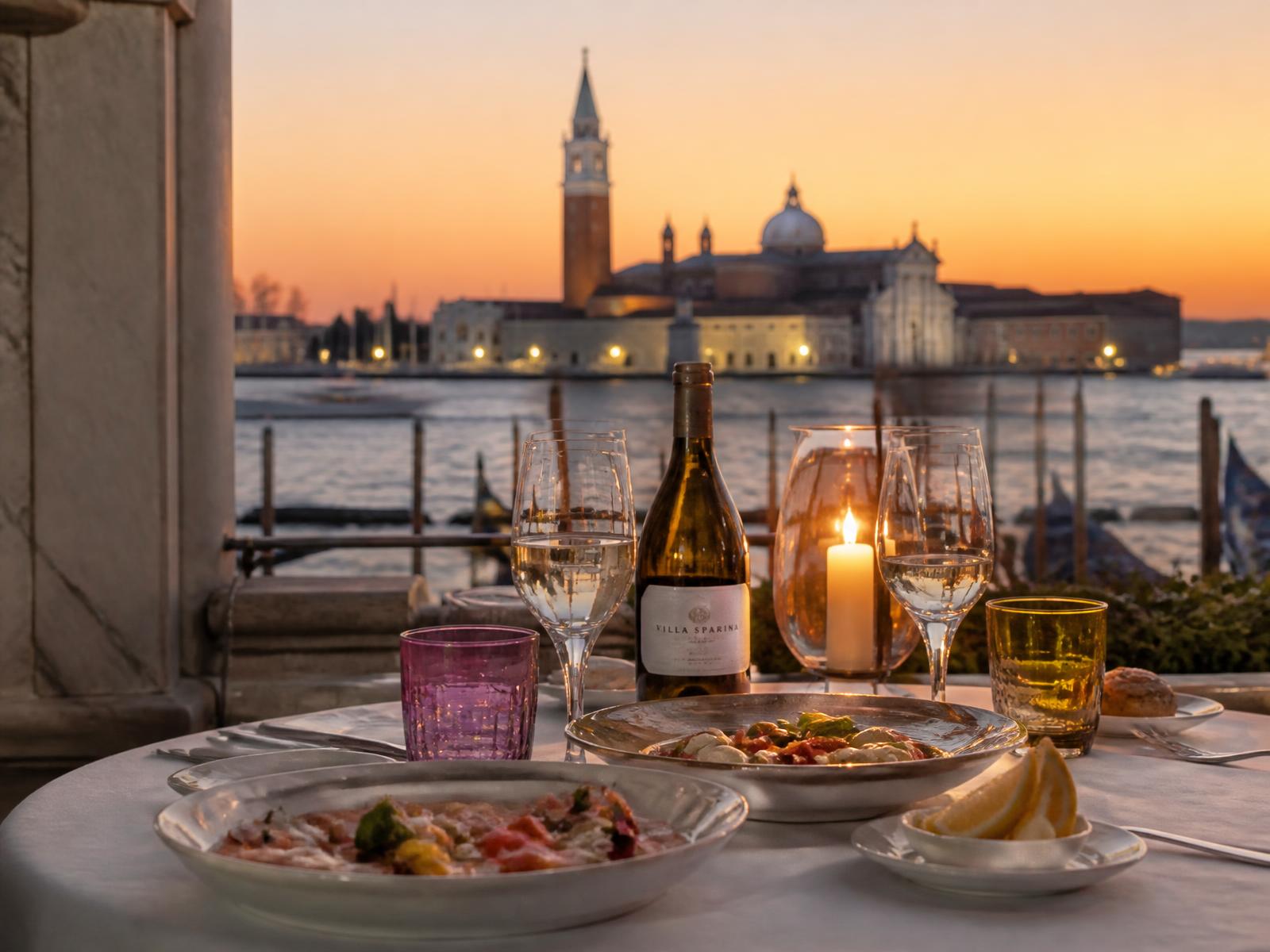
Cip's Club sits out on the water, close enough that the wake of a passing boat lifts the terrace slightly. Order simply — crudo, a plate of vegetables, a grilled fish for two — and watch the campanile go pink and then grey opposite you. It is the most Venetian view in Venice, and you eat it as much as you look at it.

Behind all of it is Harry's Bar: the same family, the same white peaches pressed by hand into a Bellini, the same belief that a small tumbler and an unhurried barman are worth more than any amount of invention. Dining here is not an amenity. It is the way the city introduces itself.

Candlelit terrace dinner overlooking the Venetian lagoon at sunset with white linen, Murano glass and Adriatic seafood
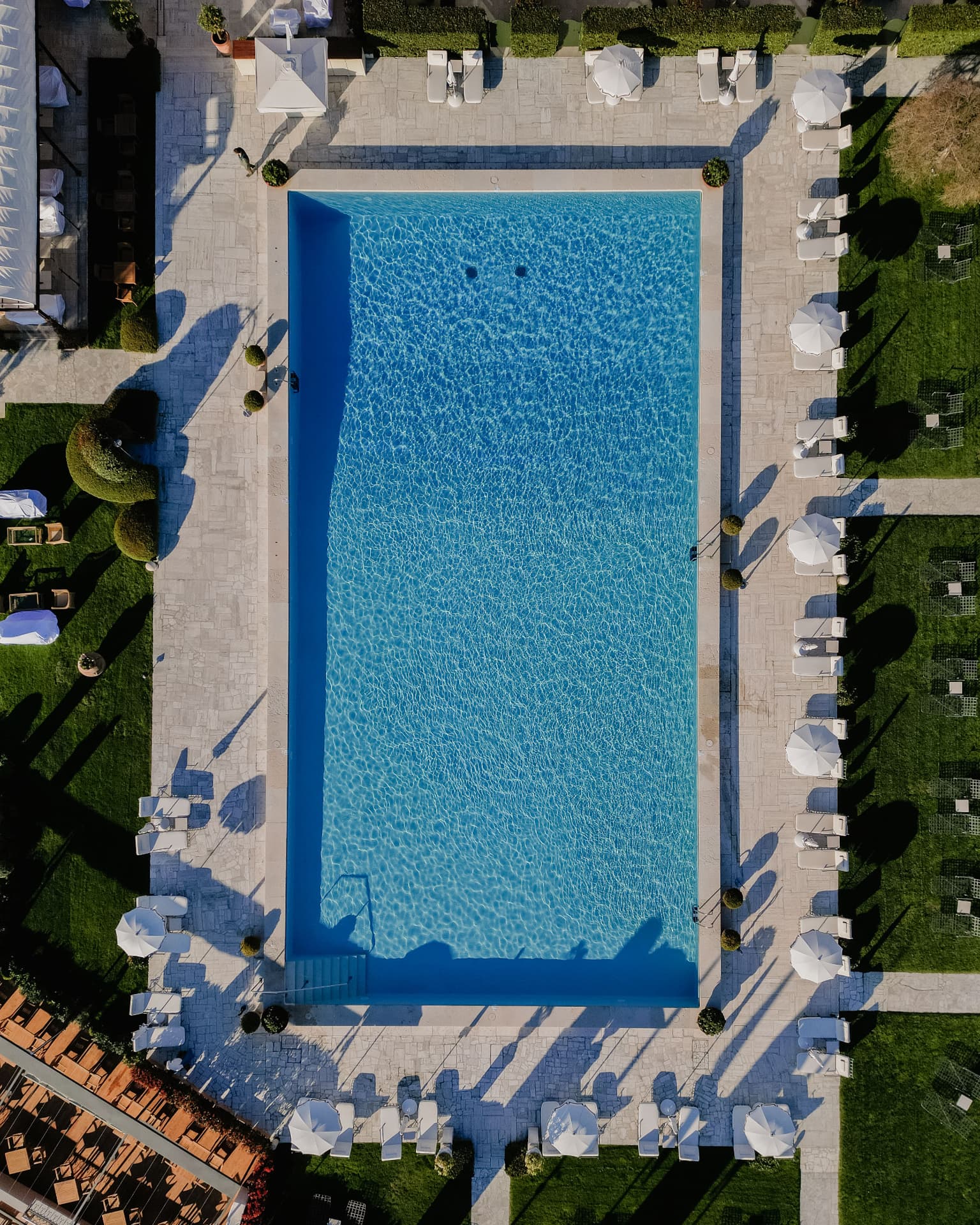
Large swimming pool in a walled Venetian garden at early morning with cypress trees, folded towels and a brick campanile beyond

Wellness

The only place in Venice where you can swim thirty lengths before breakfast

The pool was scandalous when it was built and is now simply beloved: an Olympic-sized rectangle of still green water laid out where the convent orchard stood, with cypresses along one side and a campanile beyond them. At seven in the morning there is mist on it and nobody in it.

The spa is small and unhurried, and does what Italian hands have always done well — oils, warmth, pressure, time — with treatments drawn from the vineyard and the garden. Afterwards there is nothing to do, which is the intention.

Mostly, though, wellbeing here is a matter of air and geography. Salt on the breeze off the lagoon, roses in the heat, a long walk on gravel, a chair in the shade with a book you will not finish. You leave rested, and you did nothing that could be described as a programme.

Signature Experiences

Six ways into the city

All of them begin at the water door, and most of them are best before nine in the morning or after eight at night.

  • No. 01

    The canals before anyone else

    A wooden boat at half past five, no commentary, no route worth naming. The water is still enough to hold the buildings whole, and for an hour the only sounds are bakers, gulls and your own engine idling under a bridge.

  • No. 02

    San Marco after hours

    The basilica once the doors are closed and the lights come up over the mosaics: eight centuries of gold, seen by six people. It is very quiet, and it takes a while afterwards to want to speak.

  • No. 03

    A gondola through the small waterways

    Not the Grand Canal. The back routes behind Dorsoduro, where laundry hangs above the water, doorsteps are green with weed, and a right turn brings you unexpectedly beneath somebody's kitchen window.

  • No. 04

    A furnace on Murano

    A morning with a maestro who has been turning the same rod for forty years. Heat, breath, a colour that appears only at the last second. You will never look at the chandelier in the salon the same way again.

  • No. 05

    A concert in a private palazzo

    Strings in a piano nobile lit by candles, thirty chairs, the canal audible between movements. Arranged through a family who have lived on that floor for a very long time.

  • No. 06

    The lagoon, island by island

    Murano for glass, Burano for lace and colour, Torcello for the mosaic and the silence. Go north early, take lunch on the water, and come back into the light on the way home.

Maison Voyage Loves

Six small things

  • Watching Venice wake from the other side of the water, coffee in hand, before anyone has crossed it.
  • Breakfast beneath the flowering trees, where the only interruption is a gardener and a wheelbarrow.
  • Arriving by wooden boat, and the small unearned pleasure of stepping onto a pier rather than a pavement.
  • A Bellini at dusk with the Grand Canal going gold, made by someone in a white jacket who has made a thousand of them.
  • Walking Giudecca after sunset, past boatyards and washing lines, entirely unnoticed.
  • Church bells arriving late across the lagoon, slightly out of time with one another.

Who This House Is For

Romantics, readers of history, and anyone who has always suspected that a garden is worth more than an address.

It suits travellers who love Italy in the long sense — the paintings, the architecture, the way a family runs a dining room across three generations. Couples do best of all: honeymoons, anniversaries, birthdays that end with a boat at midnight. Gardeners are quietly delighted. So are people who came to Venice for the Biennale and discovered they would rather sit under a fig tree and think about it.

Design lovers will find their week here: Murano furnaces, hand-loomed silk, Scarpa at the Querini Stampalia, and a house that has aged without being smoothed. And anyone travelling with a certain quantity of luggage, or a certain reluctance to be looked at, will appreciate the private launch and the wall.

It is not, honestly, a hotel for everyone. If your taste runs to contemporary minimalism — concrete, low light, silence as a design principle — this will feel too warm, too flowered, too full of gilt and history, and Venice has newer rooms that will suit you better. And if you want to walk out of the door straight into the alleys at midnight, the boat will feel like an obstacle rather than a pleasure. For everyone else, it is the crossing that makes the stay.

Nearby Discoveries

What we would do with three days

Not a list to complete. Six things, unhurried, with long gaps between them for coffee and getting lost.

  • No. 01

    San Marco, at seven

    The square belongs to pigeons, sweepers and the first light on the basilica's gold. Cross for the hour before the city arrives, drink a coffee standing at a bar off the piazzetta, and be back for breakfast.

  • No. 02

    The Doge's Palace and the Salute

    One for the staircases and the sheer nerve of a republic; the other for Longhena's white dome at the mouth of the Grand Canal, built in gratitude after a plague and best entered in the late afternoon.

  • No. 03

    Peggy Guggenheim's house

    A modern collection in an unfinished palazzo with a garden on the water. Small enough to see properly, personal enough to feel like a visit rather than a museum.

  • No. 04

    Workshops still working

    A gold beater in Cannaregio, a mask-maker who refuses to sell to the souvenir trade, a bookbinder near San Polo. Ask, and doors open that are not on any list.

  • No. 05

    Murano, Burano, Torcello

    Glass, colour and eleven residents with a basilica. Take the northern lagoon in one long day and let Torcello be the last stop, when the light goes flat and silver.

  • No. 06

    Giudecca, on foot

    Your own island after sunset: boatyards, a Palladian church, washing lines, a bar where nobody is a visitor. Ten minutes from the gate, and the part of Venice you will miss most.

A Note from the Editor

Come in late April or the first half of October, and ask for a room facing the water.

Swim before breakfast on the first morning. Cross to San Marco at seven and come back for it. Give one evening entirely to Cip's Club and one to no plan at all — that is the evening you will describe to people afterwards, and you will find it hard to explain why.

Ben Trousil — Maison Voyage

From the Journal

Written in the city

All stories
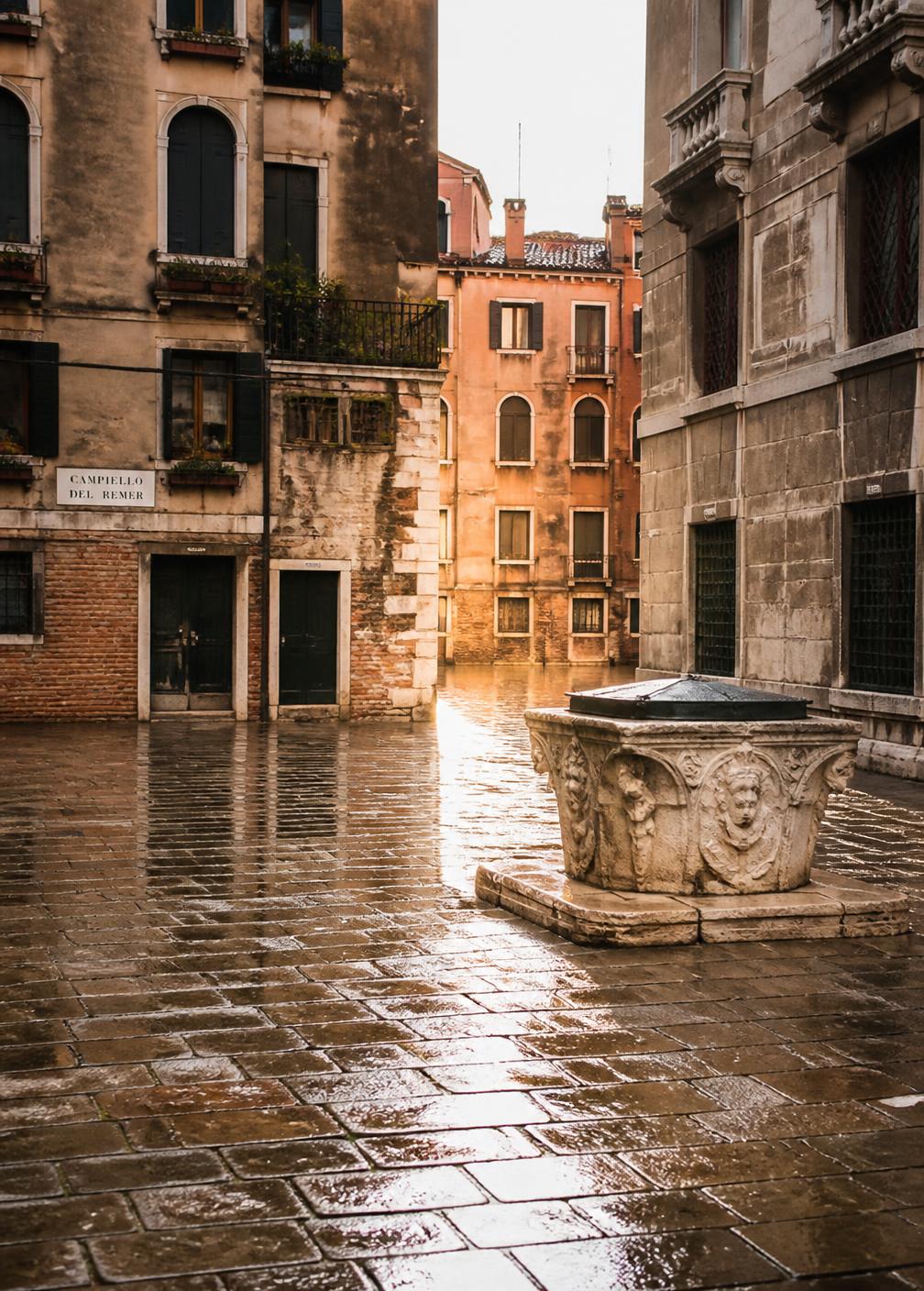
  • Empty Venetian campo at dawn with wet stone paving and a carved stone wellhead

    Venice Beyond the Crowds

    TravelJune 2026

    The city has two timetables. Learn the quieter one and Venice hands you back the version everyone believes has been lost.

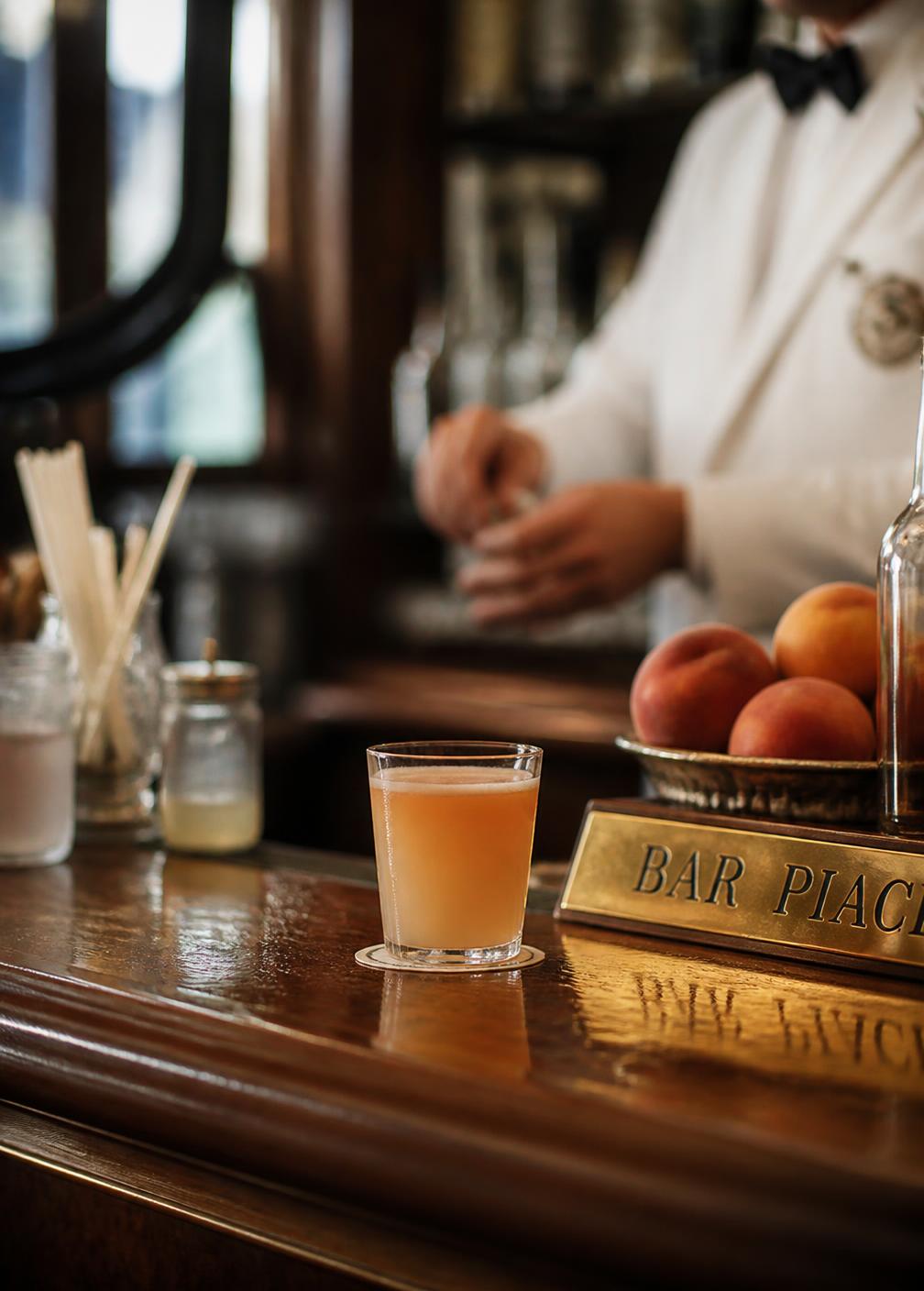
  • Vintage Italian bar counter with a peach bellini in a small tumbler and a barman in a white jacket behind

    The Story Behind Harry's Bar

    HeritageMay 2026

    White peaches, prosecco, a small tumbler and a room the size of a railway carriage — how Giuseppe Cipriani invented an entire idea of Italian hospitality.

  • Venetian lagoon at dusk seen from a wooden boat with flat silver water and a distant bell tower

    The Art of Venetian Luxury

    CraftApril 2026

    Glass, gold leaf, hand-loomed silk and a boat made of eleven kinds of wood: why the most beautiful hotels in Venice are really archives of craftsmanship.

A Personal Enquiry

Let's Curate Your Venetian Journey

If Venice has begun to occupy your thinking, we would be glad to plan it with you properly — private boat transfers, the hours at which each thing is worth seeing, and rooms chosen for their light rather than their category.

Hidden restaurants, workshops that rarely open their doors, an evening on the lagoon, and stays across the city and the wider Veneto, arranged personally and at your pace.

Why book through Maison Voyage?

  • Personal luxury travel advice
  • Carefully curated hotel recommendations
  • Tailor-made itineraries
  • Exclusive partner benefits whenever available
  • Direct personal contact from start to finish

No booking is made and nothing is charged. We simply begin a conversation.

An Invitation

Continue the Journey

One letter each month: a place worth the detour, an object worth keeping, a page worth reading slowly. Nothing more.