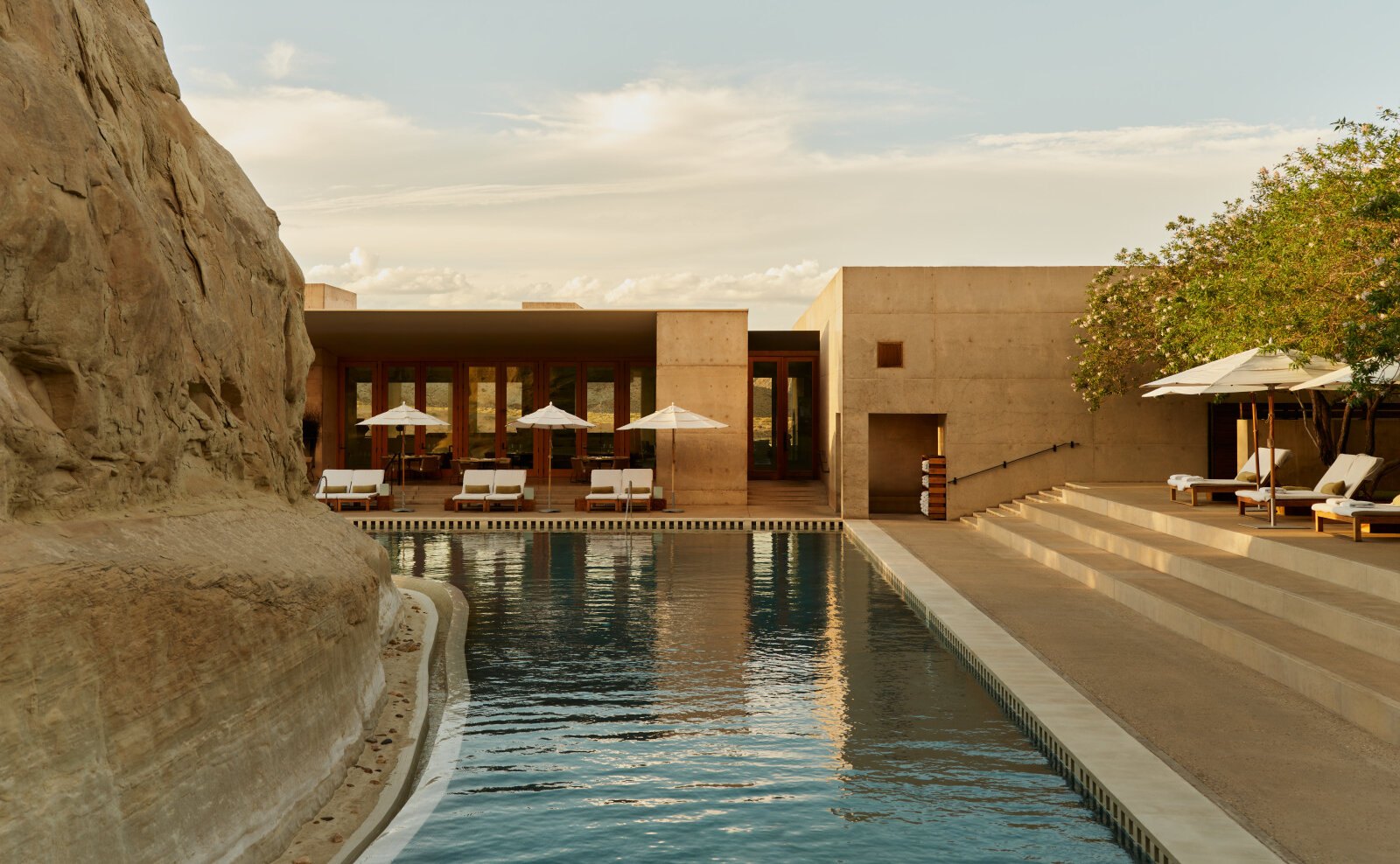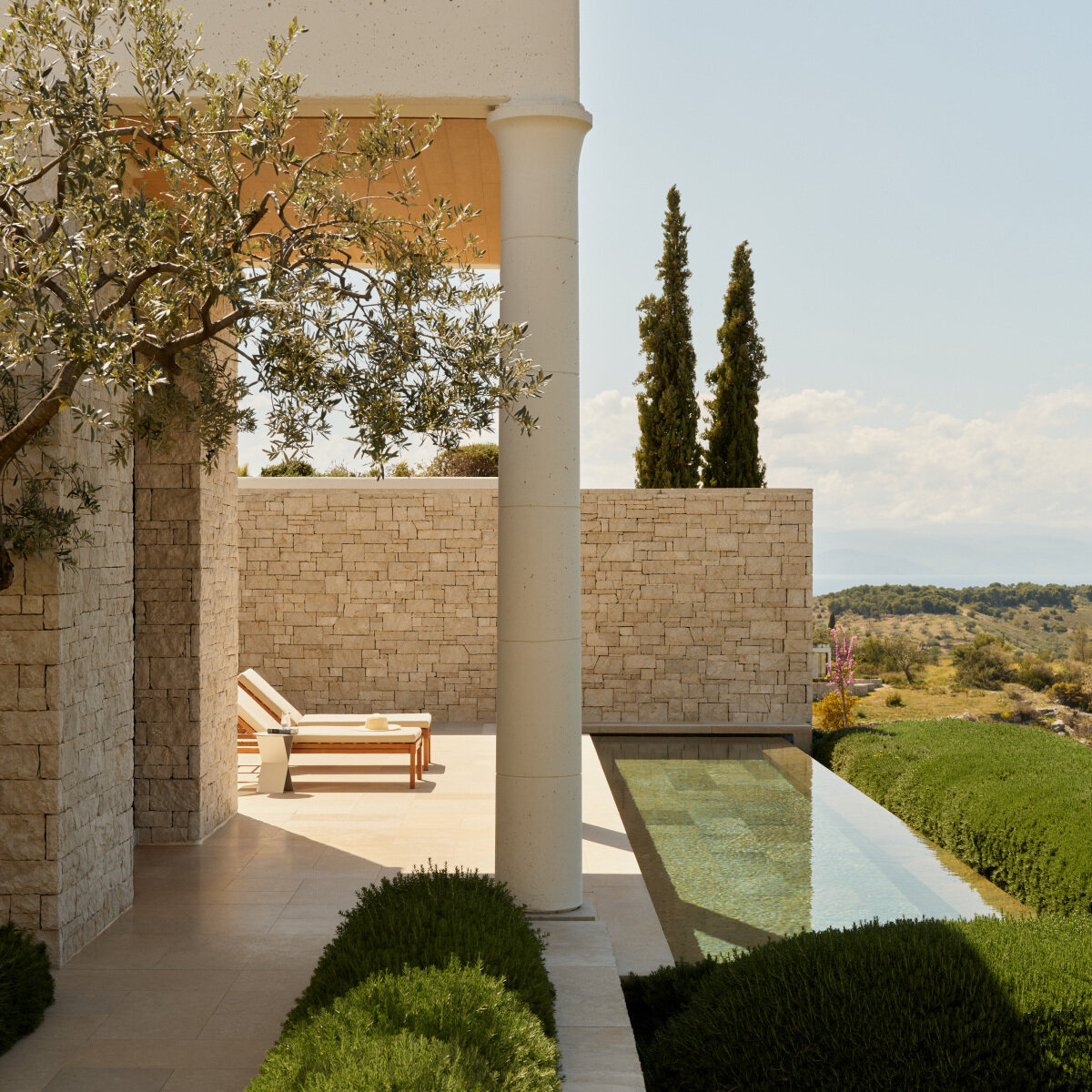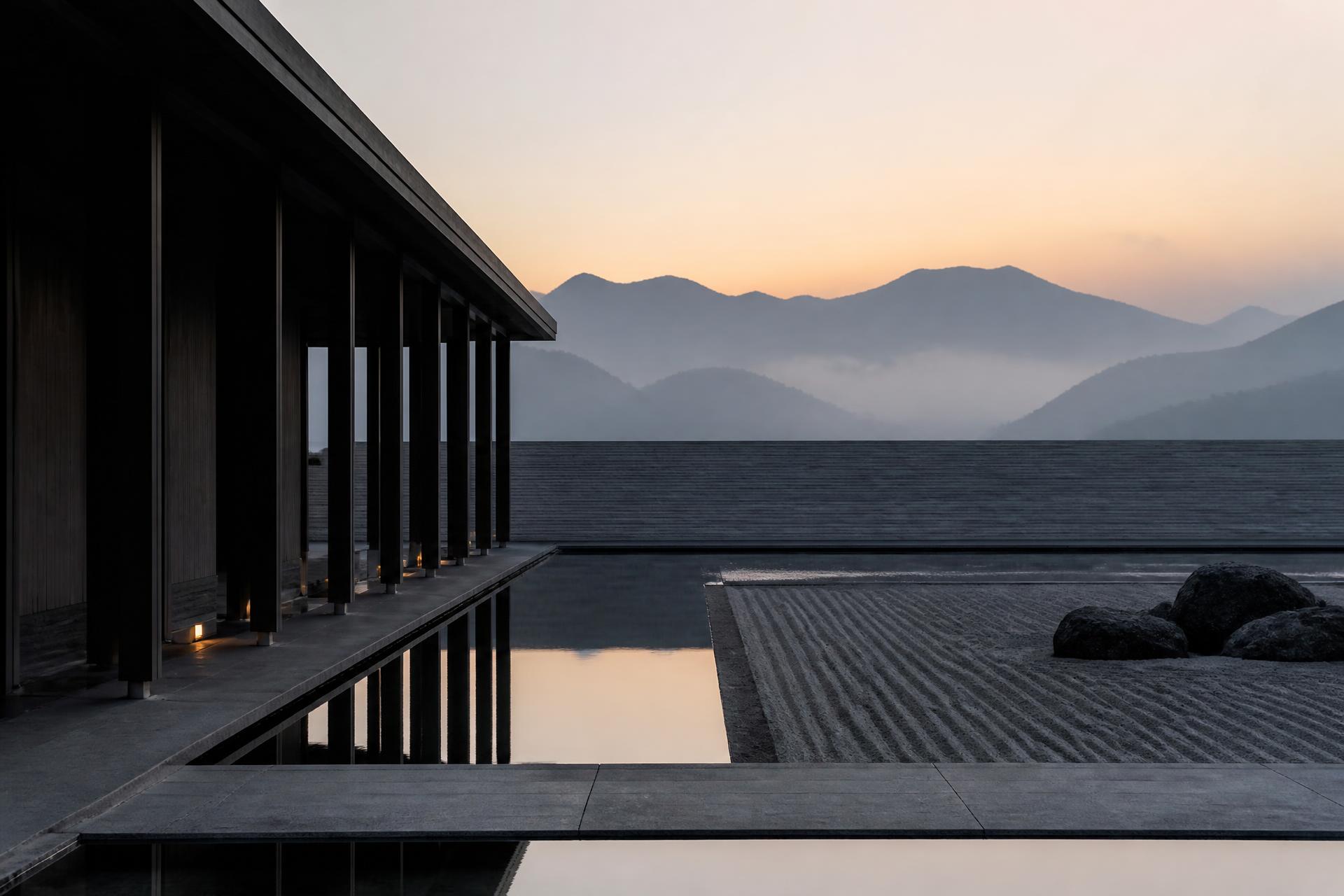

Dark timber colonnade beside a still reflecting pool and raked stone court, mountains dissolving in dawn mist

Luxury Hotels — House No. 01

Aman

A small group of houses built around emptiness — stone, timber, water and light, arranged so that very little happens, beautifully.

An Introduction

Some hotels are designed to impress you. These are designed to leave you alone.

The word means peace, and the houses take it literally. There is no lobby music, no procession of greeters, rarely a sign. You arrive, a door opens onto a courtyard, and the noise of the journey falls away somewhere behind you.

What follows is unusually consistent across continents: long horizontal lines, local stone and timber, water held perfectly still, and a staff who seem to have agreed in advance to speak softly. The result is not a style so much as a temperature.

The Philosophy

Peace, taken literally

The founding idea was almost contrarian: build small, in places already beautiful, and let the landscape remain the main event. Thirty rooms rather than three hundred; a colonnade rather than a facade; a courtyard rather than an atrium.

Materials are chosen for how they age — dark timber that softens, pale stone that records the sun, water that holds the sky. Service follows the same logic. Nothing is performed. Things simply happen at the moment you would have asked for them, and no earlier.

It is a philosophy of subtraction, and it explains why guests speak about these houses the way they speak about a piece of music: not what was in the room, but what it made them feel like afterwards.

A room does not need to be full to be generous.

Featured Houses

Six rooms worth the journey

A palazzo, a tower, a plantation, a desert. Six houses that share a temperament and almost nothing else.

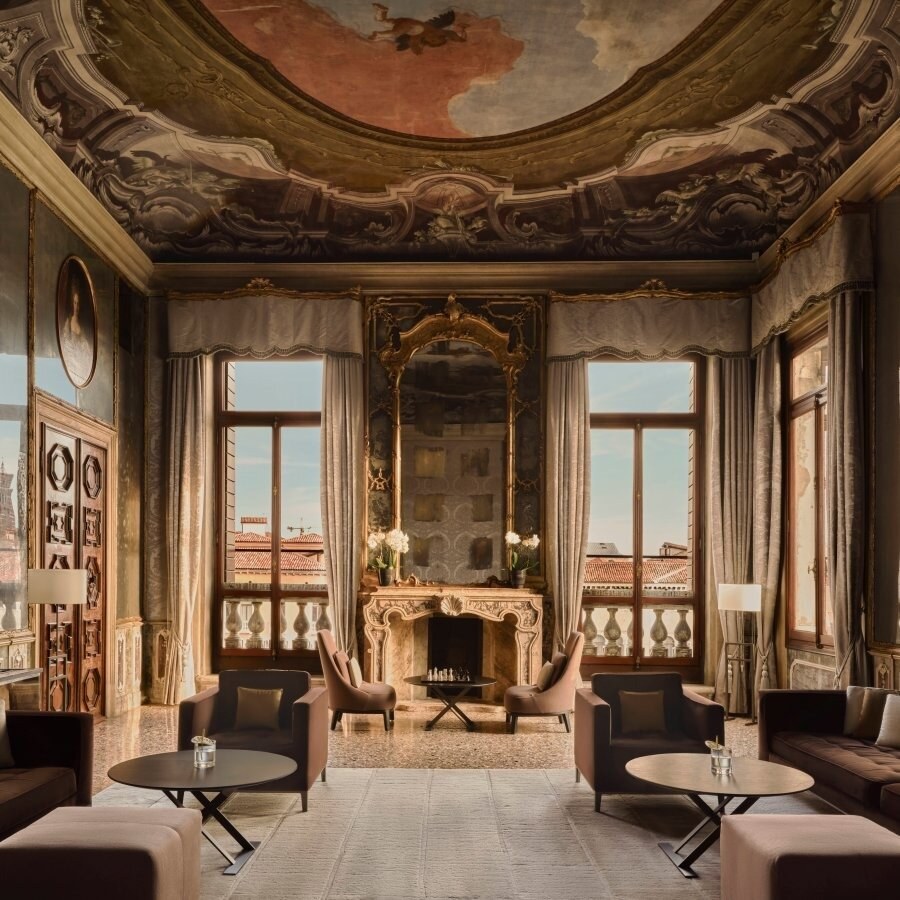
Empty Venetian palazzo salon with faded gilded stucco and a tall arched window in soft canal light

No. 01Venice, Italy

Aman Venice

A sixteenth-century palazzo on the Grand Canal, where frescoed ceilings are left as time made them and the water throws light across the floor all morning. You are handed a key to a private house, not a room number.

Read the House
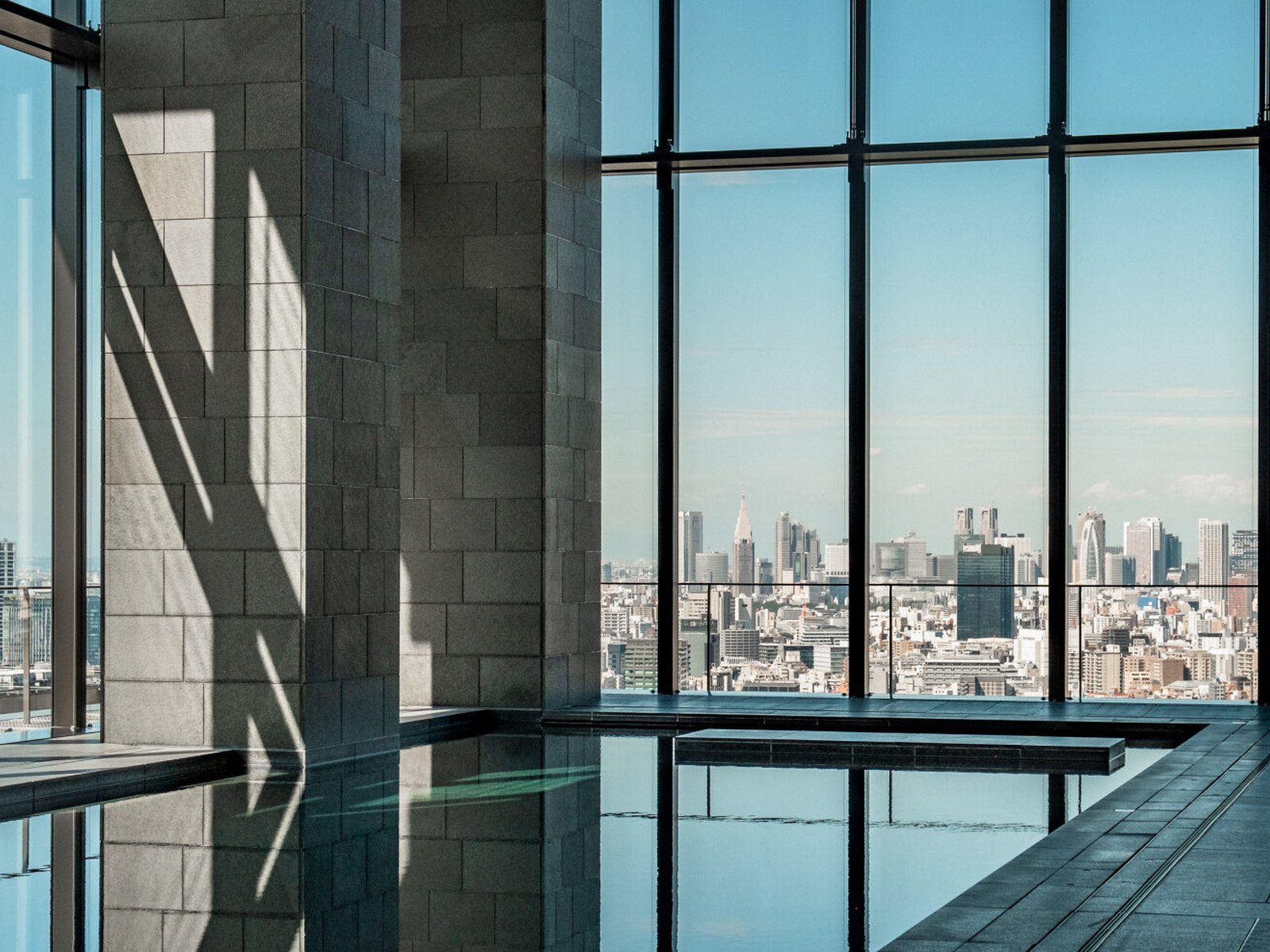
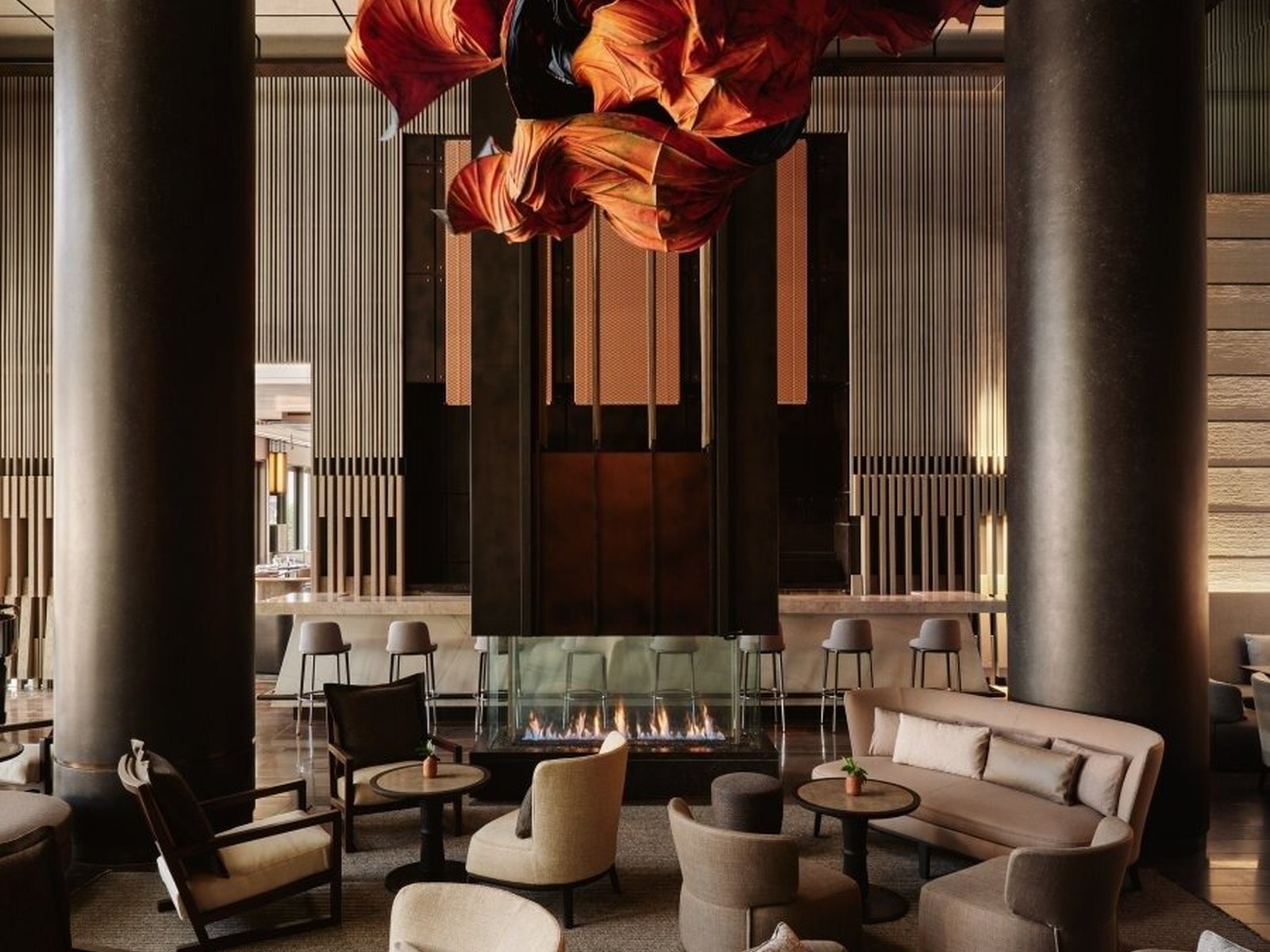
Serene Japanese-modern hotel lounge with washi walls, dark timber and a single camellia branch above the city

No. 02Tokyo, Japan

Aman Tokyo

Thirty-three floors above Otemachi, the city becomes weather rather than noise. Washi, stone and dark timber, a single branch in a vessel, and the particular Tokyo grey that makes everything look considered.

Read the House
Hushed art-deco suite with bronze framed windows overlooking the Manhattan skyline in winter haze

No. 03New York, United States

Aman New York

Behind the Crown Building's bronze windows, Fifth Avenue goes quiet. Low light, deep carpet, a fireplace in the room — the rare address in Manhattan that asks you to slow down rather than keep up.

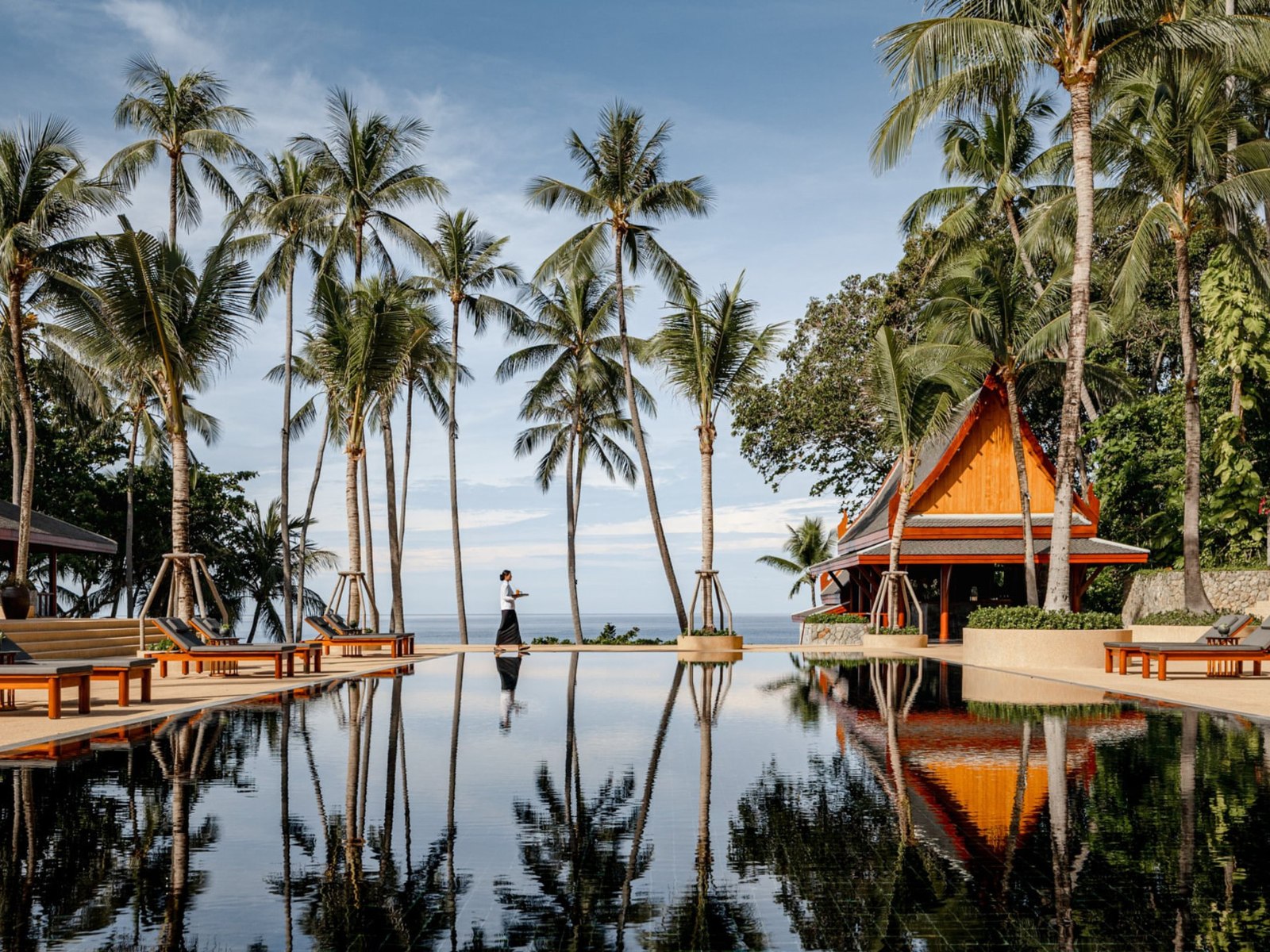
Black granite pool on a headland framed by coconut palms above the Andaman Sea

No. 04Phuket, Thailand

Amanpuri

The first of them, on a coconut plantation above the Andaman Sea. Black granite, pale timber and a colonnade of palms — the pavilion that taught an entire industry what restraint could look like.

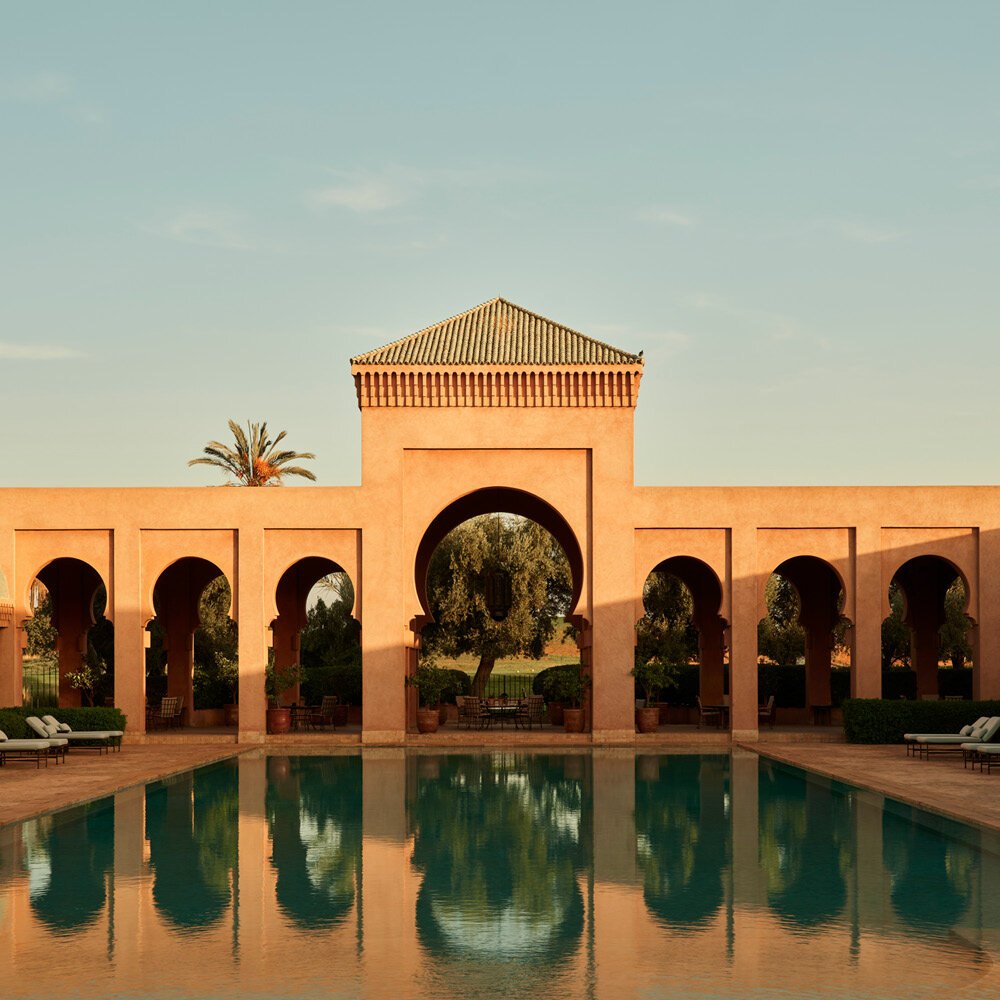
Moroccan earth-walled courtyard with a long still basin, olive trees and the Atlas mountains at dusk

No. 05Marrakech, Morocco

Amanjena

Ochre pisé walls and a basin the length of a courtyard, olive trees standing very still. At dusk the Atlas turns violet and the whole place seems to have been here for several centuries longer than it has.

Pale concrete desert retreat built around a sandstone escarpment with a still pool at dawn

No. 06Utah, United States

Amangiri

Pale concrete folded into a canyon plateau, built around the rock rather than upon it. Nothing to do but watch the light move across the escarpment — which turns out to be more than enough.

Read the House

Where They Are

A quiet atlas

Fewer than forty houses in the world, placed where the landscape already had something to say.

  • Europe

    • Venice
    • Rome
    • Courchevel
    • Bodrum
    • Porto Heli
  • Asia

    • Tokyo
    • Kyoto
    • Phuket
    • Bali
    • Bhutan
  • The Americas

    • New York
    • Utah
    • Los Cabos
    • Cozumel
  • Africa & Middle East

    • Marrakech
    • Wadi Rum
    • Zighy Bay

From the Journal

Written along the way

All stories
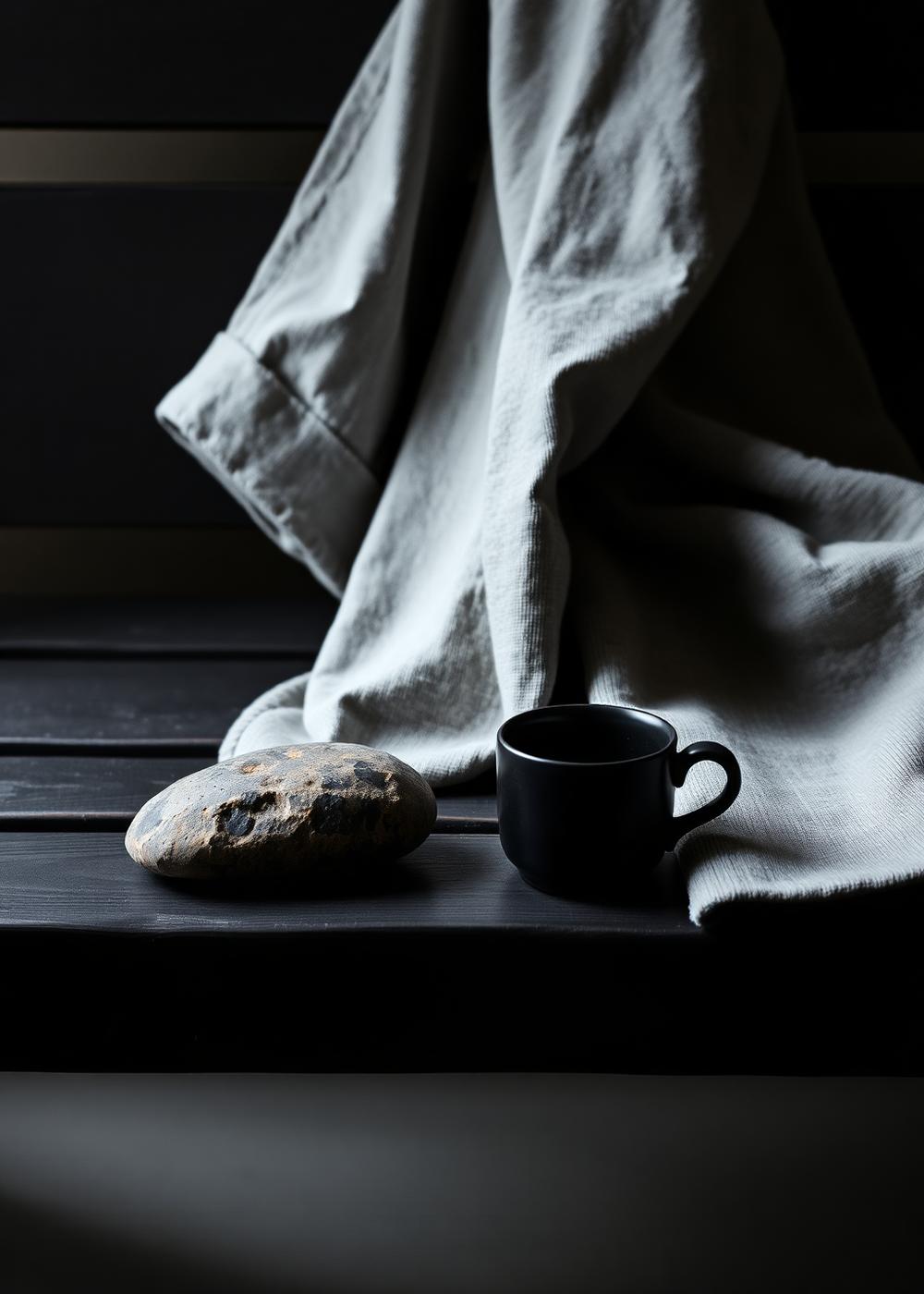
  • Folded grey linen robe, black ceramic cup and a river stone on a dark timber bench

    The Architecture of Silence

    DesignJuly 2026

    On courtyards, colonnades and the deliberate emptiness that makes a room feel like a held breath.

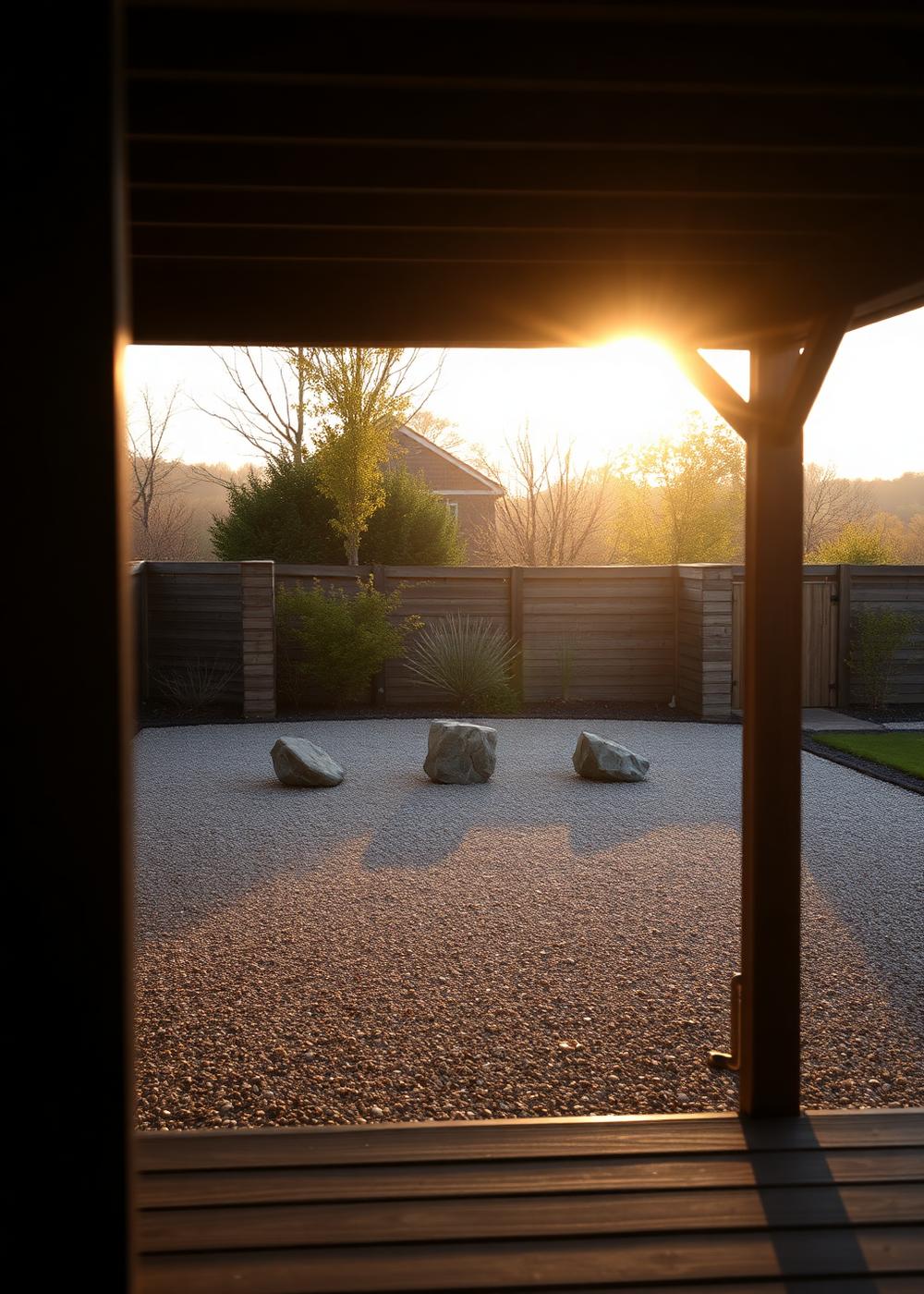
  • Raked gravel garden with three stones and long shadows at sunrise seen from a timber veranda

    Waking Early on Purpose

    RitualJune 2026

    The first hour of the day, in houses that are built around it — tea, a raked garden, no conversation.

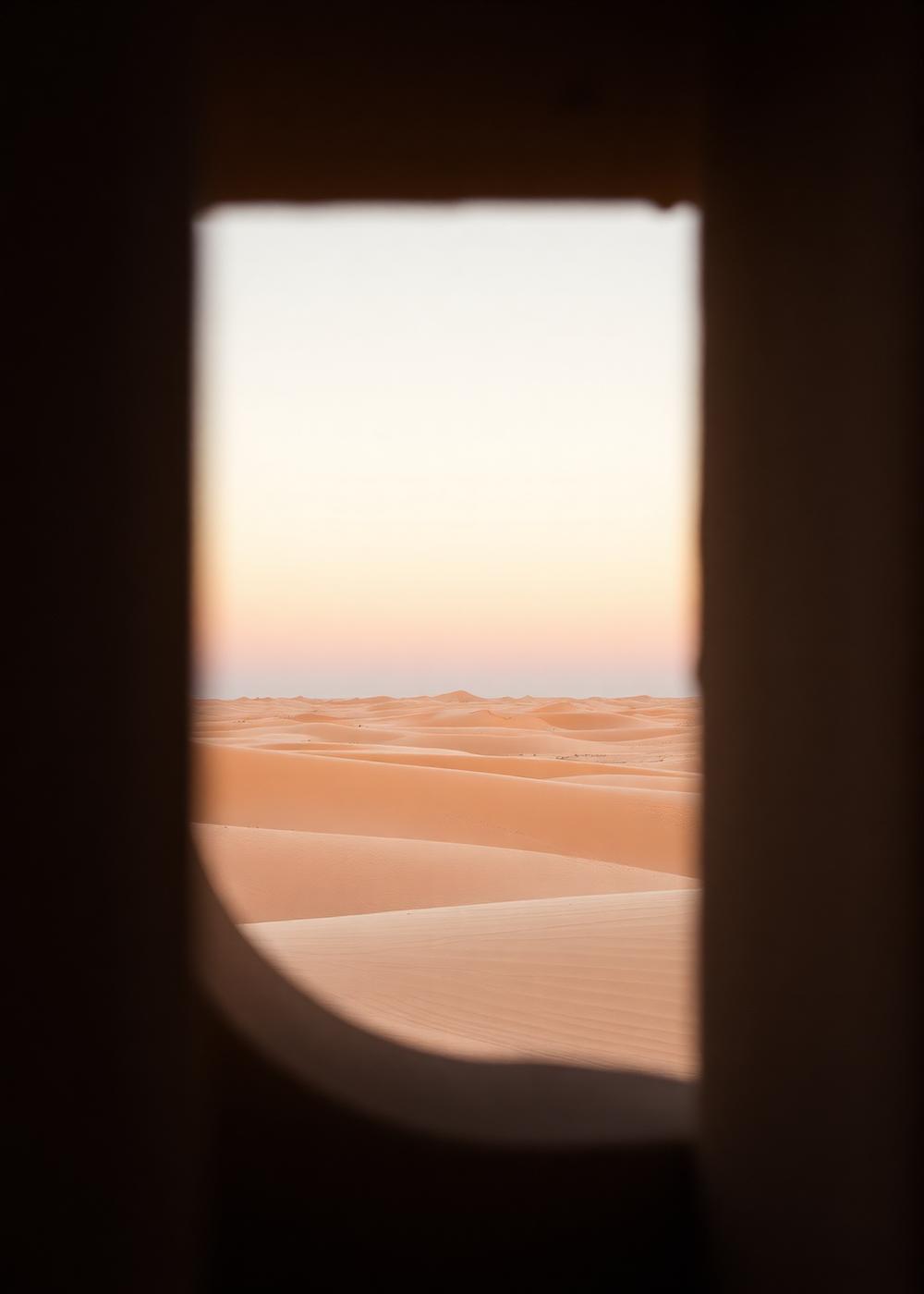
  • Desert horizon at first light seen through a narrow concrete aperture

    Notes from the Plateau

    TravelMay 2026

    Three days in the high desert, where the landscape does most of the talking and the building simply listens.

Maison Voyage Recommends

If you go once, go to Amangiri in early spring.

Arrive late in the afternoon, when the escarpment is still holding the day's heat. Ask for nothing on the first evening. Wake before the light and walk out onto the plateau in a robe with a cup of tea — that hour is the whole argument for this kind of travel, made in a single gesture.

Ben Trousil, Founding Editor

Questions

The things readers ask us most

What makes an Aman feel different from other luxury hotels?
Scale and silence. The houses are small, the public rooms are often nearly empty, and almost nothing is announced. The pleasure is in what has been left out rather than what has been added.
Which house would you suggest for a first stay?
Amanpuri if you want to understand where the idea began, Aman Venice if you would rather be inside a city and a private house at once. Both explain the temperament quickly.
Are these houses suitable for a longer, slower stay?
They are at their best that way. Three nights is the minimum at which the rhythm — early light, long breakfast, an afternoon with nothing in it — becomes legible.
When is the light at its most beautiful?
Venice in late autumn, Tokyo in the grey weeks before the blossom, Marrakech and Utah in the hour after sunrise. We plan our own visits around the light before anything else.
Does Maison Voyage take a commission?
No. We are an editorial house, not an agency. Nothing on this page has been paid for, and every house here has been stayed in by one of our editors.

An Invitation

Continue the Journey

One letter each month: a place worth the detour, an object worth keeping, a page worth reading slowly. Nothing more.