Yachtreisen
Four Seasons Yachts
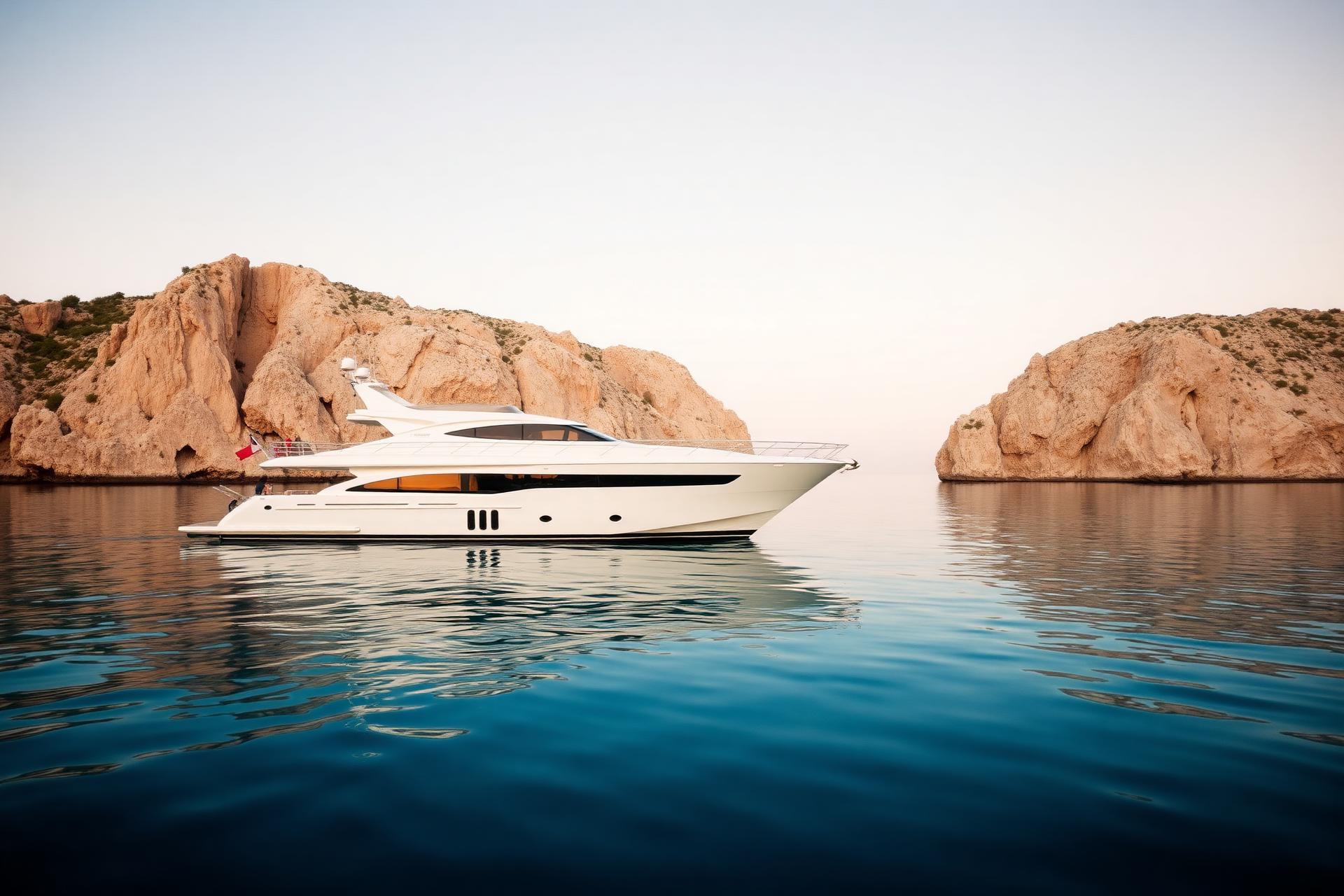
Eine neue Ära beginnt leise: ein Hotel aus Terrassen, Travertin und warmer Eiche, von einem mediterranen Hügel auf das Wasser übertragen, dem es schon immer zugewandt war.
Eine Einführung
Es fühlt sich nicht an wie ein Aufbruch von zu Hause. Es fühlt sich an, als sei das Hotel mitgekommen.
Four Seasons hat sechs Jahrzehnte damit verbracht zu lernen, wie sich ein Raum verhalten sollte — wie eine Tür schliesst, wie lange ein Frühstück dauern darf, wie schnell jemand erscheint und wie vollständig er danach wieder verschwindet. All das aufs Wasser zu bringen, war nie eine Frage des Massstabs. Es war eine Frage der Proportion.
Was ankommt, ist kein grosses Schiff, das komfortabel gemacht wurde. Es ist ein kleines Wohnhaus, fünfundneunzig Apartments, jedes mit eigener Terrasse, das sich im Tempo eines langen Mittagessens an einer Küste bewegt, die genau das belohnt.
Das Ergebnis ist ungewöhnlich ruhig. Es gibt keinen Zeitplan an der Wand, keine Schlange zu irgendeiner Stunde, kein Gefühl, abgefertigt zu werden. Man wacht auf, das Licht liegt auf dem Wasser, und der Tag gehört einem ganz allein.
Die Philosophie
Service, den man erst hinterher bemerkt
Der Haustil war schon immer Vorausdenken ohne Inszenierung. Jemand merkt sich, wie Sie am zweiten Morgen Ihren Kaffee trinken, und erwähnt es nie wieder. Die Terrasse ist gedeckt, bevor man daran denkt zu fragen. Nichts wird angekündigt; die Dinge sind einfach schon so, wie man sie sich gewünscht hätte.
Es gibt mehr Crew als Gäste, und dennoch wirken die Decks leer. Das ist die Disziplin: Präsenz, die knapp ausserhalb des Blickfelds bleibt, damit der Raum sich immer allein anfühlt.
Zeitloses Design tut den Rest. Kein Trend ist irgendwo an Bord sichtbar — nur warmer Stein, unlackierte Eiche, Leinen, Messing und Glas, angeordnet mit der Zurückhaltung einer privaten Villa statt dem Ehrgeiz eines Hotels.
Die Yacht
Gebaut wie eine Residenz, nicht wie ein Schiff
Die Silhouette ist lang und niedrig, näher an einer weissen Villa auf einer Landzunge als an irgendetwas mit gestapelten Balkonen. Glas läuft fast über die gesamte Länge; die oberen Decks treten zurück, damit Licht die Terrassen darunter erreicht.
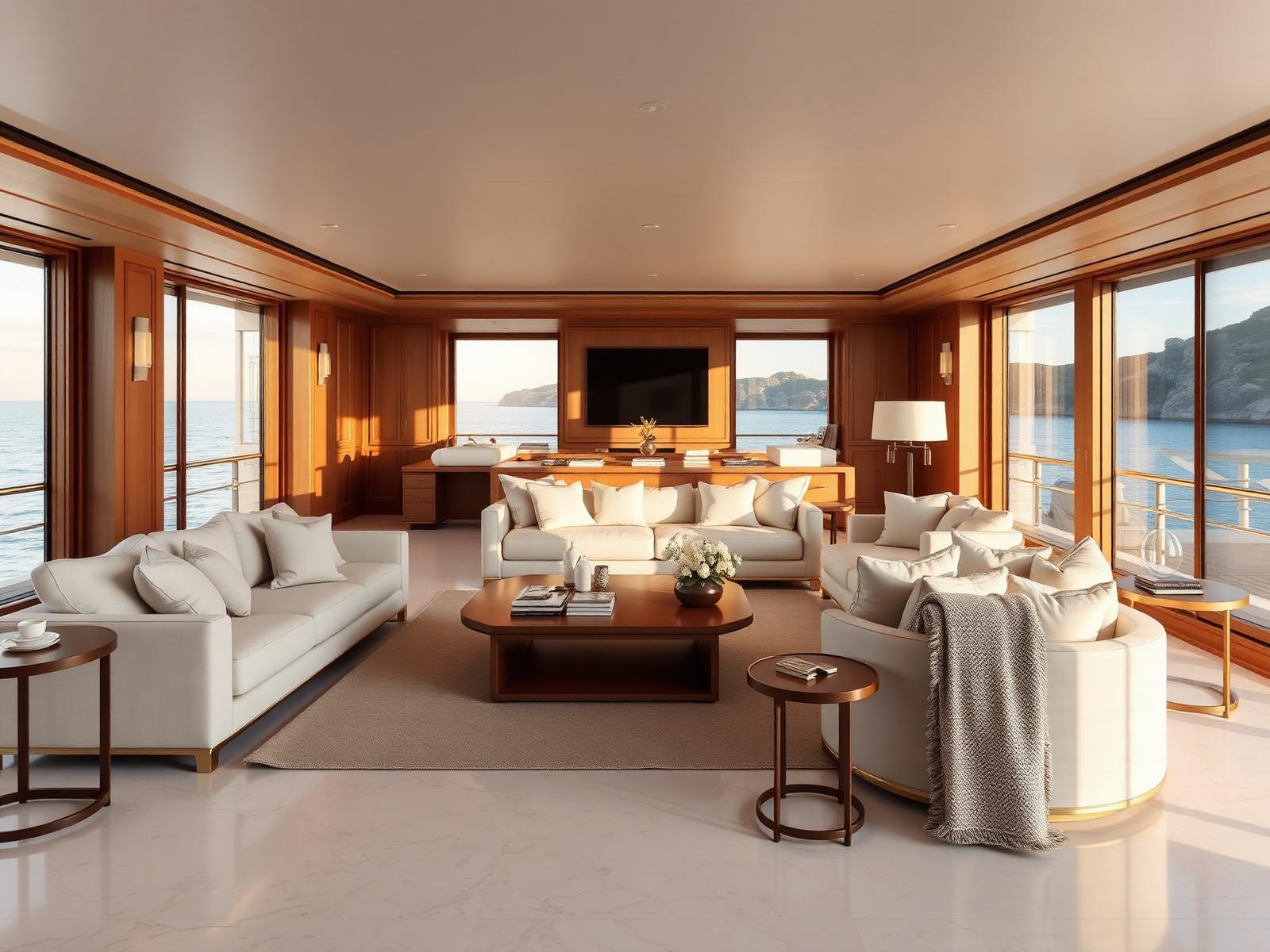
Im Inneren ist der Grundriss bewusst grosszügig und leicht unterbelegt. Räume öffnen sich zueinander statt zu Fluren. Decken sind hoch, Türschwellen breit, und nirgends an Bord müssen sich zwei Menschen zur Seite drehen, um vorbeizukommen.
Die Materialien sind mediterran und unaufgeregt gewählt — Travertin, Kalkputz, helle Eiche, gealtertes Messing, cremefarbenes Leinen — damit das Schiff in zwanzig Jahren genauso aussieht wie am Morgen seiner Ankunft.
Die Suiten
Räume mit einer Tür zum Wetter
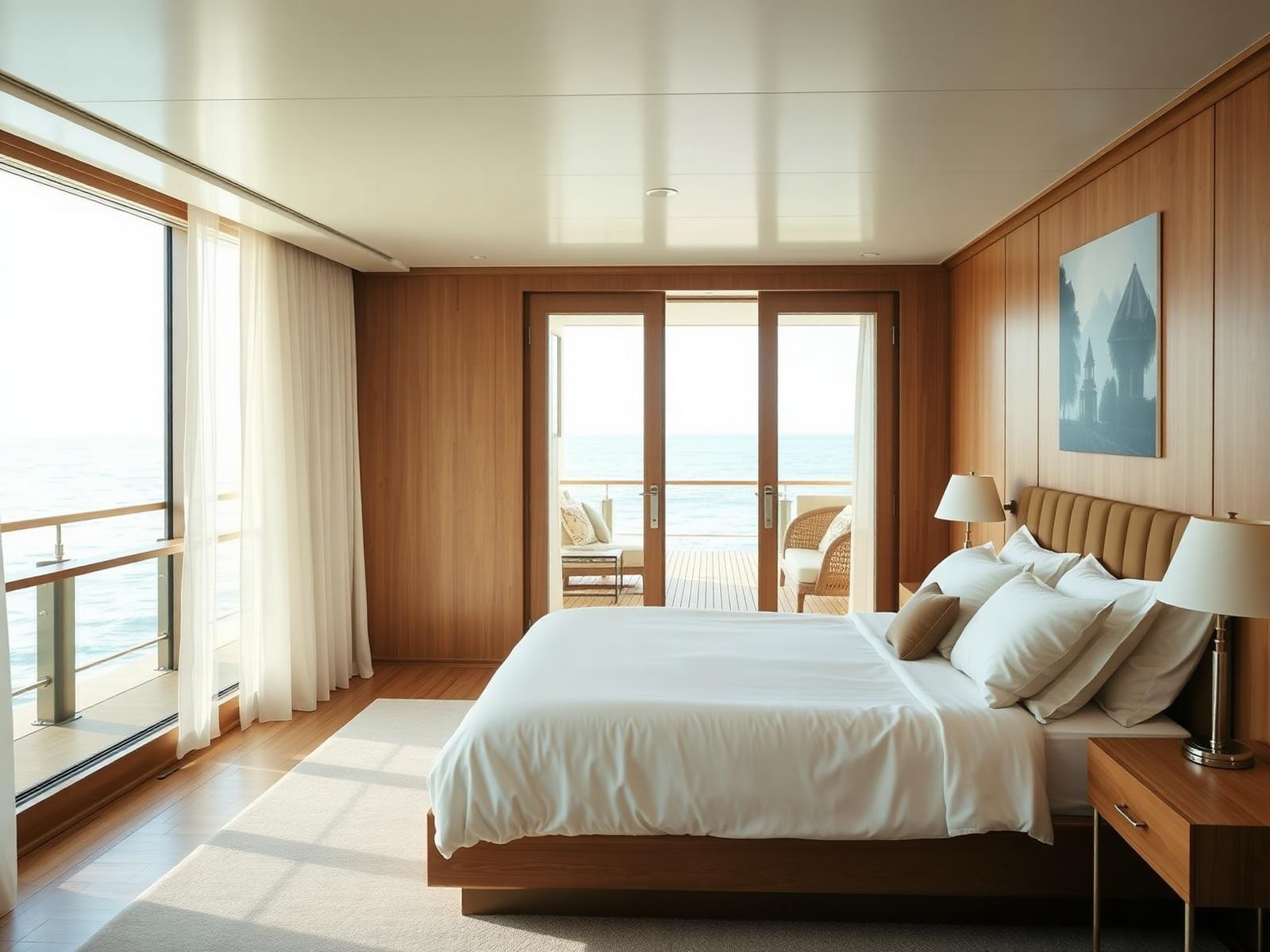
Jede Suite hat eine eigene Terrasse. Keinen Vorsprung, keinen Balkon — einen Raum ohne Decke, breit genug zum Essen, tief genug zum Schlafen.
Suite Nr. 01
The Terrace Suite
Ein Wohnraum, der sich ganz zur eigenen Teakterrasse hin öffnet, sodass der Unterschied zwischen innen und aussen spätestens am zweiten Morgen keine Rolle mehr spielt.
Suite Nr. 02
The Loft Suite
Zwei Ebenen, verbunden durch eine helle Eichentreppe, ein Ankleidezimmer und ein Bad aus Travertin — die Proportionen eines Stadthauses statt einer Kabine.
Suite Nr. 03
The Funnel Suite
Der seltenste Raum an Bord: ein privater Pool auf eigenem Deck, Glas auf drei Seiten, und ein Horizont, der für die Dauer der Reise niemand anderem gehört.
Kulinarik
Die Küste, noch am selben Tag zubereitet
Die Beschaffung folgt der Route statt einem Zeitplan: Wolfsbarsch vom Morgenmarkt, noch warme Tomaten, Öl aus einem Tal im Landesinneren gepresst, und sehr wenig, das damit noch geschieht.
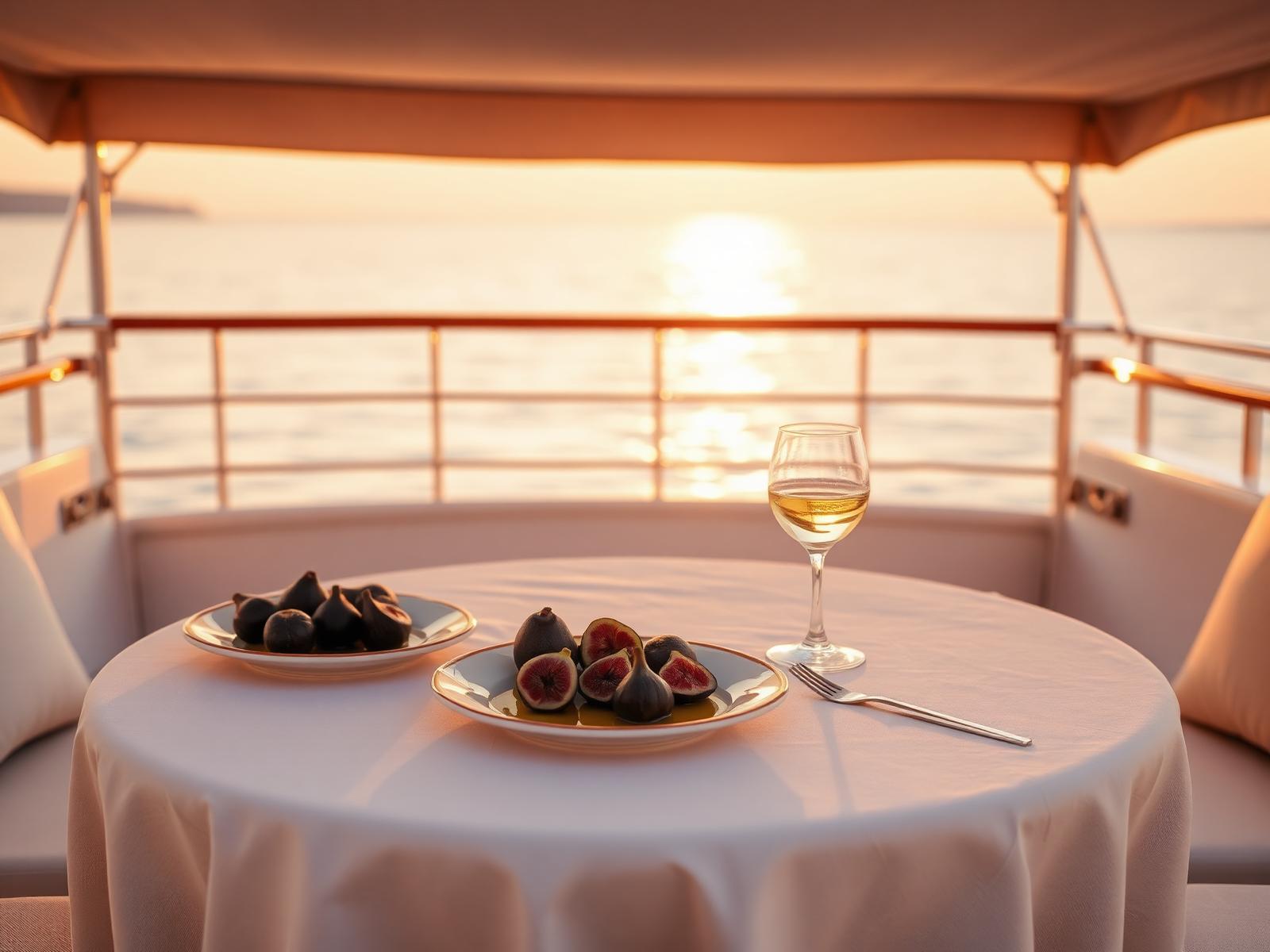
Es gibt mehrere Räume zum Essen und keine Verpflichtung, einen davon zu nutzen. An den meisten Abenden ist der einprägsamste Tisch die eigene Terrasse, zur Dämmerung mit einer einzelnen Lampe gedeckt und der ganzen Bucht davor.
Die Stunden gehören einem selbst. Frühstück um elf wird mit derselben Höflichkeit begegnet wie Frühstück um sieben — eine Kleinigkeit, die über eine Woche hinweg keineswegs klein ist.
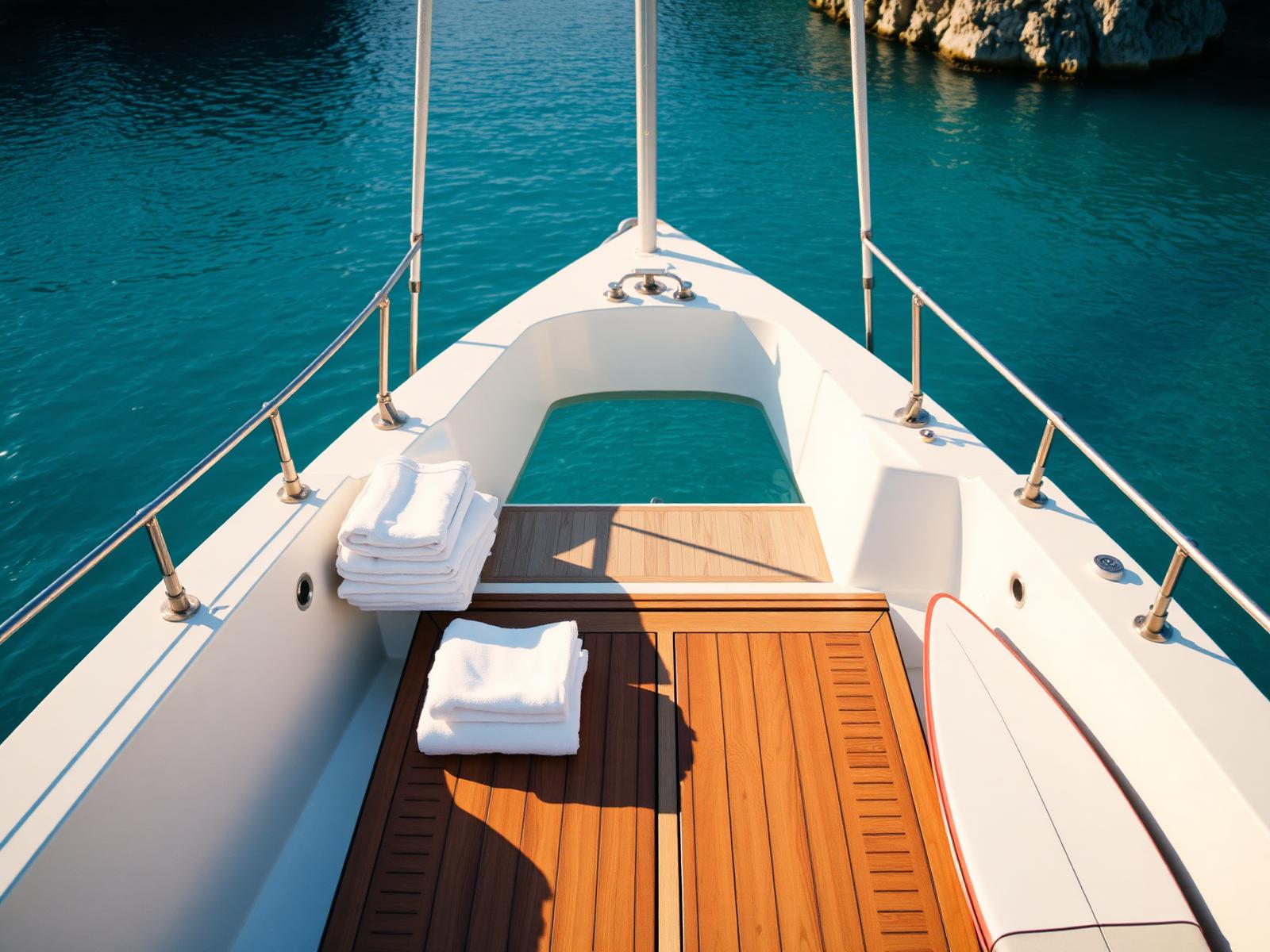
Die Marina
Wenn sich das Heck zum Meer öffnet
Am späten Vormittag, vor Anker, klappt der Rumpf zurück und ein Teakdeck legt sich knapp über das Wasser. Schwimmen Sie davon, oder sitzen Sie mit den Füssen im Meer und lassen Sie den Tag ganz ungeplant verstreichen.
Beiboote warten für jeden, der eine Bucht, einen Dorfsteg oder ein zu Fuss erreichbares Bergkloster besuchen möchte. Nichts ist ein geplanter Ausflug; es ist einfach ein Boot, und jemand, der Sie gern hinbringt.
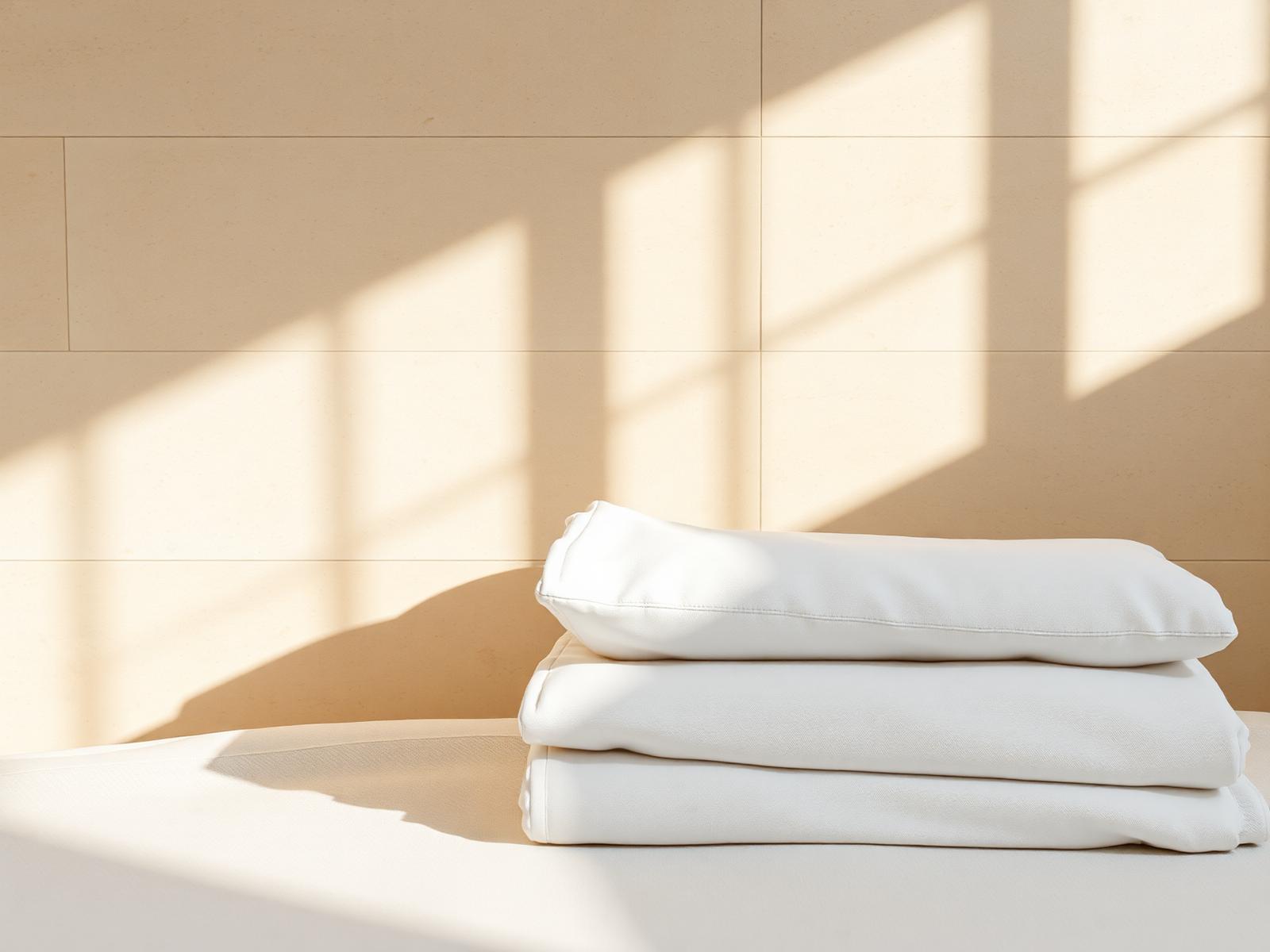
Am späten Nachmittag ist die Plattform meist wieder leer, die Handtücher gefaltet, und das Wasser ungestört für den, der zuletzt hinuntergeht.
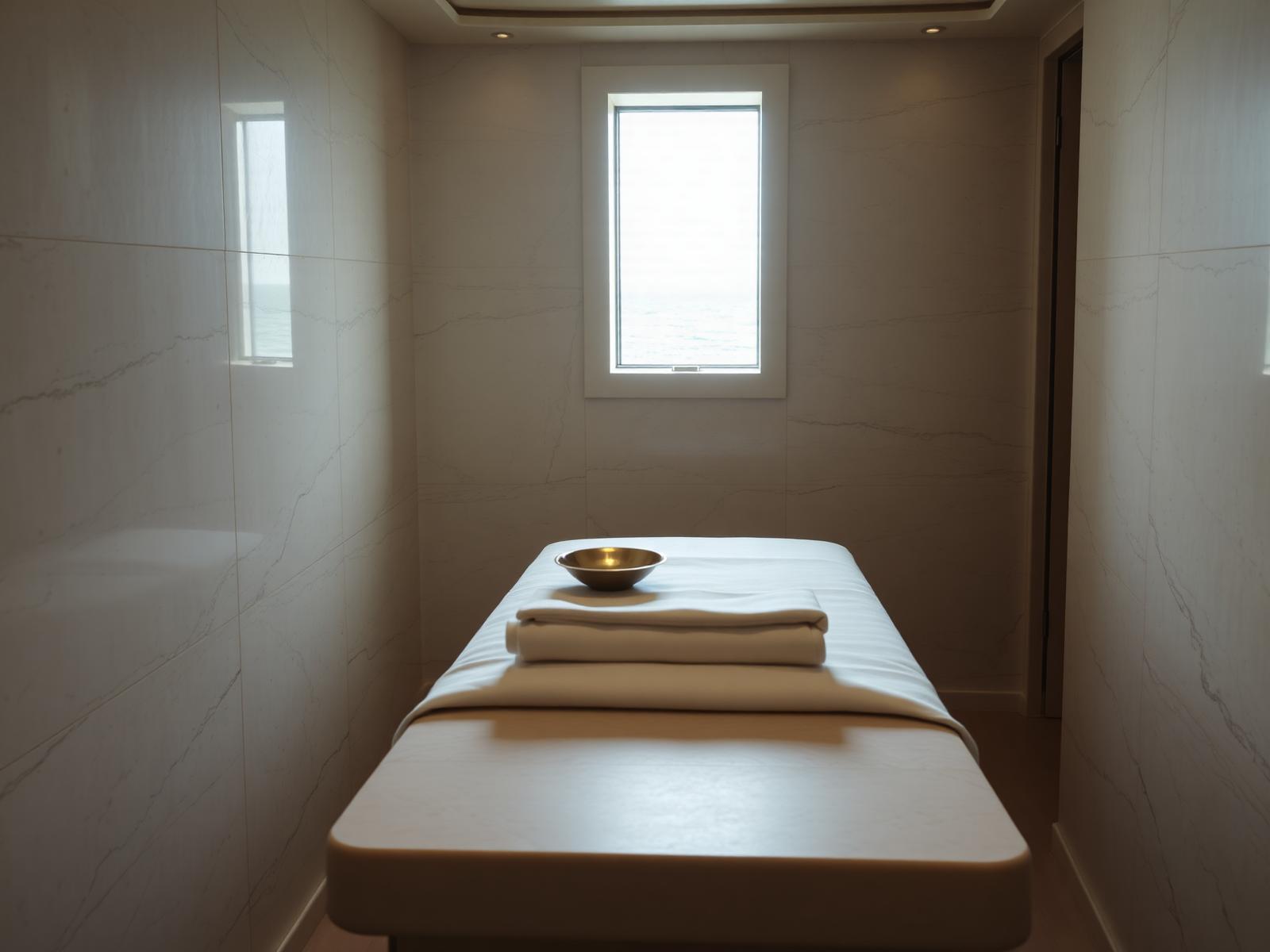
Wellness
Warmer Stein, kaltes Wasser, lange Stille
Ein Spa aus hellem Travertin und gedämpftem Licht, aufgebaut ums Baden statt um lange Behandlungslisten: ein Hamam, ein kaltes Tauchbecken, und Räume, die ruhig genug sind, um den Rumpf sich bewegen zu hören.
Nehmen Sie die Stunde vor dem Abendessen, dann gehen Sie mit nassem Haar zur Terrasse hinauf, während das Licht schwindet. Es ist das überzeugendste Argument des Schiffes, und es kostet nichts als den Nachmittag.
Die Reisen
Küstenlinien, langsam gelesen
Routen orientieren sich an Ankerplätzen statt an Häfen, mit genug Zeit, um eine zweite Nacht zu bleiben, wo die erste es wert war, wiederholt zu werden.
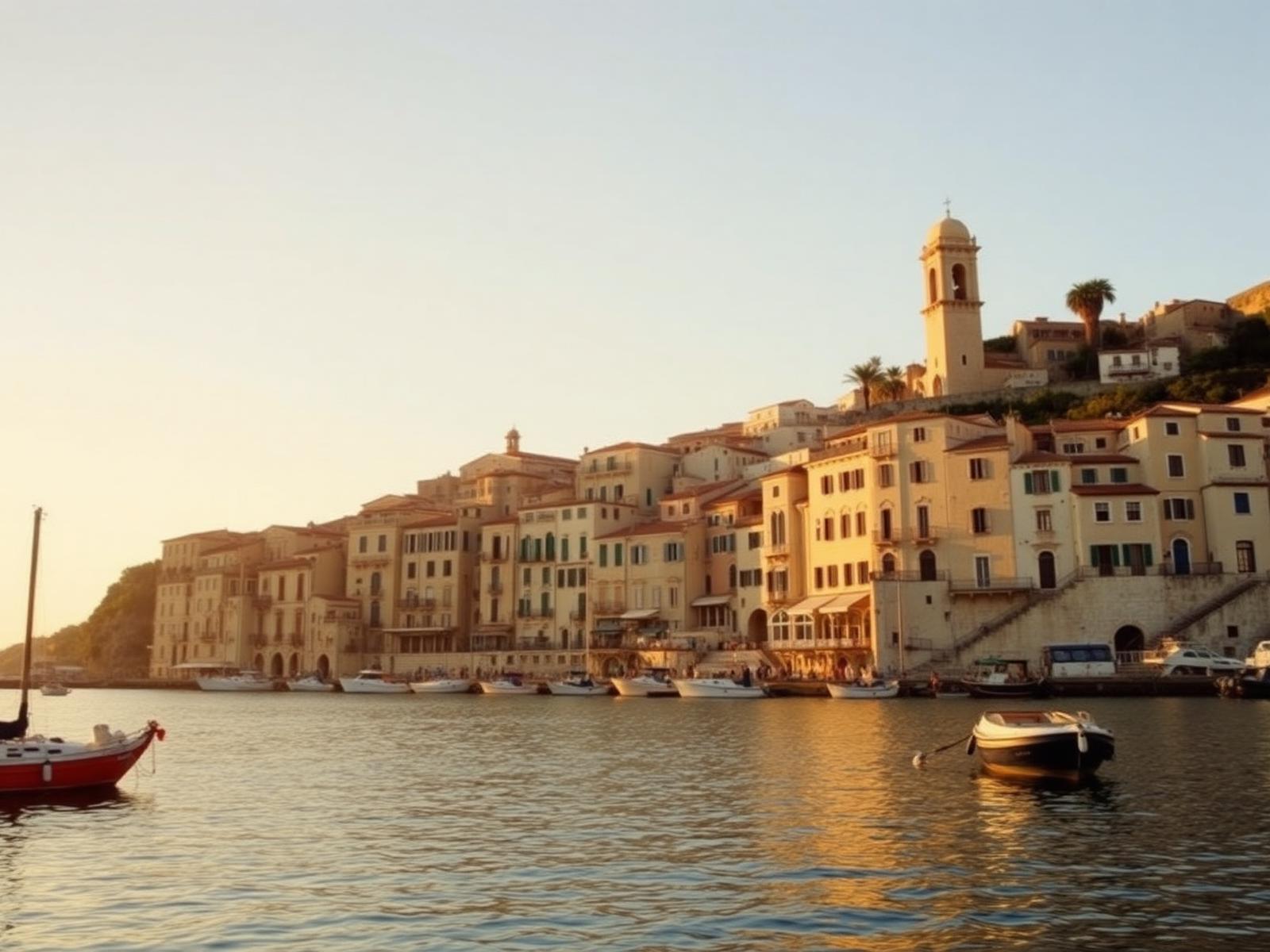
Reise Nr. 01
Die Tyrrhenische Küste
Von Neapel nach Portofino über Ponza und die Äolischen Inseln — vulkanisches Gestein, Zitronenterrassen und Häfen, die man in einer Stunde zu Fuss erkundet.
Reise Nr. 02
Die Adria
Von Venedig südwärts entlang der dalmatinischen Küste: istrischer Stein, Renaissancestädte, Zypressenhügel und Wasser in der Farbe von grünem Glas.
Reise Nr. 03
Die Balearen und darüber hinaus
Palma, die nördlichen Buchten Menorcas und die Costa Brava — Pinien, Salz und lange Nachmittage vor Anker mit wartendem Beiboot.
Reise Nr. 04
Die Ägäis
Von Athen durch die Kykladen in der Nebensaison, wenn das Licht am schönsten ist und die Dörfer ihre Plätze für sich haben.
Pure Voyage empfiehlt
Fünf kleine Dinge
- Mit offenen Terrassentüren schlafen und an einer Küste aufwachen, die man nicht erwartet hat.
- Das Frühstück, draussen abgestellt, und niemand klopft ein zweites Mal.
- Der Moment, in dem sich das Heck absenkt und das Meer Teil des Raumes wird.
- Warmer Travertin unter den Füssen nach dem kalten Tauchbecken, eine Stunde vor dem Abendessen.
- Zur Dämmerung von einem Dorf an Bord zurückkehren und die Lampen bereits brennen sehen.
Die Galerie
Eine Woche, in kleinen Ausschnitten
Aus dem Journal
Weiterlesen
Design
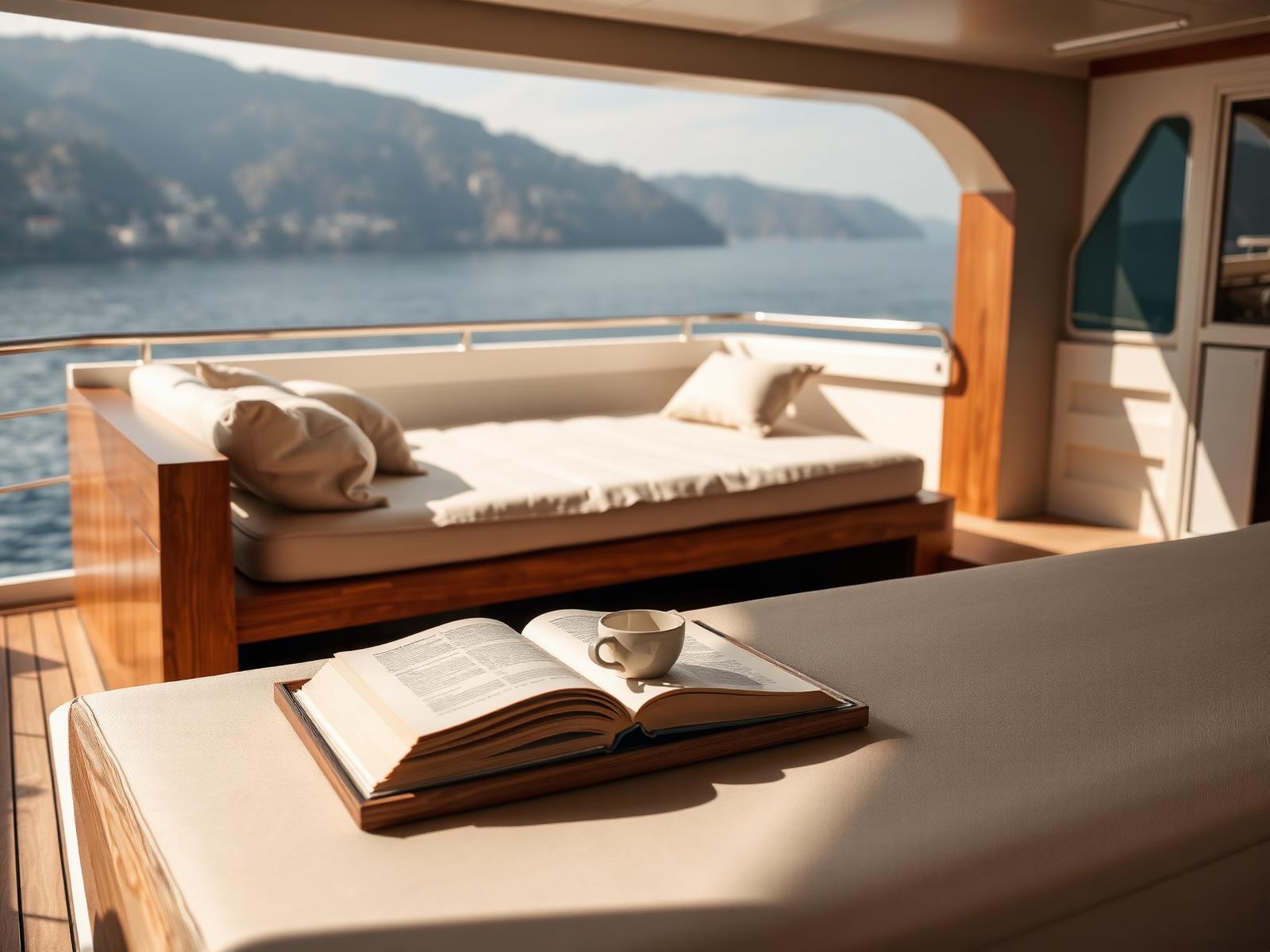
Die private Terrasse, und was sie an einem Raum auf See verändert
Eine Tür, die man die ganze Nacht offen lassen kann, macht aus einer Kabine ein Apartment. Es ist der einfachste Gedanke an Bord — und derjenige, der alles andere verändert.
Essay
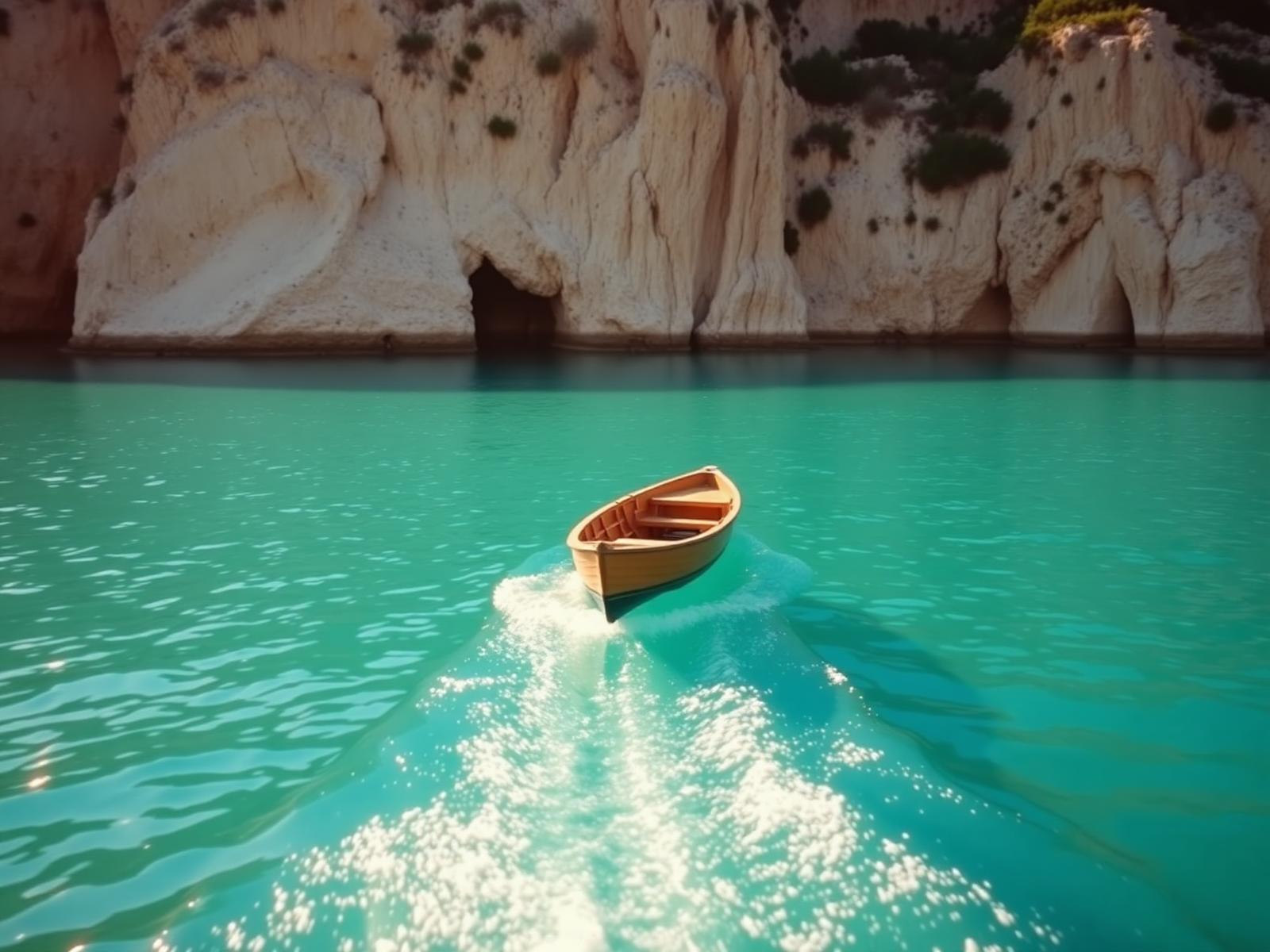
Mediterrane Eleganz, und die Disziplin des Weglassens
Travertin, Leinen, Eiche, Messing. Vier Materialien, warmes Licht, und die Zuversicht, kein fünftes hinzuzufügen — die Formsprache der Küste, aufs Wasser übertragen.
Vor Anker
Über das Vergnügen einer Marina, die sich aus dem Rumpf entfaltet
Später Vormittag, das Heck öffnet sich, und das Meer wird Teil des Hotels. Um diese halbe Stunde herum würden wir eine ganze Woche planen.
Eine Anmerkung des Redakteurs
Nehmen Sie die Suite mit der tiefsten Terrasse, und essen Sie dort jeden Abend.
Reisen Sie im Mai oder späten September, wenn das Mittelmeer sein Licht hat und nichts von seinem Andrang. Schwimmen Sie vor dem Frühstück, gehen Sie nur dann an Land, wenn ein Dorf Sie wirklich reizt, und lassen Sie die restliche Woche im Tempo der Küste verstreichen.
Das Pure Voyage Team

Eine Einladung
Einmal im Monat: Hotels, Neueröffnungen und Reiseideen
Ein Hotel, das uns überzeugt hat. Eine Neueröffnung, die wir im Blick haben. Und eine Reiseidee zur richtigen Jahreszeit. Sorgfältig ausgewählt und auf das Wesentliche reduziert.
Eine persönliche Anfrage
Planen Sie Ihre Reise?
Wenn das nach der richtigen Art von Woche klingt, arrangieren wir sie gern persönlich für Sie — die Saison, die Küste und die Terrasse mit der richtigen Ausrichtung.
Pure Voyage plant diese Reisen mit Bedacht, und nur für wenige Reisende gleichzeitig.
Warum über Pure Voyage buchen?
- Persönliche Luxusreiseberatung
- Sorgfältig gewählte Hotelempfehlungen
- Ein Reiseplan, der zu Ihnen passt
- Partnervorteile, wo sie verfügbar sind
- Persönlicher Ansprechpartner von Anfang bis Ende